
Classroom Reading Corner Ideas Teachers Actually Use

If your classroom reading corner is a slumped beanbag and a wobbly bin of paperbacks nobody reshelves, this fixes it. You have one awkward corner, a district that won’t let you drill the walls, and roughly forty dollars of your own money you’d rather not spend. That’s the real starting line for most teachers, and it’s exactly what we’re working with here.
Every “dreamy” reading corner on Pinterest looks like it took a weekend and a craft budget. Most didn’t. Underneath the string lights and the jute rug, a good classroom reading corner is really just five decisions made in the right order. Get those right and the space survives 25 kids, a fire drill, and the long slog to June.
Here’s the build, corner by corner, with the sizes and the mistakes nobody warns you about.
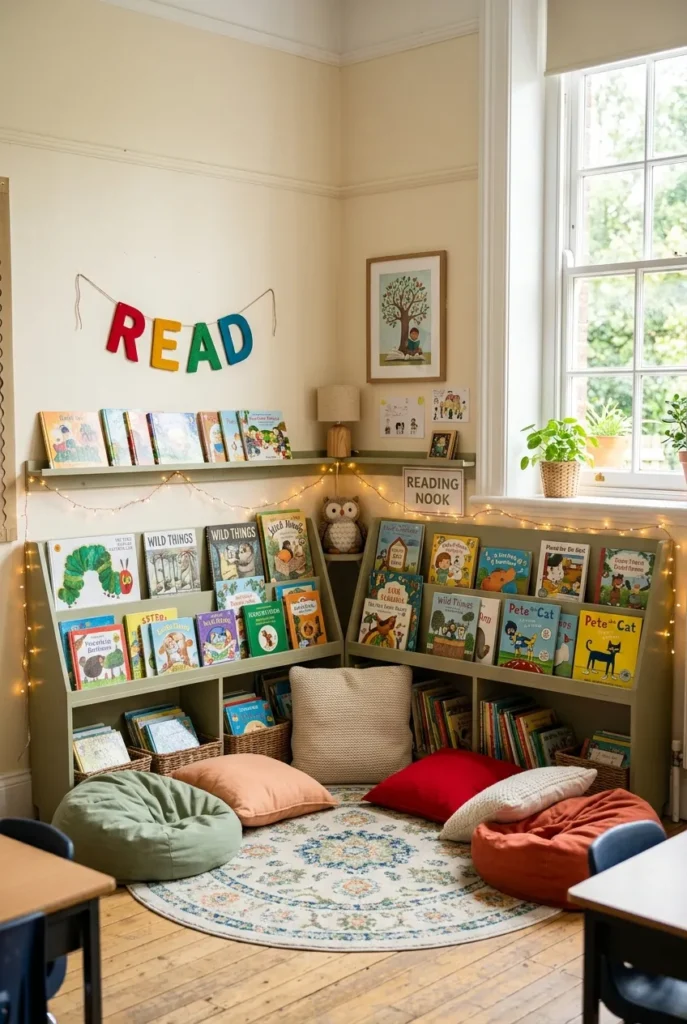
Start With the Corner Itself, Not the Cute Stuff
Pick the corner before you buy a single cushion. You want two walls meeting, away from the door and the pencil sharpener, ideally near a window for daylight. Two walls do the cozy work for free, so you’re not building an enclosure from scratch.
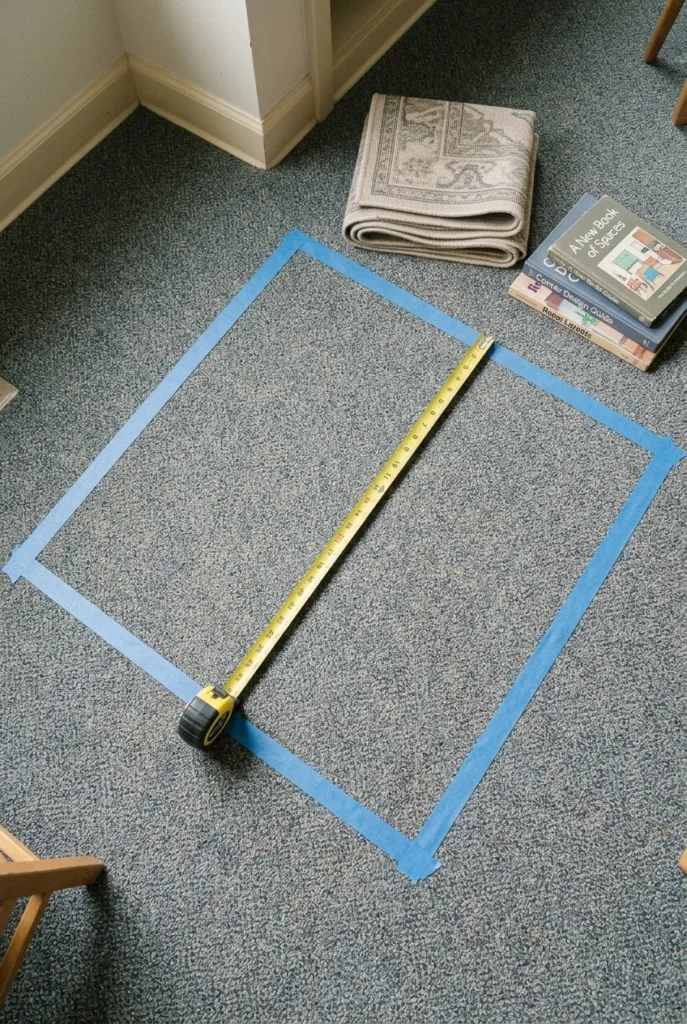
Measure the floor you can actually spare. A workable classroom reading corner for a small group runs about [VERIFY: 5 ft by 5 ft (1.5 m by 1.5 m)] of open floor, enough for three or four kids to sit without a knee war. Tape the outline on the carpet first. Live with it for a day before you commit.
Sight lines matter more than looks. You need to see every reader from your teaching spot, so keep the tallest piece under [VERIFY: 36 inches (91 cm)] tall. Reading Rockets has a helpful teacher walkthrough of how one educator organized her space in their guide on setting up a classroom library, and the “can I see everyone” rule shows up there too.
Failure mode: skip the sight-line check and you’ll spend the year craning your neck around a bookcase to see who’s actually reading.
The No-Drill Setup for Teachers Who Can’t Touch the Walls
Most classroom advice assumes you can hang, nail, and mount. You can’t. District walls are off-limits, and cinder block laughs at push pins. So everything here stands on the floor or clips on without a single hole.
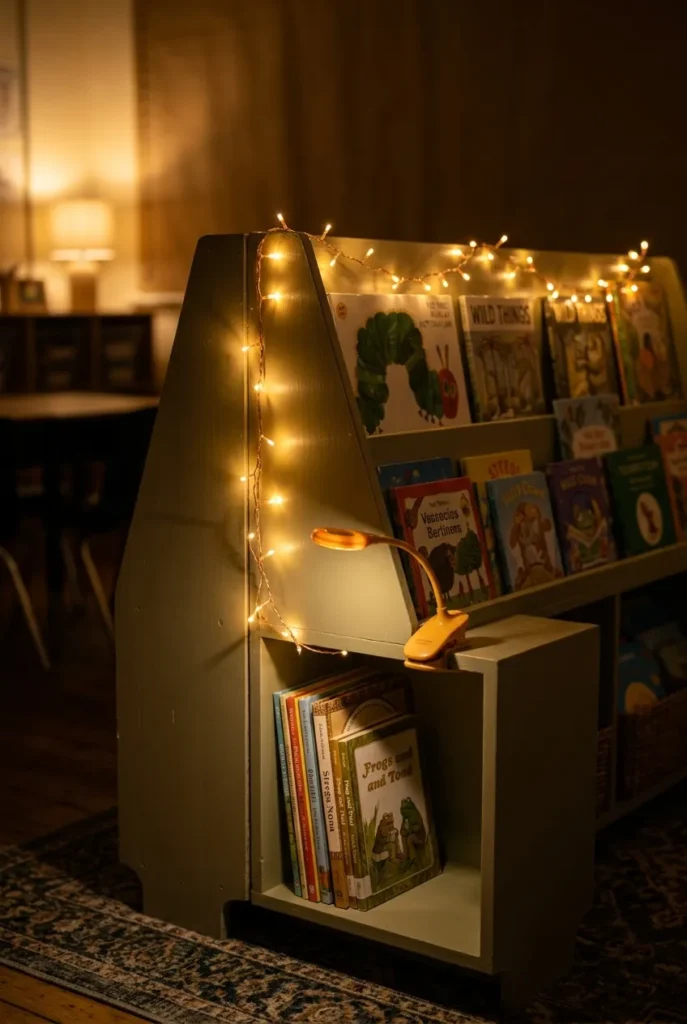
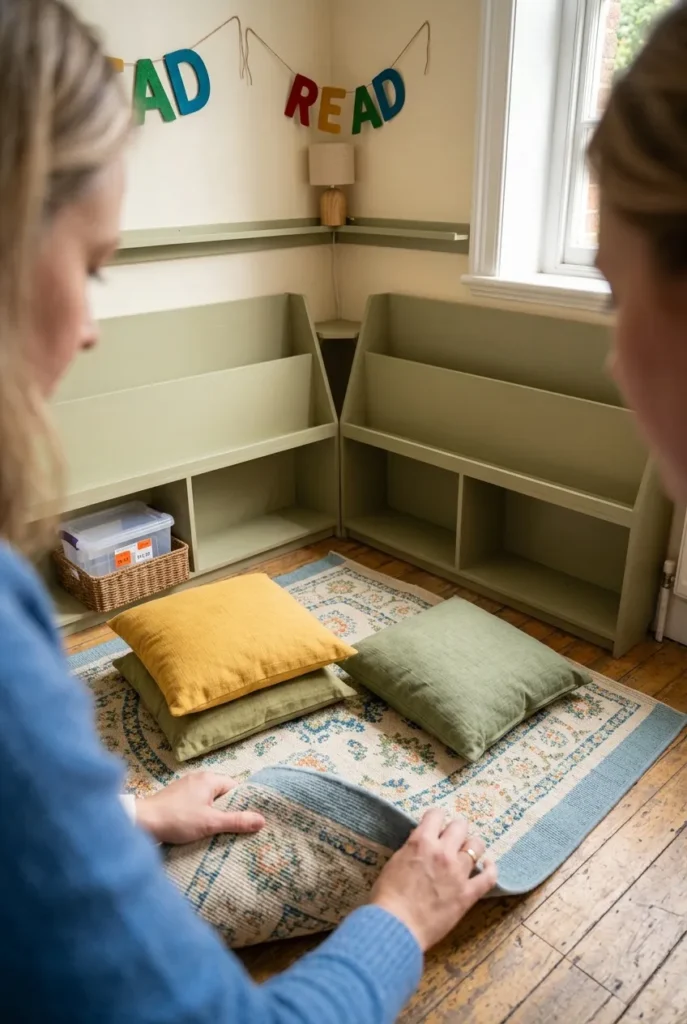
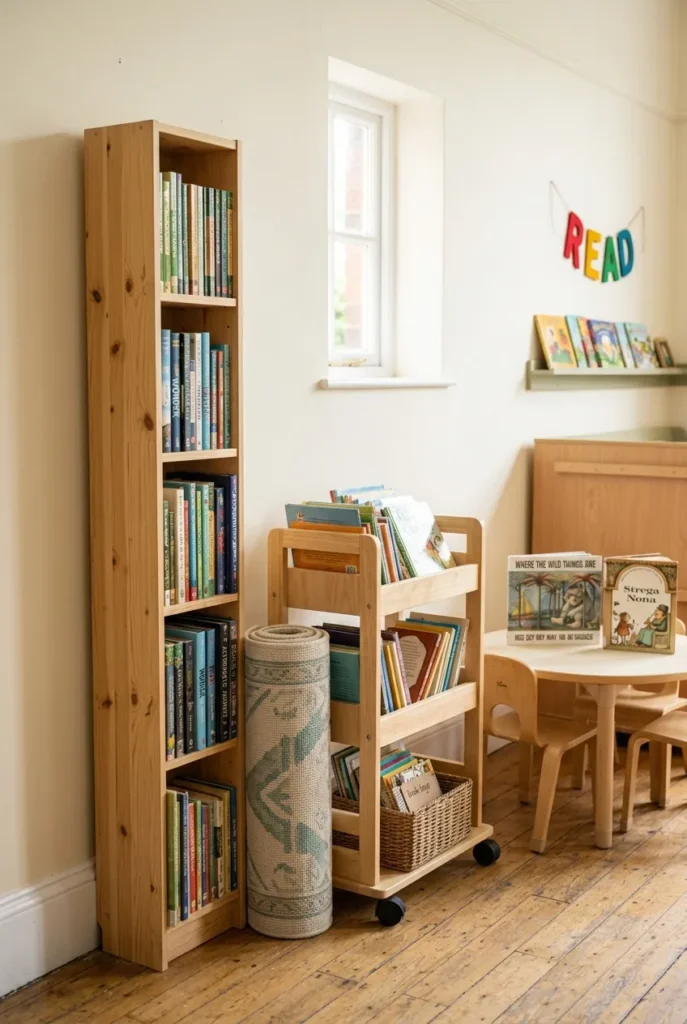
Use freestanding, forward-facing shelving instead of wall units. A low tiered book display or a rain-gutter shelf resting on the floor puts covers out where kids can see them, no anchoring required. For dividers, a rolling cart or a fabric-covered bookshelf becomes the “wall” that defines the nook.
Light it without an outlet fight. Battery-operated warm string lights [VERIFY: 2700K] and a clip-on book light give you glow without taping a cord across a walkway. For soft division overhead, tension rods wedge between two shelves or a doorway with zero hardware.
This zero-drill logic is the same one we use for lease-bound spaces at home, and the walkthrough in our reading nook ideas for renters translates almost directly to a classroom you’re not allowed to alter.
Failure mode: hang one “temporary” hook with adhesive strips on painted cinder block and you’ll pull off a patch of paint by October. Keep it freestanding.
Seating That Survives Twenty-Five Kids
Classroom seating takes a beating adult furniture never sees. Skip anything with a zipper a six-year-old can open. You want washable, wipeable, and light enough to stack at the end of the day.
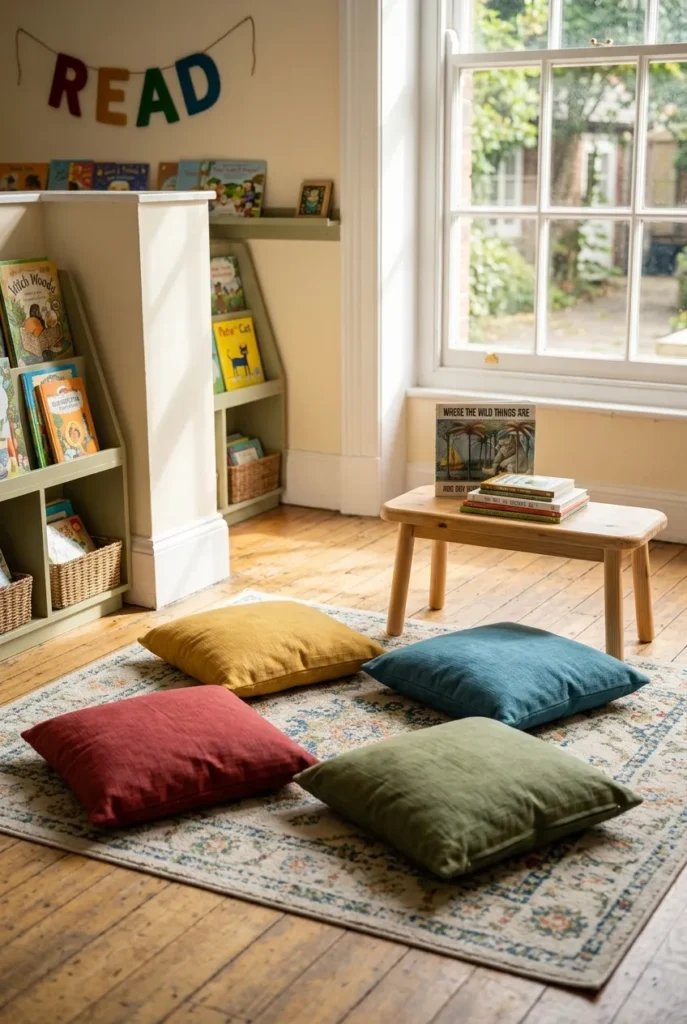
Floor cushions win for flexibility. Three or four firm floor cushions [VERIFY: around 18 in (46 cm) square] give you a rotating four-seat corner that stacks flat in seconds. Add one low bench or a sturdy ottoman for the kid who can’t sit on the floor. If you want the cozy-den feel without a build, a small pop-up teepee reads as “special” to a first grader and folds away for fire-drill compliance.
Honest trade-off: floor cushions photograph like a dream. After 40 minutes on a thin one, a kid’s back gives out and the wiggling starts, so go firmer than you think and cap floor time. We break down the fill types and covers that actually hold up in our guide to floor cushions for a reading nook, and the washable-cover advice matters double in a classroom.
Failure mode: buy one giant shared beanbag and you’ve built a wrestling ring, not a reading corner. Separate seats keep separate readers.
Show the Covers, Not the Spines
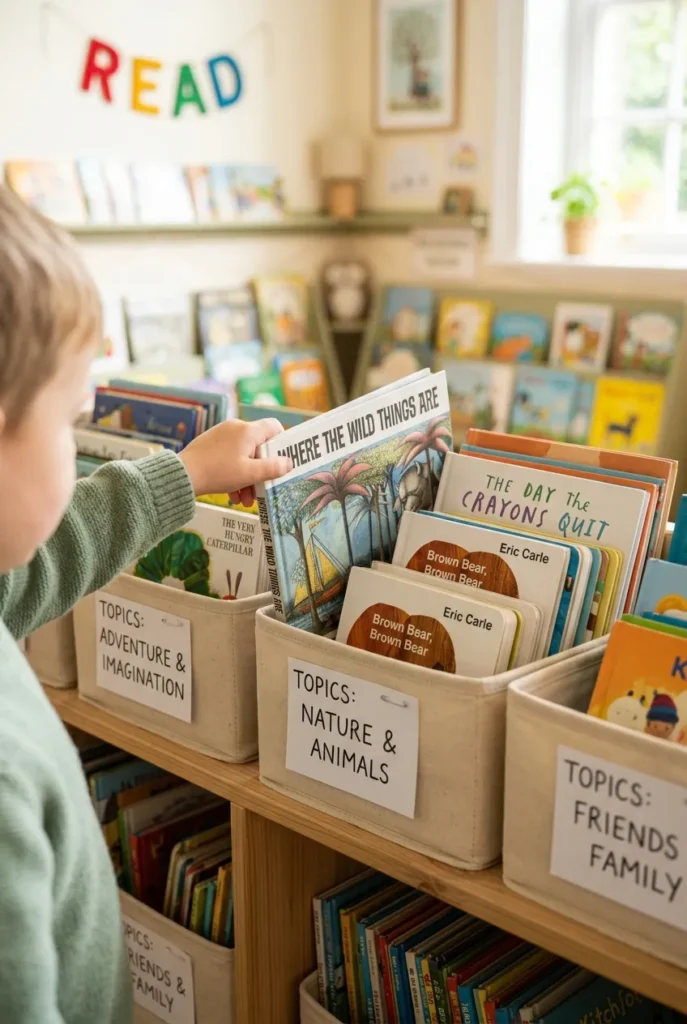
Here’s the single highest-value change you can make today: turn the books face-out. Kids choose with their eyes, and a wall of spines reads like homework. Forward-facing display is the trick every strong classroom library uses, and it’s the first thing I’d fix in any corner.
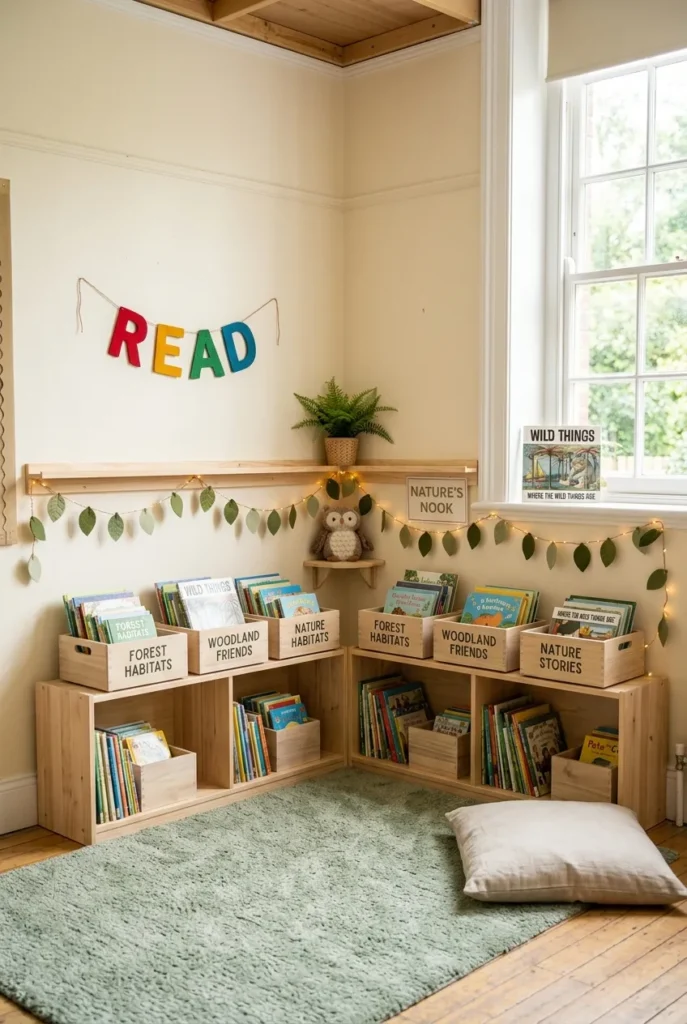
Group books into labeled bins by topic, not reading level. “Animals,” “Funny,” “Space,” and “Scary (a little)” pull kids in far better than “Level F.” Keep bins to a size a child can carry back one-handed, and photograph the label so you can reprint when it inevitably tears. Scholastic makes the case for why this curated access moves the needle in their overview of why classroom libraries matter.
Rotate, don’t overload. Put out [VERIFY: 30 to 40] titles at a time and keep the rest in reserve. A fresh swap every two weeks makes the same collection feel new.
Failure mode: cr”am every book you own onto the shelf and kids freeze from too much choice, then default to the same three favorites all year.
A Real Budget Build, Totaled Out
Let’s talk actual dollars, because “affordable” is not a number. Here’s a starter corner that skips the craft-store spiral and still feels intentional.
| Piece | Archetype | Est. price band [VERIFY] |
|---|---|---|
| Washable rug (4×6) | flatweave, low pile | [VERIFY: $35 to $55] |
| Floor cushions (x3) | firm square covers | [VERIFY: $45 to $60] |
| Forward-facing shelf | rain-gutter or tiered | [VERIFY: $30 to $50] |
| Book bins (x6) | fabric, labeled | [VERIFY: $18 to $30] |
| Warm string lights | battery, 2700K | [VERIFY: $12 to $20] |
That lands the whole corner in the [VERIFY: $140 to $215] range, comfortably inside a teacher’s real budget if you spread it across a couple of paychecks or a supply grant. [VERIFY: Personal aside from publisher, e.g. “I built my first one for $[X] the summer I moved rooms, and the rug was the only splurge.”] For more ways to stretch a small budget without it looking cheap, our reading nook on a budget breakdown has swaps that apply straight to a classroom.
Failure mode: blow the budget on one statement piece (looking at you, $120 teepee) and you’ve got a prop with nowhere comfortable to sit.
Make It Cozy Without Making It a Fire Hazard
Cozy is a feeling built from three senses, not a pile of stuff. Warm light, soft texture, and a little sound-dampening do more than any themed cutout.
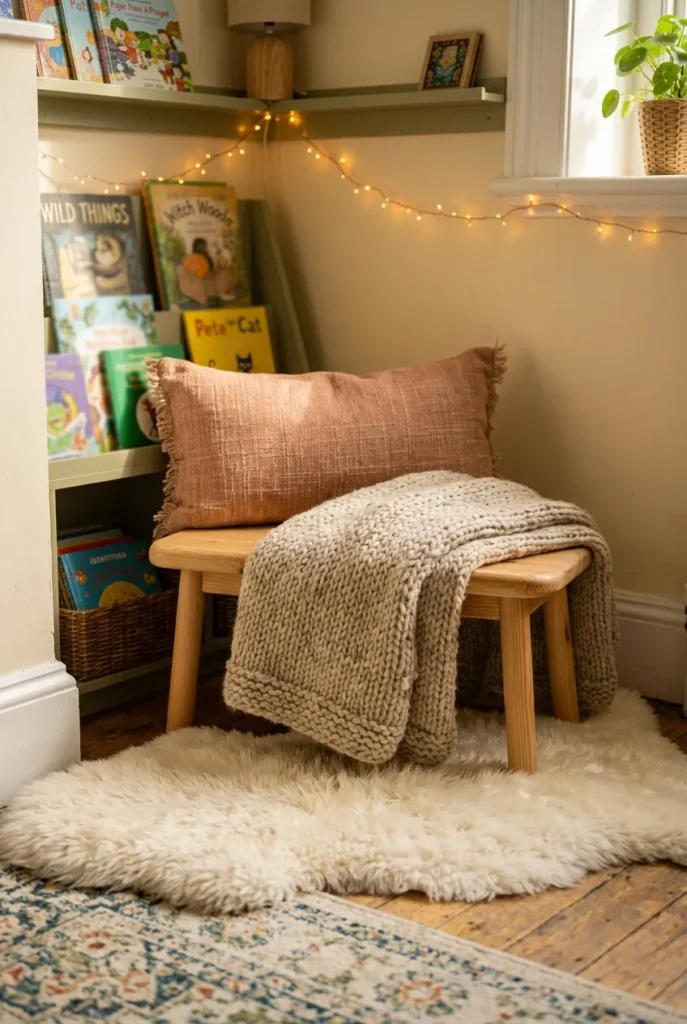
Layer texture low and washable: a chunky-knit throw over the bench, a sheepskin-look mat under one cushion, a lumbar pillow for the wall side. Add one non-visual beat kids notice without naming it, a soft rug that hushes footsteps so the corner actually sounds quieter than the rest of the room. That drop in noise is what signals “this is the calm place.”
Keep it code-safe. Fabric drapes and lights have to meet your school’s fire rules, so check the flame-resistant label and keep everything clear of exits and vents. When in doubt, ask your custodian before you hang a single yard of fabric.
Failure mode: drape fabric near a heater or block a vent for the aesthetic and you’ll get it torn down on the first walkthrough. Cozy that breaks code isn’t cozy for long.
Set the Rules Before the Kids Set Them for You
A reading corner without a system becomes a hangout by week two. Decide the traffic rules first, then teach them like any other routine.
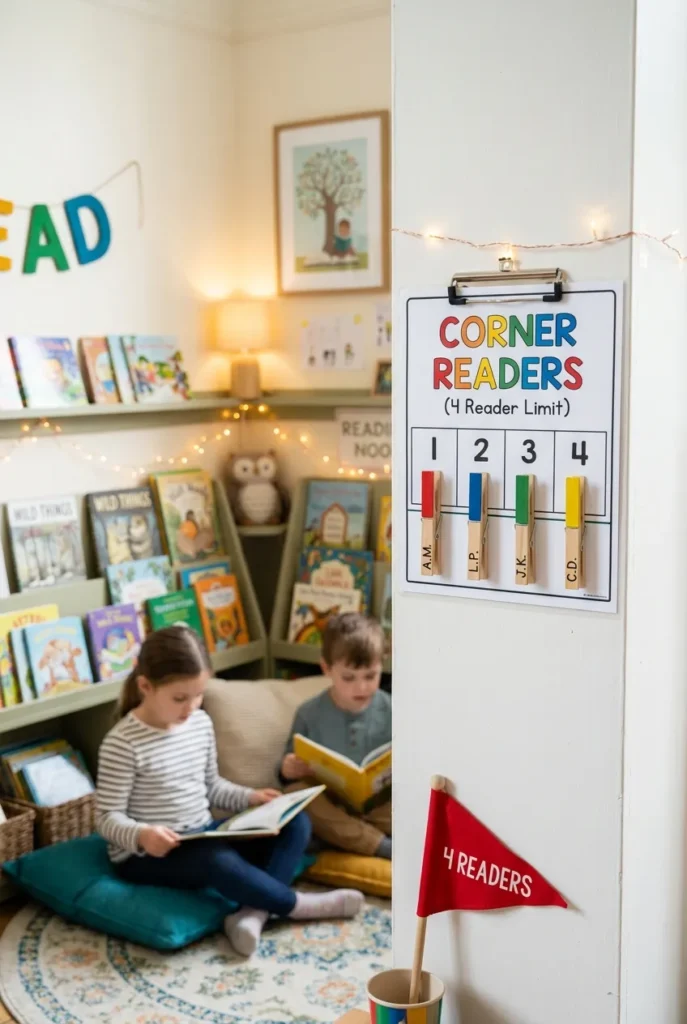
Cap the crowd. Post a visible number, [VERIFY: 3 or 4] readers at a time, with a simple clip or token system so kids self-manage the count. Fewer bodies means real reading instead of a huddle. Set a soft time limit for a rotation so everyone gets a turn across the week.
Teach the reset. Ninety seconds before transition, readers reshelve into the right bin and stack their own cushion. Model it twice, then hold the line. This is the step every roundup skips, and it’s the one that keeps the corner alive in April.
Failure mode: skip the count rule and your quiet nook becomes the loudest square footage in the room, and you’ll be tempted to shut it down entirely.
Tiny Classroom? Build Up and Fold Away
No spare corner is not a dealbreaker. When floor space is gone, the reading corner goes vertical and portable.
Go vertical with a narrow tower shelf [VERIFY: about 12 in (30 cm) deep] against one wall, and let a folding mat plus two cushions become the “corner” that appears at reading time and disappears after. A rolling cart of bins wheels the whole library to any open patch of floor, then tucks under a table.
Claim shared square footage. The end of a bookshelf run, the space beside your small-group table, even under a lofted storage shelf all work. Our small-space playbook in kids reading nook ideas has fold-away setups that scale down to a single square yard.
Failure mode: wait for the “perfect” permanent spot and you’ll never build one. A portable corner used daily beats a dream corner that never happens.
Theme It Lightly, Not Literally
Themes are the fun part, but a full pirate ship is a lot of cardboard to store in June. Lean on a light theme you can swap with a rug, a few bin labels, and one wall element instead of a built structure.
Match the theme to your readers. A nature or “reading forest” look (green rug, a leafy garland, woodland bin labels) suits younger grades and photographs beautifully for a class newsletter. Older kids respond to a calmer, cozier “book cafe” vibe over anything cartoonish. Pick a palette of two or three colors and stop there so it reads intentional, not chaotic.
Keep it flexible. One swappable element (a seasonal garland or a themed pennant) refreshes the whole corner without a rebuild.
Failure mode: commit to an elaborate built theme and you’ll resent dismantling it, then it lives on top of a cabinet gathering dust all summer.
Frequently Asked Questions
How do you create a classroom reading corner?
Start by choosing a two-wall corner away from the door, tape out about a 5-by-5-foot space, then add low forward-facing book display, three or four washable floor cushions, and warm battery lights. Keep everything under 36 inches so you can see every reader, and finish with labeled book bins sorted by topic.
How do you set up a classroom layout around a reading corner?
Place the reading corner where you have a clear sight line from your teaching spot, and keep it out of the main traffic path between the door, desks, and supplies. Face shelving inward to define the nook, and leave an open lane so kids can enter without stepping over readers.
What should a classroom reading corner look like?
It should feel distinct from desk work: softer light, a rug that quiets footsteps, comfortable low seating, and books displayed cover-out so choices are easy. Aim for calm and inviting over busy and loud, with a two or three color palette rather than every theme at once.
How do you set up a reading corner for small-group or intervention time?
Add a low table or lap desks beside the cushions, keep a small whiteboard and letter tiles within arm’s reach, and stock leveled sets you control separately from the free-choice bins. Position it so you sit with your back to a wall and face the rest of the room.
How many books should a classroom reading corner hold?
Put out roughly 30 to 40 titles at a time in labeled topic bins, and keep the rest in reserve to rotate every couple of weeks. Too many choices at once tends to overwhelm younger readers, so rotation keeps the same collection feeling fresh.
How much does a classroom reading corner cost?
A solid starter corner (rug, cushions, forward-facing shelf, bins, lights) generally lands in the low-to-mid hundreds, and you can trim it by thrifting the rug and repurposing bins you already own. Spreading purchases across paychecks or a supply grant keeps it manageable.
Your Weekend Starting Point
You don’t need a build day or a craft budget to fix your classroom reading corner. Tape out the space, turn the books face-out, add three firm cushions and a warm light, and post the reader-count rule. That’s a real corner by Monday.
Once the bones are in, the fun layering begins. If you want stage-by-stage setups you can copy for a specific grade, our kids reading nook ideas guide is the natural next read, with fold-away options for the tiniest rooms.
Keep reading
More cozy nook ideas
 Kids
Read →
Kids
Read →
Teen Boy Reading Nook Ideas He Won’t Call Babyish
A teen boy reading nook lives or dies on one thing: it can’t look like it belongs to a nine-year-old. No rainbow…
 Kids
Read →
Kids
Read →
Nursery Reading Nook Ideas for Babies and Toddlers
You stepped on a board book this morning. Then a stuffed bunny. Then something sticky near the crib that you decided not…
 Kids
Read →
Kids
Read →
How to Build a Daycare Reading Corner on a Budget
Three pieces, one weekend, under 150. No drilling into your landlord’s walls, no custom millwork, no design degree. If you run a…