
How to Create a Vintage Cottagecore Bedroom (Even in a Rental)

If your bedroom is white walls, one harsh overhead bulb, and a bed you’ve never really styled, this is the fix. A vintage cottagecore bedroom runs on five layers: one honest antique, floral bedding that looks inherited, a palette that ages well, warm 2700K light, and something alive. You can build all five without drilling a single hole, which matters when a landlord holds your deposit. Below you’ll find the full formula, real price bands, and the safety check most decor blogs skip entirely.
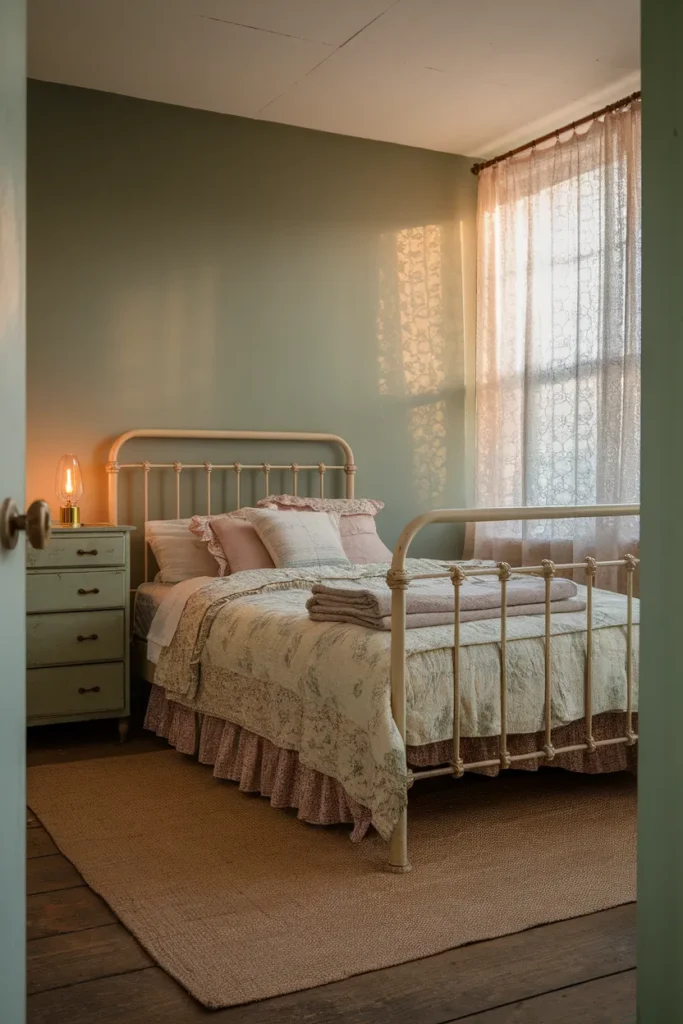
The 5-Layer Vintage Cottagecore Bedroom Formula
Here’s the whole method in one screenshot. Build in this order, because each layer softens the flaws of the one before it.
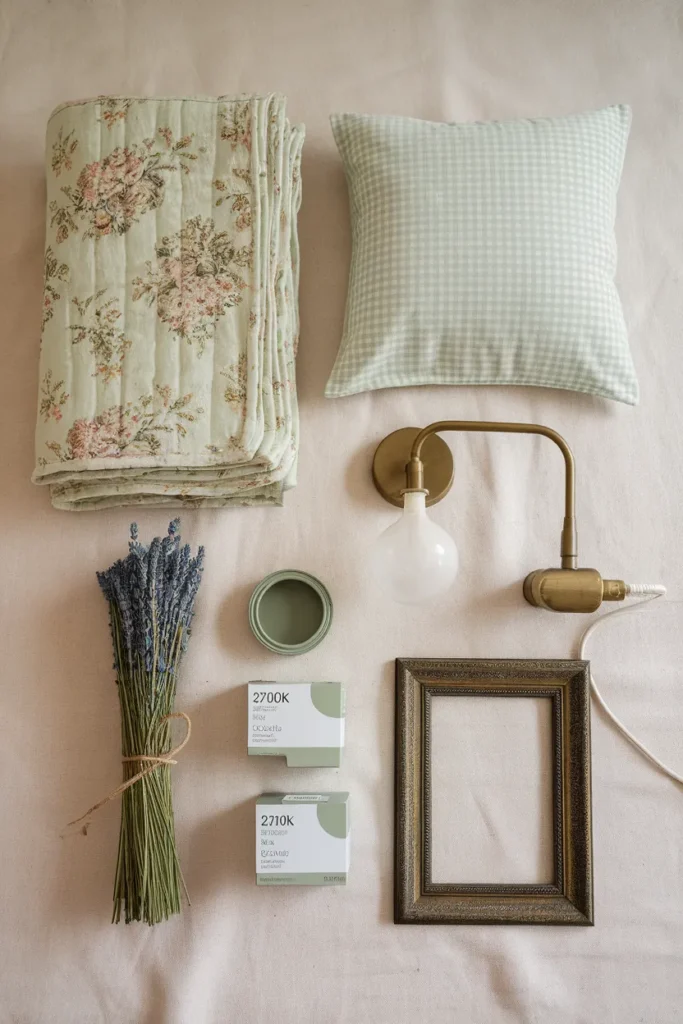
- One honest antique. A real secondhand piece with wear you can feel: a dresser, an iron bed frame, or a nightstand. One is enough.
- Floral bedding, layered. A vintage quilt or coverlet plus one quiet geometric (gingham or a thin stripe) in the same palette.
- A palette that ages well. Sage, cream, dusty rose, faded blue. Muted versions only, never primary-crayon color.
- Warm light, and only warm light. 2700K bulbs in lamps and a plug-in sconce. The overhead switch stays off after sunset.
- One living thing. A pothos, a bundle of dried lavender, or a $6 jug of grocery-store flowers.
The whole list fits a realistic $80 to $400 range depending on how patient you are at estate sales. Each layer gets its own section below, with the numbers, the sourcing, and the mistakes that quietly ruin the look.
Start With One Honest Antique (Not a Matching Set)
The fastest way to fake a decade of collecting is to buy a five-piece bedroom set with a “vintage look.” It also fails every time. Matching sets read as hotel, and an antique cottagecore bedroom depends on the opposite signal: pieces that clearly arrived in different years, from different lives.
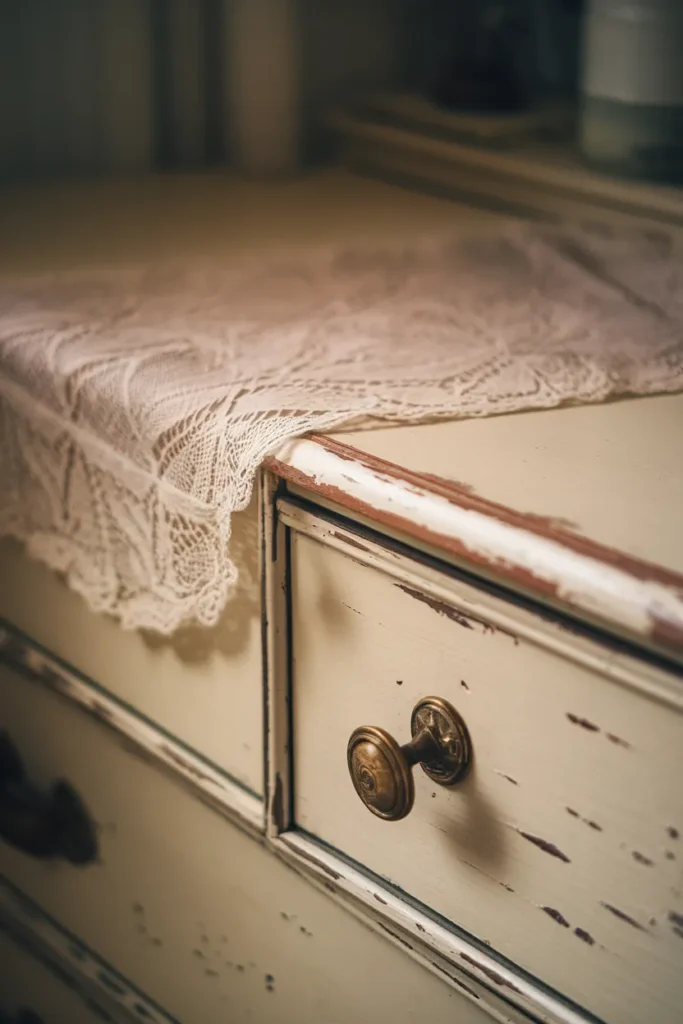
So buy one real piece first. Estate sales, Facebook Marketplace, Habitat for Humanity ReStores, and the furniture corner of any thrift store are the hunting grounds. Good archetypes: a 1940s waterfall-front dresser, a full or queen iron bed frame, or a single turned-leg wood nightstand. Run three checks before you hand over cash. Pull every drawer to see if it glides or grinds. Rock the piece with one hand for wobble. Then smell inside a drawer: dusty and faintly woody airs out in a week, but sharp mildew never fully leaves.
Honest trade-off: real antiques are heavy, and wood drawers can stick on humid August days. You’ll accept both, because the first cold touch of an iron bed rail on a winter morning does more for the mood than anything you can order new. That contrast, warm quilt against cold iron, is the whole style in one sensation.
Floral Bedding That Looks Inherited, Not Printed Yesterday
Vintage floral bedding is where most budgets should go first, because the bed is 60 percent of what a camera or a houseguest sees. Start with a real secondhand quilt. Hand-stitched vintage quilts commonly run about $50 to $150 at antique malls and thrift stores in the US right now, and the good ones in usable condition move fast, so buy when you see one, not when you finish deliberating.
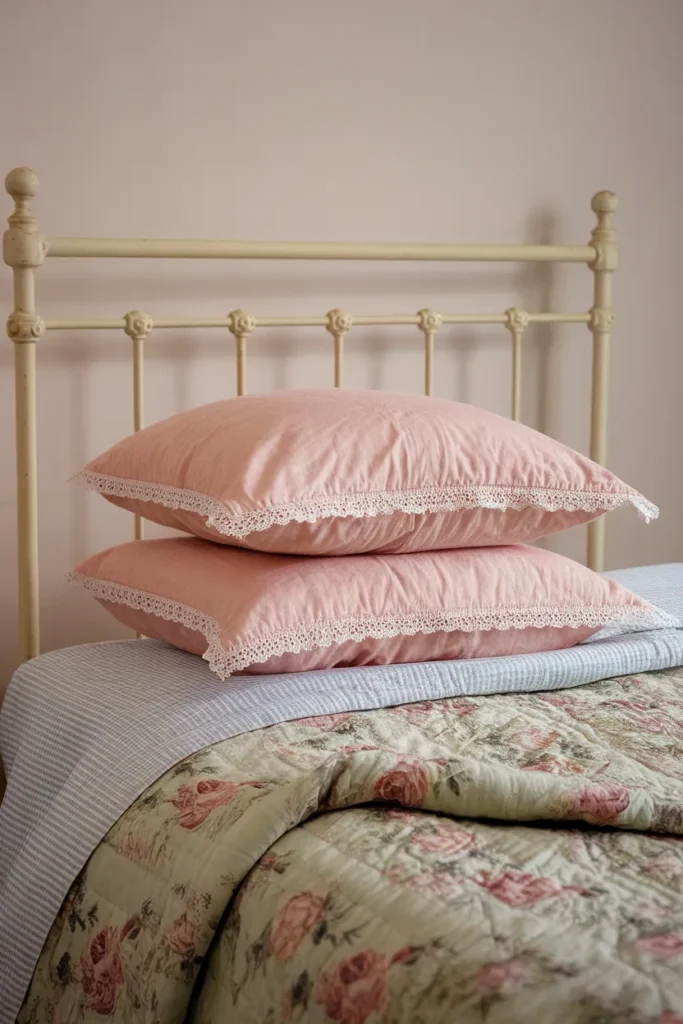
Then layer. The rule that makes mixed patterns work: keep every print inside one shared palette. A rose floral quilt, a sage gingham pillowcase, and a thin-stripe sheet all read as a set when they pull from the same four colors, and like a rummage bin when they don’t. Add ruffled or lace-trimmed pillowcases, one lumbar pillow, and a linen throw folded at the foot. Natural fibers only: cotton, linen, real wool. Polyester “vintage style” sets pill within months and photograph with a plastic sheen that no filter rescues.
One care reality up front: wash a secondhand quilt cold on gentle, skip the bleach, and dry it flat or over a line. Some arrive smelling like someone else’s attic, and an afternoon on a line in moving air fixes what a dryer sheet can’t.
A Cottagecore Bedroom Color Palette That Ages Well
The cottagecore bedroom color palette that keeps working year after year is muted and slightly dusty: sage green, cream, dusty rose, faded sky blue, buttery yellow. Notice what’s missing. No pure white, no primary anything. Every color should look like it spent a summer near a window.
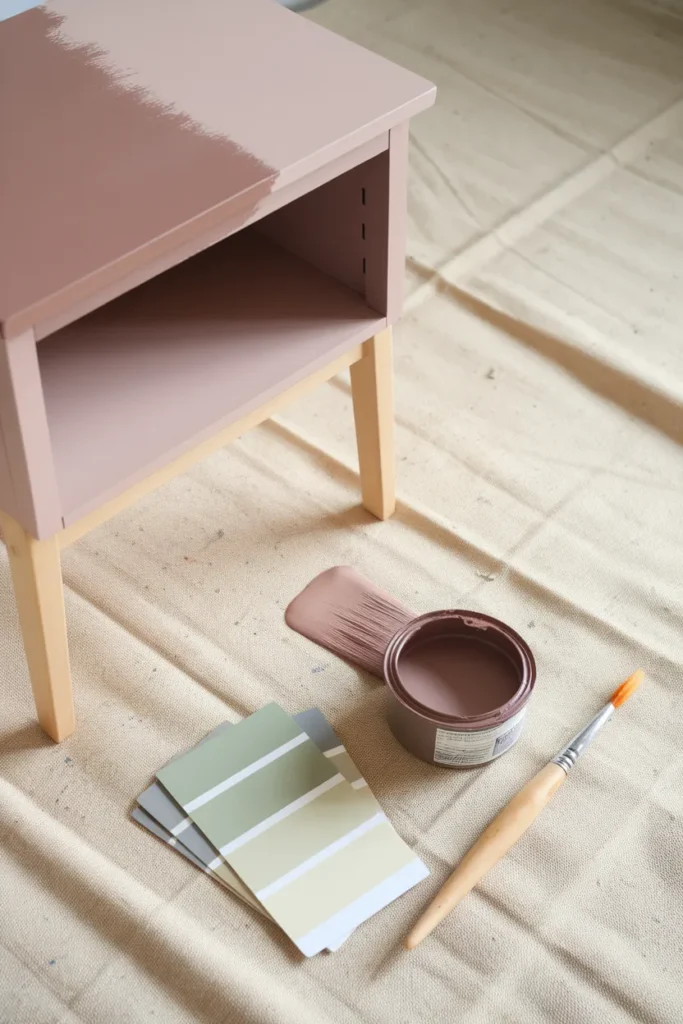
Pick one quiet wall color and let pattern do the talking, or flip it: bolder walls, calmer bedding. Both work. Both at once doesn’t. If you can paint, moody-muted pinks in the Sulking Room Pink family have become a repeat favorite for cottage bedrooms for a reason. If you can’t commit to a wall, steal the sample-pot trick: a $5 to $10 tester of the shade you love turns a thrifted nightstand or a set of frames into your color story in one afternoon, no landlord conversation required.
For the wider room plan beyond color, our full cottagecore bedroom idea guide walks through 25 complete setups you can borrow from.
Light It Like 1948: Lamps, Sconces, and the 2700K Rule
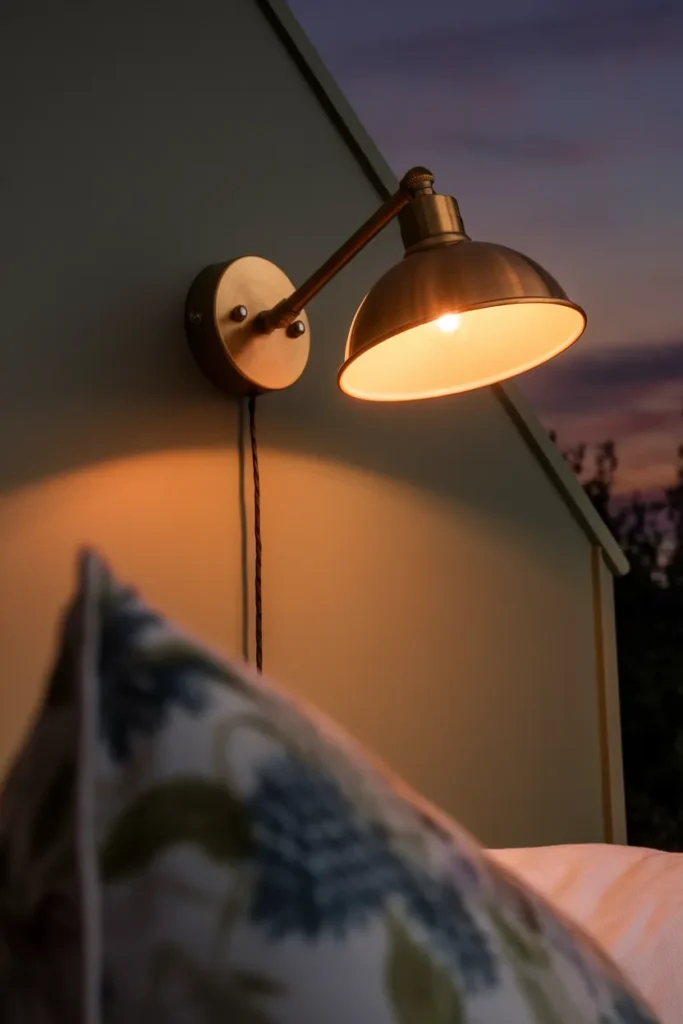
Overhead light flattens every texture you just paid for. From dusk onward, this room should run on two or three small warm sources at different heights: a lamp on the dresser, a lamp or plug-in sconce at the bed, maybe a tiny picture light over art.
The number that matters is 2700K. That’s the soft white end of the Kelvin scale, the same warm cast old incandescent bulbs threw, and it’s printed on every bulb box under “light appearance” on the Lighting Facts label. The Department of Energy’s Lighting Facts guide explains the label line by line if you want the full read. For brightness, 450 to 800 lumens per lamp covers a bedroom: enough to read by, soft enough to wind down under. Add a $10-range plug-in dimmer to one lamp and you’ve built candlelight you can control.
The failure mode is a single stray daylight bulb. One 5000K bulb in a bedside lamp turns rose florals gray and makes the whole room feel like a waiting area. Check every socket once; it’s a two-minute audit.
Renter-Safe Vintage: No Drills, No Lost Deposit
Every element above installs without a drill. Here’s the renter’s toolkit, tested against the two things you actually fear: holes and lost deposits.
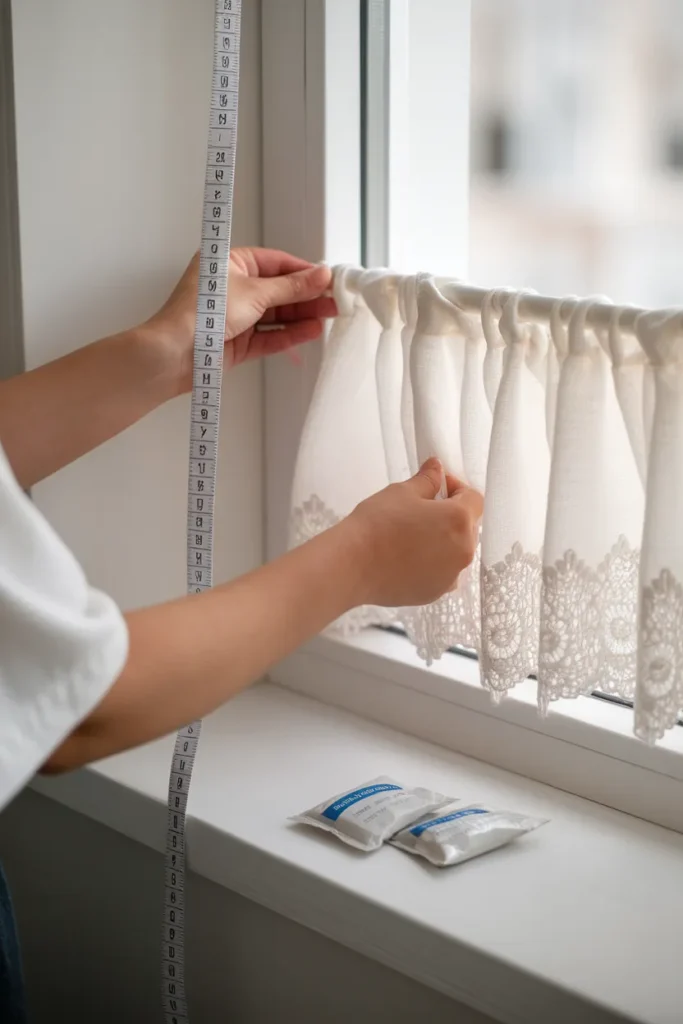
Windows first. A tension rod inside the frame carries a lace cafe curtain with zero hardware. For full-length sheer panels, damage-free adhesive hooks rated above your curtain’s weight do the job; press each one for the full count the package demands, then use one more hook than you think you need. Walls: lean, don’t hang.
A large mirror or framed botanical propped on the dresser reads more collected than a gallery wall anyway. Lighting: the plug-in swing-arm sconce from the last section exists precisely so renters never touch wiring. Floors: a washable rug over carpet you didn’t choose. And instead of wallpaper, frame a single wallpaper sample; one sheet of a vintage floral print behind glass gives you the pattern hit for a few dollars, and it moves out when you do.
Numbers worth saving
| Thing | The number that works |
|---|---|
| Bulb color | 2700K, labeled soft white |
| Lamp brightness | 450 to 800 lumens each |
| Curtain rod height | 4 to 8 inches above the window frame |
| Curtain rod width | 6 to 12 inches past the frame on each side |
| Nightstand height | tabletop within about 2 inches of your mattress top |
Hang curtains at frame height and the window looks shorter; those 4 to 8 inches of lift are free visual ceiling height, even on a tension-free adhesive setup.
The Thrift Safety Check Nobody Writes About
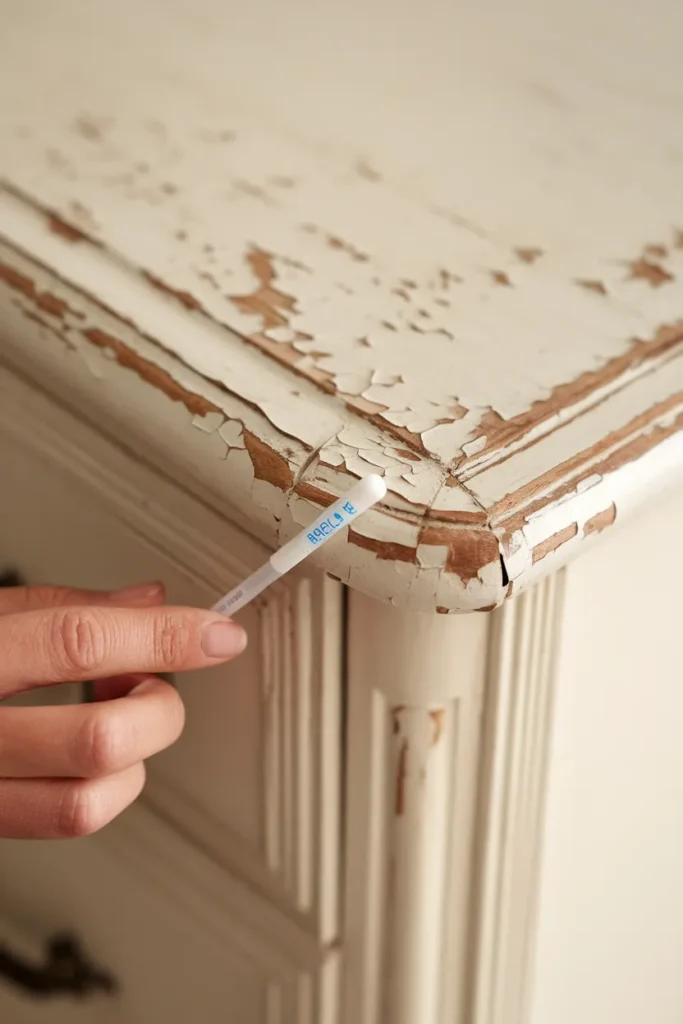
Here’s the part every inspiration listicle skips. The US banned consumer lead-based paint in 1978, which means the charming painted dressers and iron cribs-turned-shelves in the vintage price range can predate the ban. Intact, stable old paint is generally the lower-risk case; paint that’s chipping, chalking, or peeling is the actual hazard, and that’s exactly the “chippy” finish the aesthetic celebrates.
So add one step between the thrift store and the bedroom. Inexpensive instant swab kits from any hardware store tell you in minutes whether a painted piece contains lead. If a chippy piece tests positive, seal it under a clear topcoat or pass on it, and never sand it, because sanding turns the problem into dust. That caution doubles if kids or pets share the room. The EPA’s lead safety guidance for homes covers the fuller picture, including when to call a certified inspector.
Two quicker vetting habits while you’re at it. Check upholstered finds along seams and under cushions in the parking lot, not in your bedroom. And quarantine textiles straight into a cold gentle wash before they touch the bed. Quick plain-language note: this is general guidance, not professional testing; for peeling paint anywhere in an older home, a certified lead inspector is the right call.
Grandmacore or Vintage Cottagecore? Where the Line Sits
The two styles get merged on Pinterest constantly, and knowing the difference will save you from a room that reads as clutter. The clean way to hold it: cottagecore looks toward the garden, grandmacore looks toward the hearth. Cottagecore pulls in nature, air, and florals that could’ve come from the yard. A grandmacore bedroom leans indoor and nostalgic: doilies, layered kitsch, teacups, a maximalist pile of memory. Vintage cottagecore sits between them, antique bones with a garden palette.
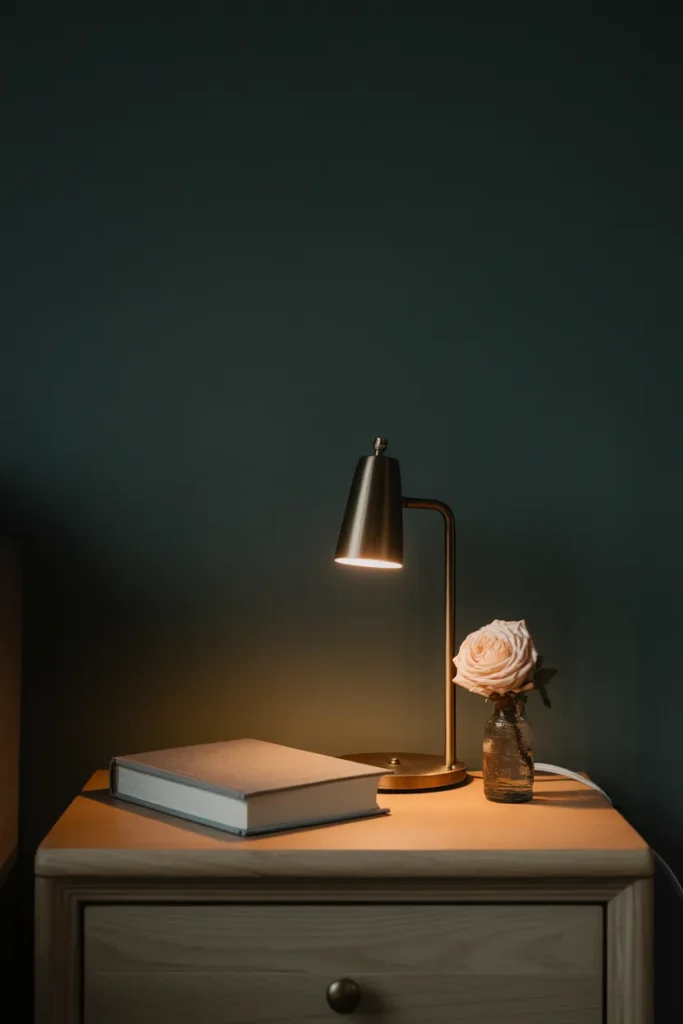
To stay on the cottage side of the line, use what I call the One Story Per Surface rule. Every surface holds one small grouping that tells one story: a lamp, a clothbound book, a bud vase. That’s it. When a nightstand starts telling three stories at once, you’ve crossed into grandma’s parlor, lovely in its own right but a different room. Edit twice a year and the collected look stays collected instead of accumulating.
And if the full grandma direction is genuinely calling you, our grandmacore reading nook ideas lean all the way in, doilies included.
Save One Corner for the Books
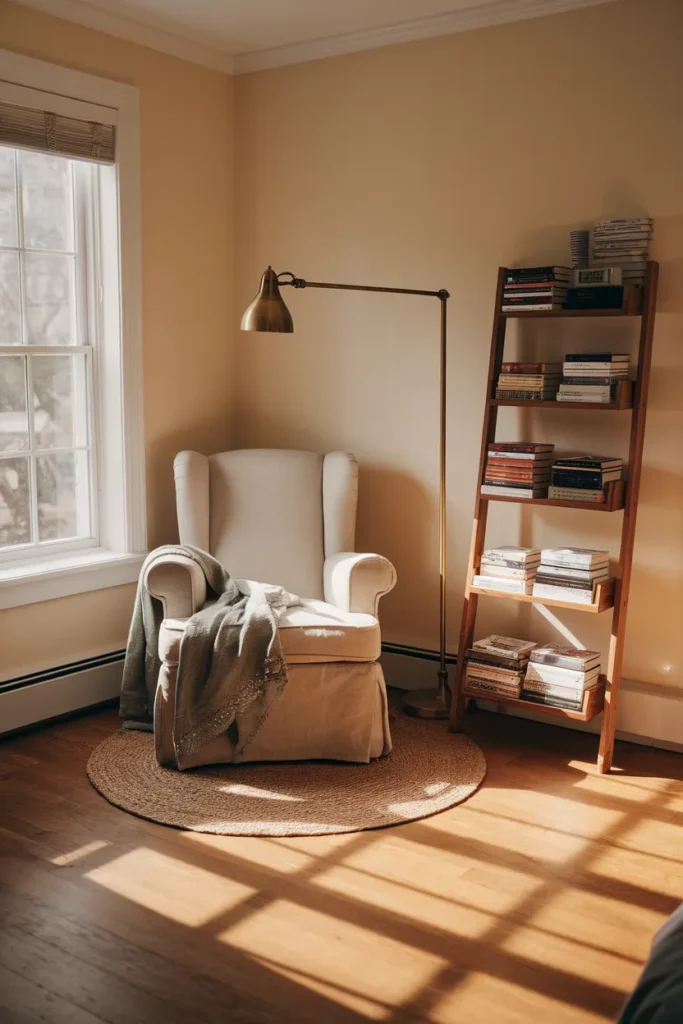
A vintage cottagecore bedroom earns its keep when you actually live in it, so give one corner a job. Angle an armchair toward the window where the afternoon light lands, drop a linen throw over one arm, and stand a ladder shelf beside it for the TBR pile. A swing-arm lamp at shoulder height puts light on the page instead of in your eyes, and a small jute rug marks the corner as its own little territory. That’s the whole build: a spot to curl up and get lost in a book while the rest of the room glows behind you.
If you want to go deeper on that one chair, our vintage reading nook ideas show how to style it so it feels lived-in rather than staged.
FAQ
What makes a bedroom vintage cottagecore instead of just cottagecore? Age you can see and touch. Standard cottagecore can be built entirely from new pieces styled soft and rural. The vintage version requires at least one genuinely secondhand anchor, real wear, and patterns that look faded rather than freshly printed.
How do I create a vintage cottagecore bedroom on a budget? Spend in this order: a secondhand quilt (roughly $50 to $150 at antique malls and thrift stores), 2700K bulbs for lamps you already own, a paint sample pot for one small furniture makeover, and thrifted frames for botanical prints. Skip new reproduction furniture entirely; it’s the most expensive way to look the least authentic.
What colors belong in a cottagecore bedroom color palette? Muted, slightly dusty versions of garden colors: sage green, cream, dusty rose, faded sky blue, and buttery yellow. If a shade would look at home in a crayon box, soften it two steps before it enters the room.
What’s the difference between grandmacore and a vintage cottagecore bedroom? Grandmacore is the hearth: indoor nostalgia, doilies, layered kitsch, maximalist memory. Vintage cottagecore is the garden brought inside: antique bones, floral bedding, air and light. Keep one story per surface and you’ll stay on the cottage side.
Is cottagecore still in style in 2026? Yes. The style keeps ranking, new guides keep publishing this year, and Pinterest search activity on the vintage variation stays steady. What’s shifted is the direction: away from costume-level whimsy and toward rooms that look collected over years, which is exactly what this guide builds.
How do I keep a vintage cottagecore bedroom from feeling cluttered? Apply the One Story Per Surface rule, edit surfaces twice a year, and give modern life one hidden escape hatch: a drawer or basket where the charger, remote, and lotion bottle live out of sight. Cottage calm is mostly the absence of plastic in the sightlines.
Bring It Home
Start with the quilt. It’s the layer that changes the room the day it arrives, it sets your palette for everything after, and hunting one down teaches you how the whole secondhand game works. Then add the antique, the light, and the living thing at whatever pace your weekends allow. A room built this way isn’t finished in an afternoon, and that’s the point: it should look like it took years, even when it took a season. When the first corner feels right, wander the rest of our cottagecore guides and pick the next one.
Keep reading
More cozy nook ideas
 Bedroom
Read →
Bedroom
Read →
English Cottage Bedroom Checklist: Everything to Decide Before You Start
You saved forty pins of floral quilts and sloped ceilings, then looked up at your own bedroom: beige walls, one window, a…
 Bedroom
Read →
Bedroom
Read →
21 Small Bedroom Ideas for Couples
Sixty-two and a quarter inches. That’s the width of a common IKEA queen storage frame, and in a 10 by 10 foot…
 Bedroom
Read →
Bedroom
Read →
Floral Bedding Ideas for a Cottagecore Bedroom That Still Looks Right in Daylight
No painting. No drilling. No conversation with your landlord. Floral Bedding Cottagecore is the one cottagecore move you can make in an…