
Dorm Reading Nook Ideas That Won’t Cost You Your Deposit

No drill, no paint, no angry housing email in March. You need one corner, a soft place to land, and a light that isn’t the ceiling fluorescent. That’s the whole build.
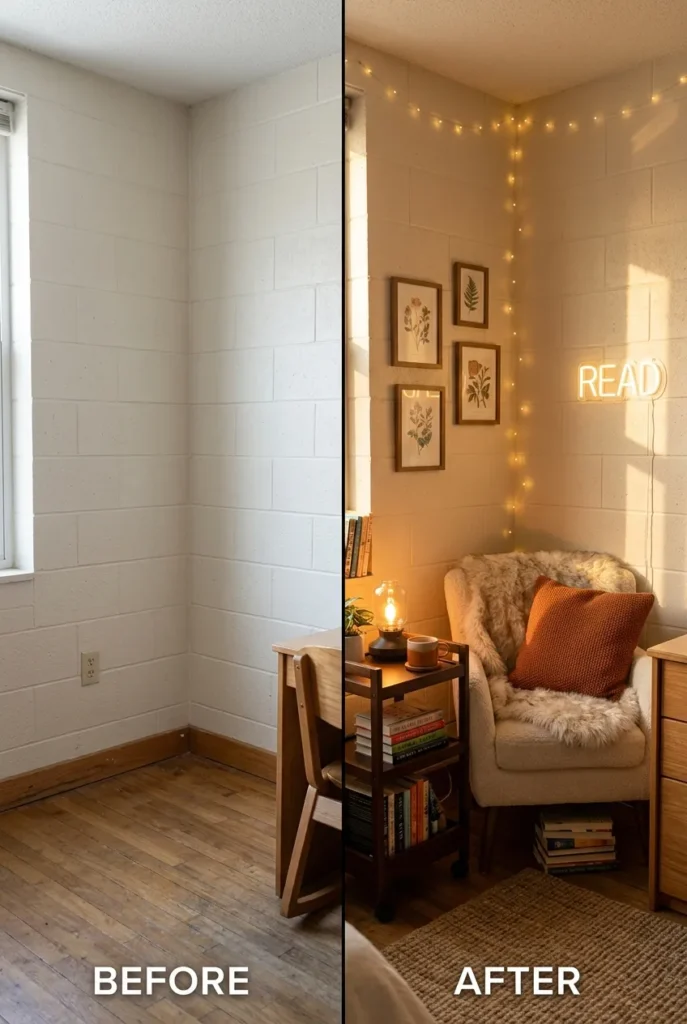
Most dorm rooms give you about 100 to 150 square feet to split with a roommate, and almost none of it is yours to alter. So a dorm reading nook isn’t about renovating. It’s about claiming three feet of corner and making it feel like the coziest three feet on your floor. This guide sticks to setups that peel off clean on move-out day.
Here’s what we’ll cover: the damage-free rule that keeps your deposit safe, the seat, the light, the under-the-bed trick your RA won’t mind, and the roommate-privacy fix. Every idea works in a rented, can’t-touch-the-walls room.
Start With the No-Damage Rule (Read This Before You Buy Anything)
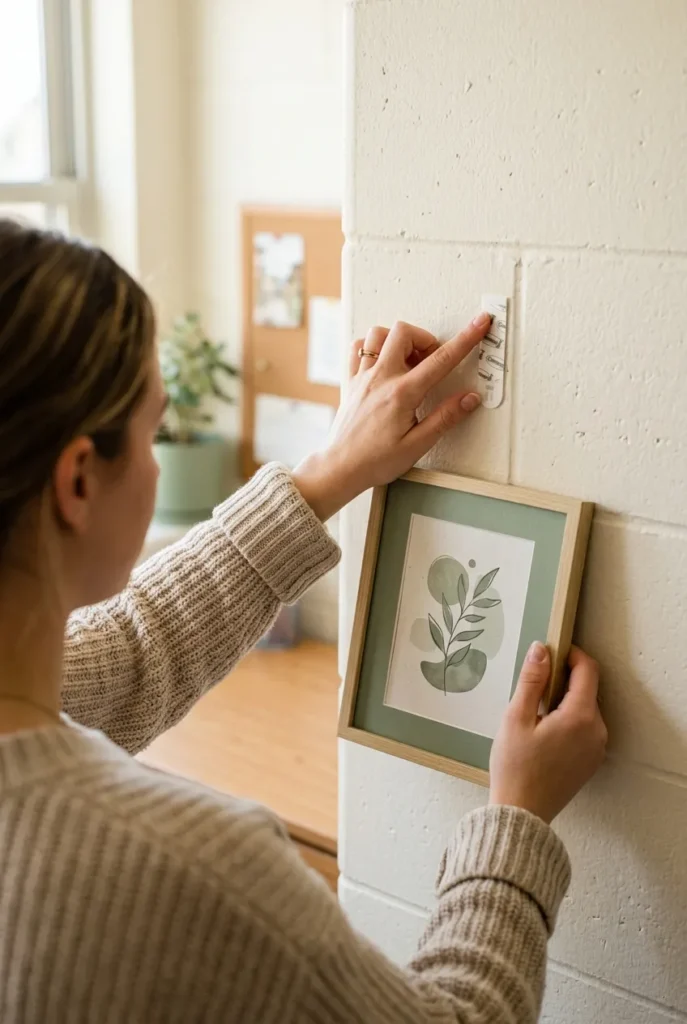
The fastest way to lose a housing deposit is hanging something heavy on adhesive strips rated for less. According to the official Command product weight guide, small picture hanging strips hold about 1 pound per set, and their larger picture strips top out around a 20-pound frame at 18 by 24 inches. Match the strip to the object, press for the full 30 seconds the package asks for, and let it cure before you load it. 3M’s own strip documentation also notes the adhesive isn’t recommended for hanging tapestries or fabric, which is exactly the mistake that pulls paint off in a strip when your wall hanging sags.
A few damage-free anchors that actually hold in a dorm: tension rods (no hardware at all), over-the-door hooks, and freestanding shelves that lean instead of mount.
I hung a 14×18 print on medium strips freshman year, and it came off clean two semesters later with zero paint damage.
Failure mode: skip the cure time, hang it the same minute you stick it, and you’ll hear it hit the floor at 2 a.m.
Pick a Seat That Fits Under Three Feet
Your seat sets the whole footprint. In a dorm you want something soft, light enough to shove aside on cleaning day, and small enough to leave a walking path.
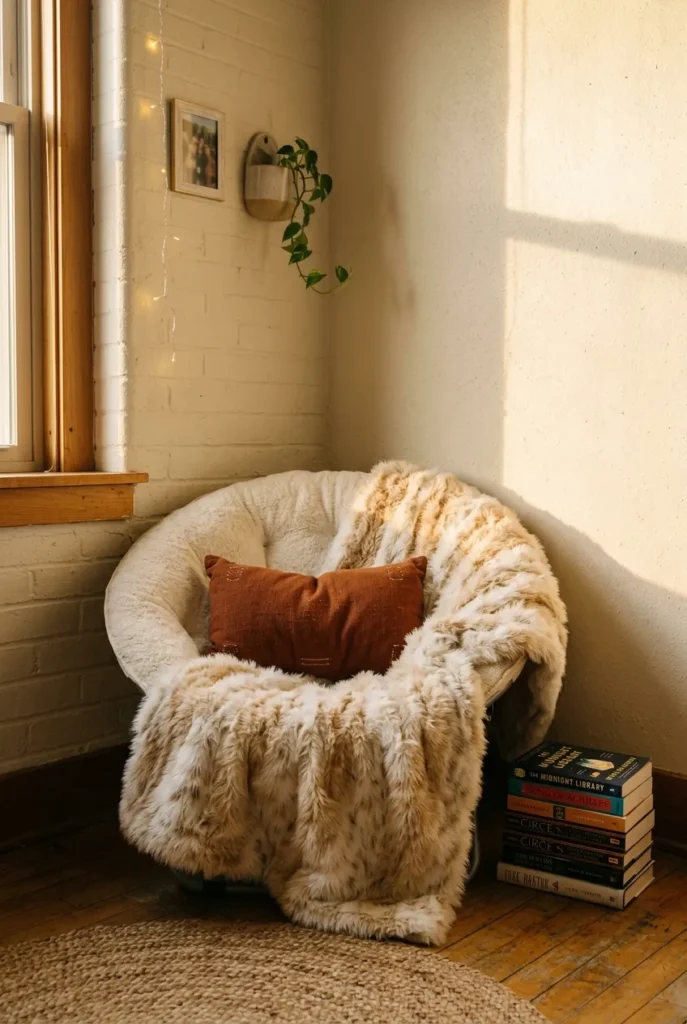
The winners for tight rooms: a floor cushion or large pouf, a papasan-style saucer chair (the Pinterest favorite for a reason), or a bean bag you can deflate and restuff. A saucer chair runs roughly 30 to 34 inches across, so measure your corner before you fall in love with one online.
Layer it the way the cozy pins do: a sheepskin or faux-fur throw, one lumbar pillow for your lower back, and a chunky knit blanket you actually want to touch. That last texture detail is the difference between a chair you photograph and a chair you sit in for three hours.
I set up my whole seat for about $45 using a Target saucer chair and two clearance pillows in fall 2025.
Failure mode: floor cushions photograph beautifully. After 40 minutes with no back support, you’ll be reading flat on the floor with a crick in your neck.
Fix the Lighting (Because Overhead Fluorescents Kill the Mood)
Dorm ceiling light is the enemy of a reading nook. It’s flat, blue-tinted, and unflattering. The fix is a warmer, lower light source you control.
The U.S. Department of Energy notes that warm light around 2,700 Kelvin complements the wood, furniture, and fabrics in a home, which is exactly the amber, sink-into-your-book glow you’re after. Look for a bulb labeled “soft white” or “warm white” in that 2700K range for a clip-on or plug-in lamp.
Skip anything with a flame. Most dorms ban candles and open flames outright, so get your candlelit feeling from LED fairy lights, a small dimmable clip lamp on a shelf, or a swing-arm lamp clamped to your bed frame. Fairy lights on a tension rod give you that starry Pinterest ceiling with zero hardware.
Non-visual sensory beat: warm light at reading level also cuts the faint hum-and-flicker of overhead tubes, so the corner just feels quieter.

Store Books Without a Bookshelf You Can’t Have
You don’t get to install a bookcase, so go vertical and freestanding. This is where a small dorm nook earns its “library corner” feeling.
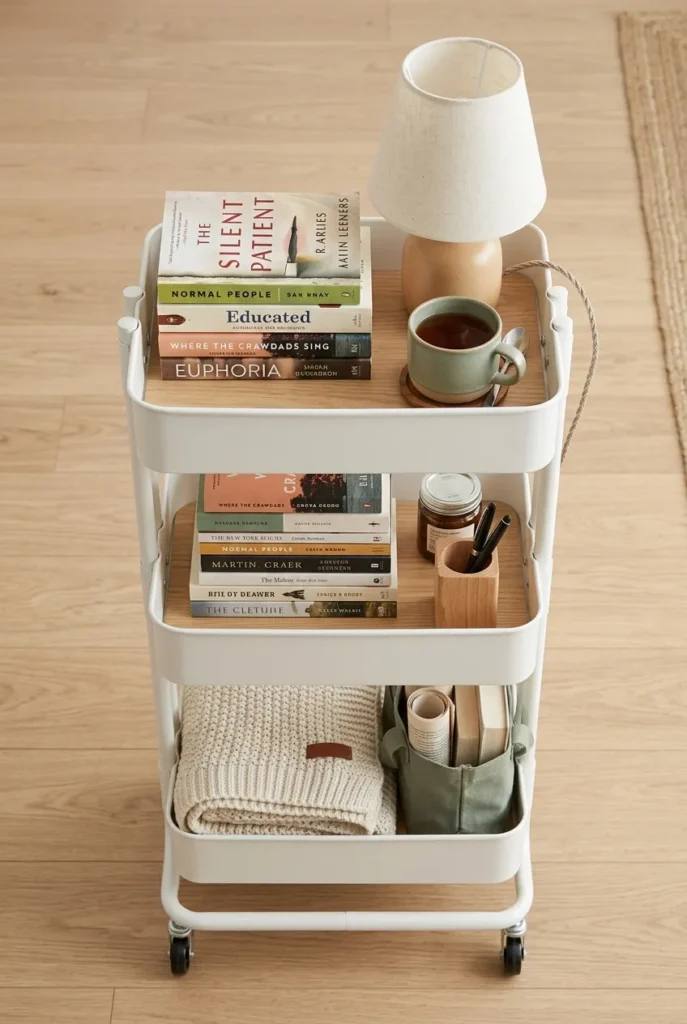
Best no-mount options: a slim leaning ladder shelf, a rolling cart parked beside the chair, stacked wooden crates, or an over-the-door organizer repurposed for paperbacks and your TBR pile. A rolling cart is the MVP here because it holds books, a mug, and your reading light, then rolls away when you need the floor.
Keep the reach honest. Anything you grab often should sit within about an 18-inch arm’s reach of the seat, so you’re not standing up mid-chapter. Call it the 18-inch reach rule, and it’s the quiet trick that makes a nook feel designed instead of thrown together.
For more small-footprint storage that disappears into the setup, the renter-friendly reading nook setups guide breaks down no-drill options that peel off clean.
Tuck the Nook Under a Lofted Bed (The Move Design Blogs Miss)
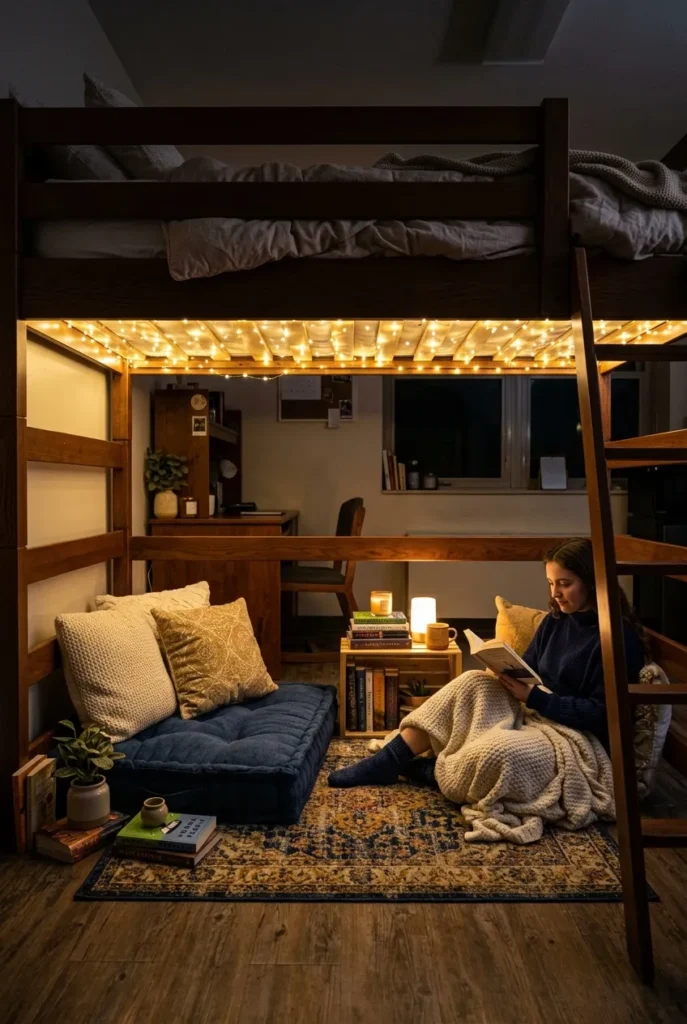
Here’s the angle the big decor sites skip entirely: the space under a lofted or raised dorm bed is the single best reading-nook footprint you already own. It’s enclosed on three sides, which is basically a built-in cocoon.
Loft your bed to the tallest setting your housing allows, then slide your seat underneath. You get instant walls and a low ceiling that makes the space feel intentional, like a cupboard hideaway. Add a clip lamp to the bed frame above, a small rug to define the floor, and one string of fairy lights along the underside of the mattress support.
The under-bed nook also solves the “my room is too small” problem, because it uses the cubic feet you’re wasting anyway. If your dorm bed doesn’t loft, a similar tucked-away feeling works in any tight corner, and this tiny reading nook under one square meter walkthrough shows renter-safe builds that fit almost nowhere.
I had about 40 inches of headroom sitting up, enough for a floor cushion but not a tall chair.
Failure mode: loft the bed without checking your housing’s minimum-height rule and you may get told to lower it, taking your nook with it.
Add Softness and Texture (The Cozy Layer)
A nook reads cozy because of what your hands and feet touch, not because of what it costs. This is the layer that makes people stop scrolling.
Build it up: a small washable rug to warm the cold dorm tile or thin carpet, two or three pillows in mixed textures (a smooth cotton, a nubby boucle, a soft sherpa), and one throw folded over the arm of the seat. Mixing textures is what keeps the corner from looking flat in photos and, more importantly, in real life.
A jute or washable rug also does quiet double duty: it muffles footsteps and softens the echo of a hard-floored dorm, so the corner sounds calmer the second you step onto it.

Solve the Roommate Problem With Privacy and Quiet
Shared rooms are the real dorm reality, and none of the top decor guides address it. Your nook needs a little visual and light separation so you can read while your roommate’s desk lamp is blazing at midnight.
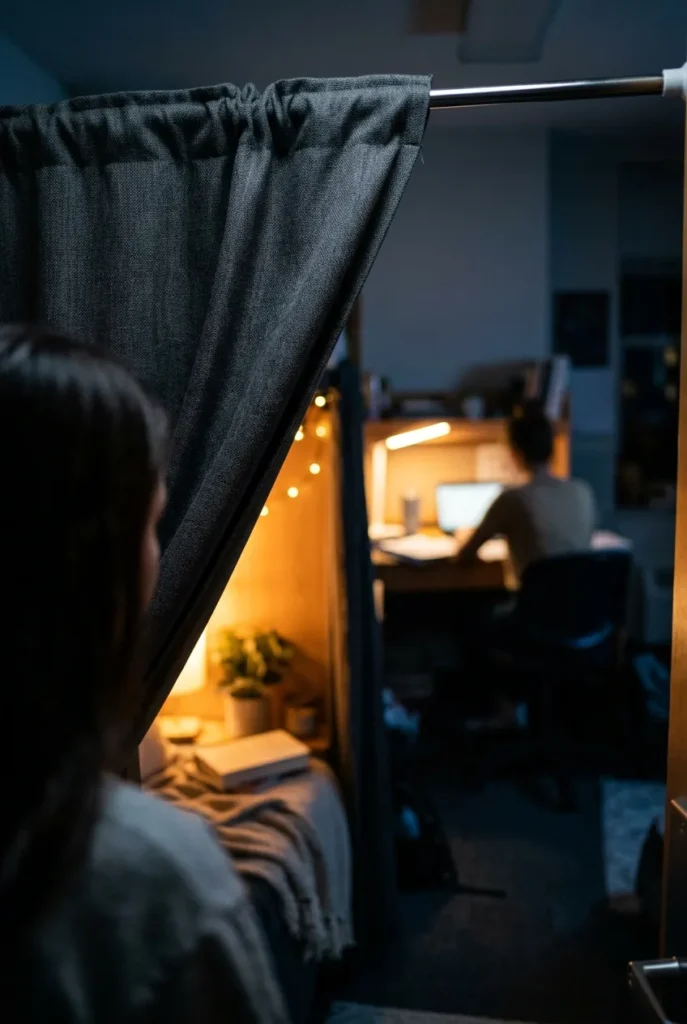
The no-drill privacy kit: a tension rod across a corner or bed opening with a curtain (blackout if you read at night), a folding screen you can fold flat and store, or a sheer panel that softens the space without fully closing it off. Tension rods carry the whole thing with zero holes in the wall.
For the light itself, a blackout curtain around a lofted-bed nook blocks a roommate’s lamp far better than an eye mask, and it doubles as a sound buffer. If your corner has no window to work with at all, the windowless nook fixes that still look designed walk through cozy setups for exactly that situation.
Non-visual sensory beat: pulling a curtain closed around your nook drops the room noise a notch and signals your brain it’s reading time, not scrolling time.
Style It So It Looks Like You, Not a Catalog
The finishing touches turn a functional corner into your corner. This is the cottagecore-versus-dark-academia decision, and dorms let you commit hard because it all comes down clean.
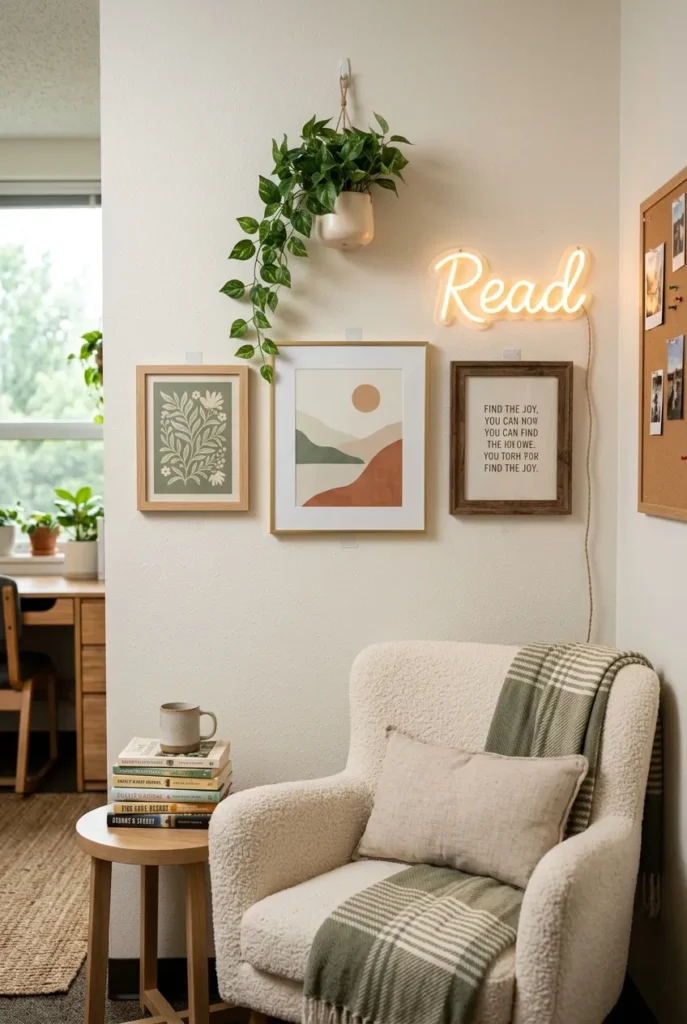
Pick one aesthetic and repeat it three times so it reads on purpose: a small gallery wall of prints on damage-free strips, a trailing faux plant that needs no light or water, and one personal object (a framed photo, a ceramic mug, your library card in a little frame). A “just one more chapter” neon-style LED sign is the Pinterest signature move if that’s your vibe.
Keep it edited. Three intentional objects beat ten random ones in a space this small, and an over-stuffed corner photographs cluttered instead of cozy.
Keep It Move-Out Ready All Year
The last mindset shift: build the nook assuming you’ll take it apart in nine months. That’s what protects your deposit and your sanity in May.
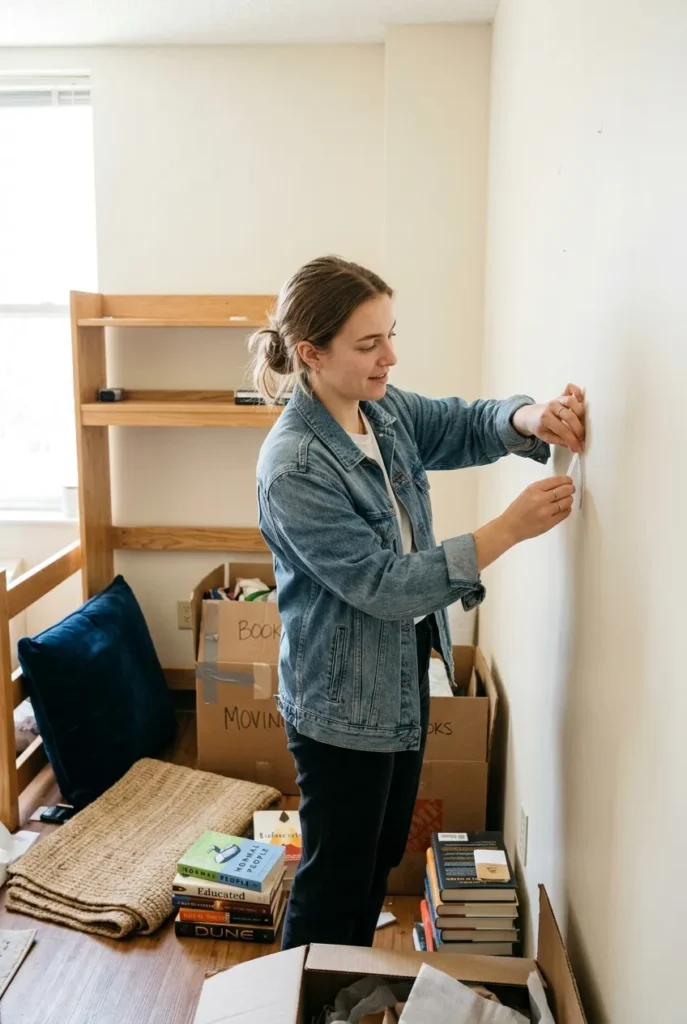
Favor freestanding and adhesive over anything permanent, keep the strip packaging so you know what came off which wall, and remove adhesive slowly by pulling the tab straight down, not yanking. A nook built this way disassembles in about 20 minutes and leaves the room exactly as you found it.
took me about 25 minutes to pack the whole nook, walls came back spotless, full deposit returned.
Your Weekend Build Order
Put it together in one afternoon: seat first, then light, then storage, then the soft layer, then privacy and styling last. Doing it in that order means you’re never moving a finished piece to fit a bigger one.
Frequently Asked Questions
What is a reading nook called?
A reading nook goes by a few names: a book nook, a reading corner, or a cozy hideaway. In a dorm, people often call it a study corner or a book corner. It just means a small, dedicated spot set up for comfortable reading.
What do you need in a dorm reading nook?
Three things do the heavy lifting: a comfortable seat (floor cushion, saucer chair, or bean bag), a warm light source you control, and some book storage. Add a rug and a couple of soft pillows and you’ve covered comfort, function, and coziness.
How do you make a reading nook without drilling?
Use damage-free adhesive strips within their rated weight, tension rods for curtains and fairy lights, over-the-door hooks, and freestanding or leaning furniture. Nothing needs a screw, and everything peels or lifts off clean at move-out.
Can you put a reading nook under a lofted dorm bed?
Yes, and it’s one of the best dorm setups because the raised bed gives you instant walls on three sides. Loft the bed to the height your housing allows, slide a cushion or small chair underneath, clip a lamp to the frame, and add a small rug to define the floor.
What lighting is allowed in dorms?
Most dorms ban candles and open flames, so stick with LED options: fairy lights, a clip-on or plug-in lamp, and a warm “soft white” bulb around 2700K. Always check your specific housing rules, since some limit halogen lamps or high-wattage fixtures too.
Wrap-Up
A dorm reading nook comes down to one claimed corner, a soft seat, a warm light, and mounting that never touches a screw. Build it move-out-minded from day one and it costs you nothing but an afternoon.
If your corner is truly tiny or oddly shaped, start with the renter-friendly no-drill setups next, then pull your favorite pieces into your own space this weekend.
This guide covers general dorm and rental setups. Always check your specific housing contract and RA guidelines before mounting anything or lofting a bed, since rules on adhesives, lighting, and furniture vary by school.
Keep reading
More cozy nook ideas
 Nook Ideas
Read →
Nook Ideas
Read →
10 Dog Nook Ideas You’ll Want to Curl Up In
Warm light from one floor lamp, a chair turned away from the TV, and your dog asleep on a bolster bed beside…
 Nook Ideas
Read →
Nook Ideas
Read →
21 Window Sill Reading Nook Ideas for Adults
Most apartment window sills are deep enough for a candle and not much else. By October the glass breathes cold on your…
 Home Library & Bookshelves
Read →
Home Library & Bookshelves
Read →
12 Ideas for Built-In Bookshelves Around the Fireplace for Book Lovers
Thirty-two inches between uprights. Six inches of bare masonry around the firebox. Twelve inches of shelf depth. Get those three numbers right…