
15 Cottagecore Bathroom Ideas That Work in a Rental You Can’t Renovate

No clawfoot tub, no reno budget, no friendly landlord required. A cottagecore bathroom comes down to three surfaces and one bulb, and you can change all of them with a screwdriver and a Saturday. What follows is the build order, the dimensions that actually matter, and the two materials that fail fastest in a room full of steam.
Most of the ideas below cost under $40 each. All fifteen come out without a patch kit.
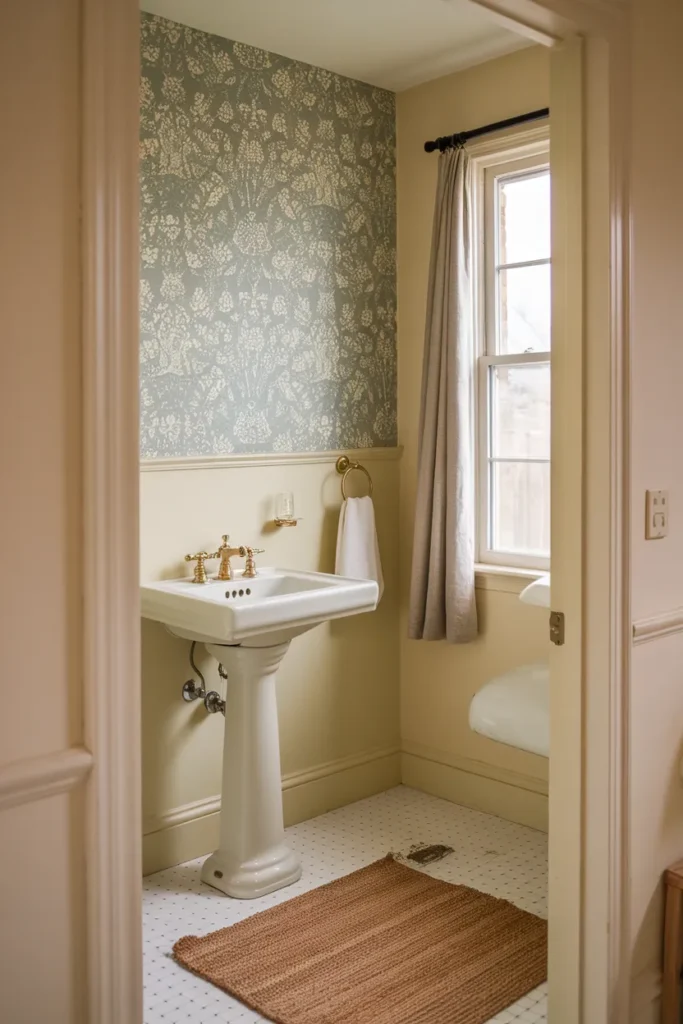
Start Here: The Three Surface Rule
Cottagecore reads on three surfaces and nowhere else. Walls, textiles, and light. Change all three or the room reads as a normal bathroom with a plant in it.
That is the whole system, and it is why so many bathroom makeovers stall. People swap the shower curtain, stop, and wonder why nothing shifted. One surface out of three is a 33 percent change, which the eye does not register as a style.
Here is the no-drill version of each:
- Walls. Peel-and-stick wallpaper on one wall, or a $12 quart of sample paint on the wall behind the toilet. Both come off or paint over.
- Textiles. Shower curtain, one runner, two towels. All swap in ten minutes with zero hardware.
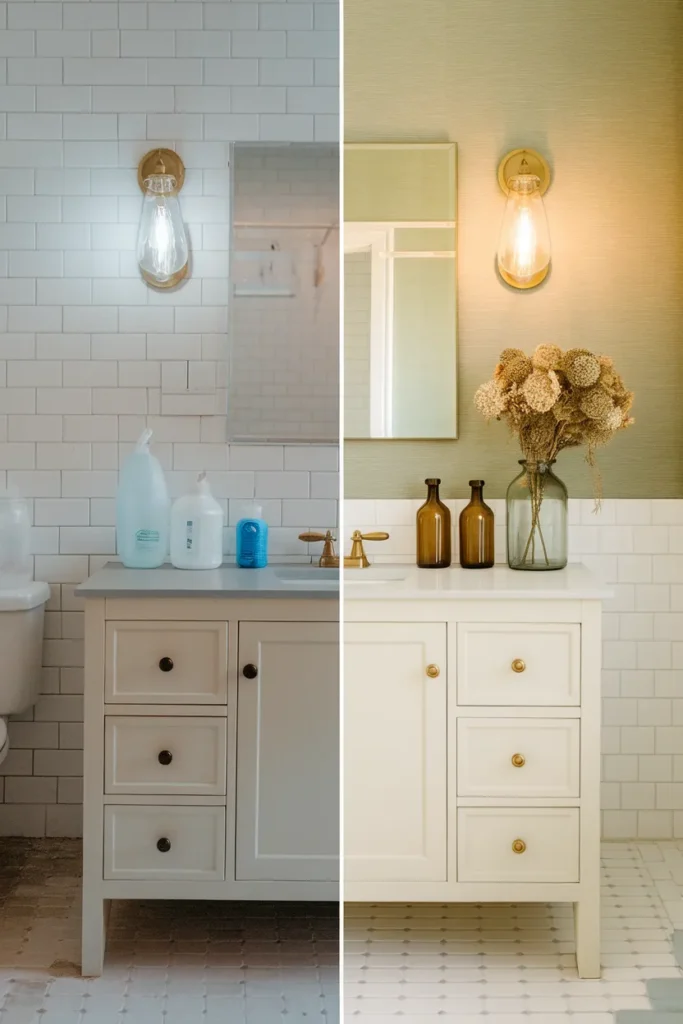
- Light. Swap the vanity bulbs to 2700K. That is a $10 change that does more than the other two combined.
Do them in that order. Light last feels backward until you try it in the other order and find yourself matching fabric to a bulb you are about to replace.
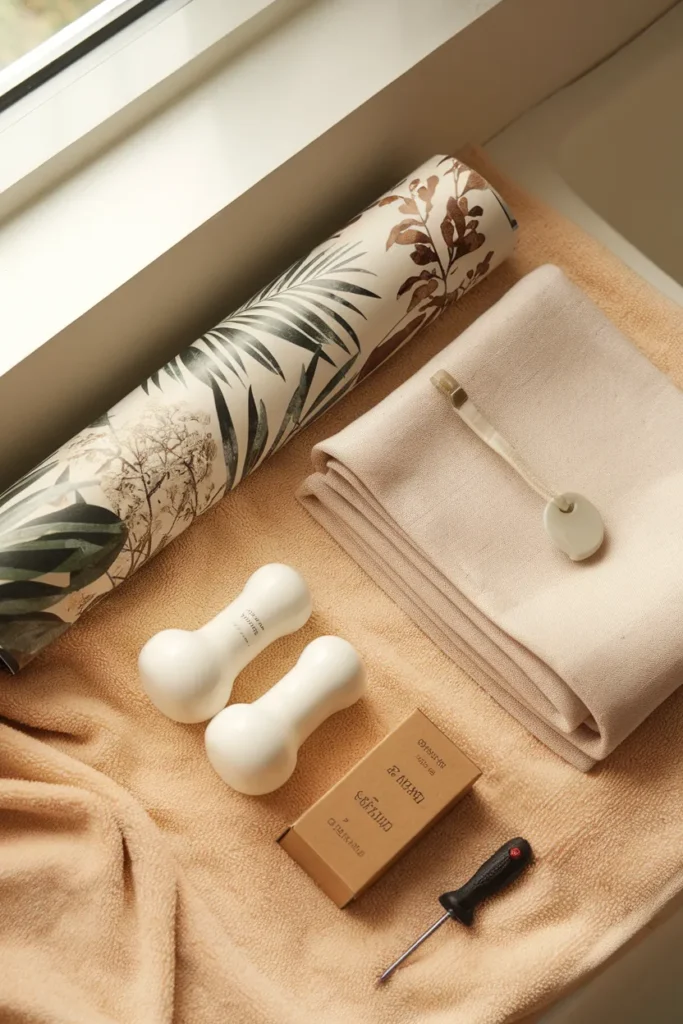
1. Swap the Bulb Before You Buy Anything
Builder-grade vanity bulbs usually run cool and bright, which is why your bathroom photographs beige and feels clinical. Warm white sits around 2700K, and the Department of Energy explainer on LED color temperature uses that figure as the warm reference point against the 5000K to 6500K cool end.
Buy a two-pack of 2700K bulbs, ideally with a CRI of 90 or higher so the sage greens and warm woods do not go muddy. Total spend is usually under $15.
Failure mode if you skip it: you buy a $30 botanical shower curtain, hang it under a 5000K bulb, and the print goes gray and flat. Then you blame the curtain.
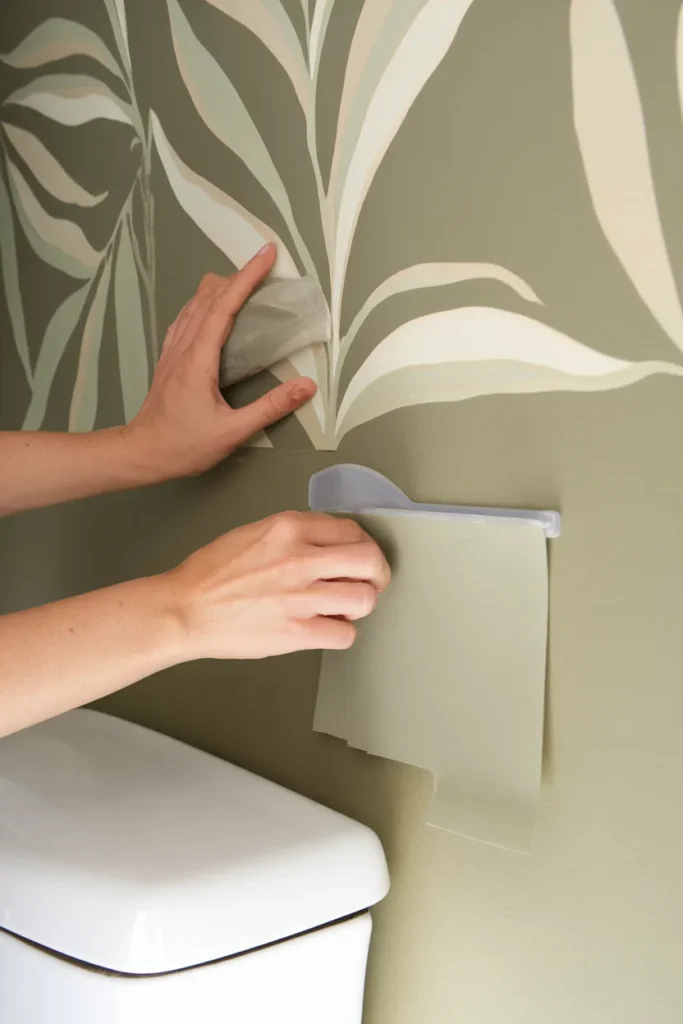
2. One Wall of Botanical Peel-and-Stick
Pick the wall farthest from the shower spray. Behind the toilet is almost always the right answer, because it is a small rectangle, it has the least splash exposure, and it is the wall people face.
Budget-friendly peel-and-stick runs roughly $20 to $50 per roll at chains like Home Depot and Target, and a single roll typically covers 28 to 30 square feet. A standard over-toilet wall is well under that, so one roll usually does it.
Small delicate repeats beat large murals in a small room. A big scenic print in a 40 square foot bathroom gets cut into fragments by the mirror, the toilet, and the towel bar, and you lose the pattern entirely. If you want the moody version of this instead of the pale one, the same logic drives our moody dark cottagecore color rules, just with a deep green ground instead of cream.
3. The Splash Line Rule
This is our own working guideline, not a building code: nothing porous within arm’s reach of the shower head. Untreated wood, paper-backed wallpaper, unsealed woven baskets, and cotton wall hangings all live outside that zone or they do not live long.
The reason is measurable. The EPA guidance on household humidity levels recommends keeping indoor relative humidity below 60 percent and ideally between 30 and 50 percent, and points out that visible condensation on walls or pipes is the signal that you are over. A bathroom after a hot shower blows past that number until the fan clears it.
Run the exhaust fan during the shower and for a stretch after. That single habit protects every soft material on this list.
4. A Linen or Cotton Shower Curtain Over the Liner
The vinyl liner does the waterproofing. The outer curtain does the styling, so it can be a fabric that would rot if you asked it to face the spray directly.
Look for oatmeal, unbleached cream, faded sage, or a small ditsy floral. Skip anything with a high-sheen finish, which reads polyester from across the room.
Wash the outer curtain on cold every couple of months. Linen softens as it goes, which is the entire point.
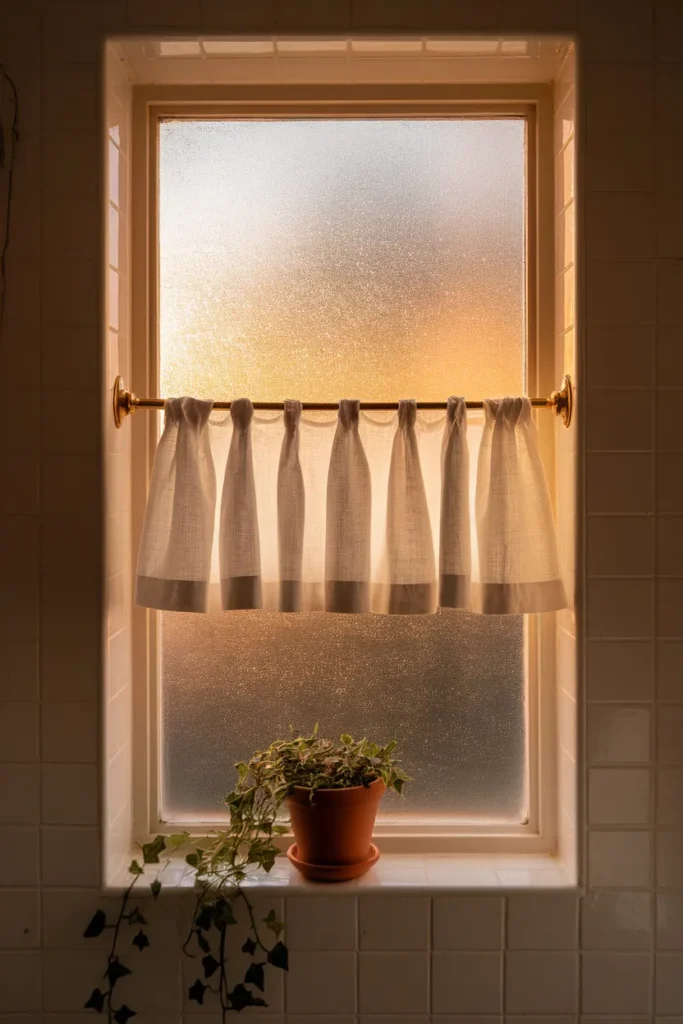
5. Cafe Curtains Instead of Blinds
If your bathroom has a window, the plastic blind is doing more damage to the aesthetic than anything else in the room. A cafe curtain covers the bottom half for privacy and lets light through the top.
Tension rods mean no drilling. A standard tension rod holds fine across a typical bathroom window and comes out clean when you move.
6. Over-the-Toilet Storage That Isn’t a Wire Rack
An over-toilet shelf unit is the single biggest storage win in a small bathroom, and the freestanding versions need no wall anchors at all.
Here are the standard US dimensions worth knowing before you order anything:
| What | Standard US dimension |
|---|---|
| Bathroom vanity height | 32 to 36 inches |
| Towel bar mounting height | About 48 inches from floor |
| Standard bath towel | 27 x 52 inches |
| Standard alcove tub length | 60 inches |
| Clearance to leave above a toilet tank | At least 24 inches |
| Peel-and-stick coverage per roll | 28 to 30 square feet |
That 24 inch clearance is the one people get wrong. Mount lower and everyone hits their head reaching for the tank lid.
7. Woven Baskets, Sealed and Placed Right
Baskets are the cottagecore storage archetype for a reason: they hide the plastic bottles that break the spell. Seagrass, water hyacinth, and rattan all work.
Keep them off the floor near the tub and out of the splash line. A basket that wicks up standing water goes musty from the inside, and you will smell it before you see it.
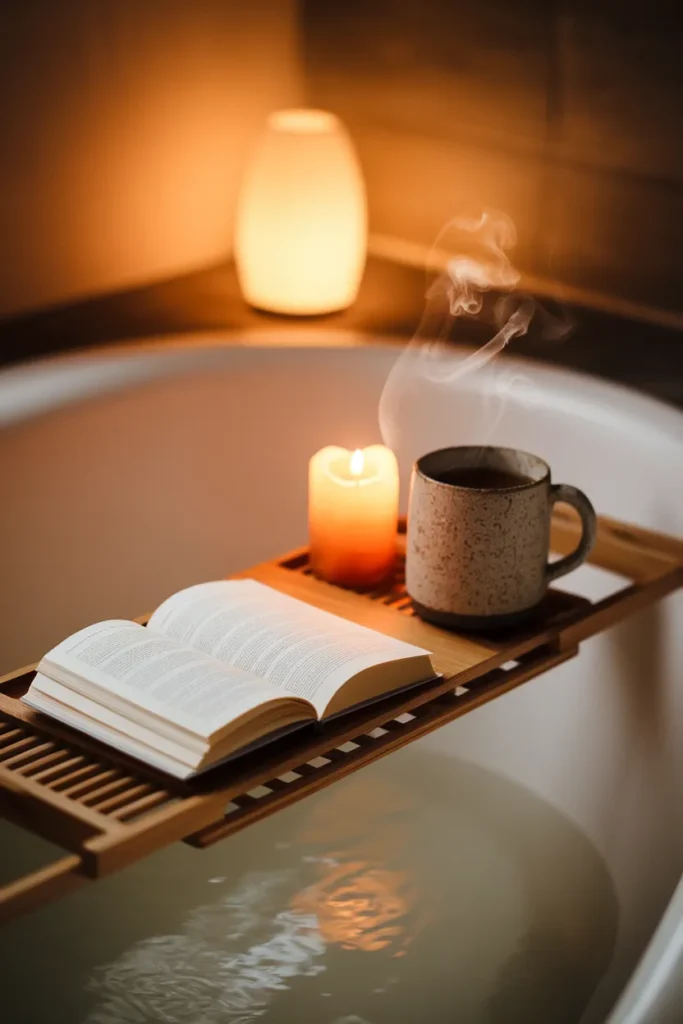
8. A Wooden Bath Tray
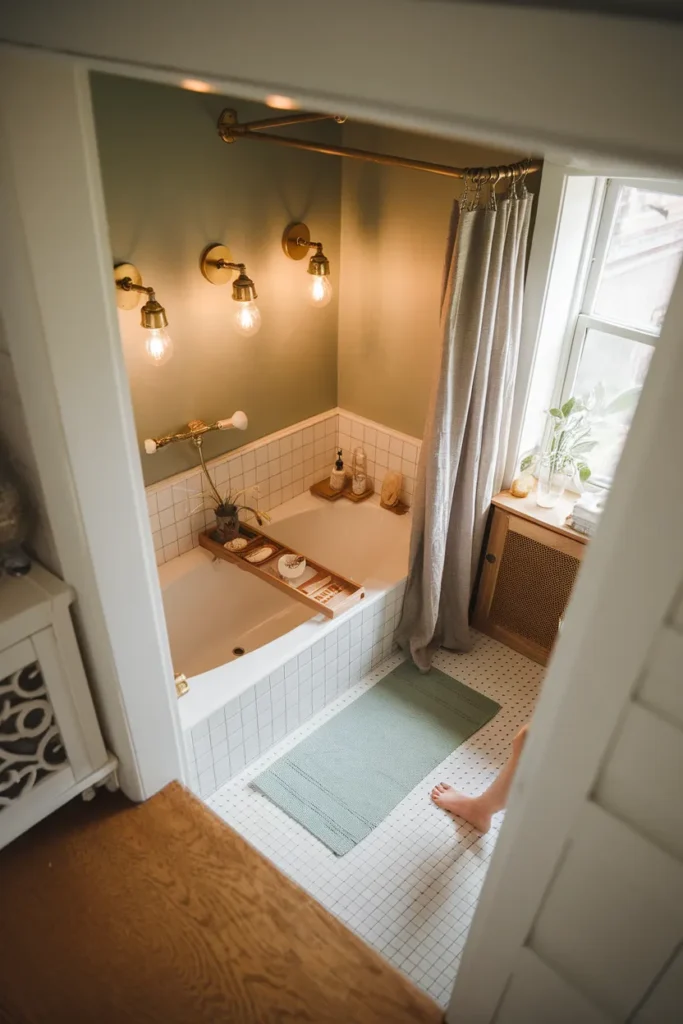
The bath tray is the object that turns a bathroom into a room you linger in. It holds a book, a mug, and a candle across the tub.
Buy sealed, or seal it yourself with a water-resistant finish. Raw wood in a bathroom cups and stains, and a tray sits in the wettest spot in the house.
9. Swap the Mirror, Not the Vanity
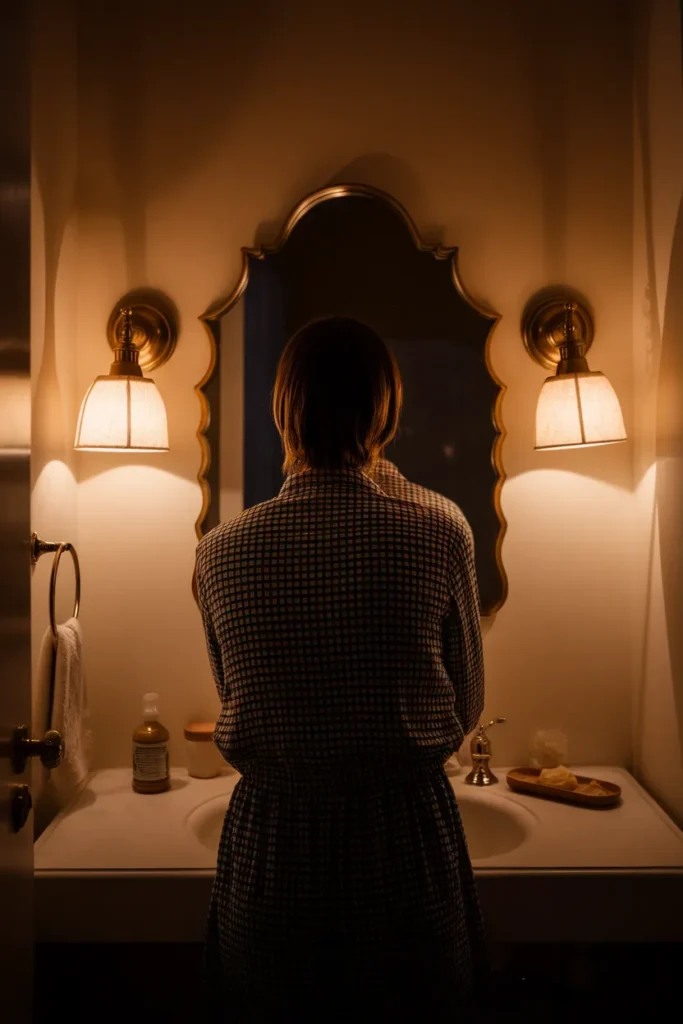
You cannot replace a rental vanity. You can lean or hang a different mirror over the flat builder-grade one, or frame the existing mirror with a stick-on frame kit.
An arched or scalloped shape does more work here than any finish. Rectangles read modern almost regardless of the frame color.
10. Plug-In Sconces on Either Side of the Mirror
Overhead-only lighting is what makes a small bathroom feel like a hallway. Plug-in sconces with cord covers give you the flanking glow without an electrician or a single hole in the drywall, assuming you have an outlet in reach.
Set them at roughly eye level, which lands near 60 to 66 inches for most people. Light from the sides is also just better light for a face than light from above. If you want to go deeper on warm layering, our reading nook lighting guides cover the same 2700K logic applied to corners and alcoves.
11. A Washable Runner Instead of a Bath Mat
The standard rectangular bath mat is the most generic object in the room. A washable cotton runner in a small check, a faded floral, or a plain oatmeal reads instantly older and softer.
Jute looks the part but holds water badly in a bathroom, so save it for a half bath with no tub. Washable cotton or a low-pile washable rug survives the actual conditions.
12. Plants That Survive a Bathroom
Most of the plants in cottagecore bathroom photos are dead within a month, because they were staged and removed.
The ones that genuinely handle low light and high humidity are pothos, most ferns, and philodendron. If your bathroom has no window, a small trailing pothos on the tank or a shelf is the safest choice on the list.
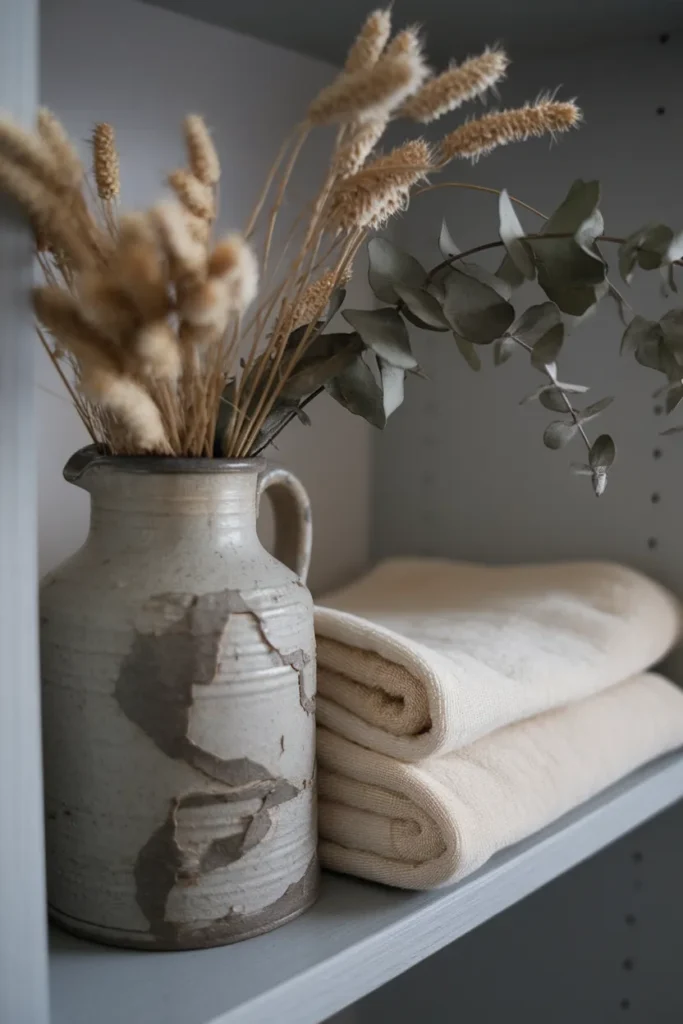
Dried florals are the honest alternative. Bunny tails, dried yarrow, and eucalyptus in a stoneware jug last for years and ask nothing.
13. Decant the Plastic
Nothing breaks the aesthetic faster than a shampoo bottle with a neon label. Amber or clear glass pump bottles for hand soap and lotion cost a few dollars each and fix the vanity in one move.
Leave the shower bottles alone unless you actually enjoy refilling. Glass in a wet shower is a genuine hazard, and a decanting habit you abandon in three weeks looks worse than the original bottles.
14. One Real Textural Detail
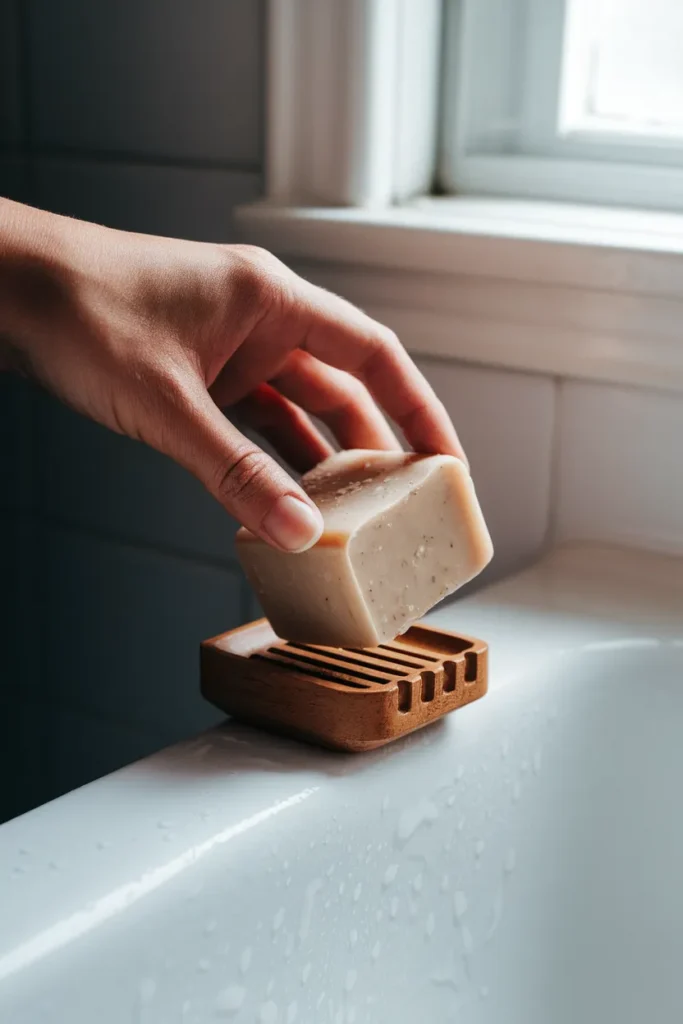
Every room on this list needs one thing that is not visual. A beeswax candle that actually smells faintly of honey when it burns. A bar of soap on a wooden dish that you can smell from the doorway. The specific squeak of a linen towel that has been washed forty times.
Cottagecore is a sensory style pretending to be a visual one. The Pinterest photo cannot carry that part, which is exactly why the room feels flat when you copy the photo exactly.
15. Stop Before You Fill Every Surface
The most common mistake in this style is treating it as maximalism. Cottagecore rooms in old houses look full because things accumulated over decades, not because someone bought fourteen objects in one weekend.
Three objects on the vanity. Two on the shelf. That is usually the ceiling for a small bathroom, and going past it turns a styled room into a cluttered one.
If you want to see the same restraint applied to a bigger room, the approach in our small cottagecore living room ideas is identical: fewer objects, better light, older materials.
The Order to Actually Do This In
If you have one afternoon and about $150, this is the sequence that gets you the most visible change per dollar:
- Bulbs to 2700K (about $15)
- Outer shower curtain in linen or cotton (about $30)
- Peel-and-stick on the wall behind the toilet (about $30)
- Washable runner (about $25)
- Two glass pump bottles and a soap dish (about $20)
- Dried florals in a jug you already own (about $15)
Prices above are typical current retail ranges, not quotes. The wallpaper figure tracks the $20 to $50 per roll band that budget lines run at major chains.
Frequently Asked Questions
Can I do a cottagecore bathroom in a small space? Yes, and small actually helps. The style depends on enclosure and warm light, both of which a small room gives you for free. Keep the pattern small in scale, limit yourself to one papered wall, and cap the surface objects at three per surface.
What colors work best in a cottagecore bathroom? Two palettes are running right now. The pale lane uses warm cream, sage green, dusty pink, and pale blue. The moody lane uses deep forest green or clay with brass and dark wood. Pick one and commit, because mixing them reads as indecision rather than layering.
How do I make a bathroom cottagecore on a budget? Change the bulb, the shower curtain, and one wall. Those three moves land under $80 at typical retail prices and account for most of the visual shift. Everything else on this list is refinement.
Will wallpaper and wood survive a bathroom? They survive placement, not luck. Keep porous materials away from direct shower spray, seal any wood you buy raw, and run the exhaust fan during and after showers. EPA guidance targets indoor relative humidity between 30 and 50 percent, and condensation on your walls or mirror means you are running above that.
What is the difference between cottagecore and farmhouse style? Farmhouse leans crisp, high contrast, and recently built: shiplap, black hardware, bright white. Cottagecore leans faded, soft edged, and collected: worn brass, small florals, muted color, visible age. Farmhouse looks new pretending to be old. Cottagecore looks old and does not apologize.
Can I do this if my bathroom has no window? That is the case this whole approach was built for. Warm bulbs at 2700K, two side light sources instead of one overhead, a light wall color, and pothos or dried florals instead of anything that needs sun.
Will any of this cost me my security deposit? Not if you stick to tension rods, plug-in sconces, freestanding shelving, and peel-and-stick removed slowly with a hairdryer on low. Test peel-and-stick on a small hidden patch first, because adhesion varies with wall texture and paint age.
Where to Take This Next
You now have the three surfaces, the order to change them in, and the two rules that keep the materials alive: keep porous things outside the splash line, and keep the humidity down with the fan you already own.
Start with the bulb. It is the cheapest change on the list and the only one that makes everything you buy afterward look better. Then pick your lane, pale or moody, and let the next purchase follow it.
If you want the same treatment for the room where you actually read, our cottagecore bedroom and living room guides run on the same three-surface logic.
Keep reading
More cozy nook ideas
 Living Room
Read →
Living Room
Read →
Cabin Living Room Checklist: Everything to Decide Before You Start
No log walls, no stone hearth, no lake outside the window. You can still build a cabin living room in a regular…
 Bedroom
Read →
Bedroom
Read →
English Cottage Bedroom Checklist: Everything to Decide Before You Start
You saved forty pins of floral quilts and sloped ceilings, then looked up at your own bedroom: beige walls, one window, a…
 Nursery & Teen Rooms
Read →
Nursery & Teen Rooms
Read →
25 Teen Boy Bedroom Ideas That Feel Grown-Up, Not Childish
If his room still has the race car lamp and the glow-in-the-dark stars, and the door has started staying shut, he’s telling…