
Cottage Bathroom Plants That Live Through a Real Bathroom (Not a Photo Shoot)

If your bathroom plant situation is one sad pothos on the toilet tank and a fern that turned crispy in six weeks, you are not bad at plants. You picked plants for a room that does not exist.
Here is what actually happens in a small rental bathroom: a hot, wet twenty minutes, then eleven dry hours with the fan running and the door shut. No window, or one frosted pane the size of a cereal box. Cottage bathroom plants have to survive that, not a greenhouse.
So before the plant list, you get three checks that tell you in five seconds whether a plant will read cottage or read office lobby. Then five plants with real light specs, real mature sizes, and honest notes on which ones your cat should not chew.
No drilling required for any of it.
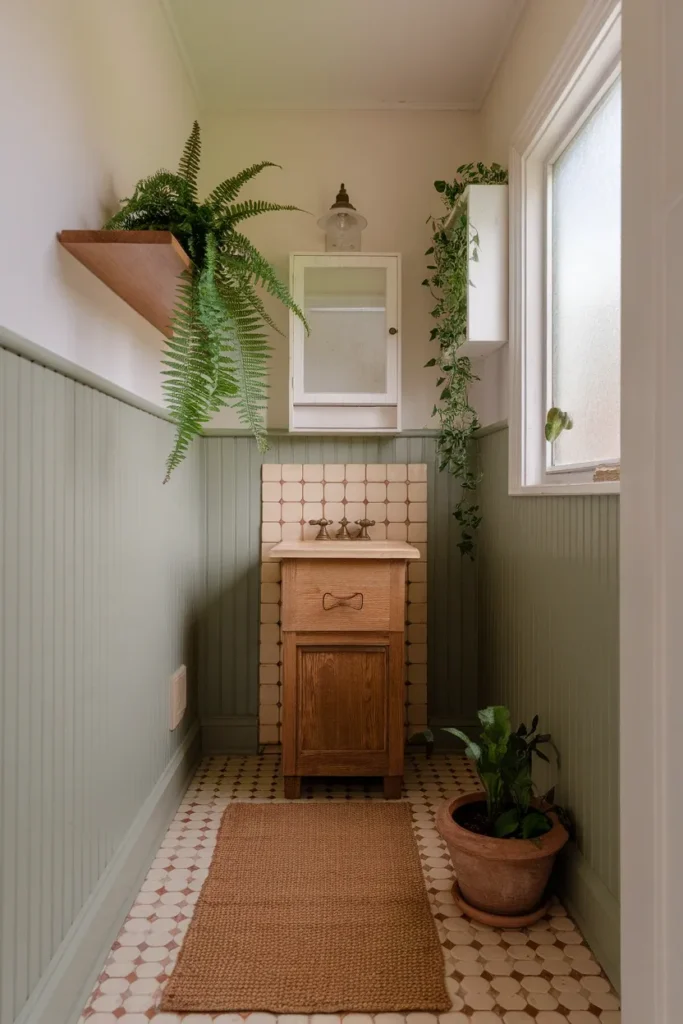
The Cottage Plant Test: Three Checks Before You Buy
Cottage style is not a plant list. It is a shape language. Walk into any garden center and you can sort the whole bench in about five seconds using three checks.
Check 1: Soft edge. Look at the outline of a single leaf. Ruffled, feathery, scalloped, or heart-shaped reads cottage. Sword-straight, spiky, or geometric reads modern. A Boston fern passes. A snake plant does not, no matter how many cottage roundups include it.
Check 2: Matte finish. Tilt the leaf toward the light. High-gloss, waxy shine reads tropical or contemporary. Soft, chalky, slightly dusty matte reads cottage. This single check is why a rubber plant never quite works next to beadboard and a spider plant always does.
Check 3: It spills. The plant should lean, arch, or trail over the pot rim rather than stand at attention. Cottage rooms look collected, a little overgrown, never staged.
Two out of three passes. That is the whole rule. Print it, screenshot it, take it to the store.
Most plants that fail all three still make a nice houseplant. They just make a nice houseplant in a different style of room.
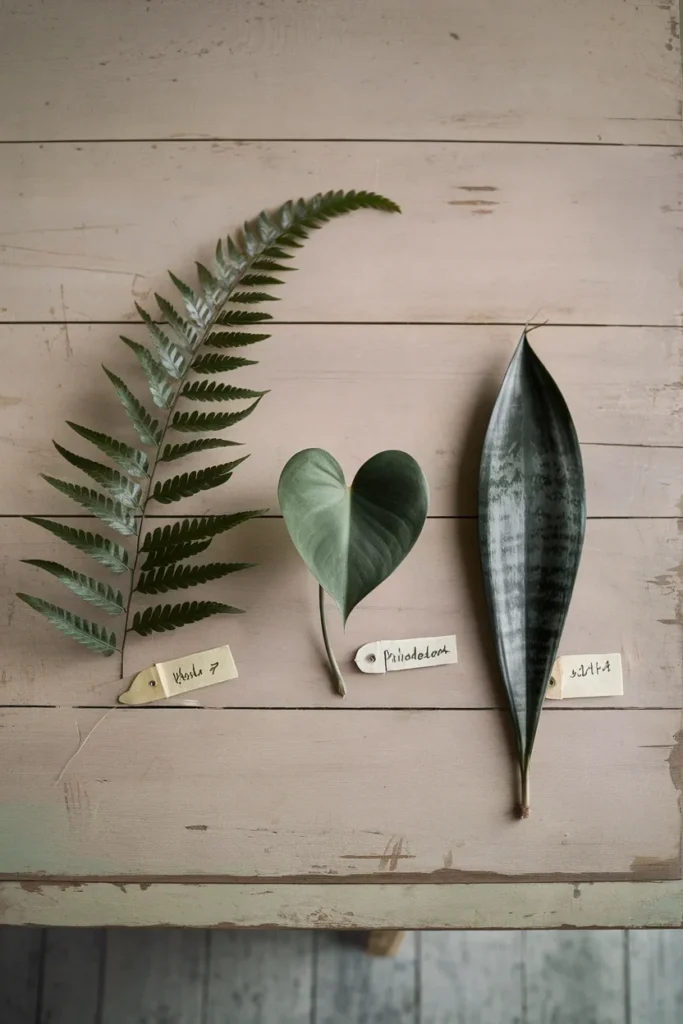
Five Cottage Bathroom Plants for Low Light and No Window
These are ranked by how much abuse they take, toughest first. Every light and size figure below comes from university extension horticulture data, not from a plant shop’s marketing copy.
1. Cast iron plant (Aspidistra elatior). The most forgiving plant on this list and the least talked about. It handles partial to full shade and is genuinely intolerant of direct sun, which makes a dim bathroom its natural habitat rather than a compromise. It grows 1 to 3 feet tall and wide, slowly, so it will not outgrow a corner in one season. Its old nickname is the barroom plant, earned by surviving Victorian pubs. The NC State Extension cast iron plant profile confirms it also tolerates dry, nutrient-poor soil, which is a polite way of saying it forgives you.
Buy it if: you have killed three plants and want to stop.
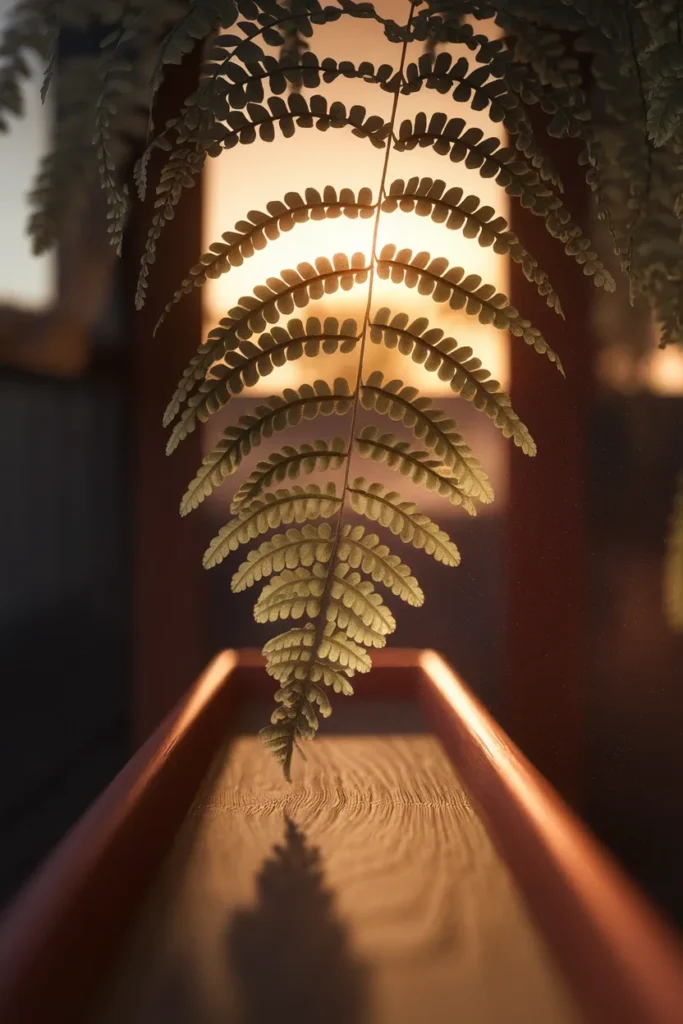
2. Boston fern (Nephrolepis exaltata). The most cottage-looking plant you can buy. Bright indirect light is ideal, but it tolerates deep shade, defined as under two hours of direct sun daily. Keep the room between 60 and 70°F. Mature size is 2 to 3 feet in height and width, so give it a shelf it can drape from, not a crowded windowsill.
Failure mode: let the soil dry out once and it drops fronds everywhere. Recoverable, though. Cut the fronds back to about 2 inches and it regrows.
3. Spider plant (Chlorophytum comosum). Arching, matte, and it throws off babies on long stems, which is peak cottage overgrowth. Passes all three checks.
4. Heartleaf philodendron. Soft heart-shaped leaves, trails hard, tolerates dim corners. Passes checks 1 and 3, borderline on gloss.
5. Pothos. The workhorse. Slightly glossier than ideal, but it trails so enthusiastically that it passes on shape alone. Read the pet section before you buy this one.
Real specs, side by side
| Plant | Light tolerance | Mature size | Pet safe? |
|---|---|---|---|
| Cast iron plant | Partial to full shade, no direct sun | 1 to 3 ft tall and wide | Yes (cats, dogs, horses) |
| Boston fern | Bright indirect; tolerates under 2 hrs direct | 2 to 3 ft tall and wide | Yes (cats, dogs, horses) |
| Spider plant | Bright indirect to moderate | 1 to 2 ft, trailing runners | Yes (cats and dogs) |
| Heartleaf philodendron | Low to moderate indirect | Trails 4 ft+ | No |
| Pothos | Low to moderate indirect | Trails 6 ft+ | No |
Light and size figures: NC State Extension Plant Toolbox and Missouri Botanical Garden Plant Finder. Pet safety: ASPCA.
If your bathroom has genuinely zero natural light, a plant alone will not fix the mood of the room. Warm bulbs do most of that work, and the same principles apply here as anywhere else in a small home, covered in these warm lighting ideas for small rooms.
Where to Actually Put Them (Shelf, Tank, Cabinet Top)
Small bathrooms have almost no floor. So go vertical and use the three surfaces nobody thinks about.
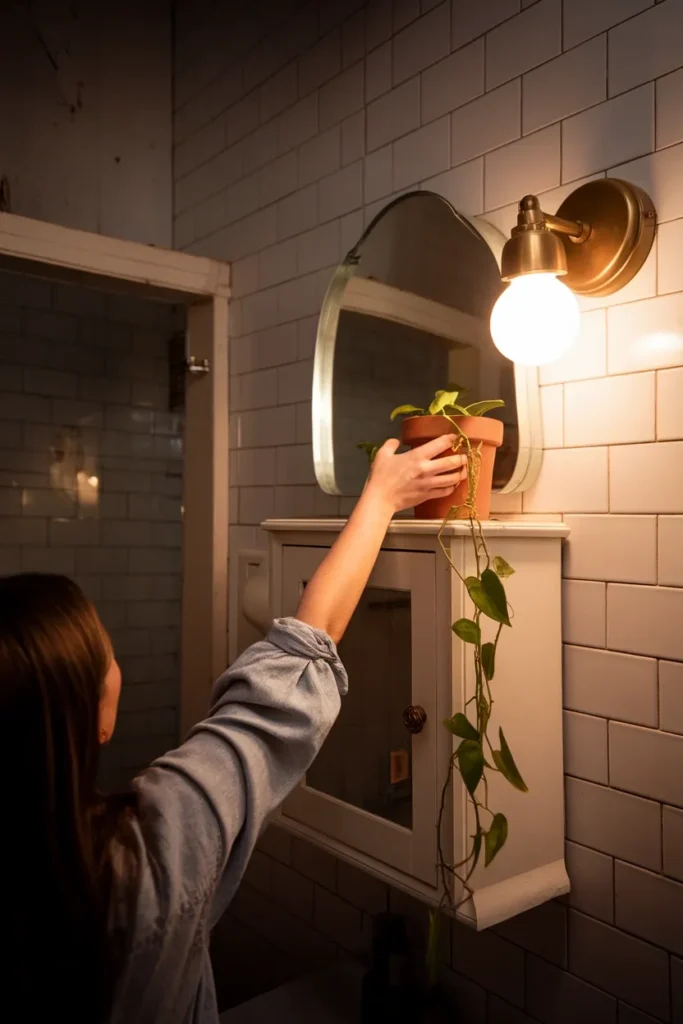
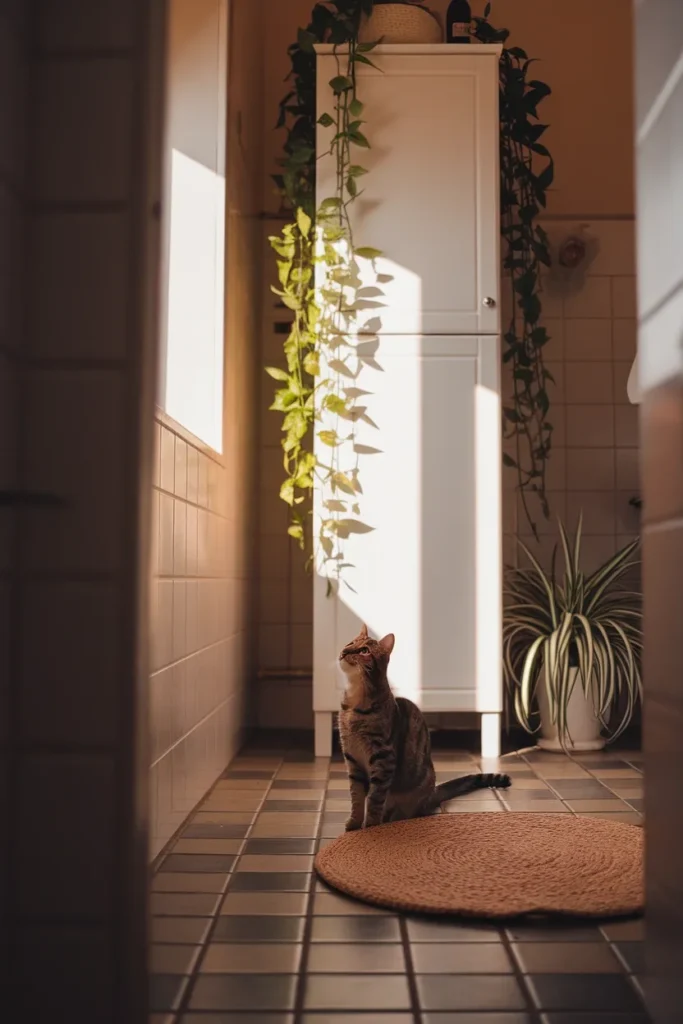
The top of the medicine cabinet. A trailing plant here reads instantly cottage because the greenery breaks the hard rectangle of the mirror. One pothos or philodendron is enough.
The tank lid. Only if your lid is flat and only with a plant under 8 inches, in a pot with a saucer. Anything taller gets knocked off.
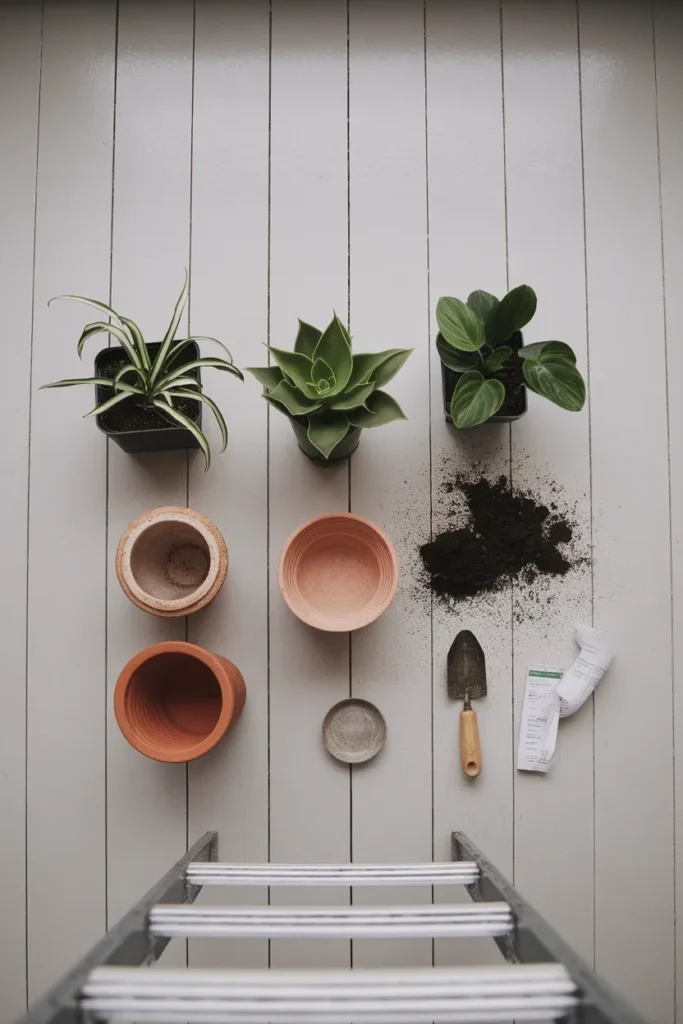
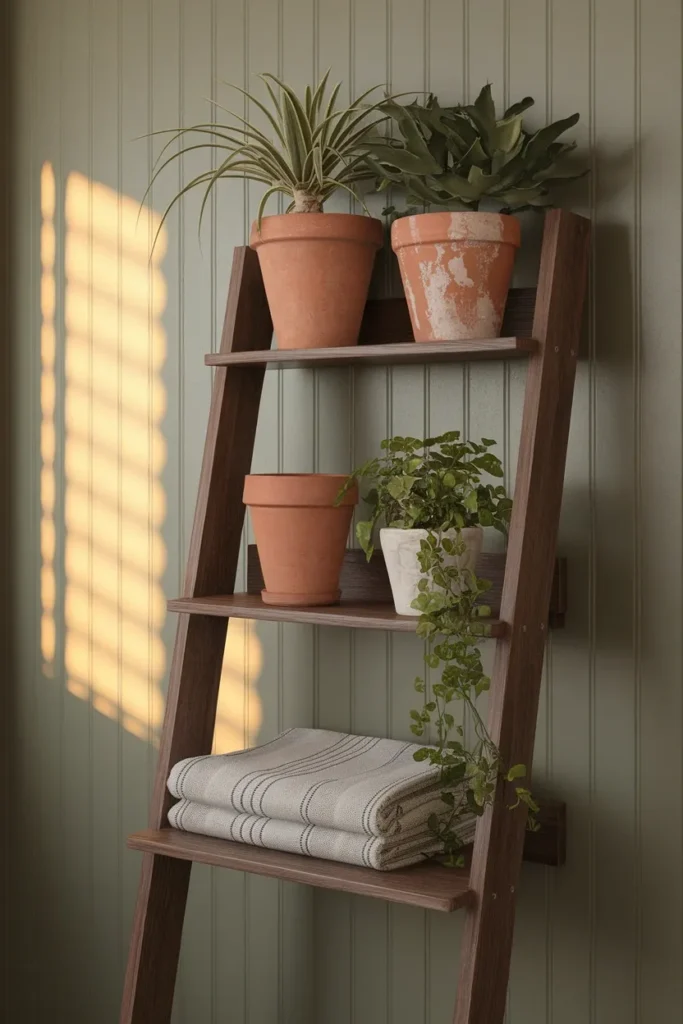
A leaning ladder shelf. No wall anchors, no landlord conversation. Two feet of wall, three tiers, three small terracotta pots.
Keep every plant at least 18 inches back from direct shower spray. Hot water hitting fronds daily causes leaf burn and constant soggy soil, which is the fastest route to root rot in a bathroom.
The layered-greenery, tucked-away feeling you are chasing here is the same thing that makes a good indoor green corner work anywhere in the house, and there is more on building that effect in these mossy forest nook styling ideas.
The Humidity Myth Nobody on Page One Will Tell You
Every bathroom plant article opens the same way: bathrooms are humid, so tropical plants love them. Half true, and the half that is wrong is the half that kills ferns.
Your bathroom is humid for roughly the length of one shower. Then the fan runs, the door opens, and the room equalizes with the rest of your house within an hour or two. That is not a rainforest. That is a normal room with a brief steam event.
It is also how it should be. EPA household moisture control guidance says to keep indoor relative humidity below 60%, ideally between 30 and 50%, and to run the bathroom fan or open a window while showering. A bathroom humid enough to keep a maidenhair fern happy around the clock is a bathroom growing mold behind the tile.
So stop relying on shower steam. Do this instead:
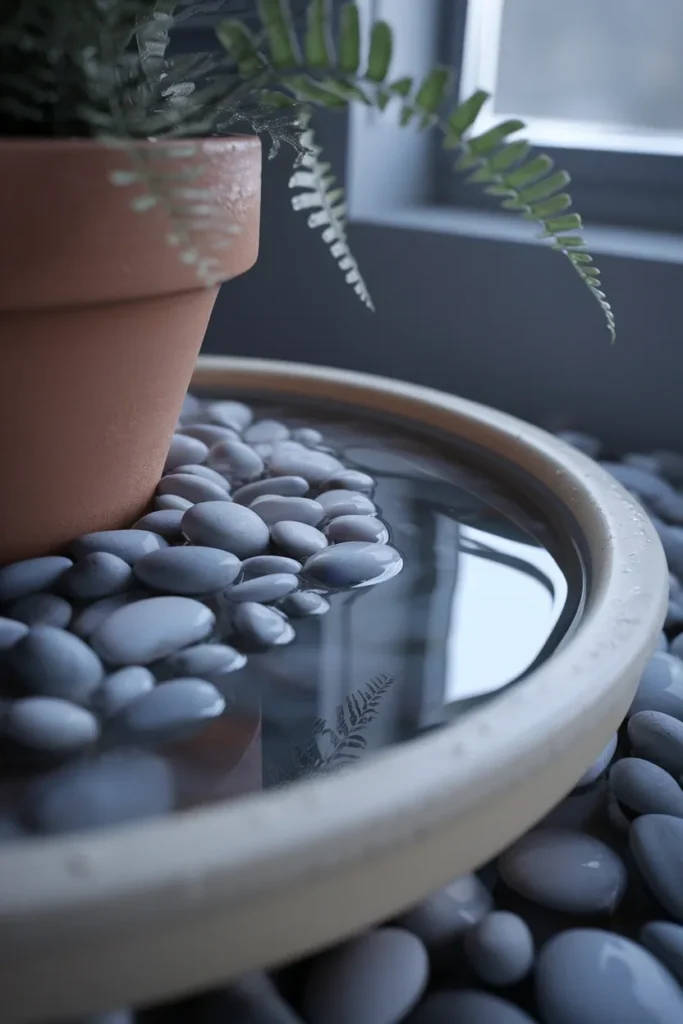
- Pebble tray. A shallow saucer, one layer of pebbles, water to just below the pebble tops. The pot sits on the pebbles, not in the water. Missouri Botanical Garden recommends exactly this for Boston ferns.
- Group plants together. Three pots within a foot of each other create a shared humid pocket through transpiration. Free, and it looks better than scattered singles.
- Pick plants that do not need it. Cast iron plant and spider plant are content at normal household humidity. That is the actual solution for most bathrooms.
One honest trade-off: maidenhair ferns and calatheas photograph gorgeously in bathroom pins and are the two plants most likely to crisp within a month in a well-ventilated American bathroom. They are pretty. They are also a project.
Pet-Safe Cottage Bathroom Plants (and Two Popular Picks That Are Not)
Bathrooms are the room where the door gets shut on a pet, and where cats drink standing water off the tub floor. Toxicity matters more here than in your living room, and not one page ranking for this search mentions it.
Non-toxic to cats and dogs: cast iron plant, Boston fern, spider plant.
Toxic to cats and dogs: pothos and peace lily. Both are in nearly every bathroom plant roundup you will read.
Golden pothos contains insoluble calcium oxalates. The ASPCA toxic and non-toxic plant database lists the clinical signs as oral irritation, intense burning of the mouth, tongue and lips, drooling, vomiting, and difficulty swallowing. Peace lily is listed as toxic to both species as well.
This does not mean never buy pothos. It means put it on top of the medicine cabinet where a cat cannot reach a trailing vine, not on the floor next to the litter box. Height is the whole fix.
This is general information, not veterinary advice. If your pet has chewed a houseplant, call your veterinarian or the ASPCA Animal Poison Control Center at (888) 426-4435.
No-Drill Setups for Renters
You do not need a single anchor in the wall.
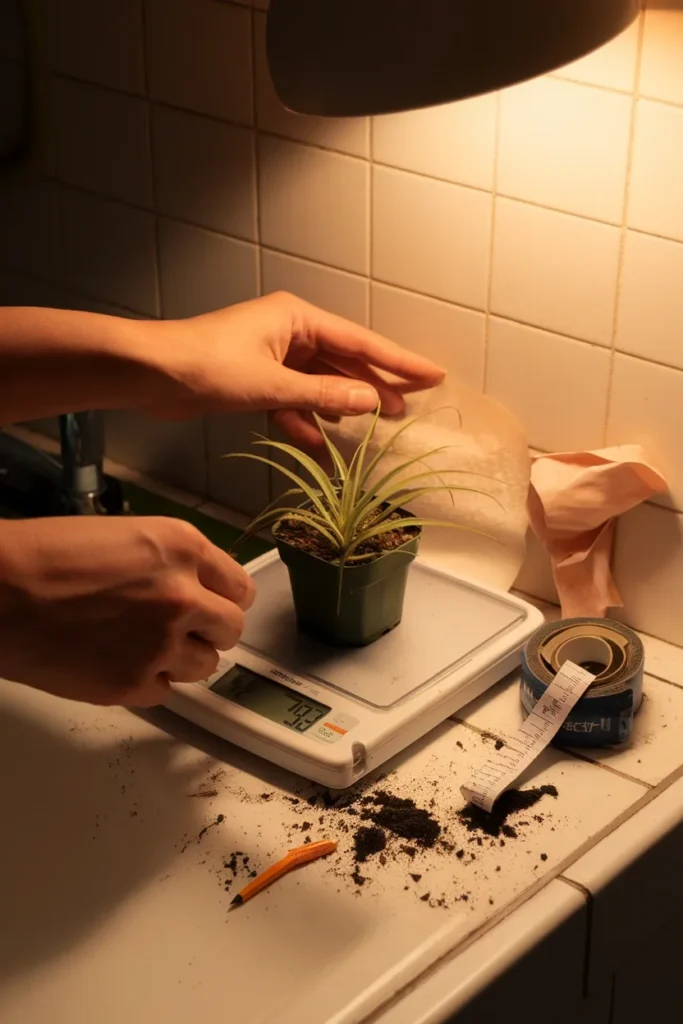
Adhesive strips rated over your actual load. Weigh the pot with wet soil on a kitchen scale first, then buy strips rated for double that number. Wet soil is heavier than most people guess, and bathroom humidity is the exact condition adhesive fails in. Skip this step and you find out at 2am.
Tension rod across the window frame. Two small hanging pots on S-hooks, no hardware, comes down in ten seconds on move-out day.
Over-the-door hooks. A macramé hanger on the back of the bathroom door puts a spider plant at eye level using zero wall real estate.
A leaning ladder. Still the easiest option, still zero commitment.
Suction shelves. Honest note: these hold on glossy tile and glass only, they fail on grout lines and textured tile, and they slip when the room heats up. Fine for a 4-inch pot. Not fine for anything you would be sad to sweep up.
What This Actually Costs
Real US prices captured from live retail listings on August 15, 2026. They move, so treat them as a band rather than a quote.
| Item | Retailer | Price |
|---|---|---|
| Golden pothos, 6 in. grower pot (ships 10 to 12 in. tall) | Home Depot | $19.97 |
| Peace lily, live indoor | Home Depot | $19.97 |
| Boston fern | Online plant retail | ~$30 |
| Small plant multipack | Target | $12.00 |
| Terracotta pots, 4 to 6 in. | Hardware or garden center | $3 to $8 each |
| Leaning ladder shelf | Big-box home retail | $35 to $70 |
A three-plant cottage bathroom, using one cast iron plant, one spider plant, one trailing pothos, plus terracotta pots and a ladder shelf, lands in the $85 to $140 range. Under the $80 to $400 budget most people expect to spend, and well under the cost of the floating shelves everyone else recommends.
Cheapest possible version: one $12 multipack, three thrifted saucers, and a plant you propagate from a friend’s pothos in a jar on the windowsill. Total under $20
Styling: Making Plants Read Cottage, Not Garden Center
Same five plants, two completely different rooms. The difference is entirely in the container and the grouping.
Terracotta over plastic, always. Matte, warm, ages with water stains instead of looking damaged. Plastic nursery pots are the single fastest way to make a cottage bathroom read rental.
Odd numbers, varied heights. Three pots at three different heights. Two identical pots side by side looks like a display. Three mismatched ones looks like someone lives here.
One vintage vessel. A chipped enamel jug, an old ironstone pitcher, a thrifted pudding basin with a drainage hole drilled in. One of these does more cottage work than five matching pots.
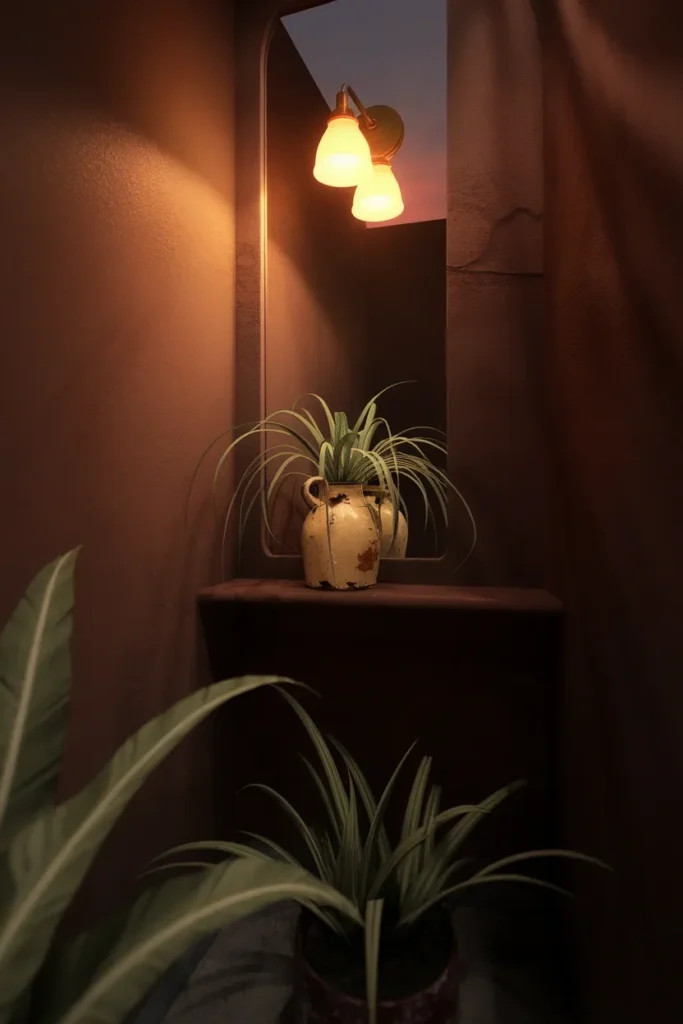
Let something die back a little. A perfectly manicured plant reads showroom. A spider plant with one browning tip and a runner that has gone rogue reads lived-in, which is the entire point of the style.
Wood, jute, and worn metal near the greenery. Green against warm wood and jute is the visual signature of every top-performing pin on this search, and it is the palette the whole aesthetic runs on. The same warm-neutral logic scales to every room in this whole-house cottagecore decor guide.
FAQ
Which plant is best to put in the bathroom? For most US bathrooms, the cast iron plant. It tolerates partial to full shade, is intolerant of direct sun, grows slowly to 1 to 3 feet, and is non-toxic to cats and dogs. If you want the classic cottage look specifically, a Boston fern on a shelf where it can drape.
How do you create a cottage style bathroom? Warm matte surfaces, vintage or vintage-looking fixtures, beadboard or painted paneling, worn wood, jute or patterned tile underfoot, and greenery that spills rather than stands. Plants do a large share of the work because they add the soft, slightly overgrown edge the style depends on.
What is the best plant for a small bathroom? A spider plant. It stays around 1 to 2 feet, trails from height so it uses no counter space, and is non-toxic to pets. Second choice is a small pothos placed high on a medicine cabinet.
What plants work in a bathroom with no window? Cast iron plant, pothos, and heartleaf philodendron handle the lowest light. In a bathroom with genuinely zero natural light, rotate the plant out to a bright room for a week each month, or add a warm LED bulb that runs a few hours a day.
Do bathroom plants really reduce humidity or mold? No, and any page claiming that is overselling. Plants release moisture through transpiration rather than absorbing it from the room. Mold control is an exhaust fan and keeping indoor relative humidity between 30 and 50%, per EPA guidance.
Are pothos and peace lily safe around cats? No. ASPCA lists both as toxic to cats and dogs. Pothos contains insoluble calcium oxalates causing oral irritation, drooling, and vomiting. Place them out of reach or choose spider plant, Boston fern, or cast iron plant instead.
How often should I water plants in a bathroom? Less than you think. Bathroom air slows soil drying, so check with a finger 2 inches down and water only when it is dry at that depth. Overwatering kills more bathroom plants than low light does.
Start With One
Pick the one plant that fits your actual bathroom, not the one you saw in a photo of somebody’s renovated farmhouse. Cast iron plant if the room is dim and you travel. Spider plant if it is small and you have a cat. Boston fern if you have a shelf and want the full cottage drape.
Run the three checks. Buy one. Give it a month.
If it lives, add the second one, then the ladder shelf, then the vintage jug. That is the whole build order.
Keep reading
More cozy nook ideas
 Living Room
Read →
Living Room
Read →
Cabin Living Room Checklist: Everything to Decide Before You Start
No log walls, no stone hearth, no lake outside the window. You can still build a cabin living room in a regular…
 Bedroom
Read →
Bedroom
Read →
English Cottage Bedroom Checklist: Everything to Decide Before You Start
You saved forty pins of floral quilts and sloped ceilings, then looked up at your own bedroom: beige walls, one window, a…
 Nursery & Teen Rooms
Read →
Nursery & Teen Rooms
Read →
25 Teen Boy Bedroom Ideas That Feel Grown-Up, Not Childish
If his room still has the race car lamp and the glow-in-the-dark stars, and the door has started staying shut, he’s telling…