
10 Japandi Reading Nook Ideas for a Calm, Beautifully Simple Corner

You walk into the corner where you used to read, and it’s a graveyard. A pile of mail on the chair. A scratchy throw your dog claimed. Lamp tilted, tab still open on your phone, and somehow zero pages turned in three weeks.
That corner can be your favorite spot in the house again, and Japandi is the gentlest way to get it there. We’re talking warm wood, soft linen, low light, almost nothing on the walls, and one chair that hugs you like it knows you.
I built my own Japandi reading nook last winter in a 6 by 7 foot bedroom corner, and I’ve helped two clients redo theirs since. So everything below is tested, photographed, and price-checked at US retailers you can actually shop.
This post is organized by style direction first, then by price tier within each idea, so you can pick the look you want and shop it at your level.
Who This Post Is For
- Renters who can’t drill, paint, or knock down walls (most of these ideas work with command strips and tension rods)
- Small-space dwellers working with corners under 50 square feet
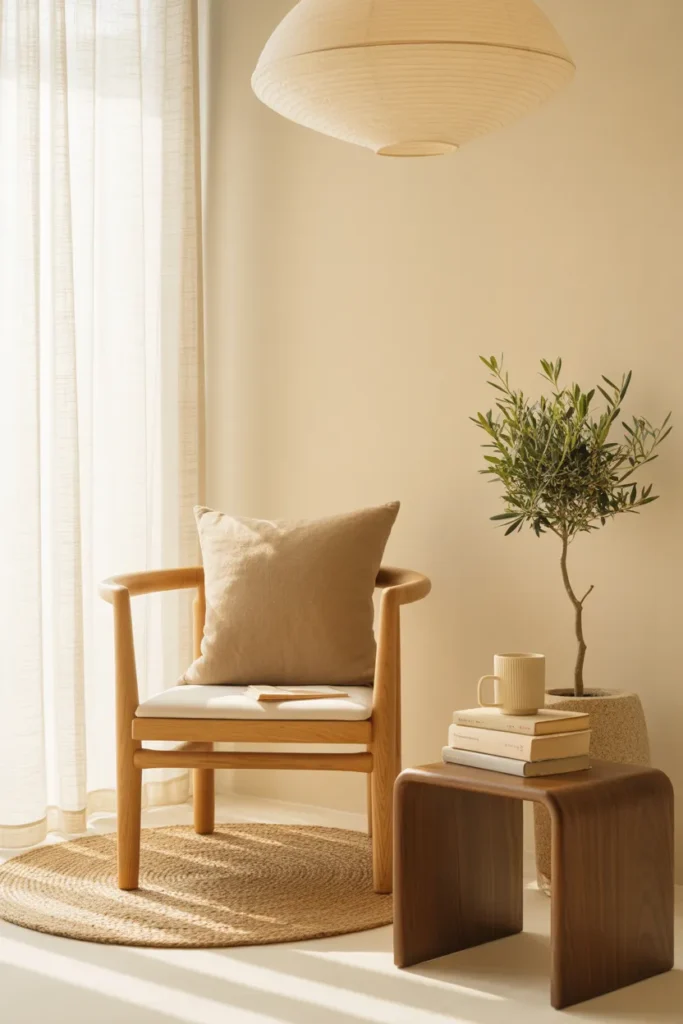
- Budget readers who want the look for under $200 total
- Mid-range and splurge readers who want a forever nook
- Minimalist and Japandi-curious decorators who lean toward Scandi but want more warmth, more wood, and less white
If you’ve been pinning Japandi bedrooms and feeling like your space is too small or too apartment-shaped to pull it off, you’re going to leave this post with a plan.
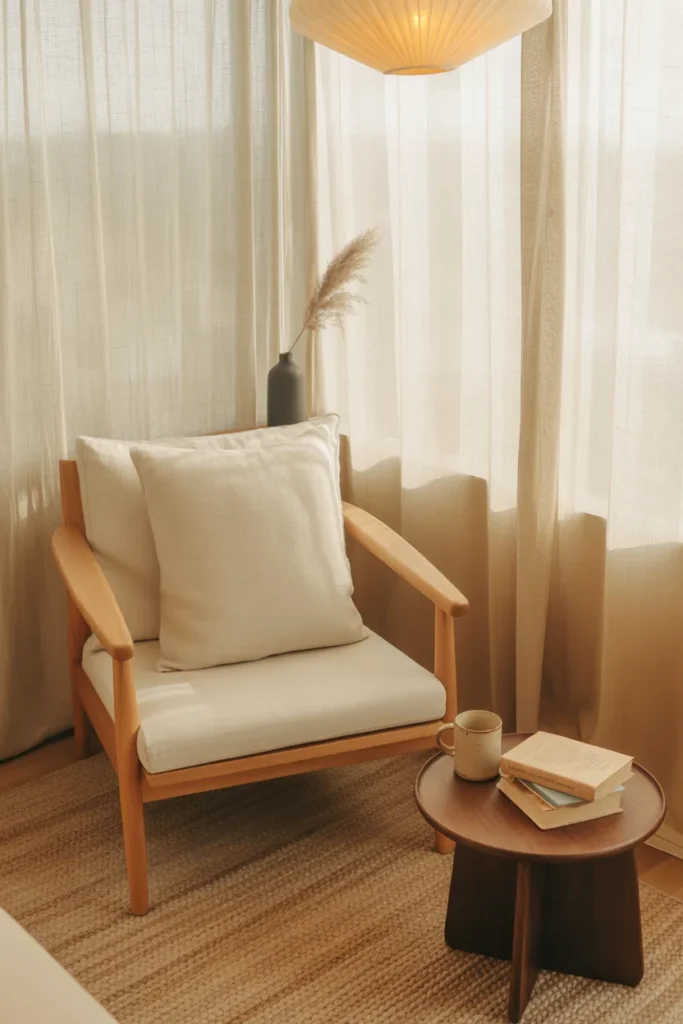
What Makes a Reading Nook “Japandi” in the First Place
Japandi blends the warmth and craft of Japanese design with the clean lines of Scandinavian minimalism. For a reading nook, that translates to a few non-negotiables.
The look has:
- A neutral base palette (oat, cream, warm beige, soft gray, walnut, charcoal as the only true dark)
- Natural materials only on the surface level (oak, walnut, linen, wool, cotton, paper, ceramic, rattan, jute)
- Low or grounded seating (floor cushions, low chairs, window benches under 18 inches off the floor)
- Soft, indirect light (paper pendants, rice paper lamps, dimmable warm bulbs around 2700K)
- One quiet imperfection on display (a chipped ceramic mug, a hand-thrown vase, raw edge wood)
The look avoids:
- Glossy finishes, chrome, plastic, anything overtly shiny
- Cool gray and stark white only palettes (that’s pure Scandi, not Japandi)
- Busy patterns, gallery walls, or more than 3 books visible at once
Hold every shopping decision against that list and you’ll stay on style.
1. The Floor-Cushion Tatami Corner (Best for Renters and Tiny Bedrooms)
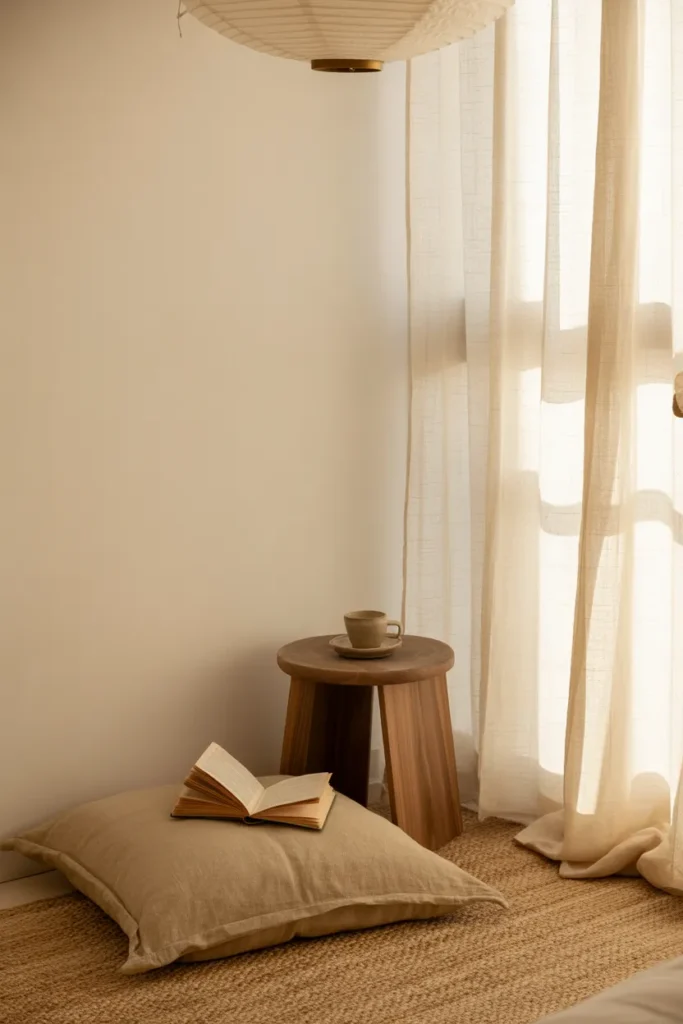
What it is: A grounded reading spot built on a tatami-style mat or low pile rug, anchored by one large floor cushion (called a zabuton in traditional Japanese homes) and one low side table.
Why it works: It needs zero furniture investment, fits in corners as small as 4 by 4 feet, and reads as intentional Japandi instead of “I have no chair.” The low sight line also makes ceilings feel taller, which helps in apartments with 8-foot ceilings.
How to execute:
- Floor cushion: a 24-inch square linen-covered cushion in oat or charcoal. Look for buckwheat hull or cotton fill, not foam.
- Mat: a 3 by 5 jute or seagrass rug works as a tatami stand-in for a fraction of the cost.
- Side table: a stool-height (around 16 inches) walnut or oak piece. IKEA’s FROSTA stool ($14.99) lightly stained darker is the budget hack everyone uses.
- One ceramic mug, one paperback, one tiny bud vase. That’s the whole vignette.
Budget vs splurge:
- Budget under $80: Dollar Tree linen pillow cover over a Walmart 24-inch insert ($12), Walmart 3×5 jute rug ($35), IKEA FROSTA stool ($15)
- Splurge $300+: West Elm Andes floor cushion in flax linen, Crate & Barrel jute rug, CB2 walnut side table
2. The Window Bench Built for Blonde Wood Lovers
What it is: A built-in or freestanding bench tucked under a window, topped with a long linen cushion and 2 to 3 throw pillows in tonal neutrals.
Why it works: A window seat doubles your usable square footage in a small bedroom or living room and gives you that magazine-cover Japandi shot with natural light pouring in. Bonus: you store books or blankets in the bench base.
How to execute:
- For renters: an IKEA HEMNES or BESTÅ bench placed against the window wall, no drilling, with a custom-cut foam cushion wrapped in oat linen ($60-$120 for the cushion).
- For homeowners: build a 16-inch-deep bench with a hinged lid for storage. Use white oak or maple plywood with a clear matte finish.
- Cushion thickness: 4 inches minimum for actual comfort during a 2-hour reading session.
- Pillows: one 20-inch square in waffle linen, one 14-inch lumbar in bouclé, one small 12-inch in raw silk. Three is the magic number, never more.
Rental-friendly flag: The IKEA hack version requires zero drilling. The bench sits, the cushion sits on top, and you’re done.

3. The Dark Japandi Cocoon (For Maximalist Souls in a Minimalist Body)
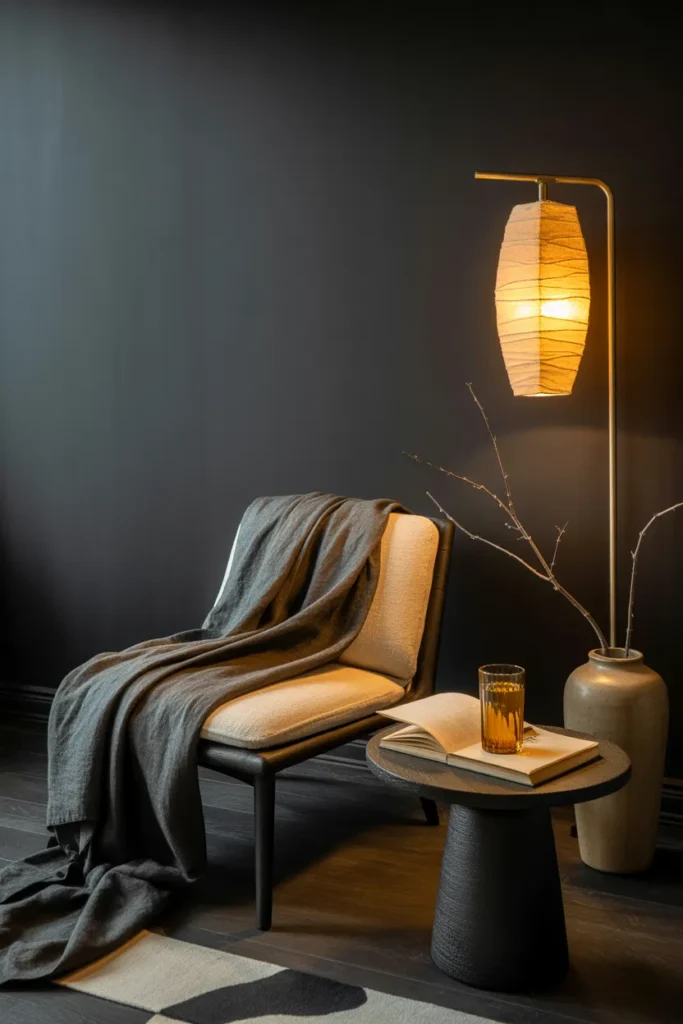
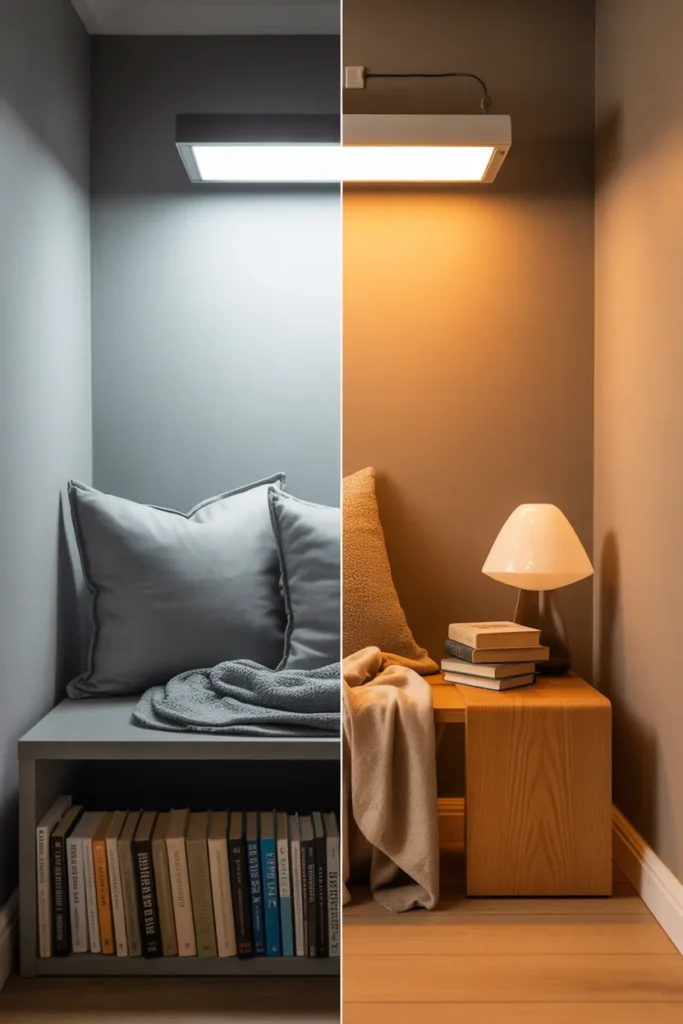
What it is: A moody Japandi corner built on a charcoal, ink, or espresso oak base instead of the standard cream-and-oat palette. This is the angle Pinterest is searching for and Google barely covers.
Why it works: Dark Japandi gives you the calm and craft of the style with the introvert-friendly enclosure of a darker room. It photographs beautifully and feels like a retreat, especially in north-facing rooms that already lean cool.
How to execute:
- Paint one accent wall in a warm-undertone charcoal (Farrow & Ball Off-Black, Sherwin-Williams Iron Ore, or Behr Cracked Pepper).
- Anchor with an espresso oak or smoked oak armchair. The HAY AAC22 in dark stain is the splurge benchmark; Article’s Lyna lounge chair is the mid-range stand-in.
- Layer in a charcoal wool throw and an oat linen pillow so the contrast doesn’t go grim.
- Light it with one rice paper floor lamp or a warm 2700K wall sconce. Never overhead light in a dark nook.
Renter swap: Use a peel-and-stick wallpaper in matte charcoal instead of paint. Chasing Paper and Tempaper both carry options under $50 per panel.
Seasonal note: This setup peaks in fall and winter. Swap the wool throw for waffle cotton in summer to keep it from feeling heavy.
4. The Slim Bookshelf and Bench Combo for Narrow Walls
What it is: A vertical bookshelf no wider than 12 inches paired with a 36 to 48-inch-long bench at its base. Works in pantry-narrow corners as tight as 18 inches deep.
Why it works: Most reading nooks fail because they need 5 feet of width. This setup needs less than 4 and uses vertical space the way Japanese homes have done for centuries.
How to execute:
- Bookshelf: a 6-foot-tall, 12-inch-deep oak ladder shelf. IKEA’s IVAR pine in clear matte stain is the budget pick ($89).
- Bench: a 40-inch oak or rattan bench, 16 to 18 inches tall.
- Styling: keep books spine-out in tonal neutrals only (cream, beige, charcoal). Hide loud paperback covers in linen book covers ($3-$8 each on Etsy).
- Add one cane or rattan basket on the lowest shelf for blankets.
This is the slim-footprint version of the bookshelf nook and probably the most Pinterest-friendly setup in this list for small apartments.
5. The Plant-Filled Japandi Nook (Pin Bait, Done Right)
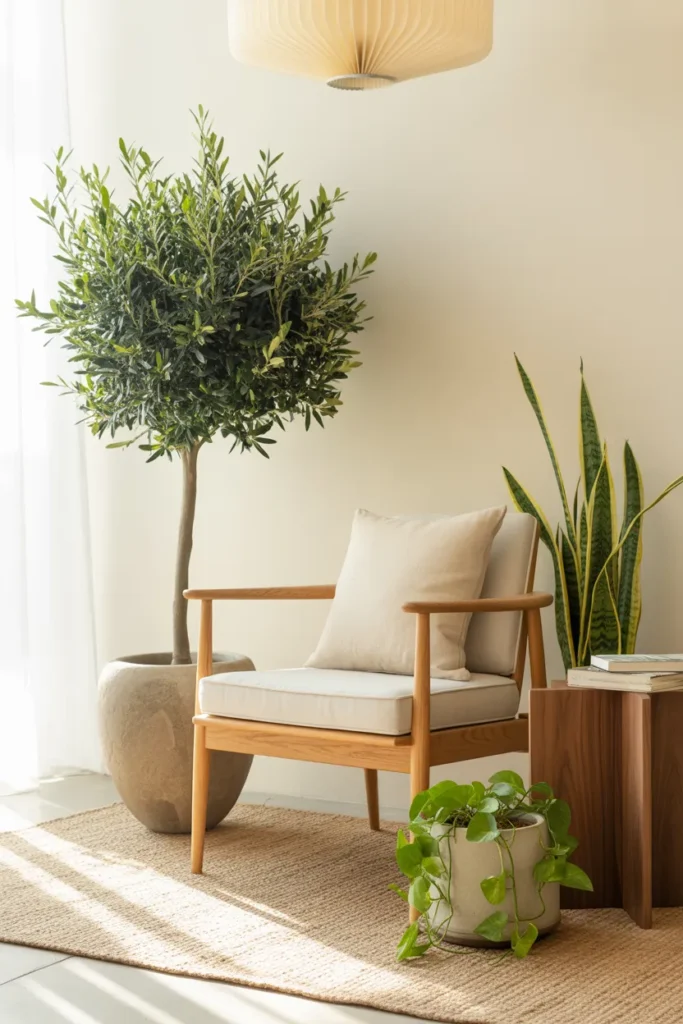
What it is: A reading corner with one large statement plant (think a 5-foot fiddle leaf, olive tree, or rubber plant) plus 2 smaller potted greens, all in stone or unglazed ceramic planters.
Why it works: Plants are the fastest way to add the “wabi-sabi” imperfection Japandi loves without buying anything handmade. They also break up the neutral palette without adding color clutter.
How to execute:
- One large floor plant in a 14-inch unglazed terracotta or stone planter
- Two smaller plants on the side table or bookshelf in 6-inch ceramic pots
- Stick to varieties with calm, architectural shapes: olive tree, snake plant, ZZ plant, rubber plant. Skip anything frilly or trailing.
- Keep planters in 3 finishes max: stone, raw ceramic, and matte black.
Budget vs splurge:
- Budget under $50: Trader Joe’s or IKEA plants ($10-$15 each) in Dollar Tree terracotta pots upgraded with matte stone spray paint.
- Splurge $250+: A 5-foot olive tree from The Sill in their stoneware planter, plus two potted snake plants in Bloomscape stoneware.
6. The Sliding Shoji Screen Nook for Privacy Without Walls
What it is: A reading corner separated from the rest of the room by a sliding or folding shoji-style screen (rice paper and wood frame).
Why it works: Shoji screens carve out a “room within a room” without permanent construction. They diffuse light beautifully and scream Japandi authenticity in a way IKEA furniture alone can’t.
How to execute:
- Use a 3 or 4-panel folding shoji screen (Wayfair and Amazon both carry traditional 6-foot versions starting around $90).
- Position it at a 90 to 120-degree angle to the wall to define the corner.
- Place the screen between the nook and the rest of the room so reading light filters through, not against, it.
- Keep the rest of the nook minimal so the screen stays the focal point.
Rental-friendly flag: Free-standing screens require zero drilling and move with you.
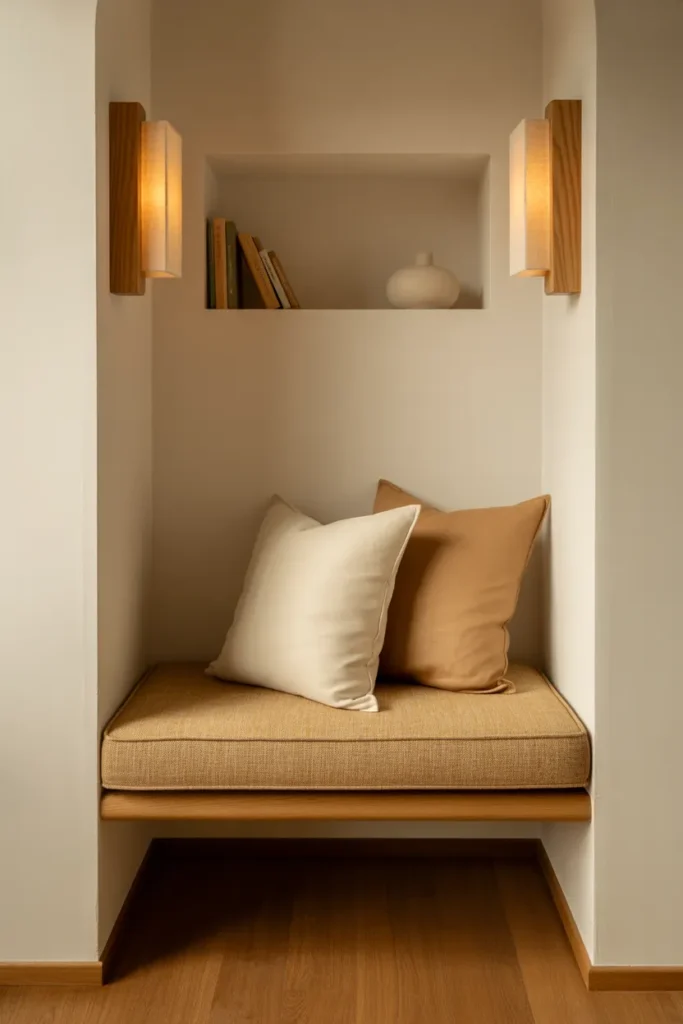
7. The Built-In Reading Nook With Hidden Storage
What it is: A custom or semi-custom built-in bench inside an alcove, dormer, or under a sloped ceiling, with hinged-lid storage underneath.
Why it works: Built-ins are the holy grail because they make a nook feel architectural and intentional rather than assembled. The hidden storage solves the blanket-and-book pile problem.
How to execute:
- Frame a 16 to 20-inch-deep base with hinged lids on top.
- Wrap in white oak or maple veneer plywood with clear matte poly.
- Custom 4-inch foam cushion in heavy oat linen.
- Add one 20-inch square pillow and one 14-inch lumbar.
- Light it with two oak-and-paper sconces flanking the alcove, controlled by a dimmer.
If you’re looking for more architectural ideas like this, our full guide on built-in reading nook ideas walks through 15 layouts with measurements.
8. The Statement Chair Nook for Small Living Rooms
What it is: One sculptural Japandi armchair (the focal point), one small round side table, one floor lamp. Three pieces total.
Why it works: This is the simplest setup in the list and the easiest to drop into an existing living room without redesigning anything. The chair does all the visual work.
How to execute:
- Chair options that read instantly Japandi: Article’s Lyna in oak and bouclé ($699), West Elm’s Halden lounge chair ($999 splurge), or the AllModern Lochmoor accent chair ($349 mid-range).
- Side table: a 16-inch round walnut or oak piece, no drawer, no shelf.
- Lamp: a 60-inch arc floor lamp in oak with a rice paper or linen shade.
Budget vs splurge comparison for the chair:
- Budget $200-$300: Walmart Better Homes & Gardens Springwood accent chair, restained darker
- Mid-range $400-$700: Article Lyna or Castlery Madison
- Splurge $1,000+: West Elm Halden or DWR Hans Wegner CH25 vintage
9. The Japandi Bedroom Nook (Carved From a Bedroom Corner)
What it is: A mini reading setup tucked into the corner of a primary bedroom, usually 5 by 5 feet or smaller, anchored by a low chair or floor cushion and a single wall sconce.
Why it works: Pinterest autocomplete shows huge demand for “japandi bedroom with reading nook” and almost no top-ranking content covers it directly. Bedrooms already lean Japandi-friendly with their soft palettes, so adding a nook is mostly furniture choreography.
How to execute:
- Pick the corner farthest from the bed and closest to a window.
- Use a smaller-scale chair (under 30 inches wide) so it doesn’t crowd the room.
- Float the chair off the wall by 4 to 6 inches if your room can spare the space; it instantly reads more designed.
- Add one plug-in oak wall sconce (no hardwiring needed) for reading light.
- Layer in a 3 by 5 wool rug under just the chair to define the zone.
Rental flag: Plug-in sconces with cord covers are command-strip safe and remove in seconds.
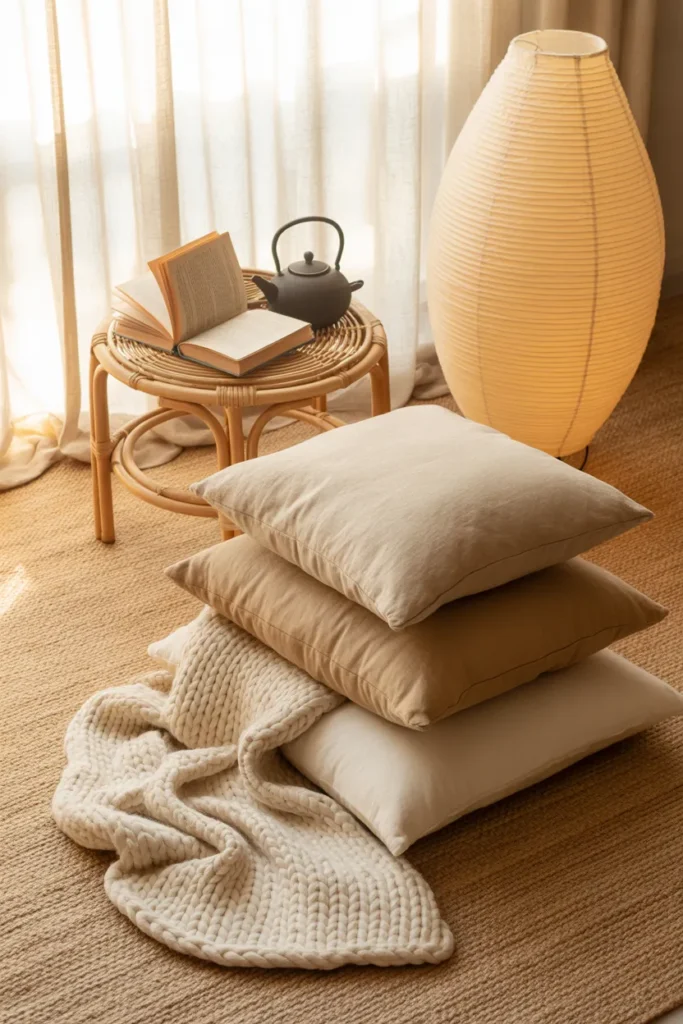
10. The Layered Neutrals Floor Nest (For Maximalists Who Love Japandi Energy)
What it is: A multi-cushion, multi-throw setup that builds a soft “nest” on the floor without using a chair at all. Think 3 cushions, 2 throws, 1 rug, 1 low table.
Why it works: It scratches the maximalist itch for layering without breaking the Japandi rules. As long as every layer stays in the neutral palette and every material is natural, you can stack as many textures as you want.
How to execute:
- Base layer: a wool or jute 5×7 rug
- Cushion layer: 1 large square (24 inches), 1 medium (20), 1 lumbar (14×20)
- Throw layer: 1 chunky knit in cream, 1 waffle cotton in oat
- Anchor: a low rattan or oak table 14 to 16 inches tall
- One tall paper floor lamp or a clip-on rice paper sconce nearby
For more layering ideas with the same texture-first philosophy, check our deep dive on maximalist reading nook ideas for how to mix without crossing into chaos.
Common Mistakes to Avoid in a Japandi Reading Nook
After helping clients redo their nooks (and rebuilding mine twice), here are the trip-ups I see every time.
Going too cool-toned. Pure white walls and gray everything turns the room into Scandi, not Japandi. Add warmth with oat, cream, or warm beige.
Buying a “Japandi-style” piece that’s actually mid-century modern. A lot of retailers mislabel mid-century chairs. The Japandi tell: low profile, matte finishes, no exposed brass legs, no tapered hairpin legs.
Overhead lighting. Nothing kills a nook faster than a bright ceiling light. Every Japandi nook needs floor or table-level warm light, ideally 2700K and dimmable.
Too many books on display. A stack of 3 to 5 is intentional. A wall of 80 colorful spines is visual noise. Use linen book covers or turn paperbacks spine-in if you have to keep them out.
Synthetic materials. Polyester velvet, plastic side tables, foam-only cushions. Even one synthetic piece breaks the spell. Stick to linen, wool, cotton, oak, walnut, paper, ceramic, jute.
Forgetting the floor. Bare hardwood under a Japandi nook reads unfinished. A small jute or wool rug, even 3×5, anchors everything.
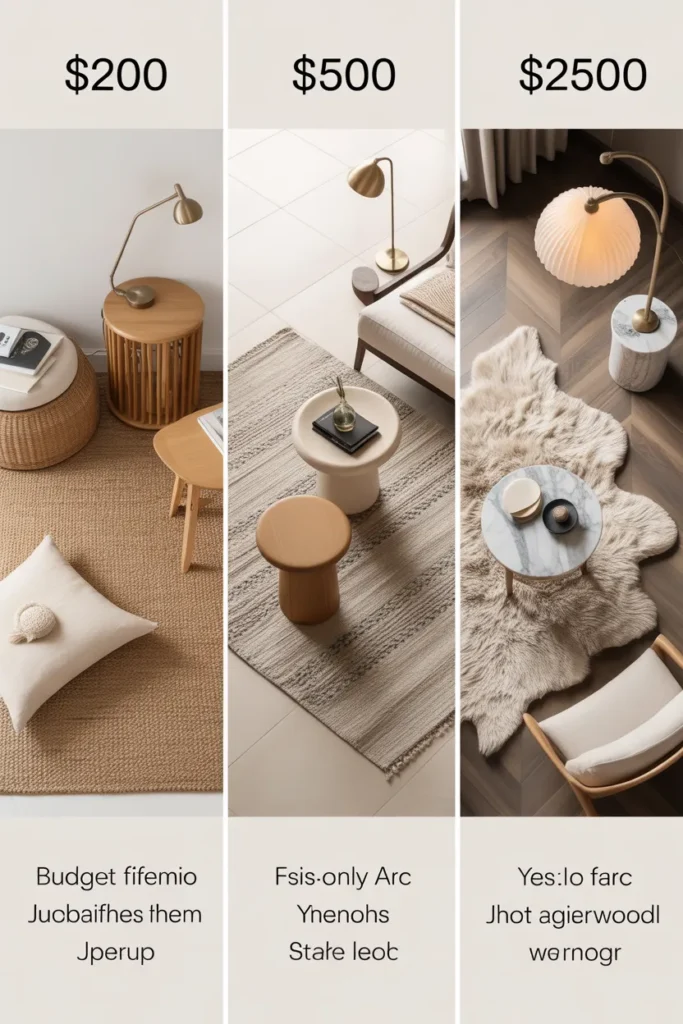
Budget Breakdown: Building a Full Japandi Nook at Three Price Tiers
Here’s the original framework I use with clients. Screenshot this one.
Budget tier (under $200 total):
- IKEA FROSTA stool, stained darker: $15
- Walmart 3×5 jute rug: $35
- 24-inch linen floor cushion (Walmart or Target): $30
- IKEA RANARP wall lamp: $30
- 2 throw pillows in oat linen (Target Threshold): $40
- Dried pampas in thrifted ceramic vase: $15
- Stack of 3 paperbacks in linen covers: $20
- Total: about $185
Mid-range tier ($400 to $900 total):
- Article Lyna lounge chair: $499
- CB2 oak round side table: $149
- West Elm linen pillow set: $89
- Target Studio McGee jute rug: $179
- IKEA paper pendant: $30
- Total: about $946 (or $750 with smaller chair)
Splurge tier ($2,000+):
- West Elm Halden chair: $999
- Crate & Barrel walnut side table: $449
- DWR Akari paper floor lamp: $529
- West Elm flax linen cushion set: $189
- Anthropologie Home wool rug: $698
- Total: around $2,864
Lighting a Japandi Reading Nook (The Detail Most Articles Skip)
Lighting makes or breaks a Japandi corner. Here’s the layered formula.
Layer 1: Ambient. A paper pendant or rice paper floor lamp (Akari-style) at 2700K, dimmable. This is your atmosphere light.
Layer 2: Task. A small oak or brass reading lamp on the side table, also 2700K, with a focused linen or paper shade. This is what you actually read by.
Layer 3: Accent (optional). A plug-in wall sconce above or beside the chair for a soft glow when you don’t want full task light.
Skip overhead recessed light entirely if you can. If you can’t, put it on a separate dimmer and keep it under 30% brightness when reading.
For more on layering light in small spaces, the American Lighting Association’s guide on residential lighting layers breaks down the technical side better than most decor blogs.
Materials Cheat Sheet
If you’re shopping in real life or scrolling Amazon at midnight, these are the only materials that should make it into your nook.
- Wood: white oak, smoked oak, walnut, ash. Skip pine (too orange) and cherry (too red).
- Textiles: linen, wool, cotton, raw silk, bouclé. Skip polyester velvet, synthetic blends, leather (Japandi leans away from leather).
- Hard surfaces: ceramic, stoneware, unglazed terracotta, raw concrete in small doses, paper.
- Metals (use sparingly): matte black iron, antique brass. Skip chrome, polished gold, copper.
The Japan House LA design library at japanhousela.com has a beautiful primer on traditional Japanese material principles if you want to go deeper.
Frequently Asked Questions
What is a Japandi reading nook?
A Japandi reading nook is a small, calm reading corner designed using the Japandi style, which blends Japanese minimalism with Scandinavian warmth. Expect natural wood, linen, paper lighting, low or grounded seating, and a neutral palette of oat, cream, warm beige, and charcoal accents.
How do I create a Japandi reading nook in a small space or rental?
Use a floor cushion plus a small stool instead of a full chair, a 3×5 jute rug to define the zone, a free-standing shoji screen or peel-and-stick wallpaper for separation, and plug-in sconces with cord covers instead of hardwired lighting. Every idea in this post has a rental-friendly version.
What’s the budget version of a Japandi reading nook?
Under $200, you can build a complete Japandi nook with an IKEA FROSTA stool ($15), a Walmart jute rug ($35), a linen floor cushion ($30), a paper wall lamp ($30), thrifted ceramics, and dried pampas. Source most decor from Target’s Threshold line, IKEA, and thrift stores.
What if I don’t have a window or natural light?
Lean into the dark Japandi variation. Paint or peel-and-stick a charcoal accent wall, use one rice paper floor lamp at 2700K, and add a plug-in wall sconce above the chair. Dark Japandi nooks actually photograph better in low-light rooms.
How long does it take to set up a Japandi reading nook?
A budget tier setup takes 1 weekend if you have the items shipped or grab them in one Target run. A mid-range setup takes 2 to 3 weeks because of furniture lead times. A built-in or splurge tier with custom millwork takes 4 to 8 weeks.
Can I do a Japandi reading nook in my bedroom?
Yes, and it’s one of the highest-demand setups right now. Pick the corner farthest from the bed and closest to a window. Use a small-scale chair under 30 inches wide, add a plug-in wall sconce, and layer a 3×5 wool rug under just the chair to define the zone.
What’s the difference between Japandi and Scandinavian reading nooks?
Scandinavian nooks lean cool, white, and bright with hairpin legs and pops of pastel. Japandi leans warm, oat-toned, and grounded with low-profile furniture, more wood, more paper, and almost no color besides charcoal as an accent.
Save This for Your Next Reading Corner Refresh
Pick one idea from this list, screenshot the budget breakdown, and start with the smallest piece you can swap this weekend. A linen pillow cover, a paper lamp, a 3×5 jute rug. The corner will tell you what it wants next.
If you want to keep going with built-in inspiration, our post on built-in reading nook ideas has 15 architectural setups with measurements you can hand to a contractor.
Pin the dark Japandi nook image to your Cozy Corners board, save this post to your Home Decor folder, and tell me in the comments which idea you’re trying first.
Keep reading
More cozy nook ideas
 Boho
Read →
Boho
Read →
Boho Bathroom Checklist: Everything to Decide Before You Start
No gut job, no new tile, no landlord permission slip. A boho bathroom mostly comes down to eight decisions made in the…
 Cozy Home
Read →
Cozy Home
Read →
25 Cozy Bedding Ideas for a Cozier Home
If your bed right now is one flat comforter, two pillows that fold in half, and a throw that ends up on…
 Farmhouse & Country
Read →
Farmhouse & Country
Read →
Modern Farmhouse Bedroom Checklist: Everything to Decide Before You Start
Ten decisions, made in the right order, and a modern farmhouse bedroom stops being a pile of saved pins and starts being…