
Reading Nook on a Budget: 15 Cozy Corners You Can Build for Under $100

You know that one corner of your living room? The one with the lonely lamp, the pile of mail, and the chair nobody actually sits in? Yeah. That corner is begging to be a reading nook. Right now it just looks unfinished, and every time you walk past it you feel a tiny pinch of guilt about the books you keep meaning to read.
Here’s the good news. You don’t need a built-in window seat, a contractor, or a Pinterest-perfect renovation budget to fix it. A reading nook on a budget is genuinely doable in a single weekend, with real money you already have, and it’ll quietly become your favorite spot in the house.
I built mine in a 600-square-foot rental for $87. The chair was $25 secondhand. The lamp was Target. The throw was Marshalls. And after testing this setup for almost a year, I’ve narrowed the formula down to 15 ideas that actually work, along with the real US prices and the rental-friendly hacks nobody else is writing about.

Who This Guide Is For
- Renters who can’t drill, paint, or commit to permanent changes (every idea below has a rental-friendly version)
- Small-space dwellers working with corners, closets, or alcoves under 50 square feet
- Budget-conscious readers who want a real number, not a vague “splurge” suggestion
- First-time DIYers who’d rather buy than build (most of these ideas require zero tools)
- Parents building a kids’ reading corner without raiding the college fund
If you live in a 4,000 square-foot home with a dedicated library, this isn’t your guide. For everyone else, keep scrolling.
How This Guide Is Organized
I’ve structured the 15 ideas by price tier, lowest to highest, so you can stop at whatever budget you have:
- Tier 1: Under $25 (the dollar-store and thrift wins) — 5 ideas
- Tier 2: Under $50 (Target, IKEA, Amazon basics) — 5 ideas
- Tier 3: Under $100 (the splurge picks that still come in under budget) — 5 ideas
Every idea answers three things: what it is, why it works, and how to actually pull it off this weekend. For the bigger picture on layout, seating, and lighting fundamentals, our ultimate guide to building a reading nook in any room covers the planning side in depth.

Tier 1: Reading Nook Ideas Under $25
1. Stack Floor Cushions Against a Bare Wall ($18 to $24)
What it is: Two oversized floor cushions layered against any empty wall, with a folded throw on top.
Why it works: Floor-level seating is the single cheapest path to a cozy reading corner. It also reads as intentional Japandi or boho design, not “I forgot to buy a chair.” Environmental psychology research has linked ground-level seating with lower stress markers, which is a fancy way of saying your body actually relaxes faster down there.
How to execute: Grab two 22-inch square cushions from IKEA (the FÅRDRUP or similar runs around $9 each) or hit Dollar Tree for two $5 throw pillows and a $5 bath rug as a base. Stack one cushion against the wall as a backrest, lay the second flat as your seat. Total: $18 to $24. Rental-friendly: zero drilling, zero damage. Pin it for fall and the whole setup looks even cozier with a chunky knit throw on top.

2. Hang $5 Battery Fairy Lights ($5 to $10)
What it is: A string of warm-white battery-operated fairy lights tucked along the wall behind your seat or draped over a curtain rod.
Why it works: Lighting is the number-one thing people get wrong in a budget reading nook. Overhead light makes a corner feel like a waiting room. Fairy lights at 2700K to 3000K give you that warm honey glow Pinterest pins are built on.
How to execute: Buy a 16-foot battery-operated copper wire string from Target or Amazon for around $6. Use removable adhesive hooks (the small clear ones from Command run $4 a pack) to drape the lights along the wall. No outlet needed. No drilling. If you want to go deeper on this, our reading nook lighting ideas guide breaks down the exact bulb temperatures and pendant tricks renters can pull off.

3. Repurpose a Thrifted Side Table ($8 to $20)
What it is: A small wooden side table or stool sourced from a thrift store, Goodwill, or Facebook Marketplace, used to hold your book, mug, and lamp.
Why it works: New side tables at Target run $40 to $80. The same shape at a thrift store is $8. Real wood patina also photographs better than new MDF, which is why every Pinterest pin you’ve saved leans vintage.
How to execute: Set a Saturday alert for your local thrift circuit (Goodwill, Salvation Army, Habitat ReStore). Look for solid wood pieces around 18 to 22 inches tall. A quick sand and a coat of beeswax revives almost any beat-up surface for under $5 in supplies. I found mine at a Habitat ReStore for $12 and it’s now the most-photographed object in my apartment.
4. Use a Cheap Bath Mat as a Layered Rug ($10 to $15)
What it is: A small woven or fluffy bath mat used as the base layer under your reading chair or floor cushion setup.
Why it works: A real area rug runs $80 to $250. A bath mat does 80% of the visual work for under $15. Layering one on top of your existing carpet (or directly on hardwood) defines the nook as its own zone, which is the trick designers use to make a corner feel like a “room within a room.”
How to execute: Target’s Threshold line and Walmart’s Mainstays both carry 20-inch by 32-inch mats in oatmeal, cream, and natural jute for $10 to $15. Place it directly under your chair or cushion stack so the front 6 inches of your feet land on it. That’s the whole trick.
5. Lean Books Against the Wall as Sculpture ($0)
What it is: Stack 8 to 12 books you already own against the wall in a leaning column or short pile next to your seat.
Why it works: Bookshelves cost money. Floor stacks cost nothing and read as “well-read person who clearly reads,” which is the entire point. The Strand bookstore aesthetic is built on this exact look.
How to execute: Pull your prettiest spines (linen-bound classics, neutral covers, vintage hardbacks) and stack them in groups of 3 to 5 against the wall. Top each stack with a candle, a small ceramic, or a trailing pothos cutting in a glass. Total cost: zero. Total impact: significant.
Tier 2: Reading Nook Ideas Under $50
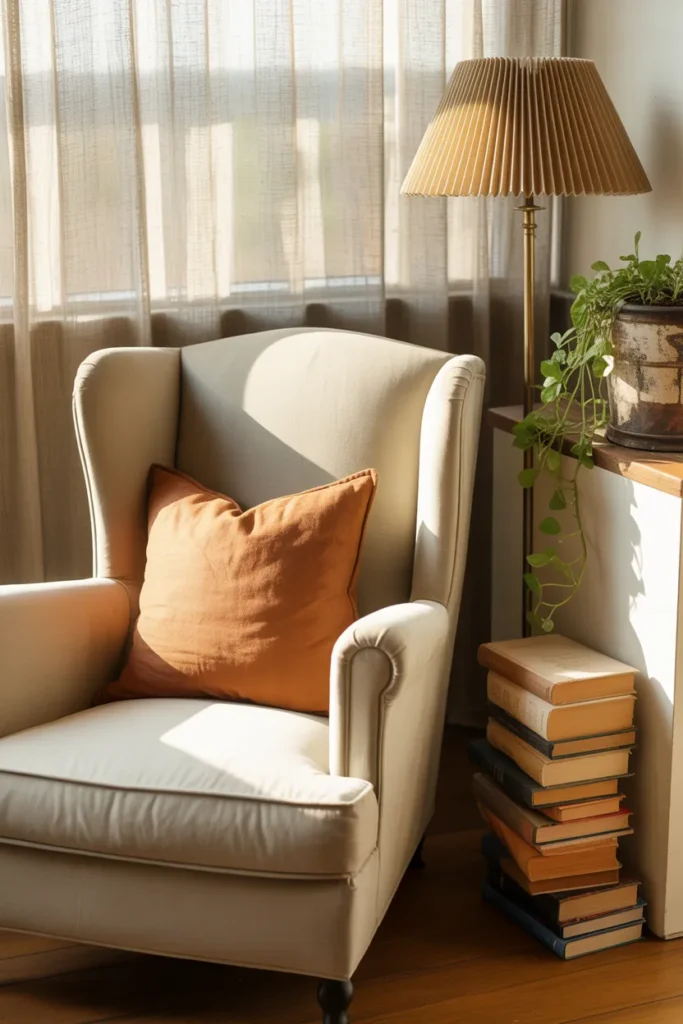
6. Score a Secondhand Armchair on Facebook Marketplace ($25 to $50)
What it is: A used armchair, accent chair, or small upholstered glider sourced from Facebook Marketplace, OfferUp, or Craigslist.
Why it works: This is the single highest-leverage move in the entire article. A new reading chair runs $200 to $800. A secondhand one in great shape runs $25 to $50, and most of them are sturdier than what you’d buy new at the same price point because they’re older, solid-wood-frame pieces from estates and downsizers.
How to execute: Search Facebook Marketplace for “armchair,” “accent chair,” “wingback,” “club chair,” and “glider” within 10 miles of your zip code. Filter by price low-to-high. Look for solid frames (push down on the arms, no wobble), removable cushions (means you can wash or reupholster), and neutral or velvet upholstery. Skip anything with visible water stains or a smoky smell. Bring a friend with a hatchback. Tip the seller $5 if they help carry it. I paid $25 for mine and it’s the best furniture purchase I’ve ever made.
7. Add a Plug-In Sconce With a Swag Hook ($30 to $45)
What it is: A wall sconce with a plug-in cord (no electrician needed) routed through a swag hook so the cord curves elegantly down to the outlet.
Why it works: Hardwired sconces cost $200+ and require an electrician and a landlord conversation you don’t want to have. Plug-in sconces give you the same boutique-hotel look for $30 to $45 and come right off the wall when you move out.
How to execute: Amazon’s plug-in brass sconce (search “plug-in wall sconce brass linen shade”) runs $35 to $45. Use one heavy-duty Command strip or, if your landlord allows a single 1/8-inch screw, a J-hook. Run the cord down the wall, tucking it behind the chair or routing it through a swag hook ($4 at Home Depot) to create a graceful curve. Hang it 14 inches above the chair’s seat back, slightly behind your shoulder. That’s the magic reading-light position.
8. Build a 4-Cube IKEA Kallax Bookshelf ($35 to $45)
What it is: The 2×2 IKEA Kallax cube shelf turned on its side, used as a low bookshelf and side table combined.
Why it works: It’s a bookshelf and a surface. It’s $39 at IKEA US. It works in spaces as narrow as 30 inches. You can paint it, leave it alone, or top it with a wood plank for a higher-end look. It’s the workhorse of small-apartment design for a reason.
How to execute: Pick up the Kallax 2×2 (29 inches square) at IKEA US for $39. Assemble in 25 minutes (one Allen wrench, two people, no curse words). Set it horizontally so the top becomes a flat surface for your lamp and mug. Fill the four cubes with books spine-out, two horizontal bookend stacks, a small basket for magazines, and one decorative object (a candle, a vintage ceramic, a small brass animal). Done.
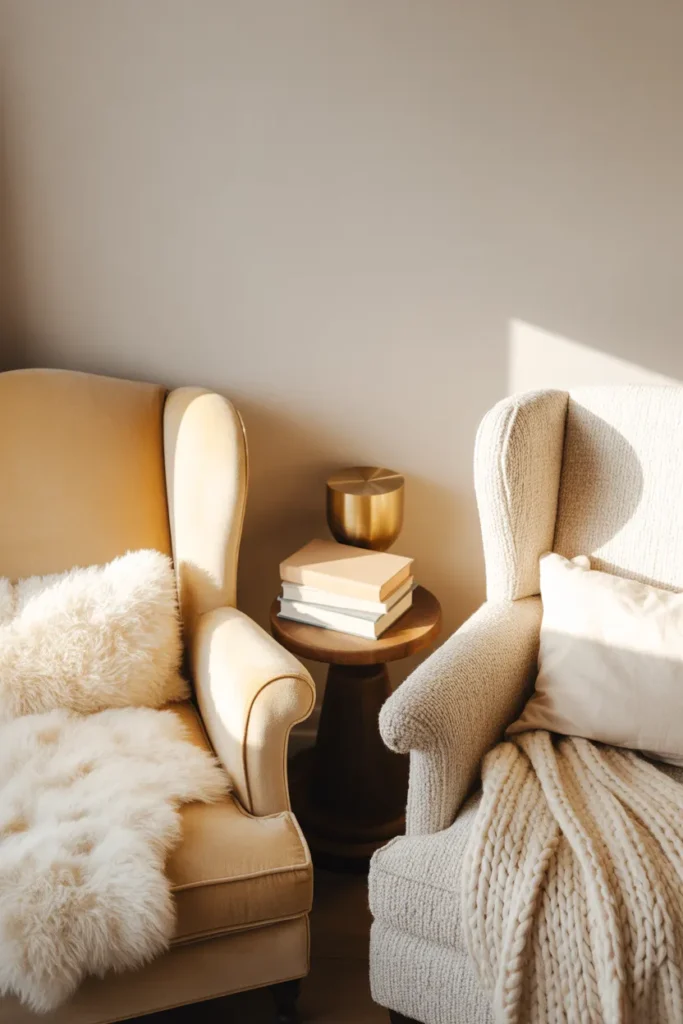
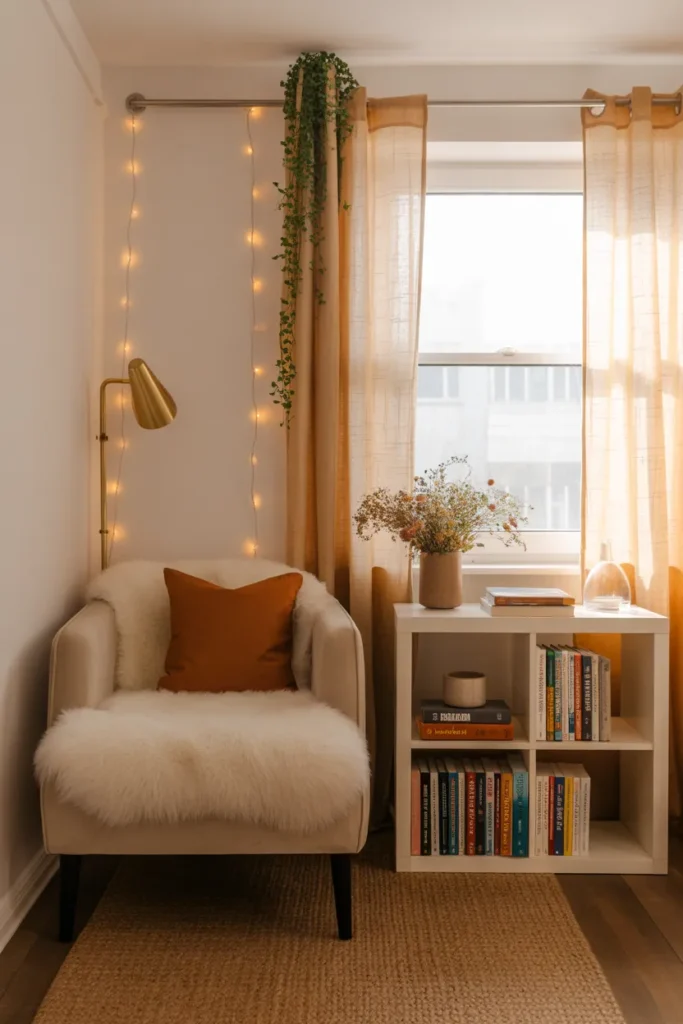
9. Layer a Faux Sheepskin Over Your Chair ($25 to $40)
What it is: A faux sheepskin or shaggy throw draped over the back and seat of your reading chair.
Why it works: Texture is what separates a “chair in a corner” from a “reading nook.” Faux sheepskin reads instantly cozy in photos and in real life. The contrast between something fluffy and something structured (like a wood frame) is the entire visual recipe behind every cottagecore Pinterest pin.
How to execute: IKEA’s TEJN faux sheepskin runs $13 (yes, really). HomeGoods carries similar in cream, gray, and warm beige for $20 to $30. Drape it over the back of your chair so it spills onto the seat. Done. Bonus points if you layer it with a chunky knit throw in a contrasting texture, like cream waffle weave over cream sheepskin.
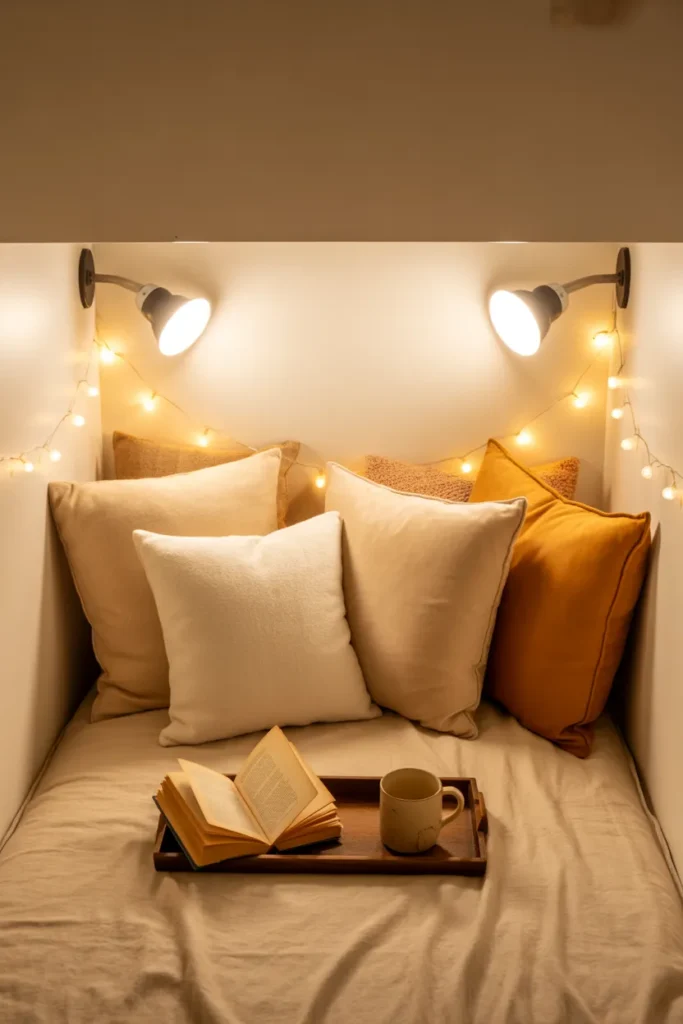
10. Create a Closet Reading Nook ($40 to $50 in finishing touches)
What it is: Convert an unused closet (linen closet, small bedroom closet, awkward hall closet) into an enclosed reading cave.
Why it works: A closet reading nook is the trending Pinterest format for 2026, and for good reason. It uses square footage you’re already paying for, gives you full enclosure (which kids especially love), and blocks out 90% of household noise without needing curtains or partitions.
How to execute: Empty the closet completely. Remove the door (most slide off the hinges with a screwdriver in 5 minutes, store it in the garage, reinstall when you move out). Lay a 2-inch foam mattress topper on the floor cut to size, $20 at Walmart. Add 4 to 6 throw pillows. Mount battery-powered puck lights to the ceiling, $15 for a pack of 6 from Amazon. String fairy lights along the back wall. Total: under $50 if you already own pillows. If your closet is at least 30 inches deep and 36 inches wide, this works. For more closet-conversion strategy, our bedroom reading nook ideas guide has a full closet breakdown.
Tier 3: Reading Nook Ideas Under $100
11. Buy the IKEA Poäng Chair ($99)
What it is: The IKEA Poäng armchair, a bentwood-frame lounge chair that’s been in production since 1976.
Why it works: It’s $99 brand new. The seat depth is 21 inches (deep enough to tuck your legs up). The bentwood frame has a gentle bounce that makes it surprisingly comfortable for long reading sessions. It’s lighter than it looks and fits through any apartment door. Designers and renters alike treat it as the gold standard budget reading chair.
How to execute: Order the Poäng frame ($69) and a cushion ($30) from IKEA US. Total: $99 plus tax. Skip the leather cushion (squeaky, not cozy). Get the cream or beige fabric or, if you want a Pinterest-ready upgrade, the faux sheepskin replacement cover from Etsy runs $45 to $65 and turns the Poäng into a completely different chair.
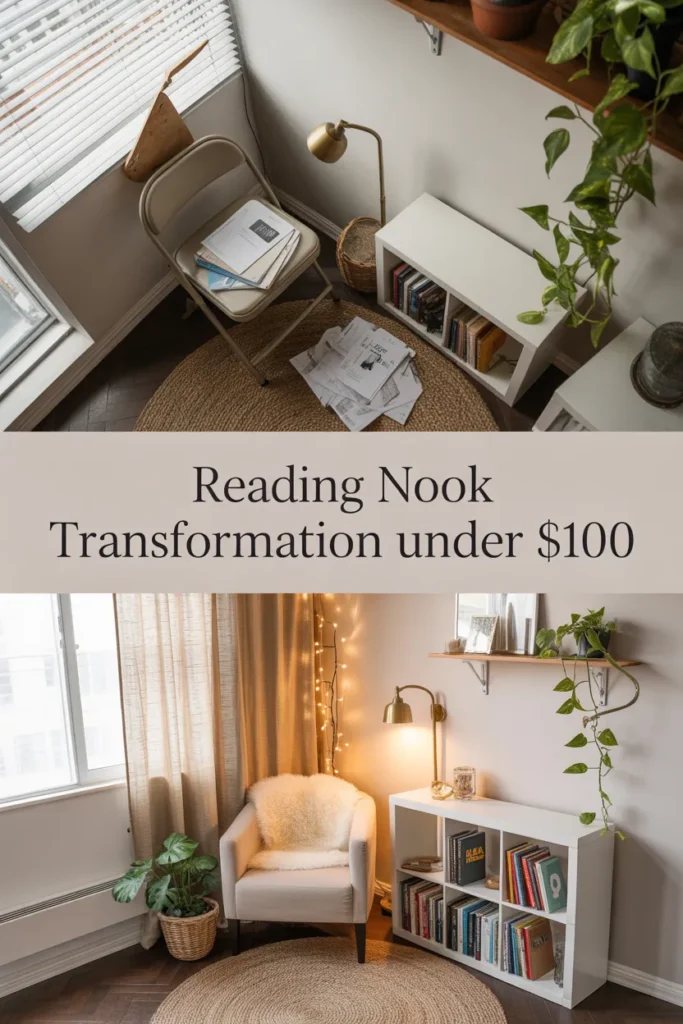
12. Add a Real Floor Lamp With a Linen Shade ($60 to $90)
What it is: A full-height floor lamp with a warm-toned linen shade, positioned just behind and to the side of your chair.
Why it works: A floor lamp is the lighting move that takes a budget reading nook from “starter” to “intentional.” Target’s Threshold line, IKEA, and Amazon all carry warm-toned linen-shade floor lamps in the $60 to $90 range that look like they belong in a $300 catalog.
How to execute: Look for a lamp 58 to 65 inches tall with an adjustable head or arc. Position it so the shade sits about 6 inches behind and 12 inches to the side of your shoulder when seated. Use a 60-watt-equivalent LED bulb at 2700K. Smart plug-in dimmers ($15 on Amazon) let you drop the brightness for evening reading. This single change is the most-asked-about element of every reading nook on a budget photo people share.
13. Hang Sheer Curtains for a Window-Seat Effect ($30 to $50)
What it is: A pair of sheer linen-look curtain panels hung in front of a window or, if you don’t have a window in your nook, mounted on the wall behind your chair as a backdrop.
Why it works: Sheers diffuse harsh daylight, soften the look of a corner, and create the visual frame Pinterest pins thrive on. A nook with sheer curtains photographs better than the same nook without them, every single time.
How to execute: Target’s Threshold sheers run $20 to $30 a panel in oatmeal, cream, and natural. Use a tension rod ($10) so you don’t have to drill. If you’re doing the wall-as-backdrop trick (no window), hang the rod 4 inches above the wall at chair-back height and let the panels fall to the floor. Instant ambiance.
14. Splurge on a Quality Throw and Pillow Combo ($50 to $90)
What it is: One genuinely nice throw blanket and two coordinating accent pillows in mixed textures (waffle, boucle, linen, knit).
Why it works: This is the budget-friendly equivalent of getting a haircut. Everything else in your nook can be thrifted or IKEA, and you’ll still look like you know what you’re doing if your textiles are good. Texture is the cheapest way to fake a designer eye.
How to execute: Target’s Casaluna line runs $35 to $50 for a chunky knit throw and $25 to $30 per pillow cover (buy inserts at IKEA for $5 each). HomeGoods carries similar quality at lower prices if you’re willing to dig. Stick to a 3-color palette: one neutral (cream or oatmeal), one earthy accent (rust, olive, mustard), one texture (cream sheepskin or waffle). Three is the magic number. Four starts to look busy.

15. Build the 4-Hour Weekend Reading Nook ($85 total)
What it is: A complete reading nook from empty corner to finished setup in a single Saturday afternoon, total spend $85.
Why it works: Most people stall on building a reading nook because they’re trying to perfect every piece over six months. The truth is, a “good enough” nook you actually use beats a perfect nook you’re still saving for. Time-boxing the project to one Saturday forces decisions and gets you reading by Sunday morning.
How to execute: Here’s the exact 4-hour shopping and setup plan:
- Hour 1: Clear and clean the corner. Measure (note width, depth, distance to nearest outlet).
- Hour 2: Hit Target for sheer curtains, a tension rod, a 60-inch floor lamp with linen shade, two pillow covers, an LED bulb. Budget: ~$60.
- Hour 3: Stop at HomeGoods or Marshalls for a chunky throw and a small framed print. Budget: ~$25.
- Hour 4: Set up. Curtain rod first, then chair (assuming you sourced it earlier), then lamp, then textiles, then book stack.
Total: $85. Total time: one Saturday afternoon. Total satisfaction: enormous.
The 5-Layer Nook Stack (Save This Framework)
Every reading nook on a budget that actually works hits all 5 of these layers. Screenshot this for your next thrift run:
| Layer | What It Does | Budget Pick |
|---|---|---|
| 1. Seat | Where you actually sit | Thrifted armchair ($25) or IKEA Poäng ($99) |
| 2. Light | Warm directional reading light | Plug-in sconce ($35) or floor lamp ($65) |
| 3. Soft Layer | Texture and physical comfort | Faux sheepskin + chunky throw ($30 to $50) |
| 4. Story Layer | Books within arm’s reach | Floor stacks (free) or Kallax shelf ($39) |
| 5. Mood Layer | Ambient finishing touches | Fairy lights + plant + candle ($15 to $25) |
If you’re missing any one layer, the nook will feel unfinished. Hit all 5 and even a $50 setup looks intentional.
Budget vs Splurge: The Reading Chair Showdown
The chair is the only place I’d genuinely consider splurging if you have the room in your budget. Here’s how the two paths compare:
| Budget Pick | Splurge Pick | |
|---|---|---|
| What | Facebook Marketplace wingback or IKEA Poäng | West Elm Haven Armchair or Anthropologie Slipper Chair |
| Cost | $25 to $99 | $799 to $1,499 |
| Comfort | Excellent (Poäng) to Good (used) | Excellent |
| Lifespan | 5 to 10 years | 15 to 25 years |
| Reupholster? | Yes, but rarely worth it under $50 | Yes, designed for it |
| Pinterest-ready? | With a sheepskin layer, yes | Out of the box, yes |
For 95% of readers, the budget path is the right call. The splurge chair only earns its keep if you read 3+ hours a day or you’re settled in a forever home.
Common Mistakes to Avoid
After helping a dozen friends set up their own reading nooks, these are the same five mistakes I keep watching people make:
- Skipping the lighting. Overhead light kills the mood every time. Spend the $35 on a plug-in sconce or a floor lamp before you spend it on another throw pillow.
- Buying a chair that’s too shallow. A reading chair needs at least 20 inches of seat depth so you can tuck your legs up. Anything shallower and you’ll abandon the nook in two weeks.
- Choosing a corner without an outlet. Sounds obvious. Happens constantly. Walk over with your phone charger first and confirm you can plug in.
- Going too matchy. Three textures and three colors is the cap. Four-of-everything starts to look like a furniture showroom.
- Forgetting noise. A cozy nook 6 feet from a TV will not get used. Pick the quietest corner you have, even if it’s not the prettiest one to start.
Frequently Asked Questions
What does a cozy reading nook need?
At minimum: a comfortable seat with at least 20-inch seat depth, one warm-toned light source (2700K to 3000K bulb), a soft layer like a throw or sheepskin, and a small surface for your book and mug. Everything else is mood.
How do I create a cozy reading nook in a small apartment on a budget?
Pick a corner with an outlet and decent natural light. Source a secondhand armchair on Facebook Marketplace for $25 to $50. Add a $35 plug-in sconce. Layer a faux sheepskin and a chunky throw. Stack books on the floor. Total under $100. Renter-friendly, no drilling required.
What is the budget version of a built-in window seat?
Use a low IKEA Kallax shelf or a sturdy wooden bench (Facebook Marketplace) pushed under your existing window. Top it with a 3-inch foam cushion ($30 cut to size at a foam shop) wrapped in a fitted cream linen cover. Add 3 to 5 throw pillows against the wall. Effect: 90% built-in, 0% construction.
How do I build a closet reading nook on a budget?
Empty the closet, remove the door, lay a foam mattress topper on the floor, layer pillows against the back wall, mount battery puck lights to the ceiling, string fairy lights along the back. Under $50 if you already own pillows. Works in any closet at least 30 inches deep.
How long does it take to build a reading nook on a budget?
A focused Saturday afternoon. The 4-hour weekend plan in idea #15 covers the exact sequence: clear, shop, set up, finish. Most people who try to drag it out over weeks never finish.
What if I don’t have a window in my reading corner?
Hang sheer curtains on the wall as a backdrop instead, layer in two warm light sources (a plug-in sconce plus a floor lamp), and lean into the cave-like coziness with deeper textures (faux fur, chunky knit, velvet). Windowless nooks photograph beautifully when the lighting is layered.
Is a reading nook worth it in a rental?
Yes. Every idea in this guide is rental-friendly with no drilling, no painting, and nothing that can’t be packed up and moved in two boxes. The $87 I spent on mine has paid for itself in hours of reading I wouldn’t have otherwise done.
Your Next Step
Your reading nook on a budget doesn’t need to be perfect. It needs to be started. Pick the one tier that matches what you have to spend this weekend, screenshot the 5-Layer Nook Stack, and give yourself one Saturday to make it happen.
If you save one pin from this post, make it the closet nook idea or the 4-hour weekend plan. Both are the highest-impact moves and the ones I get the most messages about.
Got a corner you’re trying to figure out? Save this post, then read our ultimate guide to building a reading nook in any room for the planning side, and the reading nook lighting ideas guide once you’ve picked your seat. The chair is the start. The light is what makes you actually sit in it.
For deeper background on the wellness science behind dedicated reading spaces, the American Psychological Association’s research on environmental cues and stress reduction is a solid starting point, and Apartment Therapy’s small-space living archive is a non-competing resource I trust for additional small-space inspiration.
Keep reading
More cozy nook ideas
 Small Spaces
Read →
Small Spaces
Read →
10 Small Reading Nook Ideas for Adults
One high-back chair, one clamp-on lamp, one $19.99 tray table. At IKEA US prices this month, that’s a full reading corner for…
 Home Library & Bookshelves
Read →
Home Library & Bookshelves
Read →
14 Ideas for a Fireplace with Bookshelves on Each Side on a Budget
Two bookcases, two plug-in lamps, two wall straps. At IKEA US list prices this month, that adds up to $237.98 before tax,…
 Study & Craft Nooks
Read →
Study & Craft Nooks
Read →
16 Kids Homework Station Ideas Little Ones Will Love
Two IKEA pieces, one empty corner, $109.98 before tax. That’s the first kids homework station on this list, and it fits in…
2 Comments