
25 Small Backyard Ideas for a Dreamy Cottage Garden

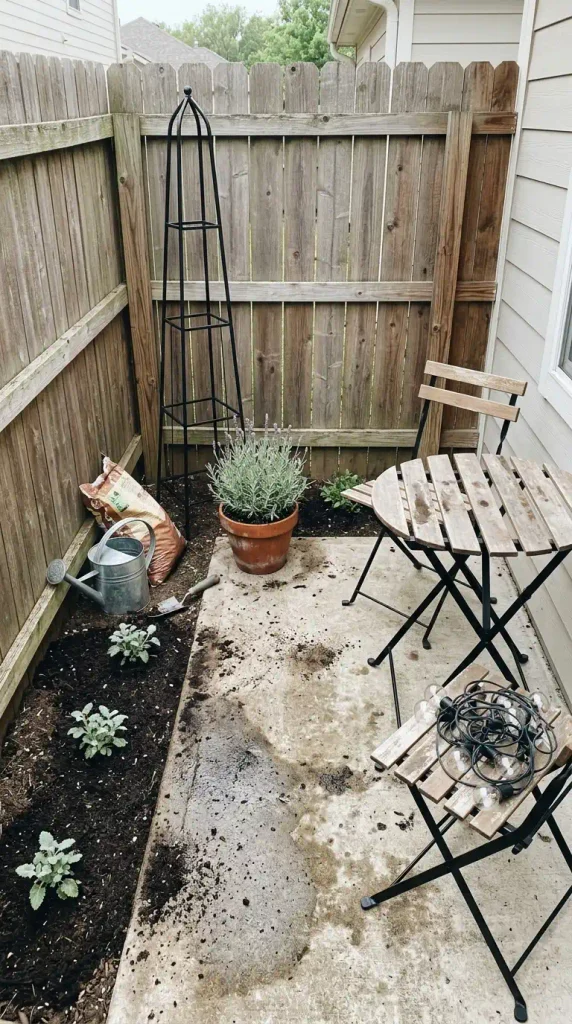
Four plants, one 6-foot obelisk, a $99.99 folding bistro set, and a strand of warm solar lights. That’s $271.03 at this month’s listed prices, and it’s enough to make a small backyard read as a cottage garden by next weekend.
You don’t need an English village or a yard you’re allowed to dig up. Most of the 25 ideas below work in pots, on a patio, or along a fence you don’t own. The few that need a shovel say so, and each one comes with a renter workaround.
Cottage gardens look loose, but small ones run on a few firm rules. Plant at three heights. Pack plants close so bare soil never shows. Give yourself one good seat, because the whole point is sitting in it with a book and a mug.
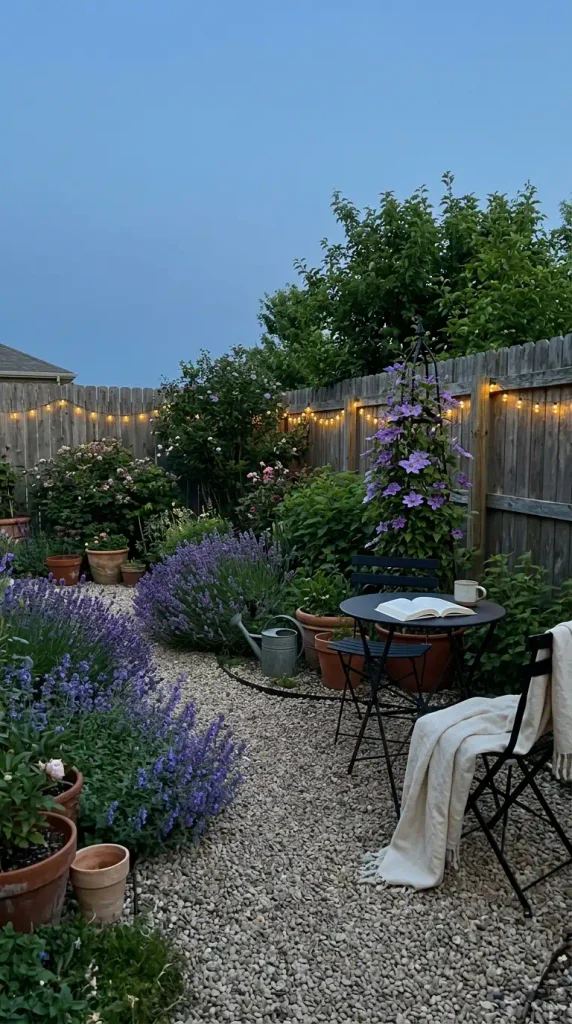
It’s also October, the month that decides how next spring looks. Bulbs, biennials, and self-seeding annuals go in now. So the list opens with the full starter corner, moves through planting, structure, and light, and ends with what to leave alone this fall.
1. Start With the $271 Corner: One Seat, One Obelisk, Four Plants
Five purchases get a bare patch of yard looking like a cottage garden by next weekend. Here’s the exact list, with the prices each store listed online in October 2026.
| Piece | What to buy | Listed price |
|---|---|---|
| 🪑 Seat | IKEA TÄRNÖ table and 2 folding chairs | $99.99 |
| 🌿 Climber support | 6 ft metal garden obelisk (Home Depot) | $57.13 |
| 💜 Anchor plant | 1 gal. ‘Sensational’ lavender (Home Depot) | $34.42 |
| 🌱 Edging | 3 ‘Walker’s Low’ catmint plants at $6.50 (Native Gardeners) | $19.50 |
| 💡 Light | 48 ft solar string lights, 2700K warm white | $59.99 |
| Total | Before tax and shipping | $271.03 |
Put the obelisk in the sunniest corner, the lavender at its foot, and the catmint along the front edge. Drape the lights along the fence top. The obelisk starts empty, and idea #4 covers which climber to grow up it. If you’re collecting small backyard ideas on a budget, this is the base every other idea here builds on.
One honest catch. Those slatted chairs are fine for a chapter, not a whole afternoon. Add a seat pad before you plan a long read.
2. Plant at Ankle, Knee, and Head Height in a Small Backyard
Loose doesn’t mean random. NC State Extension’s cottage garden overview describes them as informal perennial plantings that still take their shape from borders, paths, and hardscape. In a small yard, height does most of that shaping.
Here’s the rule this whole list leans on.
For every 4 feet of fence, plant one thing at ankle height, one at knee to hip height, and one that climbs past your head. Repeat it down the fence and the bed reads full in its first season.
Ankle: creeping thyme or sweet alyssum. Knee: catmint or lavender. Head: clematis, sweet peas, or hollyhocks. Three heights per stretch looks generous even when the bed is only 18 inches deep.
3. Lay a Curved Pea Gravel Path (3 Square Feet per Bag)
Straight paths make a small yard look like a hallway. A gentle S curve slows your eye down, so the space reads longer than it is.
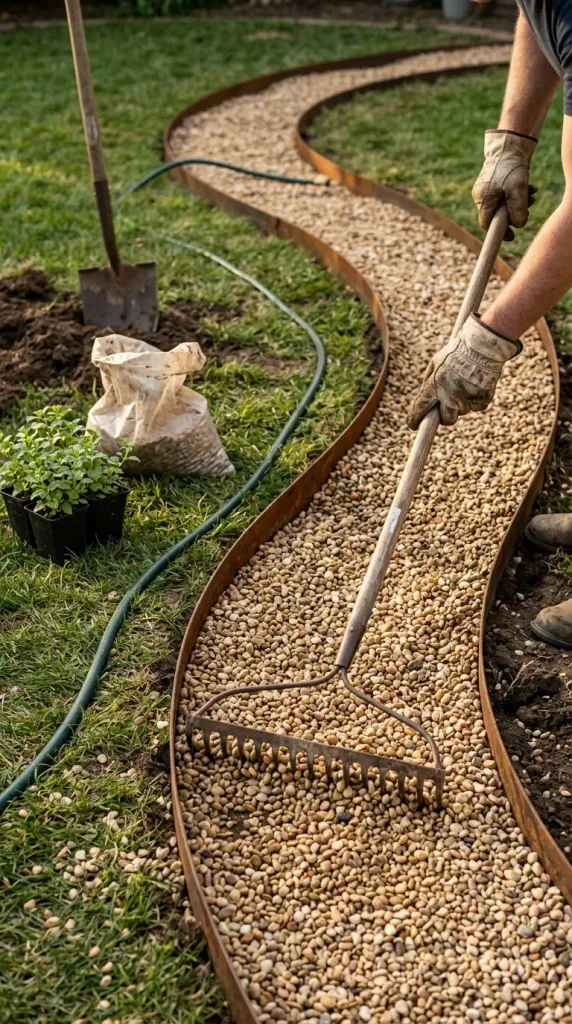
Pea gravel is the easiest way into small backyard landscaping. A 0.5 cubic foot bag runs about $4 to $7, and a Home Depot pallet of 32 bags is rated to cover 96 square feet at 2 inches deep. That works out to 3 square feet per bag, so a 2 by 12 foot path takes 8 bags, roughly $32 to $56.
Lay a garden hose in the curve you want, then cut along it with a spade.
Dig out 2 inches, lay landscape fabric, and pin the edges down.
Pour the gravel, rake it level, and set metal or brick edging so stones stay out of the lawn.
You get a soft crunch underfoot every time someone walks out. Gravel does wander, though, so the edging isn’t optional. If you rent, ask before you dig, or set loose stepping stones on the grass instead. For more layouts, see these cottage garden paths that hold up underfoot.
4. Pick the Right Clematis for the Obelisk
Fence trellises need screws. A freestanding obelisk doesn’t, which makes it the renter’s way to get 6 feet of flowers. The real decision is the vine.
Go with a late-blooming clematis, the kind sold as pruning group 3. These flower on new growth, so care is one cut a year: down to about 12 inches in March. No guessing which stems to save.
Planting matters as much as the variety. Set the root ball a couple of inches deeper than it sat in the nursery pot, then shade the base with a low plant or a flat stone. Clematis wants its head in the sun and its roots cool.
Skip the short 4-foot obelisks. A vigorous clematis tops them by midsummer and flops over the side.
5. Layer a Bulb Lasagna Pot in October
Most cottage garden photos you save were planted the fall before. Spring bulbs go in now, and one deep pot can hold three waves of bloom.
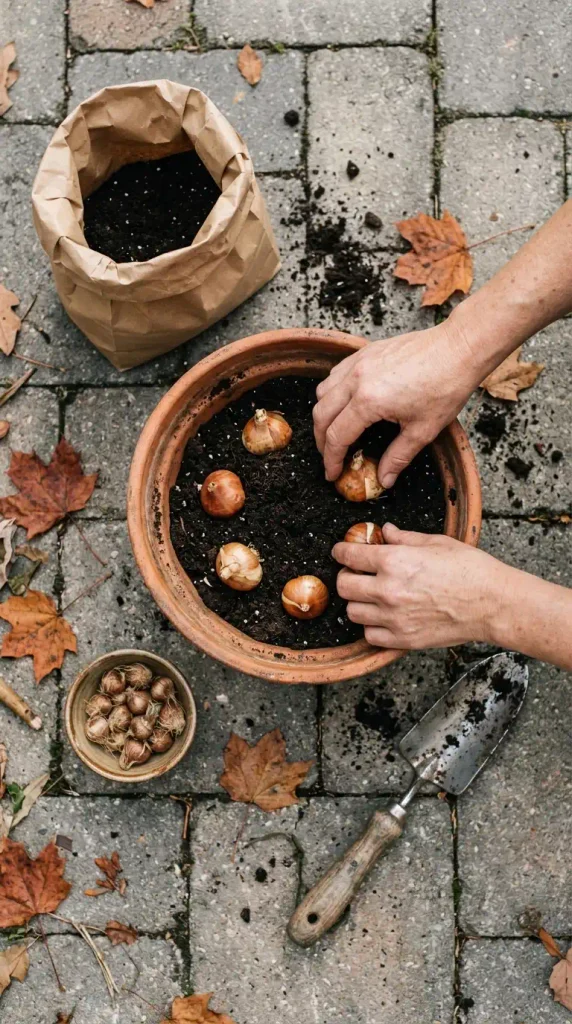
Stack it like this:
- Bottom layer, about 8 inches down: tulips or daffodils.
- Middle layer: alliums or hyacinths.
- Top layer, just under the surface: crocus or grape hyacinth.
Use a pot at least 12 inches deep with a drainage hole, and cover each layer with a few inches of potting mix before the next goes in.
💡 Quick Tip
In zone 5 or colder, park the pot in an unheated garage or shed for winter. Bulbs need the cold, but soil in a pot freezes harder than soil in the ground.
Come spring, the crocus shows first, the tulips follow, and the alliums finish the run.
6. Edge Every Bed With Walker’s Low Catmint
Catmint is the plant that makes a new bed look settled. ‘Walker’s Low’ was the 2007 Perennial Plant of the Year, and it earns that title with lavender-blue spikes, soft gray-green leaves, and bees on it all summer.
The name fools people, because it isn’t a low plant at all. Give each one 2 feet along the front of a bed, then shear it by half once the first flush fades. A second round of flowers follows. Brush past it on the way to the chair and you’ll smell something between mint and crushed sage.
7. Build a Raised Bed That Spills Over Its Sides
Raised beds fix bad soil and save your knees. The cottage trick is hiding the edges so it never looks like a box.
| Cedar boards | Galvanized metal |
|---|---|
| Warm wood that weathers to silver gray | Cool farmhouse gray from day one |
| Stays cooler in full sun | Warms soil fast in spring, runs hot in July |
| Freestanding, no digging needed | Freestanding, no digging needed |
Either way, plant the outer 6 inches with trailers: creeping thyme, nasturtiums, sweet alyssum. By midsummer the frame disappears under them. More shapes and materials live in our guide to raised bed ideas without the tidy box look.
8. Line the Back Fence With Hollyhocks
Nothing says cottage like flowers taller than the fence.
Hollyhocks reach 5 to 8 feet, and they’re biennial. Year one is a rosette of leaves, year two is flowers. Buy second-year plants this fall if you want blooms next summer.
Plant along a south or west fence in full sun.
Tie each stalk loosely to a stake at about 3 feet.
Let a few flowers drop seed for next year’s plants.
Crowding them, since rust spreads on damp, still leaves.
Watering the leaves late in the day.
Rust shows up as orange bumps under the leaves. Pull the worst lower leaves and keep going; the flowers still come.

9. Hang Planter Boxes Over the Fence Top
Fences hold more garden than most beds. Over-the-rail planter boxes hook across the top board, so nothing gets screwed into a fence you don’t own.
Before you buy
Watch the weight. A full box gets heavy after a soaking rain, so hang it near a solid post, not mid-panel on an old fence.
10. Hang an Arched Mirror to Fake a Garden Gate
An arched outdoor mirror leaned against the back fence reads like a doorway into another garden. Frame it with a climber and the edge disappears.
A flat brown fence that marks exactly where the yard stops.
An arch of reflected flowers and sky, with the fence line lost behind ivy.
Two rules keep it working. Angle the mirror slightly so it reflects plants, not your chair or the back door. And tuck foliage around the frame, because birds can fly into a clear reflection of sky. Use acrylic mirror outdoors, since glass can crack in a hard freeze.
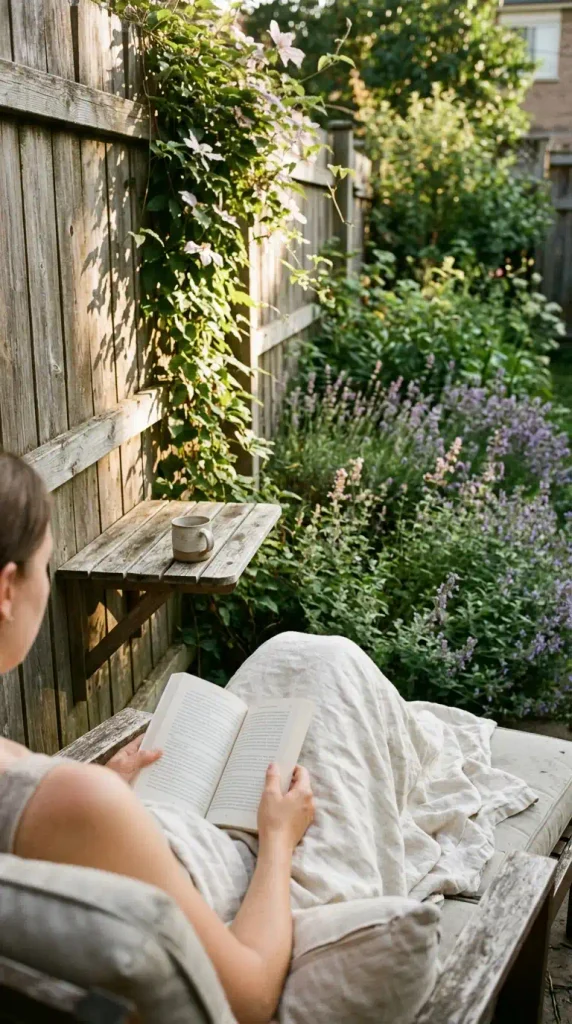
11. Give the Garden One Real Reading Seat
Every list of small backyard ideas mentions seating. Few explain how to make a chair you’ll actually sit in for an hour. Here’s the setup that gets a garden used:
- ▸Back to the fence, facing the planting, never facing the house.
- ▸A side table within arm’s reach, so the mug isn’t on the gravel.
- ▸Afternoon shade over the page. Bright sun on white paper is hard on the eyes.
- ▸A seat cushion and an outdoor throw that live in a dry box, not on the chair.
The IKEA ASKHOLMEN wall table and folding chair ($79.99) suits a strip of fence only a few feet wide, since the table folds down flat. It screws to the boards, so renters should ask first or stick with the freestanding TÄRNÖ set from idea #1. For the indoor version of this corner, borrow ideas from our cottagecore reading corner with florals.
12. Tuck Thyme Between the Pavers
Bare cracks between patio stones are wasted planting space. Creeping thyme fills them, handles light foot traffic, and gives off a herby smell when you step on it.
The old cottage gardens were kitchen gardens first. A few herbs underfoot and in pots by the door keep that roots-and-recipes feel.
Scrape out an inch of old sand, pack in potting mix, and press in small plugs. Water every other day for the first two weeks.
13. Sow Sweet Peas Up a Twig Teepee
Your pruning pile is a free trellis. Five straight branches about 6 feet long, pushed into a pot or bed and tied at the top, make a rustic teepee that looks older than it is.
Push the branches 8 inches into the soil in a circle, then lash the tops with jute twine.
Soak sweet pea seeds overnight and sow two at the foot of each branch.
Pick flowers often. Cutting them keeps new buds coming.
Timing depends on your winter. In mild areas (zone 8 and warmer), sow this fall. Everywhere else, sow in late winter as soon as the ground can be worked, because sweet peas quit once summer heat arrives.
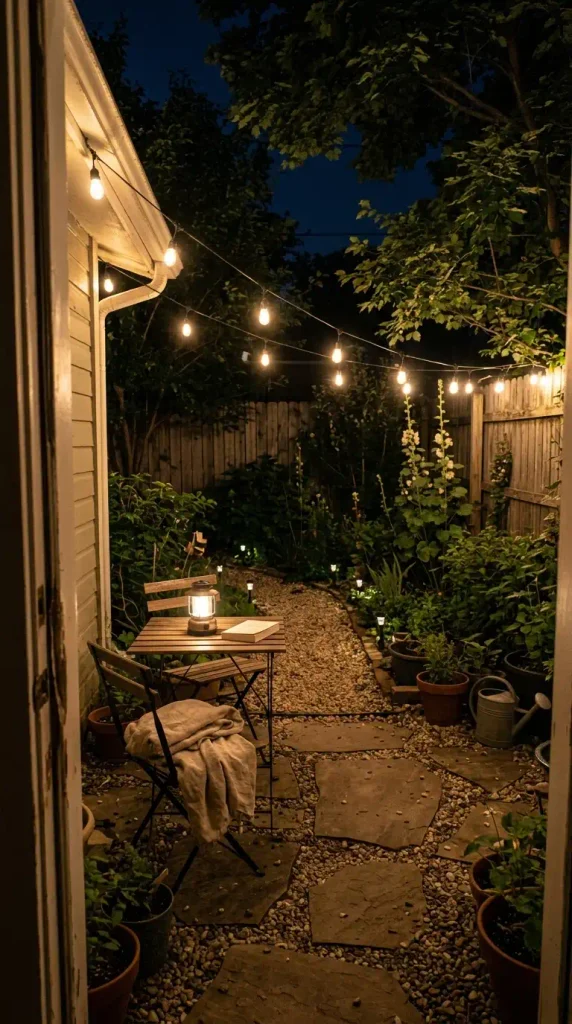
14. Light the Garden in Layers, Not One Bright Strand
String lights set the mood. They won’t light a page. That’s the gap most backyard lighting advice skips.
| Layer | What it does |
|---|---|
| ✨ Solar string lights, 2700K | Warm glow overhead and along the fence line |
| 🏮 Battery lantern on the table | Enough light to read by after sunset |
| 🔦 Solar stake lights | Mark the path edge so nobody steps into the bed |
The 48-foot Brightech Ambience Pro solar strand ($59.99 at Home Depot) uses 2700K bulbs, the same warm color as an indoor lamp, and switches on by itself at dusk. Bulbs rated 4000K and up read blue-white, closer to a parking lot than a porch.
15. Check the Distance Before You Add a Fire Bowl
A fire bowl on a fall evening is hard to beat. In a small backyard, though, measure first.
⚠️ Watch Out
Safety note: anchor tall furniture to the wall, keep candles and cords away from fabric, and use a licensed electrician or contractor for hardwired lighting, ceiling mounts, or anything structural. For open flames outdoors, check your city’s burn rules before you light anything.
The U.S. Fire Administration’s guidance on fire pit distance from your home says to keep fire pits, wood piles, and propane tanks 10 to 30 feet from the house. Plenty of small yards can’t give you that, plus clearance from the fence and overhanging branches.
If yours can’t, skip real flame. A cluster of flameless pillar candles in a metal lantern gives the same flicker with no sparks landing on dry catmint.
16. Set Out a Tub That Holds Water
Moving or still, water pulls birds and bees into a small yard fast. You don’t need a pond.
A galvanized tub, a glazed pot with the hole plugged, or a wide shallow birdbath on the gravel all work. A small solar fountain pump adds the sound of trickling water and runs only when the sun hits its panel.
Keep it clean and safe
Drain it before the first hard freeze, or ice can crack a glazed pot.
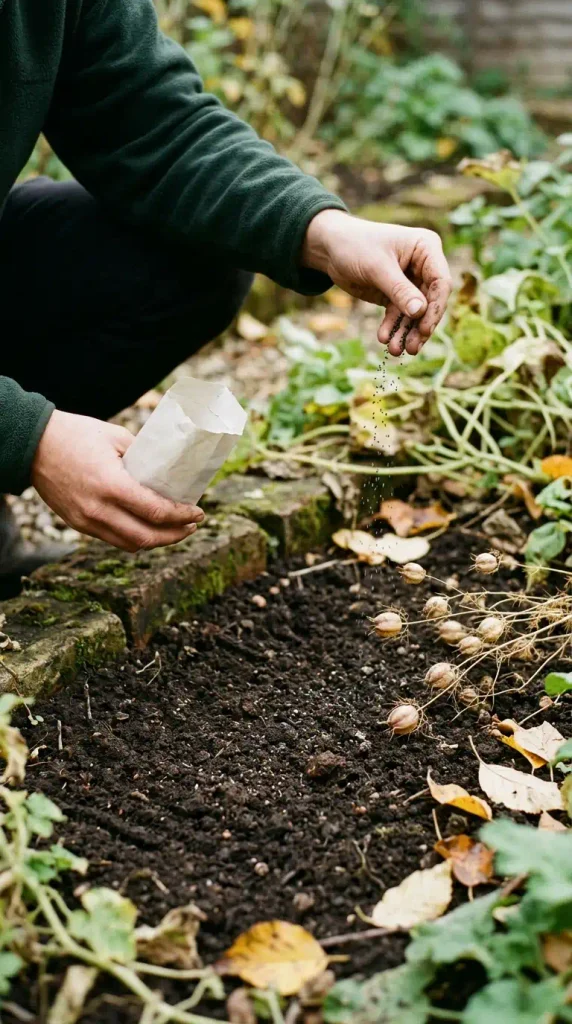
17. Scatter Self-Seeders Now and Let Them Fill the Gaps
Here’s the cottage garden secret that costs a few dollars a packet: plants that sow themselves. Throw the seed this fall, and next year they show up in every gap you missed.
| Self-seeder | What it brings |
|---|---|
| Love-in-a-mist (nigella) | Blue flowers, then striped seed pods for vases |
| Calendula | Orange and gold color until frost |
| Forget-me-nots | A sky-blue carpet under spring bulbs |
| California poppies | Silky flowers in hot, dry spots |
Rake bare soil lightly, scatter the seed, and press it down with your palm. Check each packet’s fall-sowing note for your zone. The trade-off: you give up some control, and every spring you’ll pull a few seedlings that landed in the path.
18. Soften a Bare Fence With a Living Screen
Most small backyards share fences with three neighbors. Privacy matters, but a solid wall of new boards makes the space feel boxed in.
Zip-tie reed or willow screening rolls to the fence you have. They come off clean.
Set long planters of climbers in front, so green covers the screen by summer.
Running bamboo in the ground. It spreads into the neighbor’s yard.
Raising a fence without checking your city’s height limit.
Screening rolls weather to a soft gray in a season or two, which suits the cottage look better than fresh lumber.
19. Stick to Three Flower Colors
Packing plants close only looks lush when the colors agree with each other. More than three flower colors in a small space starts to look like a nursery sale table.
Silver and gray leaves don’t count against the three. They act as the pause between colors. Calendula’s orange is the one hot note worth breaking the rule for, in a single clump.
20. Turn the Shady Side Into a Woodland Corner
Every small backyard has a strip that never sees sun. Stop fighting it.
Ferns, hostas, and heucheras fill the ground layer. Foxgloves add height, with bell-shaped spikes in pink, white, and apricot. Like hollyhocks, they’re biennial, so plant second-year foxgloves this fall for flowers in June.
📌 Good To Know
Every part of the foxglove plant is toxic to people, dogs, and cats. If you have a pet that chews plants or a toddler in the yard, swap in astilbe for the same tall shape.
Shade beds stay cool and damp, so this is also where a hammock or a second chair belongs in July.

21. Grow a Rose in a Pot Instead of a Bed
Roses are the classic cottage shrub, and you don’t need a bed for one. A compact shrub rose grows well in a container on the patio, and it moves with you if you rent.
- ▸Pick a pot at least 18 inches wide and deep. Small pots dry out by noon in July.
- ▸Choose a disease-resistant, repeat-blooming shrub rose, not a hybrid tea.
- ▸Give it six hours of sun, and water at the soil, not over the leaves.
Set it right beside the reading chair. A fragrant variety at nose height is worth more than a dozen roses across the yard.
22. Leave the Seed Heads Up This Fall
Here’s what not to do in October: cut everything to the ground.
Bare soil all winter, no seed for birds, and nowhere for insects to shelter.
Seed heads left standing, hollow stems kept, and leaves raked onto beds as mulch.
Coneflower and black-eyed Susan heads feed finches. Hollow stems give native bees somewhere to spend winter. Frost on standing seed heads also looks better than mud. Cut it all back in early spring, when new growth shows at the base.
23. Group Pots in Threes, at Three Heights
Scattered pots look like clutter. Grouped pots look planned.
Set a tall pot, a medium one, and a low one together, with the tallest at the back. Repeat the same clay color across every group so the yard reads as one design. Then plant each pot the cottage way: one star plant, packed tight with smaller fillers around it so no soil shows.
One pot group, filled
Raise one pot on an upturned clay pot to get extra height for free.

24. Keep Books and Cushions in a Deck Box
Damp paperbacks curl. Damp cushions mildew. Neither should spend a night outside.
A lidded outdoor deck box by the reading seat solves both, and its lid doubles as a side table or a second seat. Look for one with a lid that sheds water and a vent so the inside doesn’t trap humidity.
Toss a few silica packets inside and swap them each season. They’re the difference between a fresh throw and a musty one.
25. Plan the Year on One Card
A cottage garden looks unplanned. It still runs on a calendar. Screenshot this one and keep it with your seed packets.
| Month | Small backyard cottage garden job |
|---|---|
| 🍂 October | Plant bulbs, biennials, and self-seeders. Leave seed heads standing. |
| ✂️ March | Cut clematis to 12 inches, clear last year’s stems, sow sweet peas. |
| 🌷 May | Stake hollyhocks, fill gaps with annuals, set out cushions. |
| ☀️ July | Shear catmint for a second bloom, water pots daily, pick sweet peas. |
Four jobs a year keep the whole thing looking loose on purpose.
Small Backyard Cottage Garden FAQ
How do I make a small backyard look bigger?
Use height and curves. Plant at three levels so your eye travels up, not just across. Lay a curving path instead of a straight one, since a bend hides where the yard ends. Keep flower colors to three, cover fences with climbers so the boundary blurs, and lean an arched outdoor mirror against the back fence to suggest a second garden behind it.
Can you make a cottage garden in pots?
Yes. Group pots in threes at different heights, plant each one tight with a star plant and smaller fillers, and repeat the same pot color across the yard. Lavender, catmint, compact shrub roses, sweet peas on a small obelisk, and trailing thyme all do well in containers. Use pots at least 12 inches deep, and 18 inches for roses.
When should I start a cottage garden?
Fall is the best start. October is the month to plant spring bulbs, set out second-year biennials like hollyhocks and foxgloves, and scatter self-seeding annuals such as nigella and calendula. Perennials planted now root in over winter. Spring is the second window, for sweet peas, new perennials, and annuals that fill the gaps once frost has passed.
What can I do with a small backyard on a budget?
Start with one seat, one climber, and a handful of plants. A folding bistro set, a 6-foot metal obelisk, a lavender, three catmint, and solar string lights came to $271.03 at October 2026 listed prices. Add pea gravel for a path at about $4 to $7 a bag, and grow fillers from seed packets instead of buying full-size plants.
What should you not do in a small backyard?
Avoid too many materials, too many flower colors, and scattered single pots, which all make a small space look busy. Skip running bamboo, which spreads into neighboring yards. Don’t put a wood fire bowl closer than safety guidance allows. And don’t cut every plant to the ground in fall, since seed heads feed birds and hollow stems shelter native bees.
What are the easiest cottage garden plants for beginners?
Catmint, lavender, creeping thyme, calendula, and nigella are the most forgiving. Catmint is especially hard to kill: it handles drought and heat, deer and rabbits tend to leave it alone, and it blooms again if you shear it after the first flush. Calendula and nigella grow from seed scattered on bare soil and come back on their own the next year.
Your Cottage Garden Starts With One Corner
You don’t need all 25 ideas this year. Start with the corner from idea #1: one seat, one obelisk, four plants, and a strand of warm light. Get the bulbs and self-seeders in this month, and next spring will do most of the filling for you.
By June you’ll have a small backyard you actually sit in, with a book, a mug, and catmint brushing your ankles.
Save this pin to your outdoor board so the planting calendar is there when March comes around.
Keep reading
More cozy nook ideas
 Cottage Garden & Balcony
Read →
9 English Cottage Mistakes That Flatten the Look, and What to Do Instead
You bought the floral armchair, the ditsy print pillows, and a jug of dried eucalyptus. The corner still looks like a store…
 Cottage Garden & Balcony
Read →
20 Backyard Oasis Ideas on a Budget, Starting With a $152 Corner
Two folding chairs, a small outdoor rug, 24 battery globe lights, and two planters. At IKEA this October, that adds up to…