
16 Kids Homework Station Ideas Little Ones Will Love

Two IKEA pieces, one empty corner, $109.98 before tax. That’s the first kids homework station on this list, and it fits in a rental without a single hole in the wall.
If homework at your house happens on the kitchen table, between the fruit bowl and last night’s mail, you’re in good company. Most families don’t have a spare room for studying. They have a corner by the window, a closet full of coats, or a stretch of counter, and a kid who needs to sit still for 30 minutes.
These 16 homework station ideas work inside those limits. Each one names the actual pieces, says what goes wrong if you skip a step, and gives the renter-safe version first, with the owner upgrade second.
You’ll also get a two-minute fit check so the desk suits your child’s body, not just the room. A desk that sits a few inches too high turns a math sheet into a wiggle contest, and no amount of cute storage fixes that.
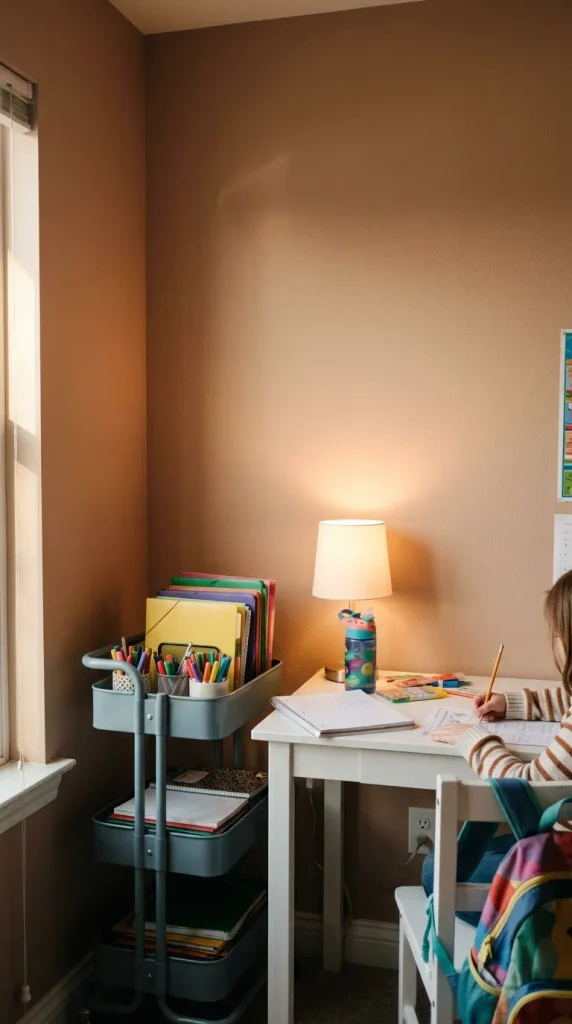
Start with the corner you already have. The first idea is built for exactly that.
1. Two IKEA Pieces, One Corner, $109.98
Start with a MICKE desk and a RÅSKOG utility cart. That’s the whole build.
The MICKE is 28 3/4 inches wide and 19 5/8 inches deep, small enough for the gap beside a dresser or under a window. The RÅSKOG rolls in beside it and holds every supply, so the desktop stays clear for the actual worksheet. It’s the same cart that anchors our rolling cart coffee station, and it works even harder here.
| Piece | What to buy | Price |
|---|---|---|
| 🪑 Desk | IKEA MICKE desk, 28 3/4″ W x 19 5/8″ D x 29 1/2″ H | $69.99 |
| 🛒 Supplies | IKEA RÅSKOG utility cart, 3 tiers on casters | $39.99 |
| 💡 Light | A desk or clamp lamp you already own | $0 |
| Total | IKEA US list prices, October 2026, before tax | $109.98 |
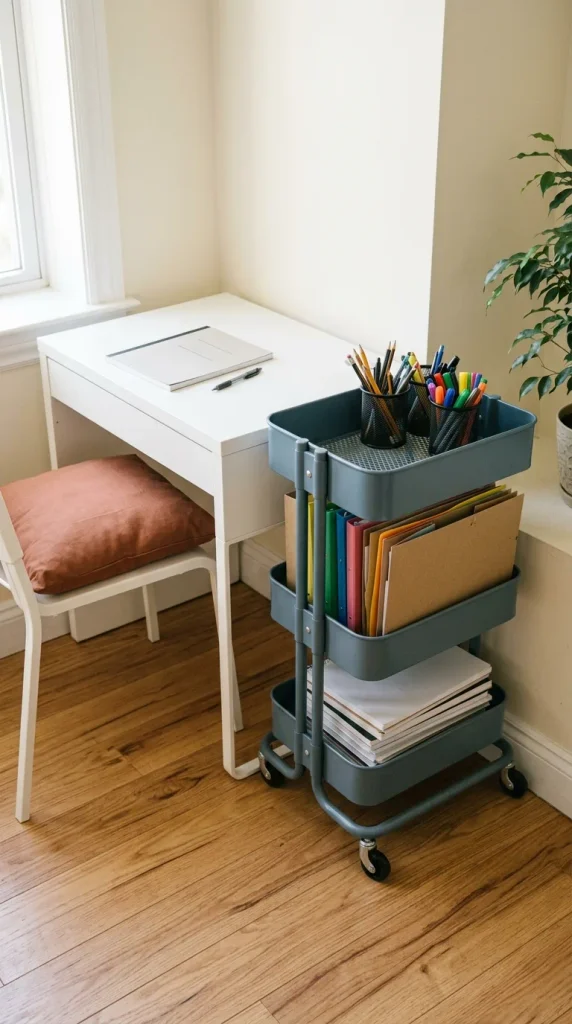
Here’s the catch: the MICKE stands 29 1/2 inches tall, which is adult desk height. A first grader will need a taller seat and something solid under their feet. The next idea shows you how to check.
2. Run the Two-Minute Fit Check Before You Buy a Chair
Most homework fidgeting isn’t a focus problem. It’s a feet problem.
When a child’s feet dangle, they hook them around the chair legs, slide forward, and slump over the page. Cornell University’s ergonomics researchers note that a footrest gives kids a stable platform and that a seat set too low forces an awkward reach. Their children’s computer ergonomics guidelines are short enough to read during pickup.
So sit your child down with a real worksheet, not an empty desk, and check four things:
The Two-Minute Fit Check
Fail the feet test? A sturdy step stool or a lidded storage bin makes a fine footrest. Run the check again every fall, because kids grow faster than furniture.
3. A Homework Caddy for Kitchen-Table Kids
Some kids will never do homework in their room. They want to be near you, the stove, and the snack drawer, and that works for a lot of families.
The fix isn’t a desk. It’s a homework caddy that lives on a shelf and comes out at 4 p.m. Fill it with only what gets used:
- Six sharpened pencils and one good eraser
- A 12-inch ruler and a glue stick
- Blunt-tip scissors and a pack of sticky notes
- Two highlighters and a simple kitchen timer
Skip the 64-pack of markers. Every extra item becomes a reason to stop working.
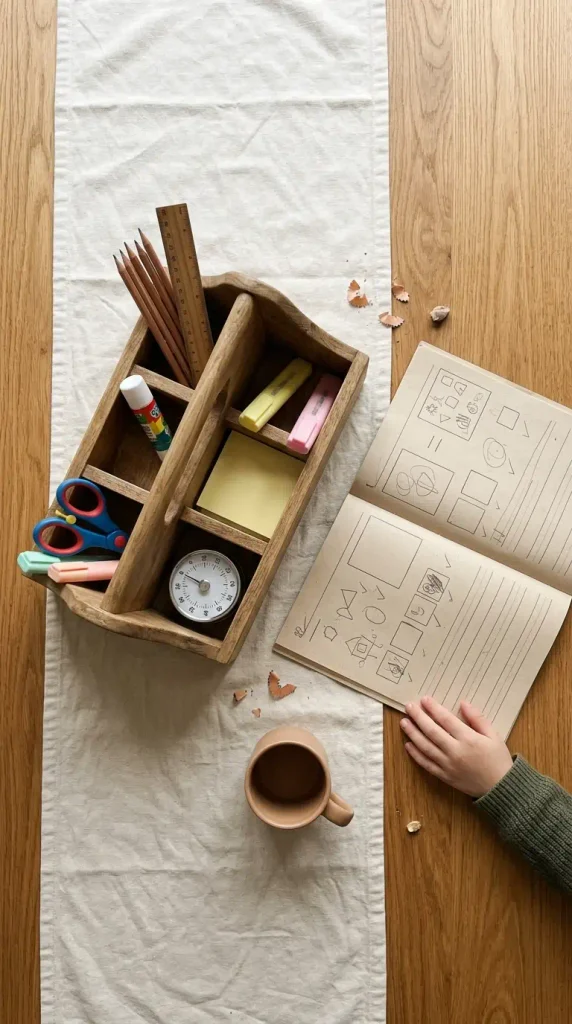
The rule that keeps it working: the caddy goes back on its shelf before the dinner plates come out. Otherwise it drifts.
4. Park a Reading Chair Two Steps From the Desk
Twenty minutes of nightly reading is homework too, and it rarely goes well at a desk.
Give reading its own seat a few steps away. A small armchair, a kid-size sofa, or a floor cushion with a backrest all work. When your child moves from the desk to the chair, it sends a clear signal that the worksheet part is over and the story part has started.
Floor cushions photograph great. After half an hour without back support, most kids start sliding sideways, so pick something with a back or push the cushion against a wall.
The reading-log corner kit
Bonus: one basket for library books means fewer surprise late fees.
5. Take the Doors Off a Closet and Call It a Study Nook
A reach-in closet is already a three-sided booth. It blocks side distractions, hides clutter, and keeps the homework mess out of the main room.
Bifold doors, a rod of outgrown clothes, and a floor of shoes nobody wears.
Doors stored, a desk sized to the opening, a clamp lamp on the shelf, and a curtain on a tension rod to close it all off at night.
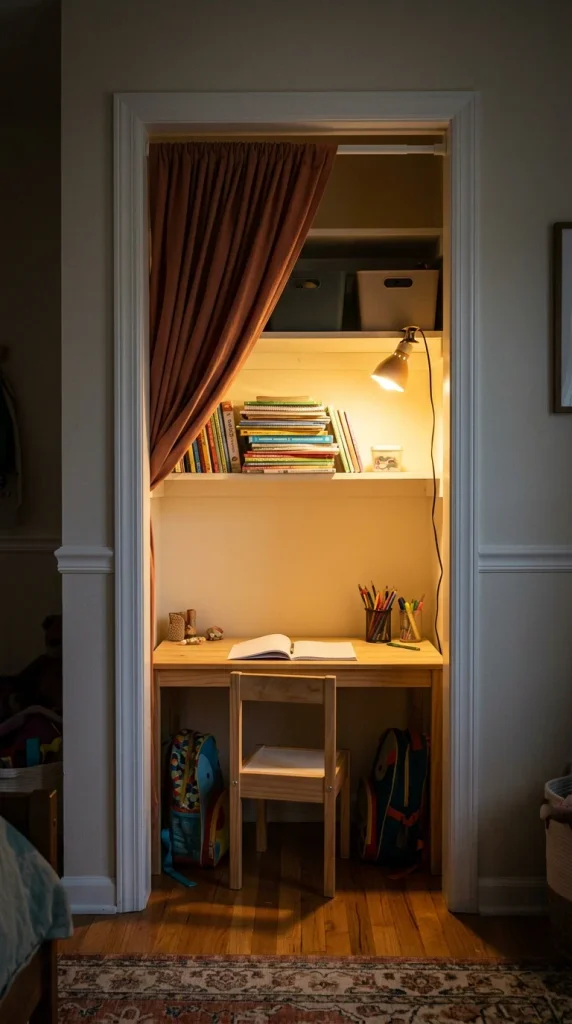
Renters, lift the doors off their track and bag the hardware with a label so move-out day is easy. Then measure the door opening, not the closet. The opening is usually narrower, and that’s where desks get stuck.
6. Claim the Floor Under a Loft Bed
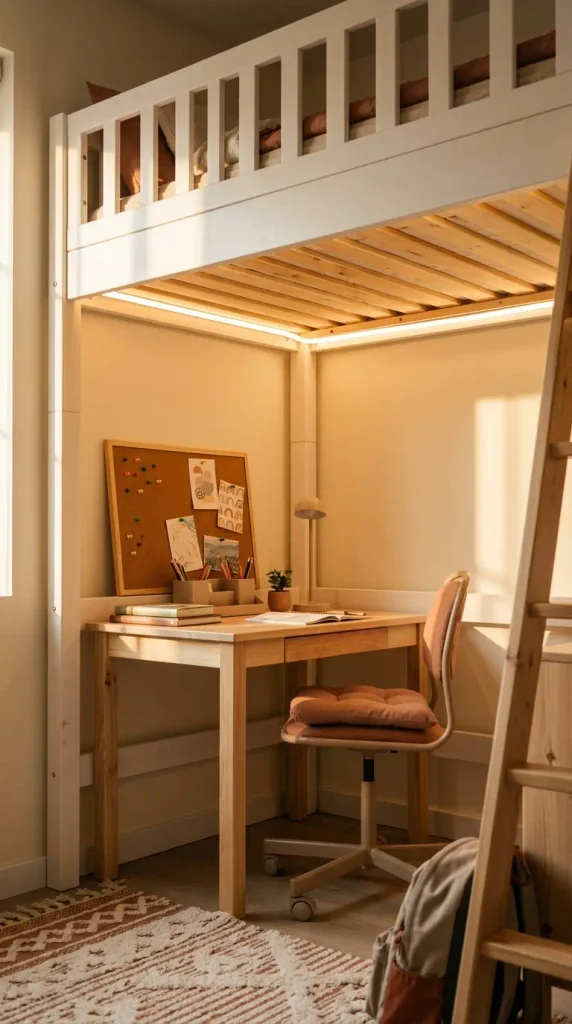
Lofting the bed hands you a whole square of floor, and a desk fits under it with room left for a chair.
Three things make it work:
- Headroom. Your child should sit up straight without the bed frame brushing their hair.
- Light. Under a loft is the darkest spot in the room, so add a clamp lamp or a plug-in LED strip under the frame.
- Guardrails. Rails on both sides of the top bunk, plus the maker’s age guidance.
For loft sizes and layouts that leave a desk-sized gap, see our twin bed layouts for small rooms.
⚠️ Watch Out
Safety note: anchor tall furniture to the wall, keep candles and cords away from fabric, and use a licensed electrician or contractor for hardwired lighting, ceiling mounts, or anything structural.
7. Fold-Down Wall Desk or Folding Table: Pick Your Path
Wall space beats floor space in a tight hallway or a shared bedroom. You’ve got two ways to use it.
| 🔑 Renter path: folding table | 🔨 Owner path: fold-down wall desk |
|---|---|
| No holes. Folds flat and slides behind a door or dresser. | Screws into wall studs. Stays put and never wobbles. |
| Supplies live in a caddy or cart nearby. | Many models hide a shallow shelf behind the flap. |
| Setup takes a minute every afternoon. | Setup takes one second, but install takes an afternoon. |
Either way, check the depth before you buy. Some fold-down desks are too shallow for a laptop and an open notebook side by side, and kids end up balancing the notebook on their lap.
8. A Pegboard Command Wall Above the Desk
Paper, pencils, and the glue stick that always vanishes all go up instead of out. A pegboard frees the whole desktop.
IKEA’s SKÅDIS pegboard comes in a 30 by 22 inch size for $29.99 and a narrower 14 1/4 by 22 inch size for $19.99. Screws aren’t included, and IKEA warns it has to be anchored securely. If your lease bans holes, skip it and use a desktop organizer instead.
Any bookcase or hutch beside the desk needs anchoring too. The CPSC estimates about 11,000 children a year were treated in emergency rooms for tip-over injuries from 2016 through 2018. Its Anchor It furniture strap steps walk you through the brackets, the strap, and the tug test.
Have your child sit at the desk, then mark the board’s center at their eye level, not yours.
Find the studs or use wall anchors rated for your wall type before hanging the rail.
Hang daily tools low and in reach, and put rarely used ones up high.
9. One Long Desk, Two Kids, a Line Down the Middle
Sibling homework usually falls apart over elbows, not math.
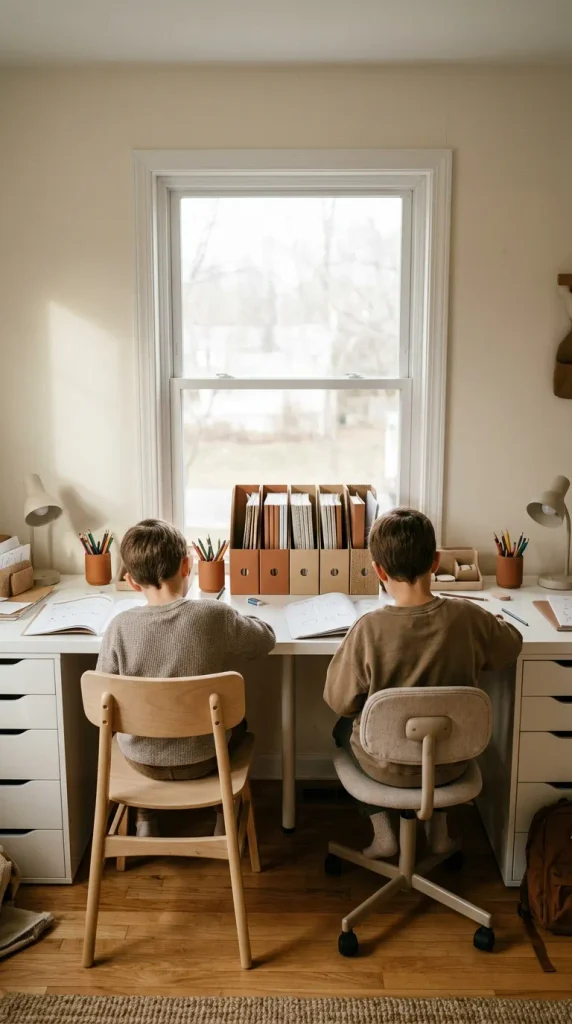
The fix is one long desktop instead of two small desks. Lay a single top across two drawer units and you get one surface with a built-in gap in the middle. Each kid gets their own caddy, their own lamp, and their own half.
Set a low divider in the middle, like a row of magazine files.
Seat the kid who’s easily distracted farther from the door.
Give each side a matching supply set so nothing gets “borrowed.”
One shared pencil cup in the middle.
Seating them face to face across a table.
One lamp aimed between them that lights neither page well.
When both halves look the same, nobody can argue that the other side got the better one.
10. Put the Lamp on the Side Opposite the Writing Hand
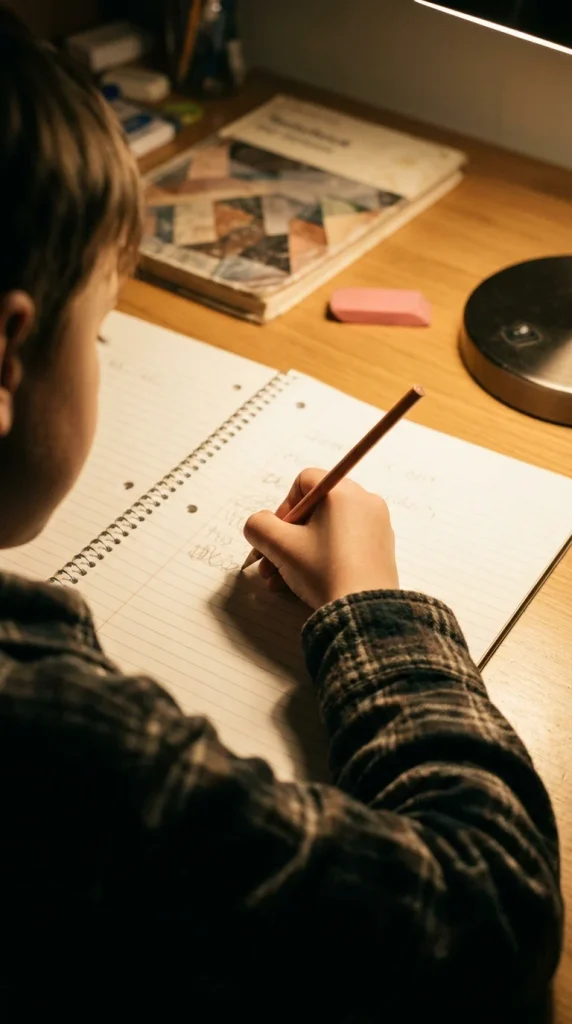
Right-handed kids need the lamp on their left. Left-handed kids need it on their right.
Get it backward and the writing hand throws a shadow right over the words they’re forming. You’ll see them lean and squint and twist the paper sideways to escape it.
Light that comes from the non-writing side lands on the page in front of the pencil, so the hand never shades its own work.
Bulb color matters too. The warm 2700K glow that suits a reading nook can feel sleepy on a worksheet, so a neutral white bulb in the desk lamp often reads crisper. Tuck the cord behind the desk so feet can’t catch it.
11. A Low Table and Floor Cushion for Kindergarten Homework
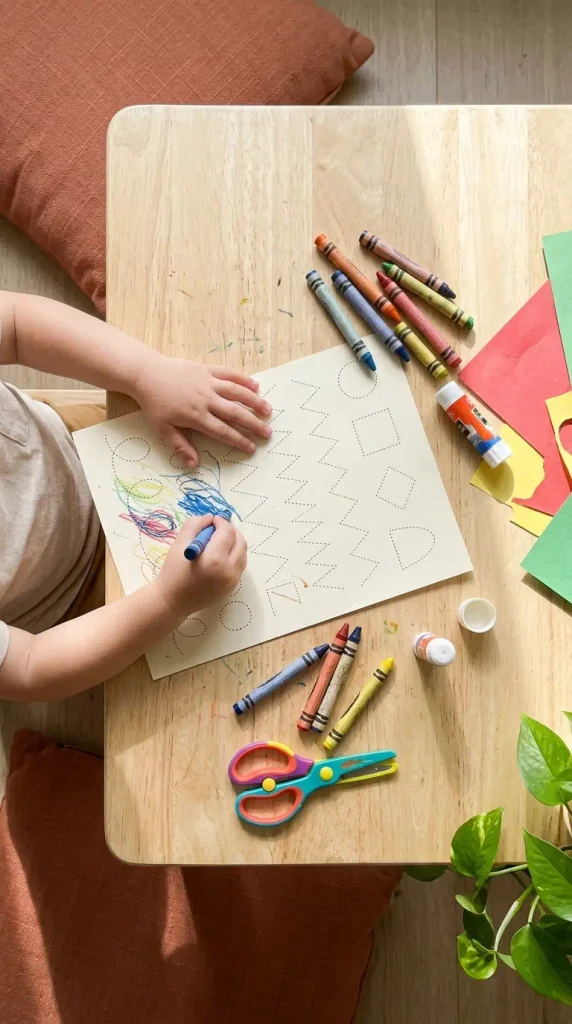
Kindergarten homework is mostly coloring, tracing, and cutting. A full adult-height desk is too much for that.
Set a sturdy kids table low enough that your child’s elbows rest on it, and add a small chair or a firm floor cushion. Their feet stay on the ground, which makes the whole fit check easy.
The downside is plain. Your child will outgrow it, so pick a table that can turn into a play table or a plant stand later.
12. Tuck a Desk Into the Space Under the Stairs
Under-stair alcoves are often dead space with a vacuum and three umbrellas. Clear it out and you’ve got a quiet, tucked-away homework spot away from the TV.
Slide in a freestanding desk that fits the tallest part of the slope, so your child sits where the ceiling is highest. Light is the weak point here. Under stairs, even daytime feels dim.
📌 Good To Know
A plug-in wall sconce or a battery LED puck light needs no wiring. Anything that cuts into the stair structure is a job for a licensed contractor.
Measure the headroom with your child in the chair, not standing. A bumped head on day one kills the whole idea.
13. Choose the Quietest Corner, Then Make It Quieter
Noise wrecks homework faster than a messy desk does. Pick the spot farthest from the TV and the front door, then soften what’s left:
- ▸Face the desk toward a wall, not toward the room.
- ▸Lay a washable rug under the chair to dull the scrape of chair legs on hardwood.
- ▸Stick felt pads under the chair feet for floors without a rug.
- ▸Keep a pair of over-ear headphones on a hook for noisy sibling nights.
- ▸Give phones and tablets a parking spot across the room.
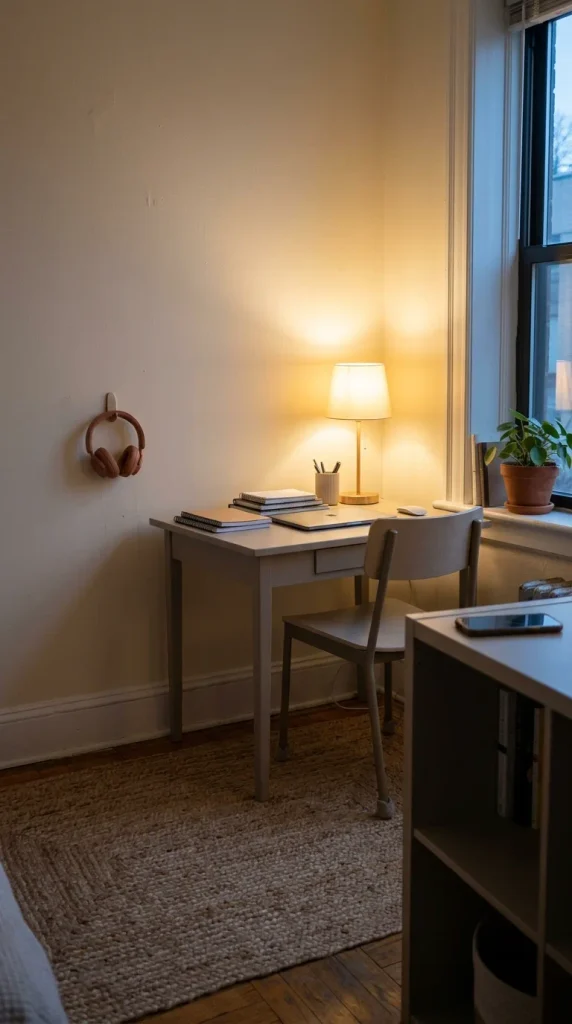
Nobody will thank you for the felt pads. You’ll just hear fewer chair scrapes at 7 p.m.
14. Build an Inbox, a Sign-Me Tray, and a Done Pile
Permission slips have a way of turning up crumpled at the bottom of a backpack the morning they’re due. Three trays on the desk stop that.
Stacking letter trays work fine and take up about the footprint of one sheet of paper. Your one job is checking the Sign Me tray at the same time every night, maybe while dinner’s in the oven.
15. End Every Session With a Five-Minute Reset
Five minutes at the end keeps tomorrow’s homework from starting in a mess.
Pencils back in the cup, points up, and the dull ones sharpened now instead of tomorrow.
Every loose paper goes into the Inbox, Sign Me, or Done tray.
Backpack zipped and hung on the chair or parked by the door.
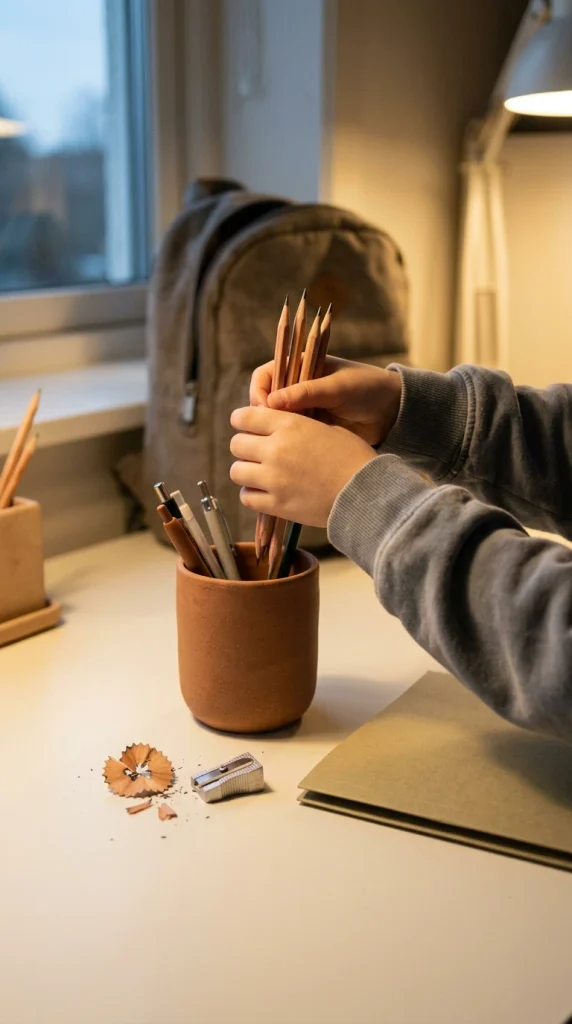
Set a kitchen timer for the reset so it feels like a race instead of a chore. The smell of pencil shavings and the zip of the backpack become the sound of homework being finished.
16. Buy a Kids Study Area That Grows With Them
Themed desks get outgrown fast. A plain desk at regular height, a chair that adjusts, and a footrest you can drop later will last much longer.
| Stage | What changes at the same desk |
|---|---|
| Early grade school | Chair raised high, footrest in place, supplies in a cart within reach. |
| Upper grade school | Chair lowered a notch, footrest smaller, paper trays added for longer projects. |
| Middle school and up | Footrest gone, laptop raised closer to eye level, a pegboard or ledge for their own stuff. |
By the tween years, the desk stops being a homework spot and becomes their own zone. Our teen bedroom ideas that feel grown-up pick up right where this list leaves off. Buy for the kid they’ll be at 12, not the one they are at 6.
Kids Homework Station FAQ
Where should a homework station be in the house?
Put it where your child will actually use it. Younger kids usually do better near a parent, like a corner of the kitchen or living room, so help is close. Older kids often focus better in a quieter spot such as a bedroom corner or under-stair nook. Wherever it goes, face the desk toward a wall and away from the TV and the front door.
What should be in a kids homework station?
Keep it to the basics: sharpened pencils, a good eraser, a ruler, a glue stick, blunt scissors, sticky notes, highlighters, and a timer. Add a desk lamp, a chair that fits your child, a footrest if their feet dangle, and a simple paper system. Leave extra art supplies elsewhere so they don’t turn homework time into craft time.
How do you make a homework station in a small space?
Use what’s already there. A closet with the doors off, the floor under a loft bed, the alcove under the stairs, or a narrow desk beside a dresser can all work. Keep supplies on a rolling cart or in a caddy that stores away, and look for a folding table if you can’t spare floor space full time.
Is it better for kids to do homework in their bedroom or at the kitchen table?
It depends on the child and their age. Many younger kids need a parent nearby, so the kitchen table with a homework caddy works well. Kids who get distracted by noise or siblings often focus better in a quiet bedroom corner. Try one setup for two weeks, watch how long homework takes, and switch if it isn’t working.
What height should a kids desk be?
There’s no single number, because it depends on your child’s size and the chair. Use a fit check instead: feet flat on the floor or a footrest, knees about level with the hips, and elbows near desk height with relaxed shoulders. Most standard desks are adult height, so a younger child usually needs a taller chair plus a footrest.
How do I keep a homework station organized?
End every session with a five-minute reset. Pencils go back in the cup, loose papers go into an Inbox, Sign Me, or Done tray, and the backpack gets zipped and parked. Limit supplies to what gets used each week. A parent checking the Sign Me tray at the same time every night keeps permission slips from going missing.
Start With One Corner This Week
The best kids homework station is the one your child actually sits at, and that usually comes down to a few unglamorous things. Feet that touch something solid. A lamp on the right side. A quiet wall to face. A five-minute reset at the end.
Pick the idea that fits the space you already have. A closet, a loft, or the kitchen table all count. Set it up before Monday. Check the fit again when the school year turns over.
Save this list to your kids’ room or back-to-school board so it’s ready when the next growth spurt hits.
Keep reading
More cozy nook ideas
 Small Spaces
Read →
Small Spaces
Read →
10 Small Reading Nook Ideas for Adults
One high-back chair, one clamp-on lamp, one $19.99 tray table. At IKEA US prices this month, that’s a full reading corner for…
 Fall Decor
Read →
Fall Decor
Read →
12 Thanksgiving Tablescape Ideas for Small Spaces (That Still Leave Room for the Food)
Twenty-four inches. That’s how much table edge one person needs to eat without bumping elbows, and it’s the number most Thanksgiving tablescape…
 Home Library & Bookshelves
Read →
Home Library & Bookshelves
Read →
14 Ideas for a Fireplace with Bookshelves on Each Side on a Budget
Two bookcases, two plug-in lamps, two wall straps. At IKEA US list prices this month, that adds up to $237.98 before tax,…