
Reading Nook Lighting Ideas — How to Get the Perfect Cozy Glow
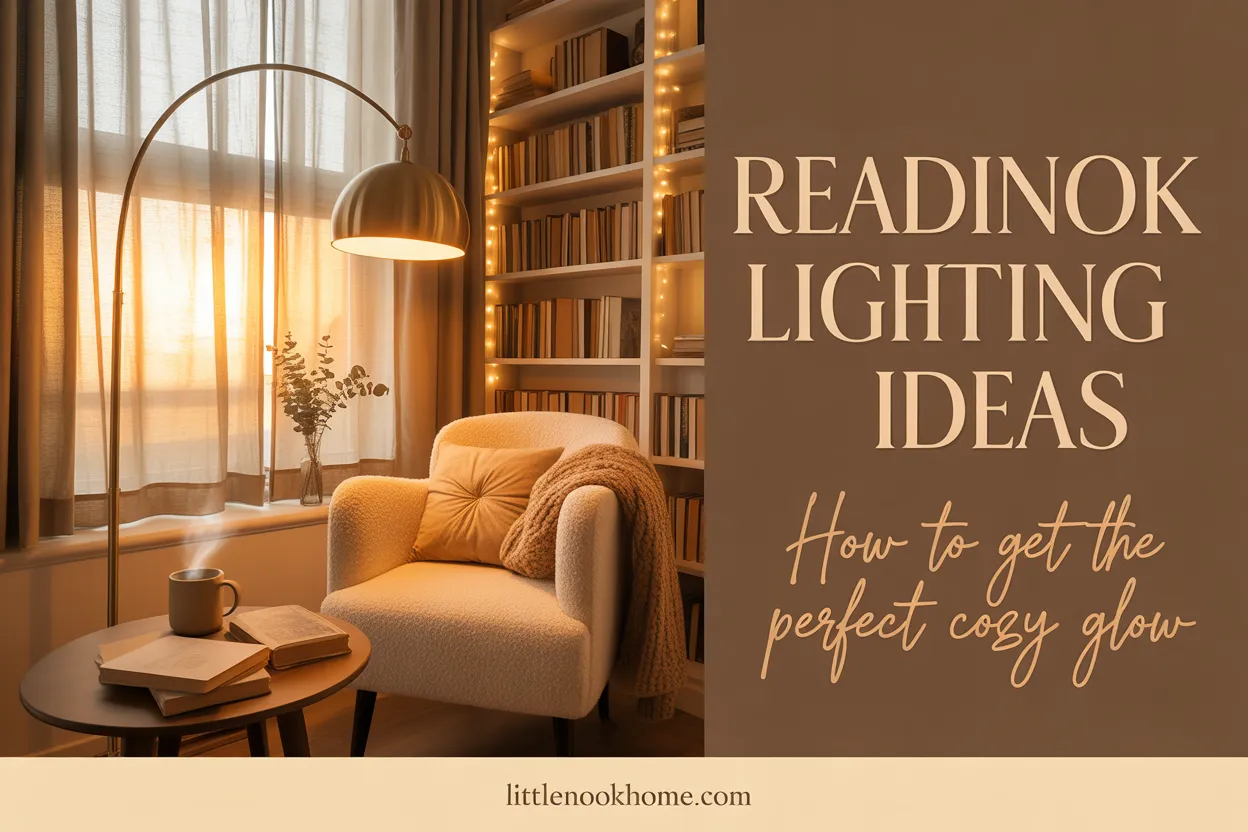
There is a very specific kind of disappointment that comes from finally building the reading nook of your dreams — the chair you obsessed over for weeks, the throw blanket that cost more than it should have, the shelf stacked just right — and then sitting down one evening and realizing the lighting is all wrong. Too bright. Too blue. Too harsh. Suddenly your cozy corner feels like a dentist’s waiting room.
I have been there more times than I’d like to admit, and honestly, lighting is the one thing most people completely underestimate. You can get the chair wrong and survive. Get the lighting wrong, and you’ll never actually sit there.
So if you’ve been scrolling Pinterest saving every soft-lit corner you see (same), this is the guide I wish I’d had. These reading nook lighting ideas are the ones that actually work — tested in real rooms, not just staged photos — and they’ll finally give you that perfect cozy glow.
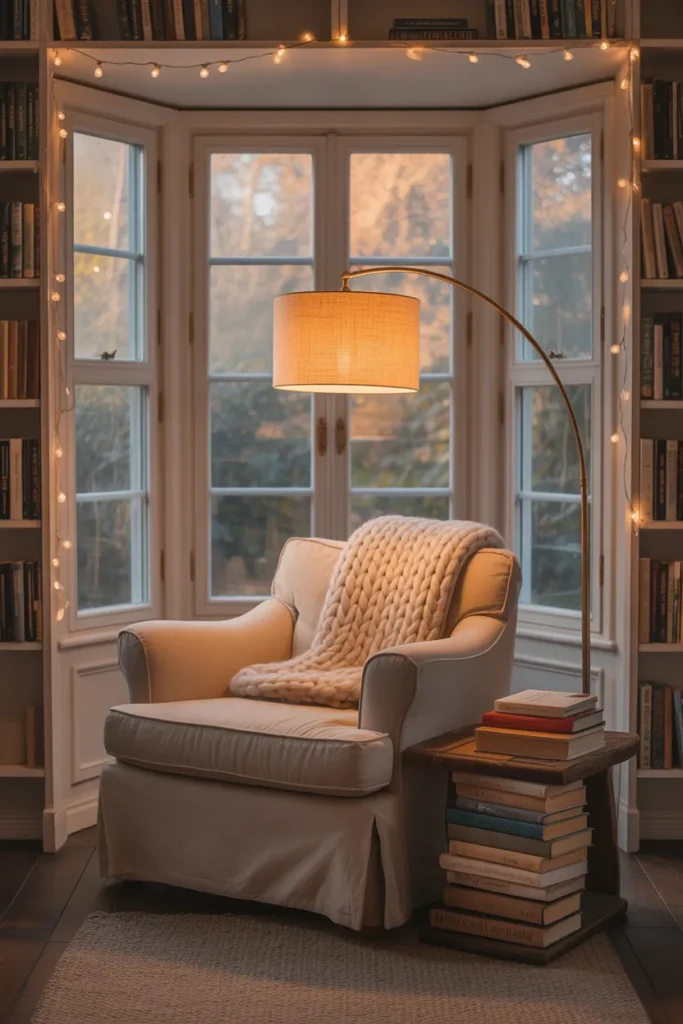
Why Reading Nook Lighting Ideas Matters More Than You Think
Pinterest searches for “reading nook ideas” jumped 245% this year, and every single one of those saved pins has one thing in common — the lighting. It’s never the chair that makes a nook feel magical. It’s the glow.
Good lighting does three things at once. It lets you actually read without squinting, it creates an emotional mood that makes you want to sit down, and it quietly sets your circadian rhythm for a better night’s sleep. Harsh overhead bulbs do the opposite on all three counts.
The short version? A reading nook without layered, warm lighting is just a chair in the corner.
If you’re still piecing the rest of your space together, my ultimate guide to building a reading nook in any room walks through the full setup — this article picks up where that one leaves off.
The Golden Rule: Aim for 2700K–3000K
Before we get into the pretty stuff, one number to remember: 2700K to 3000K. That’s the color temperature range for warm white light — the soft, golden, honey-colored glow that makes rooms feel like hygge in a bulb.
Anything above 4000K starts looking cold and clinical (think hospital corridors). Anything below 2700K can feel a little orange and dim for actual reading. The sweet spot is right in the middle, and most “soft white” or “warm white” LED bulbs will clearly label this on the box.
According to the American Academy of Ophthalmology’s guidance on reading light, warm, diffused light paired with a slightly brighter task source is what prevents eye strain during long reading sessions — which is basically the scientific case for exactly the setup we’re about to build.
Layer Three Types of Light (This Is the Secret)
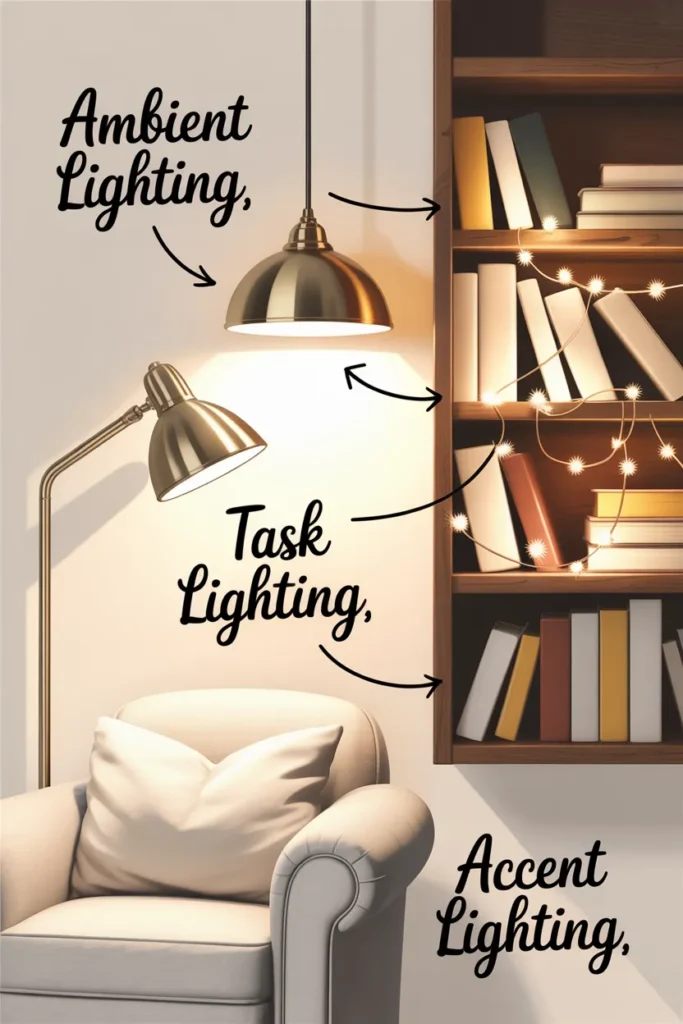
Every interior designer I’ve ever spoken to says the same thing — a reading nook needs layered lighting, not a single source. Three layers, specifically:
Ambient light fills the whole space with a gentle base glow. Think a small ceiling pendant, recessed dimmable downlight, or even a salt lamp in the corner. This is the “room is awake” layer.
Task light is the focused beam that actually hits your book. A swing-arm sconce, an adjustable floor lamp behind your shoulder, or a clip-on reading light on your headboard. This is the layer that saves your eyes.
Accent light is the mood-maker. Fairy lights woven through a bookshelf, a little candle-effect LED flickering on the side table, string lights behind a sheer curtain. This is what makes the whole thing look like a Pinterest screenshot.
When you have all three running at once, especially on dimmers, you get that honey-dipped cinematic glow that no single lamp can give you.
1. The Arc Floor Lamp — The “Just Works” Option
If you only buy one thing, buy an arc floor lamp. It curves over your chair instead of sitting beside it, which means the light lands right on your page without a table being involved.
Look for brass or black finishes with a linen or cream fabric shade — the fabric is doing half the work of softening the glow. A remote-controlled, dimmable version with a 3000K bulb is basically foolproof.
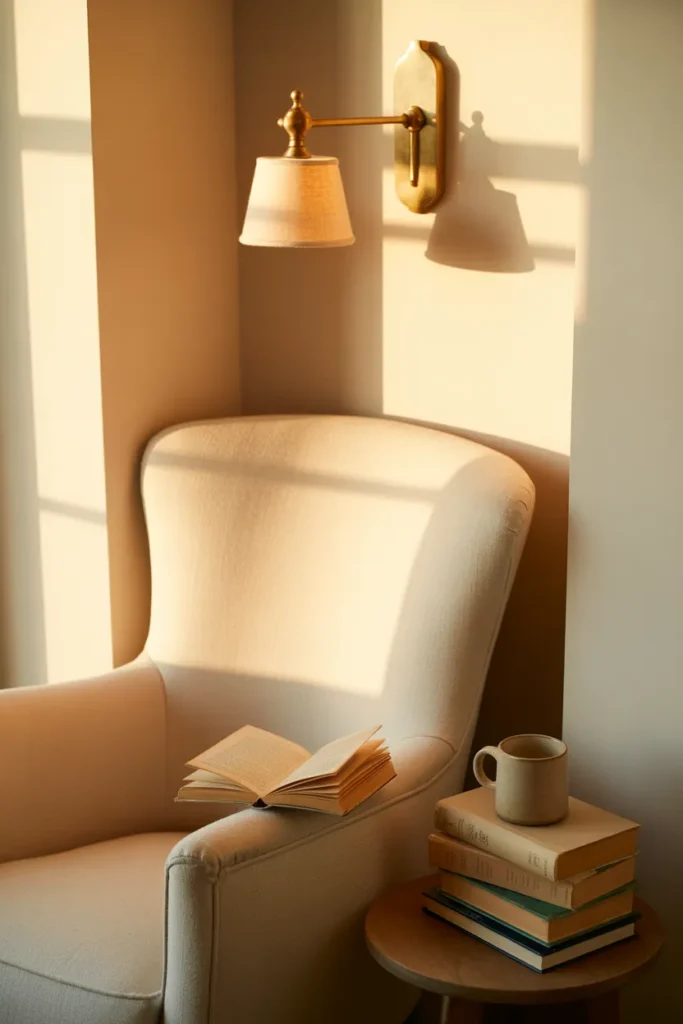
2. Wall-Mounted Swing Arm Sconces
My personal favorite for small spaces. Swing arm sconces bolt to the wall, free up your floor and tabletop entirely, and pivot to exactly where you need light. They are the pin-worthy lighting for reading nooks because they look intentional — like your room was designed, not decorated.
Plug-in versions exist if you rent and can’t hardwire, and they still look stunning with the cord tucked behind the chair.
3. Fairy Lights (Yes, They Actually Work for Adults)
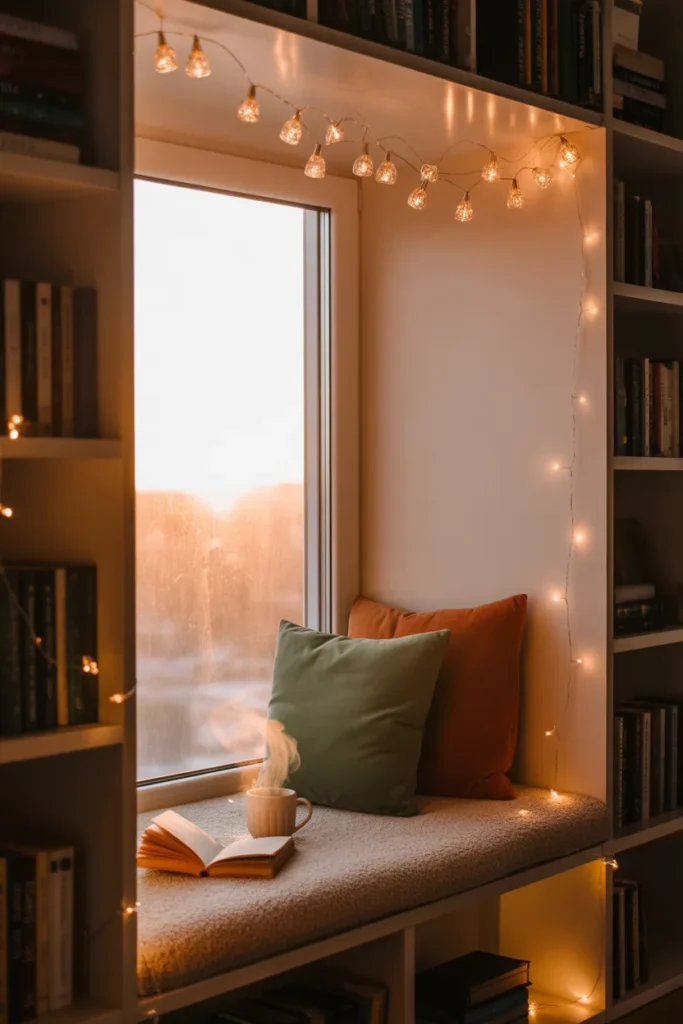
I know, I know — fairy lights sound like a dorm room flashback. But a single strand of warm-white micro LED string lights woven through a bookshelf or framing a window seat genuinely transforms a nook into a place you want to disappear into.
The trick is warm white only — never multicolor, never cool white. Battery-operated copper wire strands are almost invisible during the day and look like fireflies at night. This is the single biggest “wow” upgrade for under $15.
If your nook is in a bedroom, pair fairy lights with the other ideas in my bedroom reading nook ideas guide — they photograph beautifully together.
4. Pendant Lights and Plug-In Mini Chandeliers
A small pendant hung low over a reading chair feels like a boutique hotel moment. Go for something with a fabric, rattan, paper, or pleated shade — anything that diffuses rather than exposes the bulb.
Plug-in pendant kits (with a swag hook to route the cord) let renters get the same look without rewiring. A pleated lampshade in particular is trending hard on Pinterest for 2026 — it adds that little bit of pattern and personality without committing to wallpaper.
5. The Table Lamp With a Story
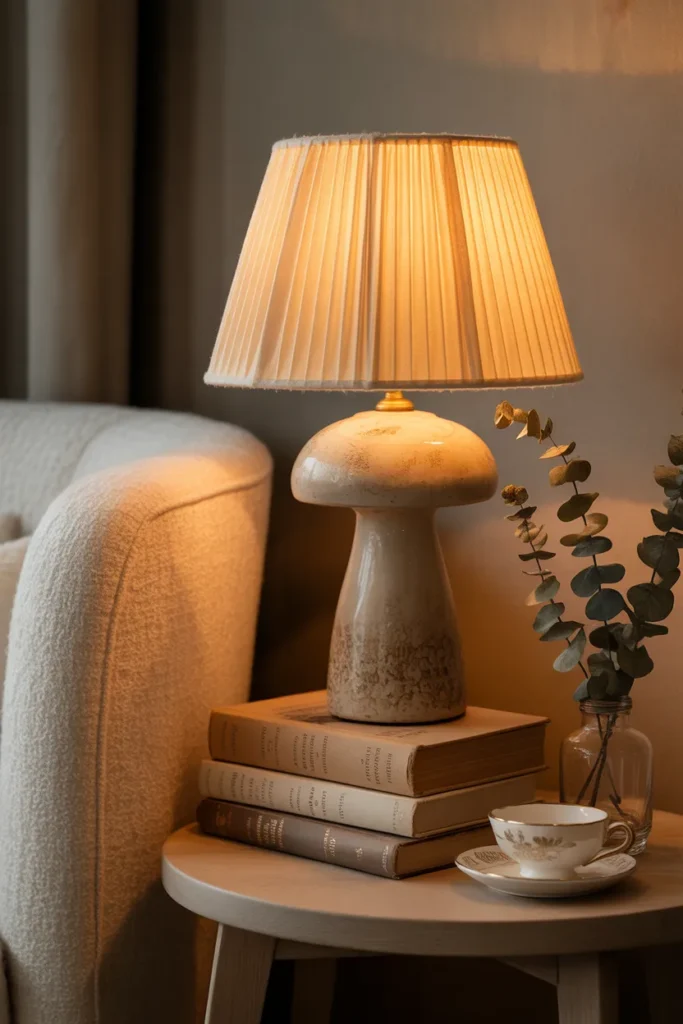
Every good reading nook deserves one “character” lamp — something slightly unexpected. A vintage mushroom lamp, a ceramic gourd-shaped base, a pleated pink shade, a tiny brass library lamp with a green glass shade. Something you’d stop and look at in an antique shop.
Height matters here: 20–34 inches is the sweet spot so the shade sits roughly at shoulder level when you’re seated, directing light onto your page instead of into your eyes.
6. Candles and Candle-Effect LEDs (For the Dark Academia Girlies)
If your aesthetic leans dark academia, moody, or cottagecore, nothing beats candlelight. Real taper candles in brass holders or a chunky pillar candle in a hurricane glass — but obviously don’t leave them unattended near paper.
Flameless flickering LED candles have genuinely gotten so good they’re indistinguishable from the real thing, and they pair beautifully with the other ideas in this dark academia reading nook guide for that full flickering-library mood.
7. Smart Bulbs for Scene-Setting
This sounds extra, but hear me out. Smart bulbs (Philips Hue, Govee, Wiz — all work) let you save scenes. One tap on your phone and your nook shifts from “morning coffee and newspaper” (brighter, 3000K) to “9pm novel mode” (dimmed 2200K, almost candlelight).
According to Sleep Foundation research on light and sleep, dimming to warmer, amber-toned light in the hour before bed actively helps melatonin production — so your reading nook is literally helping you sleep better.
8. Natural Light — The Free Upgrade
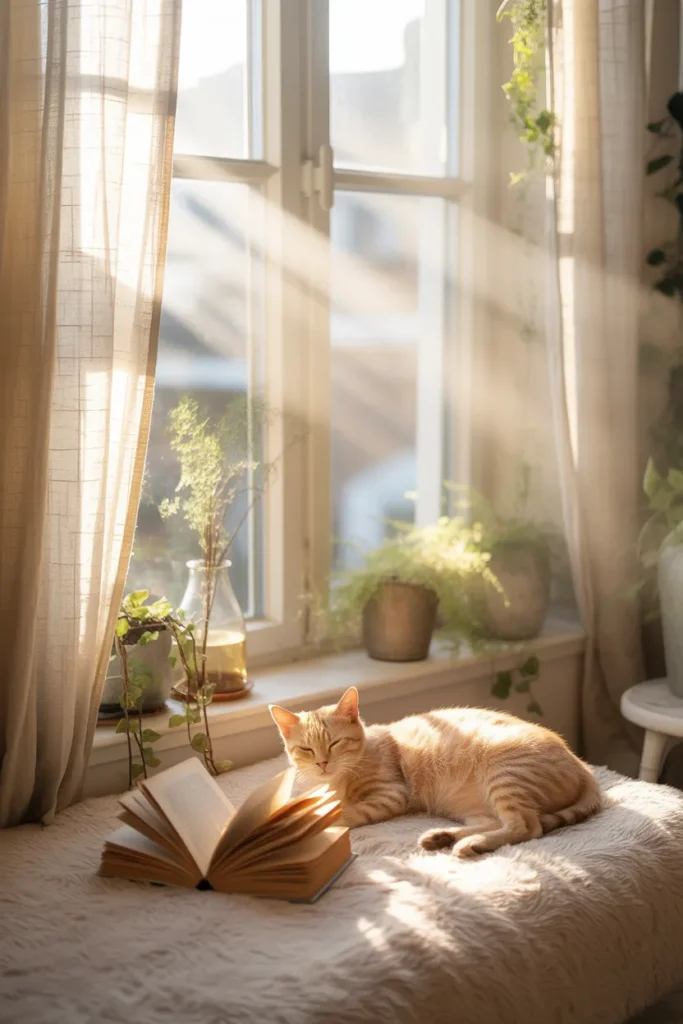
Honestly, the best reading nook lighting idea of all is a sunny window. Position your chair so daylight falls over your shoulder (not in your eyes), add sheer linen curtains to diffuse harsh midday sun, and let your electric lighting take over only after sunset. This is why window seats dominate every Pinterest board.
9. Bookshelf Lighting (The Sneaky Upgrade)
Small battery-operated puck lights or stick-on LED strips underneath your shelves throw a soft wash of light down over your books and across the nook. It’s the kind of detail that makes people ask “where is that light coming from?” No wiring, no commitment, costs about $20.
10. Dimmers on Everything
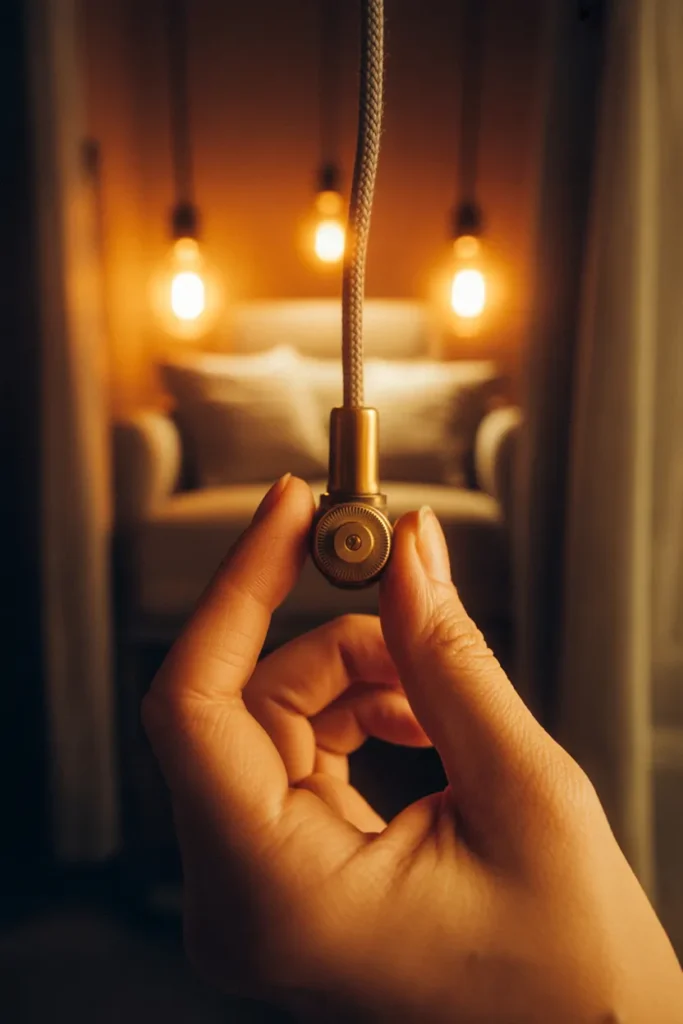
If you take nothing else from this guide, take this: put a dimmer on every light in your nook. Smart plug-in dimmers exist for any lamp with a cord. Dimmable bulbs cost the same as regular ones. And the ability to drop from 100% to 20% is the difference between “reading” and “retreat.”
Common Reading Nook Lighting Mistakes to Avoid
A few traps I’ve personally fallen into, so you don’t have to.
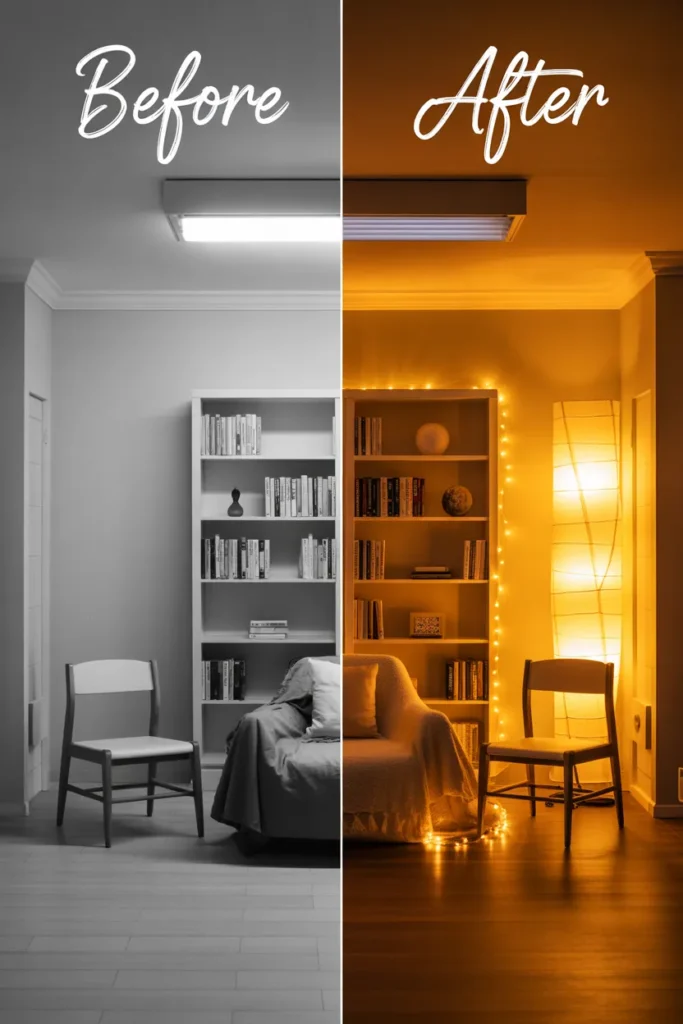
Relying on overhead lighting alone — it casts shadows on your book and flattens the whole mood. Always add at least one lower, side source.
Using cool white or daylight bulbs — 5000K is great for a kitchen, disastrous for a reading nook. Always warm white.
Placing the light source in front of you — glare. Put task light behind your shoulder or directly above and slightly behind your head.
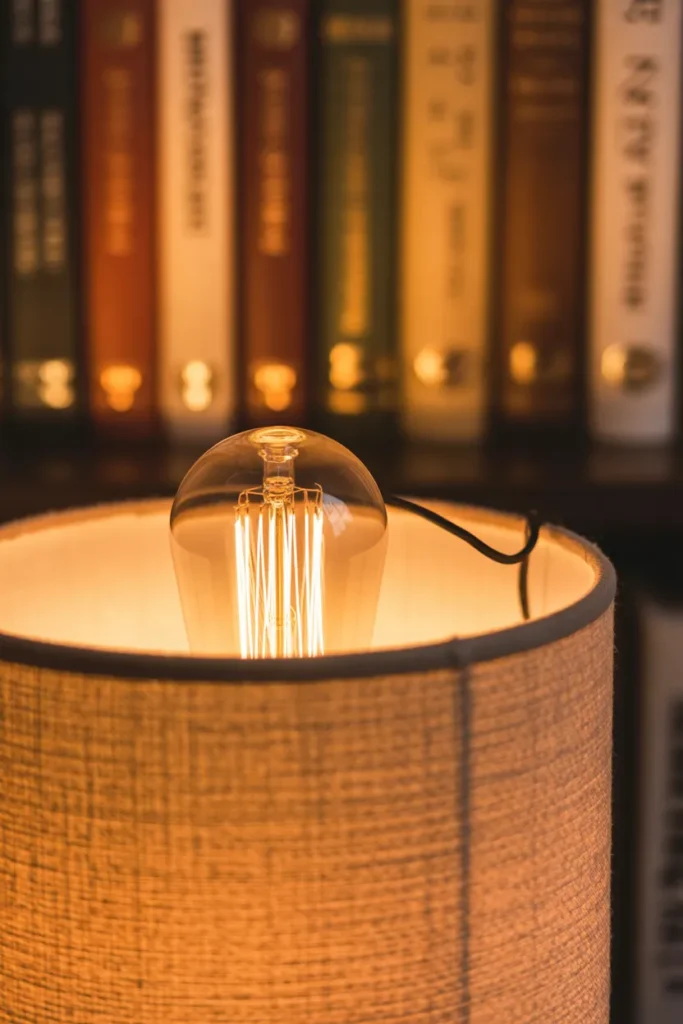
Forgetting the shade — a bare bulb, no matter how vintage-Edison-cute, will always glare. Fabric, paper, rattan, or pleated shades diffuse properly.
Going too dim — atmospheric is lovely, but if you’re straining to read, you’ll give up on the nook entirely. Task light should hit your page at around 450–800 lumens.
A Quick Shopping Checklist
Before you click “buy now” on anything, run through this:
- Bulb color temperature: 2700K–3000K
- Bulb brightness: 450–800 lumens for task light, 200–400 for accent
- Dimmable? Yes, always
- Shade material: fabric, linen, paper, rattan, or pleated — never bare
- At least two light sources (one ambient, one task — accent is bonus)
- Lamp height for seated reading: 20–34 inches shade-to-floor
- Cord color matters if exposed — match it to your wall
Bringing It All Together
The honest truth about reading nook lighting is that you don’t need to spend a fortune — you just need to layer warm light from a few different heights, put dimmers on everything, and trust that soft and golden always beats bright and white.
Start with one good floor or table lamp in warm white. Add a strand of fairy lights for mood. Toss in a candle (real or flickering-LED) for the evenings. That’s it. That’s the whole secret to the perfect cozy glow.
And the moment you sit down in your nook, switch everything on at 30%, and feel your shoulders drop — you’ll know you got it right.
Frequently Asked Questions
What is the best color temperature for a reading nook? Between 2700K and 3000K — warm white. This gives you a soft, golden glow that’s easy on the eyes and instantly cozy, without crossing into orange-dim territory.
How many light sources should a reading nook have? At minimum two, ideally three. One ambient (overhead or corner glow), one task (lamp aimed at your book), and one accent (fairy lights, candle, or shelf LED) for mood.
Are fairy lights safe to leave on while reading? Battery-operated warm-white LED fairy lights stay cool, use minimal power, and are safe for extended use. Plug-in versions should be UL-rated and never tucked inside fabric.
What’s the best lamp for a small reading nook? A wall-mounted swing arm sconce or a slim arc floor lamp — both save floor and table space while directing light exactly onto your page.
Can I use warm lighting and still see my book clearly? Absolutely. Warm color temperature (2700K–3000K) has nothing to do with brightness — just aim for 450–800 lumens of task light and you’ll read for hours without strain.
Keep reading
More cozy nook ideas
 Fall Decor
Read →
Fall Decor
Read →
Holiday Decor on a Budget: Where to Spend and Where to Save
If last December’s holiday decor money went to plastic picks, a glitter sign, and a box of red balls you were tired…
 Fall Decor
Read →
Fall Decor
Read →
21 Vintage Pumpkin Ideas for Small Apartments, No Porch or Nails Needed
No porch, no mantel, and a lease that frowns on nail holes. You still get a fall corner. You need one shelf,…
 Fall Decor
Read →
Fall Decor
Read →
14 Witchy Backyard Ideas for a Whimsical, Storybook Halloween
No old oak grove, no permission to dig, no money for a garden cottage. A witchy backyard still fits. You need one…
5 Comments