
Cottagecore Home Decor: How to Make a Whole House Look Lived In

Most cottagecore home decor fails the same way. You buy the linen, the dried eucalyptus, the little ceramic mushroom, and the room still reads as a display shelf instead of a home. Nothing in it is older than the receipt.
That’s the whole problem. It’s also fixable in an afternoon.
Below is the mixing rule that separates a collected house from a themed one, applied room by room, plus the version that works if you rent and can’t put a single hole in the wall.
The Three-Decade Rule
Here it is: every room needs objects from at least three different decades.
That’s the trick. Three decades, one room.
A store-bought cottagecore room usually contains pieces from exactly one, whatever the retailer shipped this season. Your eye catches that instantly even when your brain can’t name it. Matched sets read as retail. Mismatched decades read as a life.
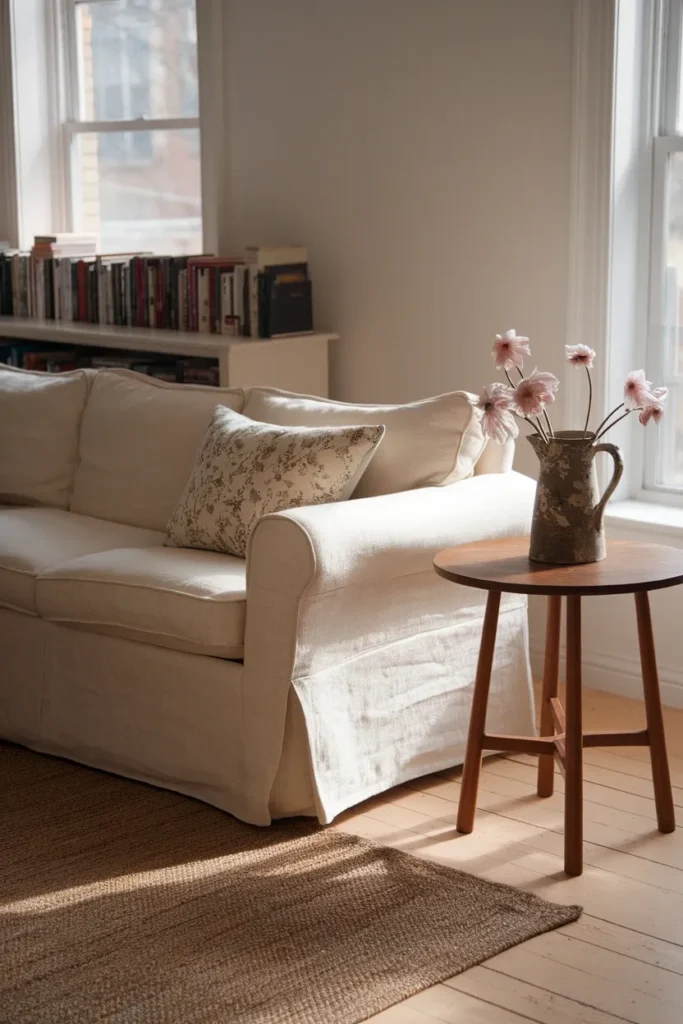
So a living room might hold a new slipcovered sofa from the 2020s, your grandmother’s oak side table from the 1960s, and a chipped ironstone pitcher out of a church rummage sale that’s probably 1930s. Done. Now the room has a past tense.
The failure mode: people skip this and compensate with volume. More jars, more dried stems, more gingham. Volume never fixes it. One genuinely old object does more work than fifteen new ones doing an impression of old.
Quick audit, takes ten seconds. Stand in your doorway and count the decades you can actually name. If you can’t get to three, you know what’s missing, and it isn’t another throw pillow.

What Cottagecore Actually Is (And Where Farmhouse Ends)
Cottagecore is a small-scale, plant-forward, handwork-loving aesthetic built on the fantasy of a self-sufficient rural life. It is not the same as farmhouse, and the confusion costs people a lot of money.
Farmhouse is about scale and utility: big black metal, shiplap planes, oversized clocks, words painted on wood. It scales up. Cottagecore scales down. It wants the six-inch pitcher, not the thirty-inch sign. It wants evidence of hands.
Shabby chic is a cousin, not a twin. Shabby chic distresses things deliberately. Cottagecore prefers things that got worn honestly and doesn’t sand anything to prove it.
Four non-negotiables, and you need all four in every room:
- Something growing. Living, not plastic. A pothos counts. A jar of grocery store eucalyptus counts for about two weeks.
- Something handmade. Anything a person clearly made. A crocheted blanket, a wonky thrifted pot, a mended pillowcase.
- Something worn. See the rule above.
- Something soft that isn’t a pillow. A linen throw over an armrest. A sheepskin on a chair back.
The sensory tell, and this is the part photos can never carry: a real cottagecore room smells like something. Beeswax, cut stems in old water, laundry that dried indoors. Rooms styled purely for the camera smell like new polyester and cardboard, and you clock the difference the second you walk in.

Five Rules That Make Cottagecore Read as Real
1. Let the pattern get bigger than feels safe
Small ditsy florals are the safe choice and the reason so many rooms look like a gift shop. Historical cottage pattern was large, repeating, and confident. Go look at the V&A’s William Morris wallpaper archive and you’ll see why: his 1881 St. James’s design needed 68 separate printing blocks and repeated vertically every 127 cm. That’s a pattern with a spine. Scale one wall, one pair of curtains, or one chair up to something that size and the whole room stops feeling twee.
2. Put the light below eye level
Overhead light kills this style faster than anything else. Cottagecore lives at lamp height and below: a swing-arm sconce, a picture light over a print, a candle on a low shelf. Warm the bulbs to 2700K and dim them if you can.
Here are the placement numbers worth writing on your hand:
| Element | Height | Why it works |
|---|---|---|
| Bedside sconce | 55 to 65 in from floor | Shoulder level when you’re sitting up in bed |
| Vanity or mirror sconce | 60 to 66 in from floor | Roughly eye level, lights the face not the top of the head |
| Hallway or living room sconce | 66 to 72 in from floor | Clears your sightline instead of glaring into it |
| Cafe curtain rod | 2 in above the window’s midpoint | Keeps privacy low, keeps daylight high |
| Bulb color | 2700K warm white | Candle adjacent, flatters wood and skin both |
3. Buy texture, not theme
Themed objects (mushroom, bee, “gather”) date fast and read as costume. Texture never does. Boucle, waffle cotton, raw linen, unglazed terracotta, hammered brass, a jute runner. Fill a room with five textures and no mushrooms and it will still read as cottagecore.
4. Leave exactly one thing unstyled
A stack of mail. Reading glasses on the arm of the chair. Your actual TBR pile, spines out, uneven. Perfectly composed rooms read as showrooms, and the human eye is very good at spotting a room nobody uses.
5. Keep the palette to three plus one
Three quiet base colors (cream, sage, warm oak is the reliable one) plus a single saturated accent used two or three times only. Oxblood, mustard, or dusty rose all work. Any more and the room turns into visual noise.
Room by Room, Whole House
Living room
Anchor with one upholstered piece you can actually sink into, then break up every matched thing around it. Swap two matching lamps for one floor lamp and one table lamp of different heights. Put a wool throw over the chair back, not folded into a neat rectangle. Add a low ladder shelf for plants so the greenery sits at three different heights instead of all on the floor.
Bedroom
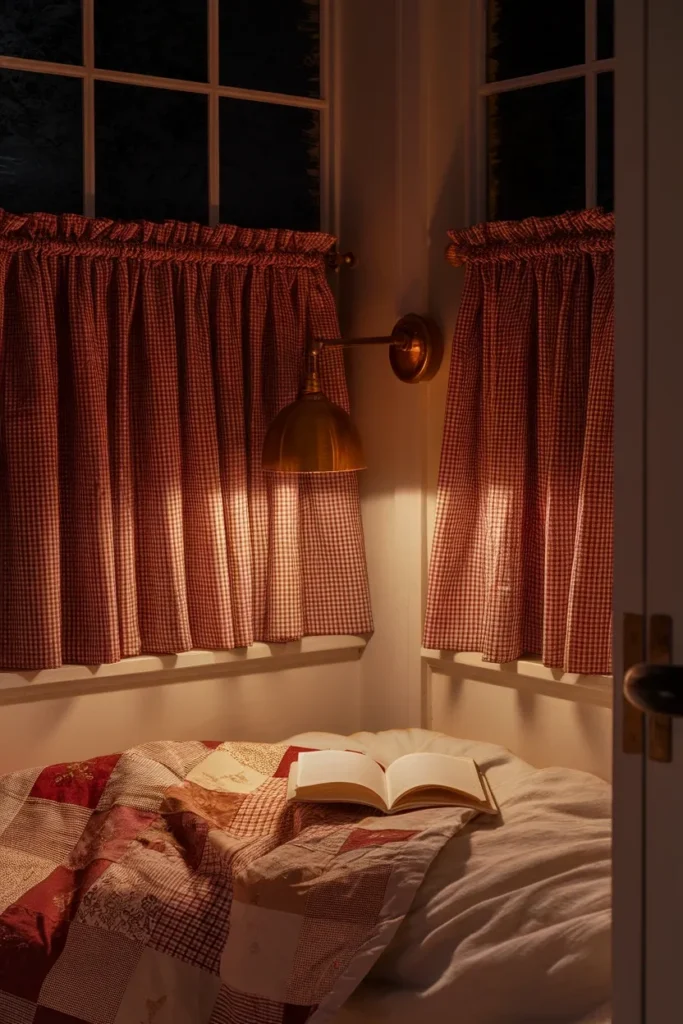
Skip the bed-in-a-bag entirely. Layer instead: a plain white base sheet, a quilt with visible stitching, one wool blanket folded across the foot. Cafe curtains on the lower half of the window, sheers above. Sconces at 55 to 65 inches so you can read without lighting the ceiling.
Kitchen
Take one cabinet door off. Just one. Fill the opening with mismatched everyday dishes, no color coordination, and put a small jar of whatever’s growing on the counter beside it. A sink skirt in a heavy cotton hides plumbing and adds the softness kitchens usually lack. Open shelving works, but only if the things on it get used, otherwise it’s a display case and everybody can tell.
Bathroom
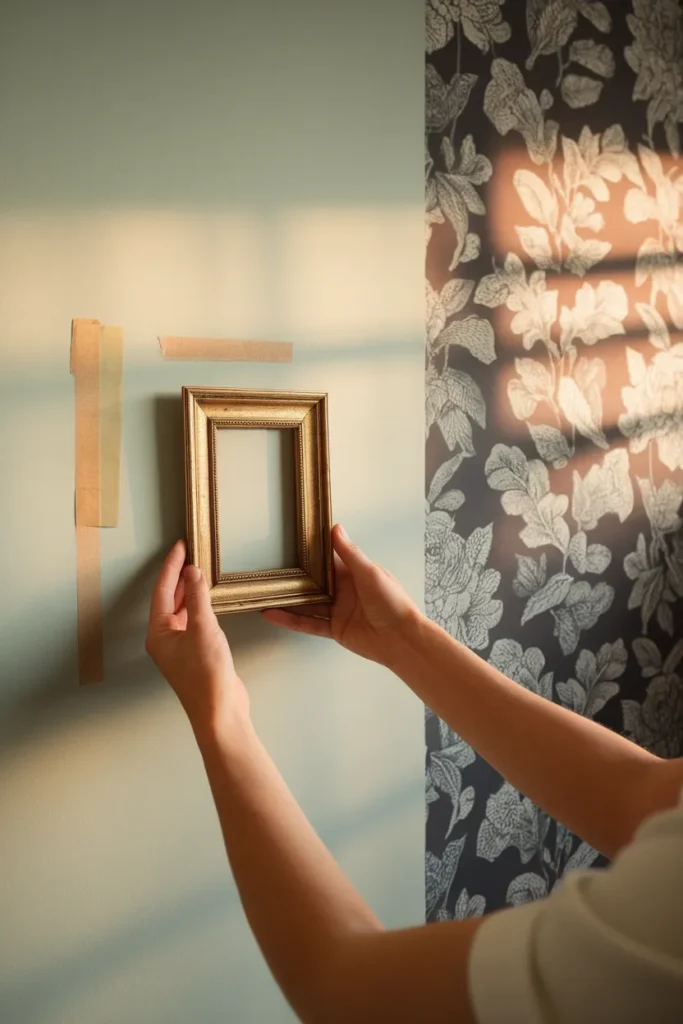
The smallest room takes the biggest pattern. Wallpaper the whole thing, or the ceiling only if you rent and want the effect for less commitment. Swap the plastic toothbrush cup for a small ironstone mug. Hang a wooden peg rail for towels instead of a chrome bar.
Entry
One hook rail, one basket, one mirror, one living thing. That’s the entire brief. Entries fail from too much, never too little.
Seasonal layering is where most of this actually happens month to month, and our cottagecore fall decor layering guide breaks that rotation down by room if you want the calendar version.
The Fifth Room Is Outside
Whole-home cottagecore doesn’t stop at the door, and this is where the aesthetic stops being decoration and starts being a supply chain. A three dollar packet of seeds gives you cut stems for months, which means the pitcher on your table stays full without a florist.
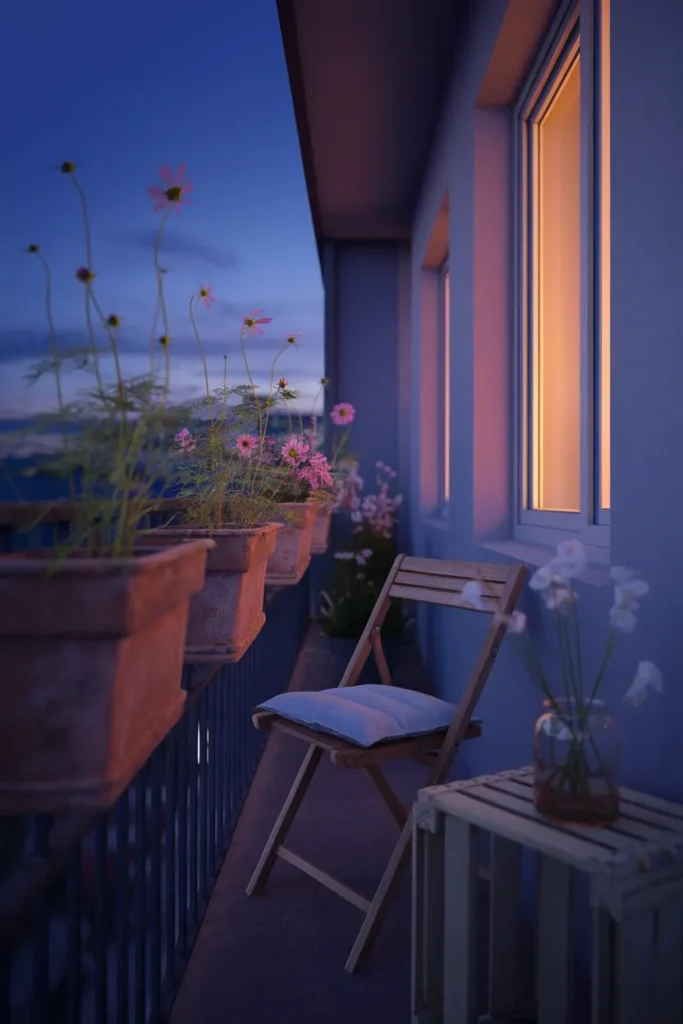
Even a balcony works. Three terracotta pots of cosmos, zinnias and cottage garden mix will keep a jar going from July through first frost, and cosmos in particular reseeds itself so aggressively you’ll be giving stems away by year two.
If you’ve got ground to work with, our wildflower garden layouts for small yards covers the layouts that read as intentional rather than neglected, which is a real distinction your neighbors will make.
The trade-off nobody mentions: cut garden flowers last about four days indoors, not the two weeks you get from a grocery store bunch treated with preservative. You’re swapping longevity for the fact that they’re yours.
Dark Cottagecore Is Where the Trend Actually Went
Here’s the thing almost nobody writing about this style has caught up to.
Pinterest’s own Spring Trend Report for 2026 lists dark cottagecore kitchen at plus 915 percent, the single largest increase of any home search in the report. Around it: village kitchen ideas at plus 825 percent, grandma core kitchen at plus 545 percent, rustic farm kitchen at plus 410 percent. Meanwhile Pinterest Predicts 2026, the flagship trend list, doesn’t mention cottagecore at all.
Read those two facts together and the picture is clear. Cottagecore isn’t fading. It’s darkening.
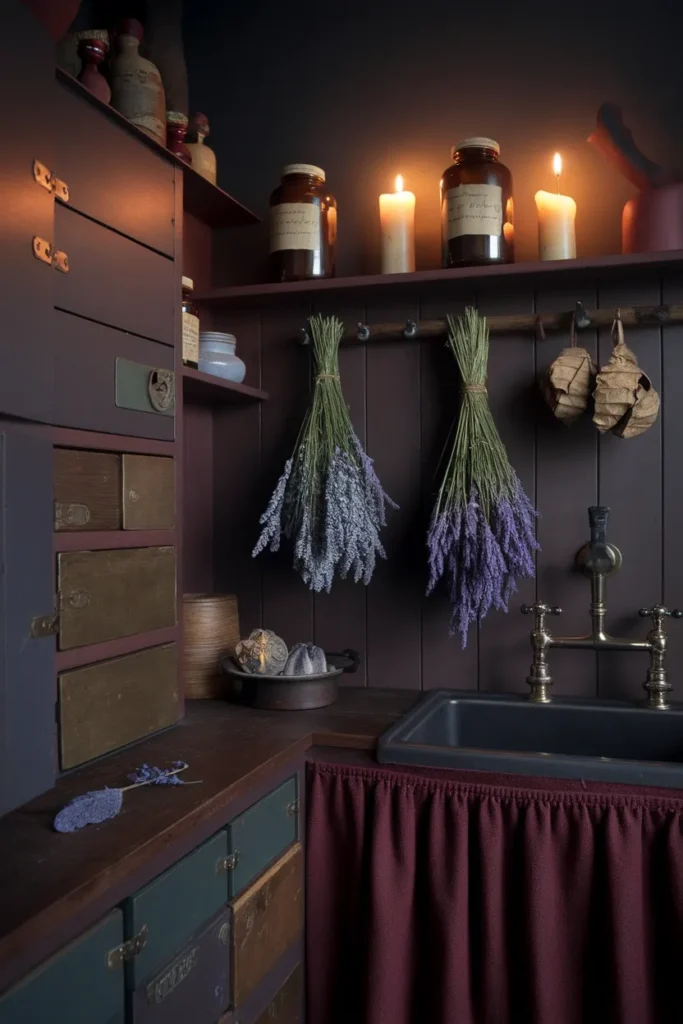
What that means practically: deep walnut instead of white oak, black or unlacquered brass hardware instead of chrome, burgundy and forest green instead of cream and sage, and lighting that stays low and ambient instead of bright. The botany stays, but it shifts toward apothecary. Dried bundles hanging from a rail, spice jars with handwritten labels, pressed ferns in dark frames.
If you’ve been holding off because cream-and-sage cottagecore felt too sweet for you, this is your version. Same rules, different temperature.
How to Buy Vintage Without Bringing Home a Problem
Every guide tells you to buy vintage furniture. Almost none tells you what to check first, and painted pieces are where it matters.
Federal law banned consumer uses of lead-based paint in 1978, and some states banned it earlier. Anything painted before that, which includes a lot of the chippy cottage furniture the aesthetic is built on, may carry lead under those layers. The EPA’s guidance on household lead sources is specific that inherited rocking chairs, antique doll furniture and old toys are all in scope, not just window frames and door trim.
None of that means don’t buy it. It means: on any painted piece that might predate 1978, don’t sand it, don’t let a toddler chew it, and either seal it under a fresh finish or use a hardware store lead test swab before you put it in a kid’s room. If paint is actively flaking, walk away or plan to strip it professionally.
This is general safety information, not a professional assessment. For an actual lead evaluation in your home, contact an EPA-certified lead inspector or risk assessor.
The rest of the flea market checklist, which costs you nothing but thirty seconds a piece:
- Sit in it. Chairs that wobble on a flat concrete floor will wobble forever.
- Open every drawer all the way. Sticking drawers mean the case is racked out of square.
- Smell inside. Musty means it lived somewhere damp, and that smell is genuinely hard to remove from old wood.
- Bring a tape measure. Carry your doorway width and the target wall width written on your phone. A dresser that’s two inches too wide is a very expensive mistake.
- Check the price honestly. Real antique dressers currently run anywhere from around $200 up past $2,500 depending on maker and condition, so a $60 painted one at a church sale is a find and a $900 one at a curated shop is retail.

Three Rooms You Can Copy Exactly
Pick whichever one matches the light you already have. Each is a full room, not a mood board.
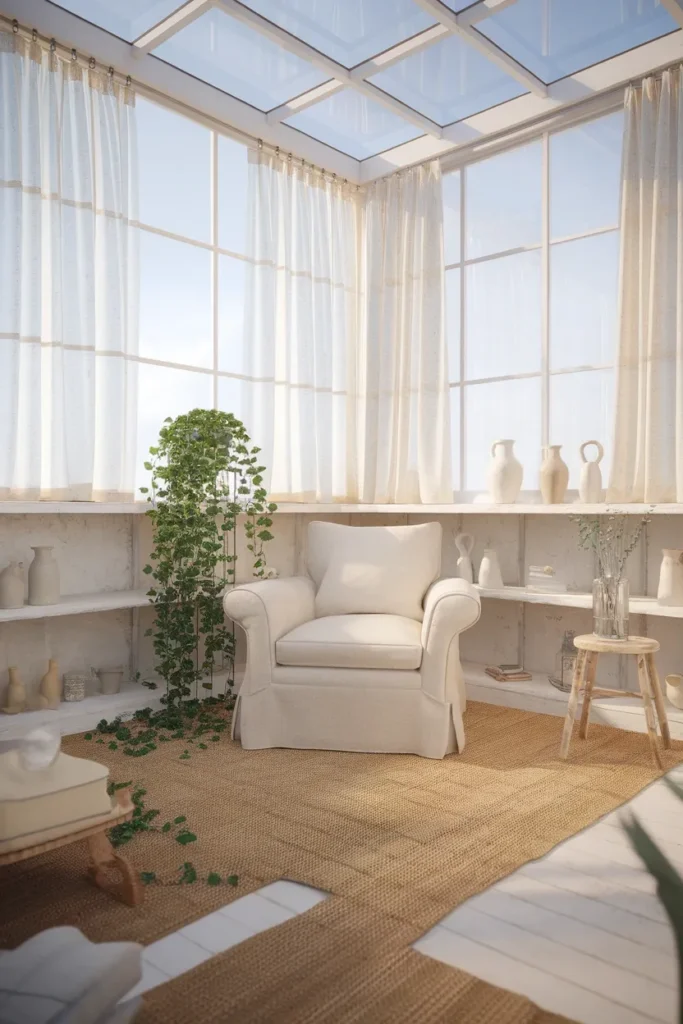
The Sunroom Softie. Cream linen slipcover, jute rug, white ironstone on open shelves, sheer curtains only, a big trailing pothos and a fiddly little jar of cut stems. Works in a bright south-facing room where dark colors would look grim. Anchor piece: any wide low-armed armchair you can actually curl up in.
The Dark Cottage. Walnut or dark-stained wood, burgundy textiles, brass hardware, dried botanicals under glass, a single 2700K lamp in each corner and nothing overhead. Works in a north-facing or basement-level room where you were never going to win the light battle anyway. Anchor piece: a wingback or club chair in a nubby dark fabric.
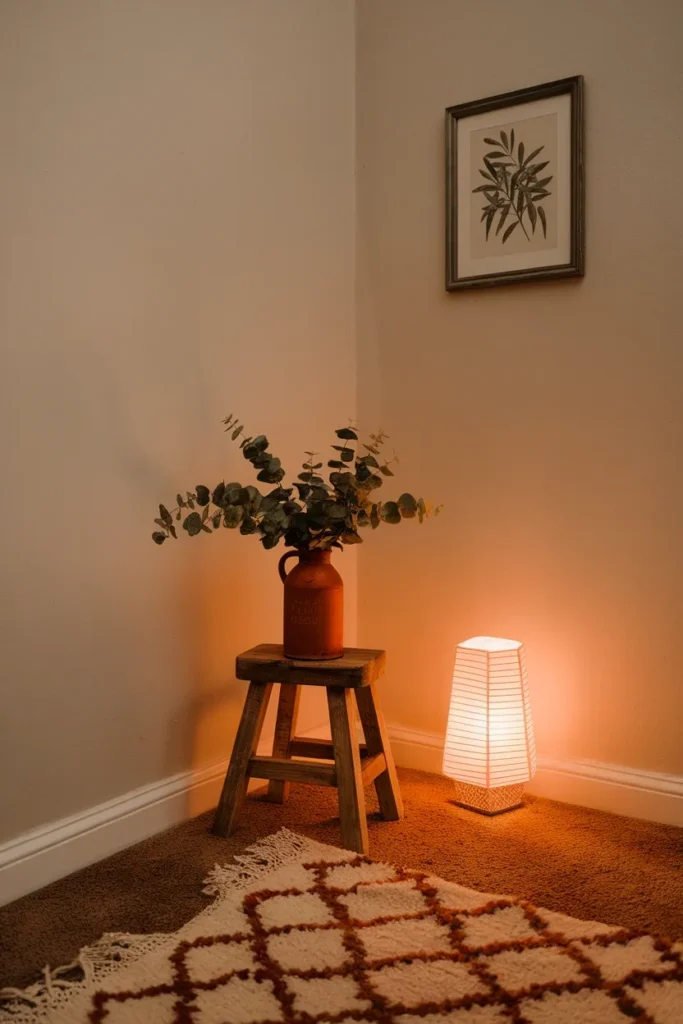
The Rental Reset. Everything softens or hangs, nothing installs. Tension rod cafe curtains, adhesive hooks, a washable rug over ugly carpet, a peel-and-stick panel on one wall only, all lamps and zero ceiling fixtures. Works anywhere you signed a lease. Anchor piece: a secondhand wooden stool that doubles as a side table.
The Renter’s Version, Roughly $200
No drilling, no paint, no landlord conversation. Nine things, in the order that gives you the fastest visible payoff:
- Two 2700K bulbs, roughly $8 to $14. Swap the ones in whatever lamps you already own. This is the single biggest change per dollar in the entire list and it takes four minutes.
- Tension rod plus a cafe curtain panel, $20 to $35. Mount it 2 inches above the window’s midpoint.
- A washable cotton rug, $30 to $60. Covers rental carpet you didn’t choose and goes in the machine when it gets grim.
- A linen or linen-blend throw, $25 to $45. Over the armrest, not folded.
- A secondhand wooden stool or small side table, $15 to $40. Your 1960s-to-1980s decade slot, likely.
- Thrifted ironstone or enamel vessel, $4 to $12. Your oldest object and the cheapest thing on this list.
- A vintage botanical print, thrifted and reframed, $10 to $25. Hang it on an adhesive hook rated well above its actual weight.
- Adhesive hooks, $6 to $10. Buy the heavier rating than you think you need. The failure mode here is a frame on the floor at 2 a.m.
- Seeds or a grocery store bunch, $0 to $15.
Range: about $120 to $250 depending entirely on what your local thrift shelf is holding that week. The thrifted items are the swing. Prices are August 2026 US ballparks, so check locally before you budget.
For the wider set of reversible swaps that don’t touch your deposit, our renter safe small apartment decor swaps goes deeper on the install-nothing methods.
Cottagecore Home Decor FAQ
What is cottagecore home decor? It’s an interior style built on rural self-sufficiency: living plants, handmade textiles, vintage and worn objects, soft natural materials, and warm low lighting. The defining feature isn’t any single object, it’s that everything looks accumulated over time instead of bought at once.
Can I do cottagecore in an apartment or a modern home? Yes, and it’s the most common version of it. Cottagecore is portable because it lives in textiles, light and objects rather than architecture. You don’t need beams, a bay window, or a cottage. A studio apartment with warm bulbs, a cafe curtain and three decades of objects reads more cottagecore than a big new house full of matched furniture.
What’s the difference between cottagecore and farmhouse? Scale and attitude. Farmhouse is large and utilitarian: black metal, shiplap, oversized signage, painted words. Cottagecore is small and handmade: little vessels, cut stems, visible stitching, evidence of a person. They mix acceptably if you let cottagecore lead and use the farmhouse pieces only as structure.
Is cottagecore still popular in 2026? Yes, though it’s shifted. Pinterest’s Spring Trend Report for 2026 shows dark cottagecore kitchen up 915 percent, the biggest home increase in the report, while its flagship Predicts list doesn’t name cottagecore at all. The sweet cream-and-sage version has cooled. The moody version is climbing hard.
What colors work best for cottagecore decor? Three quiet bases plus one accent. Cream, sage and warm oak is the dependable trio, with oxblood, mustard or dusty rose as the accent used two or three times in the room. For the dark version, swap to walnut, forest green and burgundy with brass.
How do I start cottagecore on a small budget? Change the light first. Two 2700K bulbs cost under $15 and shift a room more than $200 of decor. Then add one genuinely old object from a thrift store, then one living plant. Those three moves cost about $30 total and give you most of the effect.
What is dark cottagecore? Same style, lower temperature. Deep walnut and black-painted wood instead of white, burgundy and forest green instead of pastels, unlacquered brass instead of chrome, and candle-level lighting instead of bright. The botanical element stays but turns apothecary: dried bundles, labeled jars, pressed ferns in dark frames.
Start With the Bulbs
If you take one thing from this: three decades, one room. Everything else is decoration on top of that.
And if you’re going to do a single thing tonight, make it the light. Warm bulbs, low placement, nothing overhead. It costs less than lunch and it changes a room before your next load of laundry finishes.
Next up, work out which corner of your place you’d actually sit in, then build outward from that chair. That’s where every good nook starts.
Keep reading
More cozy nook ideas
 By Style
Read →
By Style
Read →
Cottagecore Reading Corner With Florals: A Cozy, Renter-Friendly Nook You Can Build This Month
Picture 4 p.m. light through a sheer curtain, a linen throw over one arm, and a warm bulb glowing behind a wall…
 By Style
Read →
By Style
Read →
Vintage Reading Nook Ideas That Feel Lived-In, Not Staged
You want a vintage reading nook, not a furniture showroom. You want the worn leather, the lamp that glows amber at 4…
 By Style
Read →
By Style
Read →
Reading Nook With a Canopy: Dreamy Draped Setups You Can Actually Hang
No bay window, no reno budget, no friendly landlord required. You need a hanging canopy, one soft corner, and about an afternoon.…