
Wildflower Garden Ideas That Look Romantic, Not Neglected

Most wildflower garden ideas skip the part that decides whether yours works, which is the math. Half a pound of seed covers 1,000 square feet. A patch needs to hit about 400 square feet before it reads as a meadow instead of a mistake. Seed for that patch runs somewhere around $24 to $32.
That is the whole barrier. Not a landscaper, not a sod cutter, not a yard the size of a soccer field.
The second thing nobody tells you: a wildflower patch with a crisp mown edge looks designed. The exact same patch without one looks like you quit in June. One 18-inch strip of mowed grass is the difference between a neighbor asking where you got the seed and a neighbor calling the city.
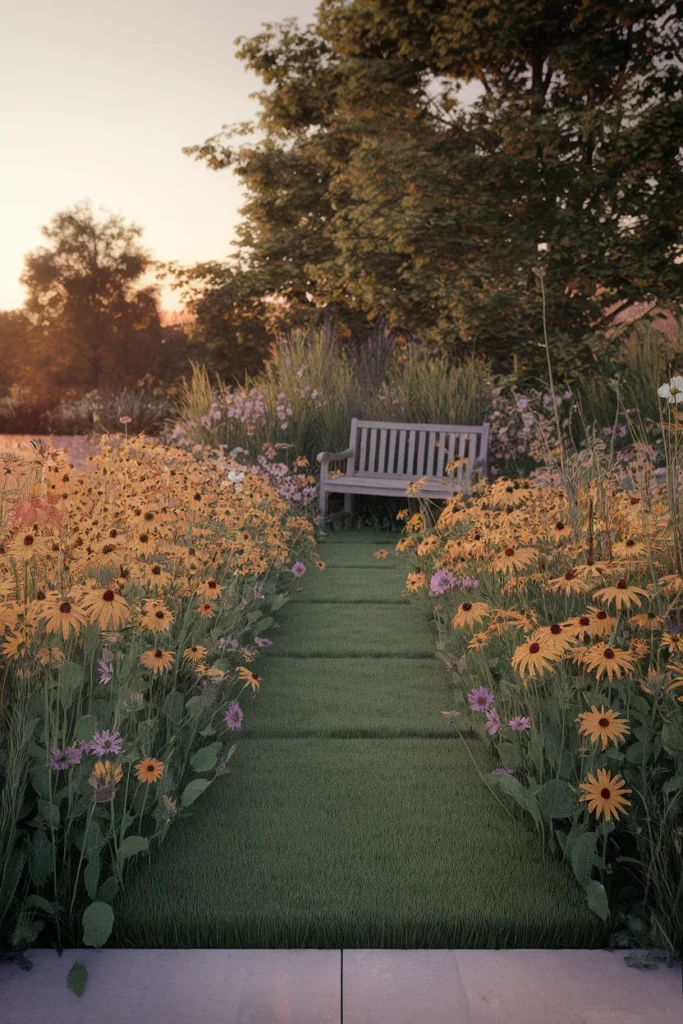
Here is the build order, the real numbers behind it, and the seven layouts that hold up once the annuals fade.
Start With 400 Square Feet and About $30 of Seed
This is the number to plan around. University of New Hampshire Extension sets the 400 square foot minimum for a meadow, and the same fact sheet puts the seeding rate at 20 pounds per acre, which works out to half a pound per 1,000 square feet.
Run that against their $60 to $80 per 1,000 square feet seed cost and you get a table you can shop from:
| Patch size | Seed you need | Seed cost |
|---|---|---|
| 200 sq ft | 1.6 oz | $12 to $16 |
| 400 sq ft (the floor) | 3.2 oz | $24 to $32 |
| 600 sq ft | 4.8 oz | $36 to $48 |
| 1,000 sq ft | 8 oz (1/2 lb) | $60 to $80 |
| 2,000 sq ft | 1 lb | $120 to $160 |
Two adjustments. If your site has heavy weed pressure or poor soil, American Meadows recommends doubling to a full pound per 1,000 square feet. And if 400 square feet sounds enormous, it is 20 feet by 20 feet, or a strip 4 feet deep running 100 feet along a fence.
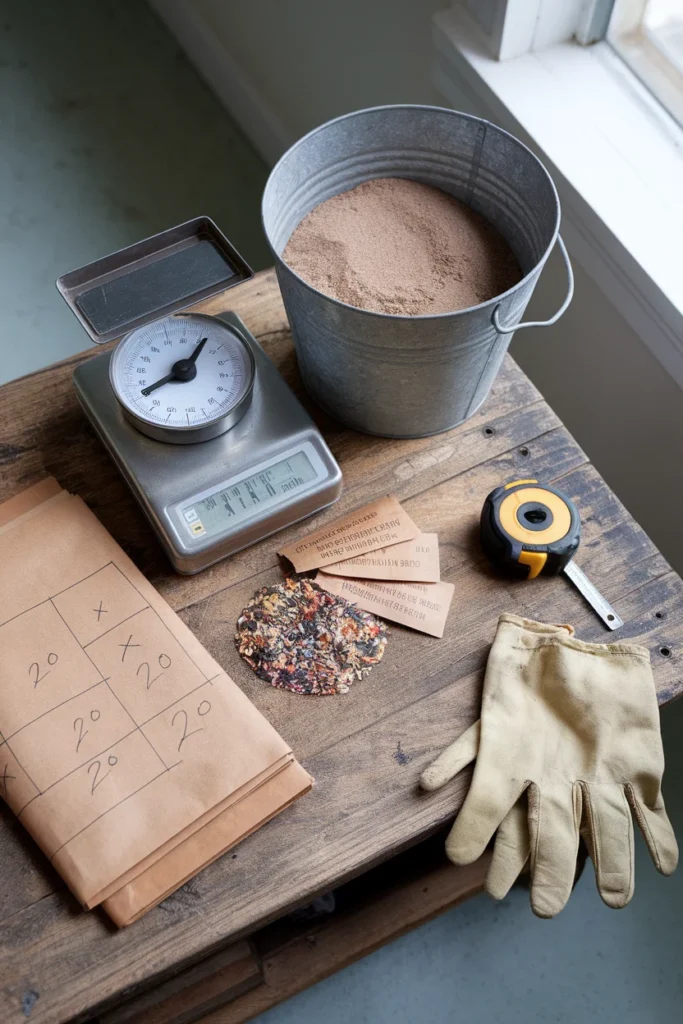
Measure before you buy. Seed math is the single most common place this project goes sideways, because people buy one $9 shaker can, scatter it over 800 square feet, and get eleven poppies.
1. Frame the Wild Part With One Mown Edge
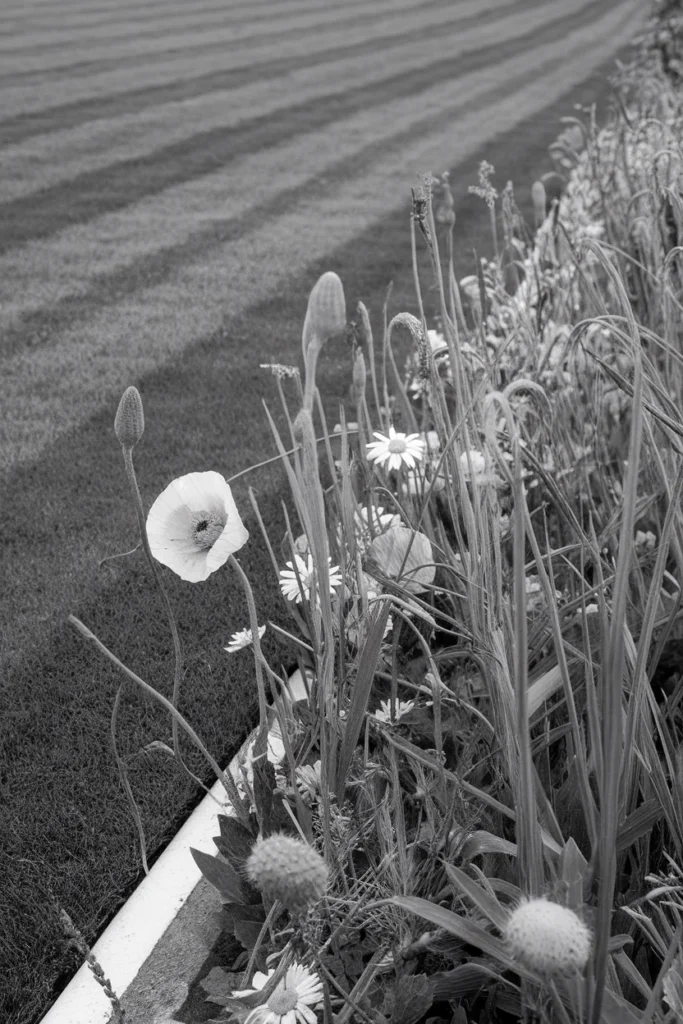
Call it the Mown Frame Rule: leave an 18-inch strip of mowed grass on every side of the planting that faces a sidewalk, a driveway or a neighbor.
That single strip is doing enormous work. It signals intent. A meadow with a hard mown border reads as a choice, and the identical meadow without one reads as abandonment, and your eye makes that call in under a second.
Eighteen inches is the practical minimum because it is roughly one pass of a standard 20-inch walk-behind mower. Two passes (36 inches) looks even more deliberate and doubles as a maintenance path so you can reach the middle without wading.
If your patch sits against a fence rather than open lawn, run the frame on the three open sides and let the fence be the fourth edge. Same effect, less mowing.
Failure mode: skip the frame and you will get the complaint. Not maybe. Municipal weed-height ordinances are enforced on visual read, and an unframed meadow looks exactly like a lawn nobody has touched since May.
2. Run the Border Down the Fence Line
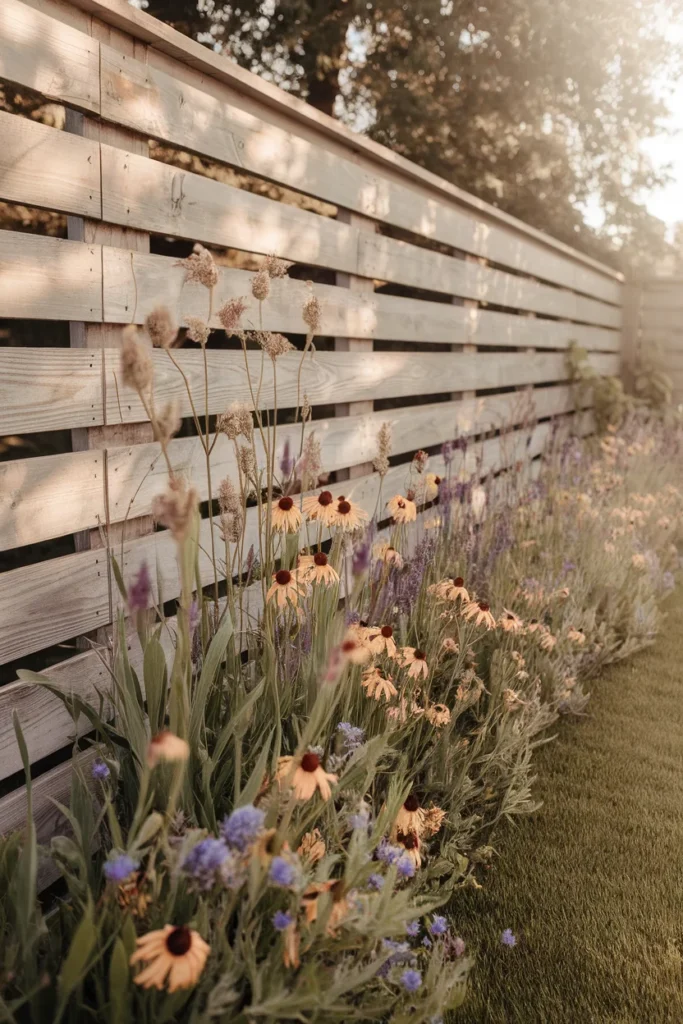
If you cannot spare a square block of lawn, take a strip instead. Wildflower garden border ideas along a fence are the single most-searched layout on Pinterest right now, and the reason is geometric: a fence gives you a built-in back wall, so the planting has structure before a single seed goes down.
Go 3 to 4 feet deep. Any shallower and tall species flop forward onto the grass by August. Any deeper and you cannot reach the back to pull a thistle without stepping on everything.
Layer by height, back to front:
- Back (36 to 60 inches): wild bergamot, cutleaf coneflower, New York ironweed
- Middle (18 to 36 inches): black-eyed Susan, purple coneflower, whorled coreopsis
- Front (6 to 18 inches): nodding onion, blue-eyed grass, plains coreopsis
A 4-foot-deep strip running 100 feet is exactly 400 square feet, which puts you right at the floor with about 3.2 ounces of seed.
Failure mode: planting the same height everywhere. You get a flat green wall with color floating on top, and by year two the tall species shade out everything short.
3. Mow a Path Through the Middle So It Feels Like a Place
A wildflower patch you look at is pretty. A wildflower patch you walk into is a room.
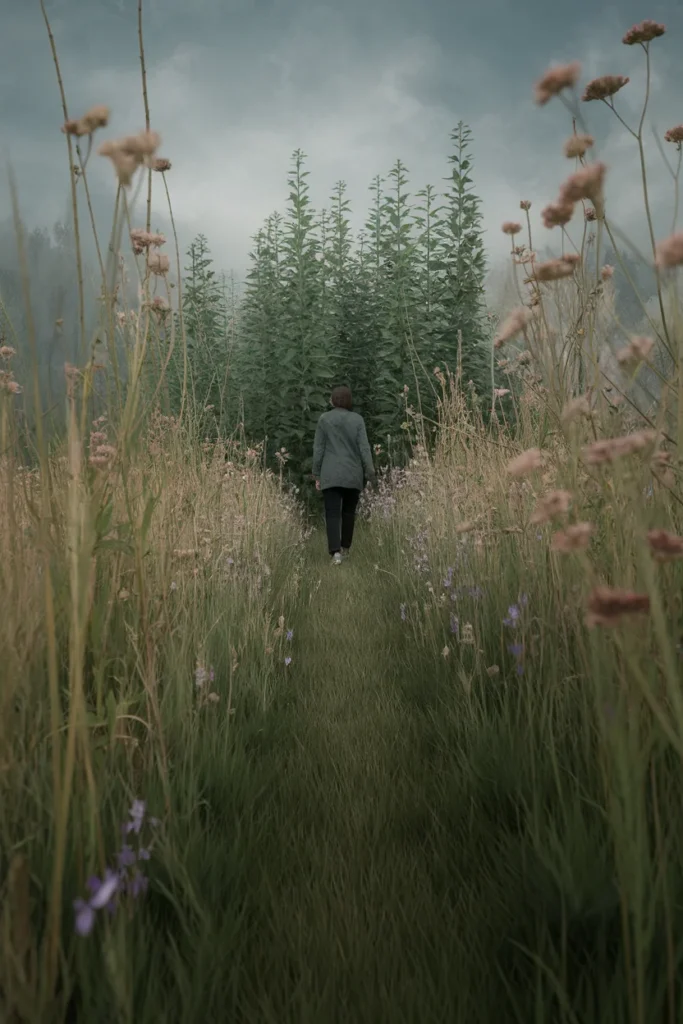
Mow a curved path straight through the planting at 24 to 30 inches wide, which is comfortable for one person and narrow enough that flowers brush both arms as you pass. Curve it. A straight path shows you the whole thing at once and kills the reveal; a curve keeps the far end hidden, and the patch feels twice as big.
Cut the path before you sow, not after. Mark it with marking flags, sow around it, and it establishes as a permanent route rather than a scar you tramped through the good part.
There is a sensory argument here too. Standing in the middle of a meadow in mid-July, the sound is completely different from the edge: a low constant hum from about a thousand bees working at once, and the dry papery rattle of coreopsis seed heads when the wind moves. You lose all of that from the patio.
Failure mode: mowing the path too narrow. Anything under 20 inches gets overgrown by August, you stop using it, and the path disappears.
4. Tuck a Reading Chair Into the Tallest Corner
Nobody on the first page of Google mentions this, which is strange, because it is the entire reason to build the thing.
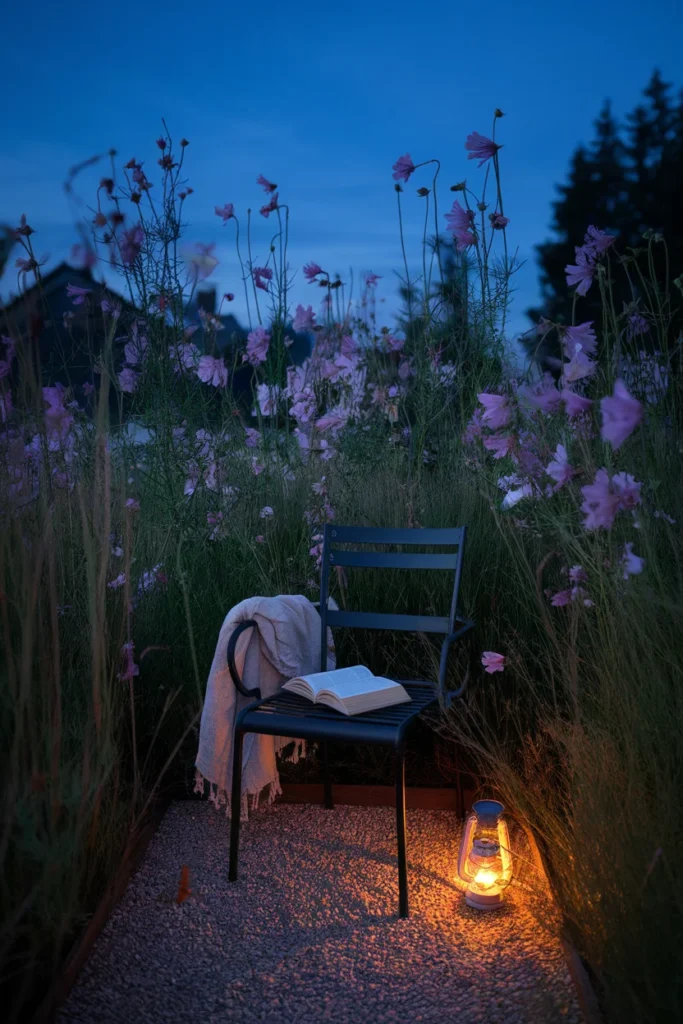
Pick the corner where your tallest species will land, usually the back or the north end, and clear a seating pad about 6 feet by 6 feet before you sow. Level it, put down a few flagstones or a square of pea gravel 2 to 3 inches deep, and set a single chair facing into the planting rather than out toward the house.
What goes on the pad, in order of how well it survives real weather:
- A powder-coated metal bistro chair. Leaves it out year round, weighs enough not to blow over, dries in ten minutes after rain.
- A teak or acacia garden bench. Better for two, silvers gracefully, needs nothing.
- A hanging hammock chair on a freestanding steel frame. No drilling, no tree required, and it packs down for winter. This is the renter answer.
Once the surrounding flowers hit 36 inches or more, that chair is invisible from the house, which is the whole trick. You are sitting in a hideaway that is technically in the middle of your own lawn.
Add a clip-on reading light or a solar lantern at 2700K rather than anything cooler. Warm light keeps the color of the flowers at dusk; anything above 3000K turns them gray and makes the whole corner feel like a parking lot. If you want the full setup, we broke it down in outdoor reading nook ideas and garden escapes, including the shade and bug problems nobody warns you about.
Keep one linen throw in a deck box by the door. Evenings in a meadow run cooler than the patio because there is no radiating hardscape nearby, and that is the difference between reading for twenty minutes and reading until you cannot see the page.
Failure mode: setting the chair before you sow but not clearing a real pad underneath. Grass and volunteer seedlings come up through the chair legs, the seat is damp every morning, and you stop going out there by July.
5. No Yard? The Raised Bed and Balcony Versions
A small backyard wildflower garden does not need a yard at all. It needs 12 square feet of sun and something to hold soil.
Raised bed. A standard 4-by-8 cedar bed is 32 square feet, which needs about a quarter ounce of seed. Fill it with plain topsoil, not the enriched raised bed mix sold beside it. Wildflowers want lean soil, and rich soil grows you a bed of leafy green stems with almost no flowers on top.
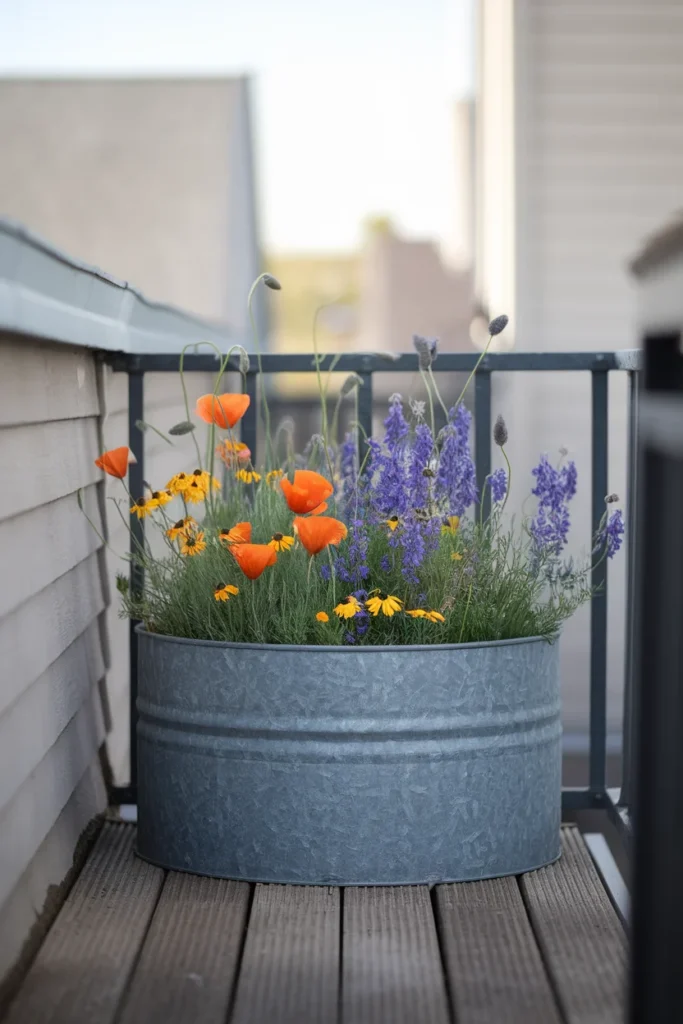
Balcony. Three 24-inch window boxes or two half-barrel planters will hold a genuine miniature meadow. Stick to species that stay under 24 inches so wind does not flatten them: plains coreopsis, blue flax, dwarf cosmos, poppies. Skip the tall prairie species entirely.
The renter rule: no digging, no drilling, nothing attached to the building. Freestanding planters on pot feet, a bag of topsoil, seed. All of it leaves with you.
Container wildflowers do need water, which is the trade-off nobody mentions. An in-ground meadow is self-sufficient after the first six weeks. A window box in August needs water every single day, sometimes twice, and one missed weekend in July ends it. If that sounds like more upkeep than you want, our small cottage garden ideas for a balcony leans on perennials in bigger pots that forgive a skipped watering.
Failure mode: using potting mix with slow-release fertilizer in it. You will get spectacular foliage and almost no blooms, and you will not understand why until year two.
6. Choose Flowers the Deer Walk Past
If you have deer, this section decides whether the other wildflower garden ideas on this page matter at all.
The University of Maryland Extension’s deer-resistant native list, updated in February 2026, runs 45 species. The ones that matter most for a meadow-style planting, because they are common in US seed mixes and they hold their shape:
- Black-eyed Susan (Rudbeckia hirta) and brown-eyed Susan (R. triloba)
- Wild bergamot (Monarda fistulosa) and scarlet bergamot (M. didyma)
- Yarrow (Achillea millefolium)
- Whorled coreopsis (Coreopsis verticillata)
- Nodding onion (Allium cernuum)
- Clustered mountain-mint (Pycnanthemum muticum)
- Goldenrods (Solidago juncea, S. nemoralis, S. rugosa)
- Milkweeds (Asclepias species)
The pattern is easy to remember once you see it: aromatic foliage (bergamot, mountain-mint, nodding onion, yarrow) and rough hairy leaves (the rudbeckias) are the two things deer consistently decline.
Maryland Extension is blunt about the limit, and so am I: “There is no deer-proof plant.” When natural forage runs short, deer will eat milkweed, which is toxic. Resistant means they browse it last, not never.
Failure mode: buying a generic “wildflower mix in a can” in deer country. Those mixes lean on tender annuals like bachelor’s button and sweet alyssum, which is essentially a salad bar with a price tag.
7. Leave a Row for the Kitchen Table Jar
Here is where the cottagecore part stops being a mood board and becomes a Tuesday.
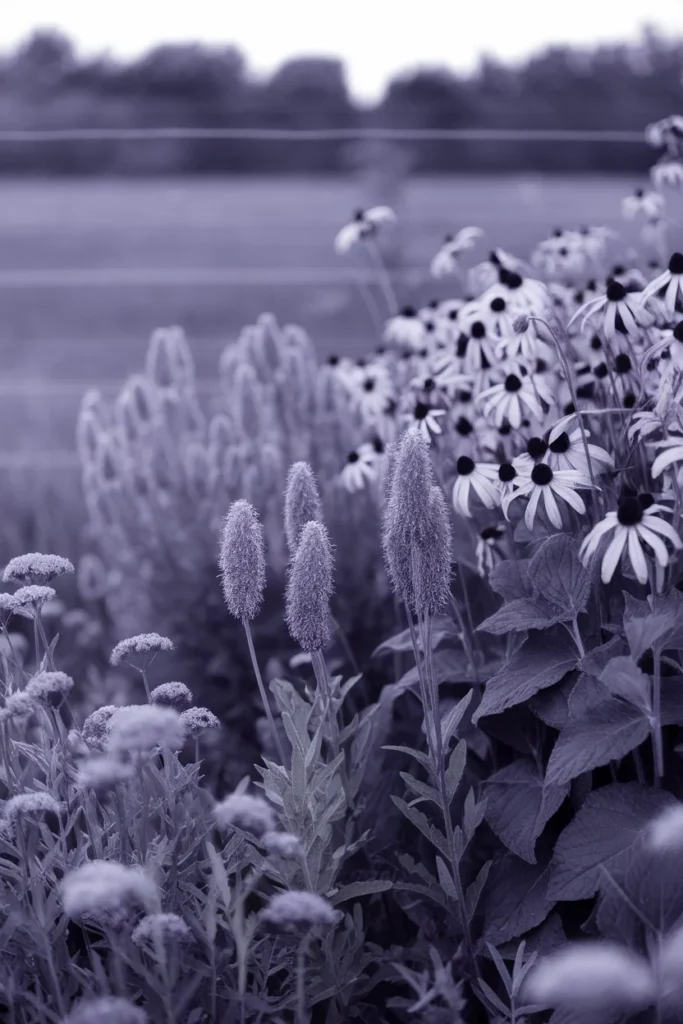
Sow one 3-foot strip along the path edge with species that cut well and rebloom when you cut them. Zinnias, cosmos, bachelor’s button, plains coreopsis and rudbeckia all do this. The technical term is cut-and-come-again, and it means every stem you take triggers two more.
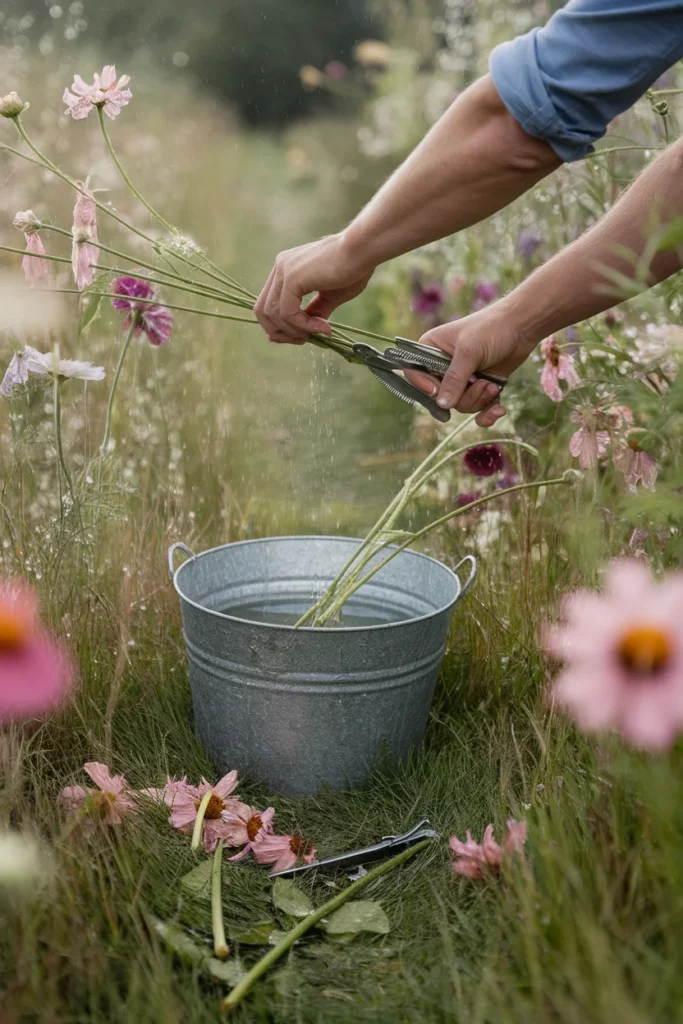
Cut in the morning before 9 a.m., while the stems are still full of water from overnight. Strip every leaf that would sit below the waterline, because submerged leaves rot within a day and that is what makes jar water go cloudy and sour by Wednesday. A quart mason jar holds a generous bunch. A pint jar holds a nice small one for a nightstand.
The point of a cutting row is that it turns a garden you look at into a garden that shows up inside the house. That is the piece the shelter magazines never bother to explain, and it is the one that keeps people walking out there in August when the novelty has worn off.
Failure mode: cutting from the middle of the display instead of a dedicated row. You end up with a bald patch right where everyone looks, and you stop cutting to protect the view.
Year One, Year Two, Year Three: What Actually Shows Up
This is the expectation gap that ruins more wildflower plantings than any pest, and not one page on the first page of Google lays it out.
Year one. Mostly annuals, and mostly not much. Perennials spend the entire first season building roots and put almost nothing above ground, which Penn State Extension describes as directing their energy into root growth. Your job is mowing: Penn State says cut at about 4 inches whenever weeds threaten to pass 8 inches. It feels wrong. Do it anyway, because you are cutting weed seed heads off before they set, and the wildflower seedlings underneath are too short to be touched.
Year two. Structure arrives, blooms are still thin. UNH Extension is direct about it: few wildflowers will bloom this year. Mow once mid-summer at 4 to 6 inches.
Year three. UNH puts it at late June. That is when you start seeing the picture you had in your head, and Penn State frames full establishment at two to three years.
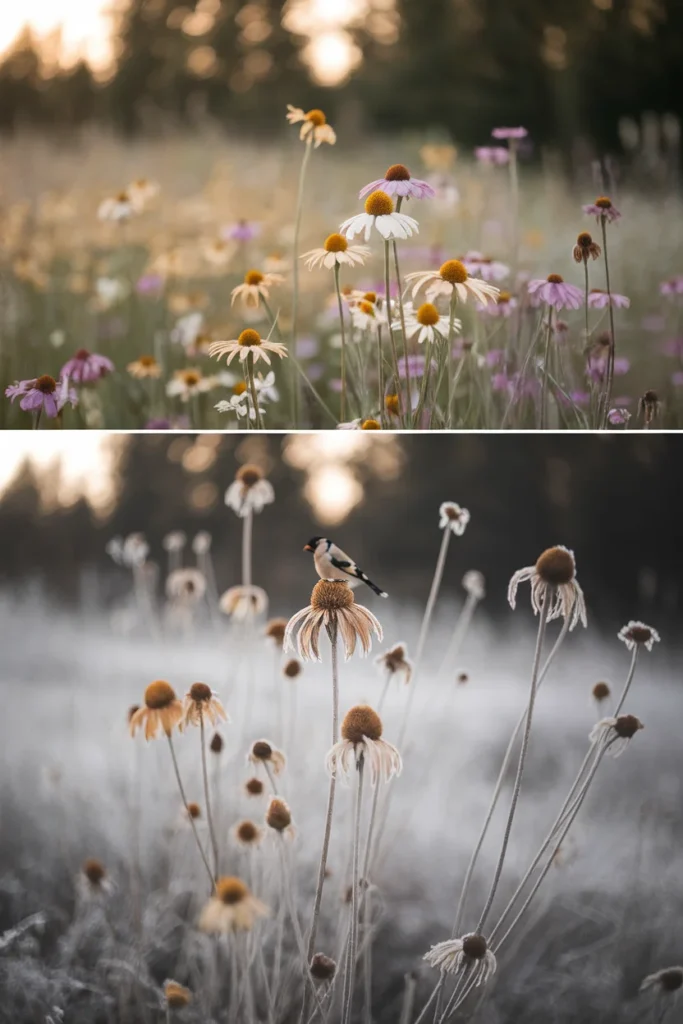
Year four and beyond. Mow high, 6 to 8 inches, in November, or leave everything standing until early spring. Leaving it up is better for overwintering insects and gives you actual winter structure: frost on standing seed heads, goldfinches working the coneflowers in January.
Water only in the first six weeks. After that, watering a native meadow mostly helps the weeds.
If you want the whole thing in one document, the New Hampshire Extension wildflower meadow seed fact sheet is the most complete free resource I have found, and it is where most of the numbers in this article come from.
Six Ways a Wildflower Garden Fails, and the Fix for Each
Every one of these is fixable, and every one of them is easier to prevent than to repair.
1. You skipped site prep. Scattering seed over existing grass produces almost nothing, because turf outcompetes wildflower seedlings before they get a second leaf. Fix: remove sod to 1 to 1.5 inches (Penn State’s spec) or solarize under black plastic for at least two months.
2. You added compost. UNH Extension is explicit that compost, manure and nitrogen-rich amendments work against you here. Rich soil favors weeds and leafy growth over flowers. Fix: plain soil, pH 5.5 or above, nothing added.
3. You buried the seed. Most wildflower seed is tiny and needs light contact, not depth. Rake to a quarter inch, then press it in by walking on it or rolling it. Fix if you have already buried it: reseed the bare patches in fall.
4. The seed washed away. Sowing on a slope right before a storm sends your $30 downhill. Fix: mix seed into a carrier first (UNH suggests half a gallon to a gallon of carrier per 500 square feet), which also shows you where you have already sown.
5. You mowed too late in year one. Letting weeds pass 8 inches means they set seed, and you fight them for three years. Fix: mow at 4 inches, as often as the weeds require.
6. You bought a mix without checking the species list. Some big-box shaker cans include species that are non-native or regionally aggressive. Fix: buy a regional mix and cross-check it against your state’s native plant list before sowing.
If I had to rank these by how much damage they do, it is site prep first by a wide margin, then the compost mistake, then everything else. Half of all disappointing wildflower plantings are just grass that was never actually removed.
Keep the Neighbors and the HOA on Your Side
A wildflower garden is one of the few home projects that can generate a letter from the city, so handle this before you sow, not after.
Three moves that resolve almost all of it:
- Keep the mown frame. Covered above, and it is the single strongest signal of intent.
- Add one deliberate object. A bench, an arbor, a birdbath, a low picket edge. One clearly placed man-made item reclassifies the whole planting from neglected to designed, and it is the exact composition trick the top-performing Pinterest photos use.
- Check your local weed ordinance first. Many US municipalities cap vegetation height, commonly around 8 to 12 inches, though it varies widely by city. A growing number of states have passed laws limiting how far HOAs can restrict native and pollinator plantings, so look up your own state before you assume you are stuck.
If you are working inside HOA rules, front-yard patches are the flashpoint and back-yard patches almost never are. Start in back, let it look good for a season, and the conversation gets much easier.
For the wider look this planting sits inside, from gravel paths to climbing roses to the fence and gate treatment, we mapped it out in the nine layers of a cottagecore garden.
Wildflower Garden FAQ
Can I just scatter wildflower seeds? You can, and the results are usually poor. Seed scattered onto existing turf or unprepared soil has to compete with established grass roots. Remove or smother the existing vegetation first, rake the seed in to a quarter inch, and press it down for good soil contact.
Do wildflower gardens come back every year? Partly. A typical mix blends annuals, which bloom hard in year one and then depend on self-seeding, with perennials, which come back reliably but take two to three years to establish. Most gardens hit a rhythm by year three where perennials carry the display and annuals fill gaps.
When is the best time to plant wildflower seeds? Fall dormant seeding, late September through early December in cold regions, is the most reliable because winter cold naturally stratifies seed that needs it. Spring works too. Penn State Extension names April as the ideal month for Pennsylvania, and your local frost dates should shift that accordingly.
How much seed do I need? Half a pound per 1,000 square feet is the standard rate. Double it to a full pound per 1,000 square feet if your site has heavy weed pressure or poor soil. Measure your patch first, since underseeding is the most common mistake.
What are the cons of a wildflower garden? It looks unremarkable for the first two years. It can read as neglect to neighbors without a mown edge. It needs real site preparation up front. And it is not zero-maintenance, just low-maintenance after establishment.
What is the easiest wildflower to grow? Black-eyed Susan is the usual answer in most of the US: it germinates readily, tolerates poor soil, self-seeds freely, and it appears on Maryland Extension’s deer-resistant list. Plains coreopsis and California poppy are close behind, and poppies are the fastest to show color in year one.
What is the difference between a meadow garden and a wildflower garden? A meadow garden includes native grasses alongside flowers, which gives it structure, winter interest and better weed suppression. A wildflower garden is flowers only, so it looks showier early and tends to need more weeding as it matures.
Start With the 400 and Build Out
You do not have to convert the lawn. Measure one 20-by-20 patch in the sunniest corner, buy 3 ounces of a regional seed mix, strip the sod, sow it in October, and leave an 18-inch mown frame around the whole thing.
Year one will look like almost nothing. Year two will look like something. Year three, in late June, you will walk a mown path into the middle of it, sit down in a chair nobody can see from the house, and get properly lost in a book while about a thousand bees work around you.
That is the whole project. Every one of the wildflower garden ideas above is a variation on that same 400 square feet.
Next: if the corner you have in mind is on a balcony or a 10-foot strip rather than a lawn, start with the small-space version instead.
Keep reading
More cozy nook ideas
 Cottage Garden & Balcony
Read →
Cottage Garden & Balcony
Read →
20 Backyard Oasis Ideas on a Budget, Starting With a $152 Corner
Two folding chairs, a small outdoor rug, 24 battery globe lights, and two planters. At IKEA this October, that adds up to…
 Reading Sheds
Read →
Reading Sheds
Read →
12 She Shed Ideas for Small Yards
No acre, no contractor, no giant budget. You need about 64 square feet, a flat patch of ground, and a plan for…
 Garden Nooks
Read →
Garden Nooks
Read →
Container Gardening Ideas for Small Cottage Gardens That Fit a Rental Patio
One anchor pot, two mid-size pots, three little ones. That’s the whole cottage garden, and it fits on a patio smaller than…