
Reading Nook Chairs — The Best Seats for Every Budget in 2026
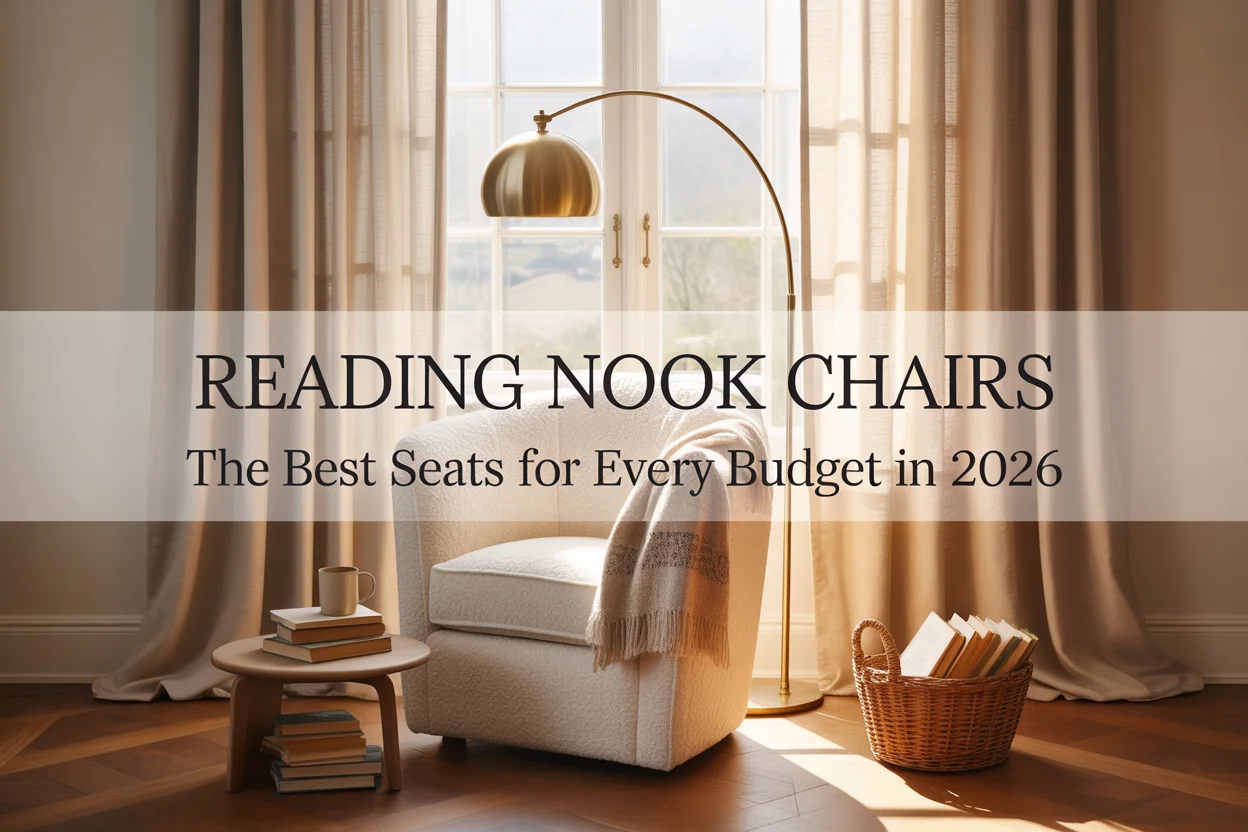
Table of Contents
- What Makes a Great Reading Nook Chair
- Best Reading Nook Chairs Under $100
- Best Reading Nook Chairs Under $300
- Worth-the-Splurge Reading Nook Chairs
- Best Reading Nook Chairs for Small Spaces
- How to Style Your Reading Nook Chair
- Frequently Asked Questions
What Makes a Great Reading Nook Chairs
Here’s the thing nobody tells you when you start shopping for reading nook chairs — most chairs that look beautiful in a showroom are genuinely terrible for reading. That sleek mid-century armchair with the razor-thin cushion? Gorgeous for photos, miserable after twenty pages. The giant overstuffed recliner? Comfortable, sure, but it swallows your entire living room corner and you end up falling asleep by chapter two.
The perfect reading chair lives in a very specific sweet spot. It needs to be deep enough that you can tuck your legs under you or drape them over the armrest. It needs back support that holds you upright without feeling rigid. The armrests should be wide enough to rest a book on. And the fabric should feel good against bare skin on a summer afternoon and warm enough with a throw blanket in December.
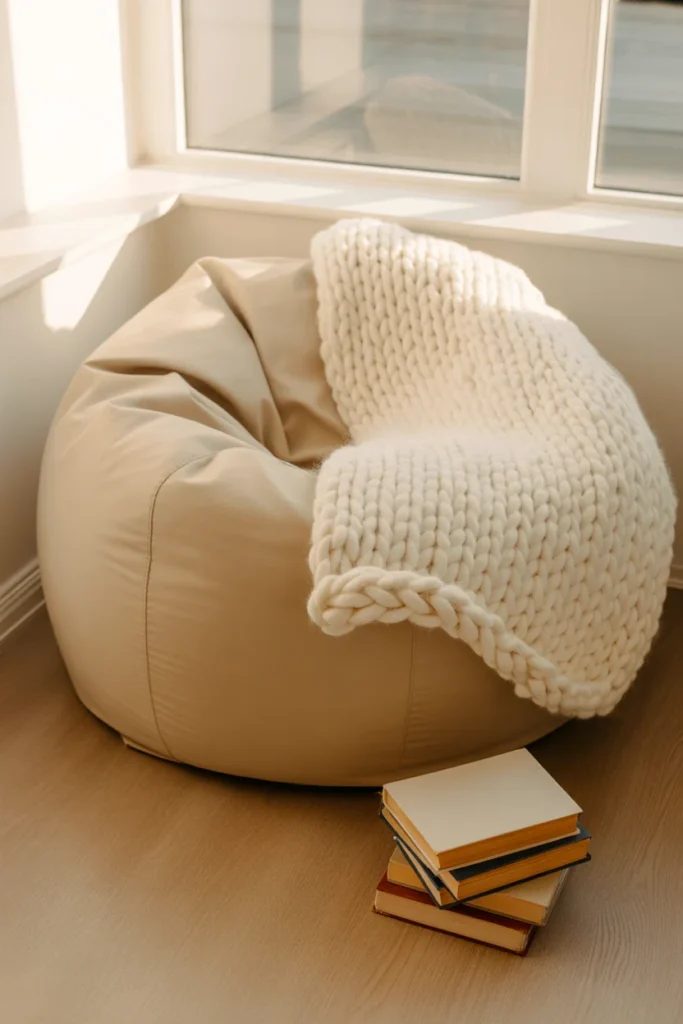
I’ve spent way too long researching this, testing chairs at showrooms, reading every review thread I could find, and asking people who actually read daily — not just people who photograph chairs for a living. Here’s what’s actually worth your money in 2026, organized by budget so you can go straight to the section that fits your wallet.
Best Reading Nook Chairs Under $100
The Oversized Bean Bag
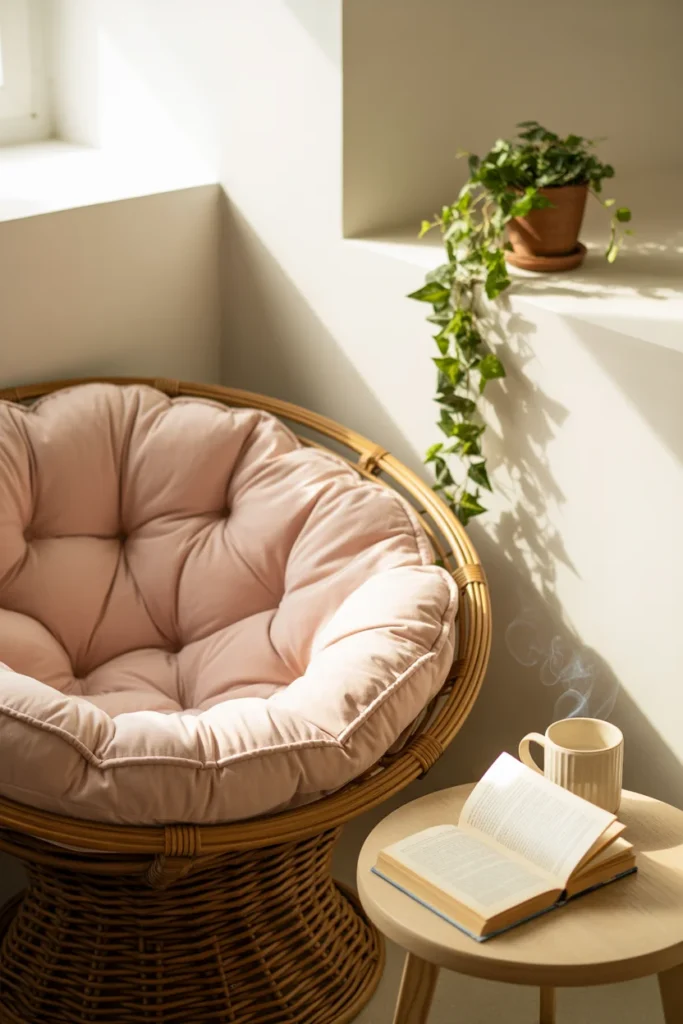
Let’s start with the most underrated reading seat that exists. A quality oversized bean bag — not the crunchy styrofoam-filled ones from college, but the newer memory foam-filled versions — is one of the most genuinely comfortable things you can sit in. They mold to your body, they’re light enough to drag from room to room, and they cost between $40 and $90 depending on size. If you’re building a reading nook on a tight budget or setting up a kids reading nook where things will get jumped on, this is your starting point.
The Floor Cushion Stack
Not technically a chair, but hear me out. A thick floor cushion (look for Japanese zabuton-style ones that are 3–4 inches thick) stacked with a triangular backrest pillow against the wall creates a surprisingly supportive reading seat for under $60 total. It works beautifully in corners, under windows, and in closet nook conversions. Plus it folds flat and stores away when you need the floor space back.
The Butterfly / Papasan Chair
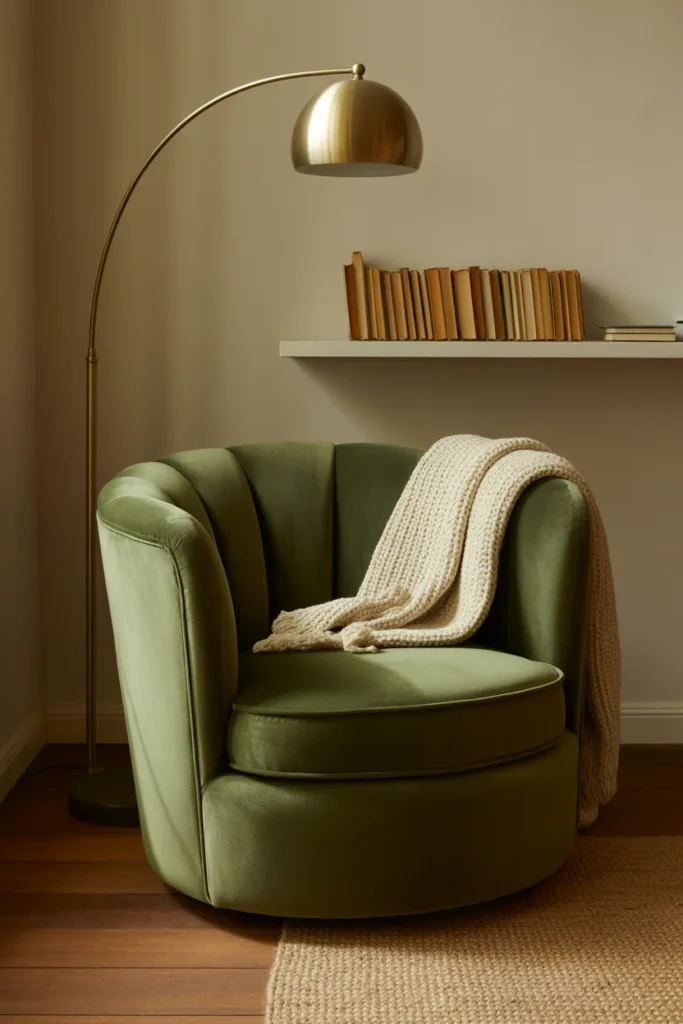
The papasan chair has made a full-circle comeback. Pinterest searches for “papasan reading nook” have been climbing steadily, and honestly it makes sense — that deep, bowl-shaped seat with a thick cushion is practically designed for curling up with a book. You can find solid papasan chairs for $60–$95, and the cushions are replaceable, so when yours starts going flat after a couple of years you just swap the pad instead of buying a whole new chair.
Best Reading Nook Chairs Under $300
The Barrel-Back Accent Chair
This is the one I recommend most often, and for good reason. A barrel-back accent chair has a curved, wrap-around back that creates an almost cocoon-like feel when you sit in it — which is exactly what you want in a reading chair. The good ones come with high-resilience foam cushions thick enough that you won’t bottom out, and the curved silhouette fits neatly into corners without looking bulky. Expect to pay $150–$280 for something that looks and feels far more expensive than it is.
The Classic Wingback
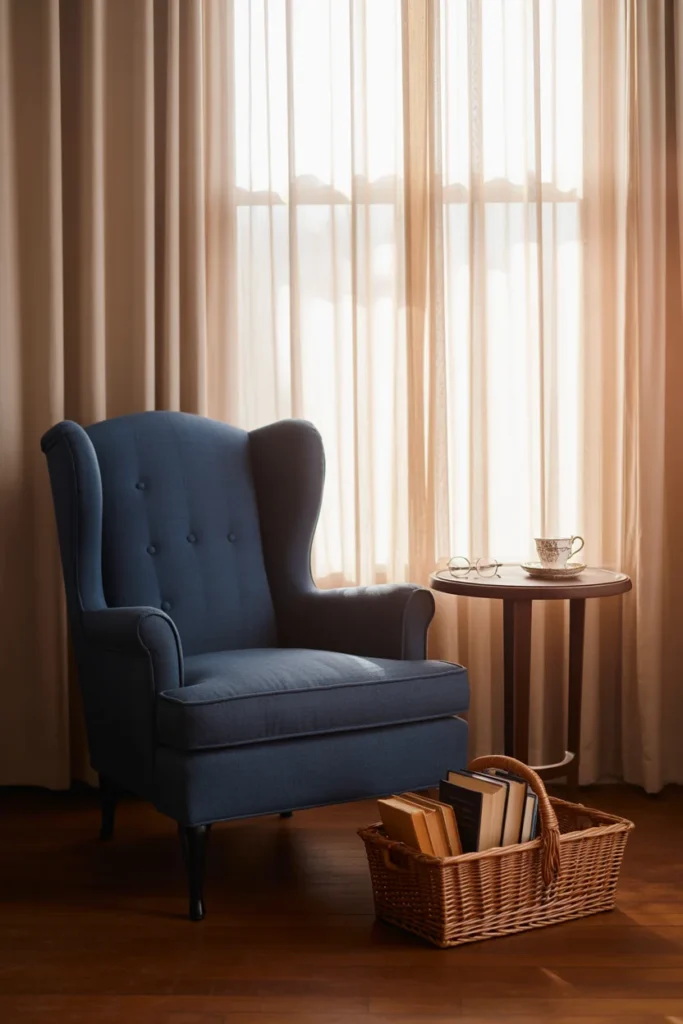
There’s a reason wingback chairs have been the default “reading chair” for centuries. Those tall side wings block peripheral distractions and create a sense of enclosure that helps you focus. Modern wingback chairs are slimmer and lighter than their traditional counterparts, which makes them realistic for apartments and smaller rooms. The upholstered versions in velvet or linen — two of the trendiest fabrics for cozy home decor in 2026 — look particularly stunning tucked into a reading corner with a small side table and a warm lamp.
The Swivel Armchair
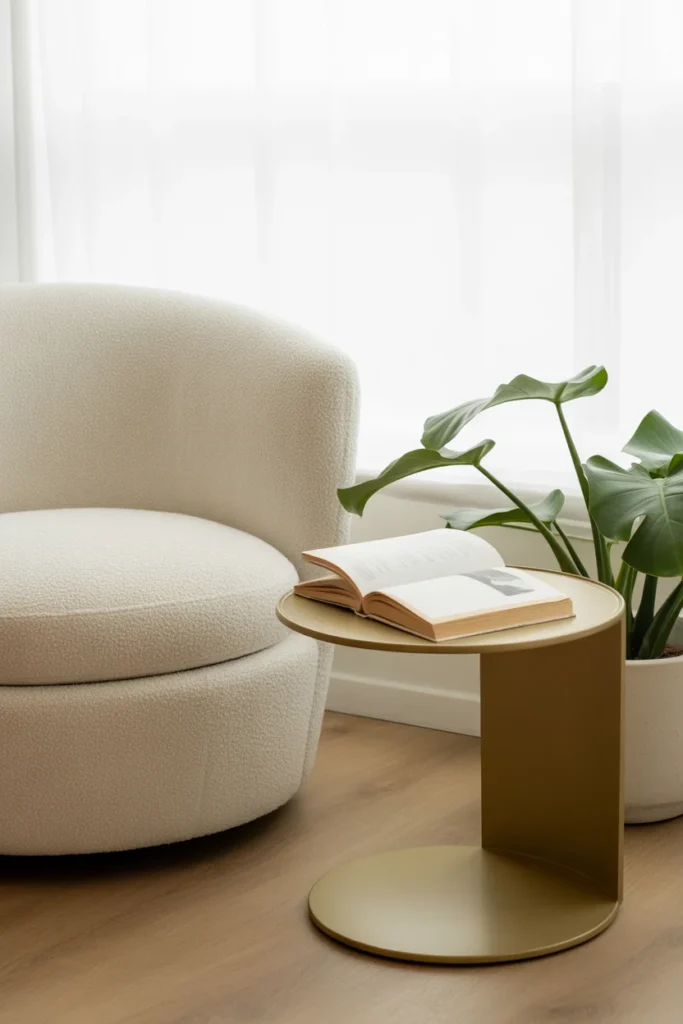
If you’ve never sat in a swivel armchair with a book, you’re missing out. There’s something deeply satisfying about gently rotating while you read — it’s almost meditative. Swivel chairs also solve a practical problem: you can turn toward natural light during the day and toward a lamp in the evening without rearranging the entire nook. Good swivel armchairs in boucle, teddy, or performance linen sit in the $180–$300 range and are one of the most “Pinterest-worthy” additions you can make to a reading space.
Worth-the-Splurge Reading Nook Chairs {#splurge}
The Hanging Egg Chair
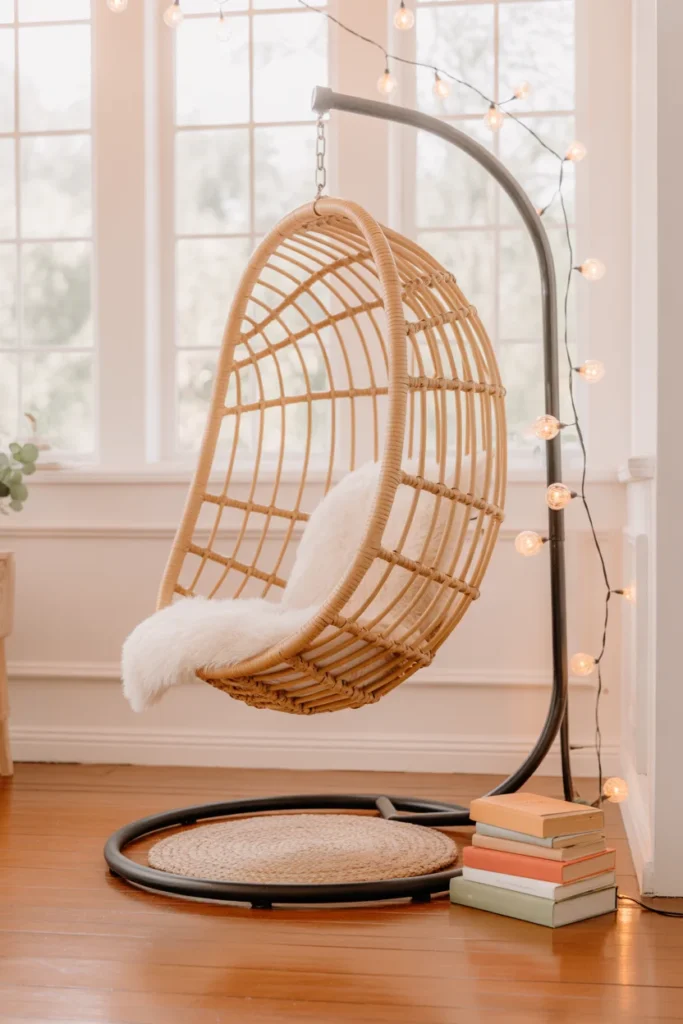
Hanging egg chairs have completely dominated Pinterest reading nook boards for three years running, and I don’t see that slowing down. They’re statement pieces that instantly make a nook feel intentional and designed. The enclosed shape creates a private, floating feeling that’s hard to describe until you’ve sat in one with a good novel. Indoor hanging egg chairs with stands (so you don’t need a ceiling mount) run $350–$600 depending on material and size. Worth every penny if the reading nook is also doubling as a room centerpiece.
The Oversized Chaise Lounge
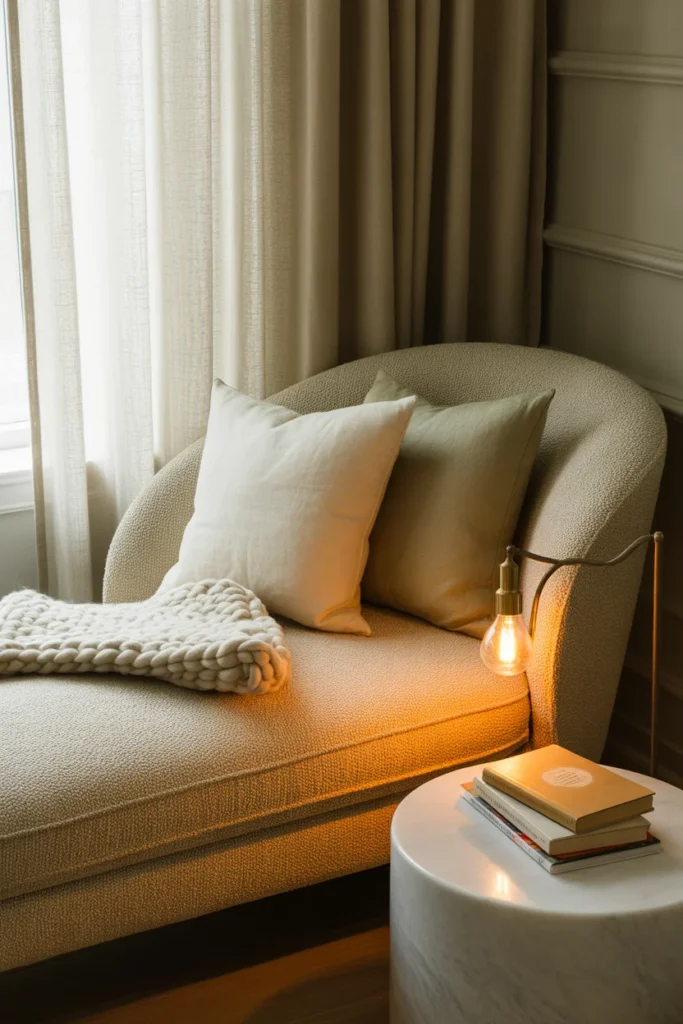
For the reader who wants to fully stretch out — legs extended, blanket draped, book propped on their chest — a chaise lounge is the ultimate reading seat. Look for one with feather-blend cushions and a slight incline in the backrest so you’re not lying completely flat. A quality reading chaise in the $400–$700 range will become the most fought-over seat in your house. The jumbo cord and boucle fabric versions that are trending in 2026 add a textural warmth that photographs beautifully too.
The Channel-Tufted Velvet Chair
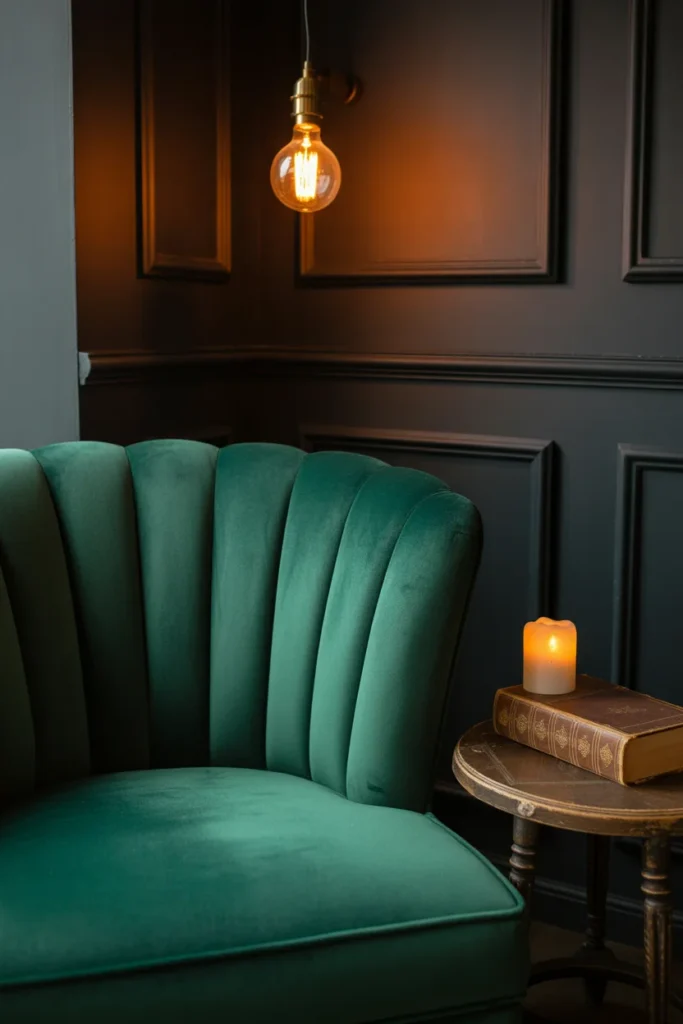
If your reading nook is as much about aesthetics as it is about comfort, a channel-tufted velvet accent chair in a deep jewel tone — emerald, navy, mustard, plum — is a showstopper. Channel tufting (those long vertical stitching lines) has overtaken traditional button tufting as the more modern, cleaner look. These chairs feel luxurious, they hold up well to daily use, and they catch light in a way that makes every photo of your nook look like it belongs in a magazine. Budget $300–$550 for one that’s genuinely well-made.
Best Reading Nook Chairs for Small Spaces
This matters more than people realize. Searches for “comfortable reading chair for small spaces” surged over 450% recently according to Pinterest trend data, and it’s because most reading chair recommendations ignore the reality that many of us don’t have a spare room with a bay window — we have an apartment corner or a strip of bedroom wall.
Here’s what actually works when space is tight:
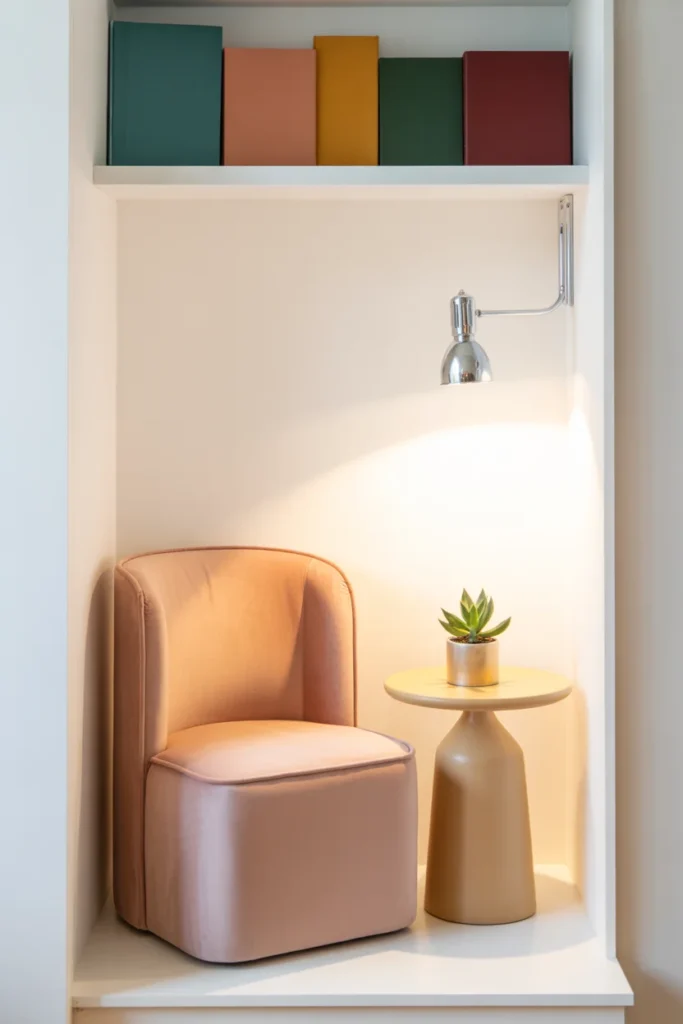
Slipper chairs sit directly on the floor with no armrests and a compact footprint. They look elegant, they fit in spaces as narrow as 24 inches, and the good ones are surprisingly comfortable for reading sessions up to an hour.
Hanging hammock chairs take up zero floor space since they attach to a single ceiling point. Paired with a small wall-mounted shelf for books, they create a complete reading nook in about two square feet of floor area.
Folding butterfly chairs collapse flat and store behind a door or in a closet when you need the floor back. They’re not the most supportive option for marathon reading sessions, but for a secondary nook in a guest room or a cozy bedroom reading corner, they work perfectly.
How to Style Your Reading Nook Chair
The chair is the anchor, but the details around it are what make a reading nook feel complete. Here’s what design bloggers and interior stylists consistently recommend:
Lighting first. Position a warm-toned floor lamp or a clip-on reading light so the beam falls over your shoulder onto the page. Overhead lighting creates glare and shadows that strain your eyes. Fairy lights and Edison-bulb string lights are beautiful for ambiance, but they’re not bright enough to actually read by, so use them as a complement, not a replacement.
A side table within reach. It doesn’t need to be big — a C-shaped sofa table, a small stool, or even a sturdy stack of hardcover books works. You need somewhere to set your coffee, your phone, and your reading glasses without getting up.
A throw blanket that lives on the chair. This sounds like a small thing, but it changes the entire psychology of the space. When a blanket is permanently draped over the armrest, the chair stops being “furniture” and starts being “your spot.” That distinction is what makes people actually sit down and read instead of just walking past.
Book storage nearby, not across the room. A small floating shelf, a wall-mounted book ledge, or a basket on the floor beside the chair means the next book is always within arm’s reach. If you have to cross the room to grab something new, you’ll reach for your phone instead — every single time. For more creative book storage ideas that pair beautifully with reading chairs, check out our reading nook bookshelf ideas.
Frequently Asked Questions
What is the most comfortable chair for a reading nook?
It depends on how you like to sit. If you curl up, a papasan or barrel-back accent chair gives you that wrapped, cozy feeling. If you stretch out, a chaise lounge is unbeatable. For pure versatility — sitting upright, cross-legged, or sideways — an oversized swivel armchair is the most universally comfortable reading nook chair.
How much should I spend on a reading nook chair?
You can create a genuinely comfortable reading seat for under $80 with a quality bean bag or floor cushion setup. For something more structured and long-lasting, $150–$300 is the sweet spot where comfort and quality overlap without overpaying. Above $400 you’re getting premium fabrics, better foam, and statement designs.

What type of chair is best for a small reading nook?
Slipper chairs, hanging hammock chairs, and compact papasan chairs are your best bets. Avoid anything wider than 30 inches or with deep armrests that eat into limited floor space. Swivel chairs also work well in tight spots because you can tuck them into a corner and rotate toward light as needed.
Should I get a reading chair with or without arms?
Armrests are a plus for longer reading sessions because they give your elbows somewhere to rest, which reduces shoulder and neck tension. However, armless slipper chairs and papasan chairs let you sit cross-legged or sideways more easily. If you tend to change positions frequently while reading, go armless.
What fabric is best for a reading chair?
Velvet, linen, and performance boucle are the top picks for 2026. Velvet feels luxurious and photographs beautifully. Linen is breathable and ages gracefully. Performance fabrics (sometimes labeled “pet-friendly” or “stain-resistant”) give you the look of natural textiles with much easier maintenance — particularly smart if kids or pets share the space.
Final Thoughts
The right reading nook chair isn’t about what looks best on a Pinterest board (though that’s a nice bonus) — it’s the one that makes you reach for a book instead of your phone at the end of the day. Whether that’s a $45 bean bag in a bedroom corner or a $500 velvet chaise by the window, the best reading nook chair is the one you’ll actually sit in, night after night, chapter after chapter.
Go pick your seat. The books are waiting.
Loved this guide? Pin it to your Home Decor or Reading Nook board so it’s waiting for you when you’re ready to shop!
Keep reading
More cozy nook ideas
 IKEA Hacks
Read →
IKEA Hacks
Read →
12 IKEA Furniture Ideas That Look Custom, Not Homemade
You can spot flat-pack from across a room, and it’s rarely the furniture’s fault. It’s the gaps. A strip of bare wall…
 IKEA Hacks
Read →
IKEA Hacks
Read →
20 IKEA Besta Ideas That Look Custom, Not Homemade
Four skinny legs, a gap at the wall, a cushion that slides off every time you lean back. That’s how most IKEA…
 DIY
Read →
DIY
Read →
12 Furniture Makeover Ideas for Beginners Who Have Never Painted a Thing
Your dresser is fine. It works, it holds socks, and it has looked exactly the same since the day you carried it…