
30 Cozy Home Decor Ideas for Rooms You Actually Live In

Your room isn’t cold because you bought the wrong sofa. It’s cold because one ceiling bulb is doing all the work and every surface in there is hard.
Cozy home decor fixes that, and almost none of it is permanent. Which matters, because you probably rent, you probably have one awkward corner and somewhere under 1,000 square feet, and your landlord probably does not want fresh holes in the drywall.
Three swaps do most of the work. They come first, before you spend real money on anything.
Start Here: The Three Swaps That Do Most of the Work
If you do nothing else on this list, do these tonight.
1. Change every bulb in the room to 2700K. Not some of them. All of them, including the one in the ceiling fixture you’re about to stop using. Mixed color temperatures are the reason a room reads “off” even when the furniture is fine.
2. Add one light source that sits below eye level. A table lamp, a floor lamp, a plug-in sconce. Anything whose glow lands below your shoulders while you’re standing.
3. Put something soft on the largest hard surface. The back of the sofa, the arm of a chair, the foot of the bed. One wool or chunky knit throw, actually draped, not folded into a store display triangle.
That’s it. Fifteen minutes, no tools, and the room will already read differently at night. Everything below is refinement.
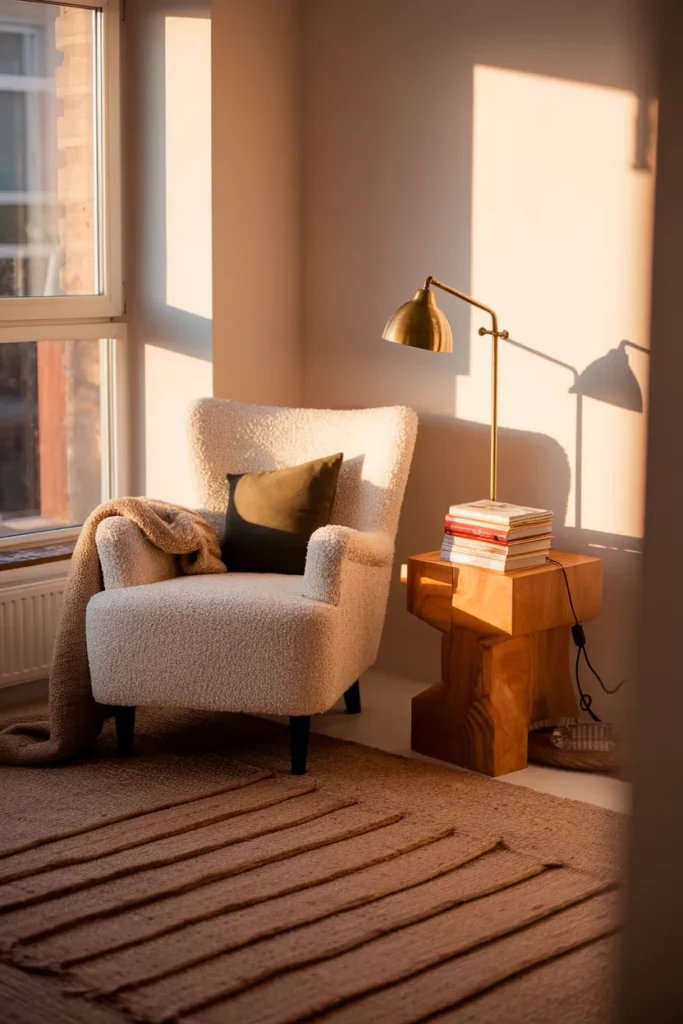
Light the Room Like It’s 7 PM, Not Noon
Lighting is the cheapest fix and the one people skip. Kelvin is the number on the box that tells you how yellow or blue the light will be, and lower means warmer.
Here’s the whole scale you need, no other numbers required:
| Kelvin | Reads as | Use it for |
|---|---|---|
| 1850K | Candle flame | Actual candles, ambience only |
| 2200K | Amber filament | Accent bulbs, exposed fixtures |
| 2700K | Soft warm white | Living rooms, bedrooms, any reading corner |
| 3000K | Warm white, brighter | Kitchens that still need warmth |
| 4000K | Neutral white | Task areas, garages |
| 5000K+ | Daylight blue-white | Nowhere you want to relax |
4. Stop using the overhead as your primary light. Ceiling fixtures throw light straight down, which flattens everything and puts shadows under people’s eyes. Use it to find things, then switch it off.
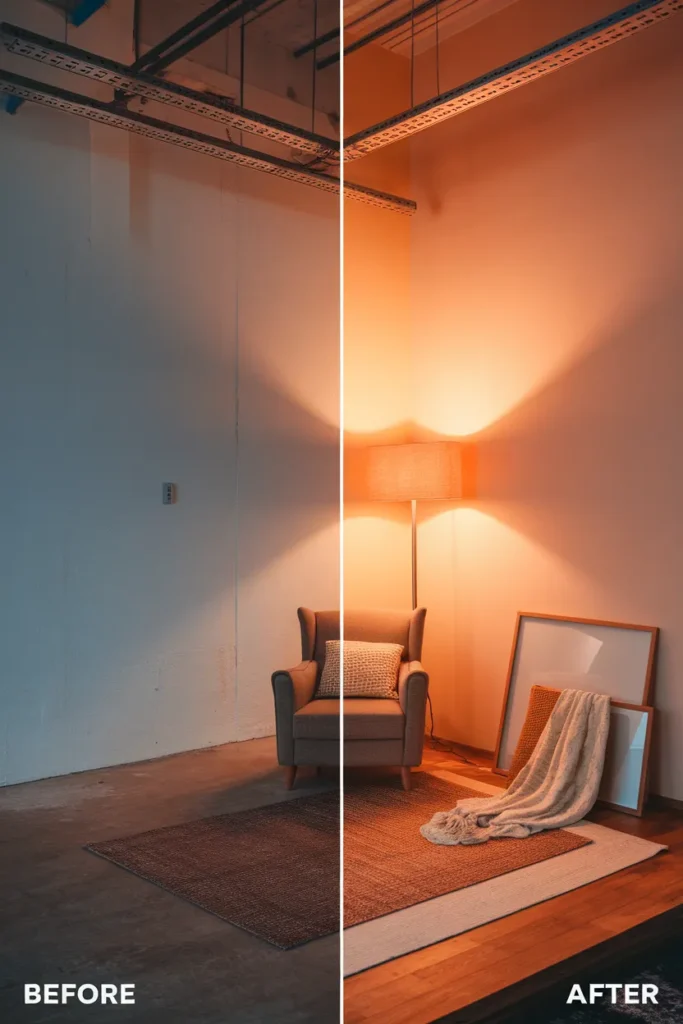
5. Follow the 3-Light Rule. Every room needs at least three separate light sources, and at least two of them must sit below eye level. Three low pools of light beat one bright ceiling every time. This is the single rule to screenshot if you take nothing else.
6. Use plug-in sconces if you rent. They mount with adhesive strips or a single small nail and cord-cover the rest. Wall light without an electrician or a deposit conversation.
7. Add a plug-in dimmer. A dimmer module between the plug and the lamp costs less than a pizza and turns any lamp into an evening lamp. Most standard LED bulbs need to be labeled dimmable to work, so check the box.
8. Keep real candles for the last hour. Candlelight sits around 1850K, warmer than any bulb you can buy, which is exactly why it works.
9. Give the reading corner its own light. A clip-on or swing-arm at shoulder height, aimed at the page rather than at your face. If you’re squinting, the corner will go unused no matter how it photographs.
Worth understanding before you buy a whole case of bulbs: Feit Electric’s warm white bulb color temperature guide breaks down which Kelvin range suits which room, and explains why 2700K and 3000K read so differently despite being close on paper.
Failure mode: you change three bulbs and leave the fourth at 5000K. One cool bulb in a warm room is more noticeable than four cool bulbs, because now the eye has something to compare against.
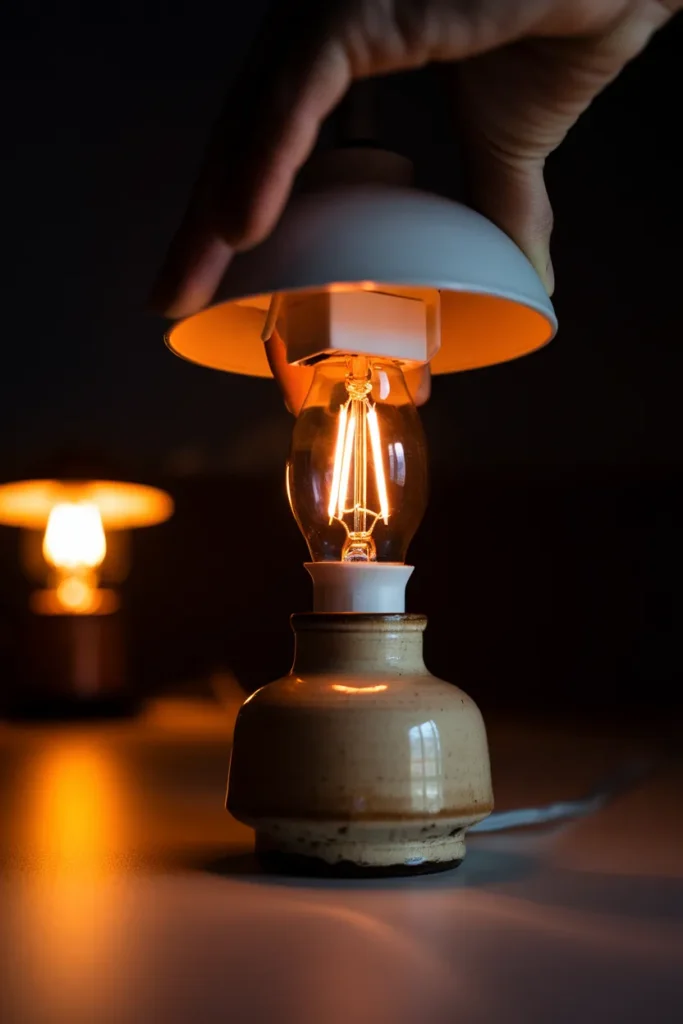
Layer Texture Until the Room Has Something to Touch
Texture is what separates a room that photographs well from a room you want to sit in. Hard, flat surfaces bounce sound and read cold no matter what color they are.
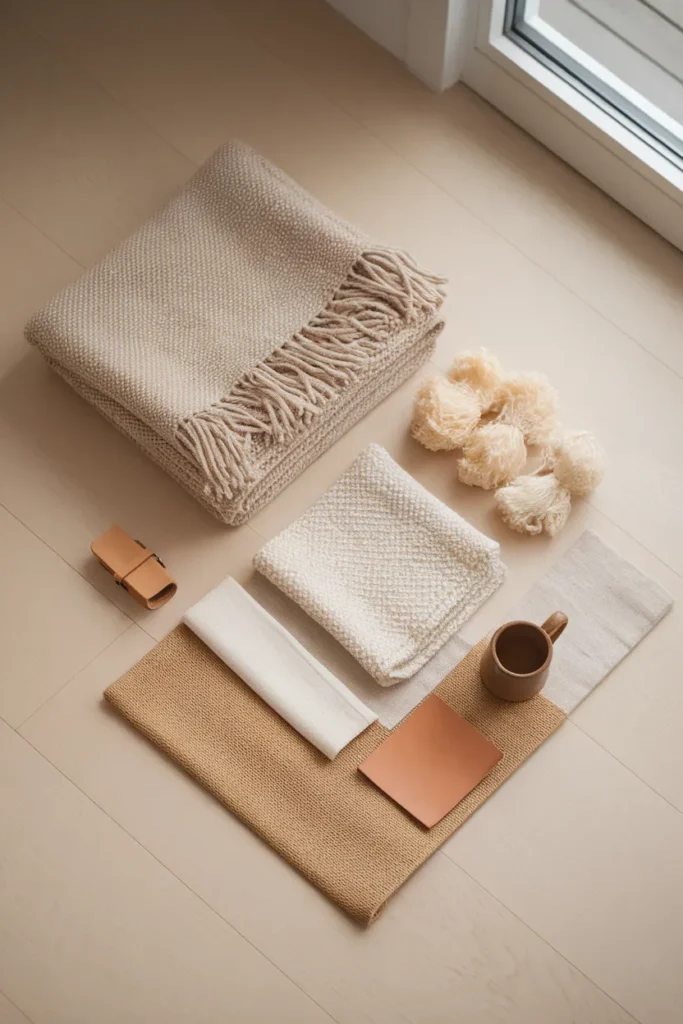
10. Contrast rough against smooth. Boucle next to raw oak. Sherpa against linen. A jute rug under a wool throw. Same-texture rooms fall flat even in the right palette.
11. Drape, don’t fold. A chunky knit over the sofa arm should look like someone just got up. Folded corners read like a showroom.
12. Add a lumbar pillow at the small of your back. Not decorative. This is the piece that decides whether you sit for ten minutes or ninety.
13. Run at least three distinct textures per room. Wool, linen, wood is a working default. Add leather or ceramic if the room can carry a fourth.
14. Throw a sheepskin over a hard chair. The fastest way to make a dining chair or desk chair usable for a long evening.
15. Let some things look old. Worn edges and mismatched wood tones read as lived-in, which is the actual goal. A room where every piece arrived the same month always feels like a hotel. This is the core of vintage cottagecore living room styling, where a single inherited-looking piece does more work than a full matching set.
Trade-off honesty: boucle photographs beautifully and pills where your elbows land. If a chair is going in a high-traffic spot, wool or a tight weave will look better in year two.
Give Every Room One Cozy Corner
Here’s where most cozy home decor advice goes wrong. It tells you to warm up an entire room, which is expensive and vague. Warm up one corner instead, and the rest of the room borrows from it.
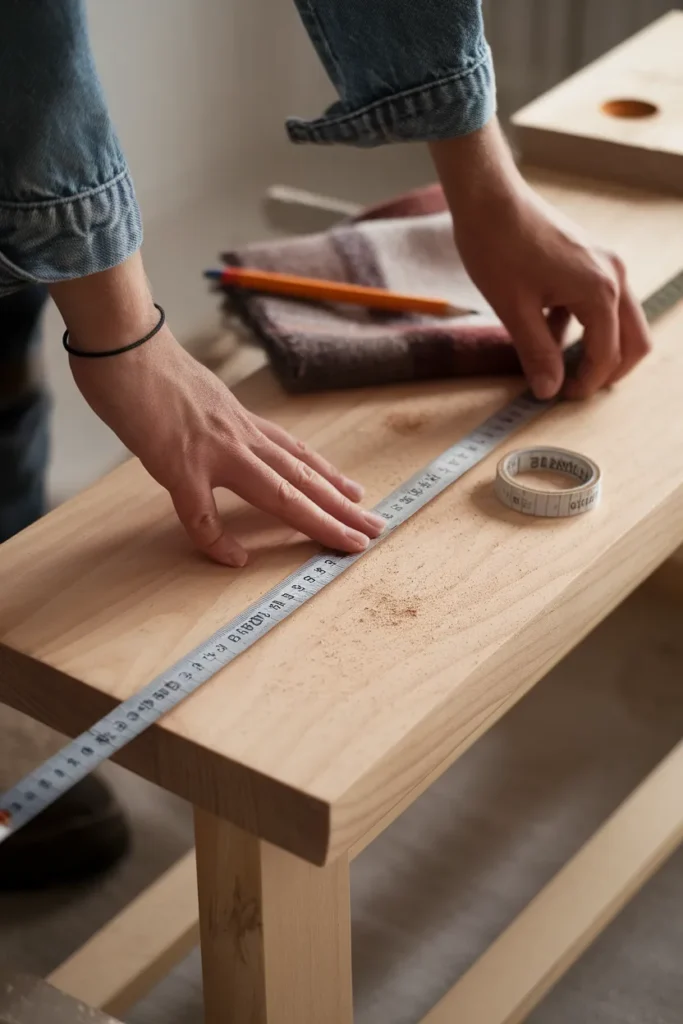
16. Use the 18-inch reach rule. Your side table should sit within 18 inches of where your hand rests when you’re seated. Farther than that and you’ll put the mug on the floor, which means the corner stops getting used.
17. Match seat height to 16 to 18 inches. That’s the range most lounge chairs land in, and it’s the range your knees expect. An IKEA Poang sits at the low end of it, which is why it reads loungey rather than upright.
18. Build the corner from three pieces, not seven. A seat, a light, a surface. Add a fourth only after you’ve used the corner for a week and found the gap yourself.
19. Be honest about floor cushions. They photograph better than anything on this list. After about forty minutes your lower back will file a complaint. Use them as secondary seating, not the main event.
20. Anchor the corner with a small rug. Even a 3×5 under the chair defines the zone and tells your eye that this is a separate place. Small-space corners benefit most from this trick, and dorm reading nook setup ideas show how far a defined corner goes when total square footage is genuinely tight.

Warm Up the Floor and the Windows
Two surfaces do a disproportionate amount of the temperature work, and both are easy to get wrong.
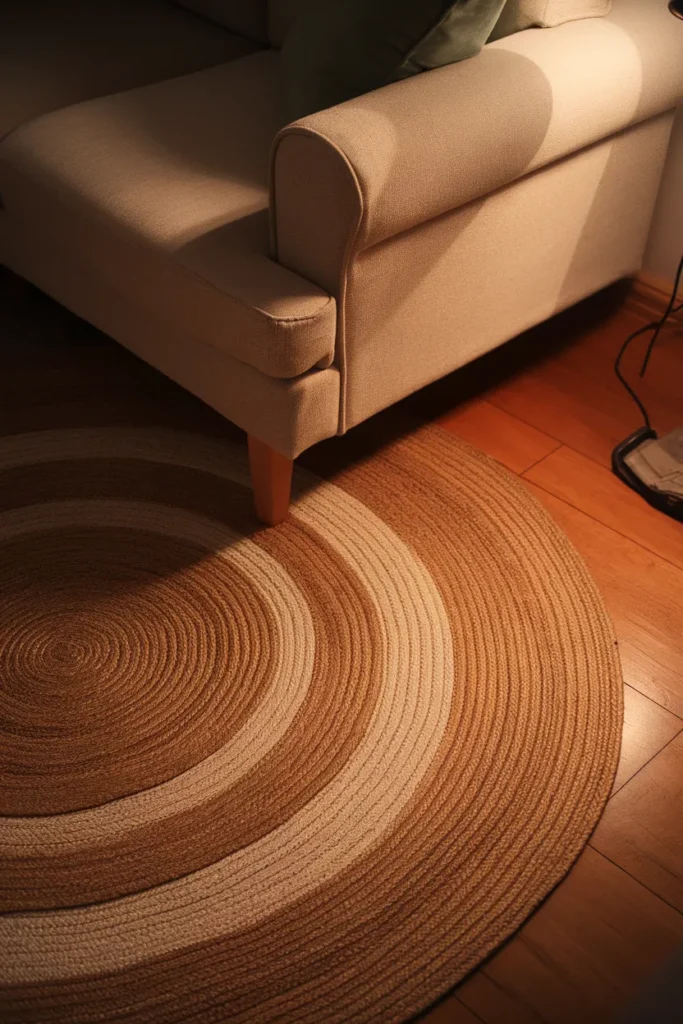
21. Layer a soft rug over a jute base. Jute alone is scratchy underfoot. Jute with a smaller wool or washable rug on top gives you the texture contrast and the warmth in one move.
22. Get the rug size right before you get the pattern right. At minimum, the front legs of every seating piece should sit on the rug. A rug that floats in the middle of the floor with nothing touching it makes a room look smaller, not larger. Leave roughly 12 to 18 inches of bare floor between the rug edge and the walls.
23. Hang curtains high and wide. Mount the rod 4 to 6 inches above the window frame and extend it 8 to 12 inches past each side. The window will read taller and the room will read finished. Almost everyone hangs curtains too low and too narrow.
24. Use lined or thermal panels in winter. They cut drafts and they hang with more weight, which is most of why heavy curtains feel warmer than sheers even before the insulation does anything.
Failure mode: curtains that stop two inches above the floor. They should either brush the floor or break slightly against it. That two-inch gap is the single most common thing that makes a styled room look unfinished.
The Cozy You Can’t Photograph
Every competing article stops at what a room looks like. Roughly half of whether a space feels warm has nothing to do with your eyes, which is exactly why rooms that look right in photos can still feel wrong to sit in.
25. Give the room a smell that isn’t cleaning product. Warm scent families do the most here: vanilla, sandalwood, cedar, black tea, anything in the bakery register. Skip sharp florals in small rooms, they turn cloying fast in under 200 square feet.
26. Deal with the sound. Hard rooms echo, and echo reads as cold. Rugs, curtains and upholstery all absorb sound, which is a real part of why a textile-heavy room feels different the moment you walk in. If your space still rings, a bookcase full of actual books is one of the better sound absorbers you can own.
27. Set the thermostat lower than you think, then add layers. Around 68F is the usual US winter recommendation for occupied rooms. A slightly cool room plus a heavy throw feels more comforting than an evenly warm room, because the contrast is the thing your body registers.
Renter-Safe Cozy: Nothing Here Needs a Drill
Every idea above survives a move-out inspection, but these three exist specifically to solve the deposit problem.
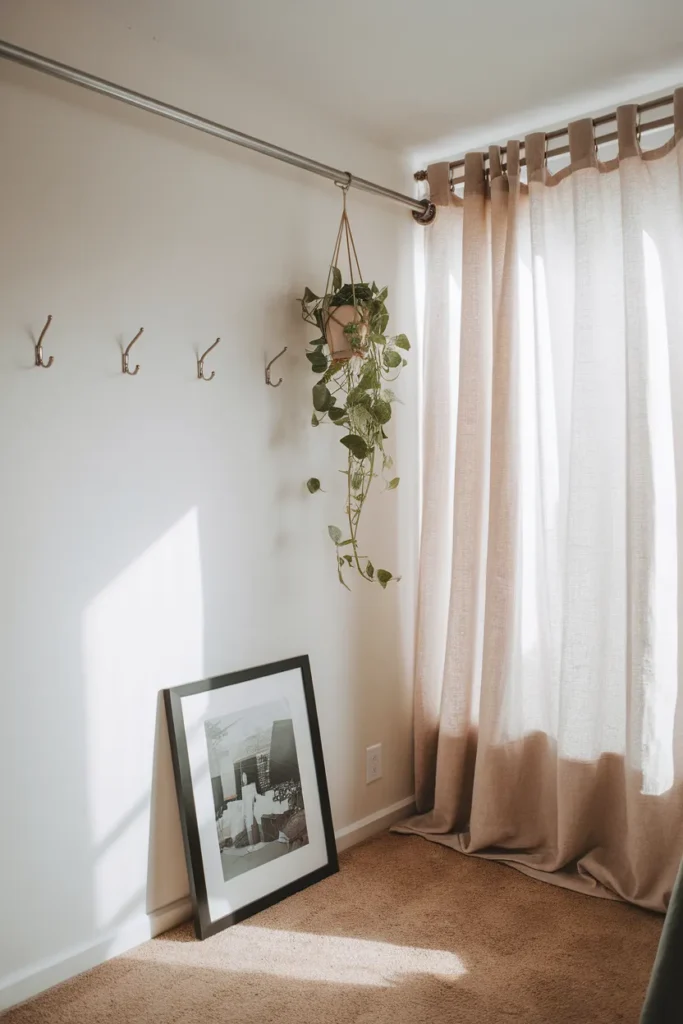
28. Adhesive strips and tension rods carry more than you think. Rated adhesive hooks hold art, garlands and light sconces. A tension rod turns an alcove into a curtained nook with zero hardware. Check the weight rating on the packet and then use one size up.
29. Peel-and-stick is genuinely good now. Removable wallpaper on one wall behind a chair defines a corner faster than anything else on this list. Test a small piece on your actual wall first, because textured or freshly painted drywall can lift.
30. Lean art instead of hanging it. A large frame propped on a shelf, a dresser or the floor reads deliberate, costs nothing in wall damage, and lets you move it next month when you change your mind.
For a full worked example of decorating around these constraints, renter-safe small bedroom decorating ideas runs through the same problem at room scale, with the reversible layers separated out from the permanent ones.
What Cozymaxxing Actually Means in 2026
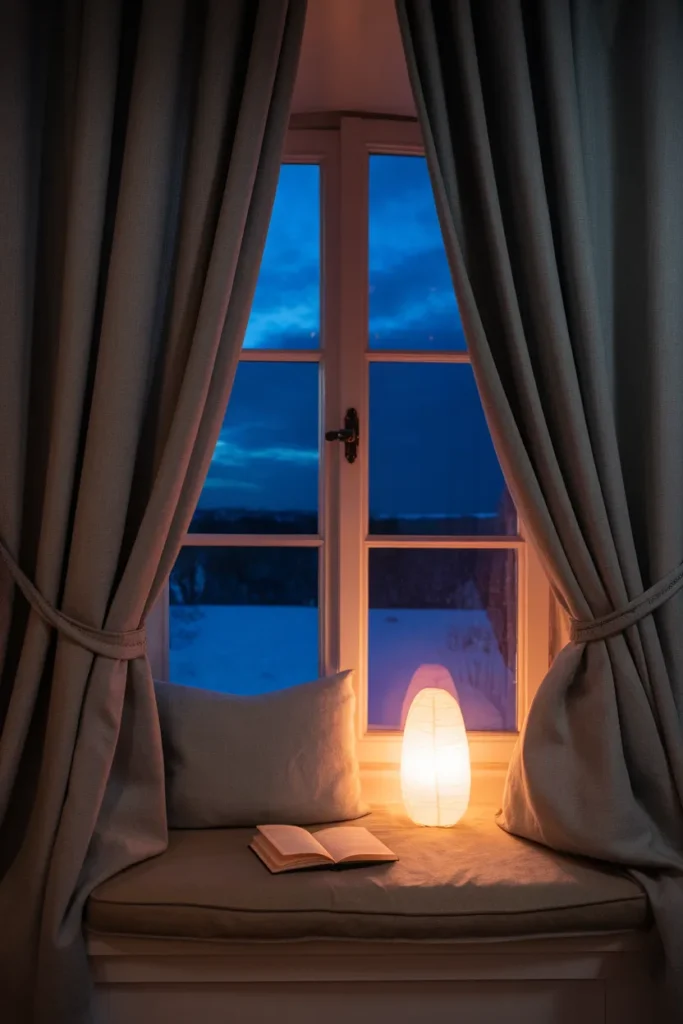
The term showed up on TikTok and moved into design coverage through 2025 and 2026. Southern Living, House Digest and Decorilla have all covered it, and the working definition across those pieces is consistent: going deliberately maximal on comfort rather than on decoration. Soft lighting, layered textiles, and small enclosed nooks, aimed at making a home feel restorative rather than photogenic.
What makes it more than a coined word is that the search behavior backs it up. Pinterest’s own 2026 spring home search data shows searches for comfy reading chairs in small spaces up 455 percent, reading nook ideas up 245 percent, and closet reading nooks for adults up 55 percent, with the platform framing the season around micro-makeovers rather than renovations.
Which is a long way of confirming what the corner-first approach above already assumes. Nobody is renovating. Everybody is trying to make one part of one room feel like somewhere they want to be.
Frequently Asked Questions
What makes a house feel cozy? Three things, in order: warm low light, soft texture on hard surfaces, and enclosure. Enclosure is the one people miss. A defined corner with a seat, a light and a surface feels warmer than an open, evenly lit room with more expensive furniture in it.
What does cozy mean in home decorating? It describes a space that reads warm, comfortable and welcoming. It’s also frequently used as a kinder word for small, which is fair enough, because small rooms have a genuine advantage here. Enclosure is easier to build when the walls are already close.
What color light bulb makes a room feel cozy? 2700K, labeled soft white or warm white on most US packaging. Anything at 4000K or above will read clinical no matter what else you do to the room.
What’s a budget-friendly way to create a cozy home? Bulbs and textiles, in that order. A pack of 2700K bulbs and one good throw will change a room more than a furniture purchase ten times the price. Thrift and secondhand furniture also works in your favor here, because worn pieces read as lived-in rather than as compromises.
How can renters make a space cozy without painting or drilling? Plug-in sconces, tension rods, adhesive hooks, removable wallpaper, leaning art and rugs. All of it comes down at move-out. Lighting is entirely renter-safe, which is convenient given it’s also the highest-impact change available.
Why does my room feel cold and uninviting? Usually one overhead bulb at too high a Kelvin, plus too many hard surfaces and nothing absorbing sound. Fix the light first, then add one soft layer, then listen for echo.

Where to Start Tonight
Pick the corner you already gravitate toward, the one where you end up sitting even though it isn’t set up for it. Put a 2700K bulb in the nearest lamp, move a side table within arm’s reach, and drape something soft over the back of the chair.
That’s a cozy corner. Everything else on this list is just doing it again in another room.
If that corner is where you want to read, the next thing worth reading is our guide to seat height, side table placement and lighting for a proper reading nook, which goes deeper on the measurements this article only touched.
Keep reading
More cozy nook ideas
 Fall Decor
Read →
Fall Decor
Read →
Holiday Decor on a Budget: Where to Spend and Where to Save
If last December’s holiday decor money went to plastic picks, a glitter sign, and a box of red balls you were tired…
 Fall Decor
Read →
Fall Decor
Read →
21 Vintage Pumpkin Ideas for Small Apartments, No Porch or Nails Needed
No porch, no mantel, and a lease that frowns on nail holes. You still get a fall corner. You need one shelf,…
 Fall Decor
Read →
Fall Decor
Read →
14 Witchy Backyard Ideas for a Whimsical, Storybook Halloween
No old oak grove, no permission to dig, no money for a garden cottage. A witchy backyard still fits. You need one…