
Cottagecore Bedroom Decor: The Three-Anchor Formula for a Storybook Room

Cottagecore bedroom decor gets treated like a shopping list. It isn’t. It’s a ratio. Warm fairy lights doing about 30 percent of the visual work, a canopy or statement bed doing 40, and floral patterns doing the last 30 without shouting over each other. Miss the ratio and the room reads as a Halloween store. Nail it and a plain rental bedroom starts looking like a rewritten fairy tale by Sunday night. Below: the three-anchor formula on your first scroll, then a room built around it with real 2026 prices, real bulb temperatures, and moves your landlord will never notice.
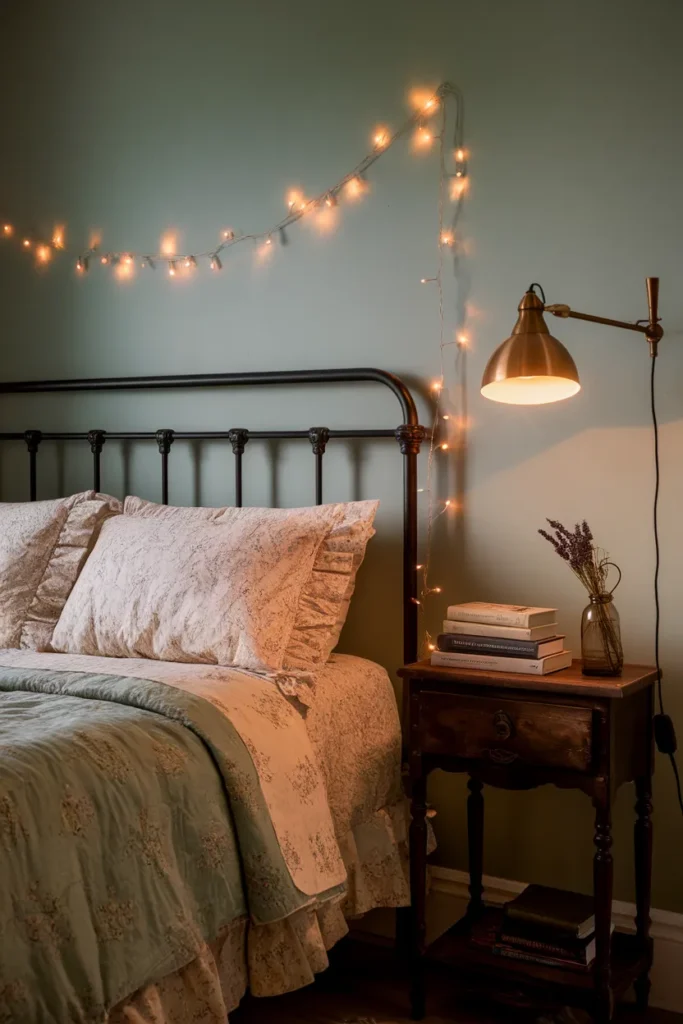
The Three-Anchor Formula
Pick one anchor as the star of the room. Dial the other two to around 60 percent of what magazines show you. That’s the entire system.
Here’s the split:
- Anchor A, fairy lights and warm glow. The whole mood runs on 2700K bulbs, copper wire strings, one dimmable table lamp, no overhead. If this is your star, keep the canopy simple and the florals small-scale.
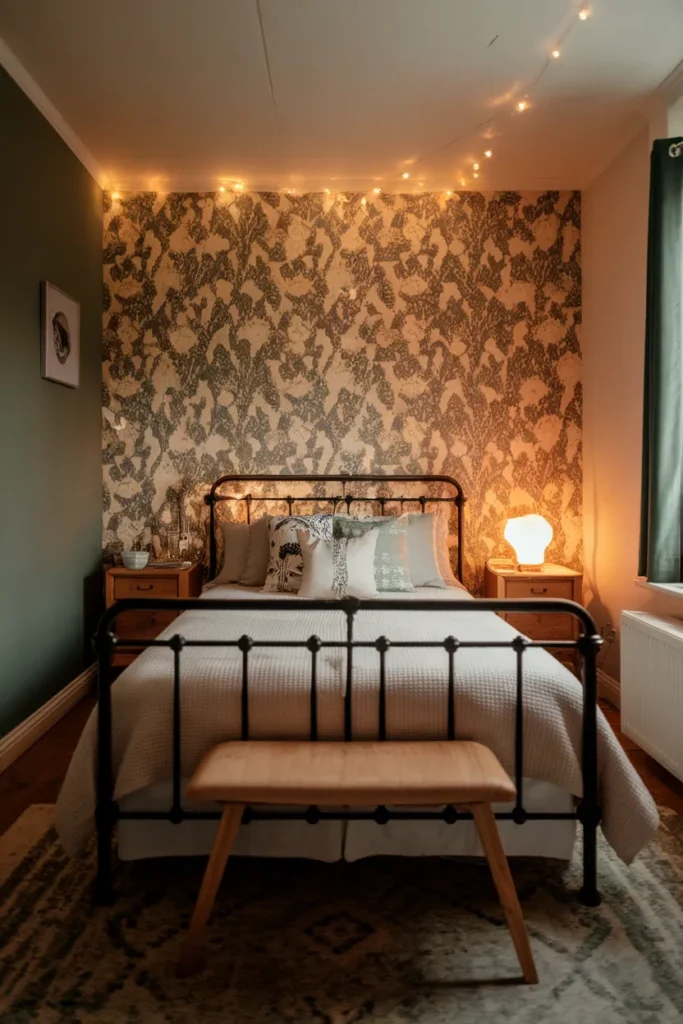
- Anchor B, a canopy or statement bed frame. Sheer muslin drape, cotton eyelet, or a black iron four-poster. If this is your star, use fairy lights sparingly (one strand max) and pick solid bedding over more pattern.
- Anchor C, floral patterns. Bedding, wallpaper, art, curtains. If florals are your star, dial the canopy to bare rods and skip decorative fairy lights entirely. One warm bedside lamp is enough.
Three anchors at full volume equals costume, not room. One anchor at full volume plus two at 60 percent equals cottagecore. Test yourself before you buy anything: which anchor are you starring? Say it out loud. Then buy for that one first.
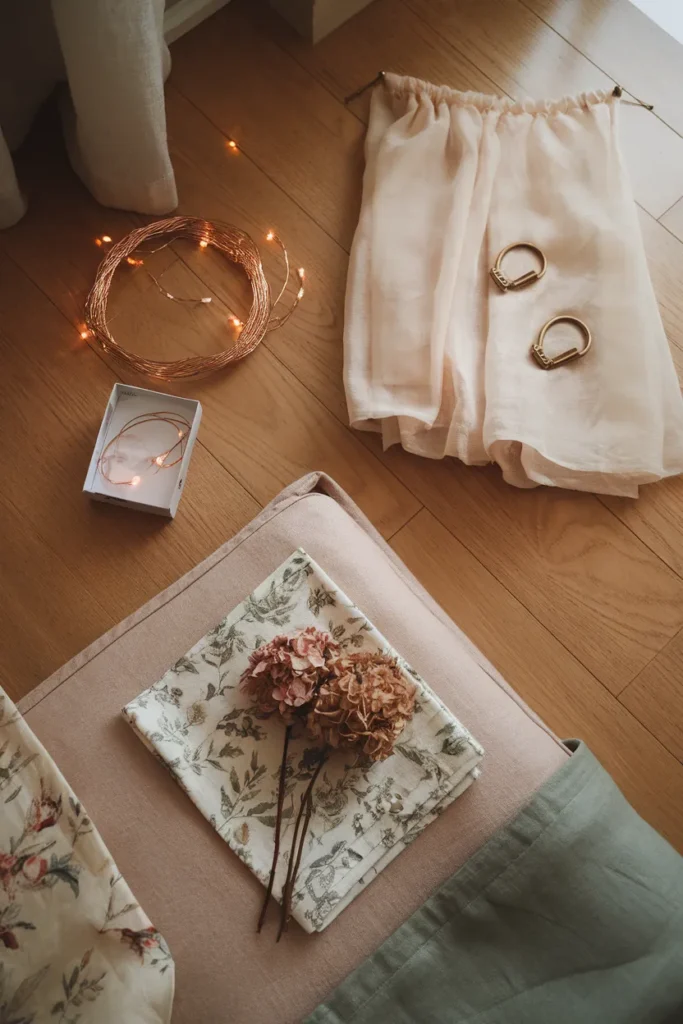
Fairy Lights That Actually Look Cottagecore, Not Dorm Room
This is where most cottagecore bedrooms fall apart. Cheap blue-white string lights kill the aesthetic in about two seconds, and they cost you real sleep.
Warm color temperature is the whole game. Bulb color is measured in Kelvin (K). A candle flame sits around 1800K, an old-fashioned incandescent glows at roughly 2700K, and daylight LEDs cover 5000K to 6500K. According to Harvard Health’s report on the effects of blue light on melatonin, exposure to blue-heavy light in the evening suppresses melatonin about twice as long as green light of the same brightness and can push circadian rhythms back by up to three hours. That’s a real sleep cost, not decor snobbery.
For cottagecore bedrooms, buy strings labeled 2700K on the box. Anything above 3000K starts looking clinical. Anything 4000K and up reads as “back of a hospital hallway.”
The physical details that matter:
- Copper or brass wire, not white plastic
- Warm white bulbs at 2700K, not “cool white” or “daylight”
- Plug-in transformer over battery packs (batteries die and you’ll stop using them)
- Dimmable if the option exists, so you can dial down at 10 pm
Where to actually put them:
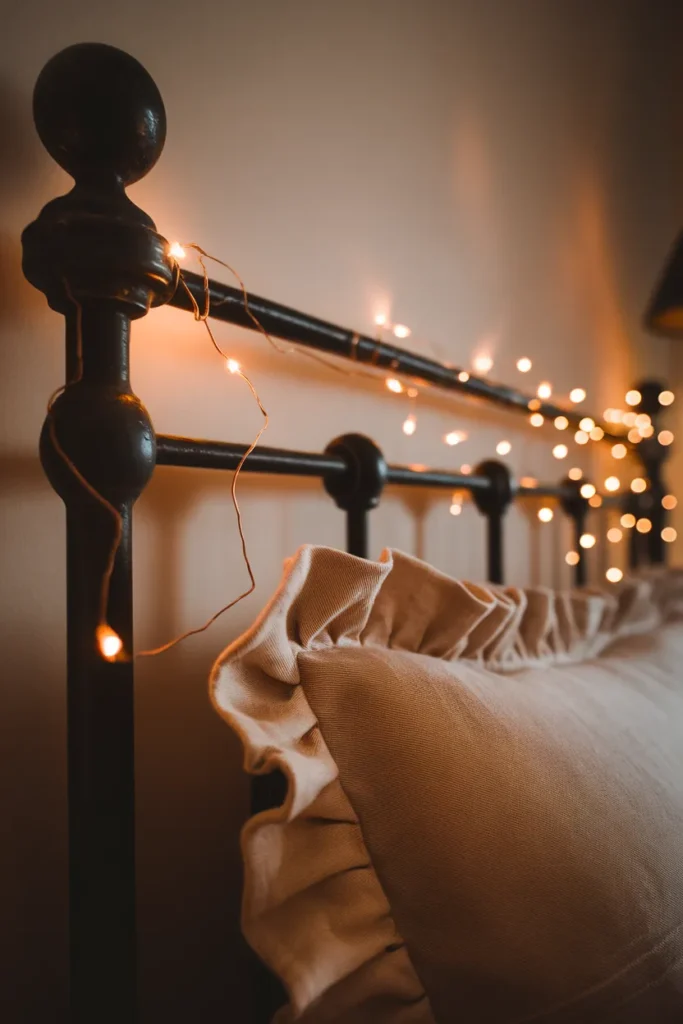
- Woven along a wrought-iron or brass headboard rail
- Behind a sheer canopy curtain, glowing through the fabric
- On a picture ledge above the bed, half-buried behind books and small frames
- Draped along a full-length mirror lean
- Tacked in a loose swag under a wall shelf
The one thing to avoid: looping fairy lights around the entire ceiling perimeter. That’s dorm-room energy. Cottagecore fairy lights want to peek out from behind something, not shout from the crown molding.
Product archetypes to search for: warm-white 33-foot copper wire strings ($15 to $25 at Target or Amazon), brass mini-globe strings ($30 to $45), or a plug-in dimmable set with a remote if you want app control ($40 to $60).
Canopy Beds for Real Bedrooms (Yes, Even 8-Foot Ceilings)
Most cottagecore Pinterest boards feature four-poster beds inside 10-foot-ceiling farmhouses. If you’re renting a 900-square-foot apartment with a standard 8-foot ceiling, that image is quietly lying to you. Here’s how canopies actually work in real US rentals.
The 6-inch clearance rule. From the top of your canopy rod or ceiling hoop, you want at least 6 inches of visible ceiling before it meets the wall. Less than that and the canopy feels like the ceiling is squashing the bed. In an 8-foot room (96 inches), your canopy top should sit at 88 inches maximum. For a standard queen mattress at 60 by 80 inches, that leaves about 62 inches of drape (mattress top to canopy), plenty of visual softness without hitting your head sitting up.
Three canopy setups that fit small rentals:
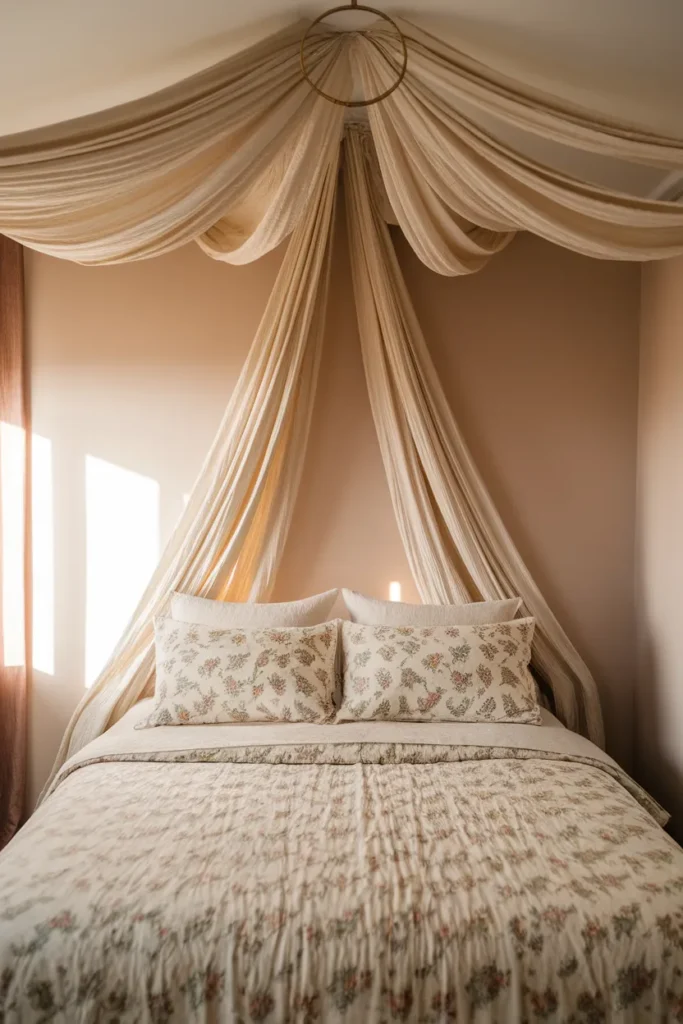
- Ceiling hoop with sheer drape. A single brass or wood embroidery hoop mounted centered over the bed, with two panels of cream muslin cascading down and out to the corners. Cost: hoop $12 to $20, muslin panels $25 to $40, ceiling hook (removable adhesive rated for 5 lb) $8. Renter safe.
- Curtain-rod canopy. A slim tension rod or ceiling-mount curtain rod along the wall behind the headboard, with two sheer panels draped forward. No four-poster required. Cost: rod $15 to $30, sheers $30 to $60.
- Full four-poster. If you own or plan to buy a bed frame, a black iron four-poster (queen) runs $250 to $500 new, or $80 to $180 secondhand on Facebook Marketplace or estate sales. Skip the ones taller than 84 inches for an 8-foot ceiling.
If your ceilings are 9 feet or higher, you have more room to go dramatic. But even then, the 6-inch clearance rule holds, and you want visible ceiling above the canopy, not compression. For a broader roundup of bedroom looks in this style, our full guide to cottagecore bedroom ideas walks through 25 layouts across different room sizes.
The fabric that reads as cottagecore, not costume: lightweight muslin, cotton eyelet with a scalloped edge, or a fine linen sheer. Heavy velvet drape reads Victorian goth. Polyester tulle reads prom. Cotton and linen do the work.
Floral Bedding, Wallpaper, and Wall Art (Layered, Not Loud)
Florals are the pattern most people get wrong. The instinct is to buy florals on everything: the duvet, the shams, the curtains, the rug, the wallpaper. That’s a fabric store, not a bedroom.
The rule: layer florals with solids at roughly a 60/40 ratio. If the duvet is floral, the shams are solid cream. If the wallpaper is floral, the bedding is mostly solid with maybe one floral pillow. Two floral patterns can coexist in a room only if they share a color family and vary in scale (one small ditsy print, one larger climbing print).
Bedding archetypes that work:
- Small-print floral duvet cover in muted tones (sage, dusty rose, faded blue), cream or oatmeal linen shams, one accent lumbar with a coordinating solid or embroidered detail. Duvet cover cost: $55 to $110 (Threshold at Target, H&M Home, Amazon, or Etsy).
- Solid linen duvet in stone or oatmeal, floral euro shams, one small-print quilted throw folded at the foot. Linen duvet: $85 to $109 (H&M Home, IKEA ANGSLILJA line, Quince).
- White eyelet or ruffle duvet, mixed floral pillow set of three in a shared color palette. Eyelet duvet: $60 to $130.
Wallpaper without commitment: peel-and-stick floral in muted, non-saturated tones. Rifle Paper Co., Chasing Paper, and Tempaper all sell cottagecore-appropriate patterns for $50 to $130 for a headboard wall (roughly 4 feet wide by 8 feet tall). Small-scale garden florals or climbing roses read cottagecore. Large geometric florals read mid-century. Choose accordingly.
Botanical prints belong roughly 12 inches above the top of the pillows, centered on the headboard, either as a cluster of three small frames (5 by 7 or 8 by 10) or a single larger frame (16 by 20). Etsy has vintage botanical illustration downloads at $5 to $15 per set. Print at home, frame in thrifted wood, done.
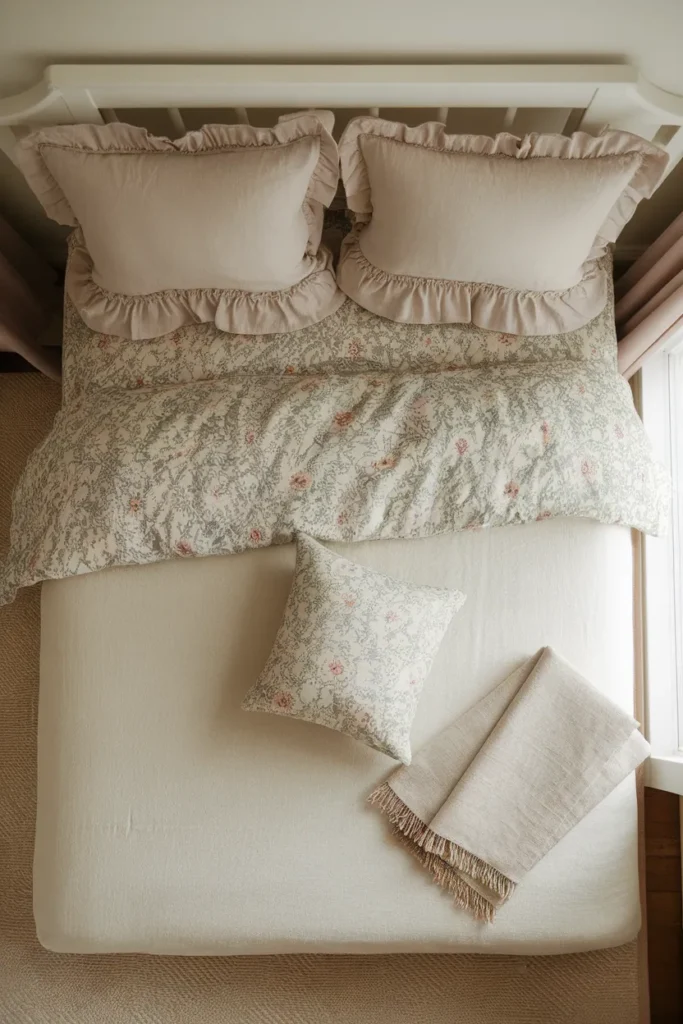
The Cottagecore Bedroom Color Palette (Sage, Cream, Dusty Rose)
Every cottagecore palette follows the same math: one warm neutral base (60 percent), one muted color (30 percent), one accent (10 percent). Bright saturated colors break the aesthetic instantly.
The reliable base neutrals: warm creams, oatmeal, bone, warm off-white. Cool bright whites (like a stark builder white) look wrong against warm wood and floral prints. If you rent and can’t paint, the base color of your bedding and curtains does this job.
The 30 percent muted color, ranked by how often it appears in top-saved cottagecore pins:
- Sage green (moss, eucalyptus, dried herb tones)
- Dusty rose (faded pink, blush, mauve)
- Butter yellow (soft warm cream-yellow, not lemon)
- Soft lavender (gray-toned, not vibrant)
- Dusty blue (fog, gray-blue, faded denim)
The 10 percent accent is where you can bring in a deeper note: forest green, terracotta, or a warm honey wood.
For a full paint direction with real color chips, Benjamin Moore’s cottage color palette walks through warm cottage neutrals and pastel accents that pair with plaster walls and traditional trim.
Rental hack for the paint you can’t do: hang one large piece of art in your accent color above the headboard, add throw pillows in that color, and add one dried floral bunch in the same tone on the nightstand. Three touches of the same accent color make the room read as intentional even when the walls stay landlord beige.
Layers That Make a Cottagecore Bedroom Feel Lived-In
Cottagecore fails when the room looks like it was styled yesterday. It works when it looks like someone has been slowly building it for years. That gap comes down to a specific kind of layering, mostly on the small horizontal surfaces.
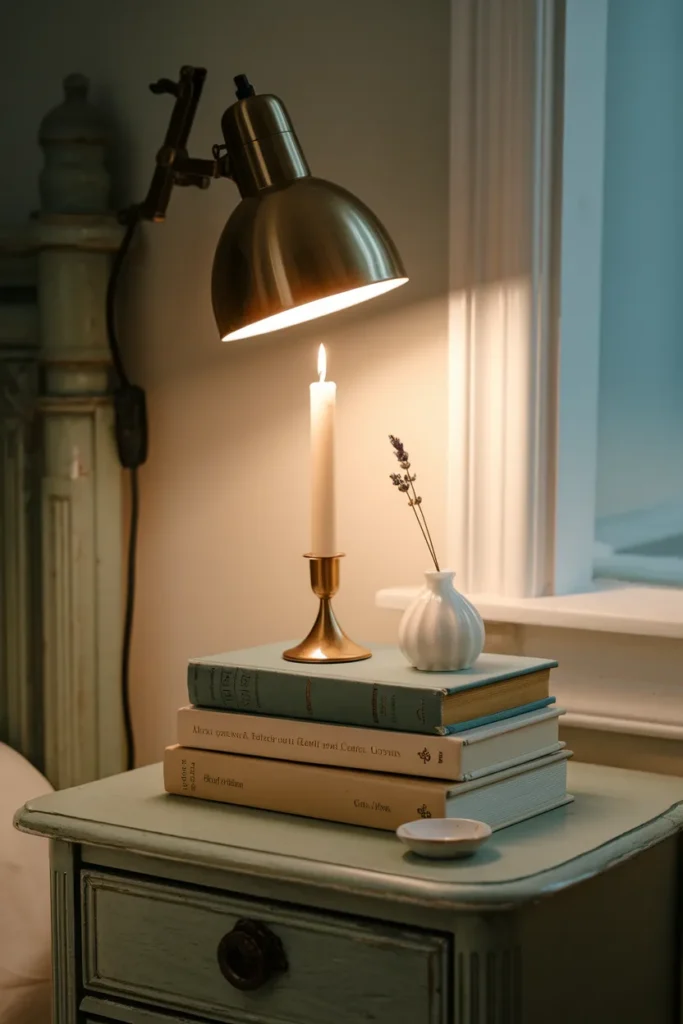
The nightstand is where the room becomes personal:
- A stack of three or four hardcover books, one slightly cracked spine visible
- A small ceramic dish holding two or three vintage brass keys or a thimble
- A tapered candle in a brass or ceramic holder (unlit is fine)
- A cutting from your own kitchen herbs (rosemary, mint, or a small ivy trailing) in a milk-glass bottle
- One personal object that doesn’t match: a grandmother’s clock, a beaded rosary, a small painted matchbox
The bed layers add texture without more pattern:
- A folded linen throw at the foot in oatmeal or sage
- One embroidered lumbar pillow, cotton or linen, in a natural weave
- A ruffled or eyelet edge on at least one pillow
The overlooked layer most people forget: sound and smell. A small bowl of dried lavender buds actually gives the room the faint scent that photos hint at but never say out loud. The rustle of linen when you sit down on the bed reads cottagecore in a way that polyester bedding physically cannot. These are the details cameras don’t capture and readers feel when they walk in.
For how these same layering rules translate to the rest of your home, our vintage cottagecore living room breakdown applies the same principles to a floral sofa and antique-hutch setup.
Renter-Friendly Cottagecore Moves (Zero Damage, Zero Deposit Risk)
Cottagecore is one of the friendliest aesthetics for renters, because most of the mood lives in textiles, lighting, and small styling rather than permanent construction. Every move below leaves your walls, floors, and fixtures exactly as your landlord handed them over.
The five moves that do the most work per dollar:
- Bulb swap. Replace every 3000K, 4000K, or “daylight” bulb in the bedroom with 2700K equivalents. A four-pack of dimmable 2700K LEDs runs about $12 to $18 at any hardware store. This is the single fastest change and it costs less than a candle.
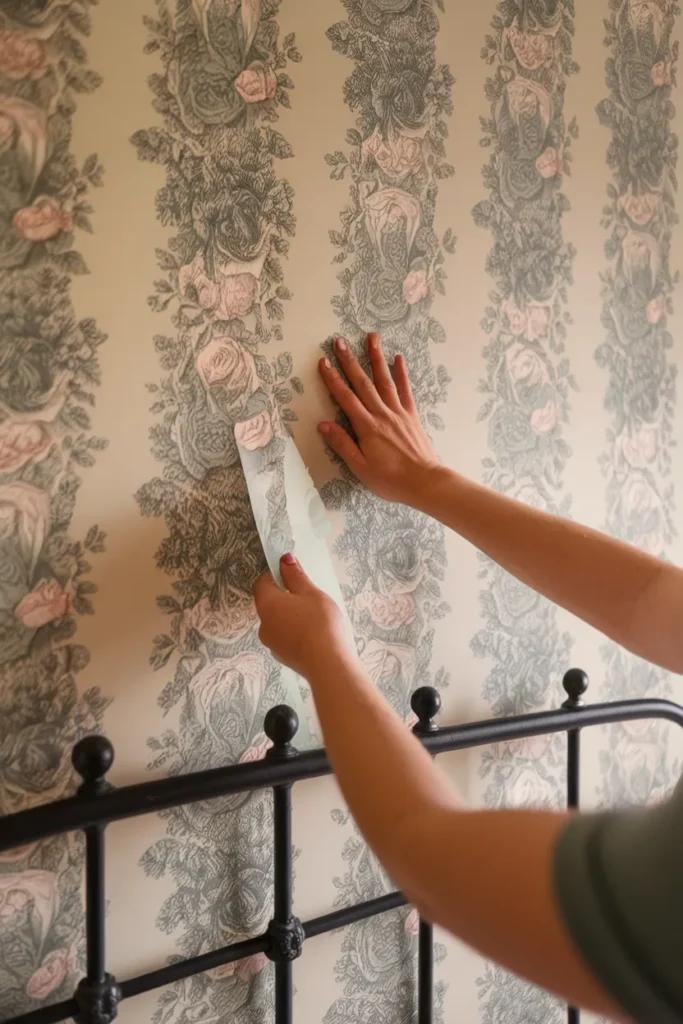
- Peel-and-stick accent wall behind the headboard. Small-scale floral, muted colors, roughly 4 feet by 8 feet ($50 to $130). Peels off clean at move-out if you buy from a reputable brand (Chasing Paper, Rifle Paper Co., Tempaper).
- Command hook picture ledge or dried botanical arrangement above the headboard. Rated hooks (up to 5 lb) can hold a small wooden ledge with framed art, or three to five dried botanical bunches (eucalyptus, lavender, wheat, pampas at 12 to 18 inches long).
- Layered rug over landlord carpet. A jute rug ($60 to $150) or a washable vintage-look floral runner ($40 to $100) on top of beige builder carpet instantly warms the floor.
- Sheer or lace curtain layer. Add cafe-length lace or cream sheer panels ($20 to $60 per panel) using a tension rod inside your existing window frame. No drilling. Diffuses light beautifully by 4 pm.
Skip the temptations: no paint (unless your lease permits), no wallpaper glued with permanent paste, no anchors deeper than removable hooks, and no drilled sconces (use plug-in wall sconces with a cord cover instead).
A Real $200 Cottagecore Bedroom Refresh (2026 Market Prices)
If you already own a bed frame, a mattress, and at least one nightstand, this is what $200 buys in the current US market. Prices are the mid-point of what typical US retailers were charging in the first half of 2026 based on live market research. Adjust up or down depending on sales and secondhand access.
The build order (buy in this exact sequence, stop when you run out of budget):
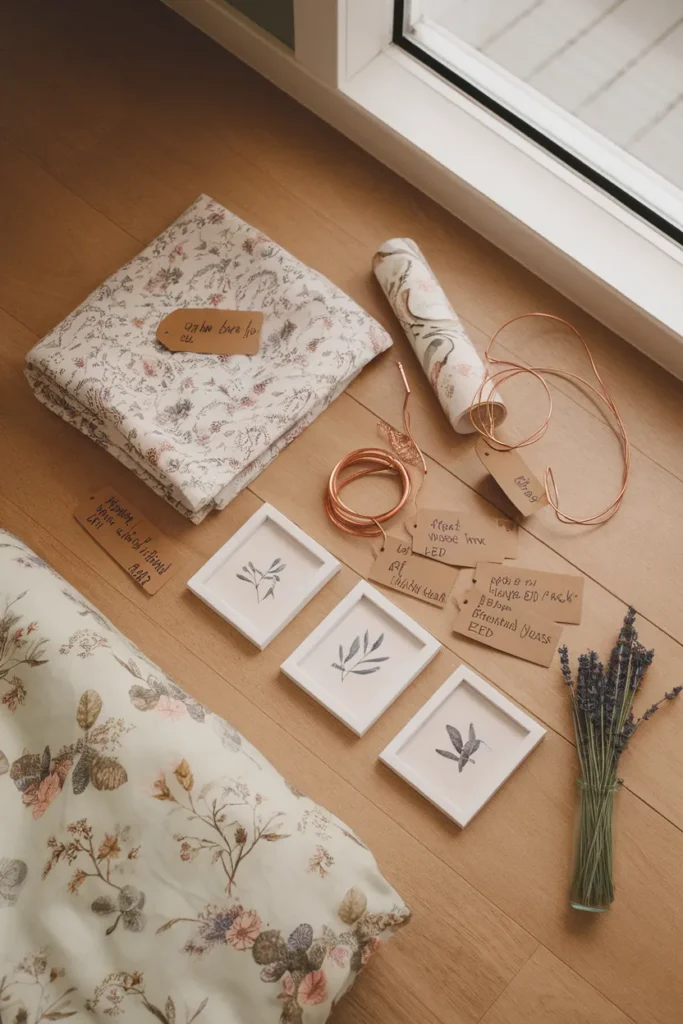
- 2700K dimmable LED bulbs, four-pack, about $15. Bedroom overhead bulb, both nightstand lamps, one accent. This is the mood in a box.
- Warm-white 33-foot copper wire fairy lights, about $18. Draped along the headboard or on a picture ledge.
- Small-print floral duvet cover with two shams (queen), about $55. Threshold at Target, H&M Home, or Amazon in the muted sage/rose family.
- Peel-and-stick floral wallpaper for the headboard wall, about $60. One roll covers roughly 4 feet by 8 feet. Rifle Paper Co. or Chasing Paper if the budget stretches; Amazon dupes at $30 to $50 if it doesn’t.
- Framed botanical print set, three small (5×7) prints, about $25. Etsy download plus three thrift-store wood frames.
- Dried lavender or eucalyptus bunches, three stems, in a milk-glass bottle, about $18. Trader Joe’s or a local farmer’s market plus one thrifted bottle.
- Total: about $191.
If you can’t buy everything at once, do the order above one at a time. The bulbs and fairy lights alone (under $35) shift the mood of the entire room. The bedding and wallpaper are the visual heavy lifters. Everything else compounds.
Where to save further: skip new bedding and buy secondhand on Facebook Marketplace, thrift a duvet cover from a Goodwill or Salvation Army in a middle-class suburb (best hunting), or ask a family member if any old floral sheets are stored in a linen closet gathering dust.
Common Mistakes That Kill the Cottagecore Look
The gap between a room that looks like the pin and a room that looks like the pin’s less-photogenic sibling comes down to a handful of avoidable errors.
Too many patterns at full saturation. If your duvet is floral, your wallpaper is floral, your curtains are floral, and your rug is floral, the room reads as a pattern collision instead of a bedroom. Solve it with the 60/40 rule from the florals section: pick two patterns max, share a color family, vary scale.
Cool bright LEDs left in place. Cottagecore built with 4000K bulbs looks half-finished no matter what else you do. Fix the bulbs first.
Bright modern nightstands or a gloss-white bed frame. Cottagecore reads warm. Cool-white lacquered furniture reads IKEA showroom. A wooden nightstand doesn’t need to be antique. Even a $40 unfinished pine one from a hardware store, stained walnut, will read cottagecore.
Everything from one shopping trip. The look depends on visual layering across time. A room where every piece is new from Amazon reads as a set, not a life. Mix at least one thrifted or handed-down piece in.
Perfect matching sets. Matched dressers and nightstand pairs read hotel. Mismatched-but-related (both wood, both vintage, different silhouettes) reads cottage.
Overcommitting to fairy lights. One good strand does the job. Six strands looks like an overzealous Christmas.
If moody, deeper cottagecore appeals more than the light-and-airy version, our dark cottagecore bedroom ideas rebuilds the same three-anchor formula around deep greens, oxblood, and lamp-lit corners instead of morning light and pastels.
FAQ
What is cottagecore bedroom decor? Cottagecore bedroom decor is a warm, romanticized, countryside-inspired styling built on soft florals, muted earth tones, vintage furniture, natural textiles like linen and cotton, and warm ambient lighting. It’s the opposite of modern minimalism: layered, personal, and slightly imperfect on purpose. In practice, it comes down to three anchors (fairy lights, canopy or statement bed, floral patterns) plus a warm color palette (sage, cream, dusty rose) and lived-in styling on the small surfaces.
How do you make a bedroom cottagecore on a budget? Start with a $15 bulb swap to 2700K warm white in every fixture. Add a copper wire fairy light strand ($18) along the headboard. Swap plain bedding for a small-print floral duvet cover with solid cream shams ($55 to $85). Layer in one framed botanical print ($15 to $25) and a small bunch of dried lavender in a thrifted bottle ($5 to $15). Total under $150 if you already own the bed. See the $200 refresh section above for the full build order.
Can you do cottagecore in a rental apartment? Yes. About 90 percent of cottagecore lives in textiles, lighting, wall art, and small styling, none of which requires drilling or paint. The five renter-safe moves in this article (bulb swap, peel-and-stick accent wall, command-hook picture ledge, layered rug, sheer curtain layer) will transform a plain rental bedroom without risking your security deposit. Peel-and-stick wallpaper from reputable brands (Chasing Paper, Rifle Paper Co., Tempaper) removes clean.
What colors are cottagecore? The cottagecore palette centers on warm neutrals (cream, oatmeal, bone) as the base (60 percent of the room), with muted secondary colors (sage green, dusty rose, butter yellow, soft lavender, dusty blue) at 30 percent, and one deeper accent (forest green, terracotta, honey wood) at 10 percent. Bright saturated colors, cool stark whites, and cool grays all break the aesthetic. Warm off-whites and earth tones are the safe defaults.
How much does a cottagecore bedroom cost? A meaningful refresh runs $150 to $350 depending on what you already own, based on 2026 US retail pricing. If the bed frame and mattress stay, budget $150 to $200 for bulbs, fairy lights, one bedding update, one framed print, and dried florals. Add $100 to $200 more for peel-and-stick wallpaper on a single accent wall and a vintage or vintage-look nightstand.
Is cottagecore still trending? Cottagecore has moved from a peak-2020 aesthetic trend to a durable interior-design category, similar to how farmhouse style stopped being a trend and became a staple. Pinterest search volume for cottagecore-related bedroom terms has grown year-over-year through 2025 based on recent trend reporting, and the aesthetic has splintered into recognizable subgenres (dark cottagecore, cottagecore minimalist, forest cottagecore). If you like it, buy it. It’s not going anywhere.
Cottagecore vs. farmhouse: what’s the difference? Farmhouse leans toward practical, functional, and slightly rustic, with a stronger focus on shiplap, black iron hardware, and industrial-farmhouse hybrid pieces. Cottagecore leans romantic, decorative, and slightly whimsical, with floral patterns, softer color palettes, and a heavier reliance on vintage and antique layering. Cottagecore is farmhouse’s more emotional cousin. You can borrow from both, but if you’re picking one lane for a bedroom, pick based on whether you want the room to feel practical (farmhouse) or dreamy (cottagecore).
Where to go from here
The three-anchor formula is enough to start. Pick your anchor tonight, buy the bulbs this weekend, and let the rest build over the next few months. Cottagecore rewards patience: a room styled slowly over six months will always look better than one shopped in one afternoon.
If you’re not sure which anchor is yours, sleep on it, walk into your bedroom in the morning, and notice which of the three things (a warm glow, a soft canopy, or florals) you were hoping to see when you opened the door. That’s your star.

Keep reading
More cozy nook ideas
 Bedroom
Read →
Bedroom
Read →
English Cottage Bedroom Checklist: Everything to Decide Before You Start
You saved forty pins of floral quilts and sloped ceilings, then looked up at your own bedroom: beige walls, one window, a…
 Bedroom
Read →
Bedroom
Read →
21 Small Bedroom Ideas for Couples
Sixty-two and a quarter inches. That’s the width of a common IKEA queen storage frame, and in a 10 by 10 foot…
 Bedroom
Read →
Bedroom
Read →
Floral Bedding Ideas for a Cottagecore Bedroom That Still Looks Right in Daylight
No painting. No drilling. No conversation with your landlord. Floral Bedding Cottagecore is the one cottagecore move you can make in an…