
Dark Cottagecore Kitchen: Moody Vintage Decor for a Cozy Cook Space

Picture your kitchen at 8 pm: forest green walls gone almost black, two taper candles on the open shelf, a brass sconce throwing warm light over a stack of thrifted plates. That’s a dark cottagecore kitchen, and you don’t need a renovation, a farmhouse, or a landlord’s blessing to build one.
You need three deep tones, one warm bulb, and permission to stop matching things. This guide gives you the five rules that make dark feel rich instead of dim, the three buys that carry the whole look, and a renter version that totals $120 in verified prices.
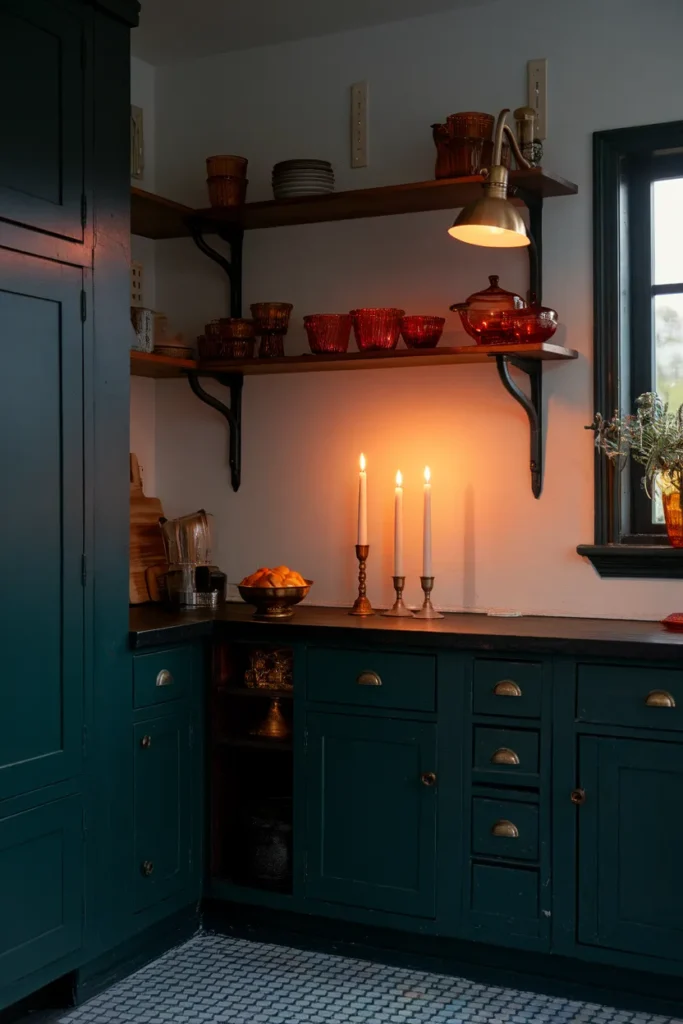
What Dark Cottagecore Actually Is (and Isn’t)
Dark cottagecore keeps everything the daylight version loves, the florals, the thrifted china, the herbs drying upside down, and moves it two hours past sunset. The palette drops to forest green, oxblood, and near-black; the light goes from sun to flame and filament.
It isn’t a gothic set piece, and it isn’t dark academia either. Dark academia is a library that happens to have a kettle; dark cottagecore is a working kitchen that happens to look like a storybook apothecary. The distinction matters because the kitchen version has to survive flour, steam, and Tuesday dinner.
It’s also not a niche anymore. Pinterest’s spring trend data has searches for dark cottagecore kitchens up 915 percent, with grandma core kitchens up 545 percent right beside it. The look is heading mainstream while the how-to advice stays vague, which is exactly why the five rules below are specific.
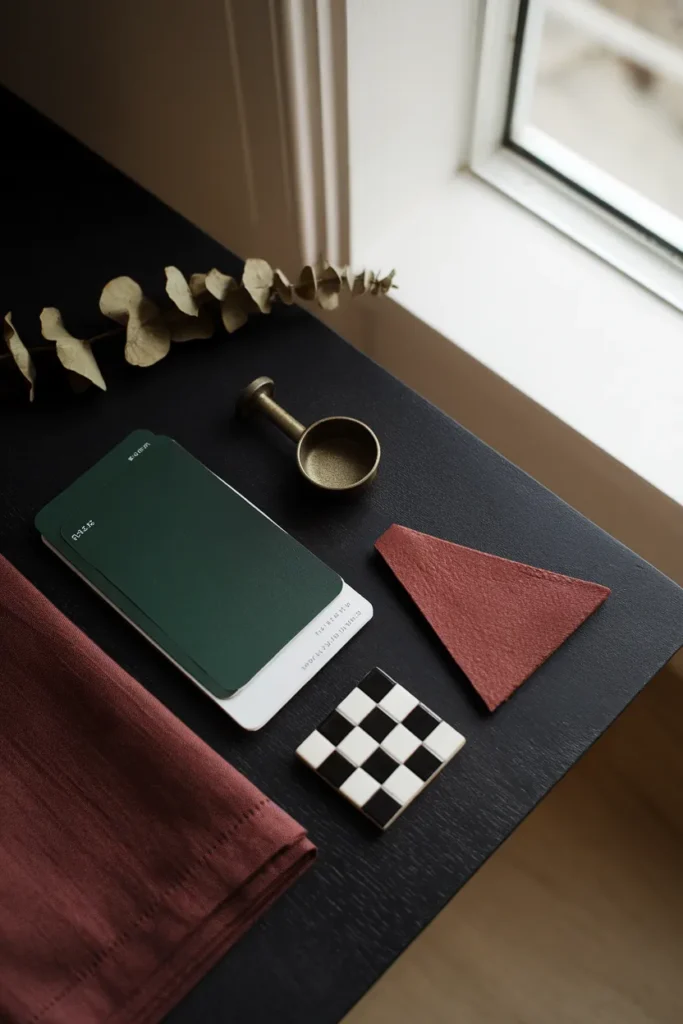
Rule 1: Cap the Palette at Three Deep Tones
Every dark cottagecore kitchen that reads romantic instead of muddy follows the same math: three deep tones, one aged metal, and nothing else. A classic trio is deep forest green, warm near-black, and one ember color like oxblood or burnt sienna.
Pick the trio before you buy a single thing, then let every purchase audition against it. Behr’s Deep Forest is a true dark cottagecore green, and an 8-ounce sample runs $5.98 at Home Depot, so testing the wall before committing costs less than a latte run.
The failure mode is tone creep. A cool gray sneaks in on a rug, a bright white on a canister, and suddenly the room argues with itself. When something feels off in a dark kitchen, count the tones first; the answer is usually four.
Rule 2: Warm Light Beats More Light
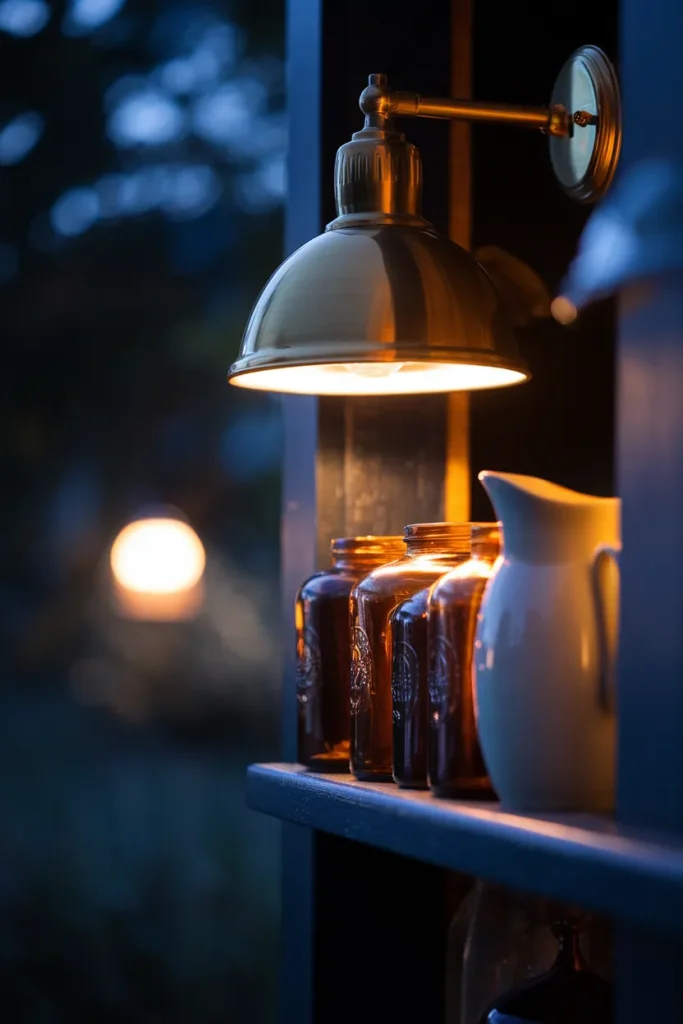
The single question that decides whether a dark kitchen works is not how much light it has, it’s what temperature that light runs. Everything in this style wants 2700K, the amber end of white, on a dimmer where possible. One cool 5000K ceiling bulb will flatten every green in the room to gray.
Think in low pools instead of one bright sky: a sconce over the shelves, a small lamp on the counter, an LED puck under one cabinet for the work zone. We use the same logic for book corners in our reading nook wall sconce guide, and the kitchen version is nearly identical.
| Zone | Fixture | Bulb and spec |
|---|---|---|
| Open shelf or plate wall | Plug-in swing-arm sconce | 2700K, 450 to 800 lumens |
| Counter work zone | Under-cabinet LED puck | 2700K to 3000K, task-rated |
| Table or banquette | Small lamp or pendant on dimmer | 2700K, dimmed after dinner |
| After-dark shelf | Unscented taper candles | Flame, the original 1800K |
The failure mode is buying one big fixture and calling it done; a single source, however warm, leaves corners dead and makes dark walls feel like a basement.
Rule 3: Age Every Metal
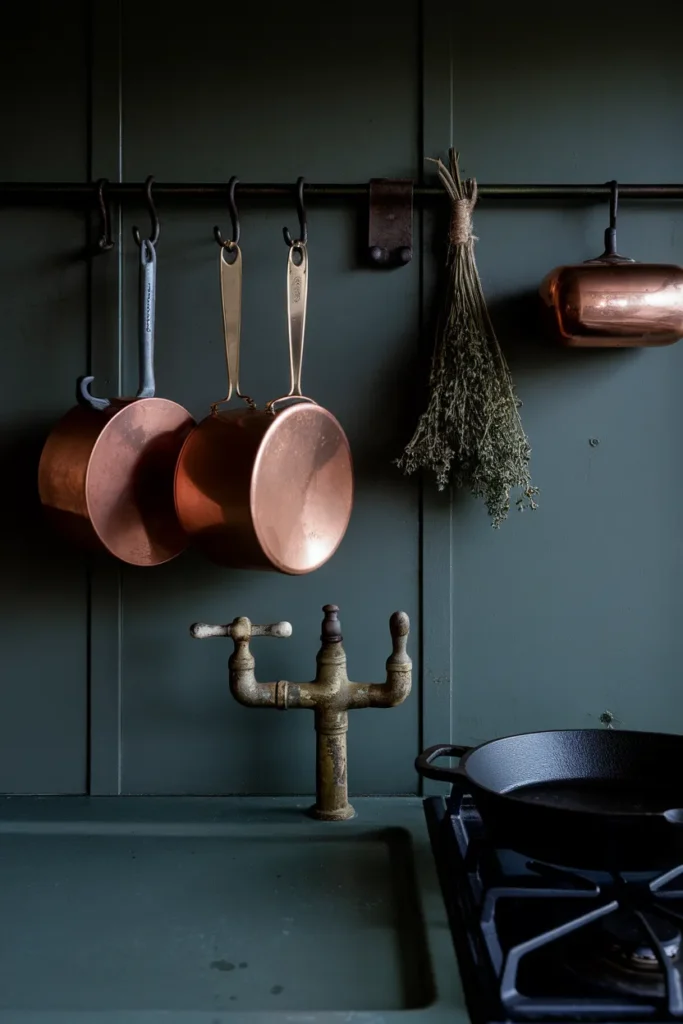
Chrome is the enemy. Dark cottagecore wants metals that look handled: unlacquered brass that fingerprints, copper with heat tint, cast iron with a decade of seasoning, wrought iron hooks gone matte. Mixing them is fine, and honestly better; matched metal packages read showroom, not cottage.
You don’t have to replace fixtures to obey the rule. Hang copper pots where the light hits them, swap cabinet knobs for aged brass pulls, stand a cast iron skillet on the stove full time, and the builder-grade faucet fades into the background.
The failure mode is polish. One weekend of Brasso can undo three years of honest patina, and the room loses the exact texture that made it feel inherited. Let the metals be old; the weight of a cast iron pan in your hand is half the aesthetic anyway.
Rule 4: Keep a Third of the Room in Cream
Here’s the anti-gloom insurance no one gives you numbers for: hold roughly one third of the visible room in pale, warm tones. Cream ceiling, pale counters, a run of ivory dishes on the dark shelf, a flour-white cafe curtain. Dark walls need something to push against or the room stops feeling moody and starts feeling low.
Sheen does quiet work here too. Keep dark walls matte so they absorb and glow, and let the cream layer carry the reflectivity in satin trim, glazed ceramic, and glass. A small mirror across from the window doubles your one shaft of daylight for free.
The failure mode is committing every surface to darkness in a burst of enthusiasm. Photograph your kitchen, squint at it, and if you can’t find three pale landing spots for your eye, the cave effect is already moving in.
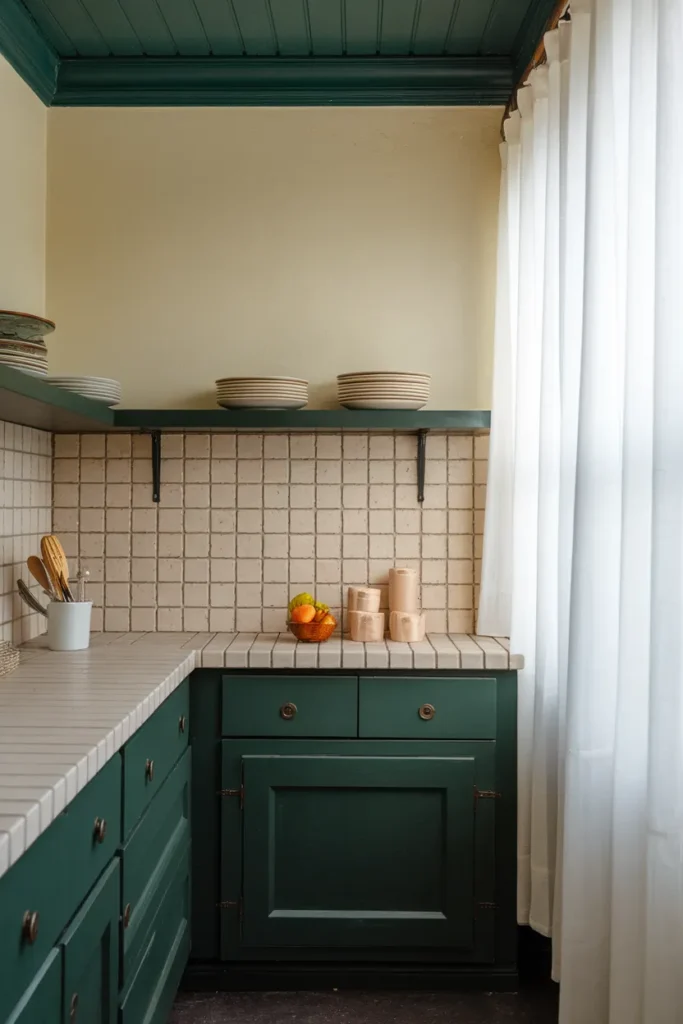
Rule 5: Collected, Not Curated
Dark cottagecore objects should look like they arrived one at a time over ten years. Apothecary jars with penciled labels, a chipped ironstone platter, mismatched brass candlesticks, bundles of rosemary and yarrow drying upside down from a hook. The smell of those herbs when steam rises past them is the room’s signature.
Thrift stores and estate sales are the supply chain, and the budget is almost embarrassing; most of the shelf can be assembled for the cost of one new “decor set.” Buy the odd number, skip the pair. If two things match exactly, separate them.
We styled the woodland version of this rule in our mossy forest reading nook, and the same principle holds at the sink: one real branch beats three plastic garlands. The failure mode is ordering a matching 12-piece “cottagecore set” online, which reads as a costume the moment it’s unboxed.
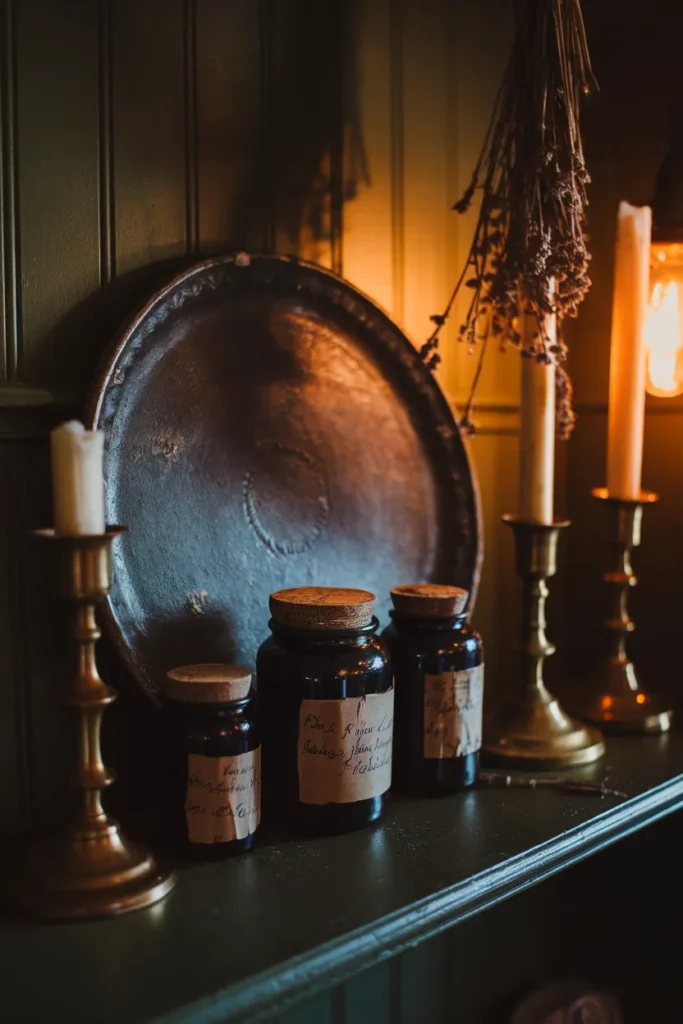
The Three Buys That Carry the Look
Everything above can be thrifted except three things, and all three prices below are live-verified as of July 2026.
The moody floral wall: Tempaper Black Moody Floral
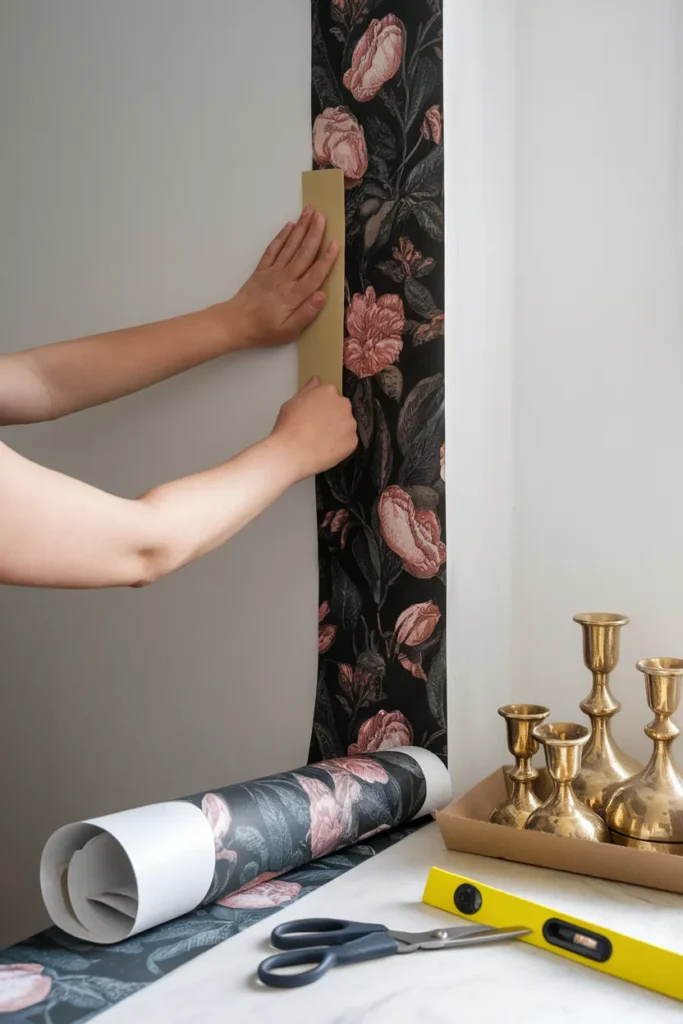
One roll of this peel-and-stick covers 60 square feet and runs $99.99 at Home Depot, enough for a full accent wall in most small kitchens with margin for pattern matching. Dark florals on a near-black ground are the fastest route to the whole aesthetic, and it peels off when the lease ends.
The light: LNC brass plug-in swing-arm sconces
A 2-pack is $99.00 at Home Depot right now, marked down from $129.99, and plug-in means zero electrician. One over the open shelf, one by the table or reading chair, both wearing 2700K bulbs.
The color test: a $5.98 Behr sample
Before any full commitment, an 8-ounce Behr sample pot ($5.98) paints a 2-foot square you can live with for a week. Watch it at noon and again by candlelight; a dark green that works at both hours is the one to keep.
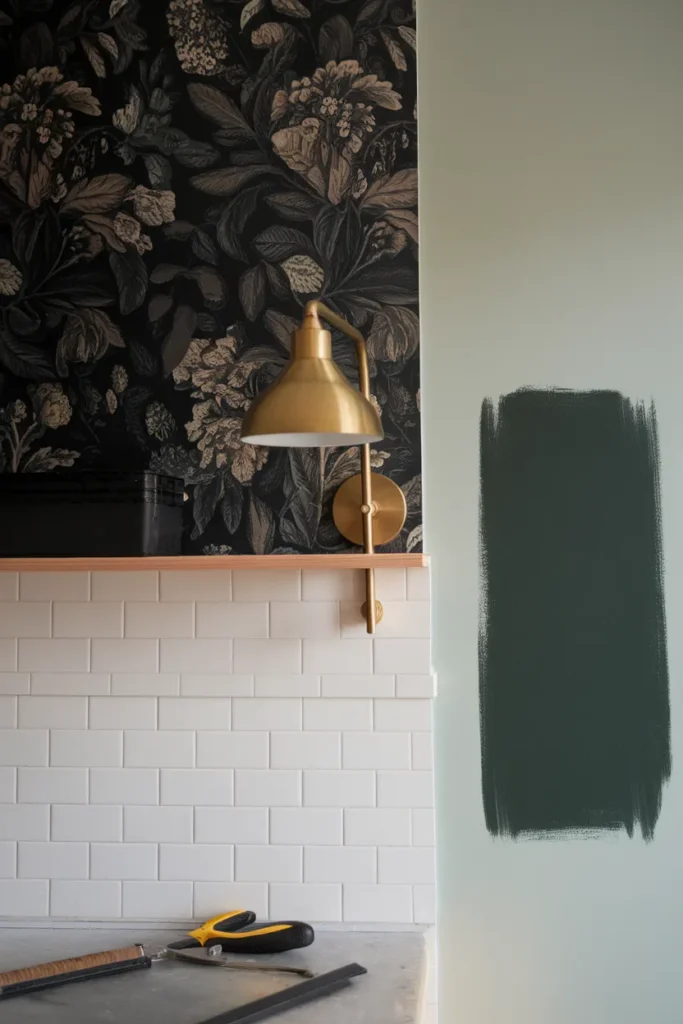
The $120 Renter Corner (No Paint, No Drill)
You can build a convincing dark cottagecore corner without touching a wall with anything permanent. Here’s the receipt, using the verified prices above and honest thrift estimates.
One Tempaper Black Moody Floral roll covers the corner’s wall for $99.99. A 2700K LED bulb for the lamp you already own adds about $5. A thrift-store run for two brass candlesticks, a small dark frame, and one chipped platter lands near $12 in most US towns. Unscented tapers are a few dollars at any grocery store. Total: right around $120, one afternoon, fully reversible.
Two cautions. Wipe the wall with a damp cloth and let it dry fully before the vinyl goes up, or the corners lift by week’s end. And treat the tapers like the open flames they are: NFPA’s candle safety guidance is blunt about keeping flames a foot from anything that burns, which in a kitchen means away from curtains, towels, and the range. Candlelight is the soul of this corner; a scorched cafe curtain is not.
The Candlelit Reading Corner (Our Favorite Move)
No other guide on page one will tell you this, but the best seat in a dark cottagecore kitchen is a reading chair. Pull a thrifted armchair to the darkest corner, drape a sheepskin or linen throw over the arm, park a side table within 18 inches, and let the kettle be your excuse.
This is where the style earns its keep after dinner: sconce dimmed, one taper lit, a romantasy paperback and steam curling off the mug. You’ll sink into it while something’s in the oven and forget the timer at least once; consider that a feature.
We built the full blueprint for this mood in our moody home library ideas, and a single chair borrows most of it. The failure mode is placing the chair inside the cooking triangle, where atmosphere turns into an obstacle by Wednesday.
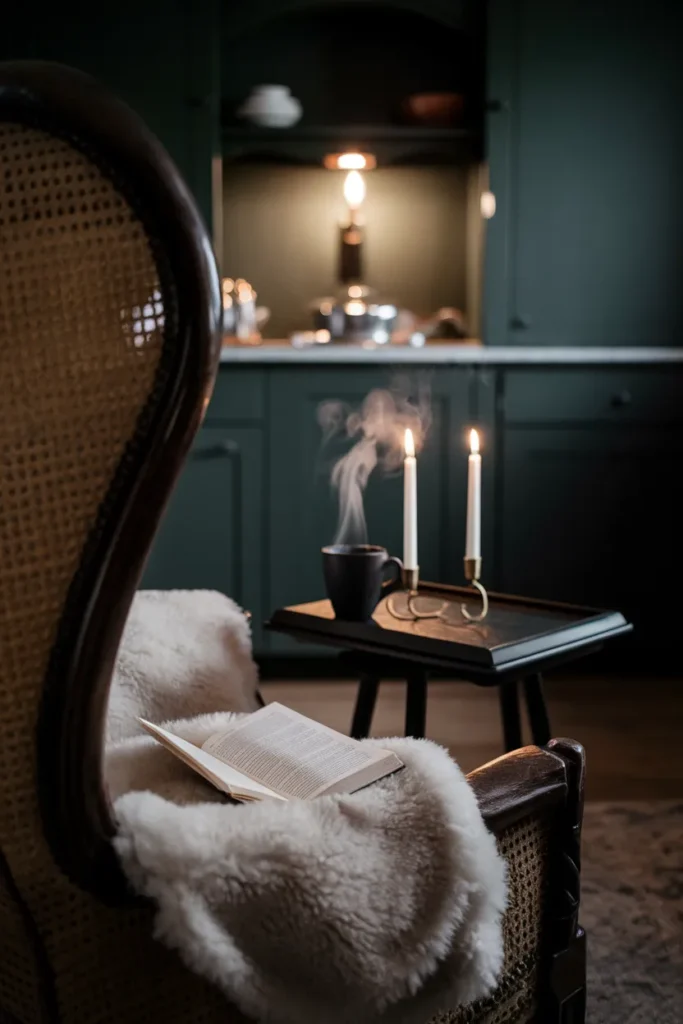
Dark Cottagecore in a Small or Windowless Kitchen
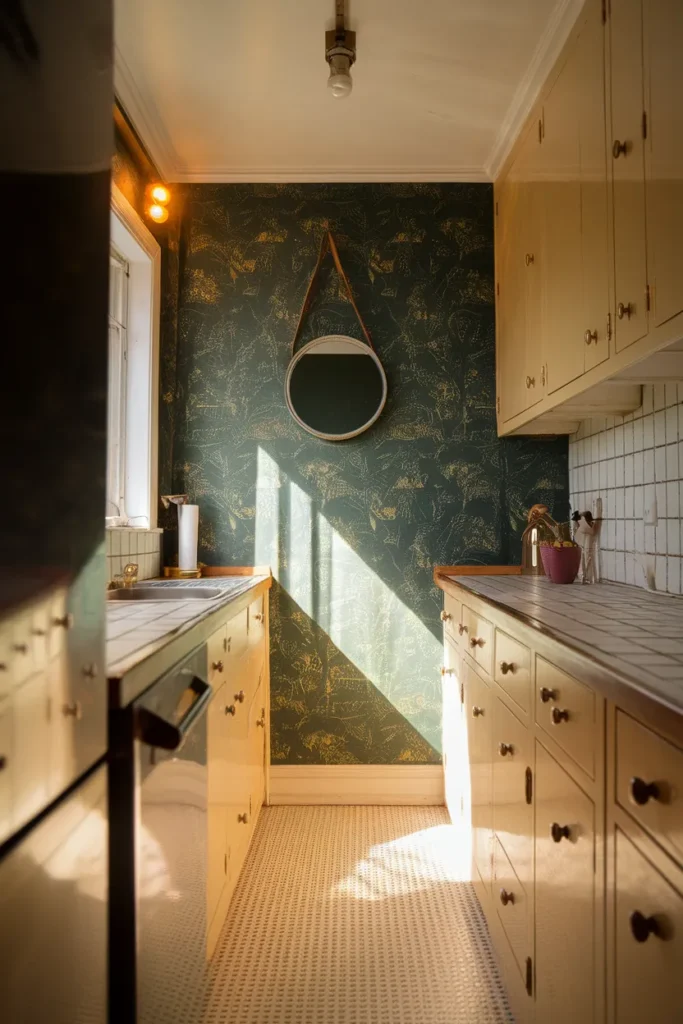
Small kitchens take this style better than big ones, but they need discipline. Go dark on one wall only, usually the wall the eye hits first from the doorway, and hold the rest at warm cream. In a galley, that single moody wall reads intentional; four moody walls read like a submarine.
Windowless kitchens lean entirely on Rule 2. Double the light pools, put every bulb at 2700K, and add one mirror where a window would logically be; the eye forgives the missing view when the glow feels like late afternoon.
Keep the floor pale or checkered rather than dark, since a black floor in a small dark room deletes the room’s edges. The failure mode is treating small and dark as a dare; the style’s charm lives in contrast, and a small room simply has less square footage to spend on shadow.
FAQ: Dark Cottagecore Kitchen Questions, Answered
What is a dark cottagecore kitchen? It’s the cottagecore aesthetic, vintage, floral, collected, and handmade, shifted into a deep palette of forest green, near-black, and ember tones, lit warm and low. The vibe is storybook apothecary rather than gothic castle.
How do I keep a dark kitchen from feeling gloomy? Two levers: hold a third of the room in cream or pale tones, and run every bulb warm at 2700K in several small pools instead of one bright ceiling source. Gloom is almost always a light-temperature problem, not a paint problem.
What colors make a dark cottagecore kitchen? Cap it at three deep tones plus one aged metal. Forest green, warm near-black, and oxblood with aged brass is the classic build; aubergine or moody blue can swap in for the green, and both are rising on Pinterest’s trend data.
Is dark cottagecore the same as dark academia? They’re cousins. Dark academia leans scholarly (books, leather, portraits) while dark cottagecore stays rural and handmade (herbs, ironstone, copper). Kitchens usually blend them at the reading corner.
Can I do this in a rental or a small kitchen? Yes, and arguably better. Peel-and-stick moody florals, plug-in sconces, thrifted brass, and warm bulbs build the whole look for around $120 with zero drilling, and a single dark accent wall suits a small kitchen more than a full repaint anyway.
Start After Sunset
Don’t begin this kitchen with a paintbrush; begin it at 8 pm with the overhead light off. Set a lamp on the counter, light one taper, and watch which corner comes alive first. That corner gets the $120 treatment this weekend, the three deep tones get chosen from what already glows there, and the rest of the room can follow one rule at a time. Save this guide for the second corner, because there’s always a second corner.
Keep reading
More cozy nook ideas
 Kitchen
Read →
Kitchen
Read →
12 Warm Neutral Kitchen Ideas Worth Copying This Weekend
If your kitchen is beige and still feels cold at 8 p.m., the paint probably isn’t the problem. It’s usually the bulb,…
 Nursery & Teen Rooms
Read →
Nursery & Teen Rooms
Read →
8 Montessori Playroom Mistakes to Avoid (and What to Do Instead)
If your Montessori playroom looks calm for about an hour after you set it up, and then every basket ends up dumped…
 Home Office
Read →
Home Office
Read →
18 Small Office Ideas for Tiny Apartments and Awkward Corners
No spare room, no landlord who likes drills, and a laptop that keeps wandering between the couch, the bed, and the kitchen…