
Home Reading Room: Turn a Spare Room Into a Library

If your spare room is currently holding a treadmill nobody runs on and four boxes you never unpacked, this fixes it. You don’t need a contractor, a renovation budget, or a landlord who likes you. You need one empty room, a seat, a light, and a wall of books. That’s the whole list. These reading room ideas are built for a real home you live in this month, not a magazine you flip through once.
Quick fork before we start, because the internet blurs it. A reading nook is a corner. A reading room is the upgrade: a full door you can close, where the only job of the space is you and a book. If you’ve got a spare bedroom, an unused office, or a box room hovering around 70 to 120 square feet, you already have everything a library needs.
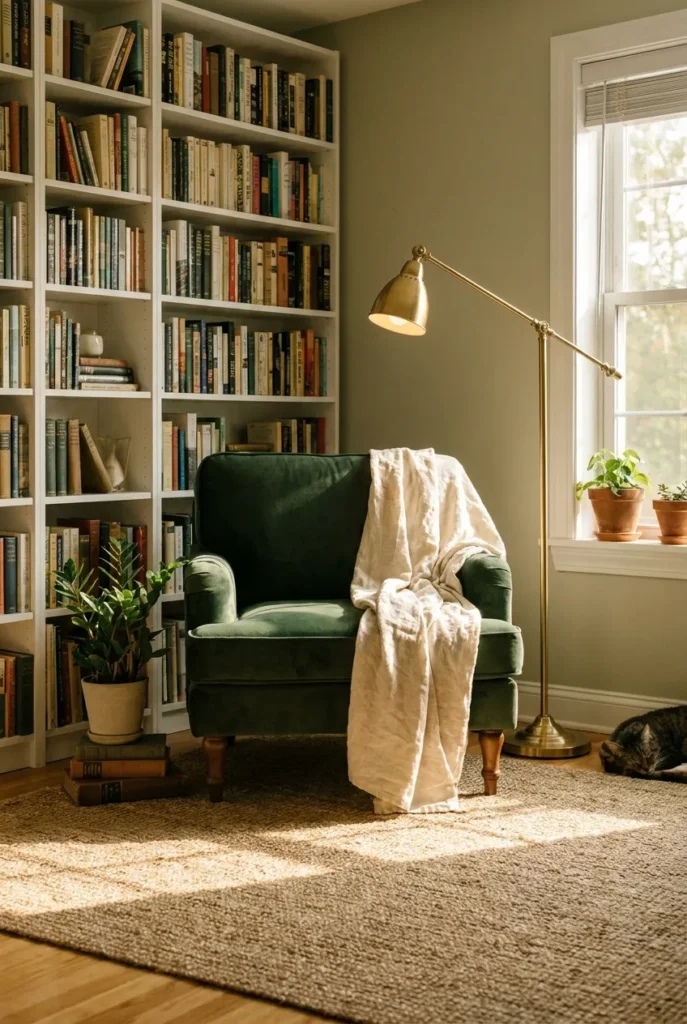
Here’s the plan. We’ll map the room into five zones, price out three honest budgets, and cover the renter-safe version of every single step.
Start With the 5-Zone Reading Room Map
Before you buy anything, picture the room as five jobs, not five purchases. I call it the 5-Zone Reading Room Map, and it’s the fastest way to stop a spare room from turning into a furniture pile.
Zone one is the seat. Zone two is the light. Zone three is the story-wall (your books). Zone four is the soft layer (throws, pillows, rug). Zone five is quiet (the door, the curtain, the sound). Nail those five and the room works. Skip one and you’ll feel it.
Most people start with the bookcase. Start with the seat instead. The seat decides where the light goes, which decides where the wall goes. Get the order wrong and you’ll be dragging a 40-pound armchair across the room at 9 pm trying to chase the lamp.
Pick the Seat First (and Where It Sits)
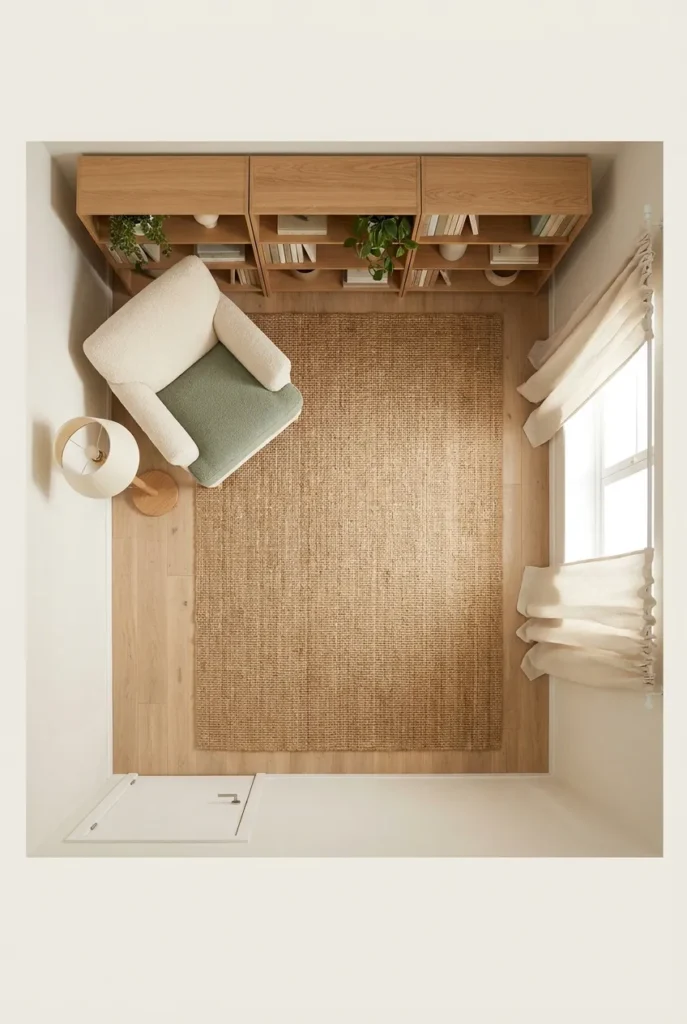
Your seat is the reason the room exists, so it gets the best spot in the house: out of the door’s swing, angled toward natural light, with a wall behind your shoulders. We read better with our back covered. It’s an old instinct and it still works.
A classic IKEA Poäng, an Article Sven lounge chair, or any deep accent chair with a high back will carry the whole room. For two readers, a small daybed or loveseat turns the space into a shared retreat. If you want to sink in and marathon read, go for a chaise or a chair with an ottoman so your legs get supported past the 40-minute mark.
Now the rule that saves your back: keep the seat 18 inches off the wall so the lamp arm clears your shoulder and you can actually lean back without your head hitting plaster. And a quiet failure mode nobody warns you about. Floor cushions photograph beautifully for Pinterest. After 45 minutes, your lower back files a complaint. Use a floor cushion as a second seat, not the main one.
If you’re a parent building this for a tween, the seat logic flips slightly. Kids want to curl sideways, so a wide chair or a small daybed beats a narrow armchair every time. For renters worried about marking the floor, slip felt pads under every leg and you’ll never see a scratch.
The best place to put your books is the wall your seat faces, and our guide on no-carpenter reading nook bookcase wall builds walks through flat-pack uprights that need zero drilling into studs.
Get the Light Right (This Is Where Most Rooms Fail)
A spare room with one ceiling bulb reads like a dentist’s office at night. Harsh, flat, blue. The fix is two-part: warm color and the right position.
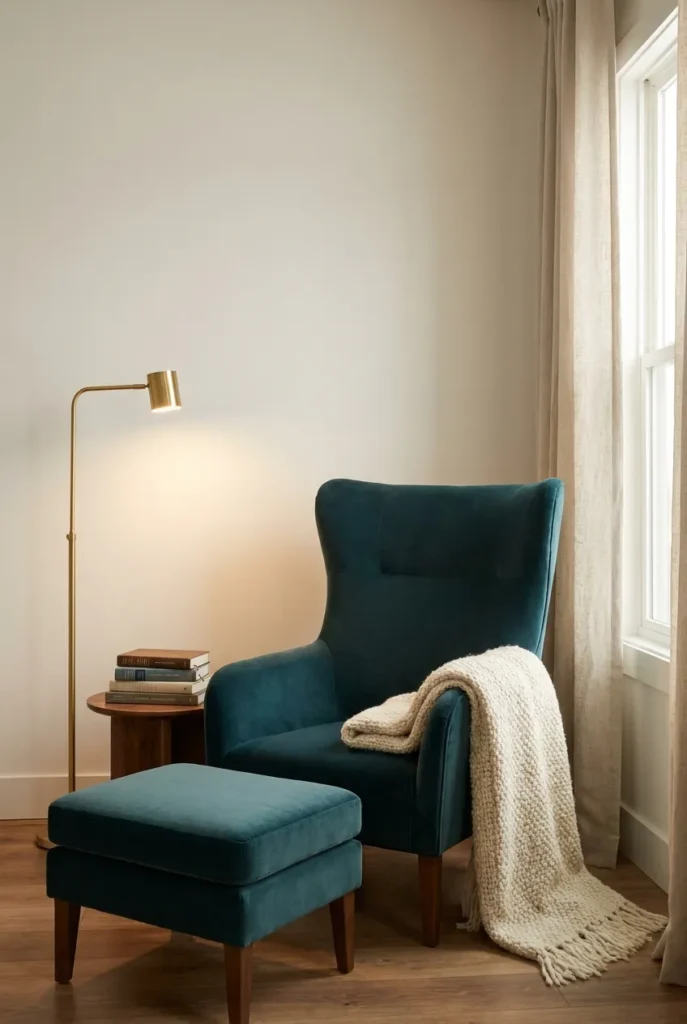
Go for a 2700K bulb. That’s the warm, amber, candlelit end of the scale, and the U.S. Department of Energy’s guide to LED color temperature confirms that lower Kelvin numbers read as cozy while higher ones read as clinical. Skip the dimmer and even a 2700K bulb can feel too bright for a 9 pm chapter, so wire one in or buy a plug-in dimmer for a few dollars.
Position matters as much as warmth. Put the light behind your shoulder, not in front of your face, so it spills onto the page without glare. A swing-arm floor lamp or a plug-in wall sconce does this best because you can aim it. For brightness, the American Optometric Association’s reading and eye comfort guidance points to a comfortable mid-range that keeps you out of both gloom and glare. In plain terms: bright enough to read a paperback’s footnotes, soft enough that the rest of the room stays dim.
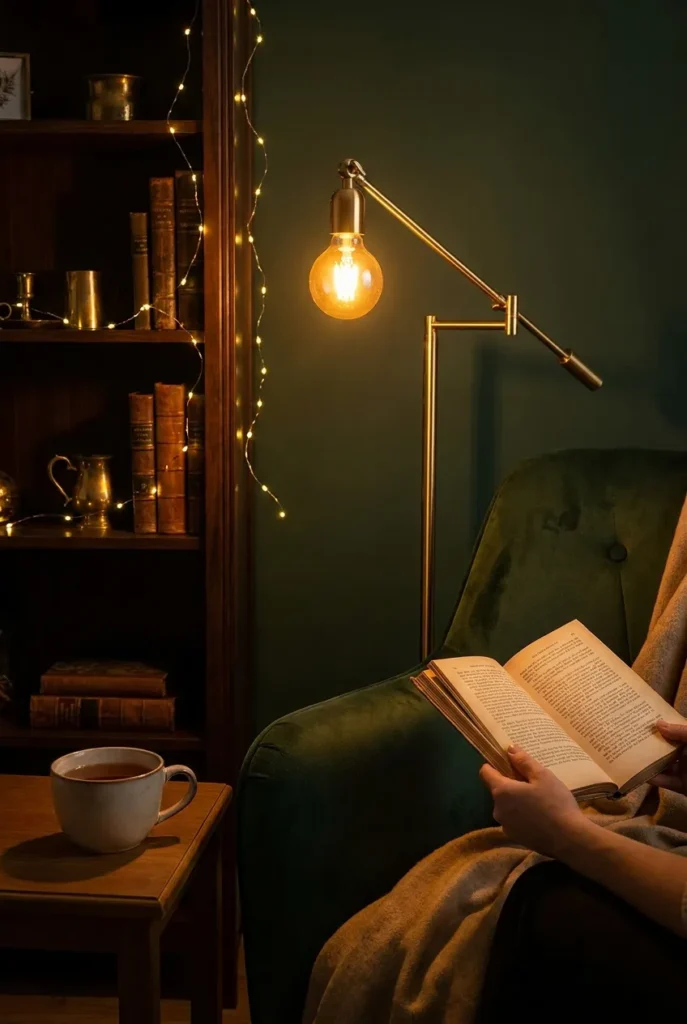
Renters, you have a no-drill path here. Plug-in sconces with a cord channel, clip-on reading lights, and a single arc floor lamp give you layered light with zero holes in the wall. Add a string of warm fairy lights along the top shelf for the glow that makes every BookTok corner look expensive.
You can borrow more of these layered-light tricks from our walkthrough on carving out a reading area in a shared living room, since the lighting math is identical whether it’s a whole room or one corner.
Build the Story-Wall (Your Books Are the Decor)
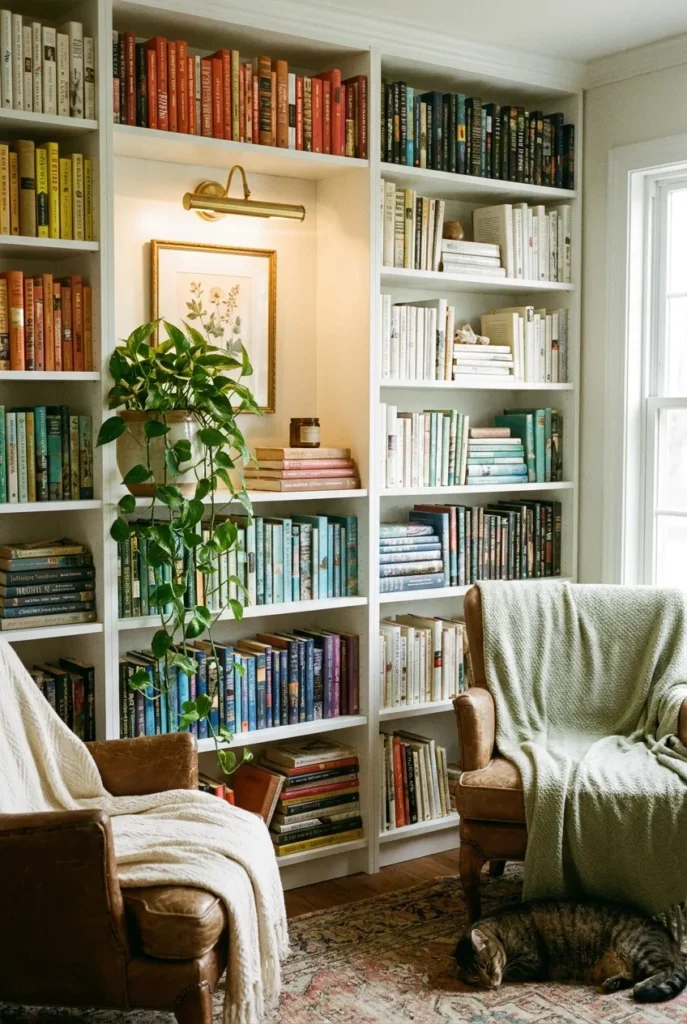
Here’s the thing about a reading room: the books are the wallpaper. You don’t need art when you have spines. The wall your seat faces becomes the story-wall, and it does more decorating than any print could.
The workhorse is the IKEA Billy bookcase. Cheap, deep enough for hardcovers, and stackable to the ceiling. Two or three side by side reads as a built-in once you add a strip of trim on top. Prefer open and airy? A ladder shelf or a few floating cubbies keep a small room from feeling boxed in.
For the build itself, with real measurements and the daybed-plus-bookcase combo, our Billy bookcase reading nook weekend build lays out the exact panel sizes and order of assembly so you’re not guessing.
Three quick rules for a story-wall that looks styled, not stuffed. First, leave one shelf only two-thirds full so the eye has somewhere to rest. Second, stack a few books horizontally to break the vertical rhythm. Third, tuck in one object that isn’t a book, a small plant, a ceramic mug, a framed library card, to make it feel lived-in. Skip these and the wall reads like a storage unit instead of a home library.
Renter note: a freestanding Billy never touches your studs, but anchor it to the wall with the included strap anyway. A toppling bookcase is the one failure mode here that actually matters.
Layer the Soft Stuff (Where Cozy Actually Comes From)
You can’t buy a feeling, but you can layer one. The soft zone is throws, pillows, and a rug, and it’s the difference between a room that looks cozy and one that feels it under your hands.
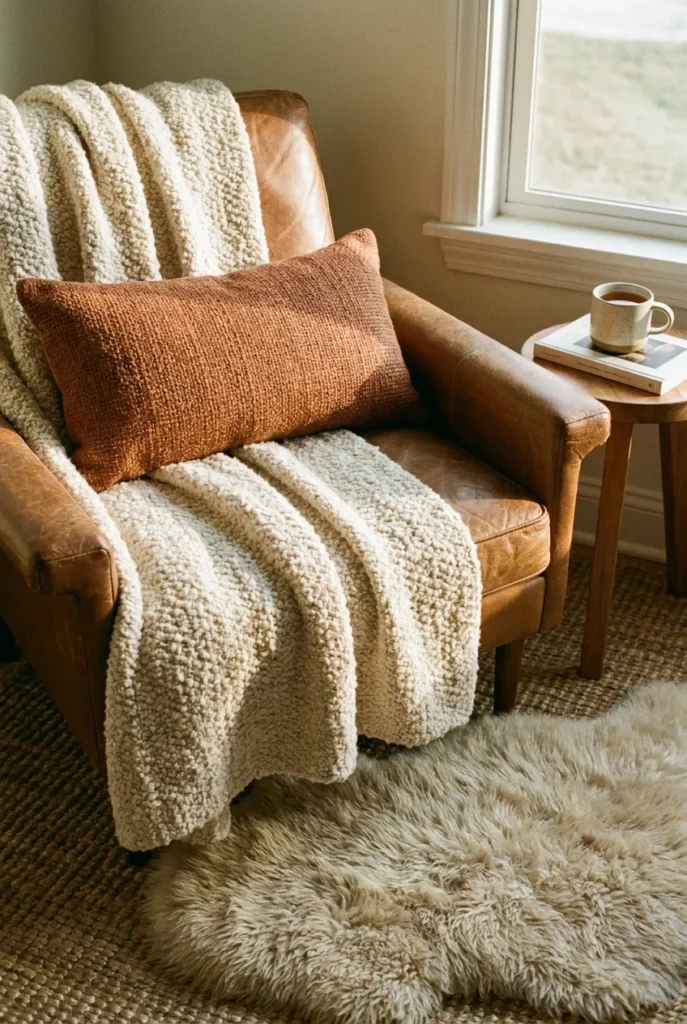
Start at the floor. A jute rug grounds the room and warms a cold hardwood or laminate floor. Layer a smaller washable rug on top if you want softer footing. Then the seat: one lumbar pillow for your lower back, one bolster for your neck, and a throw you’ll actually reach for. A boucle or sherpa throw in winter, a washed linen one in summer.
Texture is doing the quiet work here. The brush of wool on your forearm, the slight weight of a heavy throw across your knees, the give of a sheepskin underfoot. That’s the sensory layer that makes you stay an extra chapter.
For color, the Pinterest crowd loves three directions right now: cozy boho (warm terracotta, rust, layered patterns), cozy dark (forest green, charcoal, brass), and cozy pink (blush, cream, oatmeal). Pick one lane and let the soft goods carry it so you’re not repainting walls.
Solve the Quiet Zone (the Part Everyone Forgets)
A reading room is half about what you add and half about what you keep out. Light and noise. The fifth zone is quiet, and it’s the one that turns a pretty room into a real retreat.
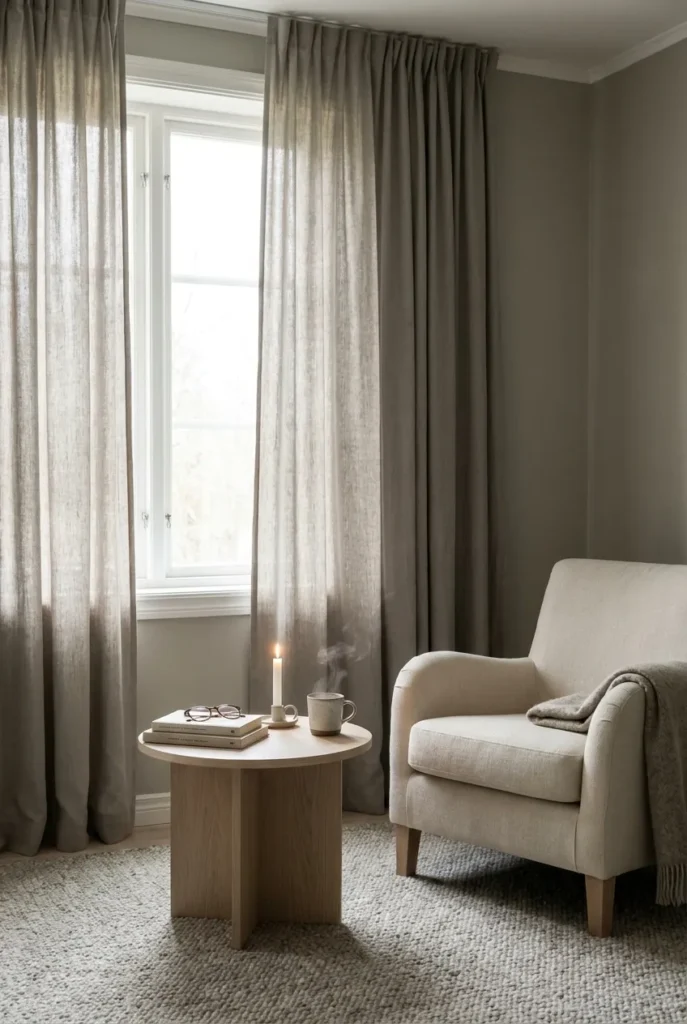
For light control, a blackout curtain lets you read at noon without screen glare and nap when the chapter wins. Café curtains give privacy on the lower half while keeping the top open to the sky. For renters, tension rods mean zero brackets and zero holes.
For sound, soft surfaces eat noise. The rug, the curtains, and a packed bookcase all absorb the hard echo of an empty room. Add a door draft stopper and the hallway noise drops too. The goal is a hush you can hear, the kind where you notice the page turn.
One more thing the photos never show: a side table within arm’s reach. Use the 18-inch reach rule, meaning the table sits close enough to set down a mug without leaning. A 32-inch-round side table or a simple stool both work. No table means a coffee ring on your book, every time.
Reading Room Ideas for Small Spaces and Tight Budgets
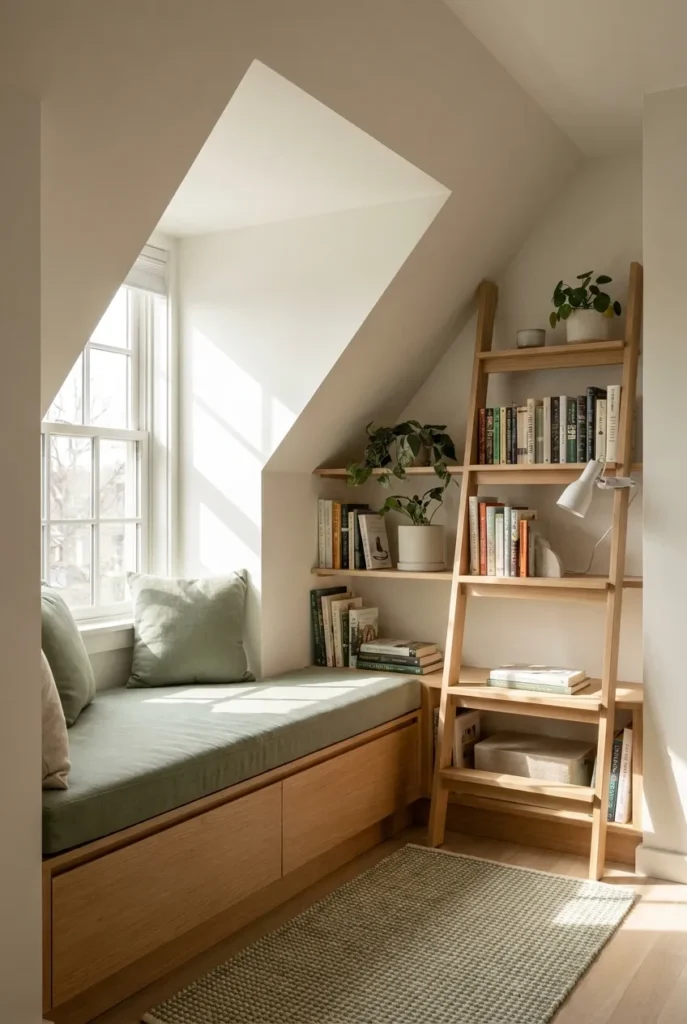
No spare room to spare? A reading room can live inside a wide closet, a sunroom, an attic dormer, or the unused end of a bedroom. The five zones don’t care about square footage. They just shrink.
For a room under 80 square feet, swap the armchair for a window seat or a built-in bench so the seat doubles as storage. Go vertical with the books. A single tall ladder shelf holds more than a wide low one and eats less floor.
Now the part the competitors skip: real numbers. Here’s a screenshot-ready budget tier table so you know exactly what each version costs.
The Reading Room Budget Tier Table
| Tier | Budget | Seat | Light | Story-Wall | Soft + Quiet |
|---|---|---|---|---|---|
| Starter | ~$200 | Secondhand armchair or floor cushion | Plug-in sconce + 2700K bulb | One Billy bookcase | Thrifted throw, jute rug, tension curtain |
| Mid | ~$600 | New accent chair + ottoman | Swing-arm floor lamp + dimmer | Two Billy bookcases + trim | Wool throw, washable rug, blackout curtain |
| Library | ~$1,200 | Daybed or chaise | Sconces + picture lights | Full bookcase wall | Layered rugs, custom cushion, café curtains |
Prices reflect 2026 ranges at Target, IKEA, and Amazon for the archetypes listed, not exact SKUs. The Starter tier proves the point loudest: a complete, genuinely cozy reading room runs about the price of one nice dinner out for four.
Aesthetic Reading Room Ideas for Adults
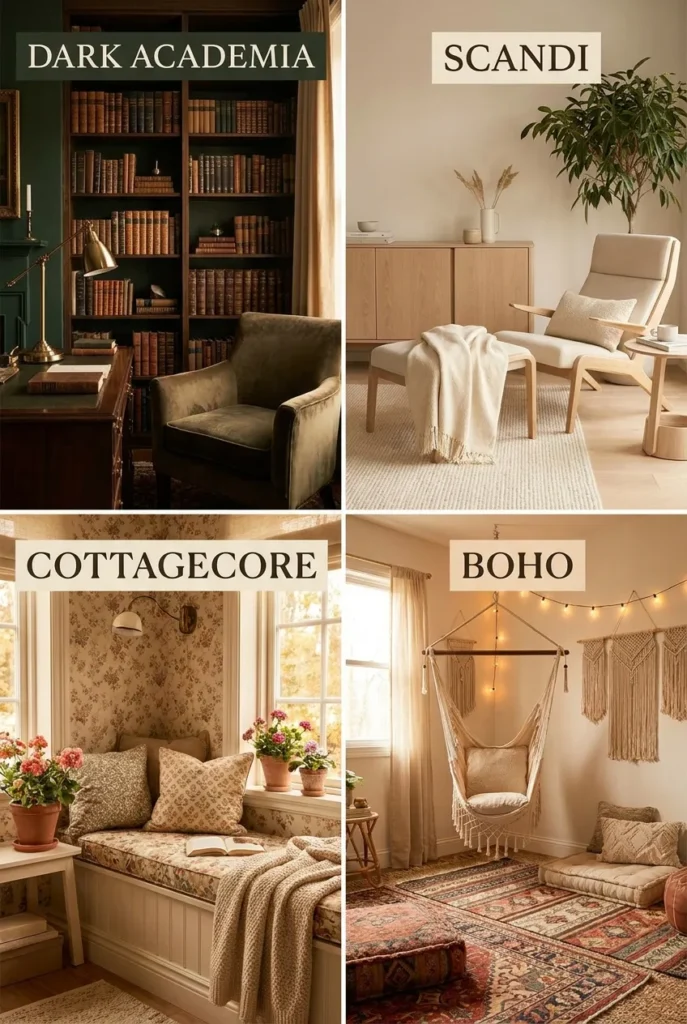
Once the five zones work, style is just a palette and a few props. Here are four adult-leaning directions pulling the looks Pinterest is searching hardest for in 2026.
Dark academia / cozy dark. Deep green or oxblood walls, brass lighting, leather-bound spines, a single library lamp. Moody, scholarly, candlelit. This is the romantasy reader’s natural habitat.
Scandi / japandi. Pale oak, cream linen, one sculptural chair, light wood shelving. Calm and uncluttered. The room breathes.
Cottagecore. Floral or botanical accents, a sun-warmed window seat, a vintage quilt, a trailing plant. Soft, nostalgic, rainy-day cozy.
Cozy boho. Layered rugs, a hammock chair or pouf, warm terracotta and rust, plenty of texture. Relaxed and tactile.
Pick one and commit. The fastest way to make a reading room feel cheap is to mix three styles and hope. One lane, layered well, beats a little of everything.
Frequently Asked Questions
How do I make a good reading room?
Map it into five zones before you buy a thing: seat, light, story-wall, soft layer, and quiet. Put the seat in the best-lit corner 18 inches off the wall, add a warm 2700K light behind your shoulder, line the facing wall with books, layer in a rug and a throw, and control light and sound with a curtain. Order matters more than budget.
What should I have in a reading room?
At minimum: a comfortable high-back seat, a warm directional light, a bookcase, a side table within arm’s reach, a rug, and one throw. Everything else is styling. A blackout or café curtain is the upgrade that makes the room usable at any hour.
What are some creative reading corner ideas?
A window seat with under-bench storage, a closet converted into a tucked-away hideaway, an attic dormer with a custom cushion, or a daybed framed by bookcases for two readers. Each one uses the same five zones, just shaped to the space you have.
How do I DIY a reading nook on a budget?
Start at the Starter tier near $200: a secondhand armchair, one IKEA Billy bookcase, a plug-in sconce with a 2700K bulb, a jute rug, and a tension-rod curtain. Add a thrifted throw and you’re done. No drilling, no contractor, renter-safe top to bottom.
Can I build a reading room if I rent?
Yes, and nothing here needs a single hole in the wall. Plug-in sconces, freestanding bookcases, tension-rod curtains, and felt pads under furniture legs keep the whole room damage-free and fully reversible when you move out.
How small can a reading room be?
A working reading room fits in about 70 to 120 square feet, but the five zones shrink into a wide closet or a sunroom corner too. Under 80 square feet, swap the armchair for a window seat and go vertical with the bookcase to save floor space.
Your Spare Room Is Already a Library
The hardest part of a reading room isn’t the building. It’s believing the awkward, half-used room down the hall is allowed to become the best spot in your home. It is.
Start with the seat this weekend. Add the warm light next. Let the books and the soft layer follow. By the time you’ve worked through all five zones, you’ll have a door you can close on the rest of the house and a chair that’s waiting for your next chapter.
So which zone are you tackling first, the seat or the story-wall? Pick one, and your spare room stops being storage today.
Keep reading
More cozy nook ideas
 Small Spaces
Read →
Small Spaces
Read →
10 Small Reading Nook Ideas for Adults
One high-back chair, one clamp-on lamp, one $19.99 tray table. At IKEA US prices this month, that’s a full reading corner for…
 Home Library & Bookshelves
Read →
Home Library & Bookshelves
Read →
14 Ideas for a Fireplace with Bookshelves on Each Side on a Budget
Two bookcases, two plug-in lamps, two wall straps. At IKEA US list prices this month, that adds up to $237.98 before tax,…
 Study & Craft Nooks
Read →
Study & Craft Nooks
Read →
16 Kids Homework Station Ideas Little Ones Will Love
Two IKEA pieces, one empty corner, $109.98 before tax. That’s the first kids homework station on this list, and it fits in…