
How to Build a Fireplace Reading Nook You’ll Actually Sink Into

Picture 4 pm light fading, a wool throw across your knees, and a 2700K bulb warming the wall while the hearth does the rest. That’s the corner we’re building. If you rent, if your “fireplace” is a fake one, if your living room is 700 square feet with one usable wall, you’re still in. A fireplace reading nook is not a renovation. It’s a chair, a heat source you respect, and a couple of soft layers placed with intention. Here’s the build order, the real clearances, and the parts nobody else tells you.
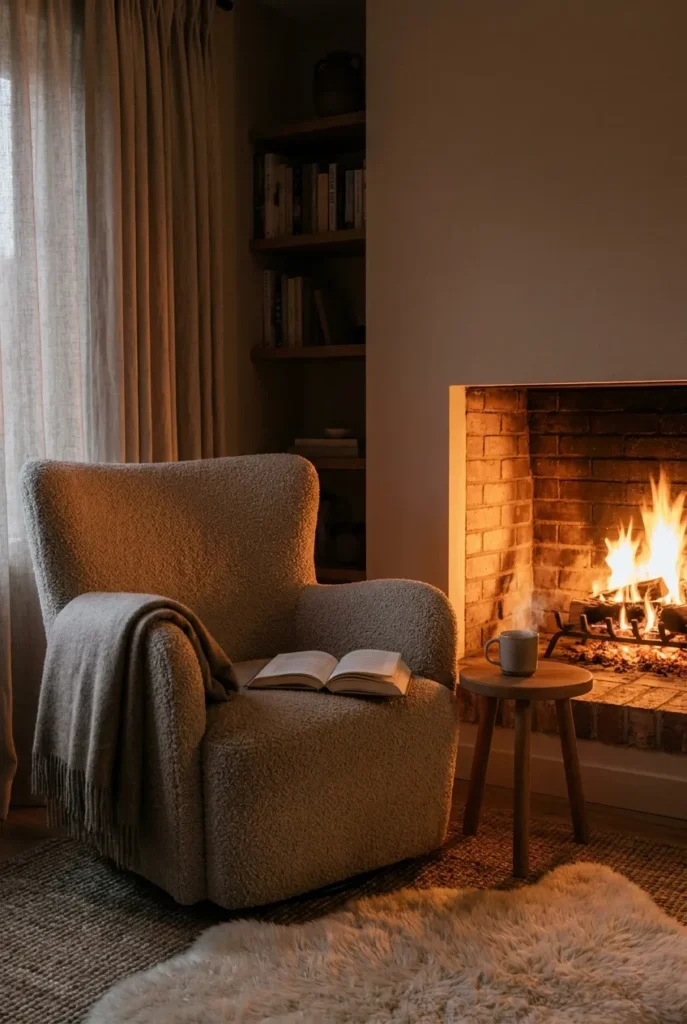
Cash the Promise First: The 3-Piece Fireplace Nook
You came here for a corner you can actually set up, so here it is before anything else. Three pieces. One afternoon.
- One seat that swallows you. An accent chair with a deep seat (an IKEA Poäng or any wide armchair around 27 to 30 inches deep works) angled 30 to 45 degrees toward the fire, never square to it. Angling lets the warmth hit your side, not your shins.
- One warm light you control. A swing-arm floor lamp with a 2700K bulb and a dimmer. The fire flickers. Your reading light should not.
- One soft layer. A wool or boucle throw plus a lumbar pillow. That’s the difference between sitting and staying.
Set those three down and you have a working nook tonight. Everything below makes it better, safer, and more yours.
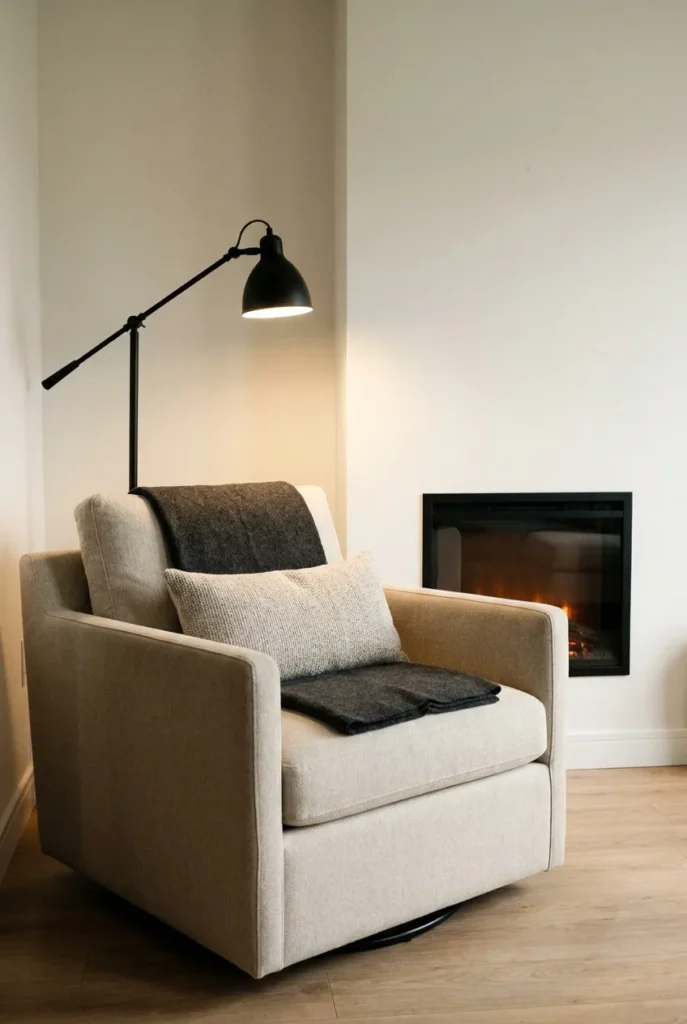
How Close Is Too Close? The Heat Gap Nobody Talks About
Here’s the part every inspiration gallery skips. You’re putting fabric, books, and a rug next to fire. That needs a rule, not a vibe.
National code keeps combustible materials about 6 inches off the firebox opening, and that’s for trim and mantels, not the soft stuff you’ll be wrapped in. For a real wood or gas fire, give your chair, rug, and throw a generous gap. Keep upholstery and any blanket at least 36 inches from an open flame, and keep a rug off the hearth extension entirely. Wandering sparks don’t care how good your corner looks on Pinterest.
For the technical side, the clearest plain-English breakdown of code requirements lives in Fine Homebuilding’s guide to fireplace clearances, worth a read before you nudge any seating toward a working firebox.
Electric units change the math. There’s no real flame, so clearances are far more forgiving, which is exactly why renters and small-space readers should lean electric. You still follow the model’s manual, but you can sit much closer to the glow without the safety tax.
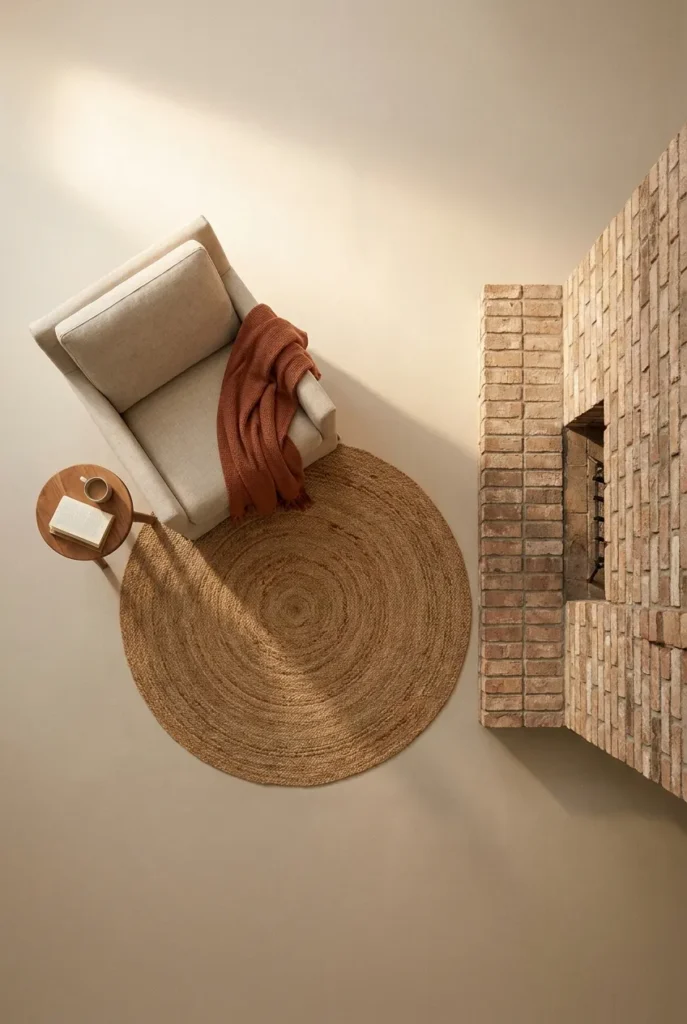
The Hearth Triangle: My 3-Measurement Framework
Most nooks fail for one of three reasons: too hot, too dim, or your books live across the room. So here’s a framework you can screenshot and measure against. Call it the Hearth Triangle.
| Measurement | What it controls | The number |
|---|---|---|
| Heat gap | Comfort and safety | 36+ in. from open flame, 8 to 12 in. is fine for electric |
| Light reach | Reading without strain | Lamp head 16 to 18 in. above the page, behind your shoulder |
| Book reach | Whether you actually stay | TBR pile within an arm’s length, roughly 24 in. |
Nail all three and the corner works in every season. Miss one and you’ll quietly stop using it by February. The book-reach leg is the one people forget. A gorgeous chair 10 feet from your shelf means you read in bed instead.
If you want to go deeper on the moody, fire-lit look this framework supports, the layered-shelf approach in this guide to building a moody home library reading nook with dark walls and warm lamps pairs perfectly with a hearth as your focal glow.
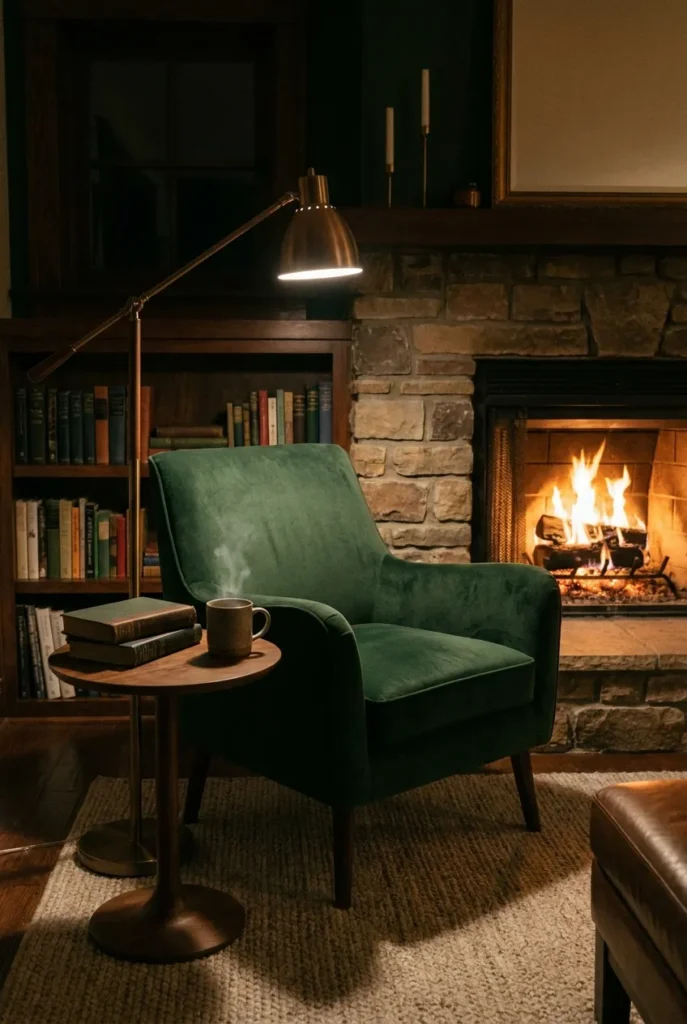
No Real Fireplace? The Electric and Faux Routes
This is the gap the whole keyword is hiding. Most people searching for a fireplace reading nook don’t have a wood-burning hearth. They rent. Or their fireplace is decorative. Good news: the electric route often looks cozier on camera and costs less than a weekend away.
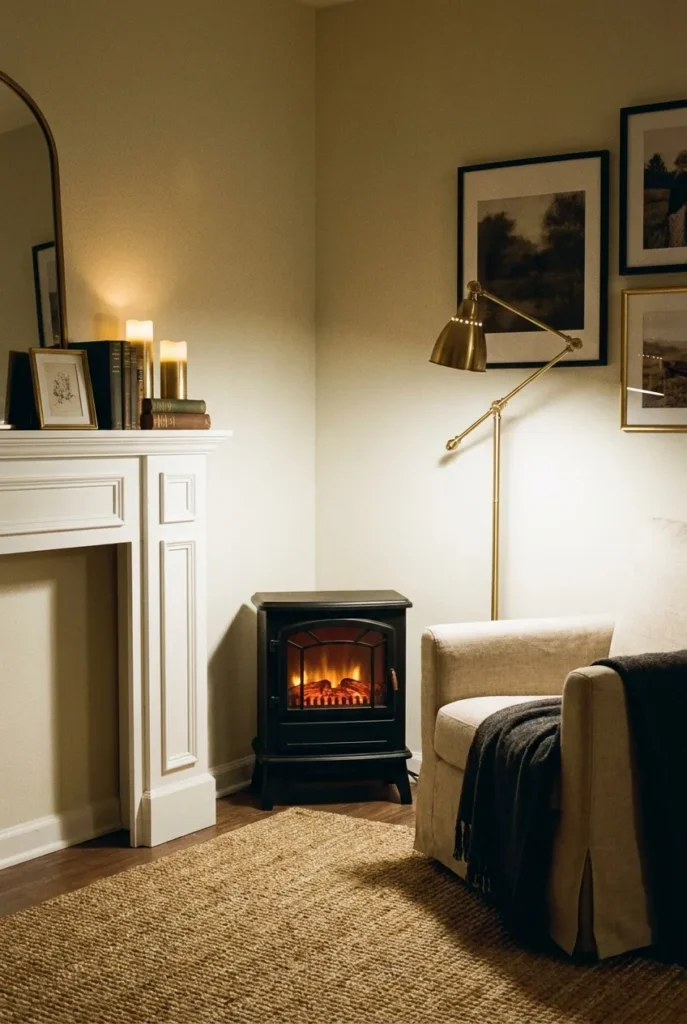
Freestanding electric stoves and small inserts run roughly $130 to $350 for the renter-friendly tier, with wall units climbing from there (HomeGuide and Angi peg most inserts in the $300 to $2,000 range for 2026, so you do not need to spend big). A little cast-look electric stove in the corner throws real warmth, needs zero venting, and unplugs when you move out.
No budget for even that? Build the glow, not the fire. A faux mantel against the wall, a cluster of flameless LED candles inside the opening, and a string of warm fairy lights reads as a hearth from across the room. It’s the trick the one competitor who solves this problem leans on, and it works.
[YOUR EXPERIENCE: drop a real line here about a faux or electric setup you actually styled, e.g. which electric stove model you used and what surprised you about the heat output. This is where your firsthand voice will carry the most weight.]
For the full playbook on making a corner feel warm with no hearth and no window at all, this companion piece on a reading nook without a window with nine cozy fixes covers the lighting and layering moves that do the heavy lifting.
Corner Fireplace vs. Wall Fireplace: Where the Chair Goes
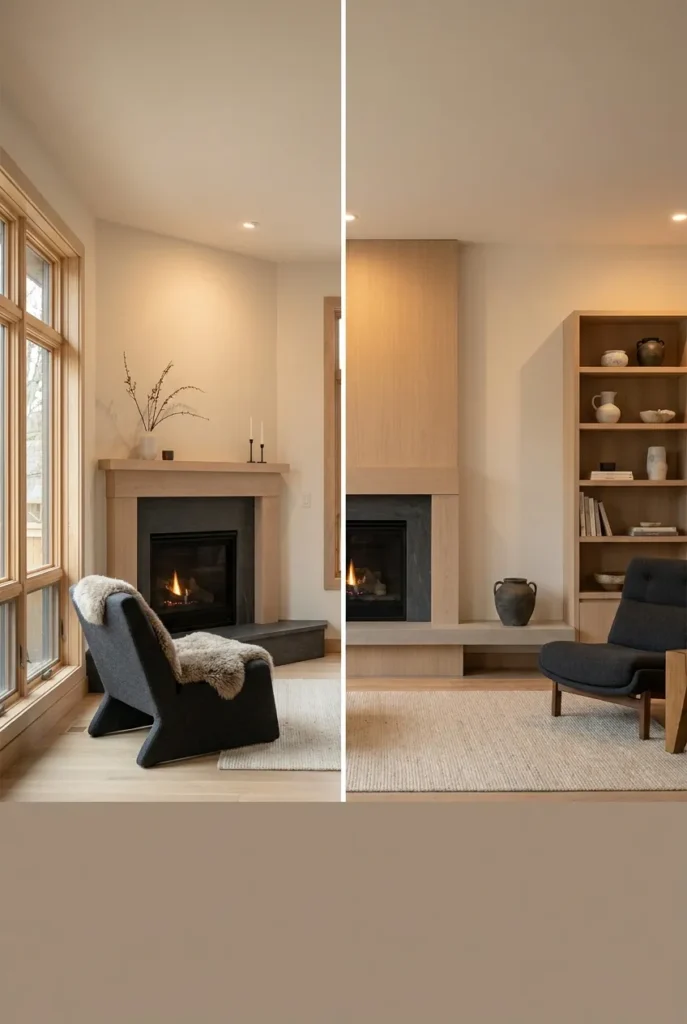
A corner fireplace and a wall fireplace want completely different layouts, and copying the wrong photo is why so many nooks feel off.
With a corner fireplace, the heat and the focal point come at you on a diagonal. Float the chair on the opposite diagonal so you face the fire across the corner, and let a slim ladder shelf fill the awkward wall beside it. Corners waste space by default, so this is where a built-in reading nook beside the fireplace earns its keep.
With a wall fireplace, you’ve got a natural symmetry to play with. Set the chair to one side of the hearth, not dead center, and balance it with a tall bookcase on the other side. A reading nook next to the fireplace, rather than in front of it, keeps your sightline to the room and your back out of the heat path.
Small room? Skip the second large piece. One chair, one slim shelf, one lamp. Crowding a 700-square-foot living room with matching armchairs is how a cozy corner turns into an obstacle course.
Lighting: Why Firelight Alone Will Strain Your Eyes
Fire is mood, not task light. Try to read by it for twenty minutes and your eyes will tell you. You need a second, steady source.
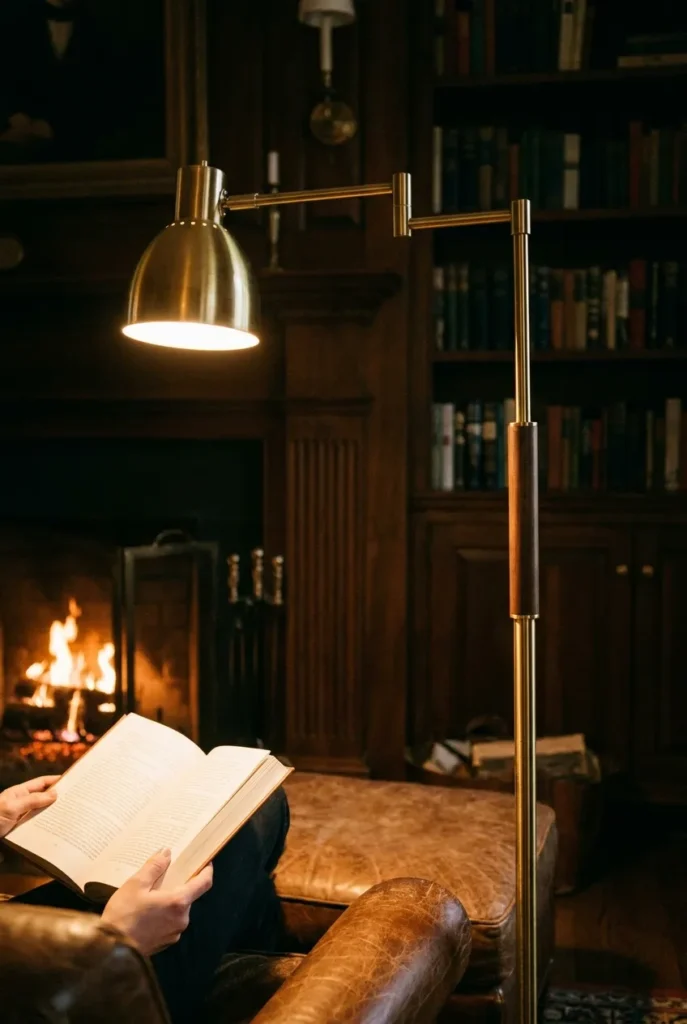
Go warm and dimmable. A 2700K bulb keeps the room reading as cozy instead of clinical, which matches the firelight instead of fighting it. Feit Electric’s color temperature guide lays out why 2700K reads warm and restful while anything north of 4000K tips into office territory. Save the cooler bulbs for fine print only.
Position matters as much as temperature. Put the lamp head 16 to 18 inches above your page and behind your reading shoulder so the light falls onto the book, not into your eyes. A swing-arm or plug-in wall sconce both work, and the plug-in sconce is fully renter-safe with the right adhesive mount.
Failure mode worth naming: skip the dimmer and your warm bulb still blasts at full strength, washing out the fire’s glow and flattening the whole mood. A $15 in-line dimmer fixes it.
Soft Layers: The Texture Stack That Sells the Cozy
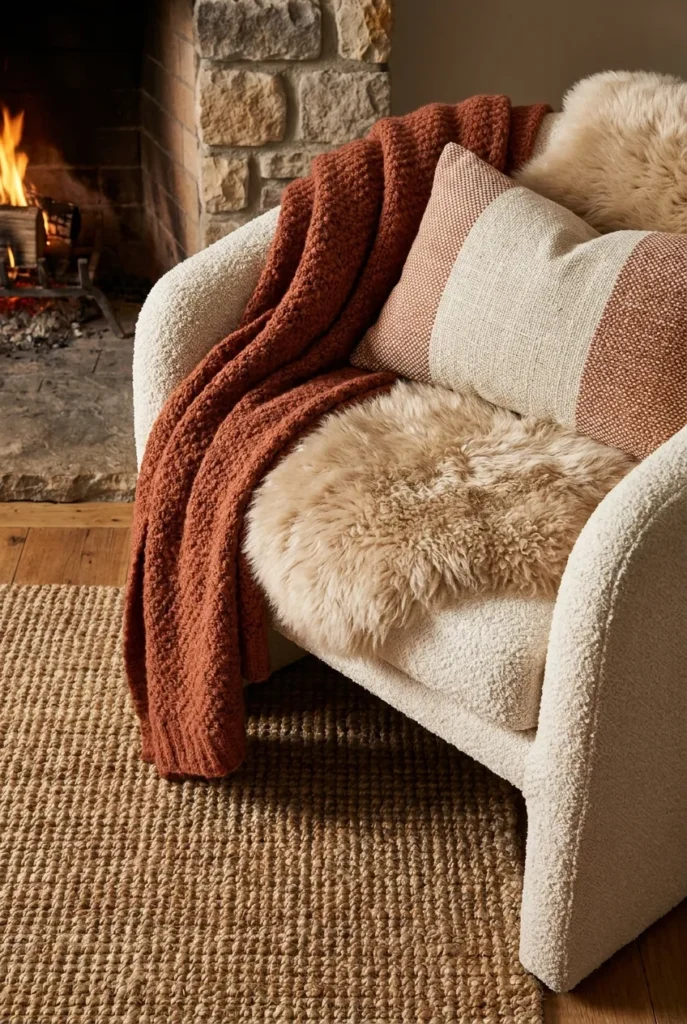
This is where a corner stops looking staged and starts feeling lived in. You’re building a stack, bottom to top.
- Floor: a jute or washable rug to define the zone (kept off the hearth extension, per the heat gap above).
- Seat: a sheepskin or boucle base layer for warmth against the back of your legs.
- Lap: a chunky wool throw, the heavy kind with real weight.
- Back: a lumbar pillow plus one bolster so your spine isn’t doing the work.
Notice the order goes from rough to soft as it gets closer to your skin. Jute underfoot, wool on your lap, sheepskin where you actually touch it. That texture gradient is the quiet thing that makes expensive rooms feel expensive.
If a full chair won’t fit, a floor-cushion setup near the hearth is a legitimate path, not a downgrade. The arrangement in this guide to a no-furniture reading nook floor cushion setup shows how to build a real seat from cushions alone, which works beautifully on a warm hearthside rug.
One honest trade-off: floor cushions photograph like a dream and feel great for about 40 minutes before your lower back files a complaint. If you’re a marathon reader, prioritize the chair.
Bedroom Fireplace Nook: The Quietest Version
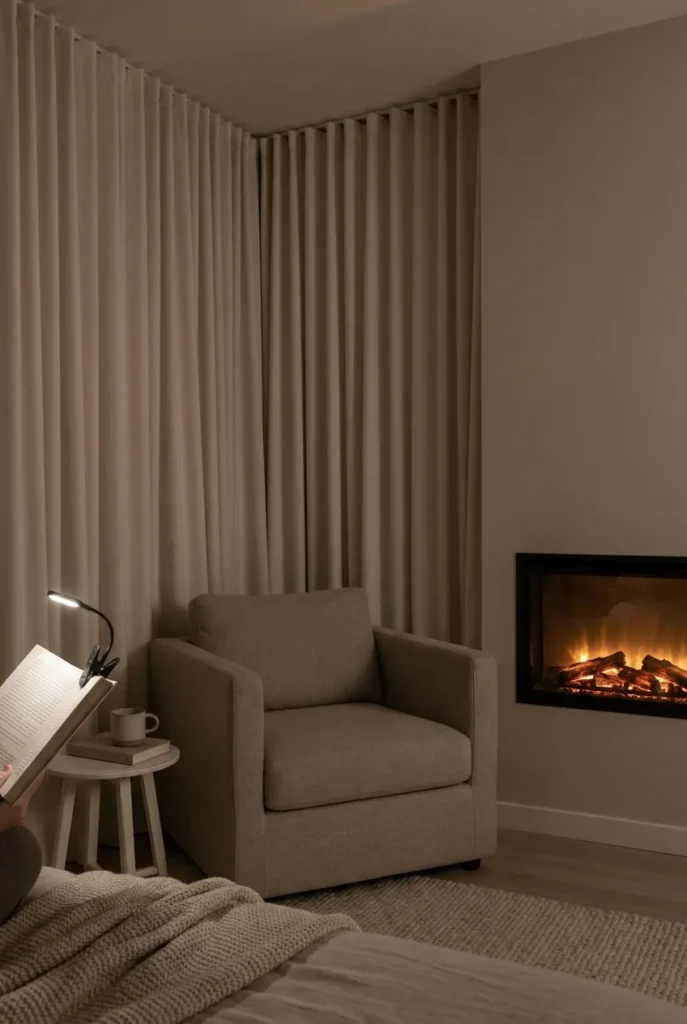
A bedroom reading nook with a fireplace is the most underrated setup in this whole list, and it’s mostly an electric play. Tuck a slim electric insert or a cast-look electric stove into a corner, set a compact armchair beside it, and add a blackout curtain panel to seal the cocoon at night.
Keep the footprint tiny. A 28-inch-wide chair, a clip-on reading light, and a small round side table for your mug and your TBR pile. The point of a bedroom nook is to read yourself toward sleep, so lean fully into 2700K and a low dimmer setting. The smell of a cold evening through a cracked window, the weight of a hardcover, the low hum of the heater. That’s the whole pitch.
A Real Budget: The Under-$300 Fireplace Nook
Numbers, not vibes. Here’s a corner you can actually total, renter-safe and drill-free.
| Piece | Archetype | Real price band |
|---|---|---|
| Electric stove or insert | Cast-look freestanding electric | $130 to $250 |
| Reading light | Plug-in swing-arm sconce, 2700K bulb + dimmer | $35 to $60 |
| Throw + lumbar pillow | Wool throw, linen lumbar | $45 to $70 |
| Rug | Small washable runner or jute | $30 to $60 |
That lands a complete, glowing, genuinely cozy fireplace reading nook in the $240 to $440 zone, and well under $300 if you already own the chair. No landlord permission required, nothing drilled, everything moves with you.
[YOUR EXPERIENCE: if you’ve built a version of this on a budget, note the actual total you hit and the one piece worth spending more on. Readers trust a real receipt.]
FAQ
What is a fireplace nook called?
There’s no single industry term, but designers usually call a seating spot built beside a hearth an inglenook, the old word for a bench or alcove tucked next to a fireplace. A modern, smaller version is just a fireplace reading nook or a hearthside reading corner.
What is the new trend for fireplaces?
The biggest shift is toward electric inserts and slim wall-mount units, especially for renters and small spaces, because they need no venting and run cleaner. Alongside that, plaster and limewashed surrounds and “quiet” minimalist hearths are replacing big ornate mantels.
What are the must-have reading nook items?
A deep, supportive seat, one warm dimmable light (2700K is the cozy sweet spot), a soft layer like a wool throw, a small side table within arm’s reach, and book storage close enough to grab without getting up. Near a fireplace, add a respectful heat gap to that list.
What is a reading nook called?
A reading nook goes by a few names depending on the spot: an alcove, a window seat if it’s under a window, an inglenook by a fireplace, or simply a reading corner. The common thread is a small, enclosed-feeling space built for one person and a book.
Can you safely put a chair right next to a fireplace?
Next to a working wood or gas fire, keep upholstery and throws at least 36 inches from the open flame and your rug off the hearth extension. Next to an electric unit, you can sit far closer since there’s no real flame, just follow the model’s manual.
How do I make a fireplace reading nook if I rent?
Go electric or faux. A freestanding electric stove unplugs and moves with you, and a faux mantel with flameless candles and warm fairy lights gives you the glow with zero construction. Use plug-in sconces and adhesive mounts to keep everything drill-free.
Your Corner Is Closer Than You Think
You don’t need a stone hearth or a contractor. You need a seat angled toward some warmth, a light you can dim, a throw with real weight, and three measurements that keep it safe and comfortable. Start with the Hearth Triangle, pick the electric or faux route if a real fire isn’t yours to use, and build outward from there. Which corner of your home is about to become the one nobody can pry you out of? Set the chair down this weekend and find out.
Keep reading
More cozy nook ideas
 Living Room
Read →
Living Room
Read →
Cabin Living Room Checklist: Everything to Decide Before You Start
No log walls, no stone hearth, no lake outside the window. You can still build a cabin living room in a regular…
 Bedroom
Read →
Bedroom
Read →
English Cottage Bedroom Checklist: Everything to Decide Before You Start
You saved forty pins of floral quilts and sloped ceilings, then looked up at your own bedroom: beige walls, one window, a…
 Nursery & Teen Rooms
Read →
Nursery & Teen Rooms
Read →
25 Teen Boy Bedroom Ideas That Feel Grown-Up, Not Childish
If his room still has the race car lamp and the glow-in-the-dark stars, and the door has started staying shut, he’s telling…