
Two Chairs, One Quiet Corner: How to Build a Reading Nook for Two

A reading nook for two isn’t two chairs shoved at a wall. It’s a small negotiated peace treaty: close enough to pass a cup of tea, far enough that nobody’s elbow lands in the other person’s chapter. Get the spacing right and you’ll both actually use it. Get it wrong and one of you migrates back to the couch within a week.
Here’s what most guides skip. They show you two pretty armchairs and never tell you how far apart to set them, where the shared light goes, or how to make it work when you rent and can’t drill. We’re fixing all three. You’ll get exact inches, real product types, and a few setups you can pull together this weekend for under $400.
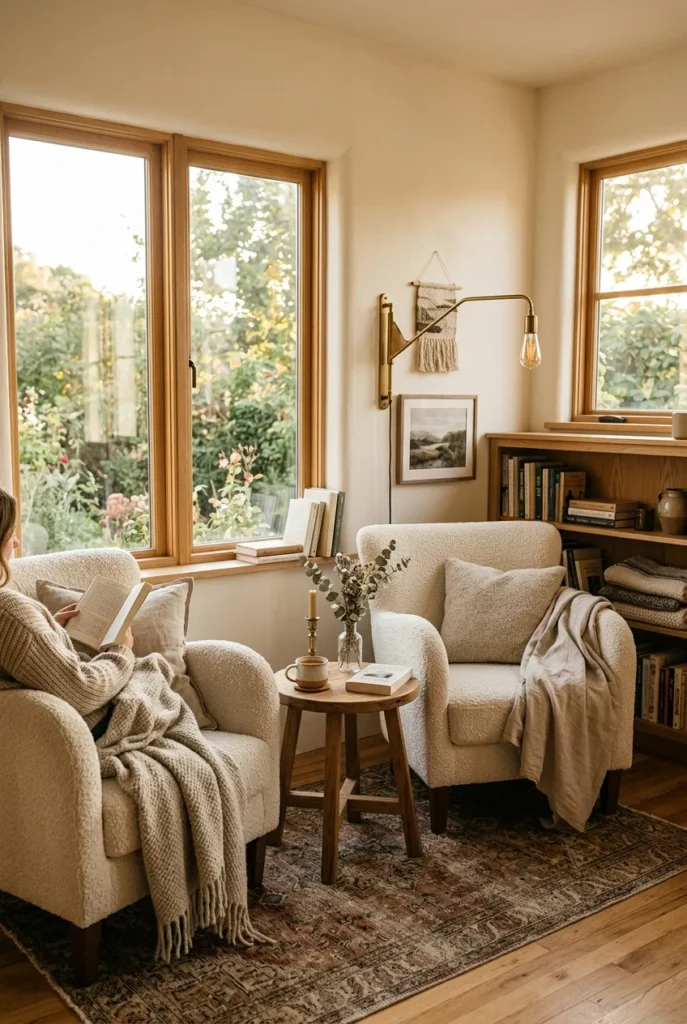
You don’t need a bay window or a big room. One awkward corner, two seats, and a plan will do it.
Start With the One Rule Nobody Tells You: Spacing for Two
Before you buy anything, settle the geometry. This is the part the big galleries leave out, and it’s the difference between a corner you both love and a corner that photographs well but feels cramped in real life.
Two readers need personal space and a shared center. Set your two chairs with 18 to 24 inches of gap between the inner armrests. Closer than 18 and you’re knocking elbows. Wider than 24 and it stops feeling like a shared nook and starts feeling like a waiting room.
The shared side table sits in that gap. A 16 to 20 inch round side table is the sweet spot: big enough for two mugs and two stacked books, small enough that nobody has to lean. I call this the 18-inch reach rule, your hand should land on the table without unfolding from the chair.
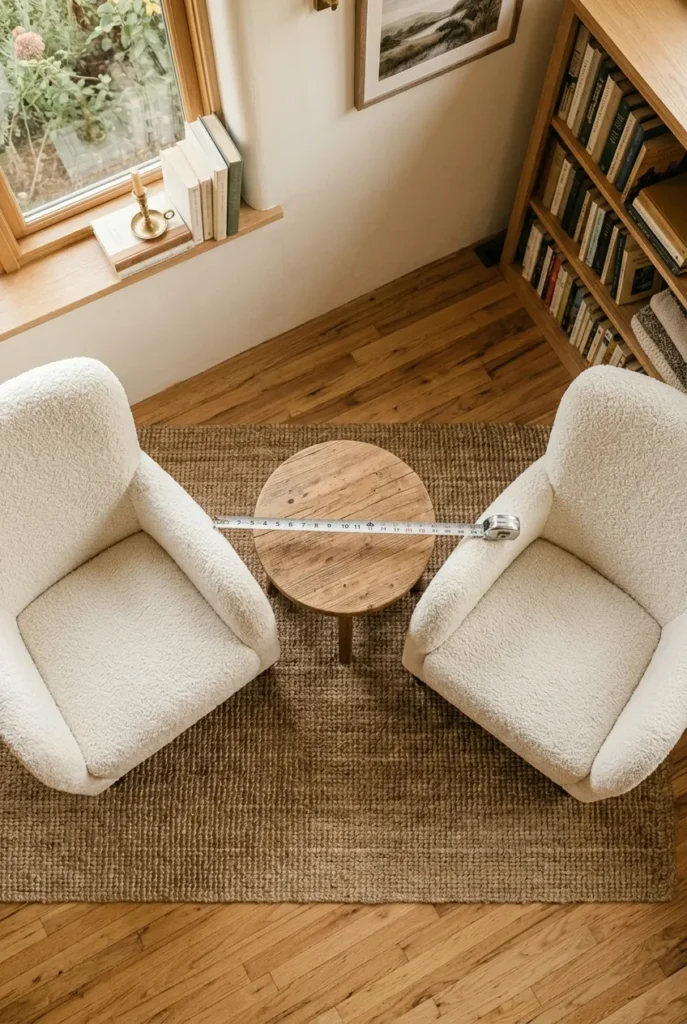
Here’s the screenshot-worthy version. This is the 2-Reader Spacing Rule, the quick-spec I wish someone had handed me before my first two-chair setup:
| Element | Spec for two readers |
|---|---|
| Gap between inner armrests | 18 to 24 inches |
| Shared side table diameter | 16 to 20 inches (round, no sharp corners) |
| Total corner footprint | about 7 to 8 feet wide |
| Chair angle toward each other | 10 to 15 degrees |
| Shared lamp height | shade bottom at 40 to 42 inches off the floor |
That last line matters more than it looks. One lamp, two readers, and the light has to clear both faces without glaring into either. A swing-arm or arc lamp solves it because the head moves. We’ll come back to light in its own section.
The Two-Armchair Setup (the Couple Classic)
When people picture a reading nook for two, this is the image: two armchairs, angled in, a shared table, a pool of warm light. It earns the cliché. It works.
Go for two of the same chair if you want calm and symmetry, an IKEA Poäng pair or two rounded boucle tubs read instantly cozy. The matching look is the easiest win for a two armchair reading nook, and it’s forgiving in a small living room because the eye sees one shape, not clutter.
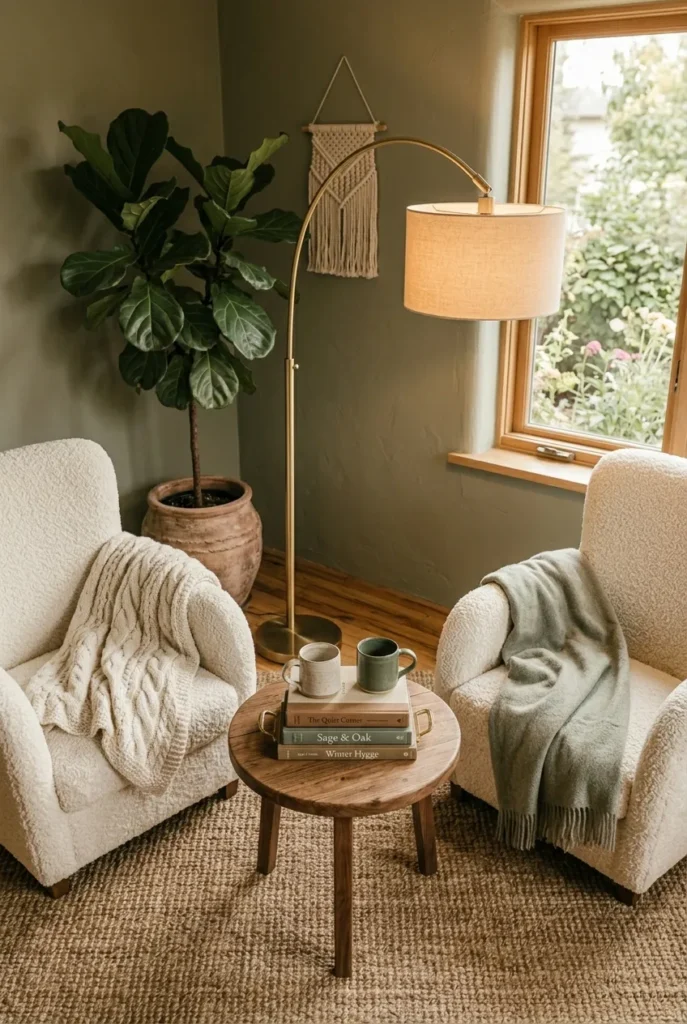
Angle each chair 10 to 15 degrees toward the center. Dead-parallel feels like a doctor’s office. Fully facing feels like an interrogation. That slight inward tilt is what makes a corner reading nook for two feel like a conversation that paused so you could both read.
If a built-in feels more your speed than freestanding chairs, a bench can seat two side by side and hide blankets underneath, our full walkthrough on a built-in reading bench with hidden storage covers real dimensions and the weekend build order. A two-person bench wants a 48 to 54 inch seat width so neither reader feels boxed in.
One honest trade-off: two big armchairs eat floor space fast. In a 600 square foot apartment, measure before you fall in love with oversized seating. Two compact chairs beat two overstuffed ones you can’t walk around.
The Renter-Safe, No-Drill Version
Here’s the angle the top results skip entirely. They build everything into the walls. But most of us reading this rent, and a security deposit doesn’t care how cute your sconces are.
You can build a complete reading nook for two without a single hole in the wall. Start with the seating: two freestanding chairs, a loveseat, or a pair of floor poufs, none of it touches the wall structurally.
For light, skip the hardwired sconce. A plug-in swing-arm wall lamp hangs on a single removable adhesive hook rated for the weight, or a freestanding arc floor lamp leans over both chairs with zero hardware. For warmth on the walls, peel-and-stick wallpaper or a large leaning frame does the job and comes off clean when you move.
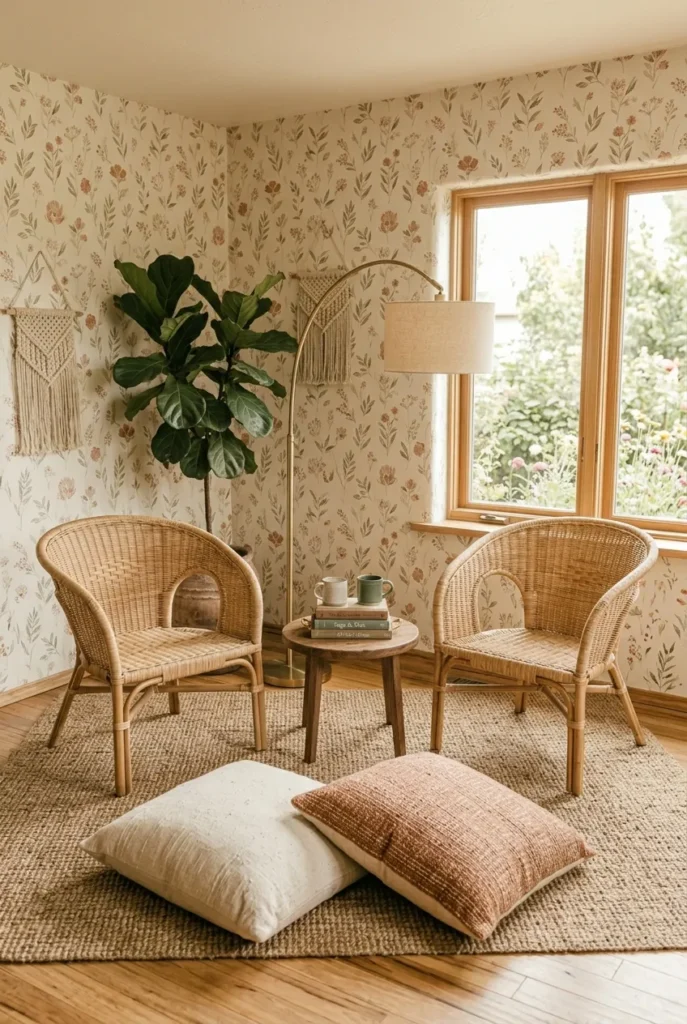
If even chairs feel like too much commitment, a floor setup is the most rental-proof option there is. Two big floor cushions, a low shared tray table, and a soft rug turn a bare corner into a hideaway, our reading nook floor cushion setup guide shows how to make it look designed instead of dorm-room. Fair warning from experience: floor cushions look great in photos, but after about 40 minutes your lower back files a complaint. Add a firm bolster against the wall for lumbar support and you’ll last a whole chapter longer.
Lighting for Two Readers (One Light, Two Faces)
Two people reading need more light than one, and it has to reach both without blinding either. This is where most shared nooks quietly fail.
The fix is warmth plus aim. Use a 2700K bulb, the warm amber tone that reads like candlelight instead of an office. ENERGY STAR notes that most warm-white certified bulbs land in the 2700K to 3000K range, which is exactly the cozy zone you want for a reading corner. Per ENERGY STAR’s guidance on bulb color and mood, lower Kelvin numbers give that warm, relaxing glow.
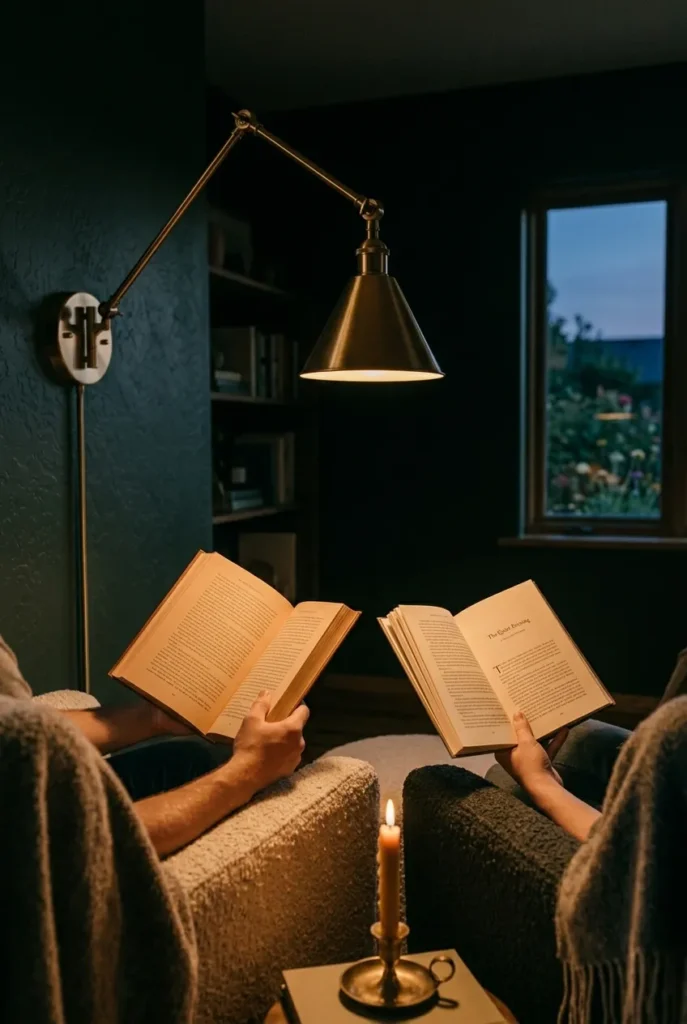
For aim, a single swing-arm or arc lamp set with the shade bottom around 40 to 42 inches off the floor clears both faces. If your two chairs sit far apart, give each reader their own small clip-on or table light instead of fighting over one. Comfortable light genuinely matters here, the American Academy of Ophthalmology notes that good lighting keeps your eyes from tiring as quickly while you read, even though dim light won’t damage them.
Skip the dimmer and your warm bulb still blasts at full strength, which kills the mood. A $12 plug-in dimmer or a smart bulb fixes it. That’s the failure mode nobody warns you about: right bulb, no dimmer, dentist-office vibes after dark.
Small-Space and Living Room Layouts for Two
No spare room? Good news, a reading nook for two living room corner is the most common version that actually gets built, and the corner is your friend.
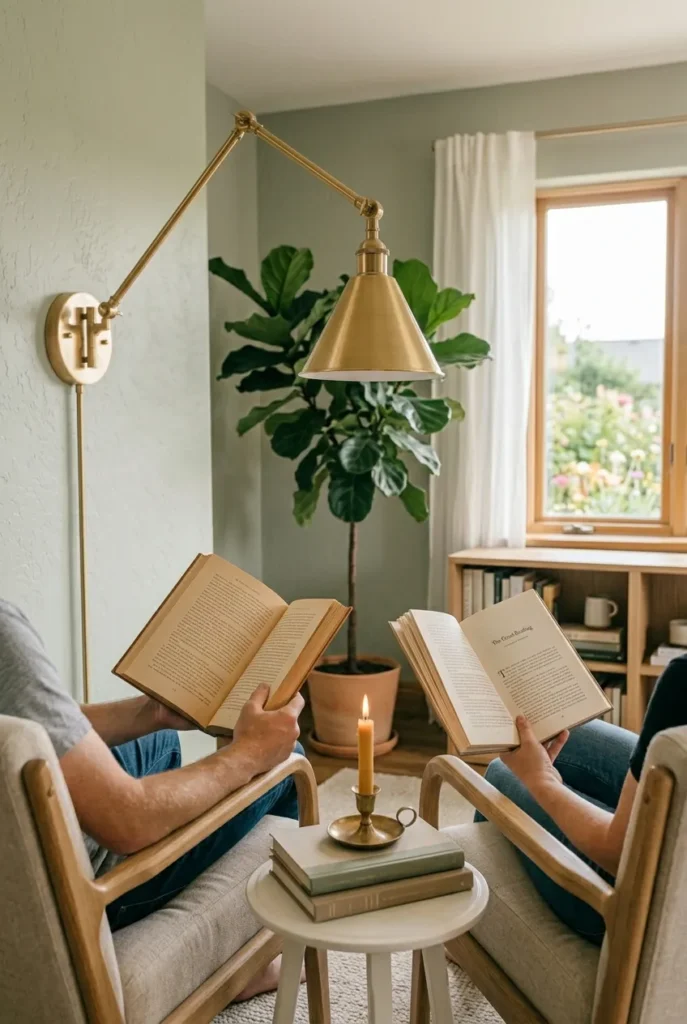
Tuck two chairs into the angle where two walls meet. The corner does structural work for you: it frames the nook, gives each chair a wall to lean toward, and carves a defined zone out of an open-plan room without any divider. A round side table in the elbow of the corner keeps the footprint tight.
If your only candidate corner has no window, don’t write it off. A windowless corner can feel more cinematic than a sunny one once you layer the light right, our guide on building a reading nook without a window walks through the exact fixes so two readers still get that warm cocoon feeling. The trick is leaning on lamps and a rug to define the zone instead of waiting on sunlight that never comes.
Truth is, two chairs plus a rug is often the entire move. A 5 by 7 foot washable rug anchors both seats and tells your brain “this is the reading zone,” even in the middle of a busy living room.
A Reading Nook for Two Kids (or a Parent and Child)
Designing for two little readers changes the rules, and it’s worth its own setup. Lower everything, soften every edge, and plan for wiggling.
For two kids, swap armchairs for a low bench at 14 to 16 inches seat height, two floor poufs, or a wide bean bag built for two. Skip the glass side table. A soft ottoman or a sturdy wooden crate holds books at kid height and survives being climbed on.
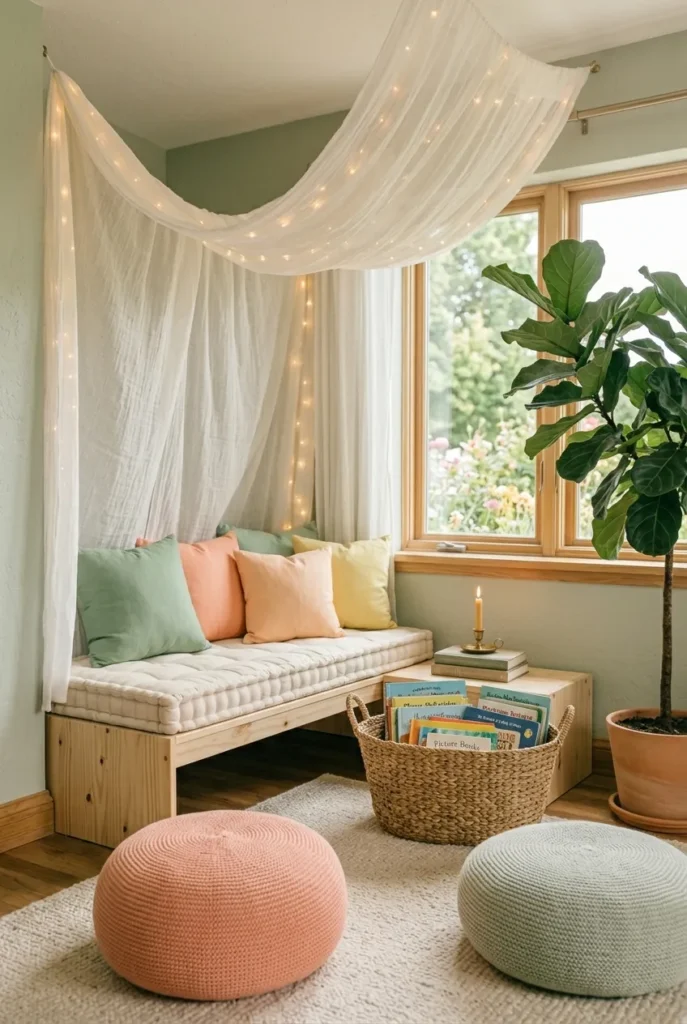
For a parent-and-child setup, one wide seat beats two separate ones. A daybed or a deep chair-and-a-half lets you both pile in for a bedtime chapter. My own kid will fit exactly two more years in our shared chair before the math stops working, so I’m soaking up the squishy stage while it lasts. Hang a soft canopy or string warm fairy lights overhead and the corner becomes the spot they ask to read in, which is the whole point.
Pairing Two Different Readers (the Mismatched-Seat Trick)
Most guides assume both readers are identical. They aren’t. One of you curls up sideways, the other sits upright for hours. One runs cold, one runs warm. Matching chairs ignore all of that.
So mismatch on purpose. Pair an upright armchair with a chaise or a deep lounge chair, one reader gets posture support, the other gets to sprawl. Tie the two together visually with a shared throw color or a repeated wood tone so it still reads as one nook, not two leftover chairs.
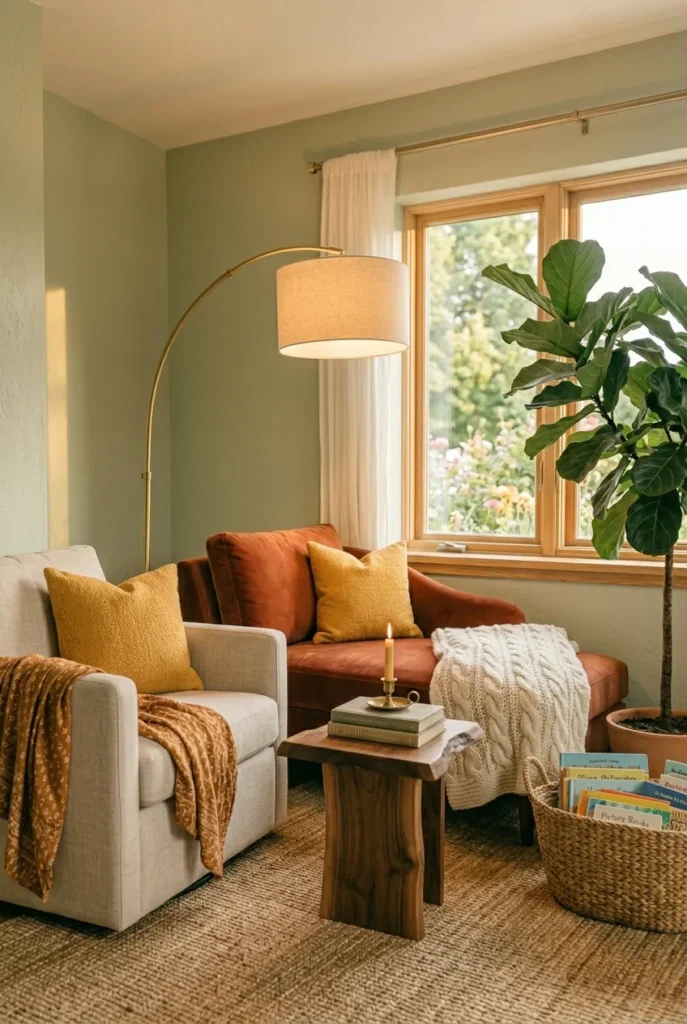
This is also the budget-smart play. You rarely find two great secondhand chairs that match, but you can almost always find one good armchair and one good lounge piece and make them talk to each other. Add a shared bolster or two lumbar pillows in the same fabric and the mismatch looks deliberate, because it is.
FAQ
What does “reading nook” actually mean?
A reading nook is a small, defined corner of a room set up specifically for comfortable reading, usually a seat or two, good warm light, somewhere to set a drink, and books within reach. It doesn’t need its own room or a window. A nook for two simply means seating and light planned around two people instead of one.
How wide should a reading nook be for two people?
Plan for about 7 to 8 feet of total width for two chairs. That covers two seats roughly 28 to 32 inches wide each, plus an 18 to 24 inch gap in the center for a shared side table. If you’re tight on space, two slim chairs can compress the whole nook to around 6 feet.
What’s the best chair for a reading nook for two?
Two matching armchairs (an IKEA Poäng pair or two boucle tubs) are the easiest cozy win. For something different, pair one upright chair with a chaise so each reader gets the posture they like. A loveseat or a 48 to 54 inch bench also seats two in less width than two separate chairs.
Can I make a reading nook for two cheaply?
Yes. The cheapest route is two floor cushions or poufs, a low shared tray table, a $12 dimmer, a warm 2700K bulb, and a leaning arc lamp, easily under $200 total. Secondhand armchairs and a washable rug keep a chair-based version close to that range too.
How do I build a reading nook for two if I rent?
Use freestanding everything: chairs or poufs that don’t attach to walls, a plug-in or arc lamp instead of hardwired sconces, peel-and-stick wallpaper, and adhesive hooks rated for the weight. Nothing drills, nothing voids your deposit, and it all comes apart on moving day.
Will two kids actually use a reading nook?
They will if you build it at their scale. Keep seats low (14 to 16 inches), use soft poufs or a wide bean bag, add a fabric canopy or fairy lights, and put books in an open basket they can reach. Kids return to a corner that feels like a fort, not a furniture display.
One Corner, Two Readers, Starting This Weekend
A reading nook for two comes down to three decisions: how far apart the seats sit, where the warm light lands, and whether you’re working around a wall you can’t drill into. Nail those and the rest is just throws and books.
So which corner in your home has been waiting for this? Measure the gap, pick your two seats, and set the lamp to 2700K. If you want a layout that uses an existing window, that’s the natural next piece to plan, and your future self, curled up with a hardcover and someone you like, will thank you for starting now.
Keep reading
More cozy nook ideas
 Living Room
Read →
Living Room
Read →
Cabin Living Room Checklist: Everything to Decide Before You Start
No log walls, no stone hearth, no lake outside the window. You can still build a cabin living room in a regular…
 Bedroom
Read →
Bedroom
Read →
English Cottage Bedroom Checklist: Everything to Decide Before You Start
You saved forty pins of floral quilts and sloped ceilings, then looked up at your own bedroom: beige walls, one window, a…
 Nursery & Teen Rooms
Read →
Nursery & Teen Rooms
Read →
25 Teen Boy Bedroom Ideas That Feel Grown-Up, Not Childish
If his room still has the race car lamp and the glow-in-the-dark stars, and the door has started staying shut, he’s telling…