
12 Fall Garden Ideas for Beginners, Starting With Just Three Pots

Two mums, one flowering kale, five pansies, $73.24. That’s the first fall garden idea on this list, and it fits on a rented front step without a single new hole in anything.
Most beginner advice assumes you own a yard, a tiller, and a free Saturday back in August. You probably have a stoop, a balcony, or one patch of dirt along the fence, and it’s already the middle of October.
Good news: this is the stretch when cold nights start doing half the work. Kale blushes pink. Pansies settle in for a second bloom next spring. Bulbs go into pots now and come up when the snow melts.
Every idea below was picked for a first-timer. Each one names what to buy, what it cost at a US store this fall, and the one mistake most likely to sink it. Renter-safe options come first, with the homeowner upgrade after.
Start with the three pots. Then work down the list as far as your weekend goes.
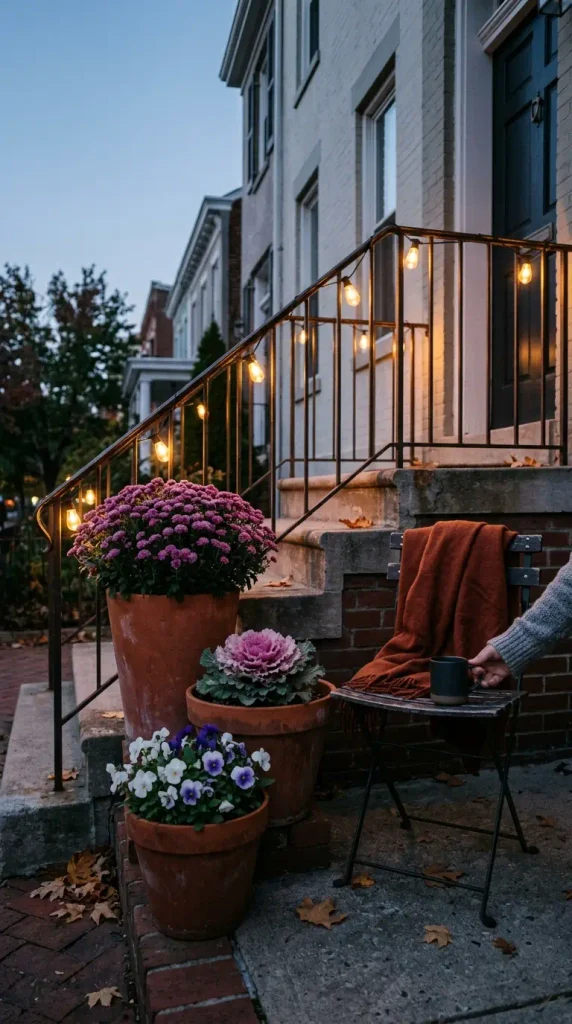
1. The 3-Pot Porch Starter: Mums, Kale, and Pansies
Group your first plants by height, not by color. Three pots in three heights is the fastest way to make a fall container garden look planned.
- Back pot: two 3-quart mums sharing one wide container for height and bulk.
- Middle pot: one 2-quart flowering kale, which only gets better as nights cool.
- Front pot: five pansies, low enough to spill over the rim.
| Pot | What to buy | Listed price |
|---|---|---|
| 🌼 Back | Two 3 qt purple garden mums (2-pack) | $29.58 |
| 🥬 Middle | One 2 qt flowering kale | $9.98 |
| 🌸 Front | 1 qt giant pansy mix (5-pack) | $33.68 |
| Total | Plants only, in pots you already own | $73.24 |
Home Depot listed prices, fall 2026. Prices shift week to week.
Any pot works as long as it has a drainage hole. Once the trio is planted, our 16 fall planter ideas for porch evenings give you a swap for every slot.
Watch the heights. Three pots at the same level look like a garden center shelf, so set the back one on an upturned bucket.
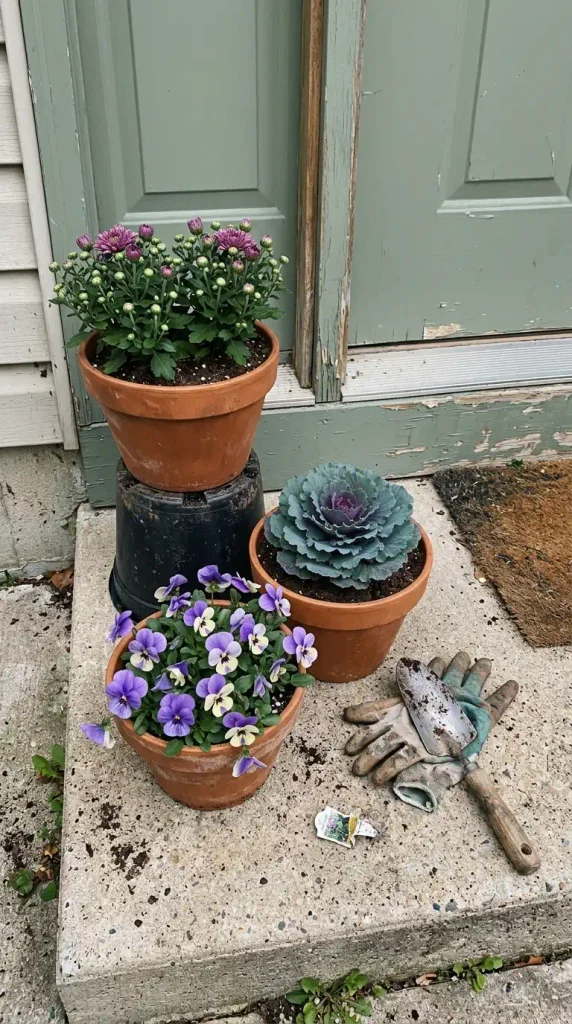
2. Let Cold Nights Color Your Ornamental Kale
Green kale on the garden center bench isn’t a dud. Its pink, white, or purple center appears only after nights dip below 50°F, and deep color takes two to four weeks of those cool nights.
So buy it green and wait. Once settled, ornamental cabbage and kale can ride out temperatures near 5°F, which is why it often outlasts every mum on the block. NC State Extension’s ornamental cabbage and kale notes suggest one kale in the center of a pot, ringed with pansies.
It’s on trend, too. Pinterest named “Cabbage Crush” a 2026 trend after cabbage searches climbed 110%.
Stop feeding it once the color starts. Fertilizer past that point slows the change.
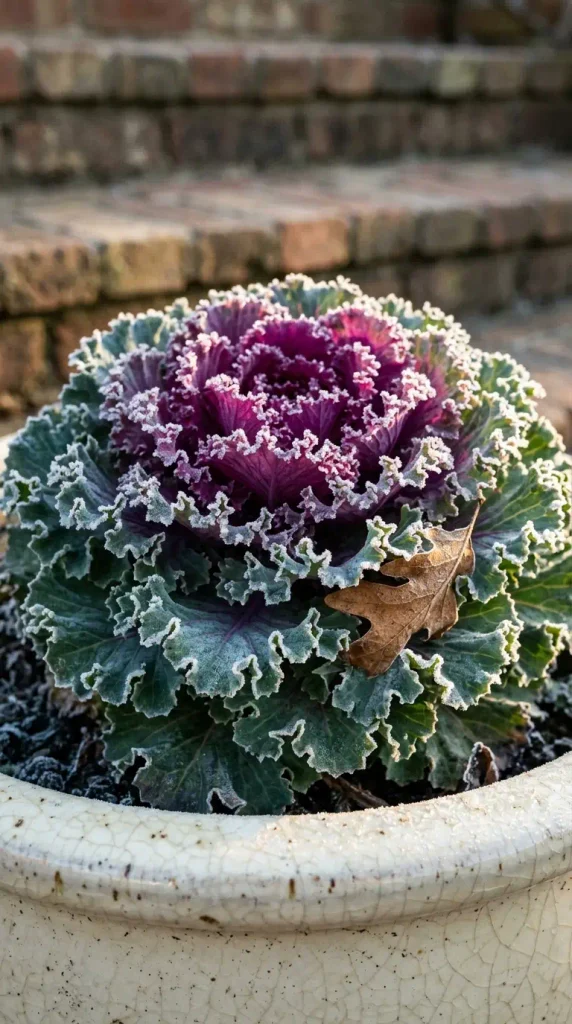
3. Buy Mums in Tight Bud, Then Water Every Other Day
Skip the mum that’s already in full color on the sale rack. Half its show is over before you get it home. I’d always take the pot with tight, barely cracked buds, because those open on your porch instead of in the store.
Mums drink hard in a pot. The tag on Home Depot’s 3-quart mums calls for full sun and watering every other day.
Pick pots with tight, mostly closed buds.
Give them full sun and water every other day.
Pinch off brown blooms to keep the pot tidy.
Buying a mum already in full bloom.
Parking it in a shady corner.
Letting the pot dry out between checks.
Most garden mums sold this season carry a zone 5 to 9 tag. Even so, the flowers fade after several frosts, so enjoy them as a season of color rather than a forever plant.
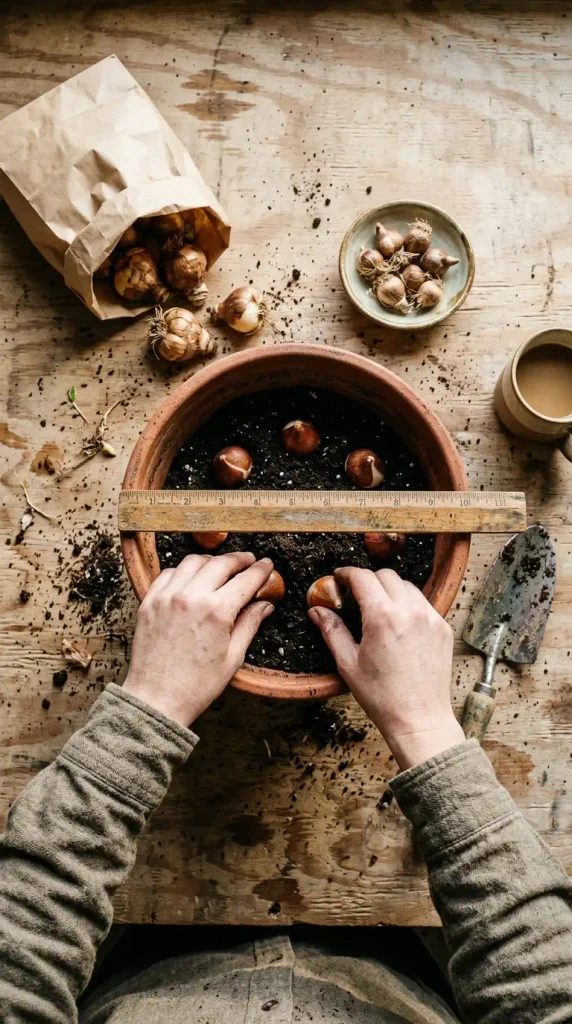
4. Layer a Bulb Lasagna Pot for Spring Color
Spring flowers get planted in fall, and a pot lets renters join in. Stack bulbs by size in one deep container and they bloom in waves, smallest first.
Wait until nights stay under 60°F, since the soil cools to match. Then build it in four moves:
Pick a pot at least 12 to 14 inches deep with a drainage hole.
Set tulips about 8 inches down, pointed side up, and cover with soil.
Add daffodils or hyacinths about 6 inches down, tucked between the tulips.
Finish with crocus or grape hyacinths 3 to 4 inches down, then water once.
A bag of 100 Darwin hybrid tulips was listed at $35.96 on sale at Home Depot this fall, far more than one pot needs, so split a bag with a neighbor. Bulb bags list hardiness zones, so check yours on the USDA Plant Hardiness Zone Map before you buy.
Own your yard? The same layers work straight in a bed, with daffodils 6 to 8 inches deep. Squirrels and deer tend to leave daffodils alone.
5. Shred Fallen Leaves Into Free Mulch
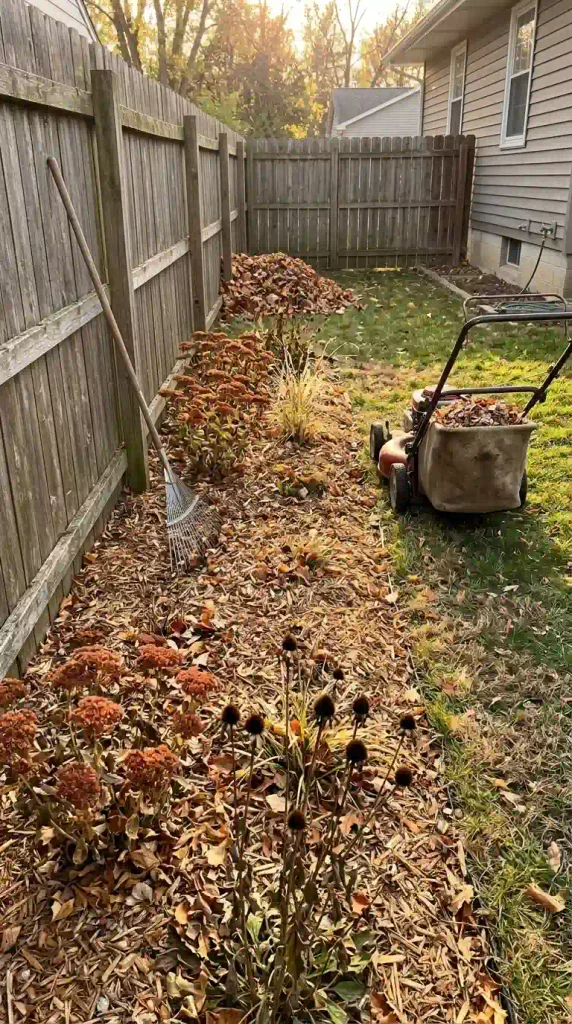
Your rake is already holding next year’s mulch. Run the leaves over with a mower a couple of times and they shrink into a fine, earthy-smelling pile that stays put in the wind.
Whole leaves matted over the bed, sliding off in the first storm and smothering low plants.
Shredded leaves spread 2 to 3 inches deep around perennials, staying in place and slowly turning into soil.
University of Illinois Extension notes that shredded leaves break down faster and stay put better than whole ones. Leave one out-of-the-way corner unraked, too, since plenty of overwintering insects ride out the cold in leaf litter.
On a balcony, a handful of crumbled leaves on top of each pot does the same job in miniature.
6. Sow a Radish Window Box You Can Eat in a Month
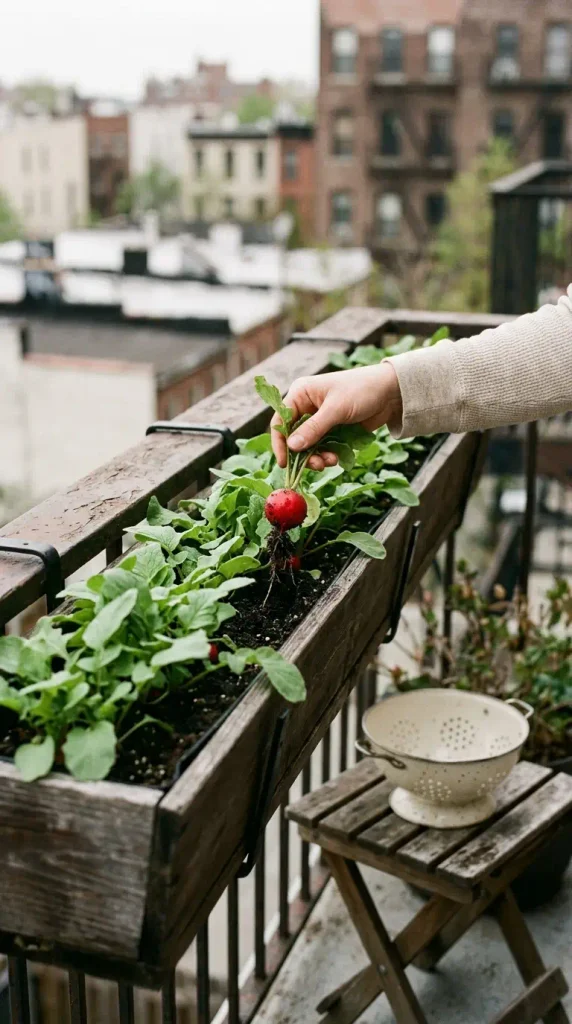
Twenty-two days. That’s how soon a Cherry Belle radish can be ready to eat after sowing, the fastest edible win in this whole list.
Sow seeds half an inch deep and 2 inches apart in a window box or wide pot. Keep the soil evenly damp so the roots stay round and mild. A Burpee Organic Cherry Belle packet runs $2.46 at Walmart, and it holds far more seed than one box needs.
Radishes shrug off a light frost, but they still need about a month of growing weather. Where the ground locks up by early November, save the packet for March.
💡 Quick Tip
Thin early. Snip extra seedlings at soil level with scissors once they’re an inch tall, so each radish has 2 inches of room to swell.
7. Tuck Garlic Cloves In About Three Weeks Before the Ground Freezes
Garlic is the crop you plant now and forget until summer. Penn State Extension suggests getting cloves in about three weeks before your ground freezes, so roots grow but green shoots stay below the surface until spring.
Garlic planting checklist
Next summer, pull the plants, brush off the soil, and cure them in a shady, airy spot for two weeks.
Don’t split the bulb days ahead. The tiny root nubs dry out and the cloves are slow to set roots.
8. Set Pumpkins on a Crate, Not the Damp Step
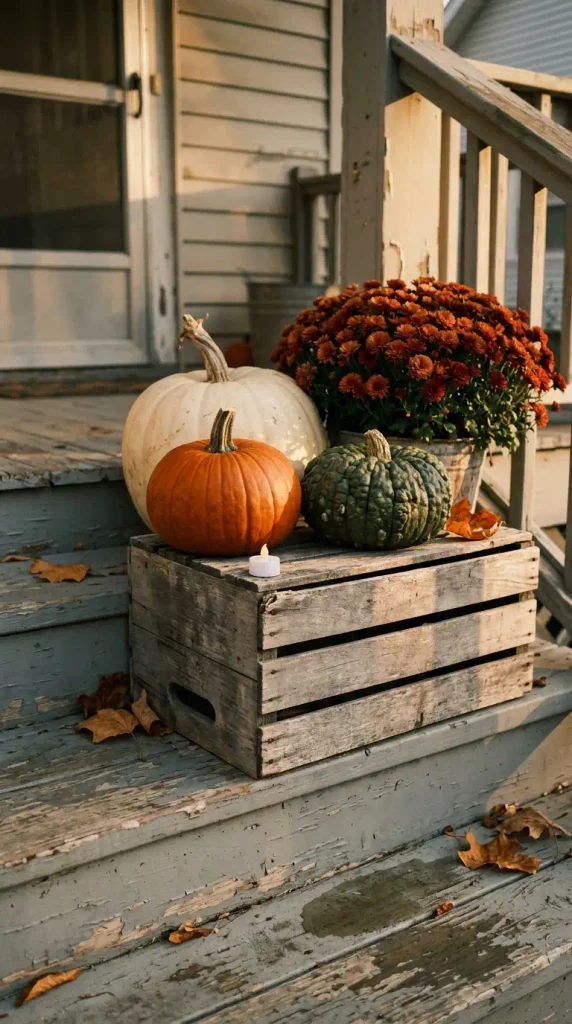
Pumpkins rot from the bottom up when they sit on wet boards. Lift them onto a slatted wooden crate and air dries them out between dewy mornings.
An uncarved pumpkin can keep two to three months in good conditions, according to Oregon State University Extension. That’s long enough to carry your fall garden decor well into November. A carved one can soften within days to a week.
Group them by size at the base of your three pots and they read as part of the planting, not an afterthought.
Safety note: anchor tall furniture to the wall, keep candles and cords away from fabric, and use a licensed electrician or contractor for hardwired lighting, ceiling mounts, or anything structural.
Show Image
9. Hang Solar String Lights Before the Clocks Fall Back
On Sunday, November 1, 2026, clocks fall back an hour, and your garden goes dark before dinner. In Indianapolis, sunset slides earlier than 5:30 p.m. after sitting past 6:15 p.m.
Solar string lights solve that without an outlet or a drill. A 12-bulb, 28-foot Brightech solar strand in 2700K warm white was listed at $37.13 at Home Depot this fall, and it switches on by itself at dark. Zip-tie it to a railing or loop it over shepherd’s hooks pushed into your pots.
| ☀️ Solar strand | 🔌 Plug-in strand |
|---|---|
| No outlet or extension cord needed. | Needs an outdoor outlet and an outdoor-rated cord. |
| Turns on by itself at dusk. | Needs a timer or a switch each night. |
| Can run dim after a cloudy week. | Same brightness every night. |
| 🔑 Renter-safe with zip ties. | Renter-safe if the cord stays out of doorways. |
Want the same glow indoors after dark? Our lit fall tree corner ideas use the same warm 2700K trick.
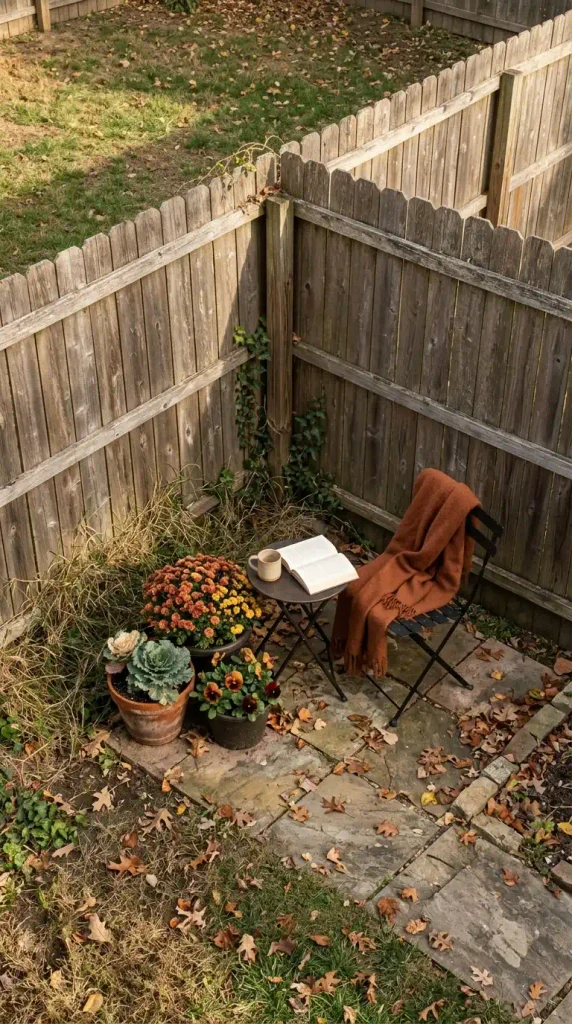
10. Make a Fall Garden Reading Corner in Two Fence Lines
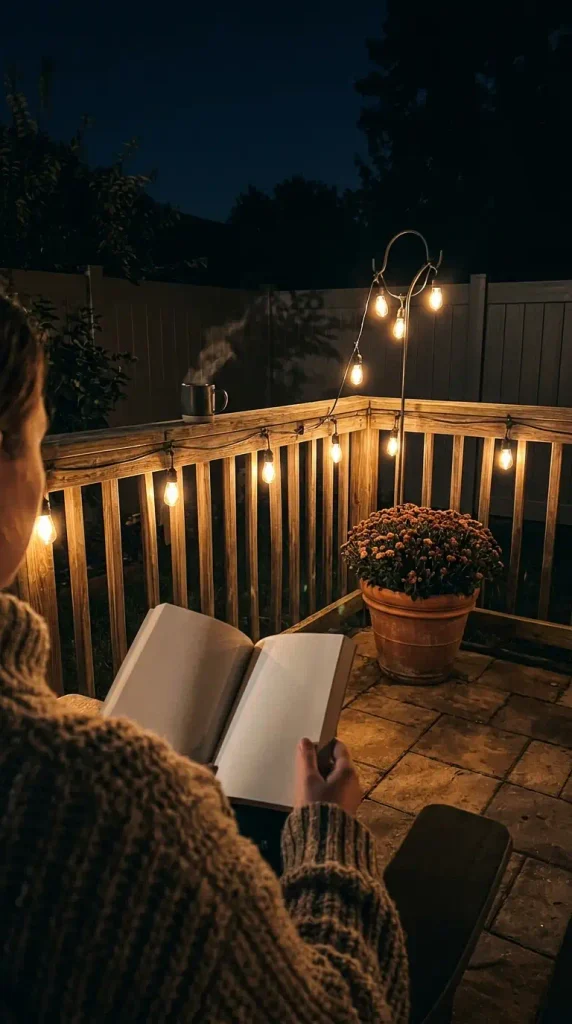
Every garden deserves one seat that faces the plants instead of the house. The easiest spot is a corner where a wall or fence covers two sides, since it blocks wind and feels sheltered without building anything.
Start with a folding bistro set (the one in our small backyard build was $99.99), a wool throw for the cold metal seat, and your three pots pulled close. My rule for any outdoor chair: if I can’t reach my mug without standing up, the side table is too far.
Late afternoon is the hour to sit there. Dry leaves skitter across the patio, the kale holds its color, and the solar strand from idea #9 flickers on as you finish a chapter. Our 25 small backyard cottage garden ideas show how to grow the corner over time.
Show Image
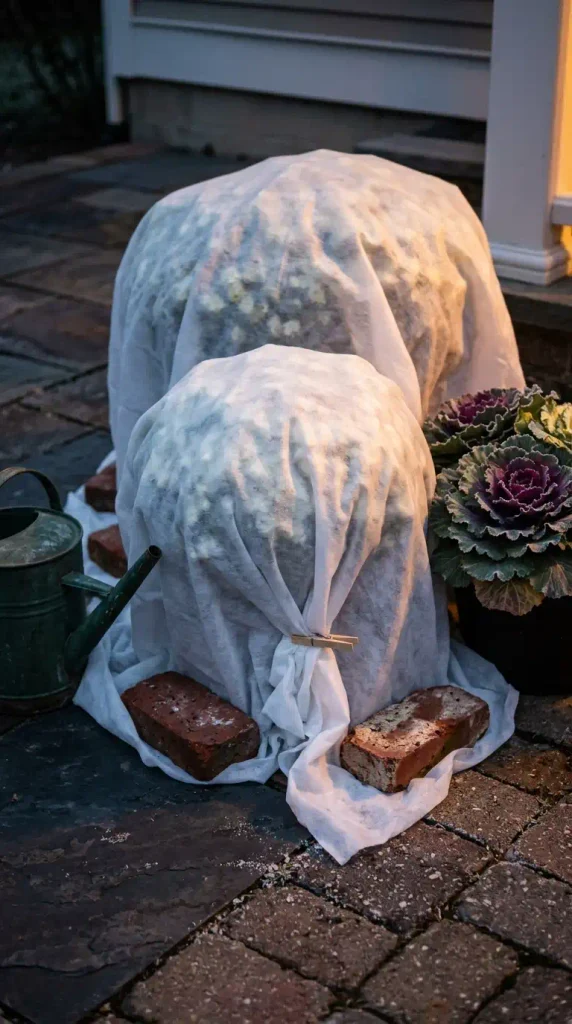
11. Pack a Frost Night Kit for About $23
A 32°F forecast is your cue to act before dark. The kit is small: a roll of breathable frost cloth, a few bricks or clothespins, and a full watering can. An Agfabric 10-by-25-foot frost cloth was listed at $23.04 at Home Depot this fall, enough to cover every pot on this list.
Water pots well in the afternoon before the freeze.
At dusk, drape the cloth down to the pot base and pin the edges with bricks or clothespins.
Pull it off the next morning once the frost melts, so plants get their light.
Pansies and kale rarely need it. Mums, radish seedlings, and anything still in bloom do.
12. Follow the Night-Temp Ladder, Not the Calendar
Calendars lie. A mid-October weekend in Minnesota and one in Georgia call for completely different jobs, but the overnight low on your weather app tells you exactly what’s next.
Check that low once a week and climb down the ladder:
Screenshot it and keep it next to your weather app. It works in any zone, on a balcony or in a backyard.
Fall Garden FAQ
What can I plant in a fall garden as a beginner?
Start with plants sold ready to go: garden mums, ornamental kale, and pansies in pots. Add spring bulbs like tulips and daffodils once nights stay under 60°F, and garlic cloves about three weeks before the ground freezes. If you want something to eat, Cherry Belle radishes mature in roughly 22 to 28 days where frost holds off long enough.
When should I start a fall garden?
Food crops like broccoli and cabbage go in 10 to 12 weeks before your first frost, so that window opens in mid to late summer. Decorative plants are more forgiving. Mums, kale, and pansies can go in through October across much of the US, and spring bulbs wait until nights stay under 60°F.
What flowers bloom in a fall garden?
Garden mums are the classic, with asters and sedum close behind. Pansies and violas bloom in cool weather and often come back in spring. Ornamental kale isn’t a flower, but its pink, white, or purple center fills the same role and keeps its color through frosts that finish off most mums.
How do I prepare my garden for winter in the fall?
Shred fallen leaves and spread them 2 to 3 inches deep over perennial beds. Plant garlic and spring bulbs before the ground freezes. Water pots well ahead of a hard freeze, and keep frost cloth ready for nights near 32°F. Leave a few seed heads and one leafy corner standing for birds and insects.
Can I grow a fall garden if I rent?
Yes, and pots make it easier. Every idea on this list works in containers: a mum, kale, and pansy trio, a bulb lasagna pot, a radish window box, and solar lights zip-tied to a railing. Nothing needs drilling or digging up a lawn, and every pot moves with you when the lease ends.
How long do mums last outside in fall?
A garden mum bought in tight bud usually gives several weeks of color on a sunny porch when it’s watered every other day. A run of frosts ends the flowers, though many garden mums are rated hardy in zones 5 to 9. Ornamental kale and pansies keep going long after the mums fade.
Start Small, Then Watch the Nights
Three pots on a step is a real fall garden. So is a radish box on a fourth-floor railing. Plant the trio this weekend, layer a bulb pot once your nights drop under 60°F, and hang the solar strand before November 1 takes your evenings.
After that, keep one eye on the overnight low and let the Night-Temp Ladder tell you what comes next. By the time the kale turns pink, you’ll have a corner worth sitting in.
Save this list to your fall garden board so the ladder is right there when the first frost warning lights up your phone.
Keep reading
More cozy nook ideas
 Fall Decor
Read →
Holiday Decor on a Budget: Where to Spend and Where to Save
If last December’s holiday decor money went to plastic picks, a glitter sign, and a box of red balls you were tired…
 Fall Decor
Read →
21 Vintage Pumpkin Ideas for Small Apartments, No Porch or Nails Needed
No porch, no mantel, and a lease that frowns on nail holes. You still get a fall corner. You need one shelf,…
 Fall Decor
Read →
14 Witchy Backyard Ideas for a Whimsical, Storybook Halloween
No old oak grove, no permission to dig, no money for a garden cottage. A witchy backyard still fits. You need one…
One Comment