
Cozy Winter Home Decor: What to Fix Before You Buy Another Throw

No renovation. No landlord permission. No thermostat argument with your roommate.
Most cozy winter home decor advice hands you a shopping list. This one starts with a diagnosis, because the reason your apartment feels bleak in February usually is not a missing blanket. It is three numbers nobody mentions. Get those right and the throws you already own start doing their job. Get them wrong and you can pile sheepskin on every surface while the room still reads cold at 4 pm.
Here is the order I would work in, starting with the part that costs nothing.
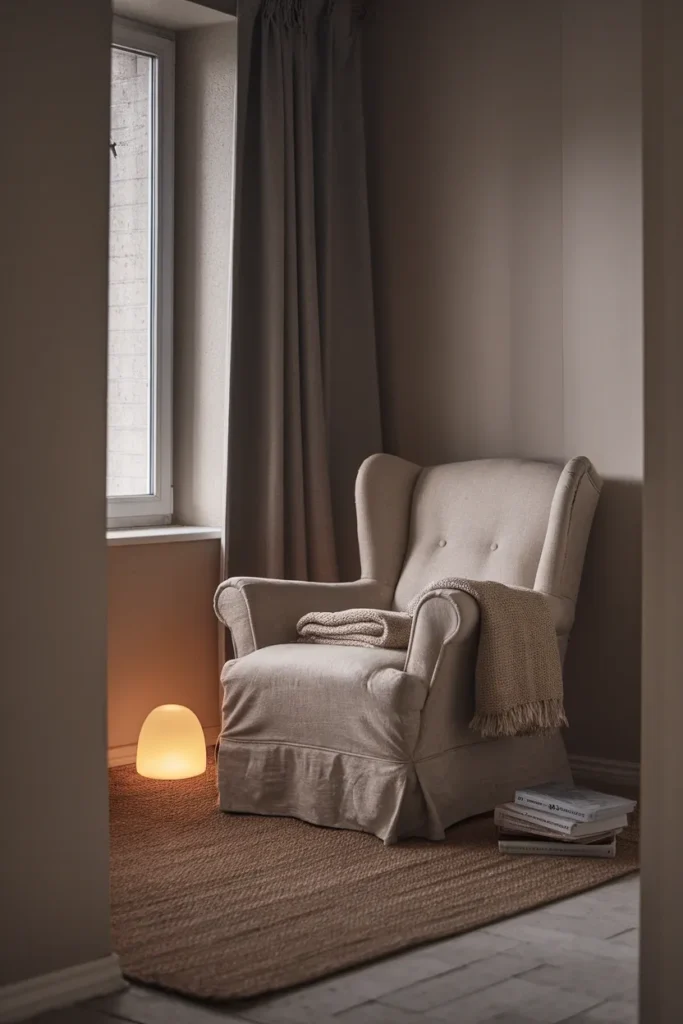
Start Here: Three Fixes That Come Before Shopping
If you do nothing else this week, do these three, in this order. They take an afternoon between them and two of the three cost nothing at all.
- Raise the humidity in the room you sit in most. Dry heated air is the single most common reason a room feels colder than the thermostat claims. This is fix number one because it changes how the room feels within about two hours, and no decor purchase can compete with that.
- Put light below eye level, and put it in at least three places. One ceiling fixture at 4000K will undo a thousand dollars of textiles. Three warm sources at knee, hip and shoulder height will rescue a room with nothing else in it.
- Warm the floor before you warm the sofa. Cold radiates up. A rug under your feet does more perceived work than a fourth throw pillow, and it is the fix people skip because it costs the most.
Everything below is the detail behind those three, plus what to do once they are handled.
The 68/40/2700 Rule
Three numbers decide whether a room reads warm before you buy a single decorative object. Memorize these and most winter decor problems solve themselves.
68 degrees Fahrenheit on the thermostat. 40 percent relative humidity in the room. 2700 Kelvin in every bulb you can see from where you sit.
Miss any one of them and the other two work harder than they should. Hit all three and a plain room with a chair and a lamp will feel better than a styled room that got the numbers wrong.
| The number | Why it matters | Renter-safe fix | What it costs |
|---|---|---|---|
| 68°F air temp | The Department of Energy notes you can save as much as 10 percent on heating by setting back the thermostat eight hours a day. Setback works only if the other two numbers hold. | Set back while you sleep and while you are out, not while you are sitting there reading | Free |
| 40% humidity | EPA puts the healthy indoor band at 30 to 50 percent. Winter forced-air heat routinely drives a room well below it, and dry air reads as colder skin | Small cool-mist humidifier in the one room you use, or a wide bowl of water near the radiator | $0 to $40 |
| 2700K bulbs | Warm-white light shifts perceived comfort more than any textile. Mixed color temperatures in one room are what make a space feel institutional | Swap the bulbs you can see. A Philips A19 soft white 2700K four-pack covers most lamps in a small apartment | Under $20 typically |
That table is the whole article compressed. The rest is how to execute it without wasting money.
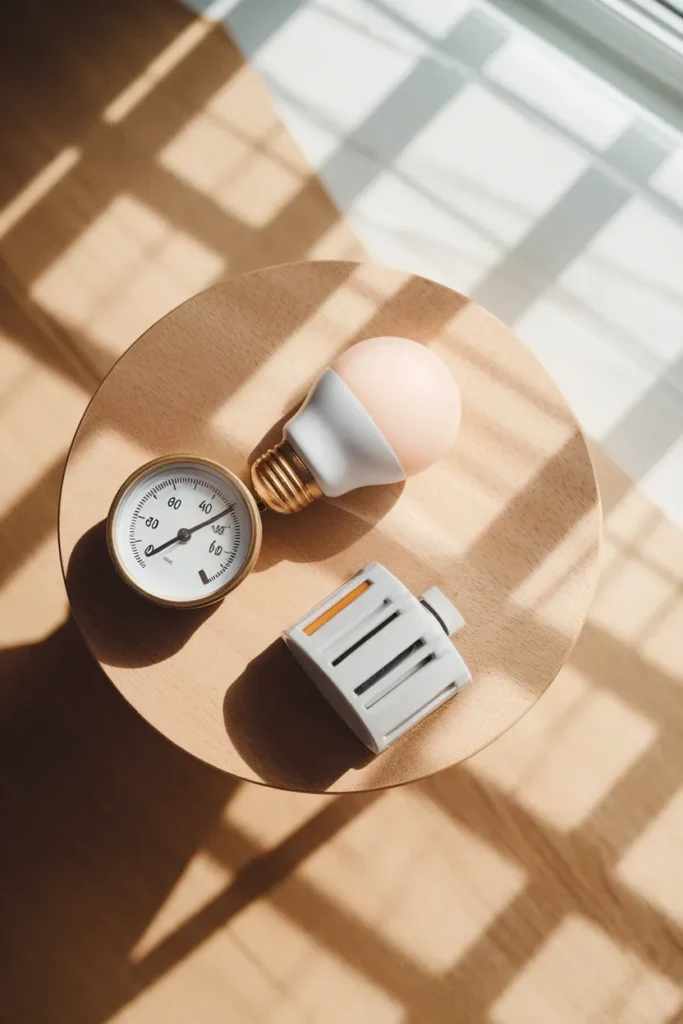
Why a 70-Degree Room Still Feels Cold in January
Here is the thing almost nobody writing about winter decor will tell you. Your skin does not read air temperature on its own. It reads temperature plus moisture plus what is radiating at you, all at once.
When your furnace runs, it heats air that was already cold and dry, and relative humidity in the room drops hard. The EPA’s indoor humidity guidance for homes puts the sensible range at 30 to 50 percent, ideally, with 60 percent as the upper limit. A heated apartment in a cold snap can sit well under that band for weeks.
Dry air pulls moisture off your skin faster, which cools you. That is why 70 degrees in July feels different from 70 degrees in January in the same room.
You notice the side effects before you notice the cause. Static shocks off the door handle. A scratchy throat by day three. Wood furniture that suddenly develops a hairline gap. Those are humidity symptoms, and every one of them is telling you the room is going to feel cold no matter how many pillows you add.
The fix, cheapest first. Run a small cool-mist humidifier in the room you actually sit in, not the hallway. Leave the bathroom door open after a shower instead of running the fan the whole time. Dry laundry on a rack indoors. If you have old cast-iron radiators, a wide ceramic bowl of water on the windowsill does real work for the price of the bowl.
What goes wrong if you skip it. You keep nudging the thermostat up a degree at a time, your bill climbs, and the room still feels thin. That is the failure mode, and it is expensive.
One honest limit. Do not chase 50 percent. Push a poorly insulated rental too humid and you get condensation on the coldest window, then mildew on the frame. Forty is the target for a reason.
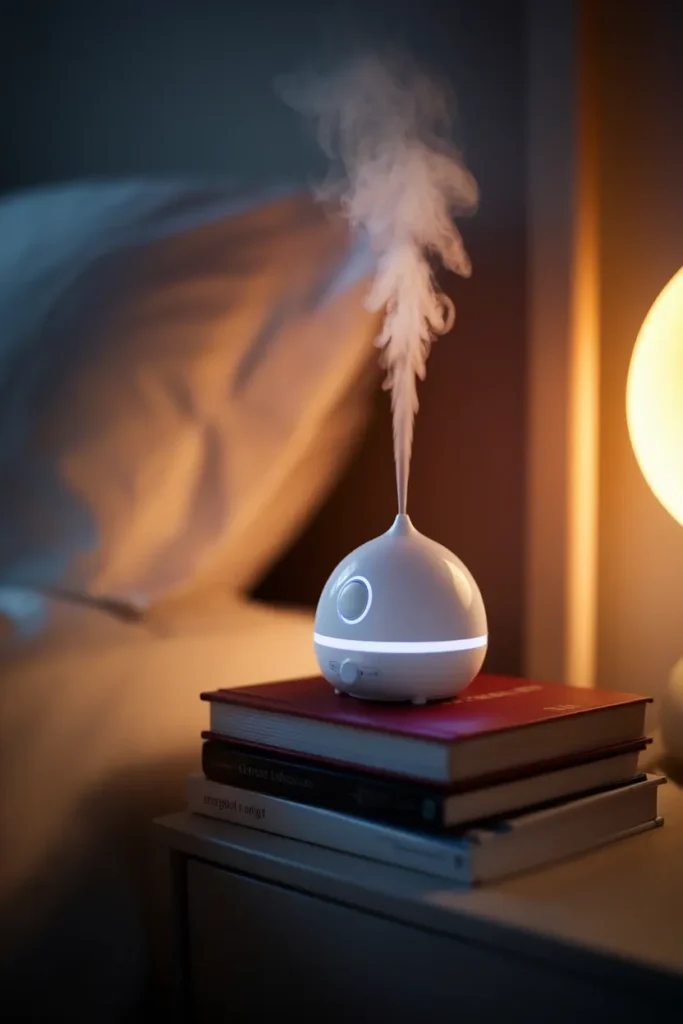
Winter Light Has Two Jobs, and Most Rooms Only Do One
Every winter decor article says soften the lighting. That advice is half right and it is quietly making some rooms worse.
Light in winter has two separate jobs and they pull in opposite directions. After dark you want low, warm, dim light for atmosphere. In the morning you want genuinely bright light, because between December and February most of us are getting a fraction of the daylight we get in June.
For scale on how big that gap is: the National Institute of Mental Health describes light therapy for winter-pattern seasonal depression using a box at 10,000 lux, which is roughly twenty times ordinary indoor lighting, for 30 to 45 minutes each morning. You do not need a therapy box to take the point. Ordinary indoor light is dimmer than we think, and the fix for a bleak-feeling January morning is not another candle.
So split the day.
Mornings: open every curtain the moment you get up, even on a gray day. Sit near the window while you drink your coffee. If your one window faces a wall, put your brightest lamp on a timer so the room is already lit when you wake.
After 4 pm: everything drops to 2700K and everything drops below eye level. That is when the linen throw and the low lamp earn their keep.
If the winter months regularly bring low mood, oversleeping, or withdrawal that lasts for weeks, the NIMH guidance on winter-pattern seasonal affective disorder is worth reading, and it is worth raising with your doctor. Decor helps a room. It is not treatment, and I am not a clinician. Talk to a qualified US healthcare professional if this sounds like your winter rather than just your living room.
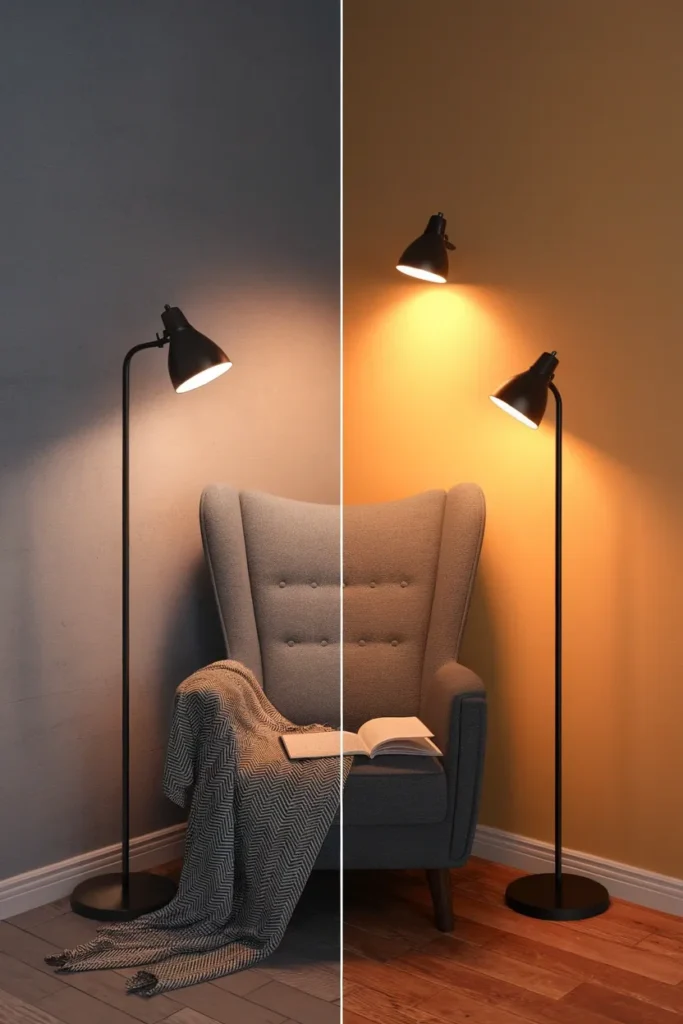
The Lamp Order: Three Sources, All Below Eye Level
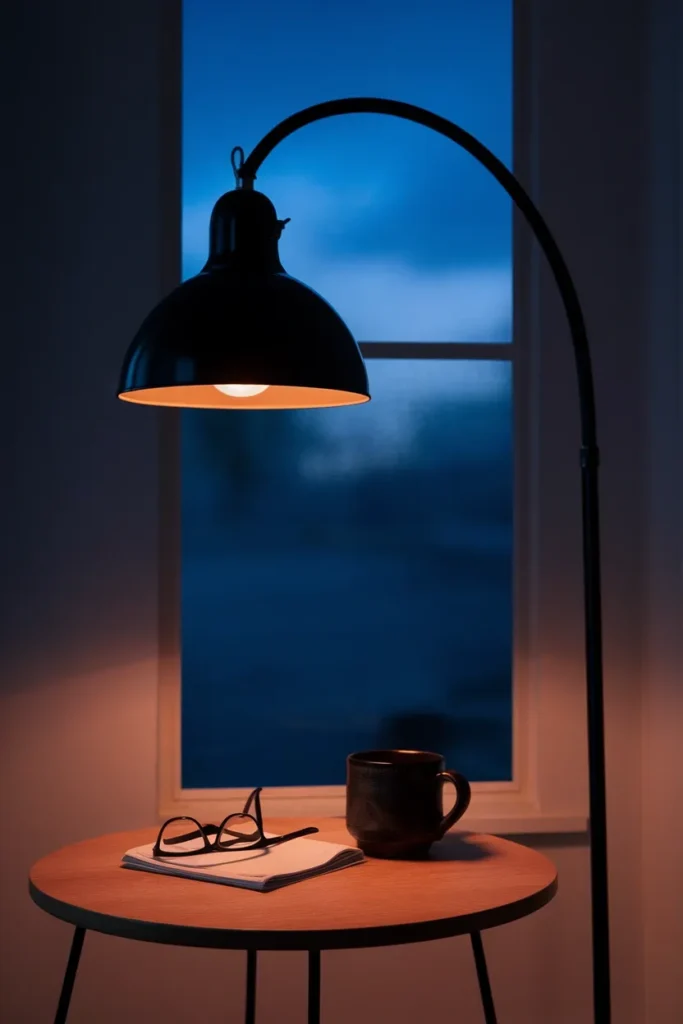
Once the color temperature is right, the placement does the rest. Three sources, three heights, zero ceiling fixtures after dark.
Knee height. A floor lamp beside the chair, shade bottom roughly level with your shoulder when seated so the bulb never glares into your eyes. IKEA’s TÅGARP reading lamp was listed at $17.99 in August 2026 and the RANARP at $69.99, which is the honest price range for something you will keep.
Hip height. A table lamp on the side table, or a plug-in sconce on the wall if you have no surface to spare. Plug-in models matter for renters because they need no wiring and no holes beyond a small hook.
Low and flickering. Candles, or fairy lights tucked behind something rather than strung across a wall. This is the layer that reads as warmth rather than illumination.
Getting all three right is fiddly, and there is more to say about dimmers, dim-to-warm bulbs and matching Kelvin across a room than fits here. If you want the full version, these warm lighting ideas for a small apartment go through the bulb math properly.
The failure mode: buying good-looking lamps and leaving the overhead light on anyway. If the ceiling fixture is on after dark, the lamps are decoration.
The Cold Surface Problem, or Why the Prettiest Seat Is the Coldest
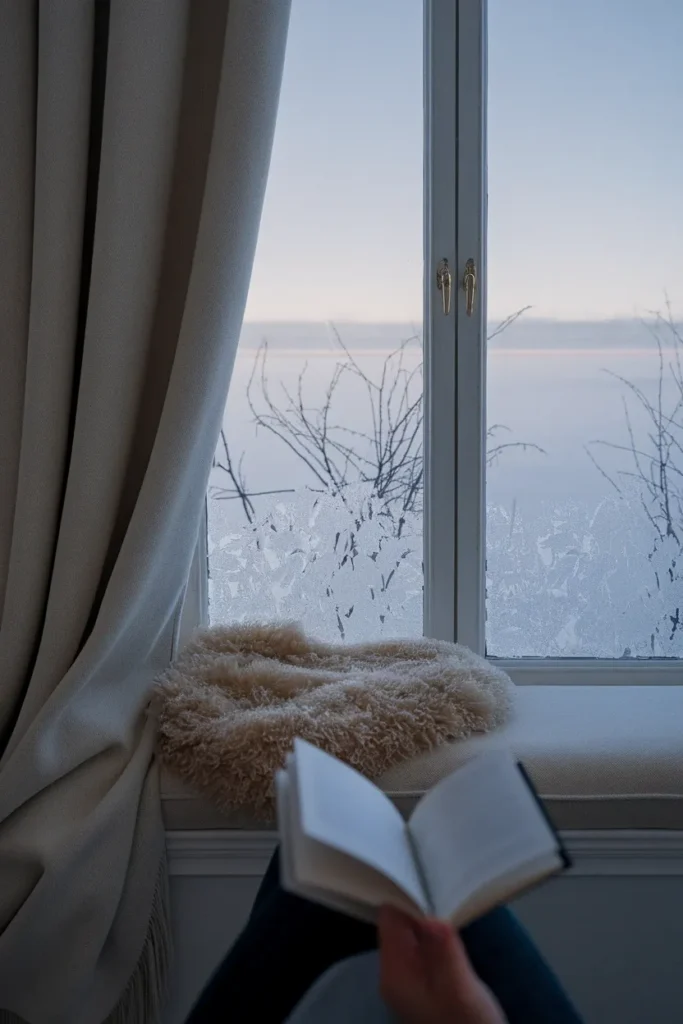
Sit in a chair eighteen inches from a single-pane window on a January night and you will feel cold even when the thermostat says 70. Move the same chair four feet into the room and you feel fine. Nothing about the air changed.
Your body radiates heat toward cold surfaces. A cold pane of glass, a cold exterior wall, a bare floor over an unheated space. The bigger and colder the surface and the closer you sit to it, the more heat leaves you, and no amount of styling fixes it.
This matters enormously for reading corners, because we all put them exactly where the problem is worst. By the window. Under the eaves. In the drafty bay.
Four fixes, cheapest to priciest:
- Close the curtains at dusk. Free, and it puts a layer of still air between you and the glass. This one habit outperforms most purchases in this article.
- Hang thermal or lined curtains on a tension rod. No drilling, no deposit risk, and heavier fabric traps more air.
- Move the seat. Boring advice, works instantly. Angle the chair so the window is beside you rather than behind you.
- Put something between you and the floor. A rug, or a sheepskin over the seat, or both.
The trade-off nobody mentions: heavy blackout curtains that fix your cold evenings also block the morning light you just read about needing. Layer sheers behind them, open the heavy panel at breakfast, close it at dusk. Two curtains, two jobs.
Layer Textiles Floor First, Not Sofa First
Almost everyone layers in the wrong order. Sofa, then pillows, then throws, then maybe a rug in spring when the budget recovers. Flip it.
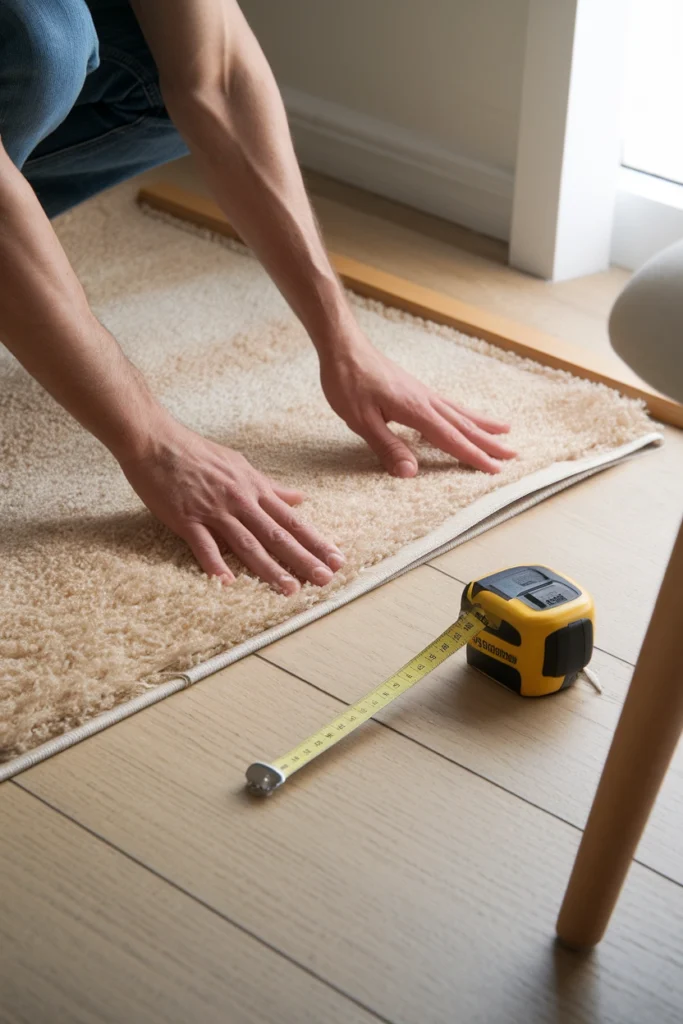
Floor. Bare floor in a cold apartment is the surface stealing the most comfort, and it is the one you are in direct contact with. Real August 2026 prices at IKEA: the TIPHEDE flatwoven at 7 feet 3 inches by 9 feet 2 inches was $39.99, the LOHALS jute at 5 feet 3 inches by 7 feet 7 inches was $129.99, and the STOENSE low pile at 7 feet 10 inches by 10 feet was $229.99.
A note on jute, since Pinterest loves it. Jute grounds a room and looks great in photos. It also feels like a doormat under bare feet at 6 am, which is the opposite of what you want in February. Save jute for the entryway and put something with pile where your feet actually land.
Seat. One throw you want to touch beats three you do not. IKEA’s range in August 2026 ran from the VITMOSSA at $2.99 for a 47 by 63 inch fleece up to the MYRULL at $49.99. The cheap fleece is fine for a spare. For the one you reach for nightly, the $25 to $50 band is where the fiber gets good enough to matter.
Window. Curtains last, because by now you know whether you need them for warmth, for light control, or both.
Sensory check that costs nothing: clap once in the room before you add the rug, then again after. That drop in echo is the sound of a room getting warmer, and it is doing as much for the feeling as anything you can see.
Build One Warm Corner Instead of Warming the Whole Room
Here is the reframe that makes winter decorating affordable. You cannot make a whole apartment feel like a retreat on a $200 budget. You can absolutely make four square feet of it feel that way, and four good square feet changes how you feel about the whole place.
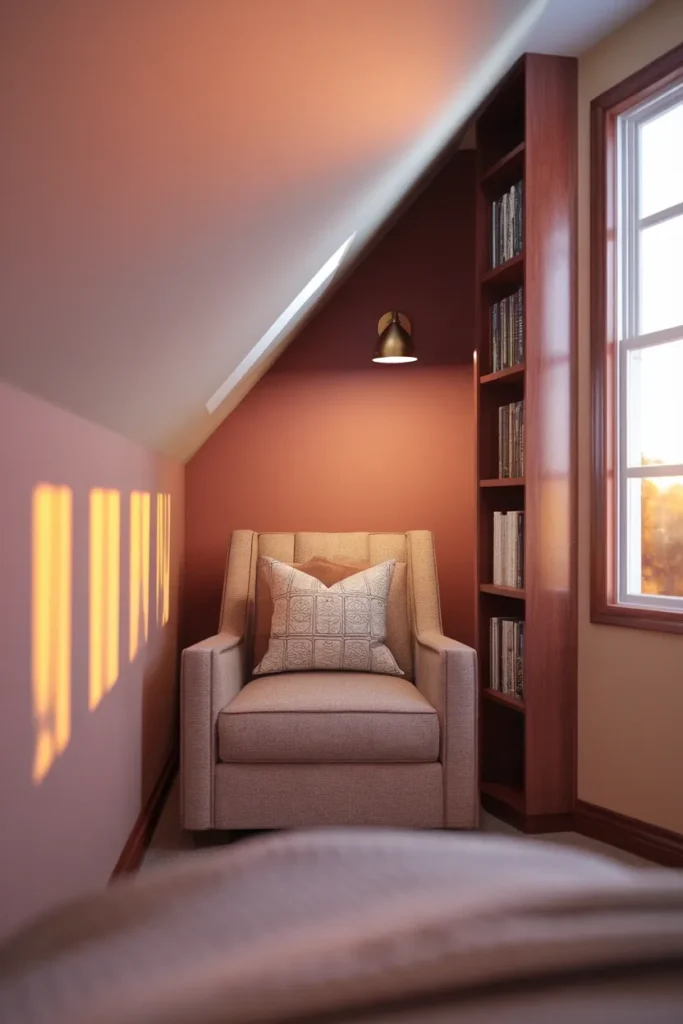
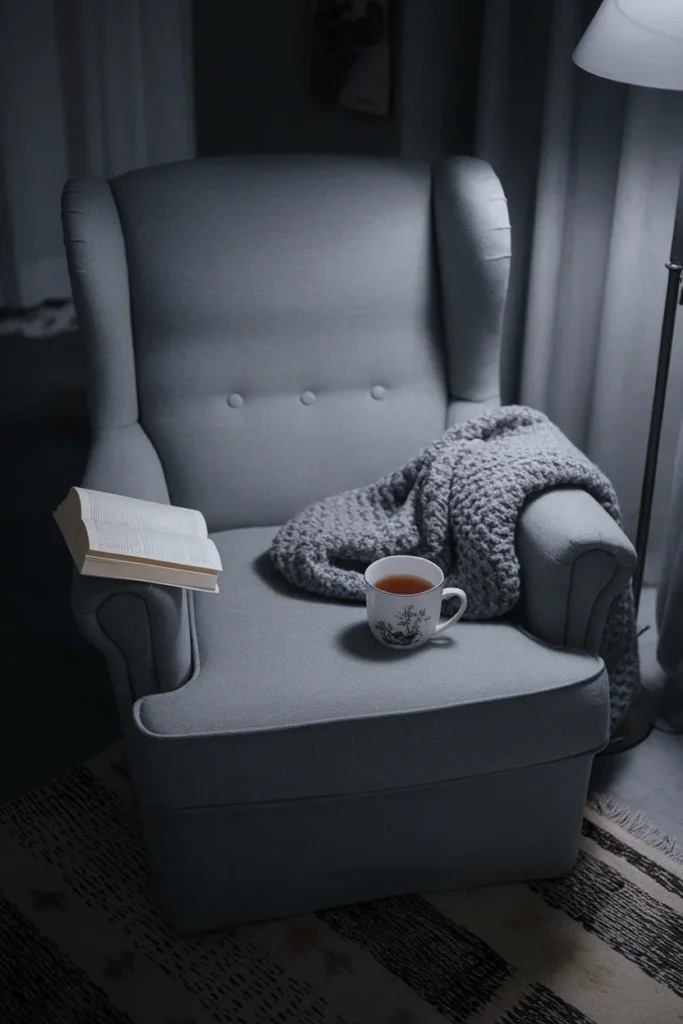
Pick the corner you already drift toward. Then give it the full treatment while the rest of the apartment stays ordinary: a chair you can sink into, warm light at two heights, something soft underfoot, a surface within arm’s reach for a mug, and your TBR pile where you can see it.
That last one is not decoration. A visible stack of books is what turns a nice chair into somewhere you actually go.
Winter is peak season for this, and the Danish approach is built around exactly this idea of a contained spot rather than a whole warmed room. These hygge reading nook ideas for long evenings walk through twelve versions of it, including a starter kit that comes in under $250.
The trade-off: floor cushions and poufs photograph well and cost little. Forty minutes into a real reading session, your lower back will tell you what it thinks of them. If the corner is meant for actual use rather than actual photos, spend the money on back support and save elsewhere.
What Carries Over From Fall, and What to Retire January 2
Half of good winter decorating is subtraction. The other half is knowing which autumn pieces were seasonal and which were just warm.
Keep working all winter: wool and boucle textures, warm 2700K bulbs, anything in oatmeal, clay, mushroom or camel, candles, baskets, everything wooden.
Retire on January 2: orange and rust in every form, anything gourd-shaped, dried corn and wheat, dark red berries, plaid in holiday colorways, cinnamon-forward scents.
The tell: if a piece is warm because of its texture, it stays. If it is warm because of its color story, and that color story is autumn, it goes.
The room-by-room version of this handoff, including what to skip entirely, is laid out in this guide to cozy fall home decor room by room, and reading it backward is a decent winter checklist.
The failure mode here is real and common. You take down the tree, the room looks bare, panic sets in, and you buy snowmen. Now it is February and your living room is a seasonal aisle. Leave the room slightly bare for a week first. The bareness usually resolves into relief.
Winter Color That Isn’t Christmas Leftovers
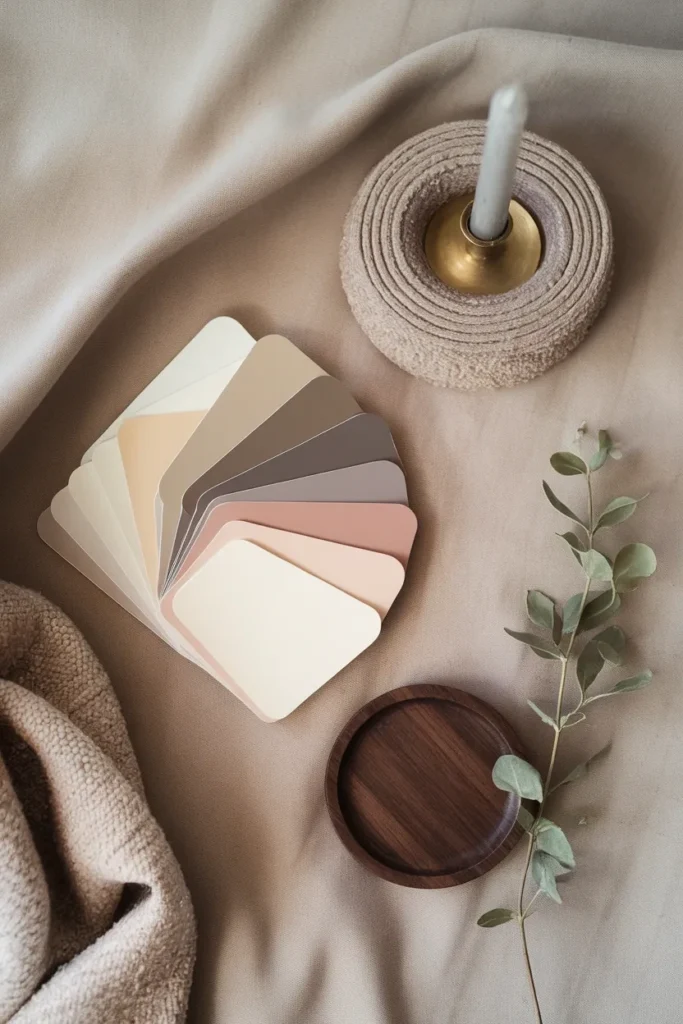
The palette that reads warmest in January is not red and green, and it is not stark white either. It is the range between: oatmeal, mushroom, warm gray, clay, and cream, with wood tones doing the heavy lifting and one metal repeating three times.
Make it brass. Pinterest’s own 2026 trend data shows searches for “brass aesthetic” up 35 percent year over year, and brass is the one metal that stays warm under 2700K light. Chrome and matte black both go cold and slightly clinical the moment the lamps come on. If you own brass, repeat it: a lamp base, a picture frame, a candlestick. Three touches read as intentional. One reads as an orphan.
For green, skip the holiday evergreen and go to eucalyptus, olive or a plain trailing pothos. Living green in January says the year is moving. Fake pine says you did not finish taking down the tree.
One deliberate omission: Pinterest’s other big 2026 predictions, the circus interiors and the celestial and alien-core palettes, are trending hard and they are wrong for a warm winter room. Trend data is not an instruction.
The 20-Minute Winter Reset
When the room feels wrong and you cannot say why, run this before you buy anything. It works in almost any room and it costs nothing.
- Minutes 1 to 3. Turn off the ceiling light. Sit down. Notice what you can now see and what disappeared.
- Minutes 4 to 7. Check every visible bulb. Any that are not 2700K go on the swap list. Mixed Kelvin is the most common invisible problem in a room.
- Minutes 8 to 10. Close the curtains. Put your hand flat on the window glass, then on the wall beside it. Whichever is colder is where your comfort is leaking.
- Minutes 11 to 14. Move one seat away from the coldest surface. Just try it. You can move it back.
- Minutes 15 to 17. Clear every horizontal surface in your eyeline, then put back only what you use. Winter rooms feel small when they are busy.
- Minutes 18 to 20. Put one soft thing where your feet land and one warm light below eye level. Sit back down.
If the room still feels cold after all six steps, the answer is humidity, and you are back at the top of this article.
Cozy Winter Home Decor FAQs
How do I decorate for winter without it feeling like Christmas all over again? Strip the holiday color story and keep the textures. Red, green, plaid, metallic ornaments and anything gourd-adjacent go into the bin. Wool, sheepskin, candles, wood, brass and every neutral stay. Winter decorating is mostly about what you take away in the first week of January.
How can I make a room feel warmer without turning up the heat? Three moves, in order. Raise the humidity toward 40 percent. Close the curtains at dusk to put a layer of still air against cold glass. Get something soft between your feet and the floor. Those three change perceived temperature more than any decor purchase.
What colors make a room feel warmer in winter? Warm neutrals beat both bright colors and stark white: oatmeal, mushroom, clay, cream and warm gray, with wood tones and brass. Brass in particular stays warm under 2700K bulbs, while chrome and matte black go cold once the lamps are on.
What are some budget-friendly winter decorating ideas? The cheapest high-impact moves are free or close to it. Closing curtains at dusk costs nothing. Turning off the overhead light costs nothing. A bowl of water near a radiator costs nothing. After that, warm bulbs and one rug where your feet land will outperform anything else at the same price.
Does a humidifier actually make a room feel warmer? It makes it feel warmer, which is what you care about. Dry air pulls moisture off your skin faster and that cools you, so a room at 30 percent humidity reads colder than the same room at 40 percent at the identical air temperature. Aim for the middle of the EPA’s 30 to 50 percent band and stop there, since over-humidifying a drafty rental causes condensation on cold windows.
How long should winter decor stay up? Through February, then start subtracting. Winter neutrals and textures can carry into early March, but sledding scenes, snowflakes and anything explicitly icy start feeling stale the moment the light gets longer. Watch the daylight rather than the calendar.
What should I do with my decor after Christmas? Take everything down, then leave the room slightly bare for a full week before you buy replacements. Most people panic at the emptiness on day two and buy filler they do not want by March. Bareness after the holidays is usually relief in disguise, and a week is long enough to tell the difference.
Start With the Bulbs Tonight
You do not need a plan for the whole apartment. You need one corner and three numbers.
Tonight, turn off the overhead light and see what the room looks like without it. This weekend, swap the bulbs you can see to 2700K and put a humidifier in the room you sit in most. Next payday, buy the rug.
That is the whole order, and it works in a studio as well as it works in a house.
Once the three numbers are handled, the fun part is deciding what that one warm corner should actually be. Pick the chair you already drift toward and build outward from there.
Keep reading
More cozy nook ideas
 Fall Decor
Read →
Fall Decor
Read →
Fall Door Decor on a Budget: Where to Spend and Where to Save
If your fall door every year is a wreath that sheds on the mat, two mums that are crispy by Halloween, and…
 Fall Decor
Read →
Fall Decor
Read →
12 Thanksgiving Tablescape Ideas for Small Spaces (That Still Leave Room for the Food)
Twenty-four inches. That’s how much table edge one person needs to eat without bumping elbows, and it’s the number most Thanksgiving tablescape…
 Fall Decor
Read →
Fall Decor
Read →
18 Fall Coffee Bar Ideas for Sweater-Weather Evenings
No counter space to spare, no espresso machine, no landlord permission needed. This fall coffee bar runs on three pieces: a slim…