
Autumn Bedroom Decor: 11 Swaps That Warm a Small Room by Sunday

No bay window. No permission to paint. No four-figure budget. Good autumn bedroom decor doesn’t need any of those, and if you rent a 700 square foot apartment with one radiator and a ceiling light you hate, this is written for you specifically.
Here’s the part most guides skip. Five of the eleven swaps below cost under $50 combined, and the single highest-impact one costs $4.99 and takes three minutes. The other six build on it.
I’m going to give you real product numbers, real dimensions, and one lighting rule that explains why your bedroom still feels cold even after you bought the throw blanket.
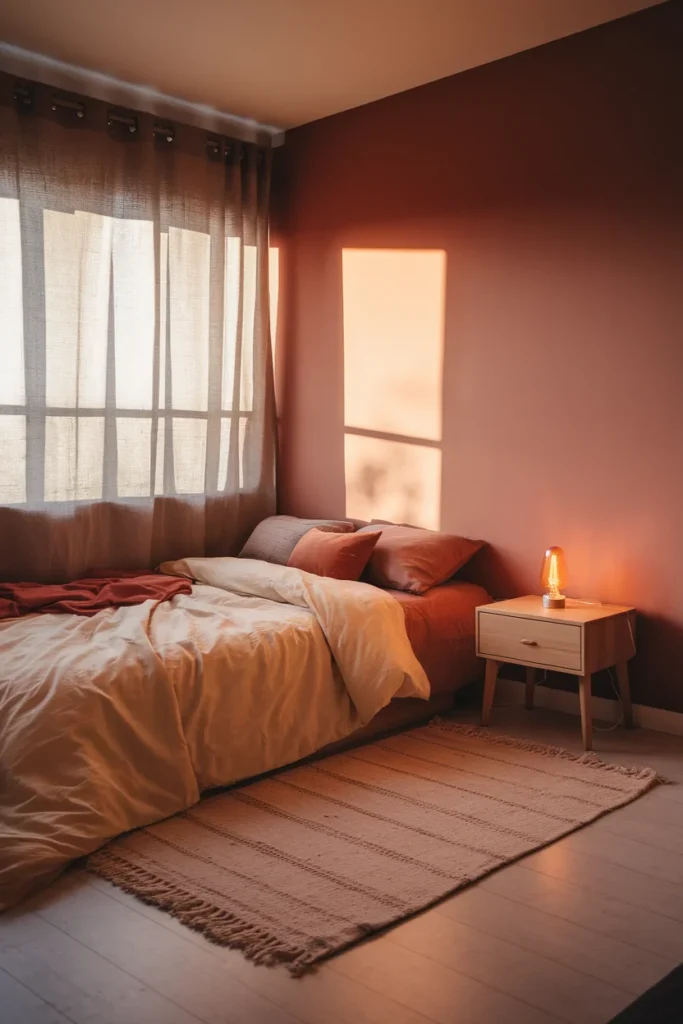
The Five-Piece Autumn Bedroom, Totaled
Before the ideas, the cart. This is what the room actually needs, in the order it should happen, with prices I pulled from IKEA’s US site in August 2026.
| Order | The swap | Real example | Price | Time |
|---|---|---|---|---|
| 1 | Warm the light | IKEA SOLHETTA E26, 2700K, 800 lumen, 5W, 2-pack | $4.99 | 3 min |
| 2 | Soften the floor | IKEA TIPHEDE flatwoven cotton rug, 3’11” x 5’11”, machine washable | $14.99 | 5 min |
| 3 | Add a second light | IKEA SKURUP wall lamp, 4″ shade, 6’3″ cord | $24.99 | 20 min |
| 4 | Layer the bed | one heavier throw, folded across the bottom third | $20 to $45 (estimate) | 2 min |
| 5 | Seal the window | lined curtain panel pair on a tension rod | $25 to $60 (estimate) | 15 min |
Verified subtotal on the first three: $44.97. Realistic all-in: $90 to $150 depending on what your throw and curtains cost.
Two flagged as estimates because throw and curtain pricing swings hard by retailer and I’d rather say “estimate” than quote you a number I didn’t confirm.
Notice what isn’t on the list. No pumpkins, no garland, no wall art. Those come after the room is warm, and honestly, they’re optional.
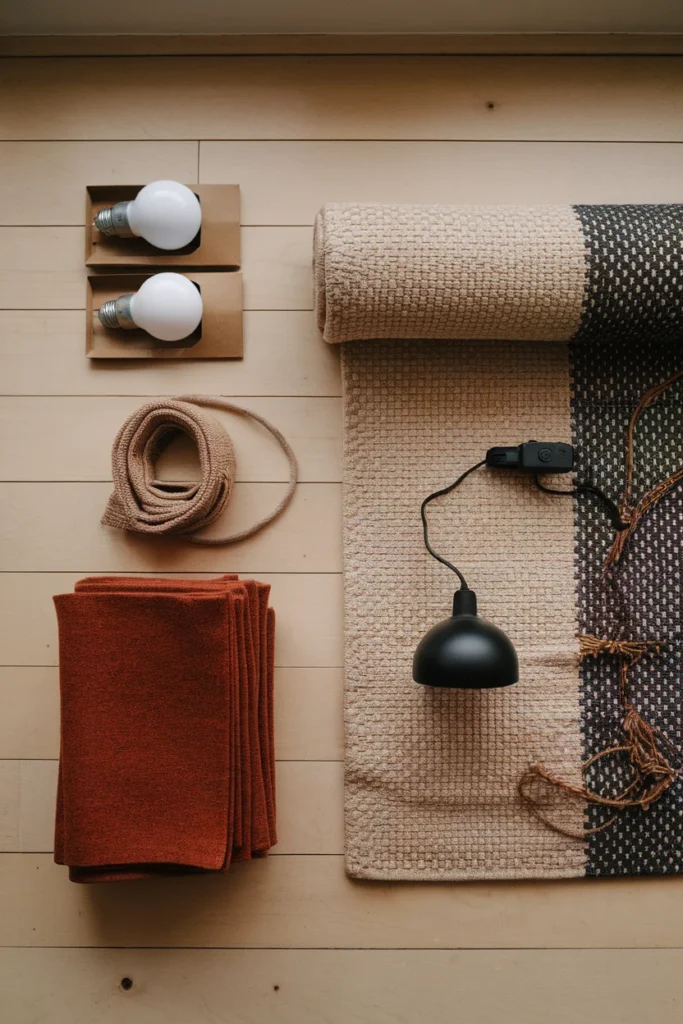
Bedroom Lighting Fails Because You Are Lying Down
Here’s the thing nobody writing about fall bedrooms seems to have tested from the pillow.
Every other room in your home gets designed for a person who is standing or sitting upright. A bedroom doesn’t. You spend most of your conscious time in there with your head about 24 inches off the mattress, looking up and sideways. Shade openings that aim politely downward when you’re on your feet aim straight into your eyes when you’re horizontal.
So run what I’ll call the Pillow Test. Turn on every lamp in the room, lie down in your actual sleeping position, and open your eyes. If you can see the bulb, the filament, or a bright hot spot on the underside of a shade, that fixture is the reason the room reads harsh no matter how many blankets you pile on.
Three fixes, cheapest first:
- Raise the shade’s bottom edge above your sightline, or lower the whole lamp. A bedside lamp whose shade bottom sits above 26 inches from the mattress surface usually clears a reclined eyeline on a standard bed.
- Swap a clear bulb for an opal one. Clear glass shows the filament. Opal diffuses it. The SOLHETTA above comes in both, and the opal costs the same.
- Move the light to the wall. A wall lamp mounted beside the headboard throws light down onto the page instead of out into the room.
Now the color of that light. Per the Department of Energy lighting terms guide, warm light falls at 2700 to 3000 Kelvin, and the DOE notes plainly that “warm light is preferred for living spaces because it is more flattering to skin tones and clothing.” Their recommended band for most indoor general and task lighting is 2700 to 3600K.
Buy 2700K. Not 3000K, not 4000K. In a bedroom the difference between 2700 and 4000 is the difference between a hotel lobby at 9 pm and a dentist’s waiting room.
Failure mode: you do all ten other swaps and leave one 5000K daylight bulb in the ceiling fixture. That single bulb overrides everything. It’s the most common reason a fall bedroom refresh doesn’t land.
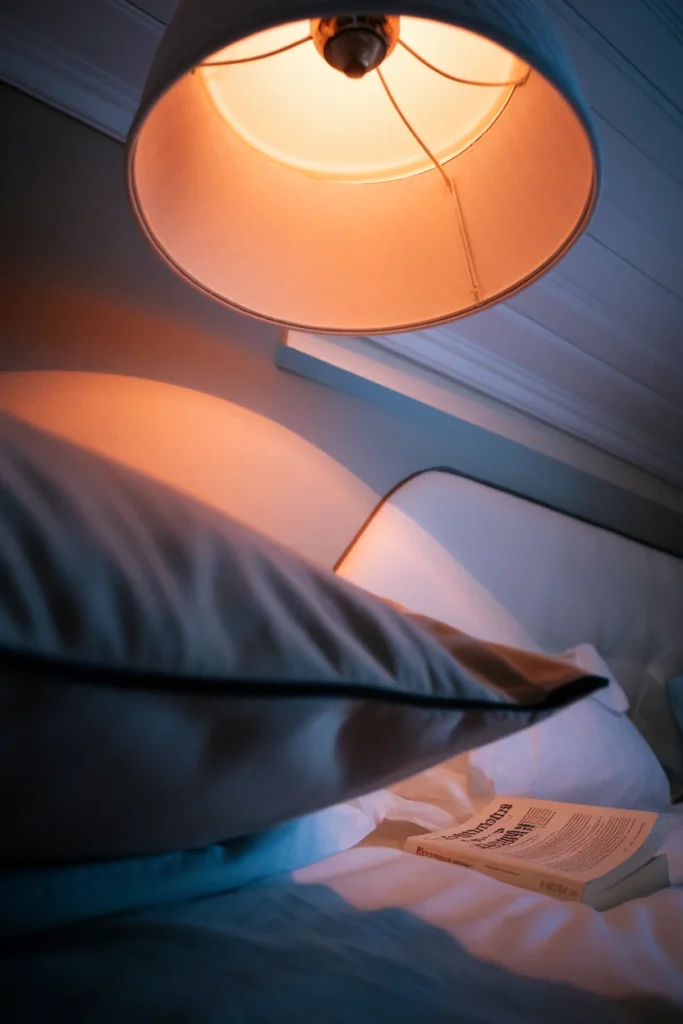
Three Weights on the Bed, Not Three Patterns
Most autumn bedding advice tells you to add texture. That’s true and also useless, because it doesn’t tell you how much or where.
Think in weights instead. You want three, and only three.
Weight one is what you already sleep under. Leave it.
Weight two is a flat, quiet layer: a cotton quilt or a washed linen coverlet, pulled up to about two thirds of the bed’s length. It reads as intention rather than clutter.
Weight three is the heavy one, and it goes across the bottom third of the bed. A wool or boucle throw around 50 by 60 inches folded lengthwise into a band roughly 18 inches deep. That band is the whole trick. It’s what makes a bed photograph warm and, more usefully, what you actually pull over your feet at 11 pm.
Pattern rule to go with it: one pattern maximum across all three weights. If your quilt has a stripe, your throw is solid. A sherpa or boucle surface counts as texture, not pattern, so it stacks fine on anything.
Failure mode: four pillows in four different autumn prints. The bed stops reading as a place to sleep and starts reading as a display, and you’ll end up dumping the pillows on the floor every night. Two sleeping pillows plus one lumbar is plenty.
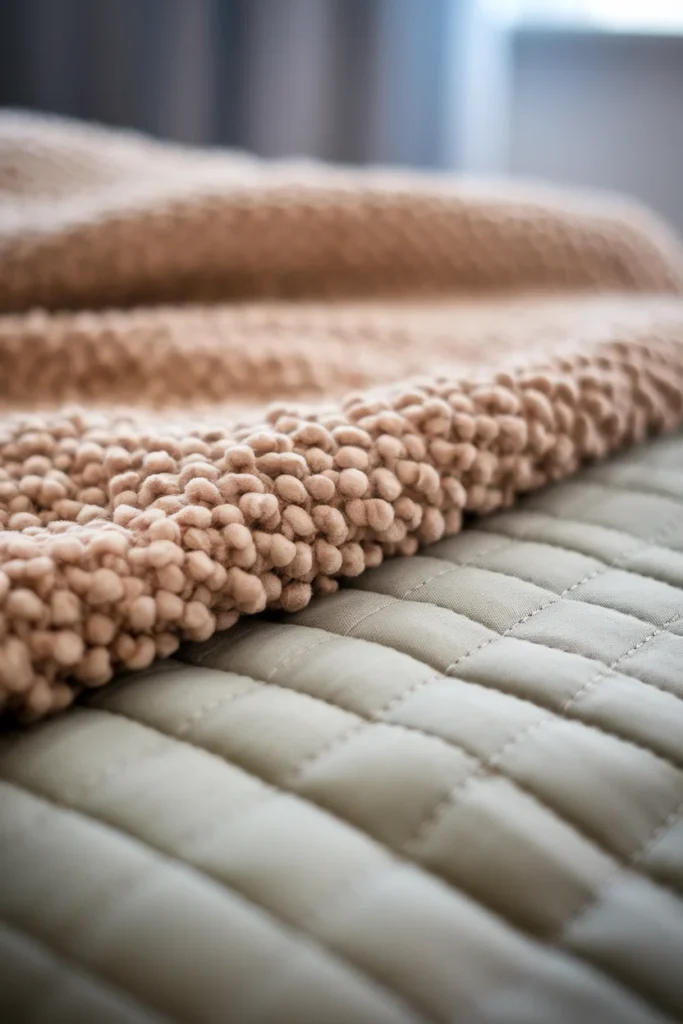
The Nightstand Triangle
A nightstand goes wrong the same way every time: everything on it is the same height, so it reads as a pile.
Fix it with three objects at three distinct heights, arranged so they’d form a triangle if you looked straight down.
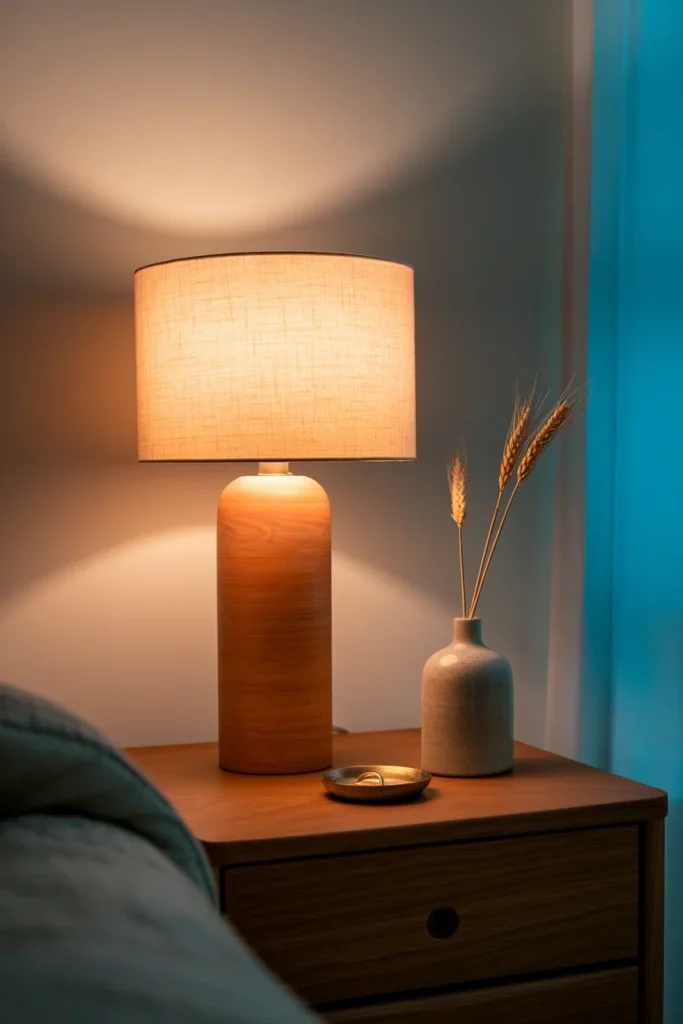
- Tall (12 to 20 inches): the lamp. It anchors the back corner.
- Medium (5 to 8 inches): a stoneware mug, a small vase with three stems of dried grass, a stack of two books stood on end.
- Low (under 3 inches): a small dish for earrings, a coaster, a single flat candle.
That’s it. Three heights, one surface, nothing else. If a fourth thing wants on, something leaves.
The reason this works has nothing to do with autumn and everything to do with how your eye moves. Equal heights make a flat line and your eye slides off. Staggered heights make your eye step down, which registers as arranged.
Seasonal version: swap the medium object. Dried wheat or bittersweet in a small vessel from roughly September through November, then a sprig of evergreen in December. The lamp and the dish never change.
Failure mode: using a real pumpkin as the medium object. A small pie pumpkin on a warm nightstand goes soft in about two to three weeks and the underside stains the wood before you notice. Put it on a dish, or use a dried element instead.
The 30-Inch Reading Corner That Fits in a Bedroom
Pinterest logged searches for “cozy reading room” up 140 percent in its fall trend reporting, and I’d argue the bedroom is where most people should actually build one. You’re already going there at night. The lamp is already there.
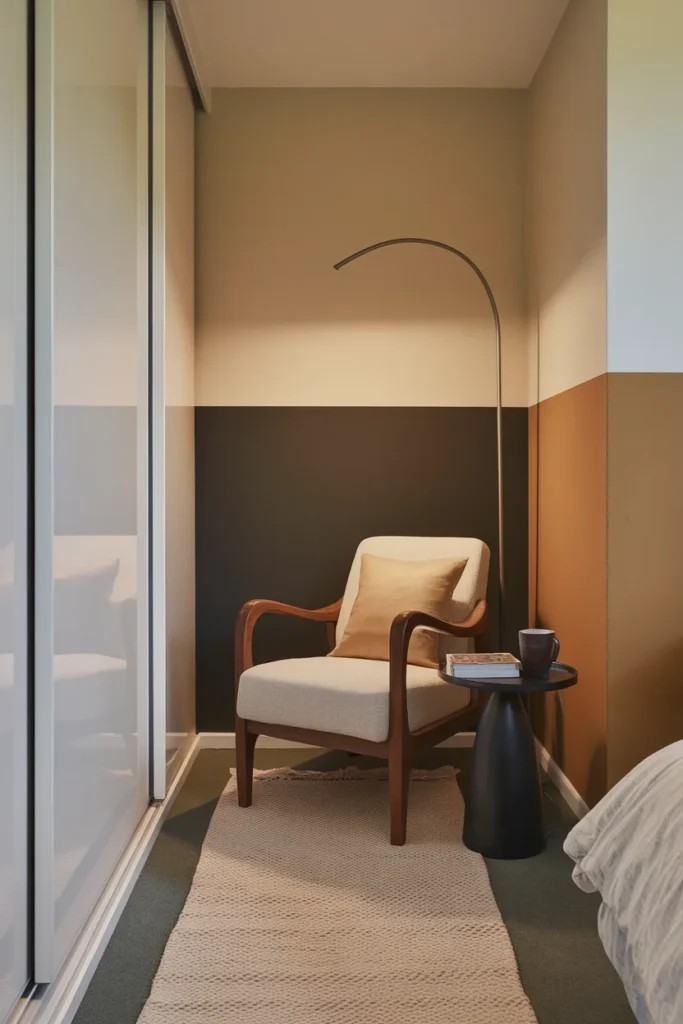
You need less floor than you think. Thirty inches of wall width is genuinely enough.
For scale, here are real dimensions rather than vague reassurance:
| Piece | Real example | Footprint | Note |
|---|---|---|---|
| Chair | IKEA POÄNG armchair | 26 3/4″ W x 32 1/4″ D | Seat height 16 1/2″, $249.00 |
| Side table | any 14″ to 16″ round | 14″ to 16″ diameter | Should sit within arm’s reach |
| Light | wall-mounted or floor | near zero floor use | Wall mount saves the most space |
A POÄNG at 26 3/4 inches wide plus a couple inches of breathing room on each side lands you at about 30 inches of wall. That fits at the foot of most beds or in the dead space beside a closet door.
Then apply the 18-inch reach rule: the top of your side table should sit within 18 inches of where your hand naturally rests on the chair arm. Farther than that and you’ll lean, and after a week of leaning you’ll stop putting your tea down and the table becomes a shelf for mail.
Sit in the chair before you buy the lamp. That 16 1/2 inch seat height puts an adult’s eyeline around 40 inches off the floor, which is precisely the band where most bedside shades throw glare. The Pillow Test applies here too, just sitting up.
Renter note: if the wall lamp is out because you can’t drill, a floor lamp with a weighted base does the same job and costs you about 10 inches of floor diameter.
Curtains Are the Cheapest Insulation in the Room
A single-pane window is the coldest surface in most bedrooms, and cold surfaces do something sneaky: they pull radiant heat off your body even when the air temperature is fine. That’s why a room can read 70 degrees on the thermostat and still feel drafty near the window.
Fabric in front of the glass fixes a surprising amount of it.
Three things that matter more than the pattern:
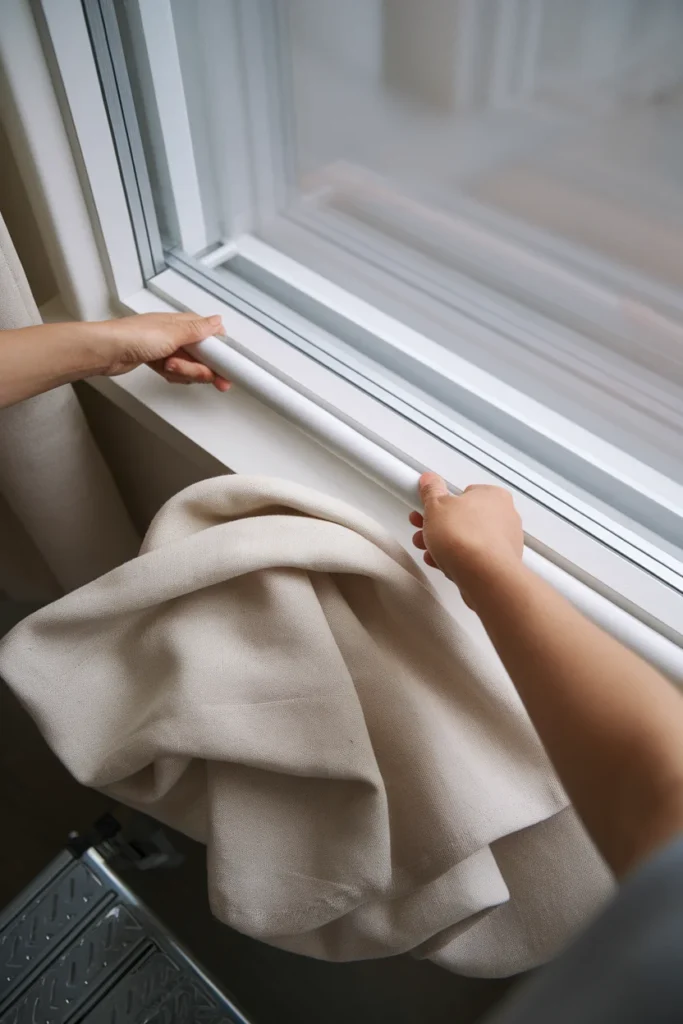
Hang high and wide. Mount the rod 4 to 6 inches above the window frame and let it extend 8 to 12 inches past the frame on each side. The panels then stack off the glass when open, so you keep the daylight, and they fully cover the cold zone when closed.
Let them touch the floor. A half inch of clearance, or a light break where the fabric just kisses the boards. Panels that float three inches above the floor let a cold column of air spill out underneath, which is exactly the thing you’re trying to stop.
Layer if you can. Sheer curtains for daytime privacy, a heavier lined panel over them for night. Two rods, or one double rod.
For a Northern Hemisphere fall this matters most from about mid-October, when evening temperatures in most of the US drop below the point where your heating cycles on regularly.
Failure mode: a tension rod carrying heavy lined panels. Tension rods hold light fabric fine and then let go at 2 am under blackout weight. If you’re going heavy, that’s the one place a bracket earns its screw.
The Floor Is Half the Warmth and Nobody Budgets for It
Bare feet on cold laminate at 6 am undo every other thing you did to that room.
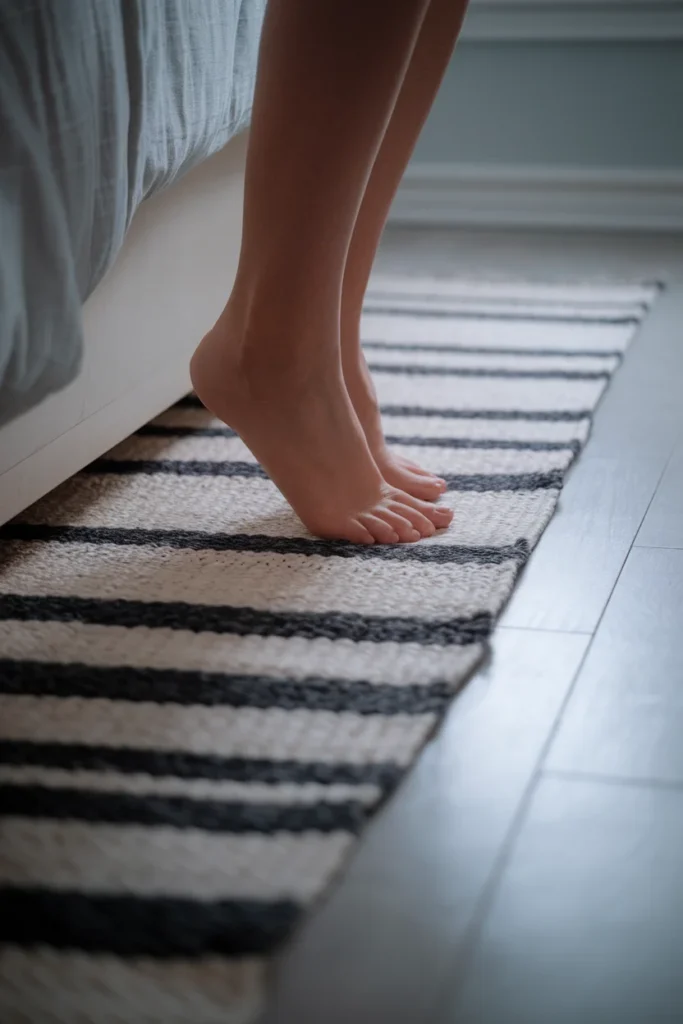
A rug is the highest-return purchase per dollar in a fall bedroom, and it doesn’t need to be big. You don’t have to cover the floor. You have to cover the landing zone.
Sizing that actually works in a small room:
- Runner beside the bed: roughly 2’6″ x 6′. Cheapest option, covers exactly where your feet go. Best for a room under 100 sq ft.
- Small area rug at the foot: something around 3’11” x 5’11” (the TIPHEDE above) works under the foot of a bed or a reading chair.
- Under the bed proper: you’d want the rug extending about 18 to 24 inches past each side, which in a queen room means going up to 8′ x 10′ and a much bigger number.
Go washable if you can. That cotton flatweave takes a warm machine wash at 104°F with a stated maximum shrinkage of 5 percent, which matters more than it sounds like it should, because a bedroom rug collects dust, hair, and spilled tea faster than any other rug in a home.
Pile height is a real tradeoff and I’ll be straight about it. High pile feels better underfoot and photographs beautifully. It also traps dust, mats down within a season under a chair leg, and can’t go in a home washer. Flatweave feels less plush and lasts three times longer.
Failure mode: a rug that stops short of the bed. A rug floating in the middle of the floor with a gap on all sides makes the room look smaller. Either tuck it under the bed’s bottom third or run it alongside.
Warmth You Cannot See: Scent, Sound, and the 65 Degree Problem
Roughly half of what your body registers as a warm room isn’t visual at all, and a fall bedroom is the one room where that ratio tips even further, because you’re in there with your eyes closed.
Temperature. Most sleep guidance lands somewhere in the mid-60s Fahrenheit for the room itself. Which means the goal isn’t a warmer bedroom, it’s a warmer bed in a cool room. That’s a genuinely different design problem, and it’s why the throw and the rug matter more than the thermostat.
Light timing. CDC materials on circadian rhythm state it about as plainly as it can be put: “avoiding bright light 2 hours before bedtime will make it easier to fall asleep.” A dimmer on the bedside lamp is a decor purchase that happens to do real work. If your fixture won’t take a dimmer, a lower-lumen bulb in the bedside lamp gets you most of the way.
Scent. Autumn scent in a bedroom should be quieter than autumn scent in a kitchen. You’re sleeping in it for eight hours. Something woody or resinous, cedar, fir, a dry amber, tends to hold up better overnight than a sweet bakery scent, which reads pleasant for twenty minutes and cloying by hour three.
On candles, one flat safety line: don’t fall asleep with one lit, and keep any open flame well away from bedding and curtains. The National Fire Protection Association publishes home candle safety guidance worth two minutes of your time. A rechargeable LED candle or a reed diffuser gets you the same effect with none of the risk, and in a bedroom I’d default to those.
Sound. Soft surfaces absorb high frequencies, which is why a room with a rug, curtains, and a layered bed literally sounds different from an empty one. It goes from slightly echoey to muffled. You won’t consciously notice it. You’ll notice that the room feels calmer.
This is general comfort and home-safety information, not medical advice. If you have ongoing sleep problems, talk to a US-licensed physician or a board-certified sleep specialist.
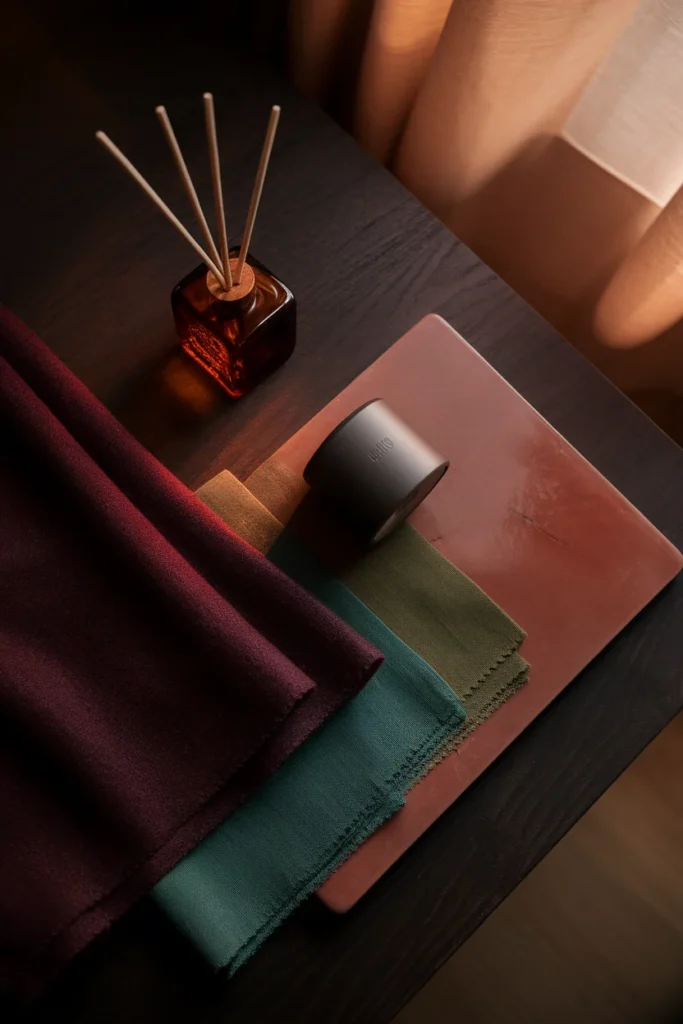
The 2026 Autumn Palette for Bedrooms, and It Isn’t Orange
Pinterest Predicts 2026 names five defining colors, and three of them are directly useful in a bedroom: Jade, Plum Noir, and Persimmon. The other two, Cool Blue and Wasabi, are harder to make restful.
Here’s how they behave in a room you sleep in.
Jade is the safest of the three and Pinterest specifically flags it as working in bedrooms alongside natural fibers. Against oak, jute, and undyed linen it reads warm rather than minty. Good as a quilt, a curtain, or a single upholstered piece.
Plum Noir is the one that surprises people. Deep, almost brown-purple, it does for a bedroom what a heavy curtain does for a window: it absorbs light instead of bouncing it, so the room settles. Best as the darkest thing in the room, not the main color. One velvet lumbar pillow, or the inside of a bookcase.
Persimmon is the actual autumn color, and it works because it’s a red-orange rather than a pumpkin orange. The distinction matters. Pumpkin orange in a bedroom reads like seasonal packaging. Persimmon reads like a color someone chose.
Which brings me to the thing I’d push back on hardest. Traditional fall decorating leans on saturated orange and yellow, and in a living room that’s fine because you’re in there with the lights on and other people around. In a bedroom, high-chroma warm colors are exhausting to wake up to. Use them at the scale of a pillow or a book spine, not a wall.
If you want the full seasonal look built around texture and foraged materials instead of color, cottagecore fall decor styling takes a different route to the same warmth.
Failure mode: buying a whole bedding set in a seasonal color. You’ll be looking at it every day for three months and storing it for nine. Seasonal color belongs on things that cost under $40 and store flat.
Deposit-Safe Versions of the Three Riskiest Swaps
Three of the eleven swaps above involve a wall. Here’s how each one goes without a drill, because “just ask your landlord” is not a plan.
The wall lamp. A cord-and-plug wall lamp still needs two screws in most cases (the SKURUP, for instance, doesn’t include screws and doesn’t tell you that until you’re home). Reversible alternatives: a clip-on reading light clamped to the headboard or a shelf, a swing-arm floor lamp positioned behind the bed, or a rechargeable picture light with a magnetic mount plate held on adhesive. The clip-on is the cheapest and the least elegant, and it works.
The curtain rod. Tension rods inside a window recess carry sheers and lightweight linen without a single hole. They will not reliably hold heavy blackout panels, and a rod that lets go at night takes paint with it. If you need blackout, use a tension rod for the sheer layer and consider adhesive-mounted brackets rated well above your panel weight for the heavy layer, then test it by hanging the panels and tugging down hard before you trust it overnight.
Anything on the wall above the bed. Adhesive strips have published weight limits and people ignore them constantly. Weigh the object. Then use strips rated for at least double, because adhesive strength drops in humidity and a bedroom gets humid. Nothing framed in glass goes above a bed, ever, regardless of the mounting method.
A fuller set of reversible methods, including the peel-and-stick math and a move-out reversal order, lives in these no-damage rental apartment decor ideas.
Failure mode: doing all of this and forgetting to photograph the walls before you start. Five minutes of photos on move-in day is the difference between “normal wear” and “we’re keeping $300.”
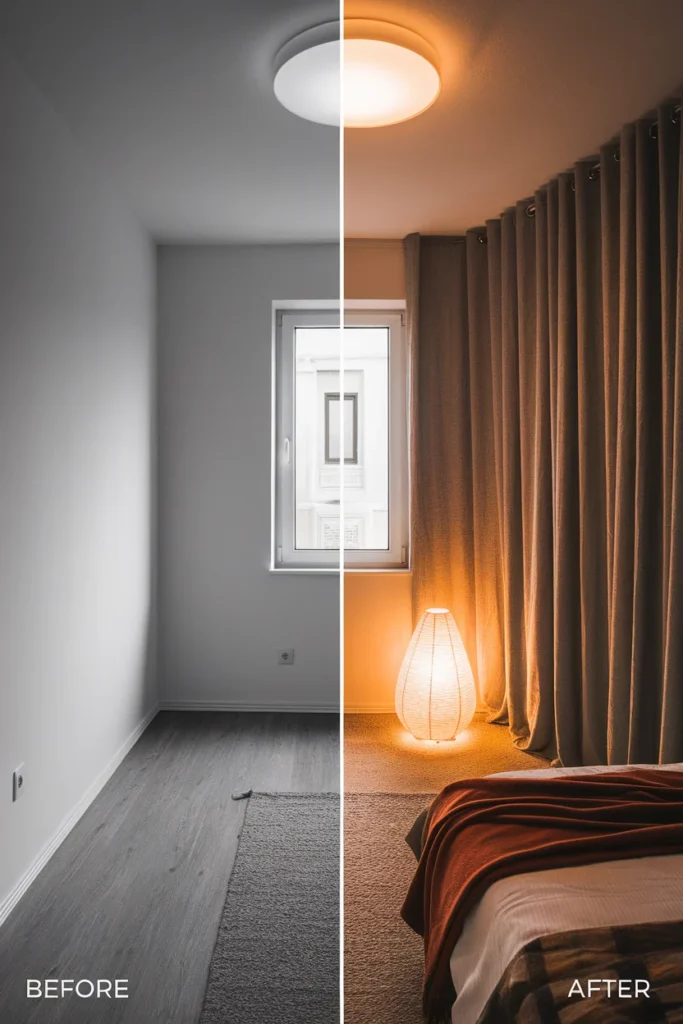
What Autumn Bedroom Decor Is Not Worth Your Money
Nobody publishes this section, so here it is.
Scented pinecones. They smell aggressive for about nine days, then they’re just pinecones covered in something sticky. Dried eucalyptus or a cedar diffuser costs similar and lasts the season.
A seasonal duvet cover. Highest cost of anything on the typical fall bedroom list, and it competes directly with the layering approach that works better and costs less.
Fairy lights strung above the headboard. They photograph well and they’re a glare source at exactly pillow height. If you love them, put them on a dimmer or a timer, and run them behind a headboard rather than above it so the light bounces off the wall.
Faux fall garland on a bedroom mirror or dresser. In a living room it works. In a bedroom it collects dust in a room where you breathe for eight hours a night.
A third throw pillow. You already know.
Where the money should go instead, in order: the bulb, the rug, the second light source, the heavy throw. That’s the whole hierarchy.
From Fall to Winter, the Three Things You Leave Up
The best argument for building the room this way is that most of it doesn’t come down.
Leave up: the 2700K bulbs, the rug, the curtains, the wall or floor lamp, the layered bed structure. None of that is seasonal. It’s just a better-built room that happens to feel right in October.
Swap in December: the medium object on the nightstand triangle, the color of the top throw, and the scent. Three items. Fifteen minutes.
Store flat: anything actually orange.
That’s the ratio worth aiming for. Roughly 80 percent of the room is permanent infrastructure and 20 percent is seasonal dressing, which is the opposite of how most fall decorating advice is structured and the reason most of it doesn’t survive to November.
If you want to run the same logic through the rest of the house, room-by-room cozy fall home decor covers what changes and what to skip in each space.
Autumn Bedroom Decor FAQs
How do I make my bedroom feel like fall without buying much? Change the light first. A 2700K warm bulb costs under $5 and shifts the entire mood of the room before you spend anything else. Then add one heavy throw across the bottom third of the bed. Those two moves, under $50 total, do more than $200 of decorative objects.
When should I start decorating my bedroom for fall? Most people start somewhere between late August and the second week of September. A useful trigger that isn’t a date: start when you first close the window at night. That’s your room telling you it’s time, and it varies by 3 or 4 weeks depending on where in the US you live.
What colors work best in an autumn bedroom? Jade, deep plum, and persimmon, all three named in Pinterest Predicts 2026, plus warm neutrals like oat and clay as the base. Keep saturated warm color small. A pillow or a book spine, not a wall, because high-chroma warm tones are tiring to wake up to.
Does decorating for fall actually make a difference? In a bedroom, the parts that change how the room feels are the light temperature, the floor surface, and the bed’s layer weights. Those genuinely change your experience of the room. Decorative objects mostly change how it photographs. Both are fine goals, but they’re not the same goal, and the first one is cheaper.
Can I do this if I rent and can’t drill? Yes, all eleven swaps have a reversible version. Bulbs, rugs, throws, and tension-rod sheers involve zero hardware. Clip-on and floor lamps replace wall-mounted ones. The only genuinely tricky one is heavy blackout curtains, which need real brackets or a rated adhesive mount you’ve tested under load.
What bulb makes a bedroom look warm? 2700 Kelvin, opal glass rather than clear, and dimmable if the fixture allows. The DOE puts warm light at 2700 to 3000K. Below 3000 is where a room stops looking like an office. Opal matters because clear glass shows the filament, which is a glare source when you’re lying down.
How do I make a small bedroom feel autumnal without it feeling cluttered? Work in surfaces rather than objects. One rug, one set of curtains, one throw, one nightstand triangle. Four surfaces, five to seven total objects. Small rooms read as autumnal through texture and light temperature, not through quantity.
Start With the $4.99 Thing
Don’t do all eleven this weekend. Do one.
Change the bulb beside your bed to a 2700K opal, lie down, and look up. If you can still see the filament or a hot spot on the shade, you’ve just found the actual problem with your bedroom, and it was never the throw blanket.
Then, when the light is right, build the reading corner. Thirty inches of wall is all it takes, and it’s the one addition that turns a bedroom you sleep in into a room you’d choose to sit in at 4 pm on a gray October afternoon.
Keep reading
More cozy nook ideas
 Bedroom
Read →
Bedroom
Read →
English Cottage Bedroom Checklist: Everything to Decide Before You Start
You saved forty pins of floral quilts and sloped ceilings, then looked up at your own bedroom: beige walls, one window, a…
 Bedroom
Read →
Bedroom
Read →
21 Small Bedroom Ideas for Couples
Sixty-two and a quarter inches. That’s the width of a common IKEA queen storage frame, and in a 10 by 10 foot…
 Bedroom
Read →
Bedroom
Read →
Floral Bedding Ideas for a Cottagecore Bedroom That Still Looks Right in Daylight
No painting. No drilling. No conversation with your landlord. Floral Bedding Cottagecore is the one cottagecore move you can make in an…