
Toddler Reading Corner Ideas: 12 Safe and Magical Setups Little Ones Will Actually Use
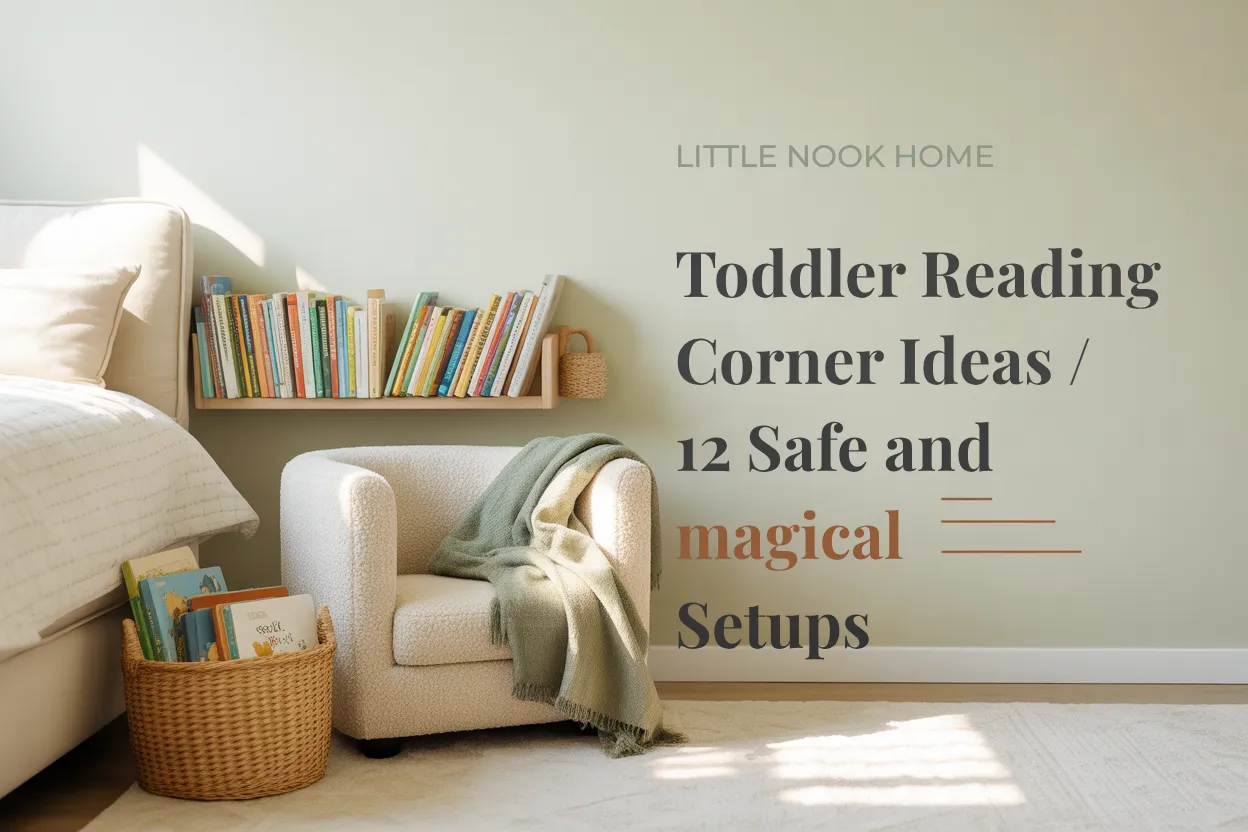
You walked into your toddler’s room this morning, stepped on a board book, then a stuffed bunny, then something sticky you’re choosing not to identify. The “cozy reading nook” you Pinterest-planned six months ago is now a laundry holding zone. The bookshelf leans slightly. Nobody has read a book in there in weeks.
I’ve been there. Three times, actually. We redid my daughter’s reading corner three full times before I figured out what works, what’s safe, and what a 2-year-old will actually crawl into without prompting. The first version was beautiful and unusable. The second was safe but boring. The third one (the one she still climbs into every night) hit the sweet spot, and that’s the formula behind every idea in this post.
These 12 toddler reading corner ideas are organized by setup style, from the simplest 20-inch corner to a full Montessori-inspired book zone. Every idea answers three things: what it is, why it works, and how to pull it off without drilling, overspending, or compromising on safety. We’ll cover budget options under $25, mid-range setups around $100, and a couple of splurges if you’re ready to invest.
Who This Toddler Reading Corner Ideas Guide Is For
You’ll get the most out of these ideas if you’re:
- A renter who can’t drill (every idea here has a no-drill version).
- Working with a corner as small as 24 by 24 inches or as generous as a whole bonus room.
- Parenting a child between 12 months and 4 years (the prime “fall in love with books” window).
- Budget-conscious and want Dollar Tree and IKEA wins before splurging at Pottery Barn Kids.
- Curious about Montessori-style setups but not ready to overhaul the whole room.
If even one of those fits, keep scrolling. You’ll walk away with a plan you can execute this weekend.
Why a Reading Corner Actually Matters for Toddlers
Here’s the science part, kept short. The American Academy of Pediatrics recommends reading aloud daily from birth because it builds vocabulary, attention span, and parent-child bonding in ways screens never will. But here’s what the research often skips: toddlers won’t engage with books they can’t see or reach. A dedicated, toddler-height corner solves that overnight.
When books are at eye level and the space feels like theirs, kids initiate reading on their own. That self-initiated reading is the gold standard early-literacy specialists at Reading Rockets point to as the strongest predictor of later reading confidence.
Now let’s build it.
Safety Comes First (Read This Before You Style Anything)
Before any styling decision, run every reading corner through this 5-point safety check. I learned a couple of these the hard way.
- Anchor every shelf and bookcase to the wall. Use anti-tip straps (around $10 for a 4-pack on Amazon). Toddlers climb. All of them. Yours included.
- No glass, no sharp corners, no heavy frames hanging above the nook. A falling frame from a 5-foot wall is a hospital trip.
- String lights need to be battery-operated and low-voltage. Skip plug-in fairy lights within toddler reach.
- Rugs need a non-slip pad underneath. A sliding rug on hardwood is a fall waiting to happen.
- Skip canopies and teepees with loose strings or long ties. Look for ones with sewn-in or short tabs.
1. The 24-Inch Corner Setup (For Tiny Spaces and Shared Rooms)
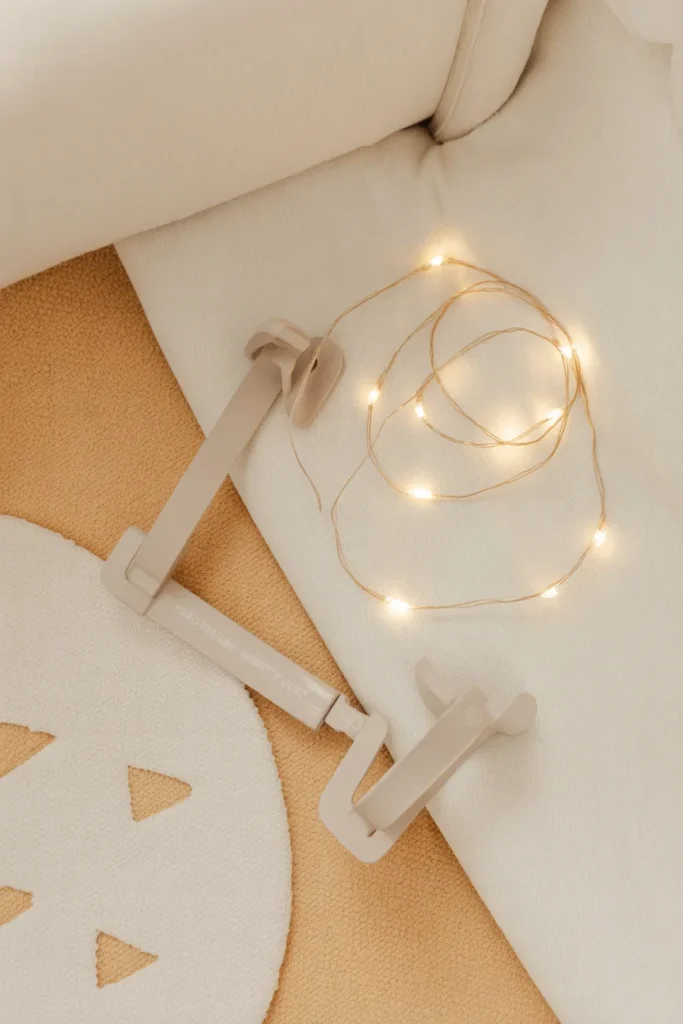
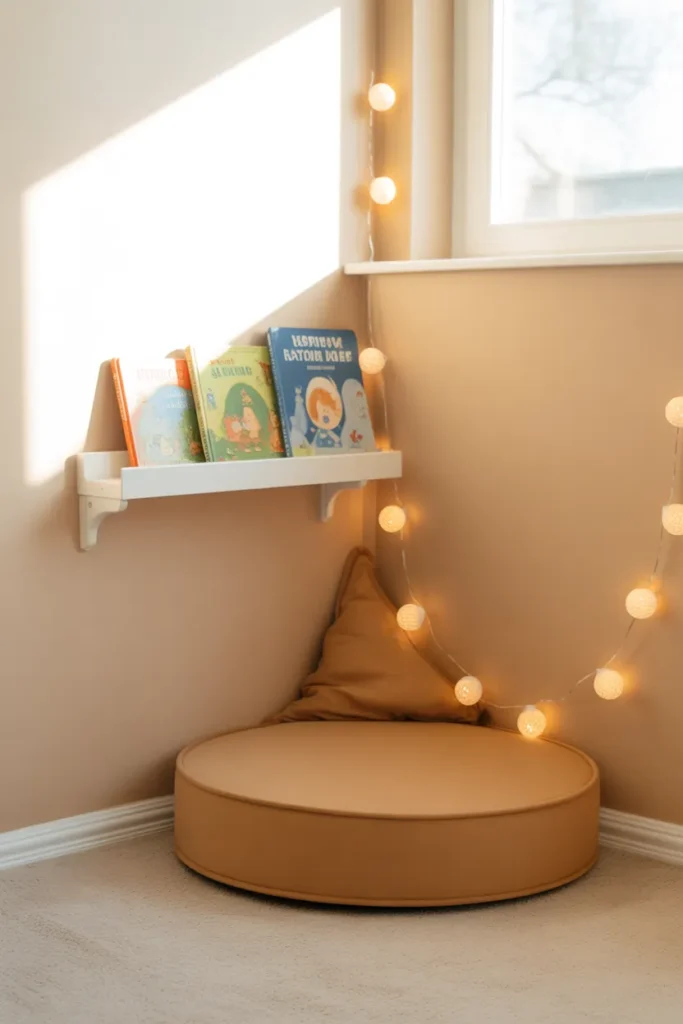
What it is: A two-foot-square corner using one floor cushion, one wall-mounted book ledge, and a battery-operated fairy light strand.
Why it works: It claims a “reading zone” without taking real estate from the rest of the room. Perfect for shared sibling rooms or apartments where the bedroom doubles as a play space.
How to do it: Mount one [INTERNAL LINK PLACEHOLDER: floor-level kids book ledge tutorial → /blog] picture ledge at toddler shoulder height (around 28 inches off the floor). Drop a 20-inch round floor cushion below it. Tape battery fairy lights along the corner where the two walls meet. Done in under 30 minutes.
Budget breakdown:
- Floor cushion (Target Pillowfort line): $25
- Picture ledge (IKEA MOSSLANDA 22-inch): $10
- Battery fairy lights (Amazon, 33 ft warm white): $9
- Total: under $50
2. The Montessori Floor-Level Reading Nook
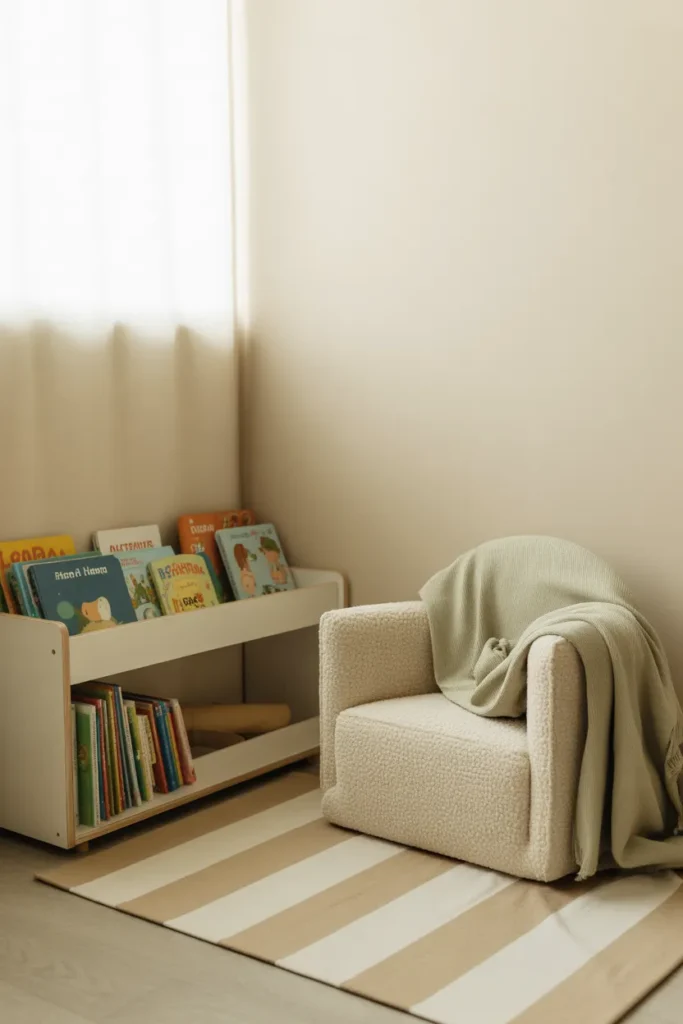
What it is: A low forward-facing bookshelf (no taller than 30 inches), a soft washable rug, and one toddler-sized chair, all at child eye level.
Why it works: Montessori principles emphasize child autonomy. When books face cover-out and the shelf is shorter than your toddler, they choose, retrieve, and return books independently. Self-initiated reading goes up dramatically when this is set up correctly.
How to do it: Get a forward-facing bookshelf with three tilted display rows. The Pottery Barn Kids version runs about $200, but the IKEA TROFAST hack (lay it sideways, add picture ledges to the front) costs $60 total and looks nearly identical. Add a 3 by 5 foot washable rug from Ruggable or Target’s Threshold line. Finish with a small bouclé toddler armchair (around $80 at Wayfair).
Splurge swap: Pottery Barn Kids Forward-Facing Bookcase, $229.
3. The Canopy Dream Nook (Renter-Friendly, No Drilling)
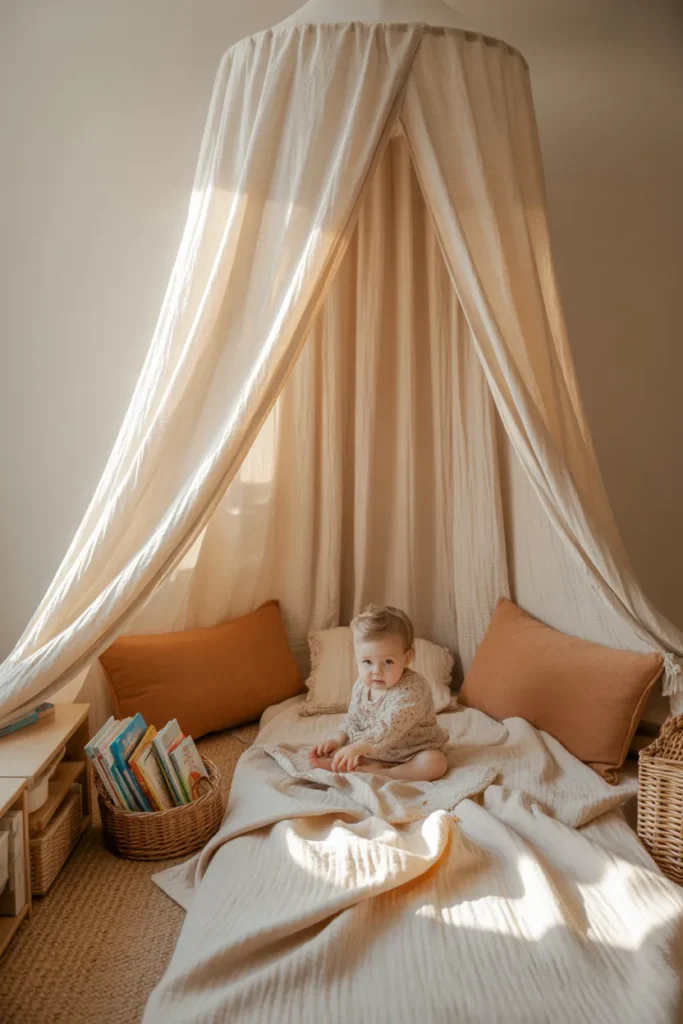
What it is: A single ceiling hook (or command-strip ceiling hook for renters) holding a sheer cotton canopy that drapes over a floor mattress or thick rug.
Why it works: Canopies create the “secret hideaway” feel toddlers go nuts for. The enclosed feeling triggers calmness and longer attention spans during story time. It also makes a 30 square foot corner feel like its own little world.
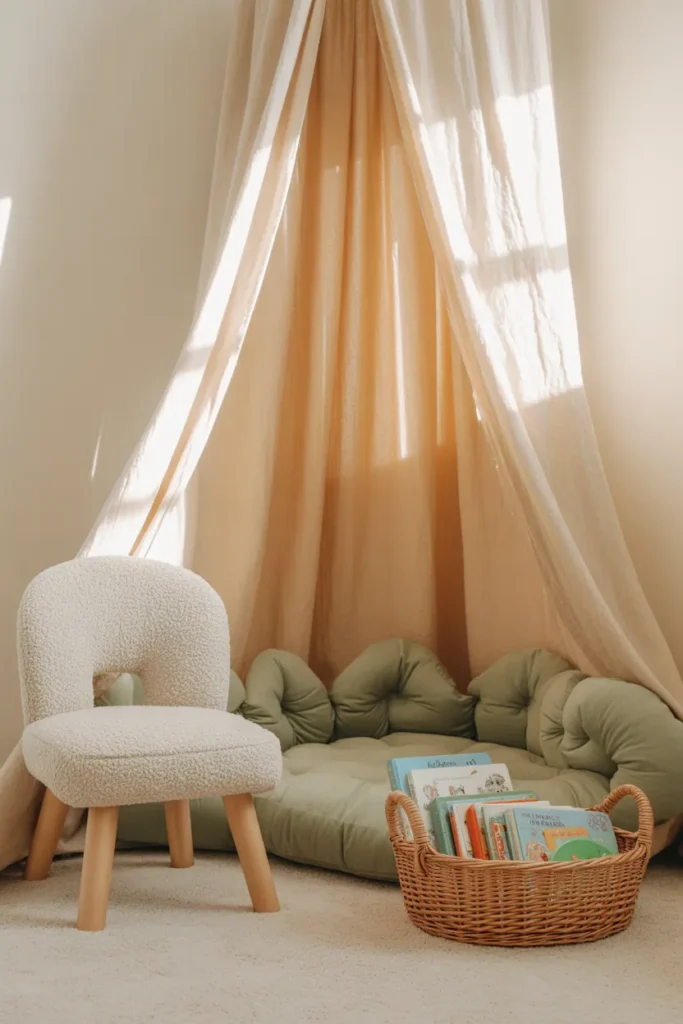
How to do it: Use a command-strip ceiling hook rated for at least 5 pounds (around $6). Hang an IKEA HÖVLIG canopy ($20) or any cotton bed canopy. Center it over a 4 by 6 foot rug or a folded twin mattress. Add two square floor pillows and a small woven basket for books.
Safety note: Skip canopies with long ties. Look for sewn-tab versions only.
4. The Closet Conversion Book Nook
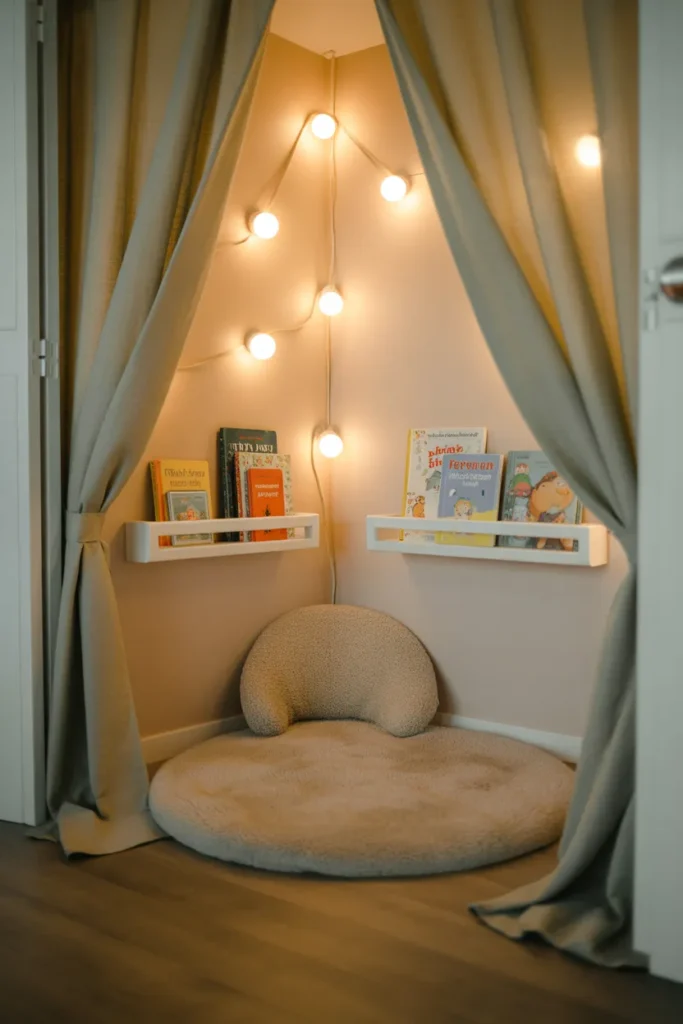
What it is: A small unused closet (24 to 36 inches wide) reimagined as a fully enclosed reading hideout with a floor cushion, wall-mounted ledges, and a removable curtain instead of a closet door.
Why it works: Closets are already enclosed, soundproof-ish, and dim. Add warm lighting and they become the cozy book cave toddlers will request by name.
How to do it: Remove the closet door (save it for when you move out, renters). Replace the rod with a tension rod and a linen curtain panel. Mount two picture ledges at staggered heights. Add a 24-inch round floor cushion. Stick battery puck lights to the ceiling for warm overhead glow.
Real talk: This works in closets as narrow as 22 inches. Measure your closet floor first. If it’s at least 22 by 24 inches with the door swing cleared, you’re good.
5. The Bean Bag and Basket Setup (The 10-Minute Nook)
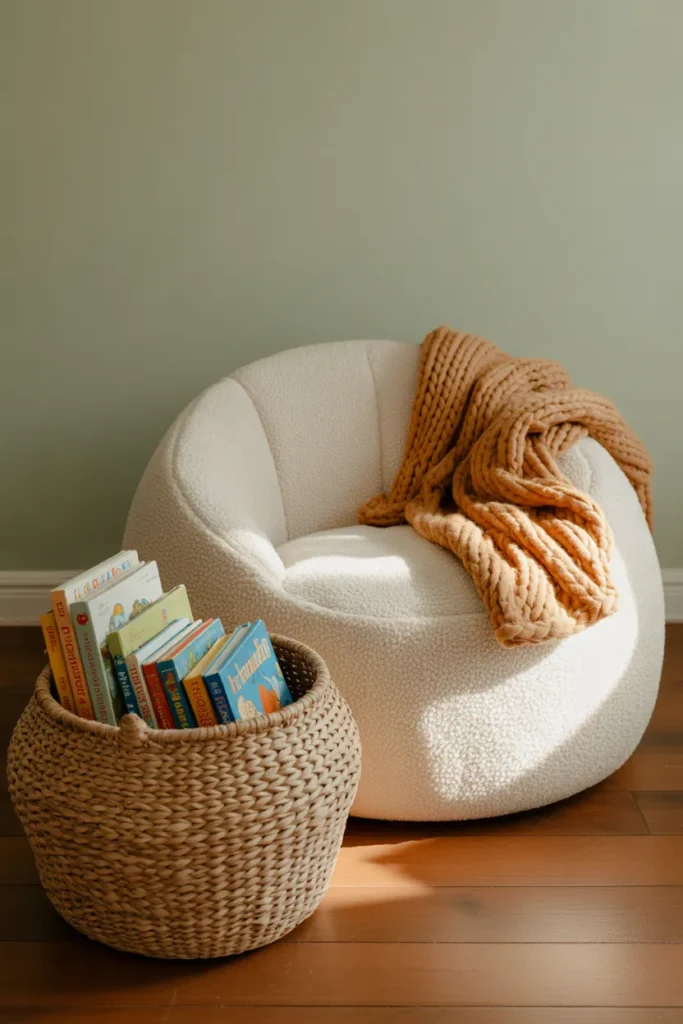
What it is: One toddler-sized bean bag, one large woven basket of books, one soft throw. That’s it.
Why it works: Sometimes the simplest setup is the one toddlers actually use. Bean bags are forgiving, mold to little bodies, and don’t require any installation or drilling.
How to do it: Get a toddler bean bag (Pottery Barn Kids Anywhere Chair runs $129; the Amazon Basics dupe is $40 and nearly identical in feel). Pair with a 16-inch seagrass basket from Target ($25). Toss in 15 to 20 board books and a chunky knit throw.
Why this beats most setups: It moves. Living room one weekend, bedroom the next, grandma’s house for a sleepover. Nooks don’t have to be permanent to count.
6. Under-the-Loft-Bed Reading Cave
What it is: The dead space under a loft or bunk bed transformed into an enclosed cave with fabric walls, fairy lights, and floor pillows.
Why it works: Loft beds waste a 6-foot by 3-foot footprint underneath. Reclaim it as a reading cave and you’ve added a whole “room” without buying square footage.
How to do it: Drape two queen flat sheets over the bed frame to create soft fabric walls (use safety pins or bed sheet clips). Line the floor with a 4 by 6 rug and three to four floor pillows. String battery fairy lights along the inside frame. Add a low book sling on the wall side.
Best for: Kids 3+ who can climb out without help. For younger toddlers, use the underside of a daybed instead.
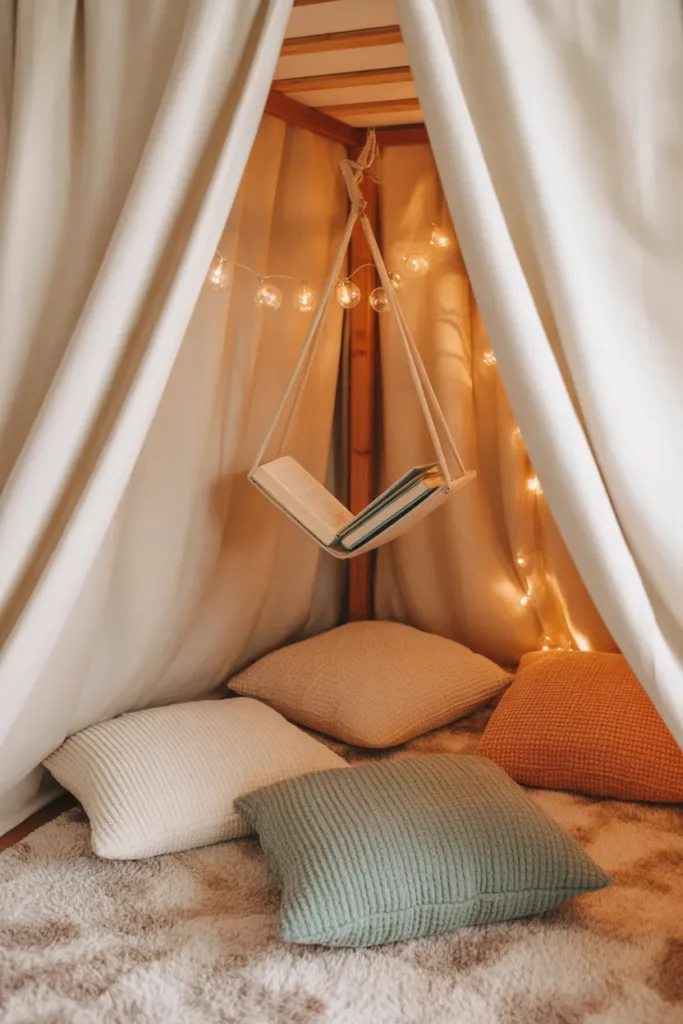
7. The Window Seat Reading Spot
What it is: An existing window bench, window seat, or radiator cover transformed into a reading spot with cushions, side basket, and a small wall-mounted ledge.
Why it works: Natural light + a view = the most-used reading spot in any house I’ve ever set up. Window seats also already have the “nook” architecture built in.
How to do it: Add a 2-inch foam cushion topper covered in washable linen ($45 at Wayfair). Pile two lumbar pillows. Tuck a tall narrow book basket beside the seat. Mount one picture ledge above for the current week’s favorites.
Renter hack: No window seat? Push a low storage bench (IKEA KALLAX 2-cube laid sideways, $40) under any window and add a cushion top. Same effect, $50 total.
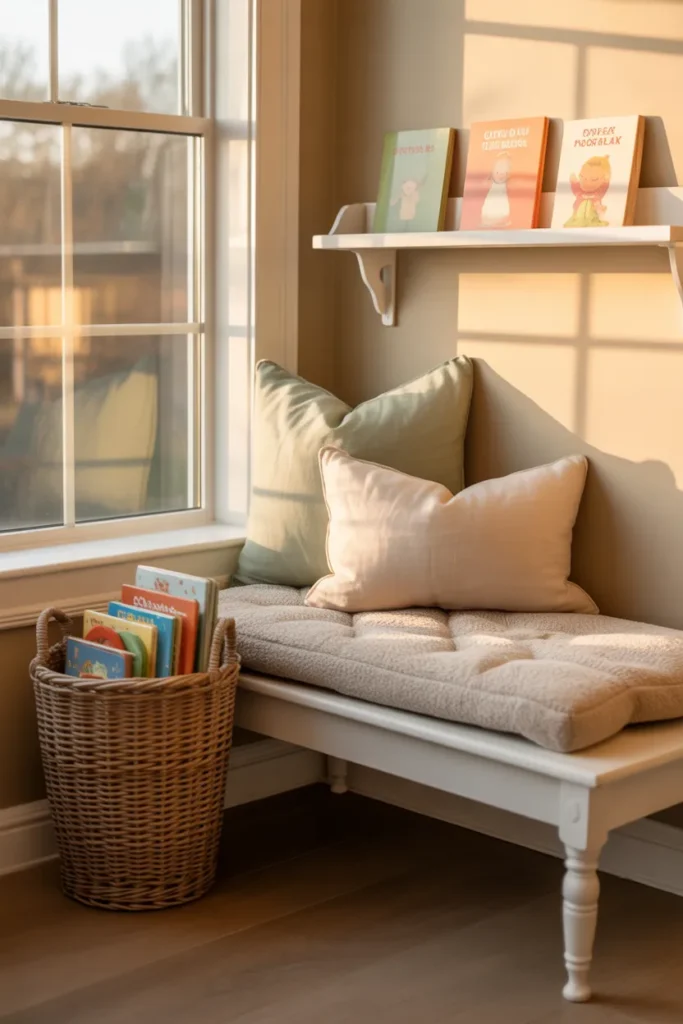
8. The Teepee Tent Book Hideaway
What it is: A freestanding canvas teepee with a fluffy rug inside, a basket of books, and a small lantern or battery fairy light strand.
Why it works: Teepees are the gateway drug to toddler reading independence. Once they realize the teepee is “their” book spot, they’ll crawl in solo for 20-minute stretches. I’ve watched this happen on repeat.
How to do it: Get a sturdy canvas teepee with a wide base (look for at least 48-inch base width for stability). Asweets and Wonder Space both make solid options around $65. Lay a faux sheepskin rug inside ($30 at IKEA). Add a small basket of 8 to 10 books and a battery lantern.
Safety note: Anchor the teepee poles to a back wall with a small bungee cord if your toddler is a climber. Trust me.
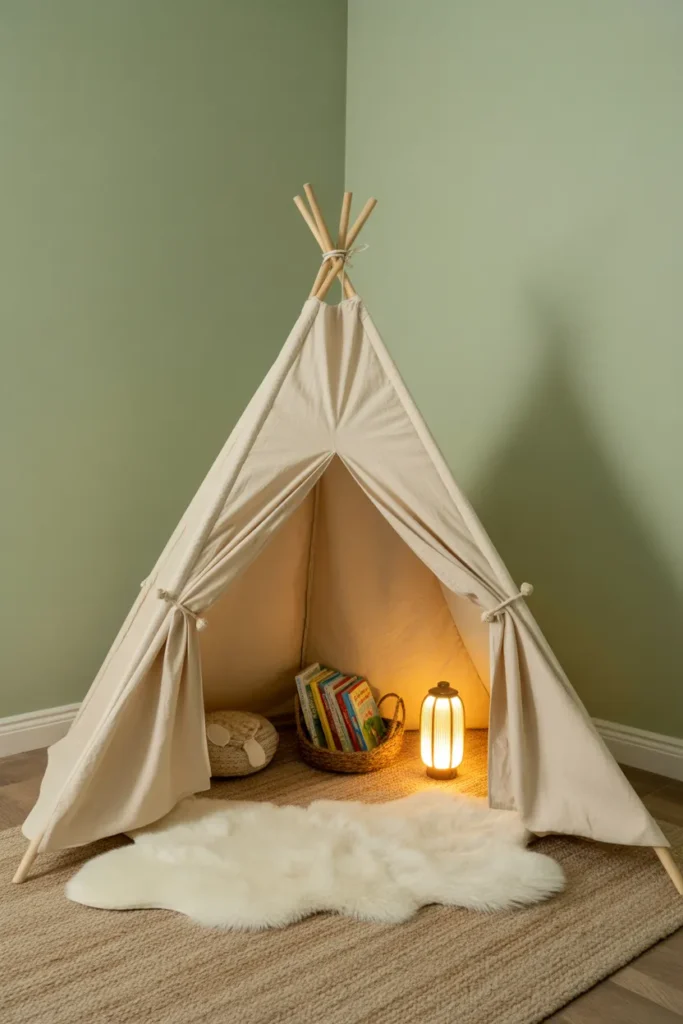
9. The Rainbow Book Wall (For the Maximalist Toddler Room)
What it is: A full wall of forward-facing picture ledges arranged in 4 to 5 rows, displaying 30+ books organized by spine color.
Why it works: Visual abundance is its own kind of magic for toddlers. A rainbow wall doubles as art and library. It also makes book selection a multisensory event.
How to do it: Mount 4 to 5 IKEA MOSSLANDA picture ledges ($10 each) horizontally across one wall, 12 inches apart vertically. Sort books rough-rainbow (red and orange together, then yellow, green, blue, purple, neutrals). Don’t aim for perfect; aim for roughly grouped.
Renter version: Use 3M Command Strip picture ledges (yes, they exist now) or a freestanding leaning bookshelf with the same color-sort treatment.
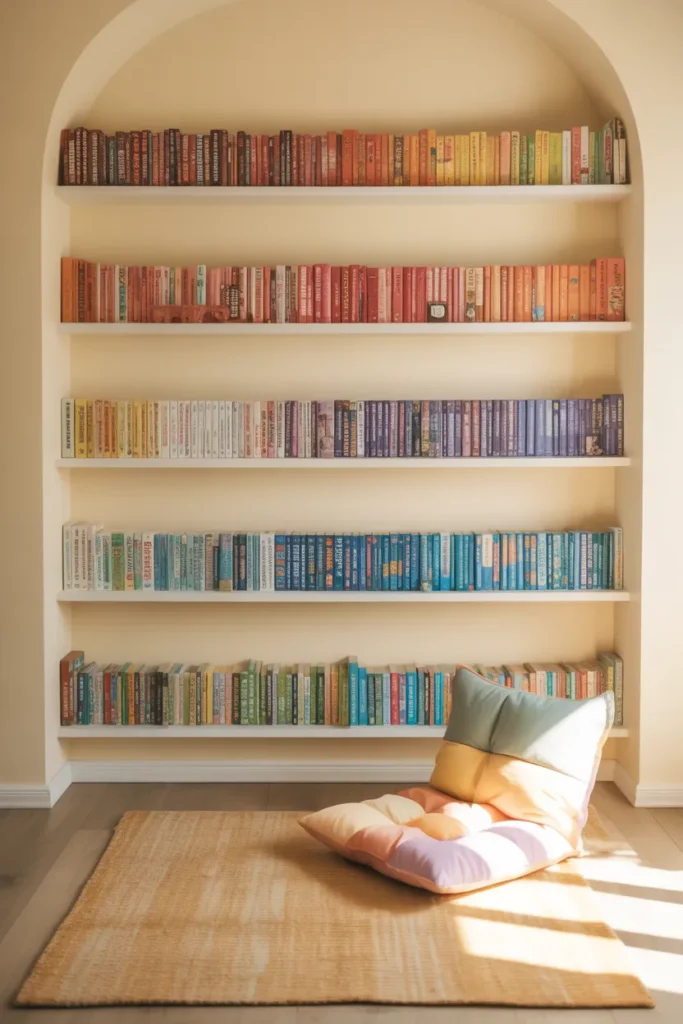
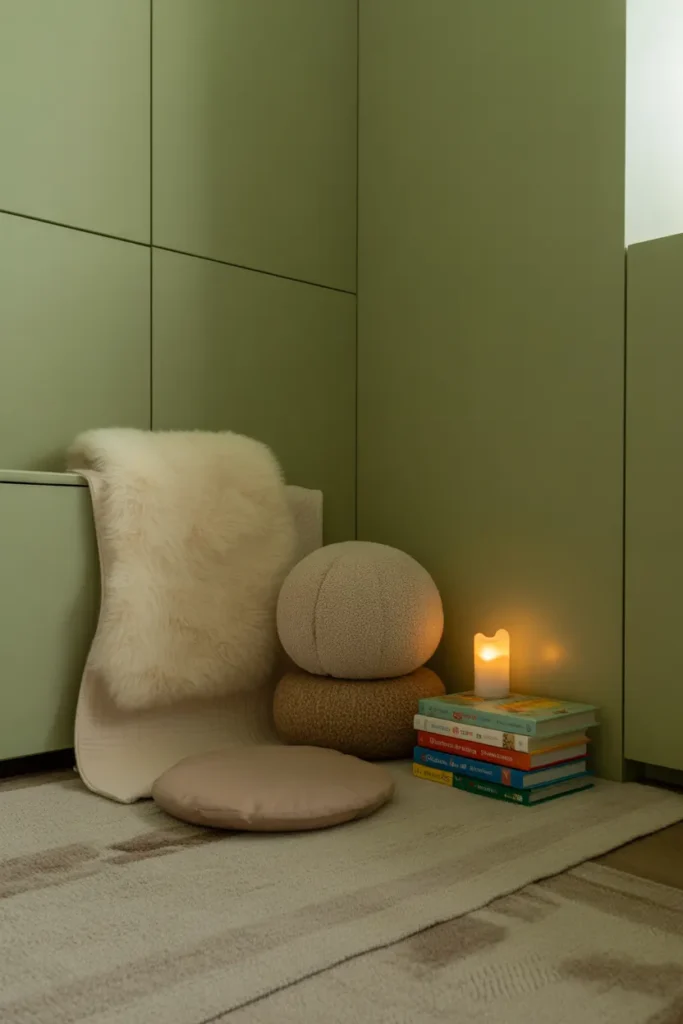
10. The Sensory-Soft Calming Corner Combo
What it is: A reading corner that doubles as a calming spot for big feelings. Soft textures, dim warm light, weighted lap pad, and books focused on emotions.
Why it works: Toddlers don’t separate “reading time” from “I’m overwhelmed time.” Combining the zones gives them one safe place for both, which lowers tantrum frequency in my experience and in [INTERNAL LINK PLACEHOLDER: toddler calm down corner guide → /blog].
How to do it: Layer a faux sheepskin over a thick rug. Add a small bean bag or floor pouf. Include a 3-pound weighted lap pad ($25 on Amazon, sized for toddlers). Curate 8 to 10 books focused on emotions (look for The Color Monster, In My Heart, anything by Todd Parr). Add a battery candle for soft glow (never real flame).
Splurge add: A small white noise machine like the Hatch Rest Mini ($45) for built-in calming sound.
11. The Themed Storybook Nook (Princess, Forest, or Space)
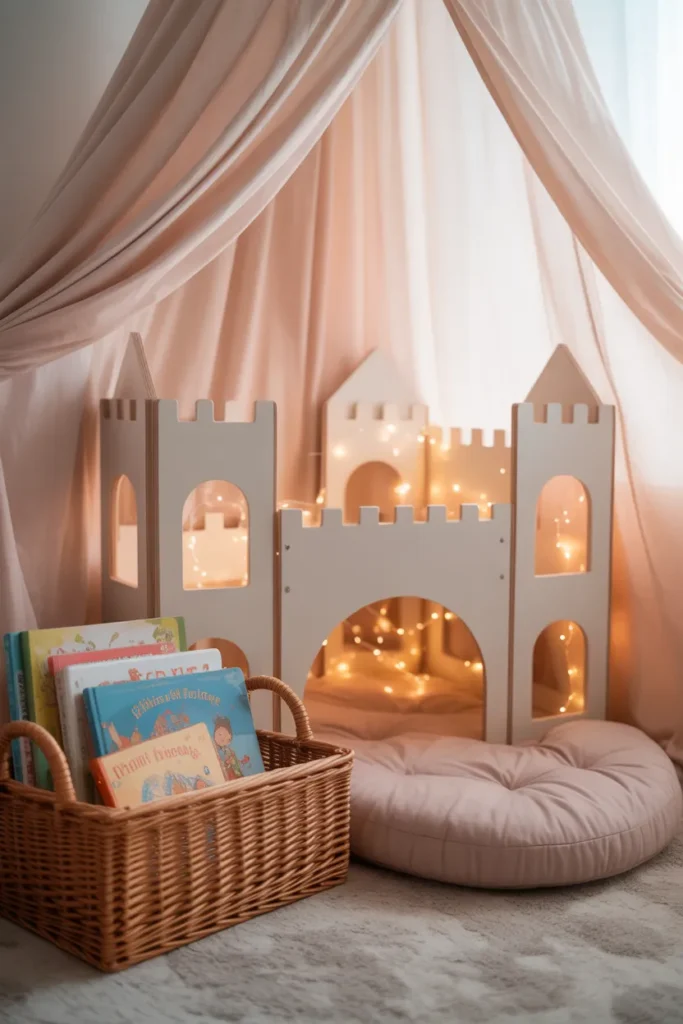
What it is: A reading corner styled around your toddler’s current obsession, whether that’s princesses, woodland animals, dinosaurs, or outer space.
Why it works: Theming pulls toddlers in emotionally. A “princess reading castle” gets used 10 times more than a generic nook for a 3-year-old in her princess phase. Same for the truck-obsessed kid with a “garage book stop.”
How to do it: Pick one anchor piece (a play castle frame, a felt forest mural, a star canopy) and build outward with two or three accent items. Don’t theme every single object. The 60-30-10 rule works here: 60% neutral base, 30% theme, 10% pop accents.
Budget version: Dollar Tree has themed garlands, removable wall stickers, and felt pennants under $5 each. Layer three of them and you’ve got a theme for $15.
12. The Outdoor Porch or Balcony Reading Nook (Three-Season)
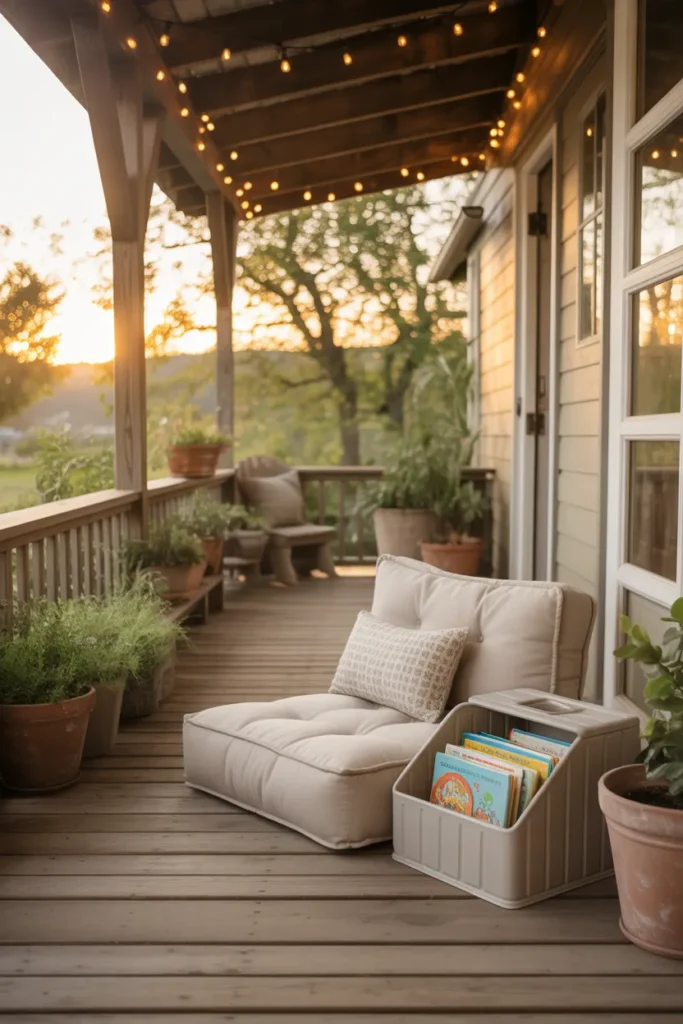
What it is: A weather-resistant outdoor reading spot on a covered porch, balcony, or screened patio. Outdoor cushion, waterproof book bin, and string lights.
Why it works: Fresh air + books = magic that nobody talks about enough. Spring through fall (March through November in most US zones), an outdoor nook becomes the most-used spot in the house.
How to do it: Use an outdoor floor cushion or pouf (Target Threshold outdoor line, $50). Pair with a lidded waterproof storage bin from Home Depot ($20) to keep books dry between sessions. Add solar-powered string lights for evening read-alouds. Rotate 6 to 8 board books at a time.
Seasonal swap: Move everything indoors mid-November. Re-launch in March. The “limited time” feel keeps the spot fresh year after year.
Budget vs Splurge: Your Toddler Reading Corner at Three Price Points
Quick screenshot-able framework if you’re trying to figure out where to spend.
| Element | Budget (Under $25) | Mid-Range ($25-$100) | Splurge ($100+) |
|---|---|---|---|
| Floor cushion | Dollar Tree round pillow + cover | Target Pillowfort, $25 | Pottery Barn Kids Anywhere Chair, $129 |
| Bookshelf | IKEA MOSSLANDA ledges, $10 each | IKEA TROFAST hack, $60 | PB Kids Forward-Facing Bookcase, $229 |
| Lighting | Battery fairy lights, $9 | Hatch Rest Mini, $45 | West Elm linen pendant, $149 |
| Rug | HomeGoods 3×5, $20 | Ruggable washable 4×6, $99 | Lorena Canals washable, $200+ |
| Canopy/tent | Dollar Tree fabric DIY, $10 | IKEA HÖVLIG, $20 | Pottery Barn Kids teepee, $149 |
Common Mistakes to Avoid
I made all of these. You don’t have to.
- Putting the nook far from where the family hangs out. Toddlers won’t go alone to a basement reading corner. Place it within sight of the kitchen or living room for under-3s.
- Choosing pretty over washable. That cream linen cushion will see snot, banana, and marker. Buy washable or buy regret.
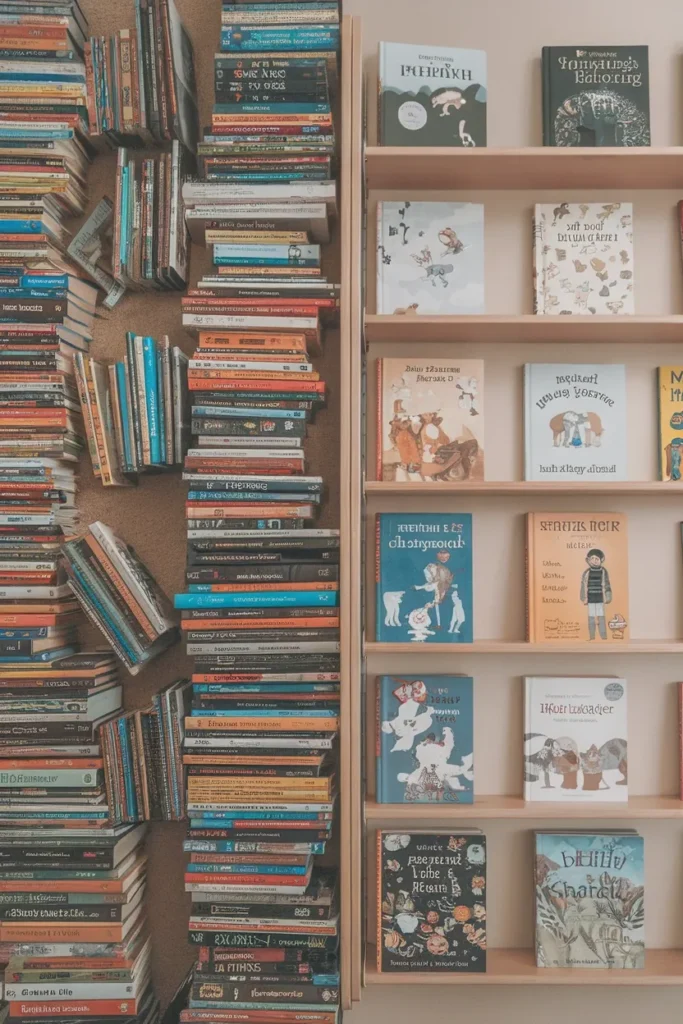
- Stuffing 80 books in. Toddlers freeze with too many choices. Display 10 to 15 forward-facing and rotate weekly.
- Forgetting to anchor furniture. Worth saying twice. Anti-tip straps. Always.
- Buying the Pinterest-perfect setup before testing the location. Build a $30 prototype with a cushion and a basket. See if your kid actually uses that corner. THEN invest.
Frequently Asked Questions
What age should a toddler have a reading corner?
You can introduce a dedicated reading spot as early as 9 to 12 months. Stick to soft floor setups (no shelves taller than the baby) until around 18 months. From 18 months to 4 years is the sweet spot when a real, styled corner pays back the most engagement.
How do I create a reading corner in a small space or rental?
Claim a 24-inch corner. Use one floor cushion, one command-strip picture ledge or a freestanding leaning shelf, and battery fairy lights. No drilling required. Total footprint: 4 square feet. Total cost: under $50.
What is the budget version of a toddler reading nook?
Dollar Tree floor pillow cover ($1.25) stuffed with a thrift-store throw, two Command Strip picture ledges from Amazon ($15), and a $9 battery fairy light strand. Total: about $25. Add a $10 thrifted basket for books and you’re done.
What if I do not have a separate room or wall for a nook?
Use vertical space. A canopy from one ceiling hook (command-strip ceiling hooks rated for 5+ pounds work) creates an instant nook over any open floor. Or claim an unused closet. Or under a daybed. Reading corners don’t need walls; they need enclosure cues.
How long does it take to set up a toddler reading corner?
The 24-inch corner version takes under 30 minutes. A full Montessori-style nook with a forward-facing bookshelf takes about 2 hours including assembly. The closet conversion is a half-day project. Bean bag and basket setup is genuinely 10 minutes.
Are reading corners Montessori?
A reading corner becomes Montessori-aligned when three things are true: books face cover-out at child eye level, the child can independently select and return books without adult help, and the space is uncluttered (10 to 15 books rotated weekly, not 50 crammed in). Plenty of non-Montessori parents use these principles because they just work.
How big should a toddler reading corner be?
Minimum usable footprint is about 16 square feet (a 4 by 4 area). Comfortable is 25 to 40 square feet. Anything larger than 50 square feet starts to feel less like a nook and more like a room, which dilutes the cozy factor toddlers respond to.
Your Next Step
Pick one idea from this list. Just one. Build a $30 prototype this weekend with whatever you already own (a cushion from the couch, a basket from the kitchen, a string of lights from the holiday bin). Watch where your toddler actually settles in. Then invest in the styled version.
That’s the formula nobody talks about, and it’s why the third version of my daughter’s reading corner finally stuck.
Save this post to your kids’ room board so you have it when you’re ready to build, and head over to next toddler bedroom decor ideas for the full bedroom styling roadmap. Which of these 12 setups feels most like your toddler? I’d love to hear in the comments.
Keep reading
More cozy nook ideas
 Kids
Read →
Kids
Read →
Teen Boy Reading Nook Ideas He Won’t Call Babyish
A teen boy reading nook lives or dies on one thing: it can’t look like it belongs to a nine-year-old. No rainbow…
 Kids
Read →
Kids
Read →
Nursery Reading Nook Ideas for Babies and Toddlers
You stepped on a board book this morning. Then a stuffed bunny. Then something sticky near the crib that you decided not…
 Kids
Read →
Kids
Read →
How to Build a Daycare Reading Corner on a Budget
Three pieces, one weekend, under 150. No drilling into your landlord’s walls, no custom millwork, no design degree. If you run a…