
25 Mudroom Ideas for a Small Entryway

No spare room, no closet by the door, and a landlord who flinches at the word drill. You can still have a mudroom. These 25 mud room ideas for a small entryway work on one wall, inside one closet, or behind one door, and most of them go up in an afternoon.
If your entry right now is a shoe pile, a hook that keeps falling off, and a bench buried under bags, this list was written for you.
Every idea comes with real numbers. That means IKEA US list prices from this October, depths in inches, and the weight each no-drill hook is actually rated to hold. Those numbers matter in a narrow hall, where two extra inches of cabinet decide whether the front door opens all the way.
The list starts with the one-wall setup, because it fits almost anywhere. Then it works through closets, the space behind the door, wet boots, pets, and the small nightly habit that keeps it all clear. Pick the three ideas that match your entry and start there.

1. Build a One-Wall Mudroom: Hooks Up Top, Bench in the Middle, Shoes Below
Small entryways don’t need a room. They need a stripe of wall doing three jobs, stacked in the order your hands move when you walk in:
- Top: a row of hooks for coats and bags, high enough that a long coat clears the seat.
- Middle: a bench you can actually sit on to pull boots off.
- Bottom: shoe storage under the seat or beside it.
At IKEA US list prices this October, the simplest version is a TJUSIG bench with shoe storage plus a two-pack of TRONES wall cabinets. That’s $109.98 before tax, plus hooks.
| Piece | Archetype | Price (IKEA US, Oct 2026) |
|---|---|---|
| 🪑 Seat | TJUSIG bench with shoe storage, 42 1/2 x 13 3/8 x 19 5/8 in | $69.99 |
| 👟 Wall shoe storage | TRONES cabinets, 2-pack, 7 1/8 in deep | $39.99 |
| 🧥 Hooks | Adhesive hooks or a screw-in rail | Varies by pack |
| Total | $109.98 + hooks |
Measure before you buy. That bench needs about 43 inches of clear wall, and the door can’t swing into it.

2. Use the 14-Inch Depth Budget Before You Buy Anything
Width gets all the attention. Depth is what trips you.
In a narrow entryway mudroom, every inch a piece sticks out from the wall comes straight out of your walkway. Keep about 36 inches clear to walk through. Then spend the depth that’s left like a budget, tier by tier:
Shop with the depth number first. You’ll skip the bench that looks slim online and blocks the door in real life.
3. Hang Shoe Cabinets That Stick Out Barely 7 Inches
Floor space gone? Go up the wall.
IKEA’s TRONES cabinets are built for exactly this:
- Each one is 20 1/2 inches wide and 7 1/8 inches deep, and IKEA says it holds about four pairs of shoes.
- The top has a recessed lip that catches keys and a phone.
- They stack, so two side by side or two stacked can fill a narrow wall.
The honest catch: IKEA says these must be secured to the wall, so you’ll make a few small screw holes. Those usually patch easily at move-out, but read your lease first.

4. Pick No-Drill Hooks by Their Weight Rating, Not Their Looks
Adhesive hooks get blamed for falling. Usually the hook was just too small for the job.
Command prints the rating on every pack, and the jump between sizes is big. Command’s large hook, rated for 5 pounds, handles a scarf or a tote. A loaded backpack or a heavy winter coat belongs on the extra large size, which is rated for 15 pounds.
| Hook size and rating | Good for |
|---|---|
| Small, 1 lb | Keys, a dog leash |
| Medium, 3 lb | Hats, a kid’s light jacket |
| Large, 5 lb | Scarves, totes, a rain shell |
| Jumbo, 7.5 lb | An everyday adult jacket |
| Extra large, 15 lb | Backpacks, heavy winter coats |
Stick them on smooth painted walls only. Press each strip hard for 30 seconds, then wait an hour before you hang anything.
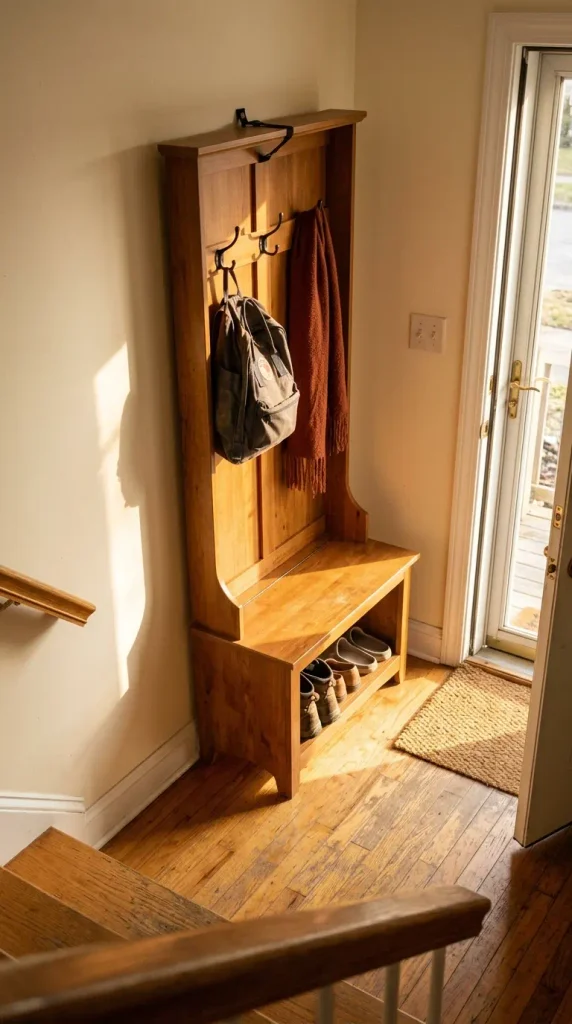
5. Choose a Narrow Hall Tree When You Have No Wall to Spare
A hall tree packs hooks, a seat, and shoe storage into one tall frame. That’s why it works in entries where the wall is broken up by a light switch, a radiator, or a second door. Narrow models are listed online at roughly $99 to $200 this month, and some are under 24 inches wide.
Tall and narrow also means tippy.
⚠️ Watch Out
Safety note: anchor tall furniture to the wall, keep candles and cords away from fabric, and use a licensed electrician or contractor for hardwired lighting, ceiling mounts, or anything structural.
Anchor kits usually cost under $20, and the CPSC’s Anchor It! campaign says installing one takes about five minutes. Load the bottom shelf with boots first. Weight low, tip risk lower.
6. Turn the Coat Closet Into a Mini Mudroom
Got a reach-in coat closet by the door? It’s already a mudroom with the wrong insides. Here’s the order that works:
Empty it completely. Keep one high shelf for off-season hats.
Lift the door off its hinges. Bag the pins and screws, label the bag, and store it with the door for move-out.
Slide in a bench under 14 inches deep so you can sit with your feet outside the closet.
Add a hook row on the back wall at coat height, plus a battery puck light so you can see inside.
Taking the door off is the step people skip, and it’s the one that makes the bench usable. The measuring and lighting tips in our reading nook closet conversion guide carry straight over to a mudroom closet.

7. Claim the Dead Space Behind the Front Door
Open your front door all the way and look at what it hides. That wedge of wall on the hinge side is often the emptiest spot in the whole entry.
The rule is simple. Measure the gap between the open door and the wall. If you add a door stop, that gap becomes your storage depth, and nothing you hang there can be deeper.
Hang an over-the-door rack for bags, umbrellas, and the dog leash.
Add a door stop so the knob never meets what you hung.
Anything deeper than the open-door gap.
Screwing heavy hooks into a hollow-core door.
Stick small felt pads where the rack touches the door. They stop the click every time it closes.
8. Give Wet Boots a Drip Zone
Wet wool and road salt have a smell. You notice it the second time you step in a puddle on your own hallway floor.
A boot tray with a raised lip keeps meltwater in one place. Fill it with a layer of smooth river stones and the boots sit up above the water. They dry faster, and the soles stop soaking.
Boots kicked off on the bare floor, puddles spreading under the bench, grit tracked into the next room.
Boots lined up on a stone-filled tray. The water stays inside the lip, and the floor stays dry.
Set the tray where the door won’t swing over it, or the door will catch on the first tall boot.

9. Mount Two Hook Heights: Low for Kids, High for Adults
With one row of hooks at adult height, small jackets end up piled on the bench every afternoon. A second row fixes that.
- High row: adult coats and bags. Hold your longest coat up to the wall first, because parkas need more drop than you’d guess.
- Low row: set at your kid’s shoulder height, which takes ten seconds to measure with a tape.
Kids hang things where they can reach. Adults do too, honestly.
Before you hang the second row
Two rows, one wall, fewer piles.
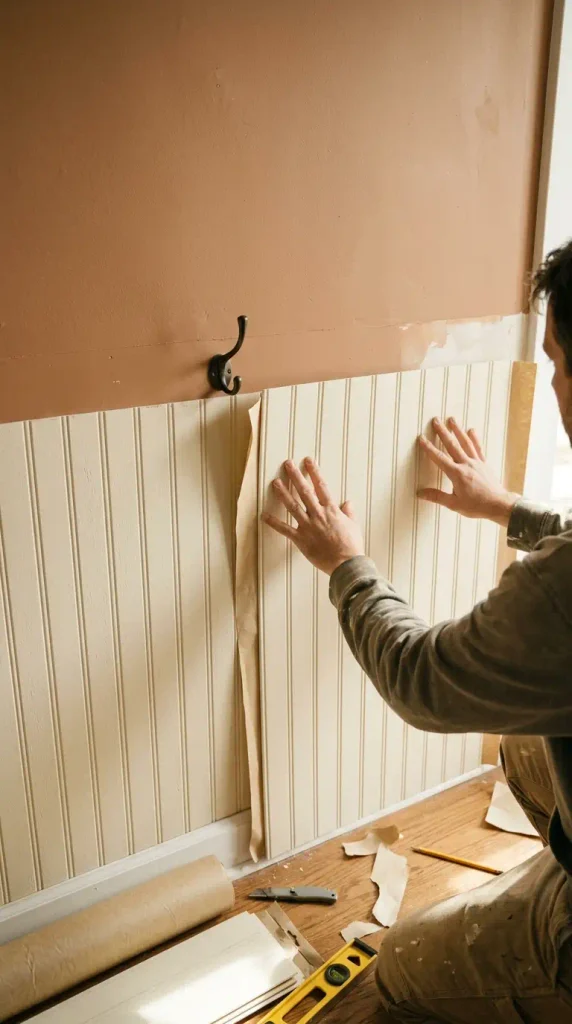
10. Fake a Mudroom Wall With Peel-and-Stick Beadboard
Paneling on the lower half of one wall tells the eye that this strip is its own room, even when it’s just the wall by the door.
A paneled lower wall frames the hooks and bench as one unit, so the entry reads as a mudroom instead of a pile.
Owners can glue up real beadboard. Renters get nearly the same effect with peel-and-stick panels or beadboard-print wallpaper.
Run it to just above bench height and hang the hook rail right at the top edge, so the panel and hooks line up. Test one small piece in a hidden spot first, because some adhesives lift paint when they come off.
11. Set a Small Tray for Keys and Mail, and Keep It Small
Mail grows to fill whatever space you give it. So give it less.
The best drop zone ideas for small spaces use a tray too small to hold a week of clutter. Set one on the TRONES top (it already has a recessed lip for this) or on a slim shelf by the door. Then give everything else a rule:
- ▸Keys and sunglasses go in the tray.
- ▸Mail goes in a wall pocket and gets sorted on Fridays.
- ▸Outgoing things, like returns and library books, get one basket on the bench.
- ▸Anything else leaves the entry tonight.
Keep a recycling bin within arm’s reach of the tray. Junk mail should never make it past the door.
12. Give Every Person One Basket Above the Bench
Shared baskets turn into junk drawers. Named ones don’t.
Mount a shelf above the hook row and line it with one basket per person. Hats, gloves, and earbuds land in their owner’s spot, and the bench stays clear for sitting.
Clip-on labels beat masking tape. They survive the first wet mitten.
13. Paint a Thrifted Dresser to Match the Wall
A short thrifted dresser makes a surprisingly good mudroom cabinet. Shoes go in the bottom drawer, gloves in the middle one, and the top holds one tray.
Paint it the same color as the wall and it stops looking like bedroom furniture that wandered into the hall. Our beginner furniture painting steps cover painting without heavy sanding.
A dark, scuffed dresser that clashes with the wall, with shoes piled beside it instead of inside it.
The same dresser painted the wall color, with new pulls, shoes in the drawers, and one tray on top.
Watch the depth, though. Many dressers run past 16 inches deep, so check it against the budget in idea 2. Dressers can also tip when the drawers are pulled open, so anchor it like the hall tree in idea 5.
14. Lay a Washable Runner Instead of a Single Doormat
A doormat catches your first step. The next three land on your floor.
In a narrow hall, a runner covers more of that path and makes the space look longer. Keep the stiff coir mat outside for the first scrape, and use a low-pile washable runner inside.
| Doormat alone | Washable runner |
|---|---|
| Catches the first step only | Covers the whole path to the hooks |
| Thick ones can jam a tight door swing | Low pile clears the door |
| Hard to deep clean | Goes in the washer when it’s muddy |
Put a rug pad underneath. Without one, the runner creeps toward the door a little every day.
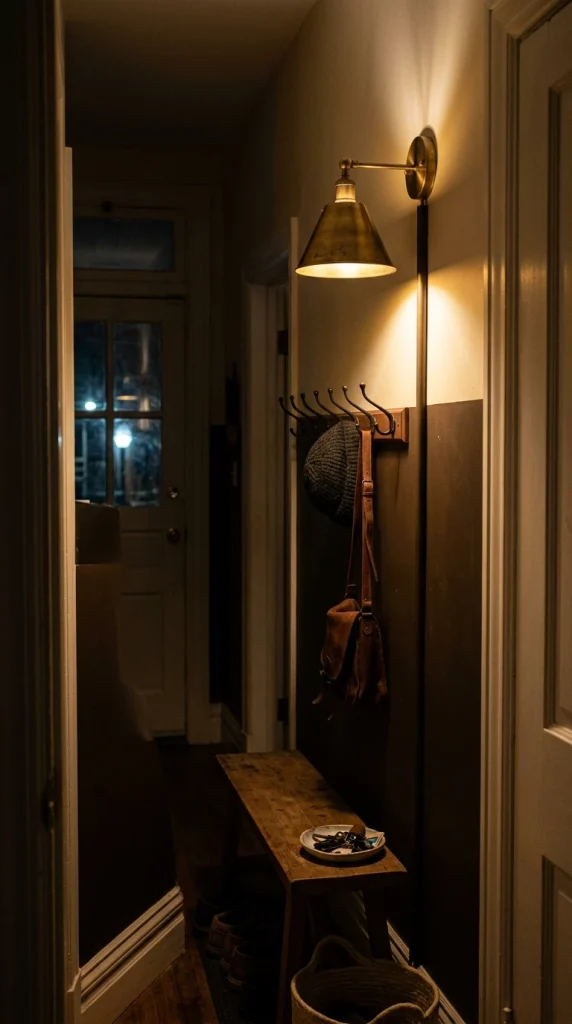
15. Light the Hooks With a Plug-In Sconce
Most entry lighting is one ceiling fixture that leaves the hooks in shadow. You end up fumbling for keys in the dark.
A plug-in wall sconce over the bench fixes that without an electrician. Put a warm 2700K bulb in it and the first thing you see at night looks like home instead of a hallway.
Most plug-in sconces still need one or two small screws for the mounting plate. Run the cord down the wall inside a paintable cord cover. Hardwired fixtures are a job for a licensed electrician.
16. Add a Shelf Above the Hooks and Use the Height
Look up. Most small entries have a few feet of empty wall above the coat hooks.
One shelf up there holds the things you grab weekly, not daily: umbrellas, the reusable grocery bags, a bin of spare gloves. Keep daily items at hand height and let the shelf handle the slow storage.
💡 Quick Tip
Leave about a foot between the shelf and the hooks so a bulky coat hood doesn’t jam against the shelf edge every time you grab it.
17. Tuck a Mudroom Pocket Under the Stairs
If your stairs land near the front door, the low triangle underneath is prime mudroom space. A bench fits under the tall end. Rolling bins slide into the short end.
Put the bench under the tallest part so you can sit up straight.
Use rolling bins in the low end so nothing gets lost in the back.
Cutting into the stair wall without a licensed contractor. It can be structural.
Closed doors over wet boots, which need air to dry.
Start open. You’ll learn what actually lands there before you spend money on doors.
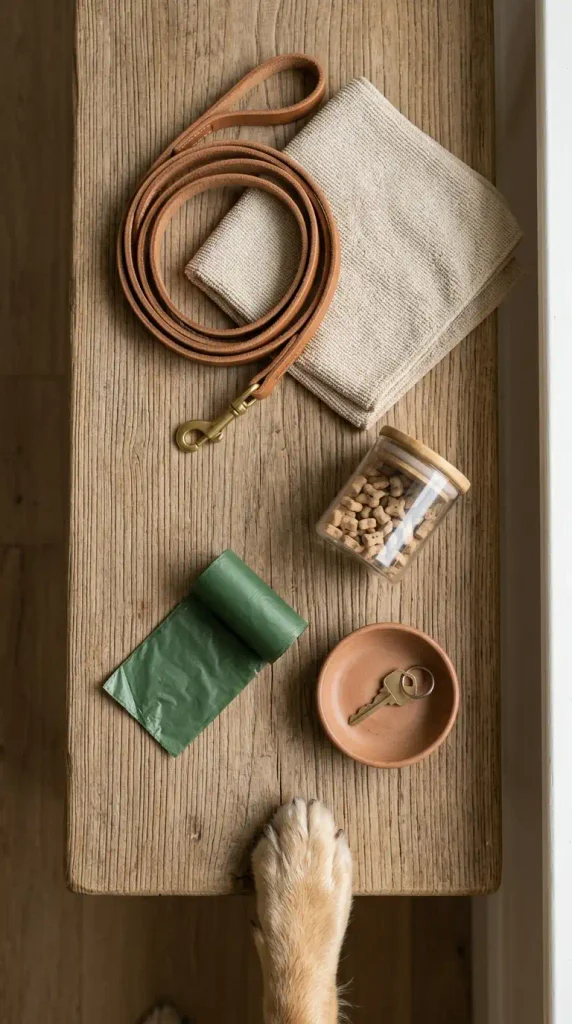
18. Set Up a Pet Station Next to the Leash Hook
Dogs come in muddier than any kid. Give them their own corner of the drop zone so the paw towel isn’t hunting for a hook after every walk.
The pet drop kit
Hang the towel low enough to grab while you’re still holding the leash. That one detail decides whether paws get wiped at all.
19. Swap Your Gear Out With the Seasons
Small entries can’t hold four seasons of gear. They don’t have to. Keep only what this season needs by the door, and box the rest.
At the start of each season, pull everything off the hooks and out of the shoe cabinet.
Keep what you wore in the last two weeks. Box the rest in a labeled bin under a bed or on a closet shelf.
Add one seasonal touch to the bench so the swap feels like a reset, not a chore.
It’s October, so this is a good week for that third step. Our small fall entryway decor ideas show how to style a bench and console without crowding the walkway.
20. Hang a Mirror by the Door
A mirror beside the door earns its spot twice. It bounces light around a hall with no window, and it’s your last check before you leave.
Hang it at eye height for the tallest adult who uses it daily. Heavy mirrors go up with the anchors from the box or rated wall anchors. Adhesive hooks aren’t made for that load.
📌 Good To Know
A mirror placed where it catches a lamp doubles the glow. Hang it so it reflects the sconce from idea 15, not the coat pile.
21. Fold the Bench Away When the Floor Is Gone
Some entries are really a hallway with a door at the end, and no bench fits. A wall-mounted fold-down seat gives you somewhere to sit for a minute, then folds flat against the wall.
Mount it into studs with the hardware the maker specifies.
Check the posted weight limit before anyone sits on it.
Adhesive mounting of any kind for a seat.
Drilling a rental wall without your landlord’s okay.
If drilling is off the table, a lightweight folding stool hung on an extra large (15 lb) hook gives you the same seat with no holes.
22. Pick a Flip-Front Shoe Cabinet for a Family’s Sneakers
Families with a lot of sneakers need more than a rack. IKEA’s BISSA flip-front cabinet holds about eight pairs in 11 inches of depth, and its doors hide the mess when the entry is visible from the living room.
It also has a notch cut into the back, so it sits flush against the wall even with a baseboard in the way.
Two warnings. IKEA says it must be fastened to the wall, and tall winter boots usually won’t fit the angled compartments. Keep those on the tray from idea 8.
23. Do a Two-Minute Reset Every Night
Systems fail without a habit. This one takes two minutes.
Before bed, hang up anything sitting on the bench, put shoes in the cabinet, clear the tray down to keys, and tip out the boot tray if it’s full of water.
Bench clear, shoes in, tray down to keys. Two minutes tonight means a clear bench tomorrow morning.
Pair it with something you already do, like locking the front door. The reset rides along.
24. Paint the Lower Wall a Deep Color to Hide Scuffs
Boot and bag scuffs land in the bottom few feet of the wall. Paint that zone a deeper shade and most of the marks disappear into it.
Owners can go ahead with a scrubbable satin or semi-gloss finish. Renters should ask first, and keep the color to the strip behind the bench so repainting at move-out is a quick job.
Stop the paint at the same height as the hook rail and the line looks planned.

25. Hide It All in a Lift-Top Storage Bench
Open cubbies look tidy in photos and messy by Wednesday. If your entry is visible from the couch, closed storage wins.
A lift-top entryway mudroom bench hides the bulky stuff: sports gear, the reusable bag pile, the spare umbrella.
Before you buy a lift-top bench
Keep shoes out of it, though. A closed box plus damp soles gives you a musty bench by spring.
Frequently Asked Questions
How do I create a mudroom in a small entryway?
Pick one wall near the door and stack three zones on it. Hooks go up top, a bench goes in the middle, and shoe storage goes below. If there’s no free wall, convert a coat closet by removing the door, or use a narrow hall tree anchored to the wall. Plan around depth first, keeping about 36 inches of walkway clear, then choose pieces that fit what’s left.
What flooring is best for a small mudroom?
Owners usually choose porcelain tile or luxury vinyl plank, because both shrug off water, salt, and grit and wipe clean fast. Renters can’t swap floors, so protect the existing one instead. Put a boot tray with a raised lip where wet shoes come off, then lay a low-pile washable runner along the path to the hooks. Add a rug pad so it stays put.
How do I keep a small mudroom organized?
Give every item one home and every person one basket. Use a small tray for keys so mail can’t pile up, and swap out off-season gear so the hooks only hold what you’re wearing now. Then do a two-minute reset before bed: clear the bench, put shoes away, and empty the boot tray. A habit does more than any new bin.
What furniture works in a small mudroom?
Shallow pieces work best. A shoe bench around 13 inches deep, wall-mounted shoe cabinets about 7 inches deep, and slim flip-front cabinets near 11 inches deep all leave room to walk. A narrow hall tree combines hooks, a seat, and shoe storage when wall space is broken up. A lift-top bench gives you closed storage if the entry is visible from the living room.
Can a mudroom be in the front entry?
Yes. Most small homes don’t have a separate back entry, so the front door is where mudroom storage ends up. The difference is that guests see it, so lean on closed storage, matching baskets, and a paint color tied to the wall. A lift-top bench or flip-front shoe cabinet keeps a front-entry mudroom looking calm while it still does the work.
How much space do you need for a mudroom?
Less than you’d think. A hook rail and a narrow shelf can work on about two feet of blank wall. Add a bench and you’ll want roughly 43 inches of width for a standard shoe bench like the TJUSIG. Depth matters more than width: keep pieces at 14 inches deep or less so the walkway stays about 36 inches wide.
How can I make a small mudroom more welcoming?
Add warm light and one soft layer. A plug-in sconce with a 2700K bulb over the hooks makes coming home at night feel calmer than a single ceiling fixture does. A cushion on the bench, a washable runner underfoot, and a mirror that catches the lamp all help. Keep the surfaces mostly clear, because clutter is what makes a small entry feel cramped.
Wrapping Up
A small entry doesn’t need square footage to work like a mudroom. It needs the right depth, the right hook ratings, and one place for everything that comes through the door.
Start with the one-wall setup or the 14-inch depth budget, then add whichever ideas fit your door, your floor, and your people. Most of these mud room ideas for a small entryway take an afternoon and leave your walls intact.
Save this list to your entryway or small-space board so the depth numbers and hook ratings are there when you’re standing in the store aisle. Then pick your first three ideas and try them this weekend.
Keep reading
More cozy nook ideas
 Nook Ideas
Read →
21 Window Sill Reading Nook Ideas for Adults
Most apartment window sills are deep enough for a candle and not much else. By October the glass breathes cold on your…
 Fall Decor
Read →
Holiday Decor on a Budget: Where to Spend and Where to Save
If last December’s holiday decor money went to plastic picks, a glitter sign, and a box of red balls you were tired…
 Fall Decor
Read →
21 Vintage Pumpkin Ideas for Small Apartments, No Porch or Nails Needed
No porch, no mantel, and a lease that frowns on nail holes. You still get a fall corner. You need one shelf,…