
Cozy Home Office Ideas: 10 Changes That Warm Up a Work Corner

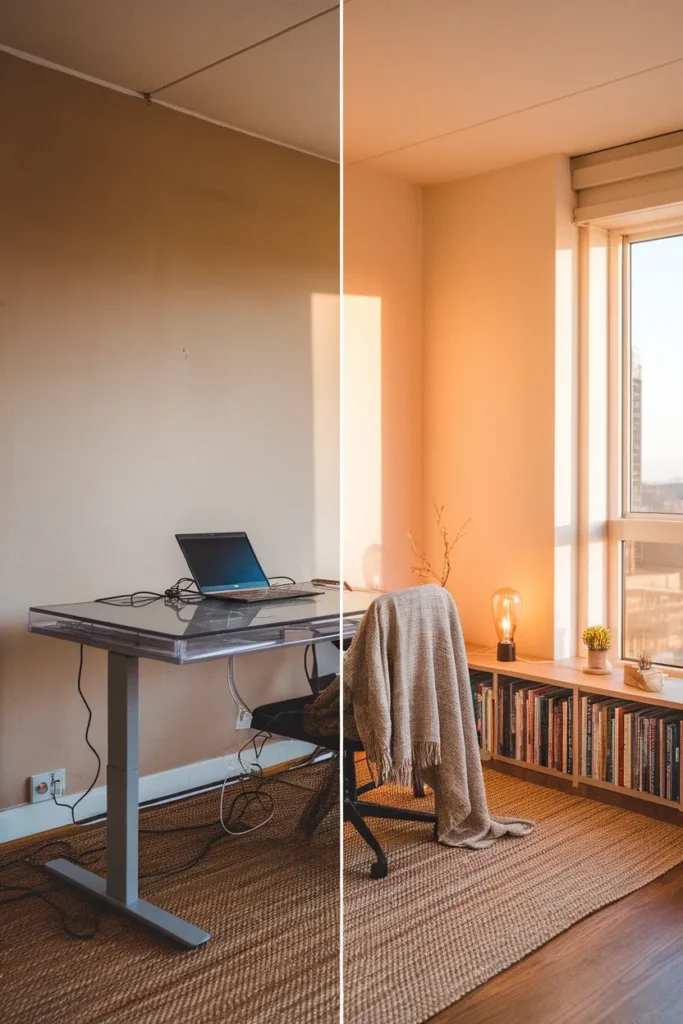
Your desk is against a beige wall, under a ceiling light that makes everything look like a dentist’s waiting room, and you have been meaning to fix it since roughly last March.
Most cozy home office ideas you find are photographed in 400 square foot studies with a fireplace. You have a corner. Maybe a spare bedroom, maybe the end of a hallway, and a landlord who would like the walls returned in the condition they were found.
Good news: the three things that actually change how a room feels are light, texture, and one soft place to sit that is not your work chair. None of them require drilling. All three fit inside a $200 budget if you shop the right way.
Here is the build order, starting with the changes that do the most.
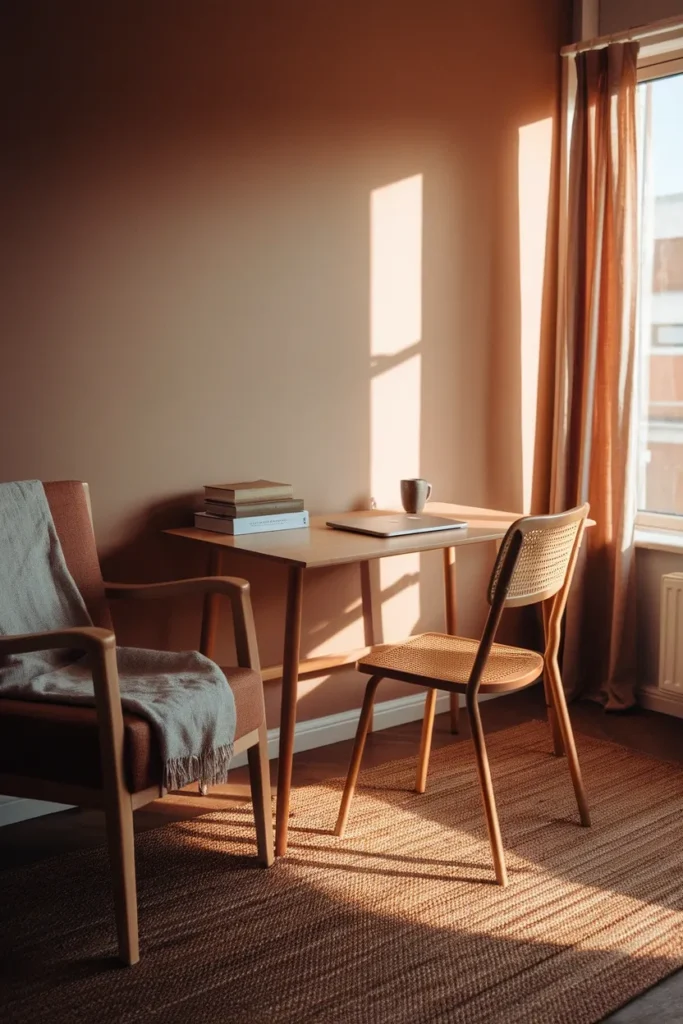
Start With the Three Layers That Do Most of the Work
If you only change three things this weekend, change these, in this order.
1. Kill the overhead light. Not the fixture, just the habit of using it. Replace it with two smaller warm sources at different heights. A desk lamp plus a plug-in sconce, or a floor lamp plus a clip-on reading light. Two pools of light at 2700K read as evening. One ceiling light at 4000K reads as an office.
2. Add one textile your hand touches. Not a decorative pillow you shove aside. A linen or wool throw over the back of your chair that you actually pull across your lap at 3pm when the room gets cold.
3. Put one soft seat in the room that is not your desk chair. A small armchair, a floor cushion, an ottoman you can pull over and put your feet on. The room stops being a workstation the moment it contains somewhere to sit that has nothing to do with work.
That is it. Light, texture, a second seat. Everything below is refinement on those three.
Failure mode if you skip this order: people usually start with decor, buy a print and a plant, and wonder why the room still feels like a cubicle. Decor sits on top of atmosphere. It cannot create it.
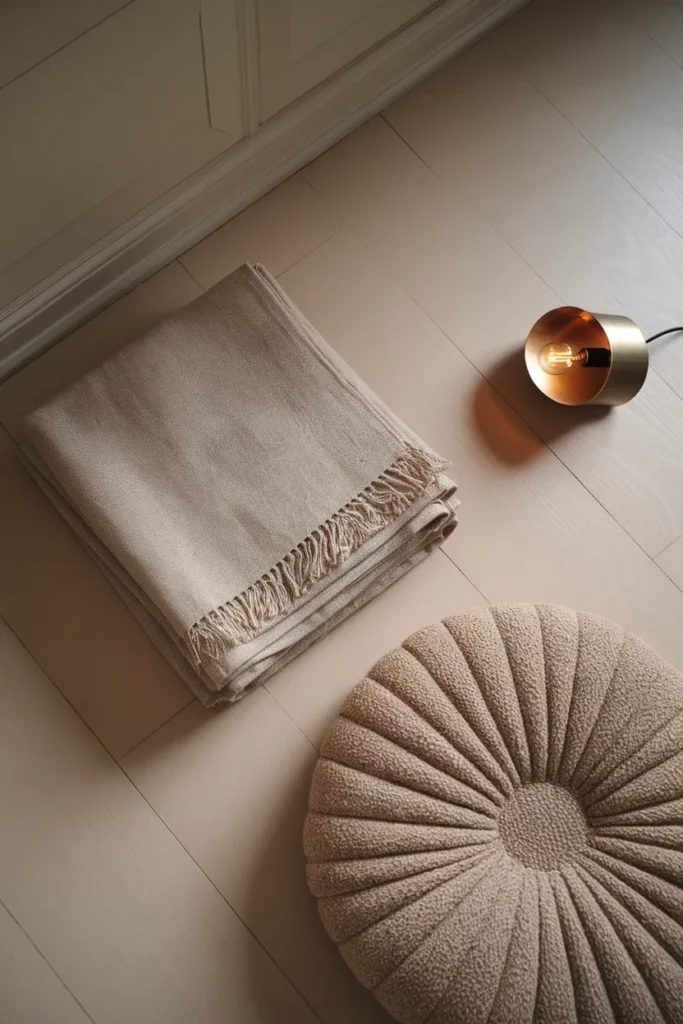
Swap the Overhead Light for Two Small Warm Ones
Color temperature does more for a room than paint does, and it costs about eleven dollars.
The U.S. Department of Energy puts the warm range at 2700K to 3000K, and recommends 2700K to 3600K for most indoor general and task lighting. Anything above roughly 3600K starts reading as cool, which is exactly the light a conference room uses. You can read the full breakdown in the Department of Energy lighting principles guide, which also explains why the Color Rendering Index matters: a CRI of 80 or higher is considered acceptable for indoor residential use, and below that your throw blanket will look slightly gray no matter what color you bought.
So: 2700K bulbs, CRI 80 or higher, in two fixtures at different heights.
One practical catch. The DOE also notes that standard desk work wants roughly 30 to 50 footcandles, and detailed work benefits from considerably more. Two soft lamps set for mood will not get you there on their own if you are reading contracts or editing photos. Keep one brighter task light on a swing arm that you can aim down at the desk surface and swing away when you are done. Warm room, bright desk. Those are two different jobs.
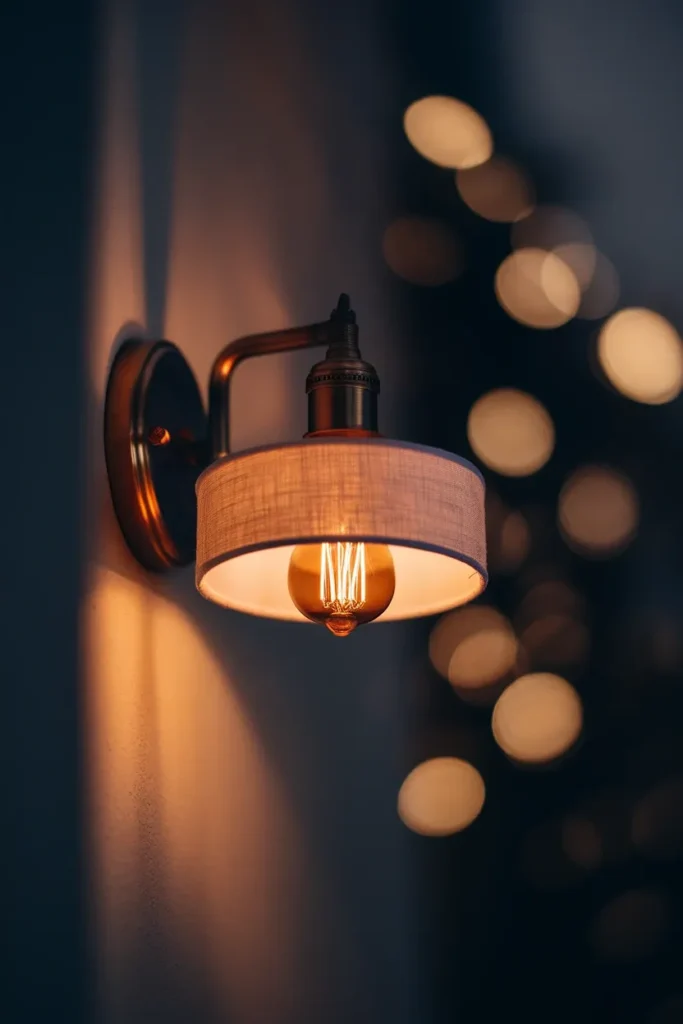
Renter note: a plug-in sconce with a cord cover gives you the wall-mounted look with zero holes, since the mount can go up on adhesive strips if the fixture is light enough. More on weight limits below.
The Comfort Trap: Where Softness and Ergonomics Actually Fight
Here is the thing nearly every roundup on this topic gets wrong. They tell you to buy a really comfortable chair, then two paragraphs later tell you to buy an ergonomic chair, as if those are the same purchase. They are frequently opposites.
A deep upholstered armchair encourages you to sink back and slouch forward at the screen. A sheepskin thrown over a task chair looks wonderful and slides sideways the moment you lean. Floor cushions photograph beautifully and your lower back files a complaint after about forty minutes.
The fix is not choosing one. It is separating them by location. Your desk seat gets measured. Your second seat gets soft.
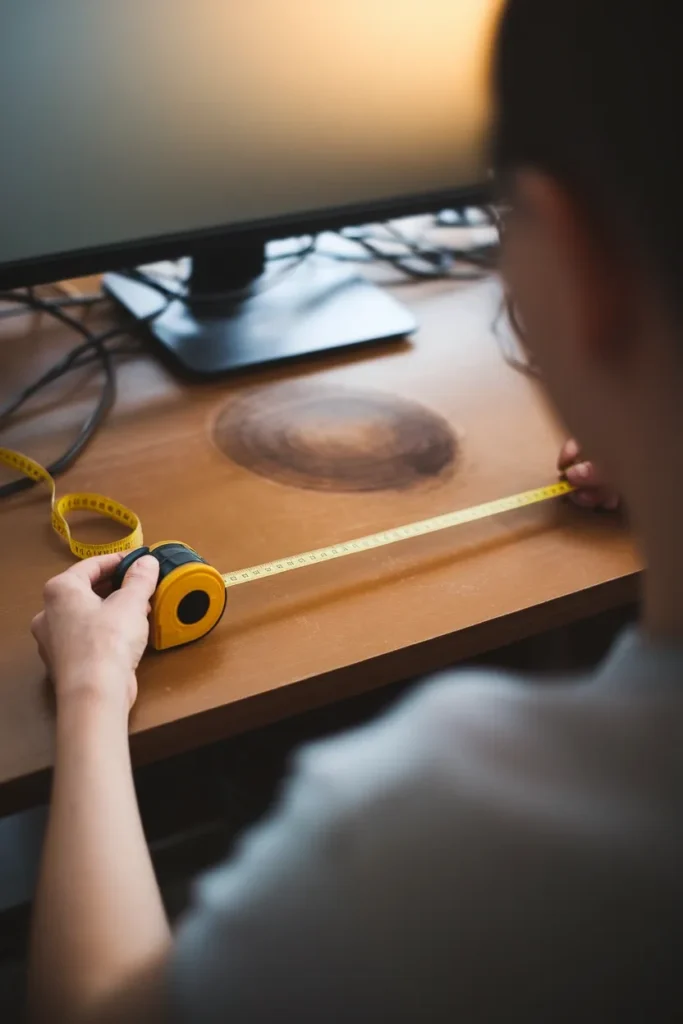
For the measured half, OSHA’s workstation guidance gives you numbers you can check with a tape measure in about ninety seconds. Their computer monitor placement guidance puts the screen 20 to 40 inches from your eyes, with the top of the monitor at or slightly below eye level and the center of the screen 15 to 20 degrees below horizontal.
Which gives us a rule short enough to remember.
The 20-15-20 Rule
| Check | Number | Where it comes from |
|---|---|---|
| Screen distance from your eyes | At least 20 inches | OSHA computer workstation eTool |
| Downward gaze to screen center | 15 to 20 degrees below horizontal | OSHA computer workstation eTool |
| Leg clearance under the desk | 20 to 28 inches high | OSHA workstation desk guidance |
Twenty inches back, fifteen degrees down, twenty inches of knee room. Measure once, and the soft layers can go anywhere they like after that.
One more number worth knowing before you buy a second seat: an IKEA POÄNG sits 16.5 inches off the floor with a 32.25 inch depth, listed at $149 on IKEA’s U.S. site as of August 2026. That depth matters more than the price. In a corner under 6 feet wide, a chair that deep will eat the walkway, and you will stop using the room.
Build a Texture Stack, Not a Texture Pile
Every article on this topic says layer textures. Almost none of them say how many, or what happens when you overdo it.
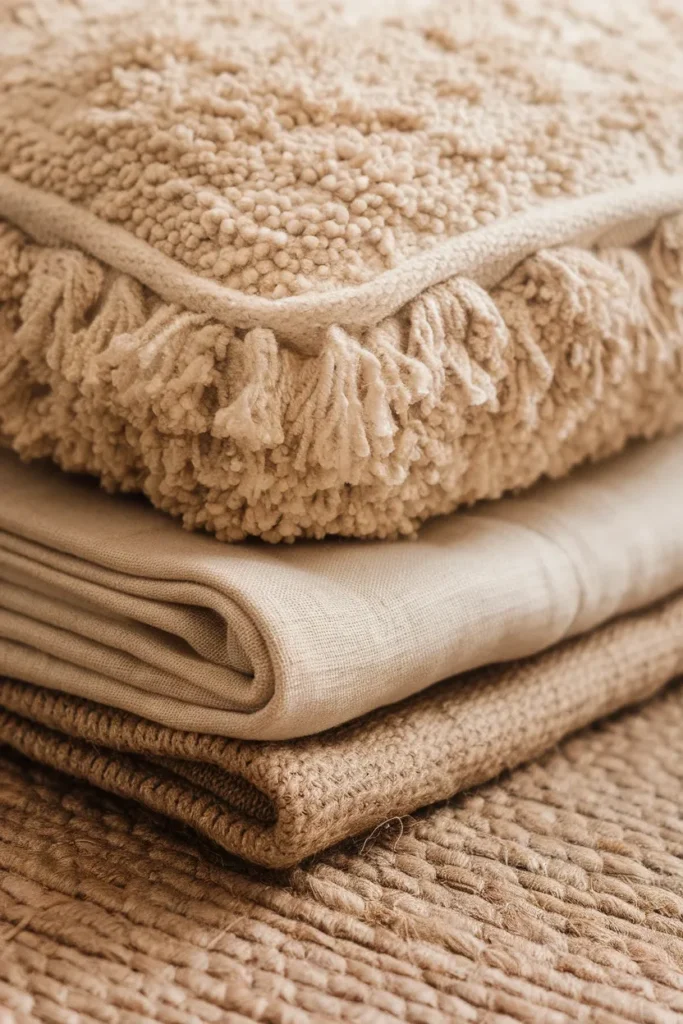
Three materials is the working number. Pick one smooth, one nubby, one flat.
- Smooth: linen throw, cotton curtain, a wool blanket with a tight weave
- Nubby: boucle cushion, sheepskin, a chunky knit lumbar pillow
- Flat: jute rug, washable runner, a felt desk mat
Four or more and the corner starts to read as cluttered rather than tucked away, especially in a room under about 100 square feet where every surface is in your peripheral vision at once.
The desk mat is the one people skip and the one that changes the daily experience most. A felt or leather mat covers the cold laminate your wrists rest on for eight hours. It costs less than a throw pillow.
Failure mode: buying all three textures in the same color. A cream boucle cushion on a cream linen throw on a cream rug photographs as a blur. Keep the values apart. Light throw, mid cushion, darker rug.
Give the Room a Second Life After 5 PM
Here is an angle the big roundups miss entirely. They design the room for the eight hours you are working and ignore the other sixteen.
A home office that only functions during business hours is a room you resent. It sits there in the evening with a dark monitor in it, radiating unfinished tasks. The rooms people describe as a retreat are almost always dual-purpose, and it takes surprisingly little to convert.
What it takes, concretely:
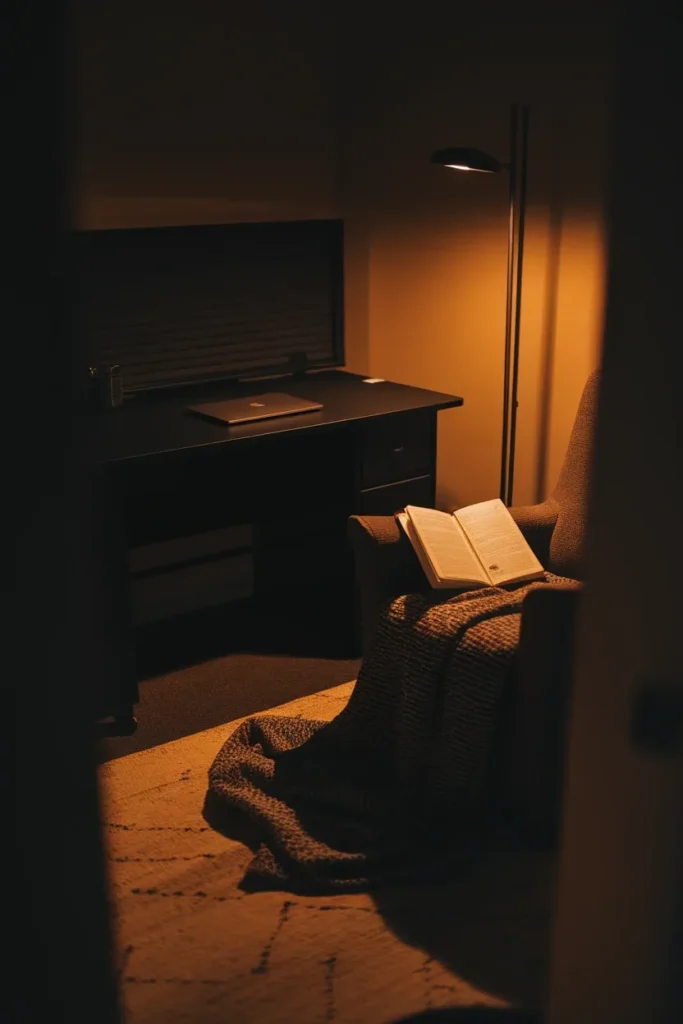
- A seat facing away from the desk, or at least at 90 degrees to it. Facing the monitor at 8pm keeps you in work posture.
- A light you can turn on without turning on the desk light. This is the whole trick. A separate switch is a separate mode.
- Somewhere to put a book down that is not the desk. A 12 to 16 inch side table, or the arm of the chair if it is flat.
- A way to make the screen disappear. Close the laptop, drape the monitor, or angle the chair so it is out of your sightline.
If the corner is big enough to hold both, our full breakdown of home office reading nook setups walks through ten layouts that fit a desk and a chair in the same footprint, including a few for rooms under 80 square feet.
Why this matters for the room, not just for you: dual-purpose rooms get maintained. You will keep a corner tidy that you sit in for pleasure. You will let a pure work corner go to seed by Wednesday.
Warm the Walls, Not Just the Bulbs
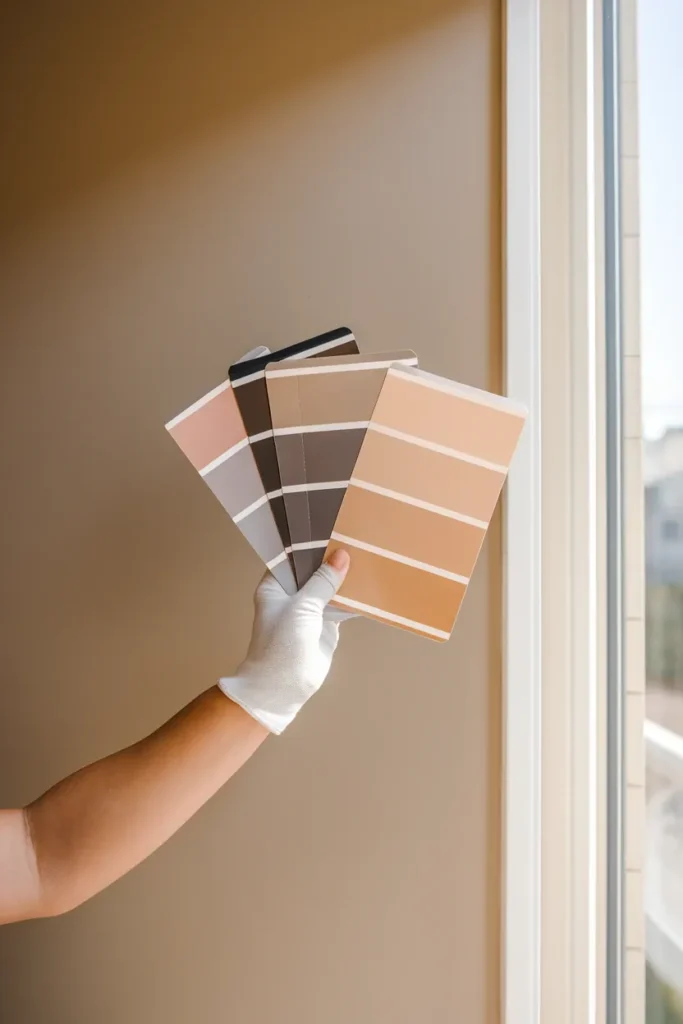
Bulb temperature and wall color multiply each other. A 2700K bulb against a cool gray wall gets neutralized, because the wall is subtracting the warmth the bulb is adding.
If you can paint, the useful move in a small room is not going dark. It is going warm and slightly muddy. Greige, clay, mushroom, dusty olive. These hold onto lamplight instead of reflecting it back flat.
If you cannot paint, you have three workarounds that cost less than a gallon anyway:
- Curtains in a warm tone, hung wide. Fabric is the biggest color surface you can add without touching the wall. Tension rods inside the window frame need no hardware.
- A large piece of art or a fabric hanging on the wall directly in your peripheral vision while seated. Not behind you.
- A tall bookcase. A 31.5 inch wide BILLY is $69 on IKEA’s U.S. site as of August 2026, and a wall of book spines is a warm-toned surface that happens to also hold books.
If you want the full lighting-plus-color logic laid out in one place, our guide to warm lighting ideas for a home covers bulb temperature, fixture height, and dimmer placement together.
Failure mode: painting an accent wall behind the desk where you never see it. Paint the wall you look at.
Renter Rules: What Actually Holds Weight
Most cozy home office ideas assume you can put a hole in something. Here is the version that gets your deposit back.
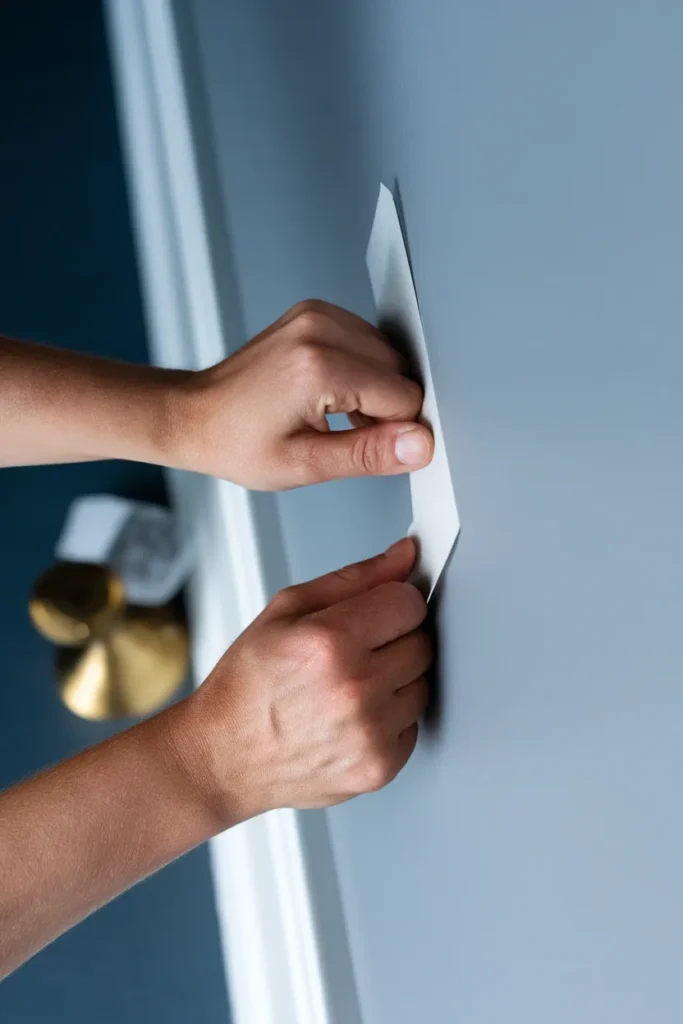
Know the real numbers before you trust an adhesive strip with a $60 sconce. 3M publishes weight ratings per product: large picture hanging strips are rated to 15 pounds and the extra-large size to 20 pounds. Those ratings assume a flat, clean, painted surface and a full cure time. They do not hold on textured or freshly painted walls, which is where most failures come from.
What this means in practice:
- Plug-in sconce: usually fine on strips if the fixture is under the rating, and most small ones are
- Floating shelf holding books: not fine, books get heavy fast, use a freestanding ladder shelf instead
- Full-length mirror: not fine on strips alone, lean it
- Cork board or fabric panel: fine
- Curtain rod: use tension rods inside the frame, or a rod that mounts to the window casing rather than drywall
For a wider set of no-damage approaches across a whole apartment, we collected the no-damage rental decor ideas that hold up over a full lease.
Failure mode: hanging the sconce over the desk on the first warm day of spring, then watching the adhesive give out in July when the room hits 85 degrees. Adhesive strength drops with heat. Mount low-stakes things over your keyboard, not the heavy ones.
Add One Sound and One Smell
Rooms are not only visual, and this is the layer people forget because it does not photograph.
Sound. A small room with a hard floor and a laptop fan has a thin, tinny quality you stop noticing and never stop hearing. A rug and a curtain absorb enough to change it. If the room echoes when you talk on a call, you have a textile problem, not a microphone problem. Some people add a small fountain or a fan for a low continuous baseline. Others need silence and a door. Test which one you are before you buy anything.
Smell. One scent, seasonally, and keep it quiet. Cedar, beeswax, black tea, and vetiver read as warm without reading as a candle shop. Avoid anything sharply citrus or minty at the desk, since those skew alert and clean rather than settled, which is the opposite of what you are building here.
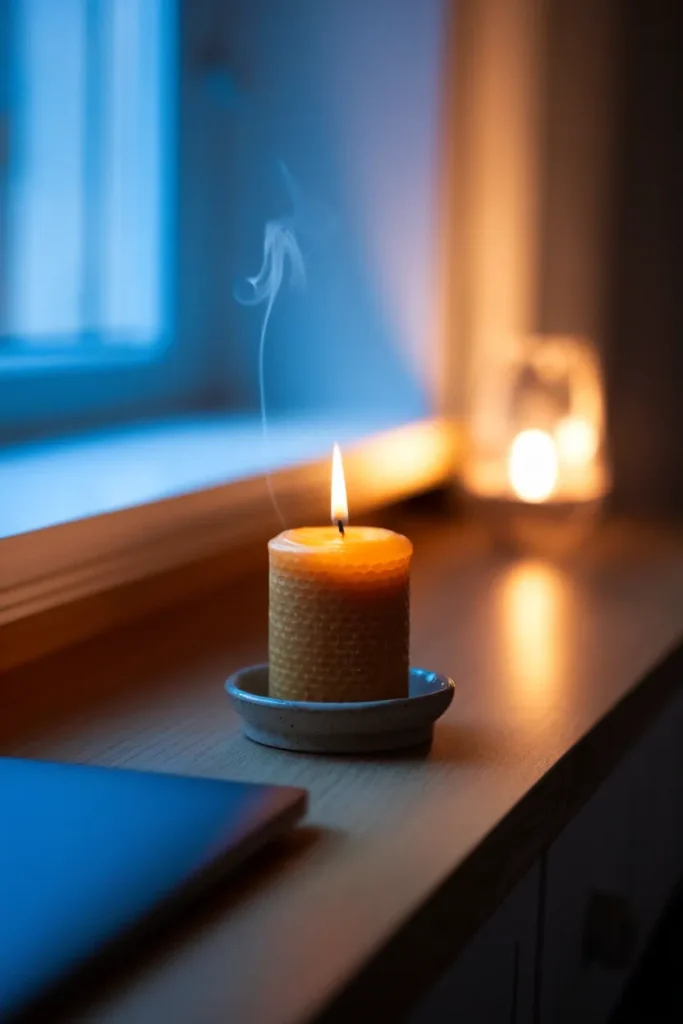
The practical version: a beeswax candle you light at the end of the workday. It becomes a signal as much as a scent. Screen off, candle on, room changes mode.
Hide the Work, Not the Personality
Storage advice in this category is usually just buy nice baskets. The more useful frame is deciding what gets to stay visible.
Work objects should be able to disappear in under sixty seconds: cables, chargers, printed paper, sticky notes, the second monitor if it is a laptop stand situation. One closed box or a single drawer is enough if you actually use it.
Personal objects should stay out permanently: books, a photo, the ceramic your friend made, plants. These are what stop the room from feeling like a serviced office.
The mistake is inverting it. People hide the personal items to look professional on video calls and leave the cable snarl visible because it is annoying to deal with. Then they wonder why the room feels cold on a Saturday.
A 31.5 inch bookcase holds 66 pounds per shelf, which is roughly 40 hardcovers, and a full shelf of book spines does more visual warming than any single decor purchase in this list.
The $200 Version, Totaled
Real numbers, all from U.S. listings checked in August 2026. Prices move, so treat this as a shape rather than a receipt.
| Item | What it does | Price |
|---|---|---|
| IKEA BILLY bookcase, 31.5 inches | Warm wall surface plus storage | $69 |
| Two 2700K bulbs, CRI 80+ | The single biggest atmosphere change | around $12 |
| Plug-in swing arm sconce | Second light source, no wiring | $35 to $60 |
| Linen or wool throw | The texture your hand touches | $25 to $45 |
| Jute or washable rug, 5×7 | Sound absorption plus a floor anchor | from around $40 |
| Felt desk mat | Warmth under your wrists all day | $15 to $25 |
That lands roughly between $196 and $251 depending on how you shop the sconce and the rug. The armchair is the piece that breaks the budget, so it is the one to buy secondhand or defer to month two.
Build order if you are spreading the cost: bulbs first, because they are eleven dollars and change everything. Rug second. Throw and desk mat third. Bookcase fourth. Chair last, once you know how much floor you actually have left.
Frequently Asked Questions
How do I make my home office feel warm and inviting?
Change the light first. Two warm sources at 2700K in place of one overhead fixture does more than any decor purchase. Then add one textile you physically touch during the day, and one seat that is not your desk chair. Those three moves cover most of the distance.
What color light is best for a home office?
The Department of Energy considers 2700K to 3000K warm and recommends 2700K to 3600K for most indoor general and task lighting. Look for a CRI of 80 or higher so your colors do not go flat. Keep one brighter, aimable task light for detailed work, since ambient warm light alone will not give you enough for reading fine print.
How do you make a small home office cozy without making it cramped?
Watch depth, not width. A chair over about 32 inches deep will block the walkway in a corner under 6 feet wide. Go vertical with a tall narrow bookcase instead of horizontal with a credenza, and keep the floor visible around the rug edges so the eye reads open space.
What can I do if I rent and cannot drill or paint?
Quite a lot. Tension rods for curtains need no hardware. Large adhesive picture hanging strips are rated to 15 pounds and extra-large to 20 pounds, which covers most small plug-in sconces and art. Freestanding shelving replaces anything wall-mounted. Curtains and a rug will shift a room’s color and sound more than paint would.
What is the best desk setup for both comfort and posture?
Separate the two jobs. Measure the desk seat, soften everything else. Screen at least 20 inches from your eyes, top of the monitor at or below eye level, screen center 15 to 20 degrees below horizontal, and 20 to 28 inches of leg clearance underneath. Once those are right, put the sheepskin on the reading chair rather than the task chair, where it will actually stay put.
How much does it cost to make a home office feel cozy?
A meaningful version lands around $200 if you skip the armchair. Warm bulbs run about $12, a felt desk mat $15 to $25, a throw $25 to $45, a 5×7 rug from around $40, and a 31.5 inch IKEA BILLY was $69 in August 2026. Seating is what moves the total, so buy it secondhand or last.
Should a home office have a rug?
Usually yes, for sound as much as looks. Hard floors plus a laptop fan create a thin, echoey quality on calls that people blame on their microphone. A rug and a curtain absorb enough to fix it. Choose washable if the room doubles as a place you eat lunch.
Where to Start This Weekend
Pick the bulbs. Genuinely, just the bulbs. Two at 2700K, CRI 80 or higher, one in a desk lamp and one anywhere else in the room, and turn the ceiling light off for a week.
It is the cheapest change on this list and the one that will tell you whether the rest is worth doing. Most people find the room feels different enough by day three that the rug and the throw stop feeling optional.
Then work down the list in order: rug, throw, desk mat, bookcase, chair. One purchase a week and the corner is finished by October.
If your corner has room for a second seat and you want to see how a desk and a reading chair share one small footprint, that is the next thing worth reading.
Keep reading
More cozy nook ideas
 By Room
Read →
By Room
Read →
One Corner, Two Lives: The Reading Nook Desk Combo That Fits a Small Bedroom
No bay window, no reno budget, no drill-friendly landlord required. You need one blank corner, about 5 feet of wall, and one…
 By Room
Read →
By Room
Read →
Home Office Reading Nook Ideas — 10 Ways to Add a Cozy Corner to Your Workspace
There is a very specific kind of tired that only comes from staring at a work screen for eight hours straight. Your…
One Comment