
Rustic Cottage Bathroom Decor: Clawfoot Tubs, Dried Flowers, and What Actually Survives the Steam

No clawfoot tub, no cottage in the Cotswolds, no landlord who returns your texts. You can still get rustic cottage bathroom decor into a rented 40 square foot bathroom, and the whole thing runs on two objects: one tub silhouette and one bundle of dried stems.
Here is the part the inspiration galleries skip. A bathroom hits 70 percent humidity twice a day. That eucalyptus bunch everyone pins turns to gray dust in about six weeks, and the reclaimed wood shelf underneath it cups like a taco.
So this guide gives you the look first, then the version that lasts.
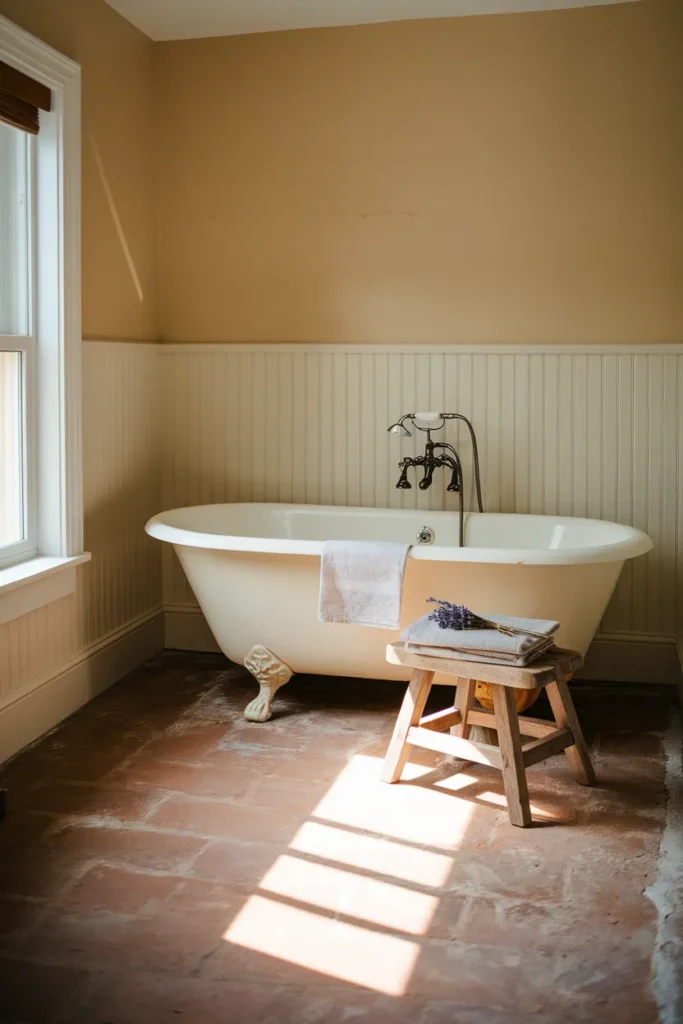
Start With the Tub Silhouette and One Dried Bunch
That is the whole first move. Two things, and your bathroom reads cottage before you buy anything else.
The tub silhouette matters more than the tub. What your eye registers in a cottage bathroom is a curved, freestanding shape with visible floor underneath it, not a boxed-in alcove. If you have a real clawfoot or roll-top, you already won. If you have a builder-grade alcove tub, skip to the workarounds further down, because there are three ways to fake that line.
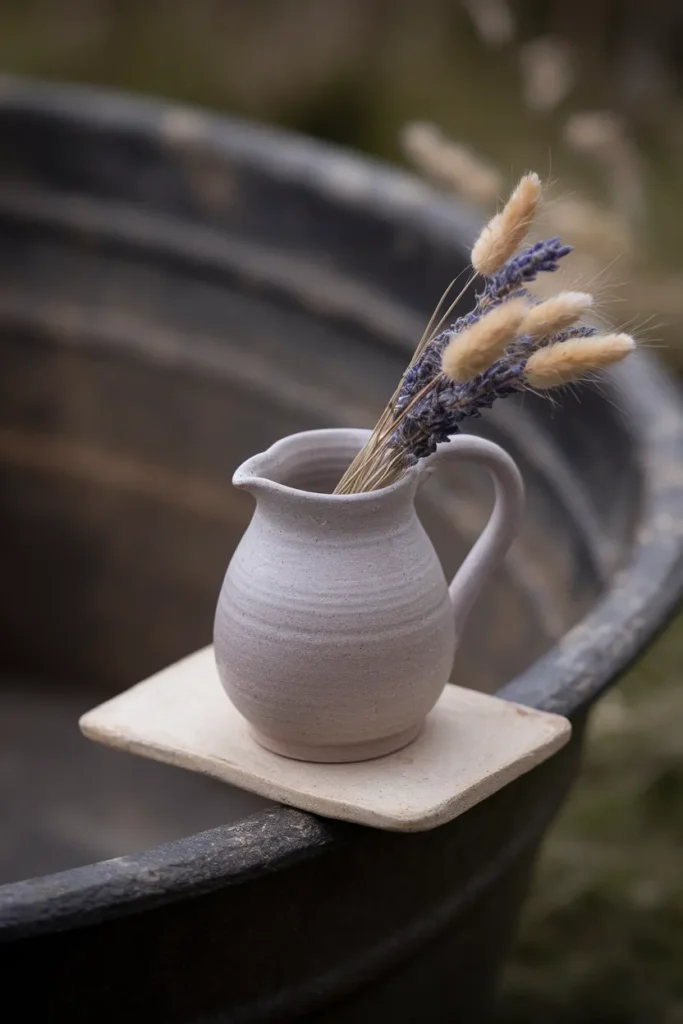
The dried bunch does the other half. One bundle, one vessel, placed at a height between the tub rim and eye level so it breaks up flat wall. Bunny tail grass, lavender, or dried eucalyptus in a stoneware pitcher or an amber apothecary bottle.
Buy one bunch. Not three. Cottage bathrooms look collected because somebody stopped.
The 60/30/10 Cottage Bath Rule
Most rustic cottage bathroom decor fails for one reason: too many materials competing. Use this ratio and the room settles down.
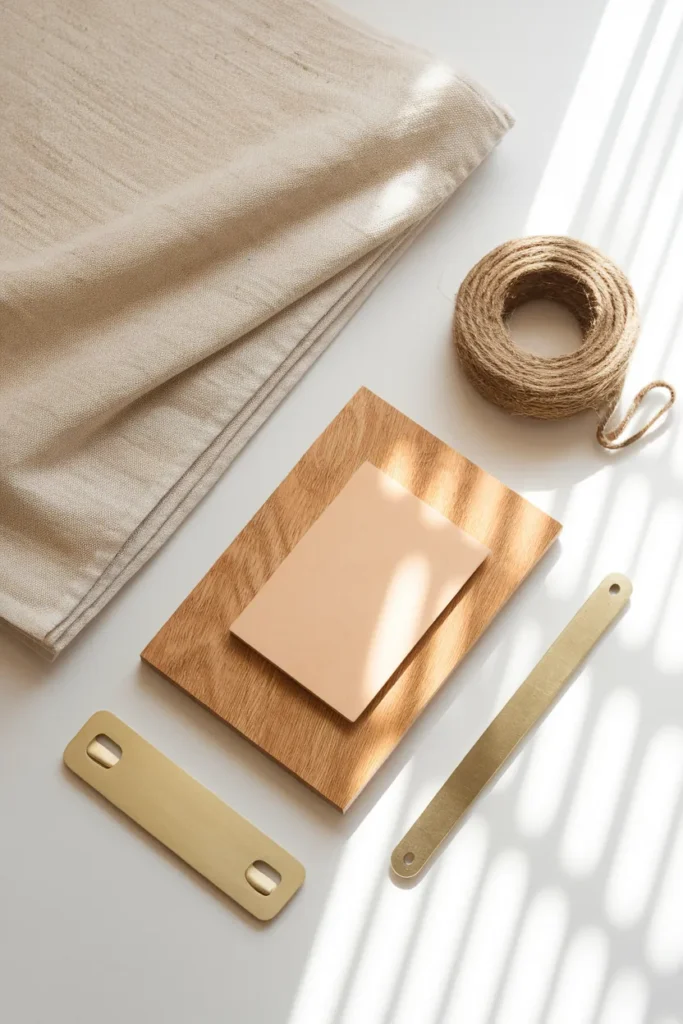
60 percent soft neutral. Walls, ceiling, the largest towels. Buttermilk, chalk white, straw, oat. This is your backdrop and it should be boring.
30 percent warm wood or natural fiber. One vanity or one stool, one shelf, one basket, one bath mat. Warm tones only. Orange-brown oak and pine read cottage. Gray-brown finishes read office lobby.
10 percent aged metal or color. Unlacquered brass, oil-rubbed bronze, or one muted sage or terracotta accent. Small doses. Towel ring, one hook, one frame.
Count what you own against those three buckets before you buy. Most bathrooms that feel wrong are running 60 percent wood and 10 percent neutral, which reads sauna, not cottage.
Dried Flowers That Actually Survive a Bathroom
Here is the gap nobody fills. Dried botanicals are the single most pinned cottage bathroom accessory and the single fastest to fail, because a bathroom is the worst room in the house for them.
The mechanism is simple. Dried stems are hygroscopic, so they pull moisture back out of humid air, go limp, and then mildew at the base where the stems bunch together. The EPA recommends keeping indoor relative humidity below 60 percent, and ideally between 30 and 50 percent, precisely because mold takes hold above that line. A bathroom during a shower blows past 60 percent easily. If you want the full picture on why that number matters, the EPA guidance on indoor humidity and mold is the plain-language version, and it notes a humidity meter runs about $10 to $50 at most hardware stores.
The Two-Shower Test. Put the bunch where you want it. Take two normal showers with the door closed. Then squeeze the stems near the base. If they feel cool and slightly pliable instead of snapping dry, that spot is too wet. Move the bunch farther from the shower, higher on the wall, or into the room’s driest corner.
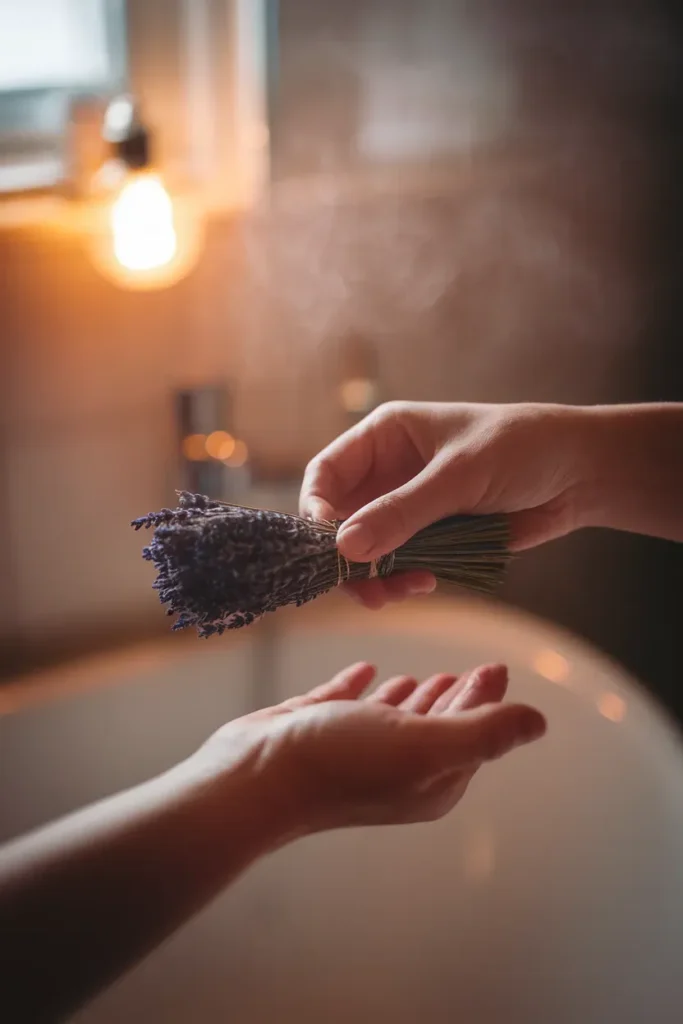
What holds up: lavender, bunny tail grass, strawflower, statice, dried wheat. Woody or waxy stems win.
What fails fast: pampas grass (sheds and goes stringy), hydrangea (browns and collapses), anything with a soft green stem.
And run the fan. Not during the shower, after it, for a full 20 minutes.
Three Ways to Fake a Clawfoot Tub
Most readers do not have one and never will. These give you the same visual line.
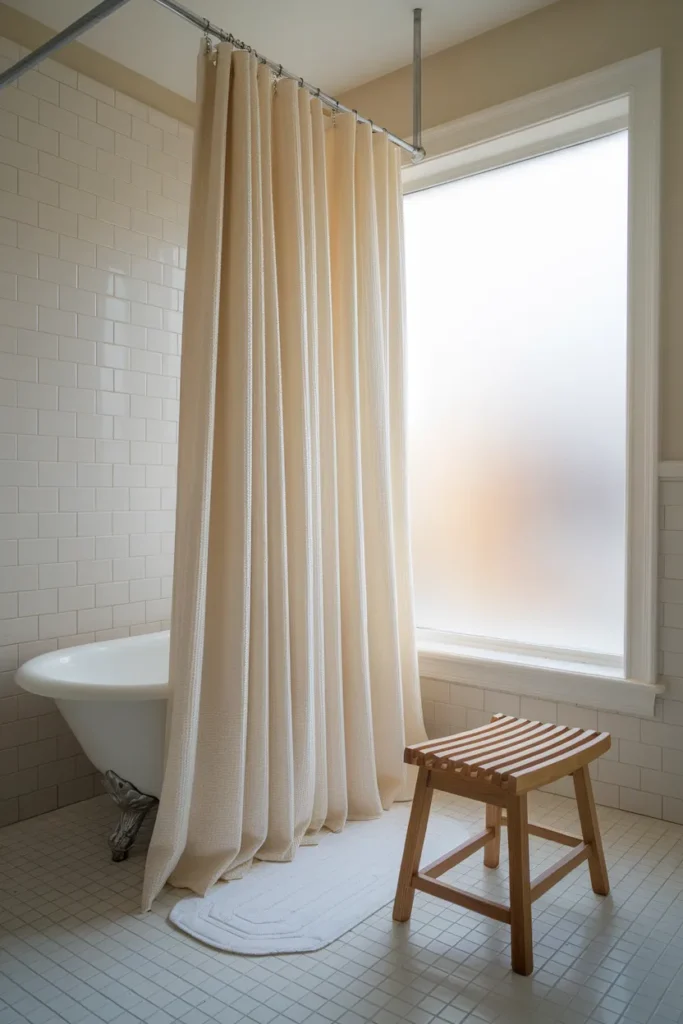
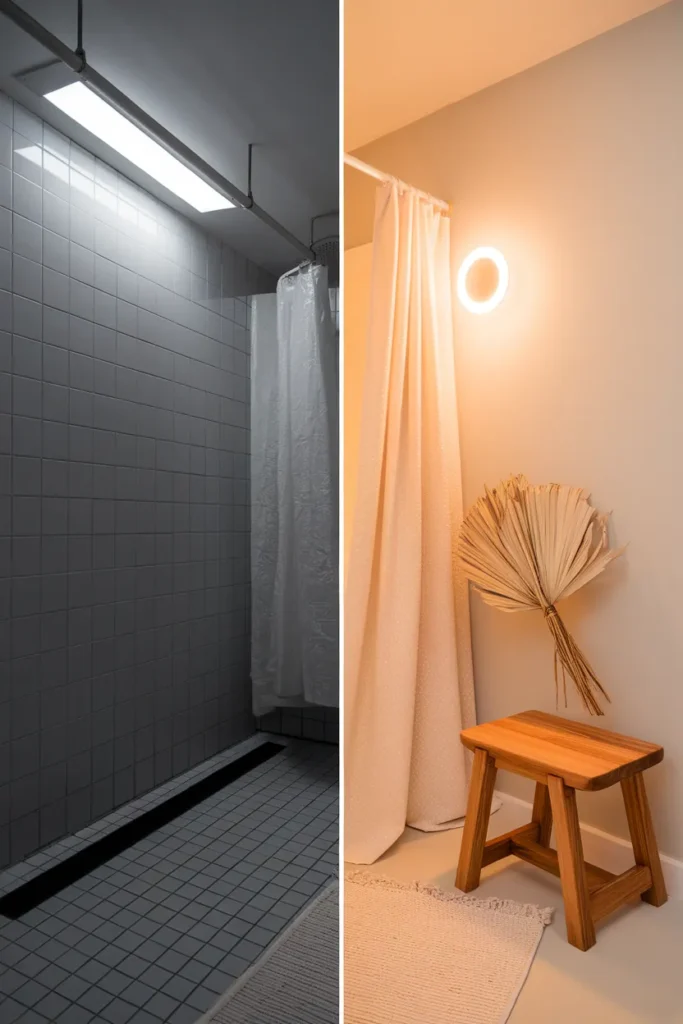
1. Curtain the alcove, not the tub. Hang a full-length linen or cotton shower curtain on a ceiling-mounted track or a tension rod set as high as the wall allows, then let it break on the floor. Floor-length fabric reads freestanding. A curtain that stops at the tub rim reads apartment.
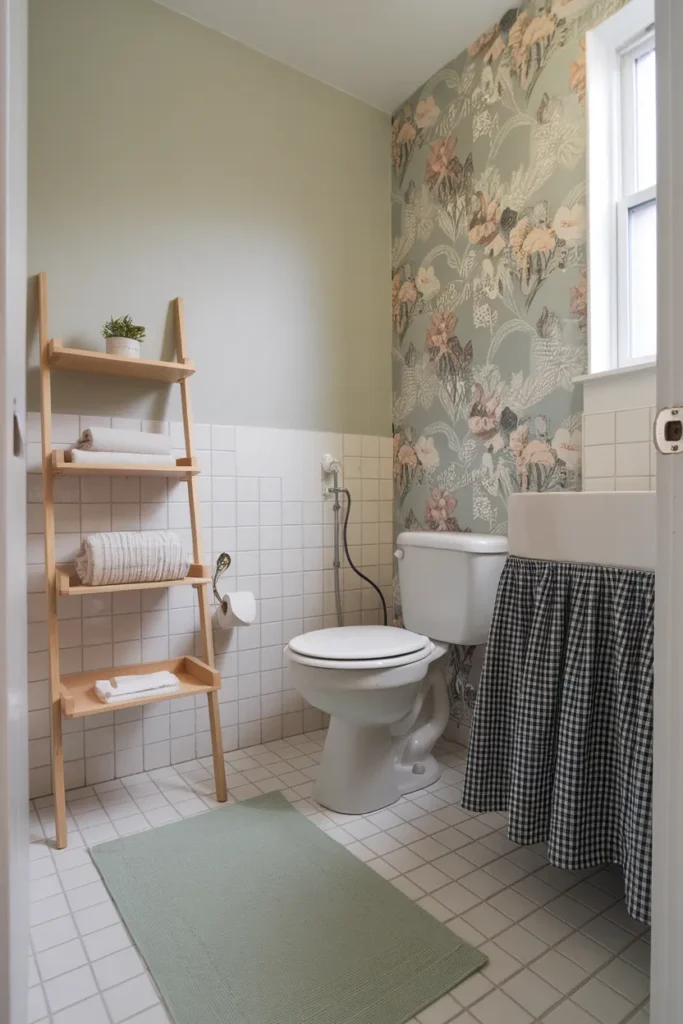
2. Skirt the vanity instead. Move the cottage weight to the sink. A gathered linen or gingham sink skirt on a tension wire hides plumbing and clutter, and it is one of the most reliably pinned cottage bathroom details there is.
3. Add a wooden bath caddy or stool. A slatted teak stool or a bath board across the tub gives you the curved, furnished, freestanding feeling in one object. Look for teak or white oak, roughly 16 to 18 inches wide.
Failure mode: Skip the floor-length curtain and every other change reads as decoration sitting on top of a builder bathroom. The curtain is the load-bearing move.
The Renter-Safe Version: No Drill, No Paint, No Deposit Lost
Every competing article assumes you own the room. Here is the version that comes back down in one afternoon.
Floor: A washable cotton runner or a flatweave rug laid over existing tile. Covers a bad floor completely, comes up in one motion. Avoid jute here, for reasons in the next section.
Walls: Peel-and-stick wallpaper on one wall only, usually behind the toilet or above wainscot height. Bathroom-rated vinyl, and test a hidden patch first for adhesive residue.
Storage: A freestanding over-the-toilet shelf. No-drill models with adhesive backing run around $20 at Walmart and Target, and a slim wooden ladder shelf leaned against the wall does the same job with more warmth.
Hardware: Command-strip hooks and a tension rod for towels. Swap towel bars only if the existing ones unscrew from brackets that are already there.
Sink: A skirt on tension wire, zero holes.
If this way of working sounds familiar, it is the same logic behind these renter-friendly cottagecore living room ideas, where the whole scheme has to be reversible.
Failure mode: Adhesive hooks fail in bathrooms more than anywhere else because people mount them on a wall that is already damp. Wipe the spot, let it dry fully, then press for 30 seconds and wait an hour before loading it.
What Wood and Fiber Actually Survive the Steam
The reclaimed wood shelf is the most-recommended item in this entire category and the one most likely to warp. Here is the honest ranking.
| Material | Holds up? | What actually happens |
|---|---|---|
| Teak, cedar | Yes | High natural oil content, built for wet use |
| Sealed white oak | Yes | Fine with a marine or polyurethane seal, reseal every couple of years |
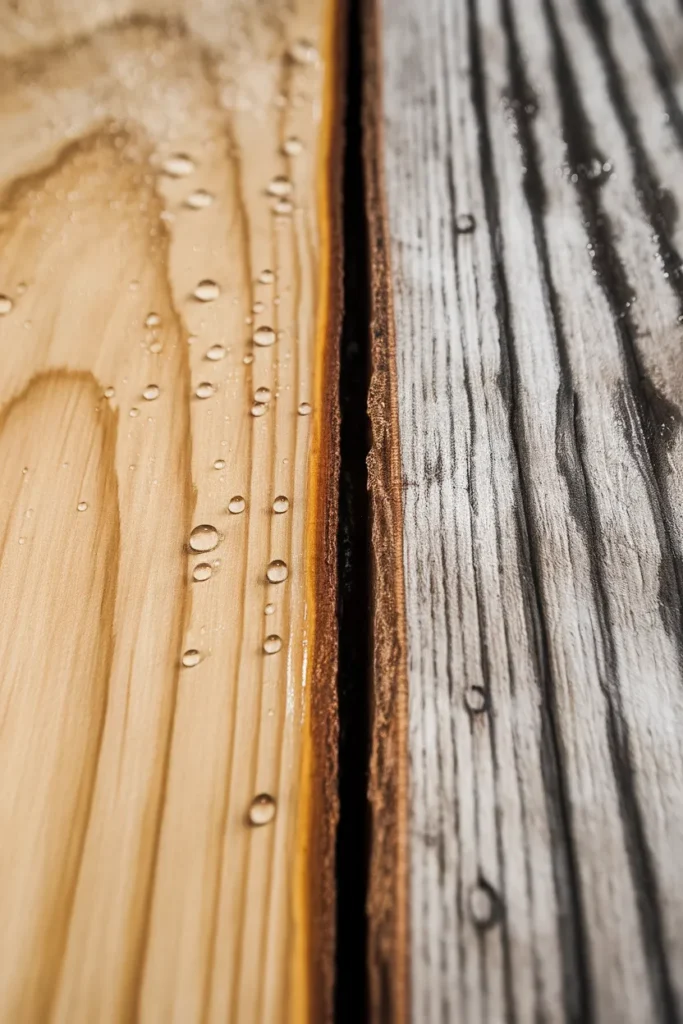
| Raw reclaimed pine | Risky | Cups and cracks along the grain within a season without sealing |
| Particle board or MDF | No | Swells at the edges and never recovers |
| Jute rug | No | Holds water, goes stiff, smells musty and stains the floor |
| Cotton flatweave rug | Yes | Washable, dries fast, the right choice for a bath |
| Wicker and rattan basket | Mostly | Fine for dry towels, keep it off the floor and away from the tub |
Two rules cover almost everything. Seal any raw wood before it goes in, and keep porous fiber off the floor.
The real fix is airflow. The Home Ventilating Institute recommends 1 CFM of exhaust per square foot for bathrooms under 100 square feet, so a 6 by 8 foot bathroom wants a fan rated at roughly 48 CFM, and it recommends running the fan for 20 minutes after you finish. The full Home Ventilating Institute bathroom fan sizing guidance covers larger rooms too. If you rent and the fan is weak, crack the window and leave the door ajar instead.
Light It Like a Cottage, Not a Dentist’s Office
Bathroom lighting is where most cottage schemes collapse. One flush-mount ceiling fixture with a 4000K bulb will flatten every warm material you just bought.
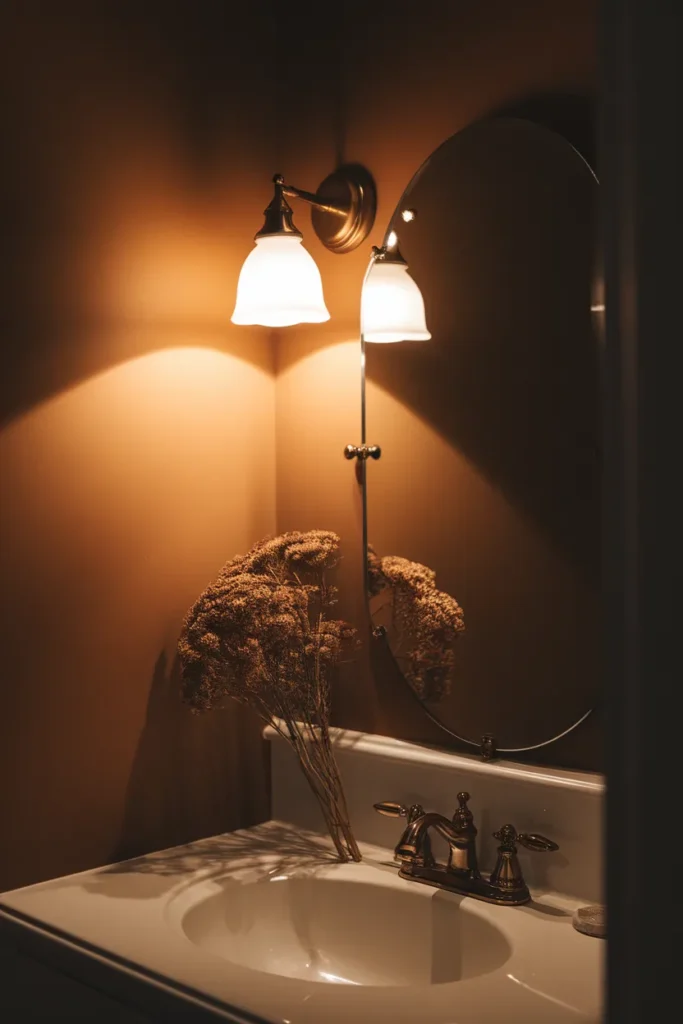
Change the bulb before you change the fixture. Go to 2700K, sometimes labeled soft white or warm white. It is a five dollar swap and it is the single highest-return change in this entire article. Anything at 3000K and above pushes the room toward blue and kills the wood tones.
Add a second, lower light source. A plug-in sconce beside the mirror, or a small lamp on the counter if there is an outlet and clearance. Two light sources at different heights is what separates a cottage bathroom from a lit box.
Put it on a dimmer or a smart bulb. Evening bath at 20 percent output, morning at full.
For how the same warm-light rules apply across the rest of a home, the reading nook lighting guides go deeper on Kelvin, placement, and sconce height.
A quick sensory check: stand in the doorway at night with only the new light on. If your hands look warm and slightly golden, you got it right. If they look gray, the bulb is wrong.
Texture, Scent, and the Details That Read Cottage
Once the big pieces are set, the room finishes on small things. These are the ones that actually register.
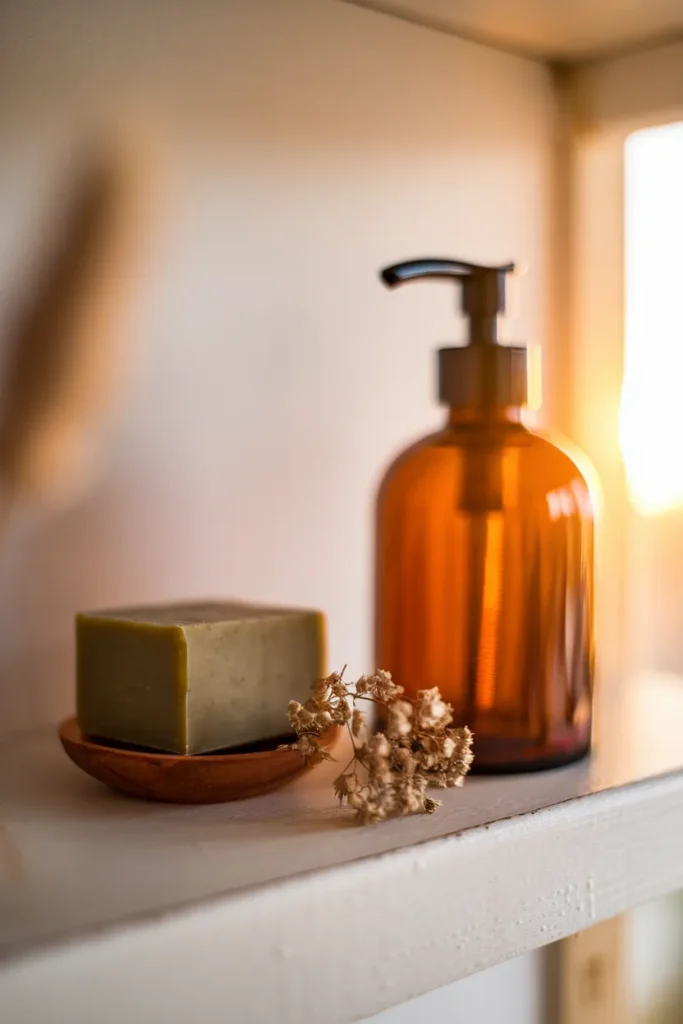
Swap plastic for glass or stone. Decant hand soap into an amber or clear glass pump bottle. Cheapest high-impact change on the list.
One folded stack, not a full shelf. Three rolled towels in a basket, or two folded on a stool. Restraint reads intentional.
Add scent that matches the material story. Cedar, bergamot, or a plain unscented bar of olive oil soap on a wooden dish. A eucalyptus bundle tied to the showerhead releases scent in the steam and lasts a few weeks.
Peg rail instead of towel bars. A Shaker-style peg rail holds towels, robes, and a hanging basket on one board, which is why cottage bathrooms with almost no storage still look uncluttered.
One piece of real art. A small framed botanical print or a thrifted oil, hung slightly lower than you think.
The Order to Buy In, Under $200
Budget matters more than inspiration, so here is the sequence. Buy in this order and stop whenever the room looks right.
- 2700K bulbs. Around $5 to $15 for a pack. Do this first, before anything else, because it changes how every other purchase looks.
- Floor-length cotton or linen shower curtain. Roughly $25 to $50. The load-bearing change.
- Cotton flatweave rug or runner. Roughly $25 to $60. Covers a bad floor instantly.
- One wooden element. Teak stool, bath caddy, or leaning ladder shelf. Roughly $30 to $70 new, far less secondhand.
- Dried bunch and one vessel. Roughly $15 to $30.
- Aged metal accent. One brass hook or towel ring, roughly $10 to $25.
That lands most rooms between $110 and $250 depending on how much you thrift. Price ranges reflect typical US retail as of mid-2026, so check your own local stock before budgeting hard.
Steps one through three do about 80 percent of the visible work. If money is tight, that is the whole project.
The same buy-in-order thinking drives this breakdown of rustic farmhouse kitchen decor on a budget, which uses a comparable three-stop shopping sequence.
Frequently Asked Questions
What is cottage-style bathroom design? It is a look built on soft neutral walls, natural materials, vintage or vintage-look fixtures, and visible texture instead of polish. Beadboard or paneling, a freestanding tub silhouette, warm wood, and floral or gingham fabric are the recurring signals. Rustic cottage leans harder on raw wood and aged metal, where coastal cottage leans lighter and bluer.
How do I create a cottage bathroom on a budget? Change the bulb to 2700K, hang a floor-length fabric shower curtain, and lay a washable cotton rug. Those three moves cost under $100 combined and carry most of the visual weight. Then add one wooden object and one dried bunch. Secondhand stores are where the wood should come from.
What colors work in a rustic bathroom? Warm neutrals as the base: buttermilk, cream, straw, oat, stone. Earth tones as accents: chestnut, terra cotta, mushroom, umber. Muted sage and soft ochre both hold up. Keep cool grays out of it, since they fight the wood tones.
Can you do cottage style in a small bathroom? Yes, and small rooms often do it better. Cottage style relies on texture and warmth rather than square footage. Wall-hung or pedestal sinks, a sink skirt for hidden storage, and a peg rail instead of bulky cabinets keep the floor clear.
How do I make a rustic bathroom feel more elevated? Reduce the number of materials, not add more. Two wood tones maximum, one metal finish, one fabric pattern. Then upgrade quality on the few things you keep: real stoneware instead of resin, unlacquered brass instead of gold-tone plastic, a linen curtain instead of vinyl.
How long do dried flowers last in a bathroom? In a well-ventilated bathroom, typically a few months. In a bathroom with a weak fan and no window, sometimes as little as four to six weeks before stems soften and mildew. Run the fan for 20 minutes after showering and keep the bunch as far from the shower as the room allows.
Do wood shelves work in a bathroom? Sealed hardwood, teak, or cedar work well. Raw reclaimed pine and anything made of particle board will swell or cup. Seal before installing, and pair it with adequate exhaust ventilation.
Where to Take This Next
Pick the two changes with the highest ratio of impact to effort: the 2700K bulb and the floor-length curtain. Do those this week, live with the room for a few days, then decide whether it needs wood or just needs editing.
Most bathrooms in this style are finished long before their owners think they are. If you want the same ratio-and-restraint approach applied to a whole room, the cottagecore guides on this site run on the same rules.
This article is for general decorating guidance. For any concern about mold, persistent damp, or ventilation problems in your home, contact a qualified licensed professional in your area, and if you rent, report moisture problems to your building manager in writing.
Keep reading
More cozy nook ideas
 Living Room
Read →
Living Room
Read →
18 Small Apartment Living Room Ideas Worth Copying This Weekend
No extra square feet. No permission to paint. A sofa that already takes up half the floor. You can still make the…
 Kitchen
Read →
Kitchen
Read →
12 Warm Neutral Kitchen Ideas Worth Copying This Weekend
If your kitchen is beige and still feels cold at 8 p.m., the paint probably isn’t the problem. It’s usually the bulb,…
 Nursery & Teen Rooms
Read →
Nursery & Teen Rooms
Read →
8 Montessori Playroom Mistakes to Avoid (and What to Do Instead)
If your Montessori playroom looks calm for about an hour after you set it up, and then every basket ends up dumped…