
12 Small Cottagecore Living Room Ideas That Work in a Rented Apartment

A small cottagecore living room in a rented apartment comes down to three things: warm light, honest texture, and furniture that actually fits the floor plan. You don’t need a bay window. You don’t need a landlord who returns calls. What you need is twelve ideas that survive a security deposit inspection, and that’s exactly what follows. You’ll get real furniture widths down to the quarter inch, the ten dollar bulb spec that does more than any throw pillow, and a full starter corner totaled line by line in idea 12. First, though, the three no-drill moves, because “I can’t put holes in the wall” is the fear that stops most renters before they start.
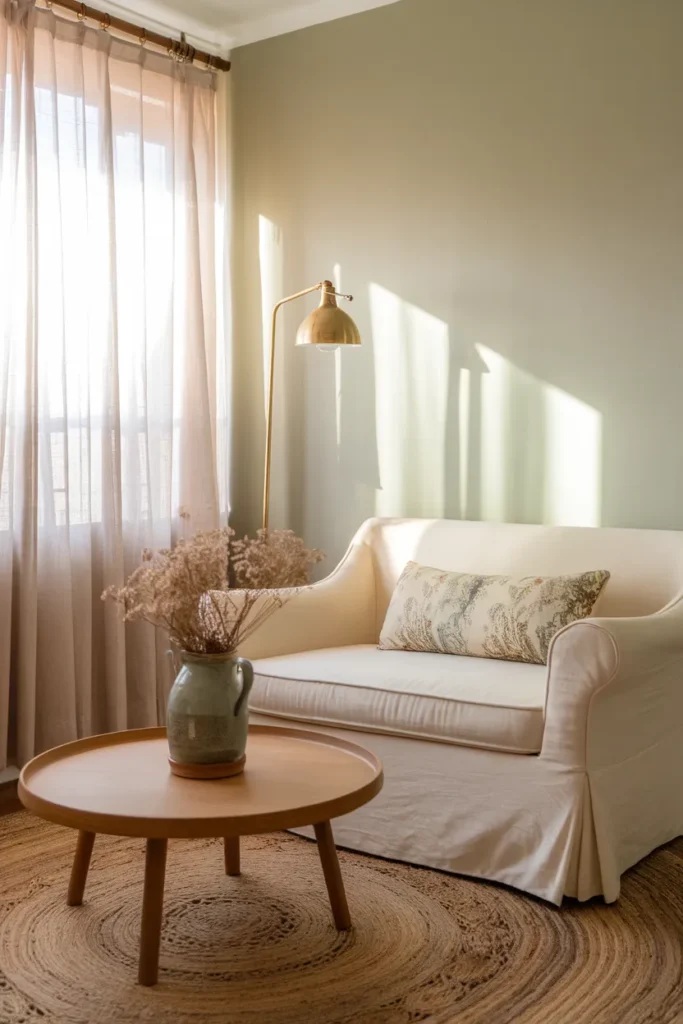
1. Start With the Three No-Drill Moves
Every idea below stays landlord-legal, but these three carry the whole look and leave the walls untouched.
- Peel-and-stick floral wallpaper on the one wall behind your seating. A single accent sliver, even 3 feet wide, reads as intentional. It works beautifully on smooth paint and lifts at the seams on textured walls within weeks, so test one strip in a closet first.
- Damage-free hanging strips for a small gallery of thrifted botanical prints. Check the weight rating on the pack, buy one size heavier than you think you need, and press each strip for the full 30 seconds.
- A plug-in sconce or swing-arm lamp beside the seat. No junction box, no electrician, one cord cover, and suddenly the corner glows like it was built that way.
I’ve moved twice with the same set of framed prints and reused the frames both times. The strips cost more than nails. The deposit came back whole.
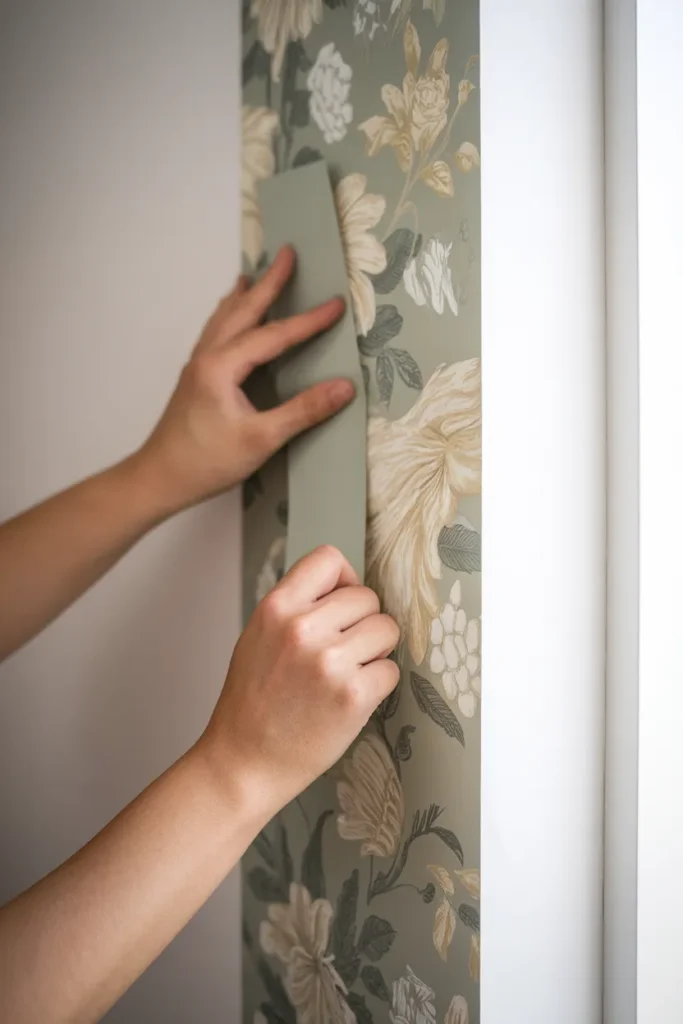
2. Set a Muted, Earthy Palette Before You Buy Anything
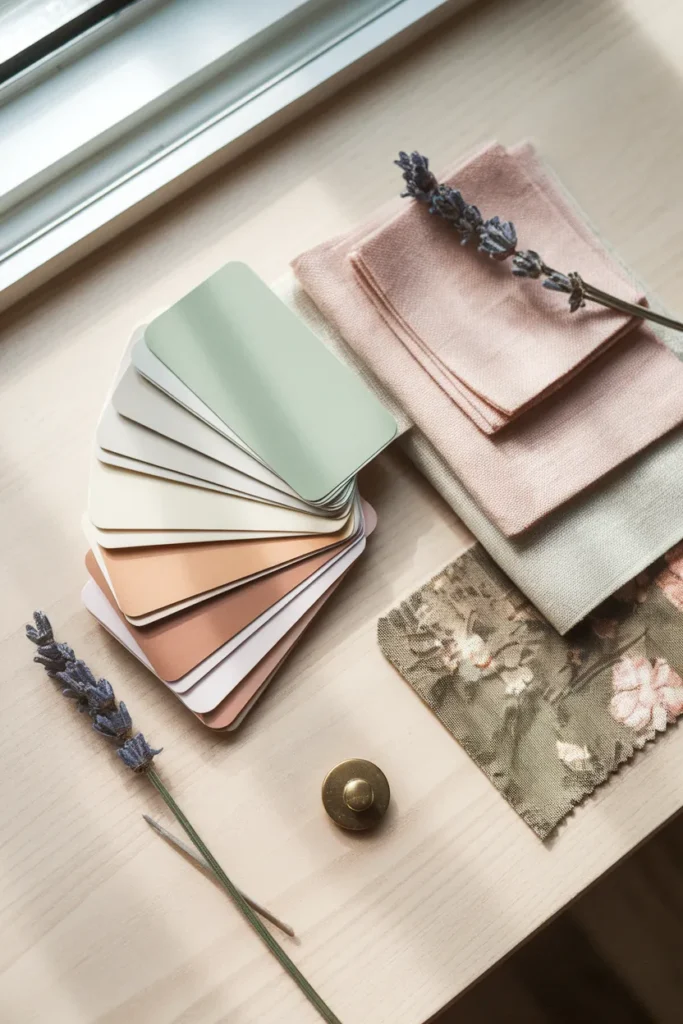
Cottagecore color in a small room means muted, not pastel-parade. Sage green, cream, oatmeal, warm oak, and one blush or dusty rose accent will make a 10 by 12 room feel calm and a little bigger, because low-contrast rooms read as continuous space.
Pick your foundation neutral first (cream or oatmeal), let sage carry the walls or the largest textile, and keep the rose to pillows and dried flowers. If your rental walls must stay white, run the palette through the rug, curtains, and slipcovers instead. It works nearly as well and packs into a moving box.
Craving something deeper, like forest green and amber? That’s a whole mood of its own, and the broader room-by-room breakdown in our 18 cottagecore living room ideas shows how the palette scales up when you’re ready to treat the entire room.
3. Thrift the Big Character Pieces, Buy the Boring Ones New
The lived-in soul of this style can’t be ordered in a box. Spend your patience at thrift stores, estate sales, and Facebook Marketplace on the pieces with visible history: a carved wood side table, a small dresser turned media stand, a framed landscape painting, a milk glass lamp base.
In my area right now, solid wood side tables run $15 to $40 secondhand and small dressers $50 to $120, roughly a quarter of new prices. Some Saturdays you drive home with nothing but a candle. That’s part of the deal, and it’s why the boring workhorses (the rug pad, the bulbs, the curtain rod) should just be bought new so the hunt stays fun instead of urgent.
One filter that saves money: skip anything upholstered unless you can wash or slipcover it. Wood wipes clean. Fabric holds twenty years of mystery. The same buy-old, wash-everything logic drives our vintage reading nook styling ideas if you want to push the era feeling further.

4. Get the Sizes Right, Then Never Think About Them Again
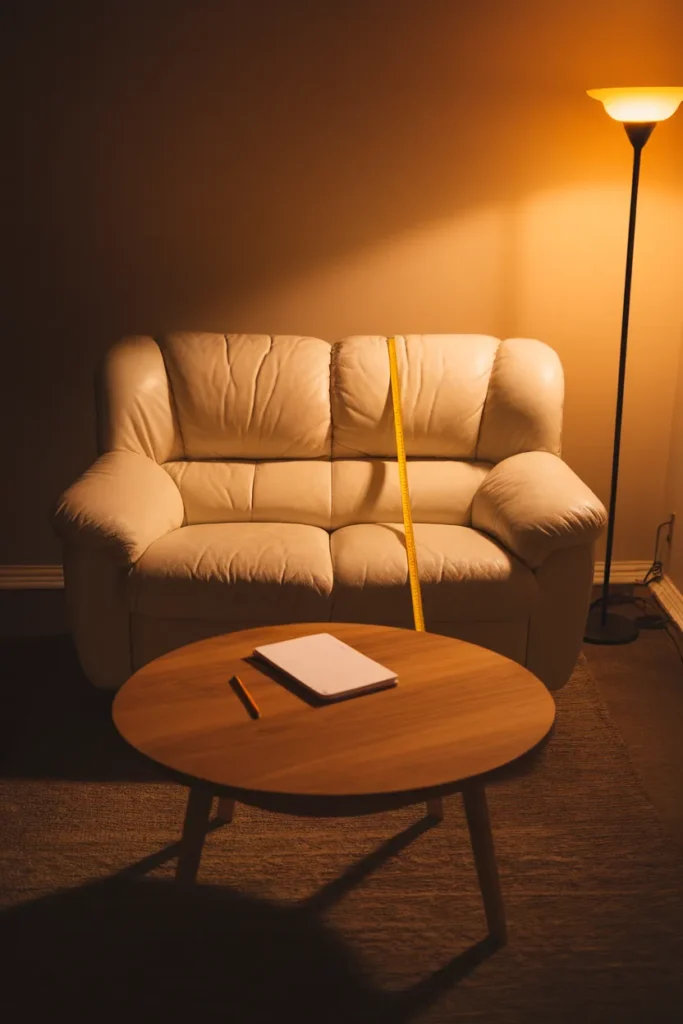
Most small rooms fail on scale, not style. A standard sofa starts around 78 inches wide and will eat a 10 by 12 foot room whole. Drop one size class and everything else gets easier.
Here’s the cheat sheet I check before any purchase:
| Piece | Small-room sweet spot | Why it works |
|---|---|---|
| Loveseat or settee | 52 to 64 in wide | Seats two, leaves a walkway |
| Accent armchair | Under 30 in wide | Slides into a 3 ft corner |
| Round coffee table | 30 to 32 in across | No corners to bruise in tight paths |
| Area rug | 5 by 7 ft, front furniture legs on it | Anchors the seating zone |
| Side table | Top within 2 in of the chair arm height | Your mug lands without looking |
And one number to memorize, the 18-Inch Breathing Room Rule: keep 14 to 18 inches between your seat and the coffee table. Tighter than 14 and knees hit wood. Wider than 18 and you’re doing sit-up reaches for your tea all evening.
5. Use Florals in Small Doses and Small Prints
Floral everything is how a compact room tips from storybook into gift shop. The rule that keeps it charming: in a small space, keep the print small too. Ditsy florals (blooms under an inch) on a lumbar pillow, a cafe curtain, or a lampshade give the cottage feeling without shouting across 120 square feet.
Cap it at three floral moments per room. A pillow, a framed botanical print, a jug of dried flowers: done. Everything else stays solid or subtly striped so the eye has somewhere to rest. If you fall for one large-scale floral, make it the peel-and-stick wall from idea 1 and let it be the only loud thing you own.
6. Build a Three-Layer Textile Stack
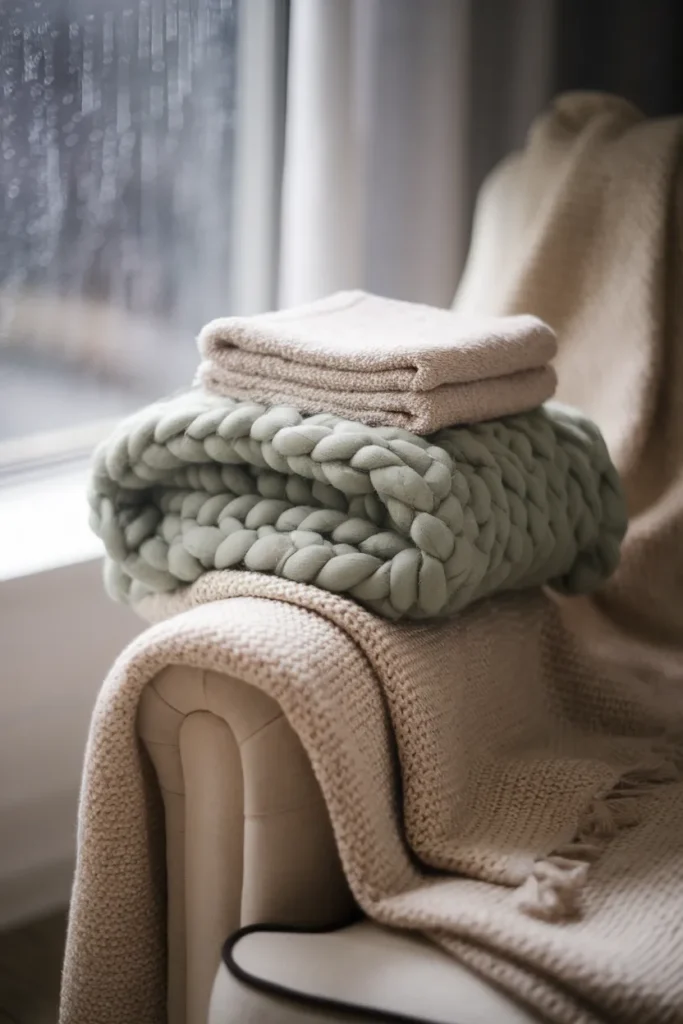
Texture is what your hands notice before your eyes do, and it’s the cheapest square footage of atmosphere you can buy. Stack three weights on the seating: a linen throw for warm months, a chunky wool or boucle layer for cold ones, and one sherpa or sheepskin touch where your hands actually rest.
Add a sheer curtain even if the view is a parking lot. It turns flat daylight into the soft, filtered kind, and on a rainy afternoon, with water ticking against the glass and a wool throw across your knees, a rental five floors up feels like a cottage lane. A washable 5 by 7 jute rug underneath finishes the stack; rough underfoot in summer, layered with a small vintage-look runner in winter.
Trade-off honesty: floor cushions and poufs photograph wonderfully and your lower back files a complaint after about 40 minutes. Keep one for guests, not for your nightly reading spot.
7. Kill the Overhead Light and Go 2700K Everywhere
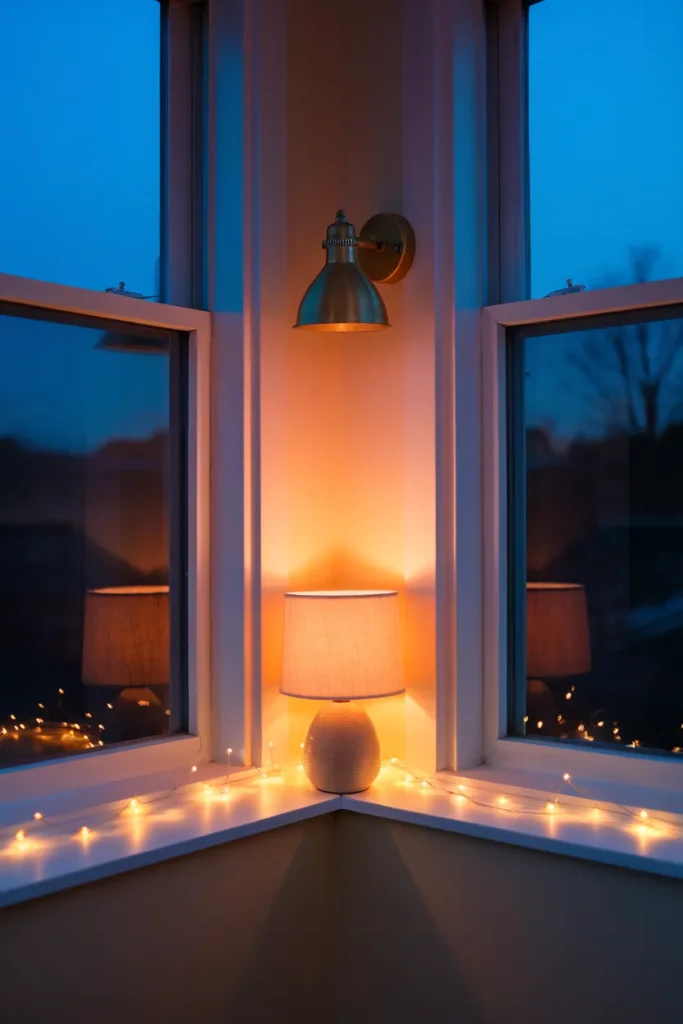
One ceiling fixture blasting cool white light will undo everything above it. Swap every bulb in the room to warm white LEDs at 2700K, which sits at the amber end of the scale; ENERGY STAR’s light color temperature guide puts the warm incandescent look in the 2200 to 3000K range, and 2700K is the sweet spot that flatters wood, cream, and skin alike.
Then spread the light low. Three sources beat one: the plug-in sconce from idea 1, a small lamp on the thrifted side table, and a warm strand of fairy lights tucked along a shelf edge as your no-fireplace hearth glow. Put the main lamp on a $12 plug-in dimmer and evenings get a settings dial.
The whole swap costs about $10 for a two-pack of dimmable 800 lumen bulbs. No other ten dollars in this article works as hard. Hang a thrifted mirror opposite the brightest lamp (strips, not nails) and the room doubles its glow for free.
8. One Honest Natural Texture Per Surface
Cottagecore is allergic to plastic. Audit the room surface by surface and give each one something that grew somewhere: jute underfoot, a wicker basket beside the seat, a rattan tray on the coffee table, an oak picture ledge, a ceramic jug, a beeswax candle that smells faintly of honey when it burns.
The archetype worth naming here is the bentwood armchair, and the IKEA POÄNG is the renter’s classic for a reason. Mine has survived two apartments. It measures 26 and three quarter inches wide, so it tucks into a 3 foot corner, the layered birch frame flexes with a comfortable bounce, and the covers come off and machine wash (getting the cushion back into the cover is a ten minute wrestling match, budget for that). At roughly $130 to $180 depending on the cushion, it’s the rare new piece that reads handmade-adjacent.
9. Let Two or Three Plants Do the Living
You need green, not a greenhouse. One tall statement (a fiddle-leaf if you have light, a faux olive tree if you don’t), one trailing pothos spilling off a shelf, and one jug of dried or fresh stems on the table. Three living moments make a small room feel tended; fifteen make it feel like a chore list.
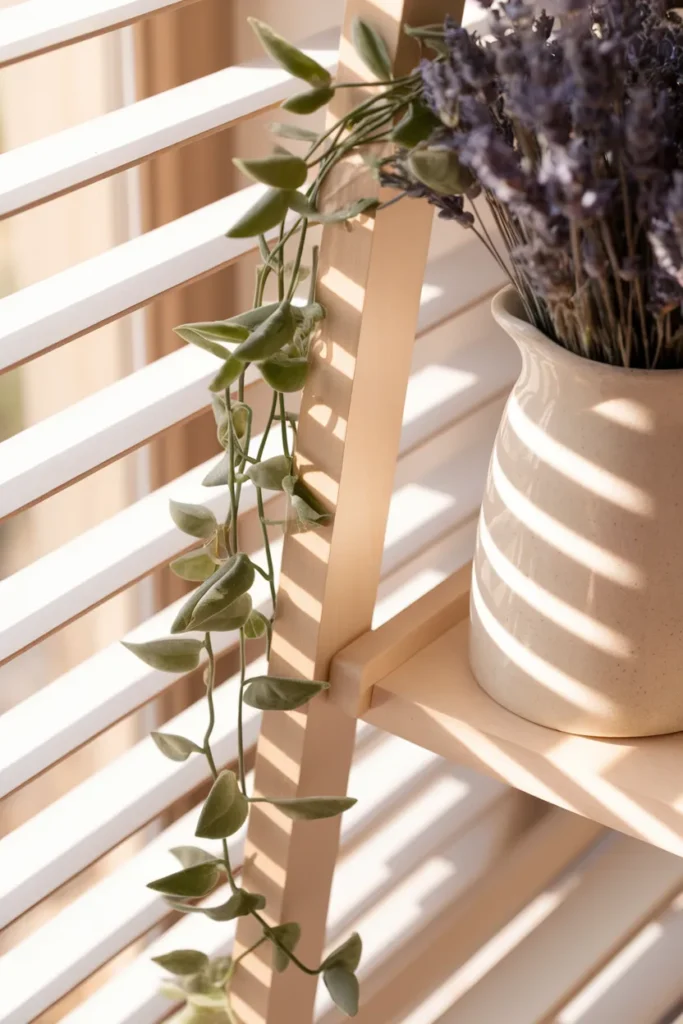
Failure mode to dodge: dark north-facing corners kill most trailing plants slowly, and nothing says neglect like crispy ivy. Pothos and snake plants tolerate the gloom; ferns and eucalyptus mostly don’t. When in doubt, dried flowers never die on you, and a bundle of dried lavender by the seat releases a little scent every time a sleeve brushes it.
10. Choose Storage That Reads as Decor
Small rooms live or die on where the clutter sleeps. The cottage answer is storage with a face: a lidded wicker trunk as a coffee table alternative, woven baskets that swallow remotes and chargers, a narrow ladder shelf displaying books, ceramics, and exactly one framed photo per shelf so it stays curated instead of crowded.
A vintage trunk pulls double duty better than anything else in this list: blanket storage inside, tea tray on top, zero extra floor space claimed. For anything tall like that ladder shelf or a thrifted bookcase, strap it to the wall before you load it. Renter-friendly anti-tip kits use one small screw into a stud (the single hole most leases forgive) and the CPSC Anchor It safety campaign shows the five minute install; the peace of mind matters double in a home with kids, cats, or enthusiastic book stacking.
11. Claim One Corner as a Reading Nook
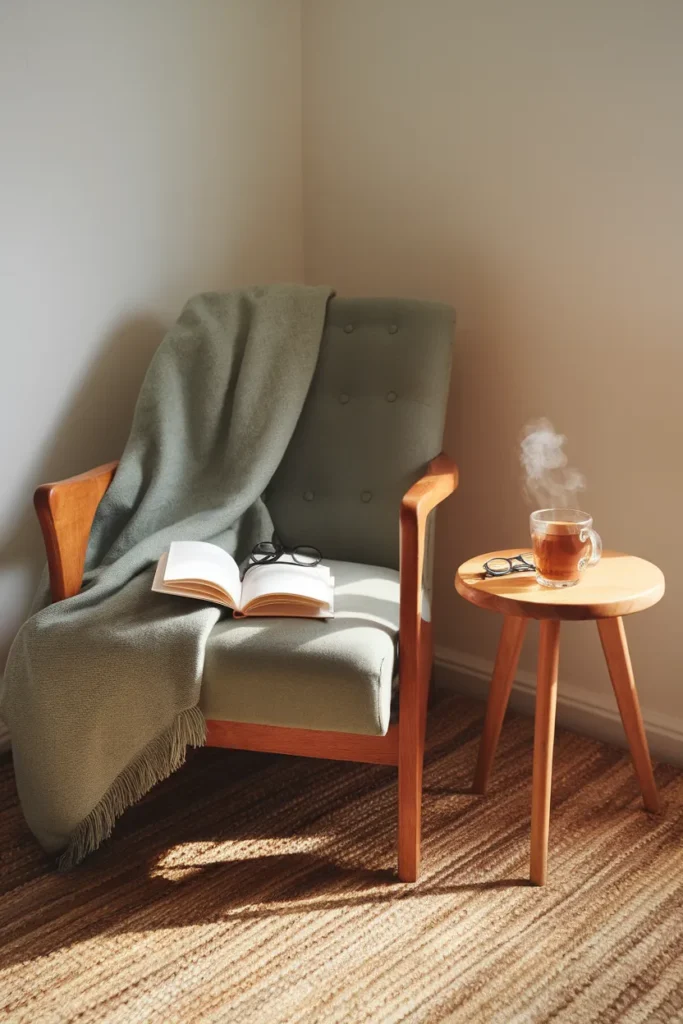
Every cottagecore living room needs a spot with a single job. Angle the armchair from idea 8 toward the window, park the thrifted side table within an arm’s reach, aim the swing-arm lamp over your shoulder, and drape the wool layer on the armrest. That’s a nook: four moves, zero construction.
Give it one ritual object so the corner keeps its meaning, a candle you only light there, or the mug that never gets used at your desk. The chair becomes a small contract with your TBR pile, and on the first cold Saturday of fall you’ll sink into it by 9 a.m. and surface around lunch. If you want the fully dressed version, with the drape, the florals, and the light mapped hour by hour, our floral cottagecore reading corner guide builds one from scratch on renter terms.
12. The $320 Starter Corner, Priced Line by Line
Proof this doesn’t take a reno budget. Here’s the full corner, with the price bands I’m seeing this month (July 2026, US retailers and secondhand markets); the middle of each range totals right around $320.
| Piece | What to look for | Typical price |
|---|---|---|
| Bentwood armchair (POÄNG archetype) | 26.75 in wide, washable cover | $129 to $180 |
| Flatwoven jute rug, 5 by 7 ft | No pile to trap crumbs | $60 to $90 |
| Plug-in swing-arm sconce | Comes with cord cover | $30 to $50 |
| 2700K dimmable LED bulbs, 2-pack | 800 lumens each | About $10 |
| Linen-blend throw, 50 by 60 in | Washable, oatmeal or sage | $20 to $35 |
| Ditsy floral lumbar pillow | 12 by 20 in, zip cover | About $20 |
| Thrifted wood side table | Top near your chair arm height | $15 to $40 |
Build order matters: chair first (it sets the corner’s footprint), rug second, light third, textiles last. Skip a line if you already own the job it does. And if the chair budget stings, watch local resale listings, where the same bentwood chairs float by secondhand most weeks at half price.
FAQ: Small Cottagecore Living Rooms
How do I make a small living room feel cottagecore without renovating?
Work in layers that leave no marks: a muted sage and cream palette, peel-and-stick florals on one wall, three textile weights on the seating, and every bulb swapped to 2700K warm white. The look lives in light and texture, not in construction.
Does cottagecore actually work in a living room under 150 square feet?
It’s one of the best styles for tiny rooms, because its core feeling is enclosure. Keep furniture in the sizes from the cheat sheet above (a loveseat under 64 inches, a chair under 30), limit florals to three moments, and the smallness starts reading as snug instead of cramped.
What colors make a small cottagecore living room feel bigger?
Low-contrast muted combinations: cream or oatmeal as the base, sage as the main color, warm wood tones, and one dusty rose accent. High contrast chops a small room into visual pieces; a close-toned palette lets the walls flow together.
How do I get the cottagecore look on a budget?
Thrift the character pieces (side tables, frames, ceramics, mirrors) and buy only the workhorses new. The priced corner in idea 12 lands around $320 total, and the single highest-impact line on it is the $10 bulb swap.
What furniture works best in a small cottagecore living room?
Small-scale pieces with visible material honesty: a slipcovered loveseat, a bentwood armchair around 27 inches wide, a round wood coffee table 30 to 32 inches across, a wicker trunk, and a narrow ladder shelf. Round shapes and washable covers earn their keep in tight quarters.
Is cottagecore still in style in 2026?
Yes, and it has branched rather than faded: the core look now sits alongside offshoots like dark cottagecore and grandmacore, and small-space versions of it remain heavily searched and pinned. Because it’s built on secondhand furniture and natural materials, it also ages without a datestamp.
Where to Start Tonight
Don’t start with the chair. Start with the two-pack of 2700K bulbs, because it costs about ten dollars, arrives in two days, and changes how every other object in the room looks the moment you flip the switch. Then work down the list one payday at a time: wall, rug, chair, corner. Save this post to your decor board so the size cheat sheet and the $320 list are there when you’re standing in the thrift store aisle, and when the corner’s done, the reading nook guides here will happily help you fill the seat.
Keep reading
More cozy nook ideas
 Living Room
Read →
Living Room
Read →
Vintage Living Room Decor That Reads Thrifted Cottage, Not Thrift Store
No estate sale connections. No reno budget. No landlord who says yes to paint. Vintage living room decor still works in a…
 Living Room
Read →
Living Room
Read →
Floral Sofa Living Room Ideas That Read Cottage, Not Dated
Your floral sofa isn’t the problem. The three beige things sitting around it are. That’s the whole diagnosis. A floral sofa living…
 Living Room
Read →
Living Room
Read →
Turn the Dead Corner of Your Living Room Into a Reading Nook
Your living room has one corner that never works. A lamp you don’t love. A plant shedding leaves onto the baseboard. Maybe…