
How to Build a Dark Cottagecore Living Room That Feels Moody, Not Gloomy

Five rules, three secondhand pieces, and one bulb swap that costs about $12. That’s the whole system for a dark cottagecore living room that reads moody and romantic instead of just dim. You don’t need a landlord’s blessing, a bay window, or a renovation budget. A beige rental box with one sad ceiling fixture works fine, because this look is built from things you can carry up the stairs: warm bulbs, old wood, heavy fabric, dried stems. Below are the five rules, the exact paint names that actually read forest at dusk, and a renter’s version that touches zero walls.
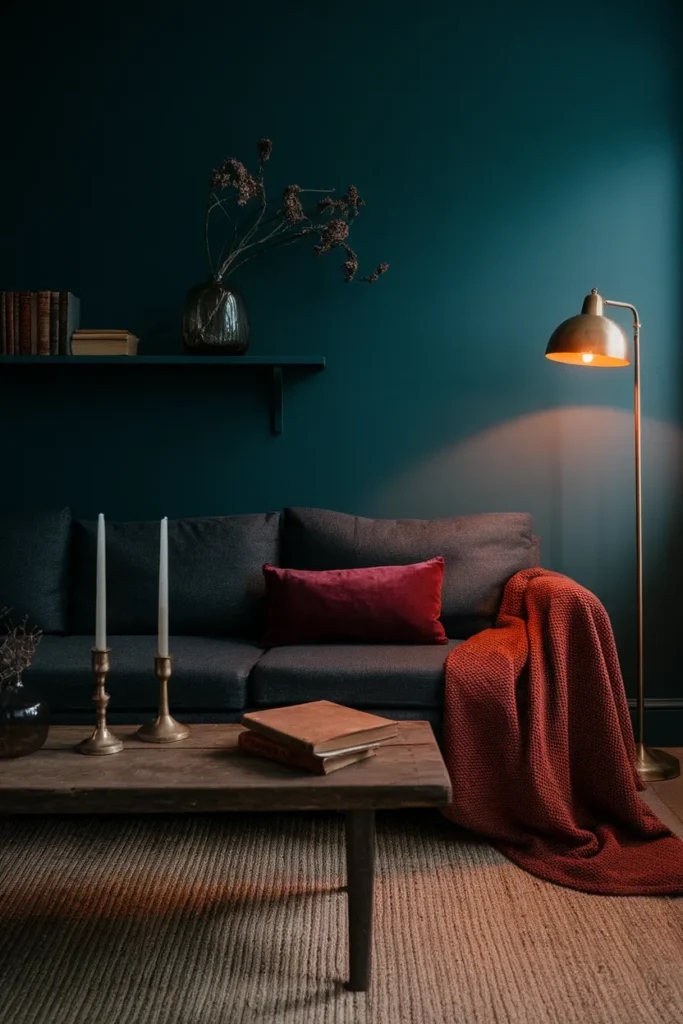
The Five Dusk Rules (the Whole Recipe, Up Front)
Every dark cottagecore living room that works, from a 500 sq ft studio to a full farmhouse parlor, follows the same five moves. I call them the Five Dusk Rules, and the order matters:
- Fix the light first. Three warm pools per seating area, 2700K or lower, ceiling fixture off.
- Paint like the forest floor. Deep green, near black, matte finish, real sampled colors.
- Let everything look a little loved. Thrifted wood, brass, old books, worn frames.
- Add weight. Velvet against linen, wool over everything, curtains hung high and heavy.
- Bring the forest in, dried and dark. Branches, moss, deep green plants, candlelight.
Screenshot that list. It’s the entire style, and every rule has a renter safe route flagged in its own section below, so nothing here depends on paint permission or a drill. Light comes first because it’s the cheapest move with the biggest payoff, and because every other decision (paint included) looks wrong under the wrong bulb.
Rule 1: Fix the Light Before You Touch a Paintbrush
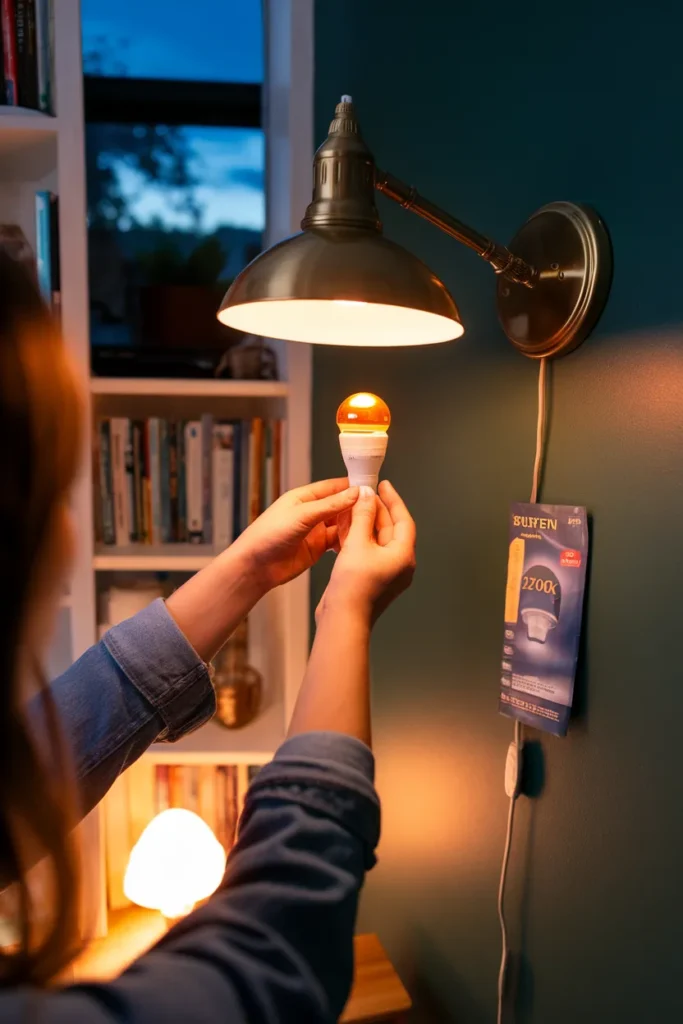
Dark walls under a single cool ceiling bulb don’t look romantic. They look like a basement. So before anything else, run what I call the Three Pools rule: every seating zone gets three separate low light sources, each one 2700K or warmer, each around 450 to 800 lumens, and none of them the overhead. A floor lamp behind the chair, a small table lamp on a shelf, a candle or plug-in sconce near the sofa. Three pools, staggered heights, ceiling switch left alone.
Kelvin is the number that decides whether your room feels like firelight or a dental office. Manufacturer specs put warm white in the 2000K to 3000K band, and the Westinghouse color temperature guide (https://www.westinghouselighting.com/color-temperature.aspx) is a clean reference to keep bookmarked while you shop bulbs.
| Bulb temperature | How it reads | Use it here? |
|---|---|---|
| 2200K to 2700K | Amber, candlelike, golden | Yes, this is the zone |
| 3000K | Warm but whiter | Acceptable for a task lamp |
| 3500K and up | Neutral to cool white | No, it flattens the mood |
One honest trade off: 2700K light pulls crisp whites toward cream. If you love a bright white ceiling, it’ll read slightly warm at night. In this style, that’s a feature.
Rule 2: Paint It Like the Forest Floor at Dusk
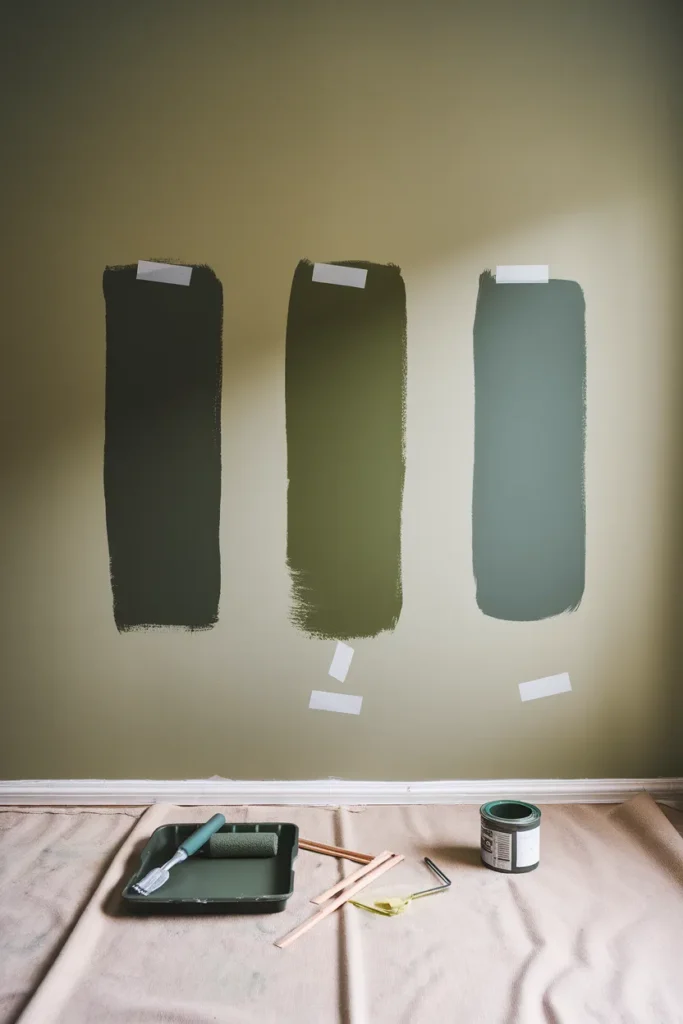
Skip generic “dark green” and sample colors that were actually mixed for low light. Four that keep showing up in designer roundups and on manufacturer sites, and that hold their depth at night: Benjamin Moore Salamander 2050-10 (a green that leans almost black, with blue in it), Benjamin Moore Black Forest Green (the darkest green in their deck), Sherwin-Williams Rookwood Dark Green SW 2816 (classic forest with real warmth), and Farrow & Ball Studio Green No. 93 (reads nearly black by lamplight, green by day).
Buy sample pots before a gallon. Tape big swatches to two different walls and judge them at 9 pm under your new 2700K bulbs, not at noon. A color that looks perfect in daylight can go flat once the lamps take over, and the whole point of this palette is how it behaves after dark.
Finish matters as much as color. Go matte or eggshell, never gloss, because sheen bounces every lamp into a glare spot and breaks the soft cocoon effect. Budget two coats over a light wall, plus primer if you’re covering builder white. And if you tape up the swatches and your stomach says “too heavy,” that’s useful information, not failure: these lighter cottagecore living room ideas (https://littlenookhome.com/cottagecore-living-room-ideas/) run the same storybook feeling in a brighter key.
Rule 3: Let Everything Look a Little Loved
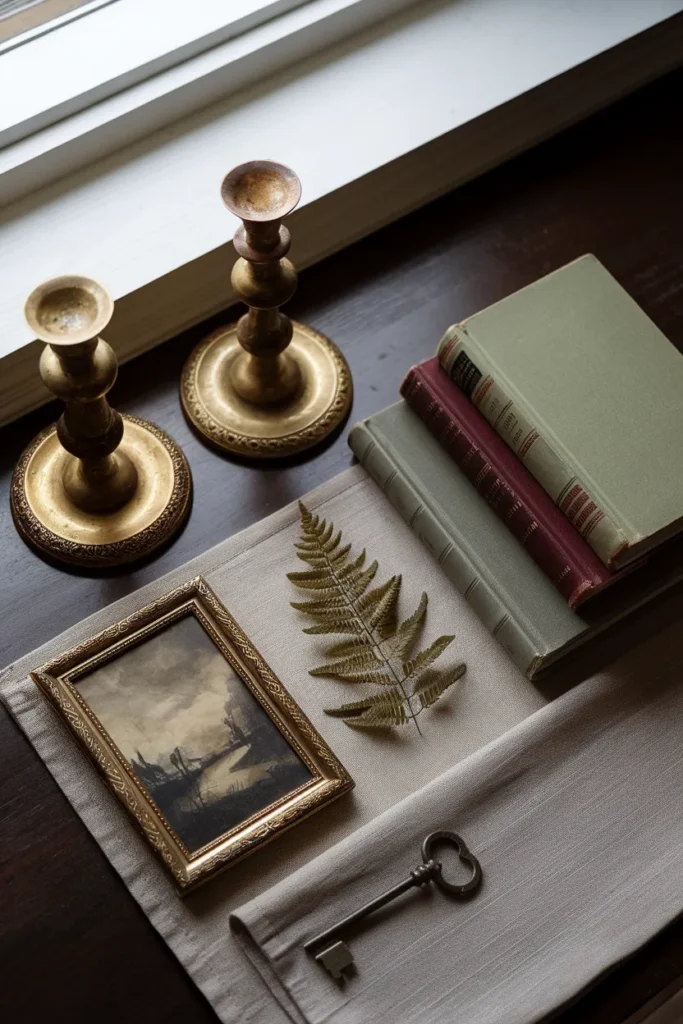
New furniture fights this style. Old furniture is this style. Your shopping list lives at the thrift store and the estate sale: a walnut or oak coffee table with soft edges and a few honest scratches, brass candlesticks (mismatched heights beat a matched set), a gilded or dark wood mirror to bounce candle flicker, clothbound books with faded spines, one odd portrait or murky landscape in a heavy frame.
Group what you collect instead of scattering it. Three brass pieces on the mantel say collection. The same three spread across the room say clutter. Odd numbers, shared tones, and a little breathing room between objects keep shelves from tipping into chaos.
Two thrift honesty notes. First, sniff upholstered pieces before you pay, because smoke and mildew ride home with you and rarely leave. Second, resist the urge to polish brass back to shine: the darkened patina is doing half the work. Crack one of those old books open while you’re styling and you get the payoff nobody photographs, that dry sweet paper smell that makes a shelf feel like a library instead of a prop.
Rule 4: Add Weight With Velvet, Wool, and Heavy Curtains
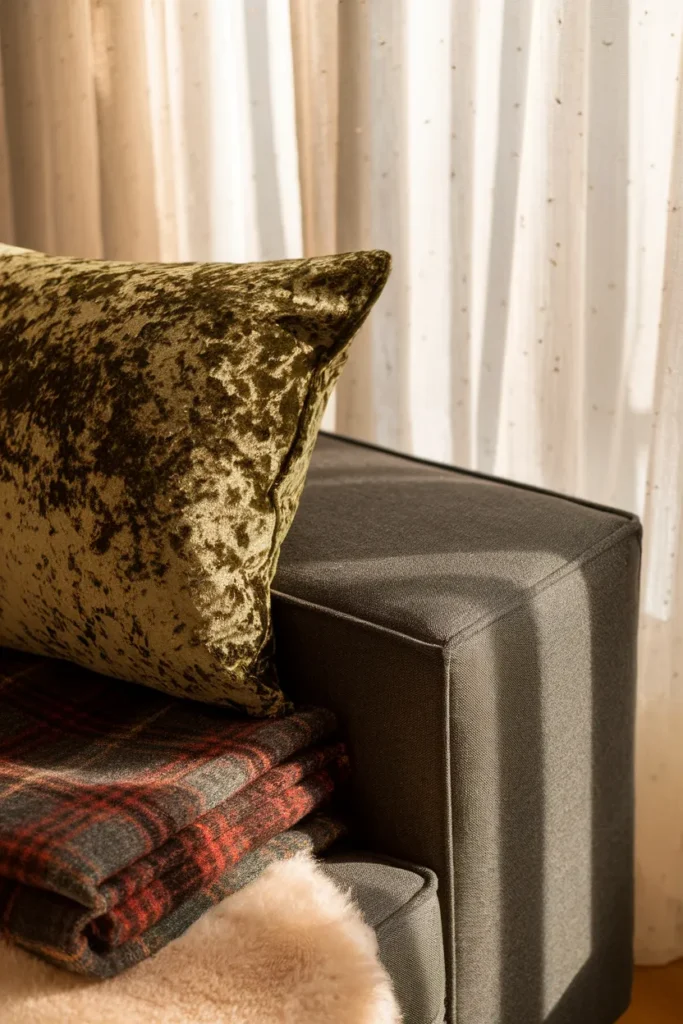
Texture is what separates a moody cottagecore living room from a room that’s simply painted dark. You want at least three fabric weights rubbing shoulders: crushed velvet against washed linen, a wool throw over both, maybe a sheepskin on the chair. Run your palm across velvet and the nap shifts color under your hand. Wool has that faint honest scratch. Those small physical signals are what your brain files under warm.
On the floor, layer a worn pattern rug (faded florals, muted Persian style, dark toile) over a flat jute base, edges slightly offset. A washable rug makes sense here if pets or kids share the room, since deep colors hide a lot but forgive nothing sticky.
Windows get the same weight. Hang curtain rods 4 to 6 inches above the frame and wider than the window, then use velvet, wool blend, or lined blackout curtain panels that pool just barely at the floor. Sheer curtain layers underneath let you keep daylight without losing privacy. Price reality for the big soft pieces: new velvet accent chairs at major US retailers are listing roughly $160 to $400 right now, and a pair of velvet pillow covers typically runs about $15 to $25, so the fabric layer costs far less than it photographs.
Rule 5: Bring the Forest In, Dried and Dark
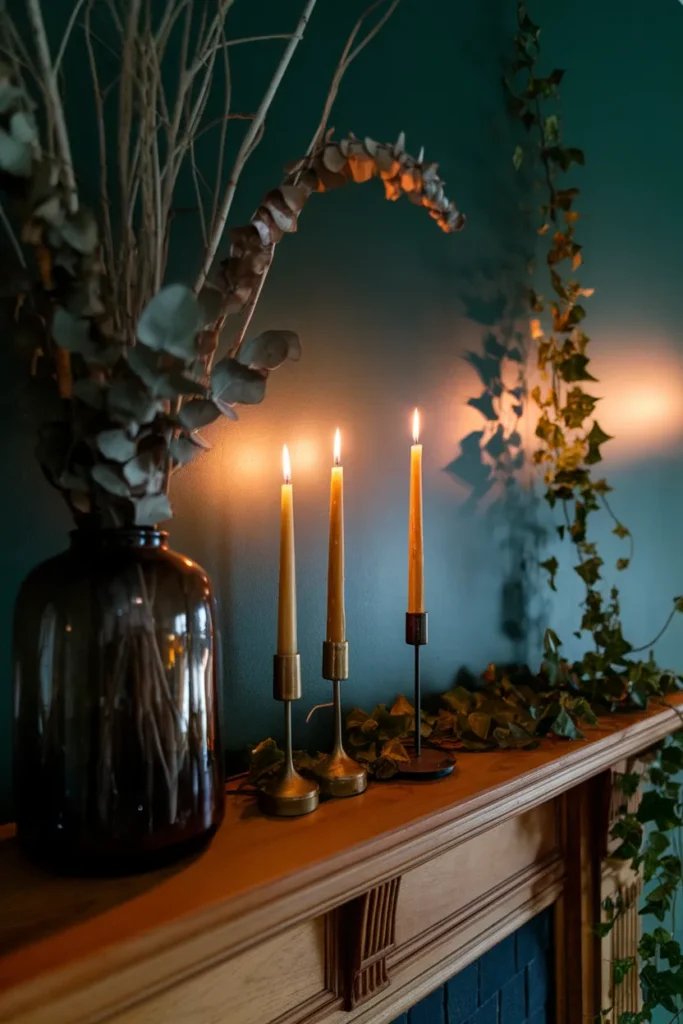
Fresh grocery store flowers look wrong here. Dried and wild looks right. Cut branches from your own yard if you have one, or buy dried eucalyptus, bunny tail grass, or preserved fern and stand them tall in smoked or amber glass. Add a bowl of pinecones or a mossy stone on the shelf. For living green, choose plants that read forest instead of tropical: ivy, pothos trailing off the bookcase, a philodendron in aged terracotta with a little white mineral bloom on the pot.
Candles carry the nighttime layer. Beeswax tapers are worth the couple extra dollars for the faint honey smell alone, and mismatched brass holders from Rule 3 give them somewhere to live. Light two or three at different heights, snuff them before you leave the room, and never let one burn unattended near those dried stems, which are basically kindling with good taste.
This is also where the dark cottagecore aesthetic separates from plain gothic decor: the goal is a forest clearing at night, not a haunted house. Keep at least a third of your botanicals alive and green so the room reads growing, not embalmed.
Three Pieces That Do 80 Percent of the Work
If you only buy three things, buy these archetypes and let the rest be thrifted or already owned.
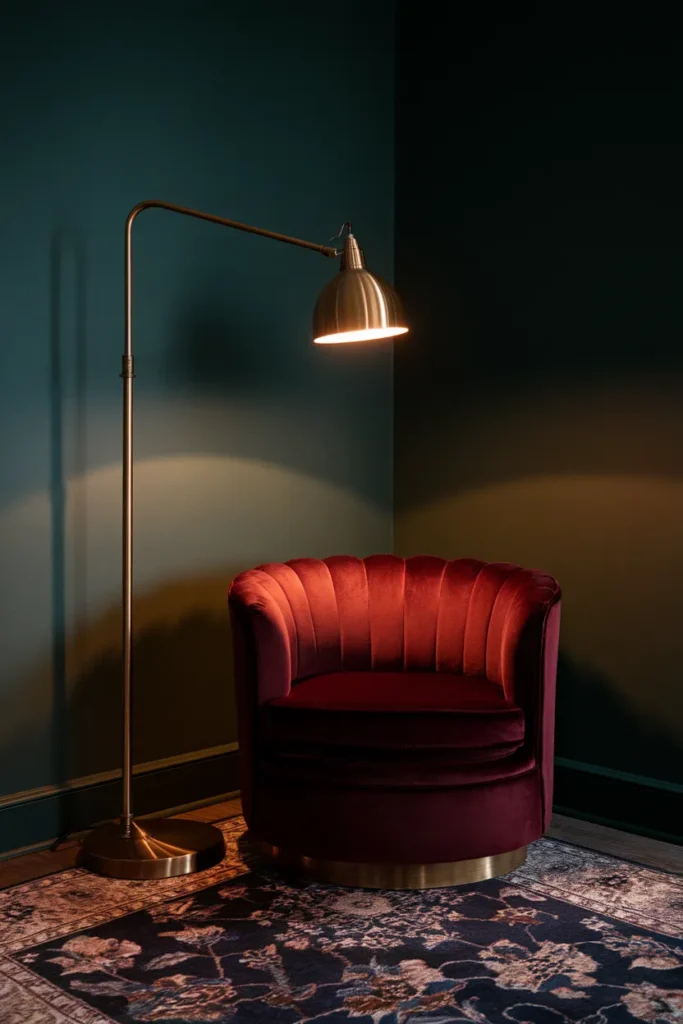
A velvet armchair in deep green or oxblood. Any brand, any decade. Common barrel styles run about 31 inches high by 30 wide, so one fits a 3 by 3 ft corner with room to breathe. Secondhand ones surface constantly for a fraction of the $160 to $400 new price band.
A brass swing-arm lamp or plug-in sconce, loaded with a 2700K bulb. This single fixture creates the signature pool of amber light that every pin in this style is secretly built around.
A worn-pattern rug, dark floral or faded Persian style. It anchors the palette, hides the fact that your floor is rental beige, and makes even a modern dark cottagecore mix of new sofa plus old accents feel intentional.
Chair, light, rug. Park them in the same corner and you’ve built the room’s gravity well: the one cozy spot every guest drifts toward without knowing why.
The Renter’s Version: No Paint, No Drill, Full Mood
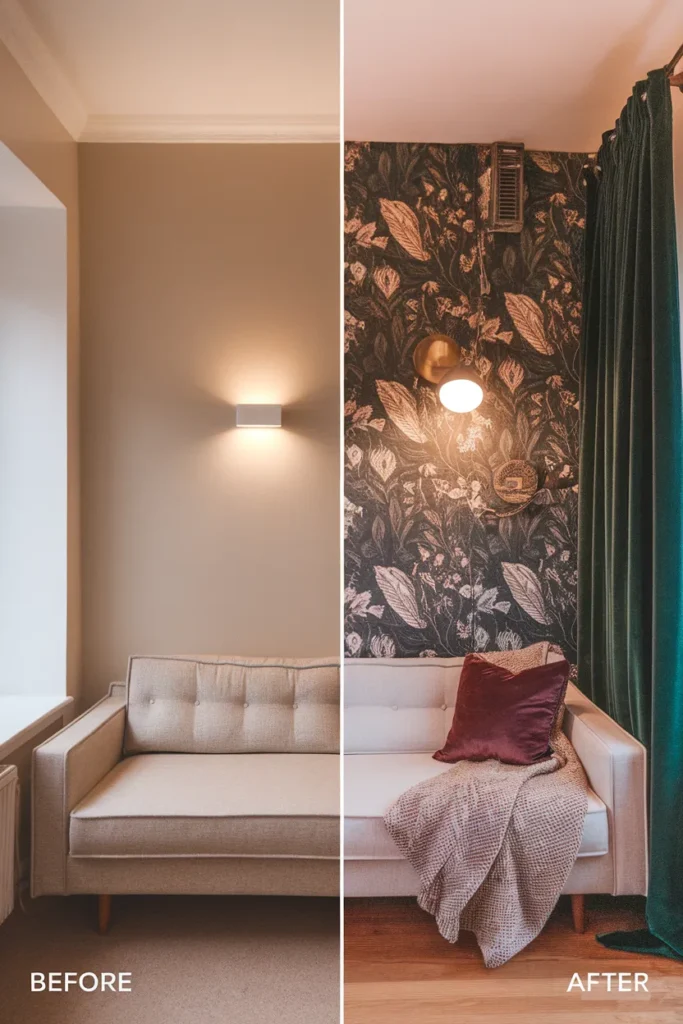
Everything above has a lease safe route, and it starts behind the sofa. One panel of dark floral peel and stick wallpaper (moody botanicals on near black grounds are everywhere now, usually somewhere in the $30 to $50 a roll range) gives you the accent wall effect and comes down clean at move out. Can’t even do that? Hang lined blackout curtain panels wall to wall on a tension rod or a rod mounted with heavy duty adhesive hooks, and you’ve faked a fabric wall with zero holes.
Light stays fully plug in: the swing-arm sconce from the last section, a floor lamp, LED taper candles if your lease side-eyes open flame. Frames hang on adhesive strips rated for their weight (weigh the mirror before trusting a strip, and keep gilded showpieces on the mantel or a shelf ledge instead). Furniture, textiles, botanicals, and thrift hauls were never the landlord’s business anyway.
Renters redo homes one room at a time, so once this room settles, the same no drill tricks carry straight into these dark cottagecore kitchen ideas (https://littlenookhome.com/dark-cottagecore-kitchen/): same palette, same brass, different room.
Plum Noir: The 2026 Accent Color to Add Now
Here’s the trend layer none of the older guides have. Pinterest named a deep plum, Plum Noir (hex #351E28), to its 2026 color palette, with searches for “dark plum” up 220 percent and “deep burgundy” up 230 percent year over year. The wider style is surging too: Pinterest’s spring 2026 trend report (https://newsroom.pinterest.com/news/spring-trend-report-2026/) logged “dark cottagecore kitchen” searches up 915 percent as people lean into comfort and nostalgia at home.
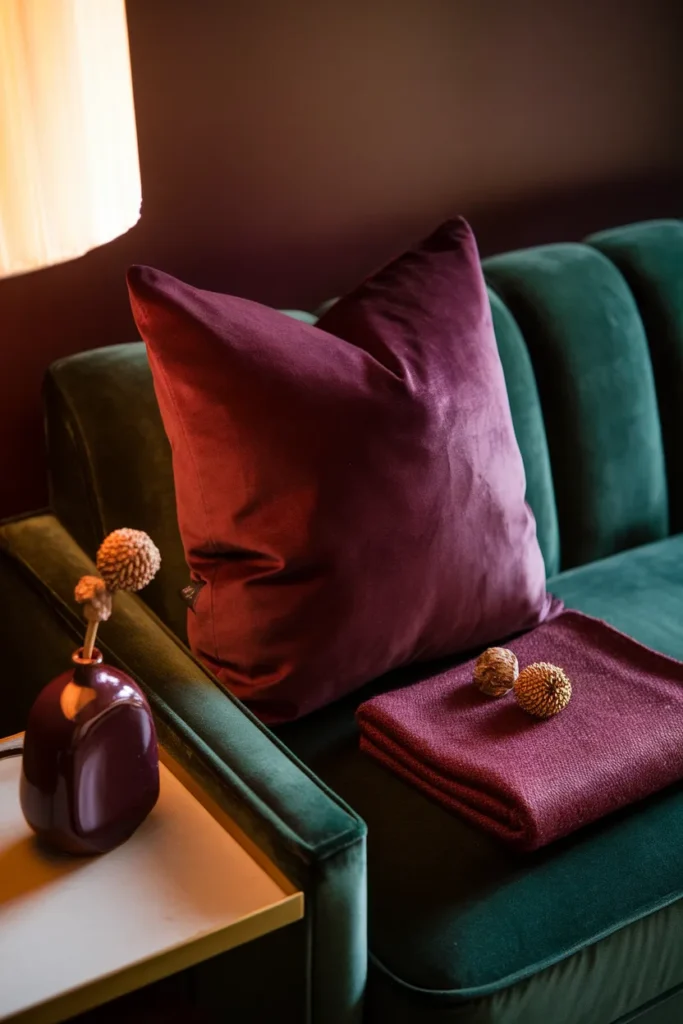
Use plum the way the forest uses berries: sparingly, against all that green. One velvet lumbar pillow, one wool throw folded over the chair arm, one glazed ceramic vase. Keep the room roughly 80 percent green, wood, and brass, 20 percent plum and oxblood, and the accent reads rich instead of Halloween. It also happens to photograph beautifully under 2700K light, which is exactly why it’s climbing the charts.
Carve Out the Reading Corner
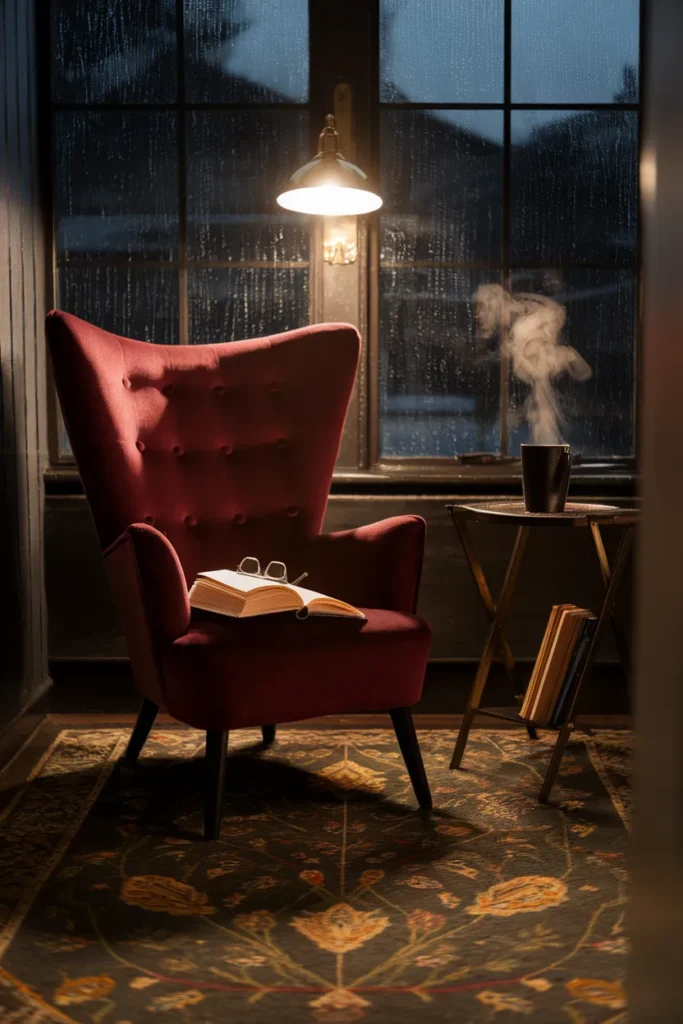
A dark cottagecore living room practically begs for a spot to get lost in a book, so give the room one tucked away anchor. Angle the velvet chair about 45 degrees off the wall instead of flat against it, which instantly reads hideaway rather than waiting room. Then apply the 18-inch reach rule: the side table’s top surface sits within 18 inches of your resting hand and within about 2 inches of the armrest height, so a mug lands without your eyes leaving the page.
Light the page, not the room. Mount or stand the shade of your sconce or lamp roughly 48 to 52 inches off the floor, just above seated shoulder height, angled over whichever shoulder faces the wall. Add a small bookcase or ladder shelf within arm’s reach for the TBR pile, and if the shelf itself looks like a yard sale, this walkthrough on styling a reading nook bookshelf (https://littlenookhome.com/reading-nook-bookshelf-styling/) fixes it in an afternoon.
Finish with a floor pillow for a second seat and a blackout curtain half drawn behind the chair. On a rainy Saturday the whole corner turns into a cocoon, and the rest of the room fades exactly the way it should.
The $150 Weekend Starter Plan
You don’t need the whole room at once. This starter run gets the mood in one weekend, using typical US big box and thrift store prices as of summer 2026 (your zip code will wobble them a little):
- Two 2700K LED bulbs, about $12 the pair, into the two lamps you already own.
- One thrifted lamp or brass candlestick trio, roughly $10 to $20 on a decent Saturday.
- A pair of velvet pillow covers in moss or plum, about $15 to $25.
- One bunch of dried eucalyptus or preserved fern plus a smoked glass vase, around $20 combined.
- Two thrifted frames with a moody landscape print or pressed fern inside, about $15.
- A plaid or solid wool blend throw, $25 to $35.
- One roll of dark floral peel and stick paper for a single accent panel, about $40.
That lands near $150, and every dollar goes to the layers people actually notice: light, texture, and age. Skip the tempting single big purchase this weekend. The chair can wait until the right secondhand one appears, and it will.
Dark Cottagecore Living Room FAQ
What is dark cottagecore? It’s the moodier branch of cottagecore: the same nature loving, handmade, old fashioned comfort, but rendered in deep greens, near blacks, aged brass, and candlelight instead of pastels and gingham. Think forest clearing at dusk rather than sunny meadow.
What’s the difference between cottagecore and dark cottagecore? Palette and light, mostly. Classic cottagecore leans cream, sage, and daylight. The dark version trades those for forest green, plum, charcoal, and warm lamp or candle glow, while keeping the vintage furniture, botanicals, and handmade texture both share.
Is dark cottagecore the same as dark academia? They’re cousins, not twins. Dark academia cottagecore blends do exist, but academia leans scholarly (libraries, tweed, busts, deep wood paneling) while dark cottagecore leans rural and wild (dried botanicals, moss, worn farmhouse pieces). Books happily live in both.
What colors make a room dark cottagecore? Forest and near black greens as the base, then walnut and oak browns, aged brass, charcoal, and small doses of plum, oxblood, and dried sage. Whites shift to cream. Anything neon, icy, or chrome breaks the spell.
Can I do dark cottagecore in a rental without painting? Yes, and it barely slows you down. Peel and stick wallpaper, wall to wall curtains, plug in sconces, 2700K bulbs, layered rugs, and thrifted furniture deliver most of the look with zero holes and zero paint, all reversible at move out.
Will a dark palette make my small living room feel smaller? Dark matte walls blur the room’s corners, which can actually make edges feel farther away at night. The real risk is bad lighting, not square footage: keep three warm light pools per seating zone and a mirror bouncing them, and small reads intimate instead of cramped.
Start With the Bulb
Tonight’s homework costs about $12 and ten minutes: swap two bulbs to 2700K, kill the overhead, and sit in the room you already own. If that small shift makes your shoulders drop, you’ll know this style is yours, and the paint samples, thrift runs, and plum accents can follow one weekend at a time. When the living room settles into itself, the kitchen version of this look is waiting for you next.
Keep reading
More cozy nook ideas
 Living Room
Read →
Living Room
Read →
Vintage Living Room Decor That Reads Thrifted Cottage, Not Thrift Store
No estate sale connections. No reno budget. No landlord who says yes to paint. Vintage living room decor still works in a…
 Living Room
Read →
Living Room
Read →
Floral Sofa Living Room Ideas That Read Cottage, Not Dated
Your floral sofa isn’t the problem. The three beige things sitting around it are. That’s the whole diagnosis. A floral sofa living…
 Living Room
Read →
Living Room
Read →
Turn the Dead Corner of Your Living Room Into a Reading Nook
Your living room has one corner that never works. A lamp you don’t love. A plant shedding leaves onto the baseboard. Maybe…