
Book Nook Ideas: 15 Cozy Corners You Can Actually Build

If your reading corner is currently a slumped pillow on the floor and three books you keep tripping over, this fixes it. You don’t need a bay window, a renovation budget, or a landlord who likes you. You need one awkward corner, a seat at the right height, and a warm bulb. That’s the whole game. These 15 book nook ideas run from a $90 floor-cushion setup to a built-in bench, and every one names the spec that makes it work.
Here’s the rule the rest of the article runs on, the 3-2-1 Nook Rule: three zones (sit, light, stash), two light sources (one ambient, one task), one anchor seat you’ll genuinely sink into. Hit those and almost any corner reads as designed instead of accidental. Skip them and you’ve got a chair near a window, which is not the same thing.
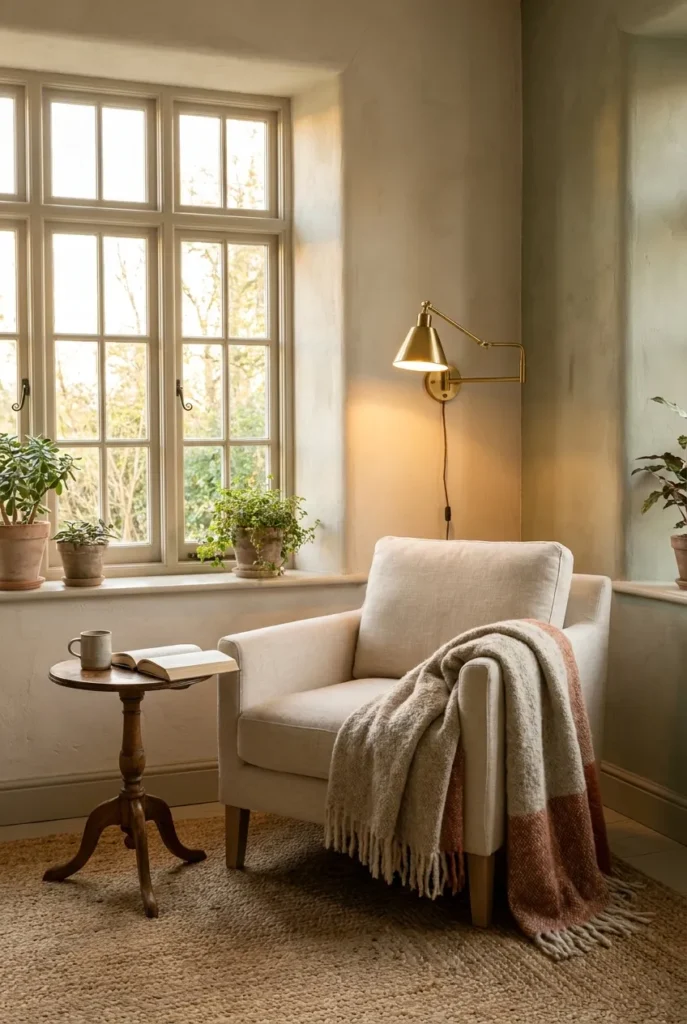
1. Start With One Comfy Chair, Set 18 Inches Off the Wall
Before paint, before shelves, you need a seat. A reading-height armchair sits lower and deeper than a dining chair, around a 17-inch seat height with a back you can actually lean into. The IKEA Poäng is the classic starter at roughly $130, and its slight recline does real work for marathon reading.
Pull it 18 inches off the wall. That gap lets a lamp arm clear your shoulder and keeps the chair from looking shoved into a baseboard. Renter win: nothing here touches a wall, so you can build this nook in an afternoon and undo it in ten minutes.
Failure mode: pick a stiff occasional chair and your lower back taps out at the 30-minute mark, right when the chapter gets good.
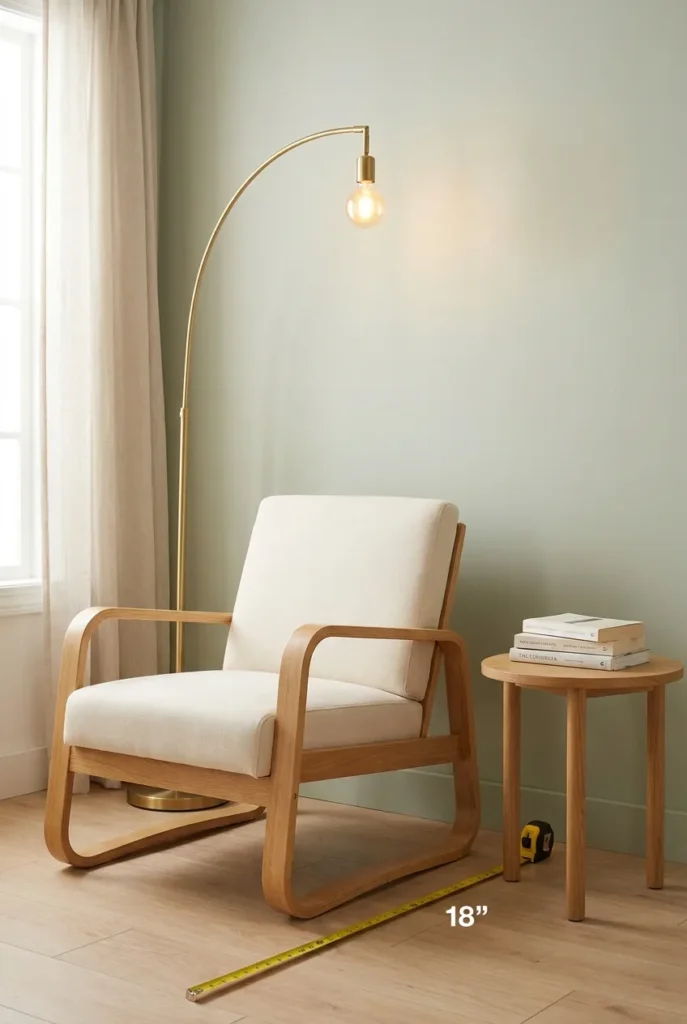
2. Claim the Bedroom Corner You Already Ignore
Most bedrooms have one dead corner past the dresser, and “book nook ideas bedroom” is one of the most-searched angles for a reason. It’s quiet, it’s private, and you’re already heading there to wind down.
Float a small accent chair and a 16-inch round side table at a 45-degree angle into the corner. Angling it softens the boxy room and gives your knees somewhere to point. Keep a wool throw within arm’s reach for the cool side of a bedroom at night.
Failure mode: backing the chair flat into the corner makes it read like spare seating, not a retreat.
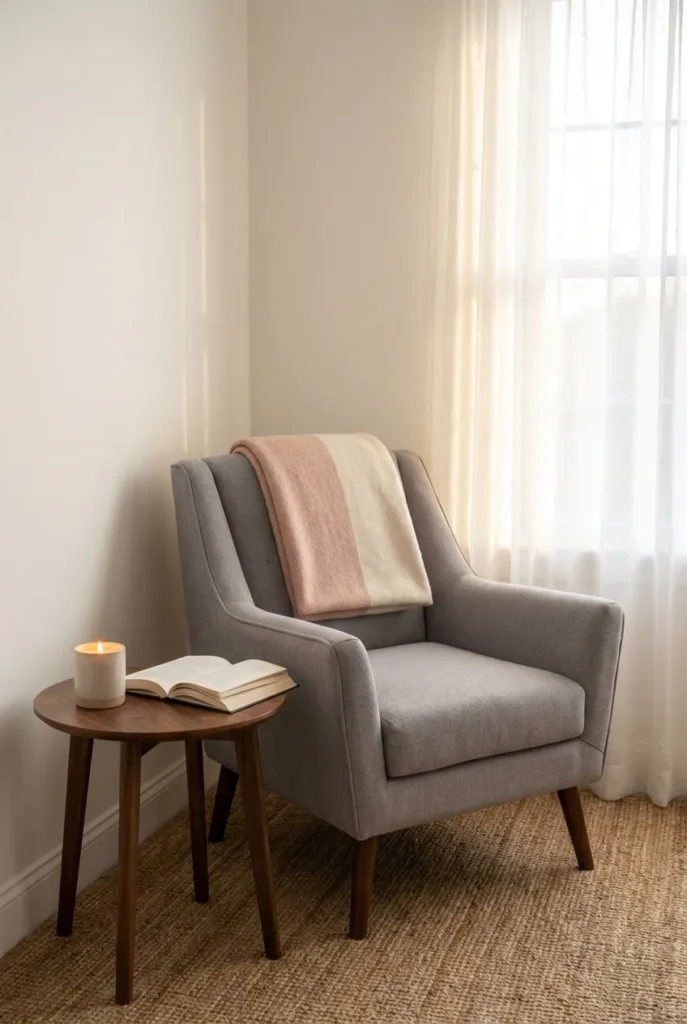
3. Build a Window Seat Where You Already Have a Sill
A window seat is the most-pinned book nook there is, and you don’t need a contractor to fake one. Push a storage bench (the IKEA Idanäs or a flat-pack toy chest, around $80 to $150) flush under the window, top it with a 3-inch foam cushion cut to fit, and pile two lumbar pillows against the glass.
Aim for a 16-inch seat depth so you can sit sideways with knees up. That sideways-with-a-book position is the whole point of a window seat, and a shallow bench kills it.
Late-afternoon light, a linen throw, the quiet weight of a hardcover: this is the corner Pinterest sold you, and it’s genuinely buildable in a rental.
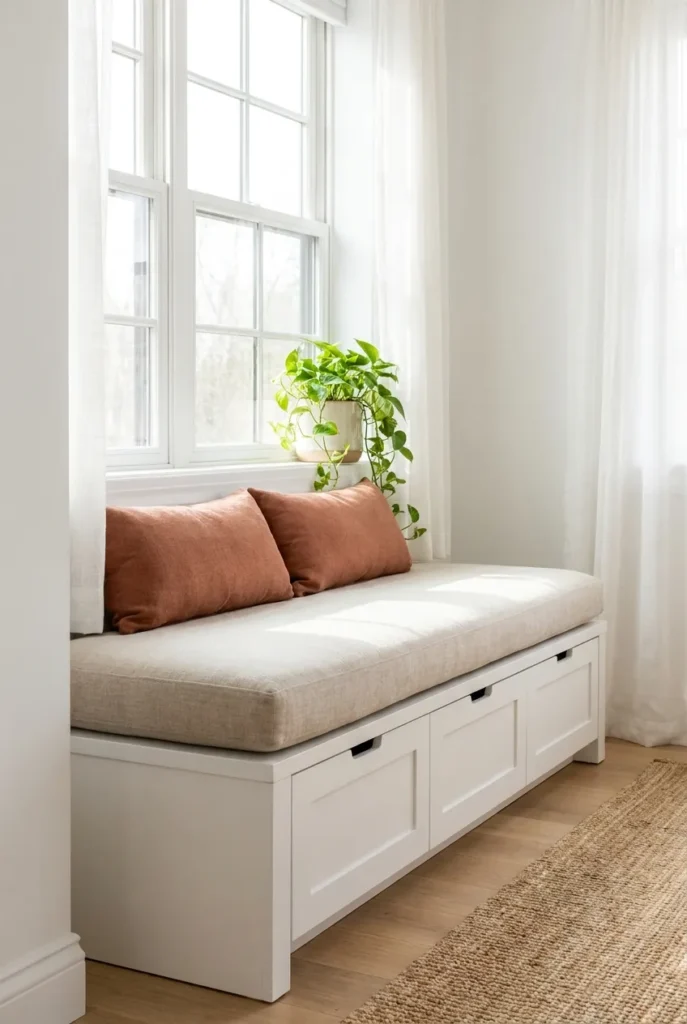
4. No Window? Build the Light Yourself
Plenty of rooms have zero good windows, and that stops nobody. A windowless corner can read warmer and more cinematic than a sunny one once you control the light yourself. The fix is layered lighting: one ambient source up high, one task light at page level.
For the full playbook on faking daylight, a focal wall, and depth in a dark corner, our guide to a cozy reading nook without a window walks through nine setups that look designed rather than compromised. Use a 2700K bulb so the corner glows amber instead of blue.
Failure mode: one harsh overhead and the corner reads like a waiting room no matter how nice the chair is.
5. Hide Your Books Inside the Seat
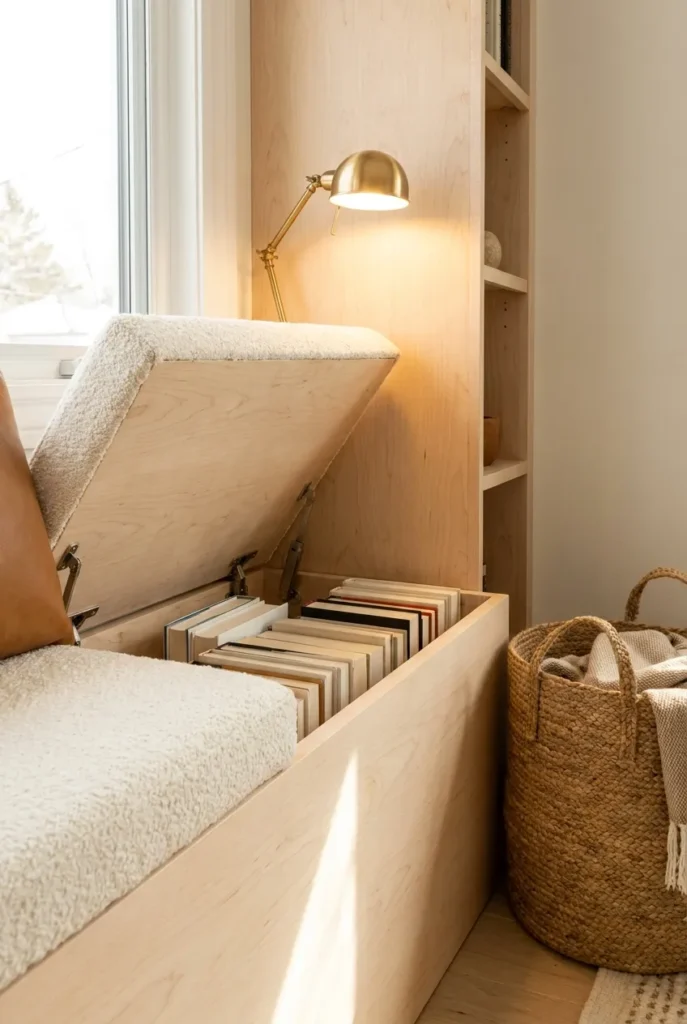
The fastest way to make a small nook feel calm is to stop storing books in stacks on the floor. Storage that hides inside the seat you already sit on does double duty in tight square footage, which matters when your whole nook is 9 square feet.
If you want the bench-with-a-secret-drawer approach done right, our breakdown of reading nook hidden storage shows how to make the lid open without slamming your fingers and where the TBR pile actually goes. A flip-top bench or two under-seat drawers keeps the floor clear and the corner quiet.
Failure mode: open shelving in a tiny nook turns visual clutter into the main event.
6. Tuck a Nook Under the Stairs
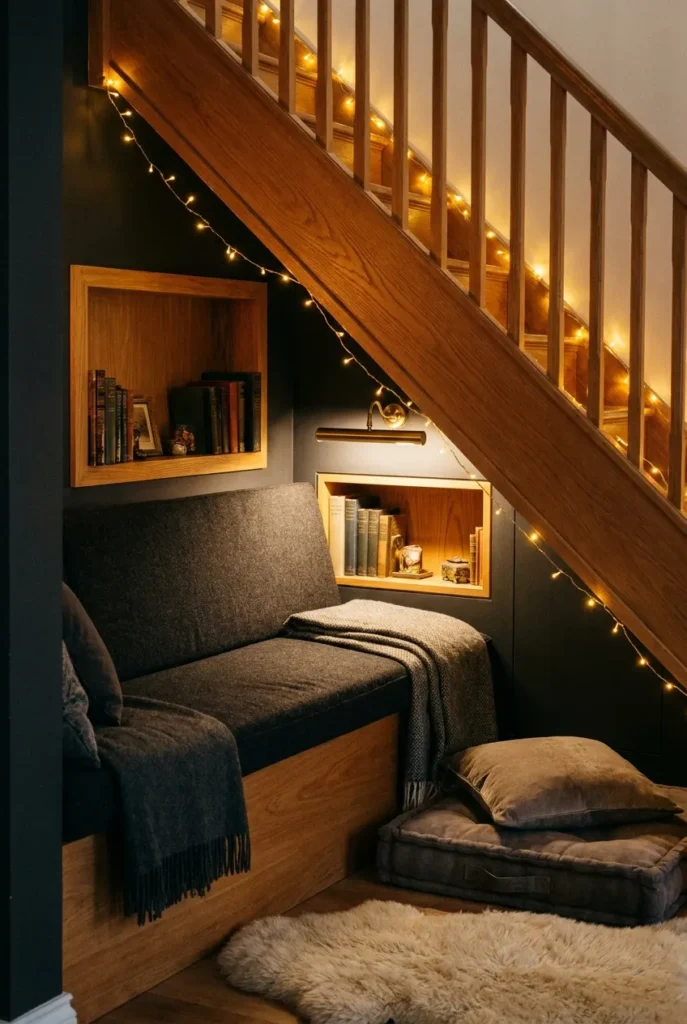
That dead triangle under the staircase is prime nook real estate, and “book nook ideas under stairs” pins go viral for the Harry-Potter-cupboard charm alone. Line the slanted wall with a cushioned bench, run a string of warm fairy lights along the underside, and add a single picture light over a small shelf.
Measure your headroom at the tall end before you commit. You want at least 36 inches of clear height where your head lands, or you’ll knock it every time you lean back.
Failure mode: building toward the short end of the slope, where you can’t actually sit upright.
7. Wrap a Reading Corner in a Bookcase Wall
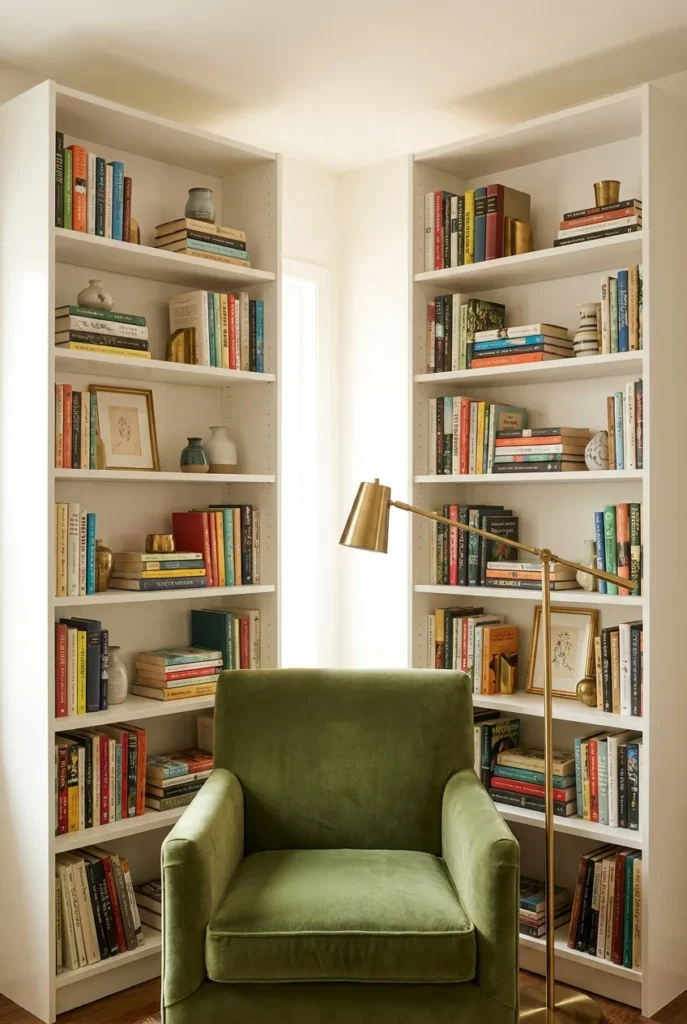
Frame your seat with shelves and the whole corner suddenly looks intentional, like a tiny home library. Flank a chair with two tall bookcases (the IKEA Billy at around $60 each is the workhorse here) and you’ve boxed in a cocoon on three sides.
Leave a 30-inch gap between the cases for the chair so you’re not wedged in. Mix horizontal book stacks with vertical spines and a few objects so the shelves breathe instead of reading like a storage unit.
Failure mode: packing every inch with spines makes the corner feel like a stockroom, not a sanctuary.
8. Go Low With a Floor Cushion Setup
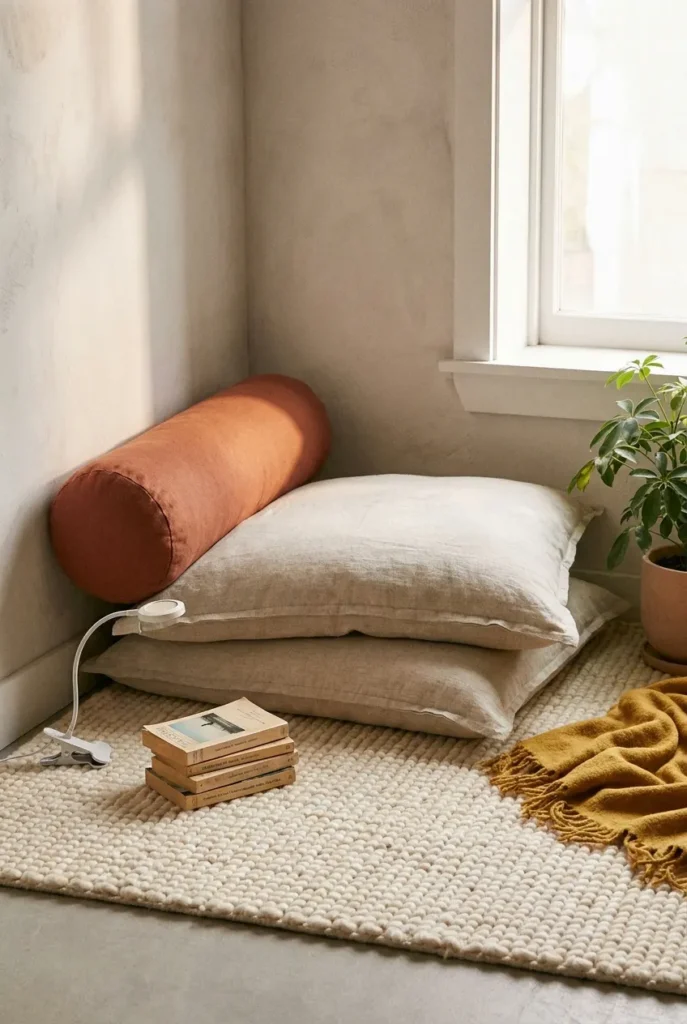
When budget is the wall you keep hitting, skip furniture entirely. A pair of oversized floor cushions, a thick washable rug, and a few bolsters build a nook for under $90. This is the most renter-proof option on the list because nothing is fixed to anything.
Honest trade-off: floor cushions photograph beautifully and feel great for about 40 minutes before your back files a complaint. Add a firm bolster against the wall for lumbar support and you’ll stretch that to a real reading session.
9. Convert a Closet Into a Reading Cocoon
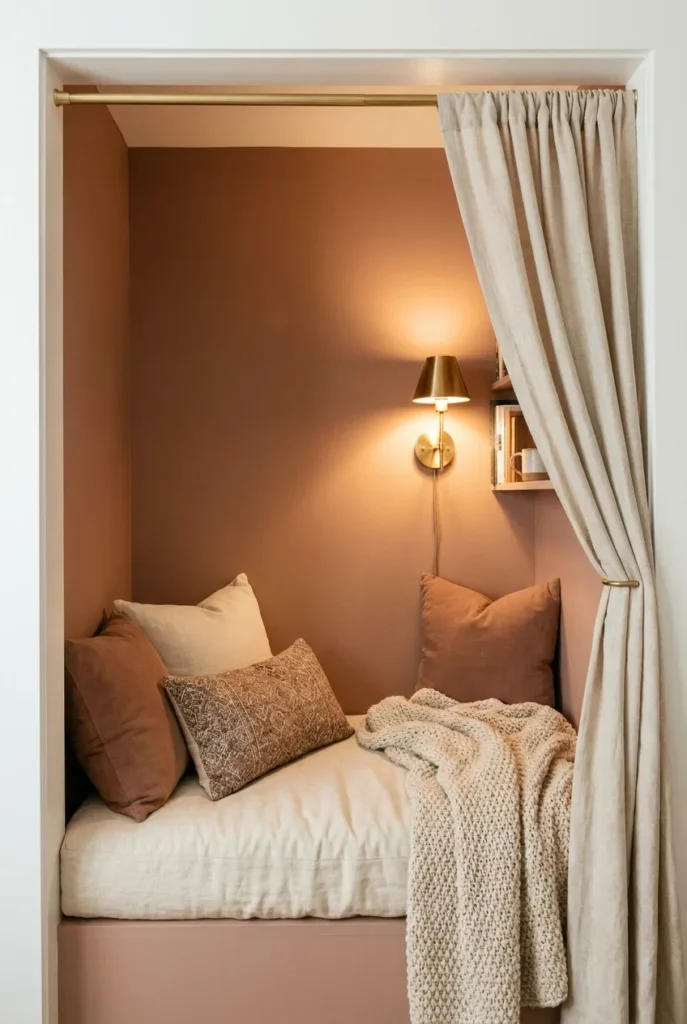
Empty a small closet, pull the door off, and you’ve got a built-in nook with three walls already done for you. Closet conversions are the coziest hideaway going because the enclosure does the cocooning for free.
Fit a cushioned bench at standard seat height (around 18 inches off the floor), add a plug-in sconce so you’re not drilling for wiring, and hang a curtain on a tension rod where the door used to be. The whole thing is reversible, which keeps your deposit safe.
Failure mode: leaving the wire shelving up top, which screams “this is still a closet.”
10. Anchor the Whole Nook With a Warm 2700K Bulb
Lighting is the single biggest difference between a nook that feels cozy and one that feels clinical, and it’s the cheapest thing to fix. Color temperature is measured in Kelvin, and you want 2700K for that warm amber glow. The U.S. Department of Energy’s ENERGY STAR guidance explains how 2700K to 3000K reads as soft white versus the bluish cast of higher numbers.
Skip the dimmer and even a 2700K bulb still reads like a dentist’s office at full blast at night. Add a small in-line dimmer (around $12) and you can drop it to candlelit for evening reading. Two light sources, remember: one ambient, one task at page level.
For the page itself, the American Optometric Association recommends bright, glare-free task lighting positioned to avoid shadows on the page, which is exactly what a swing-arm lamp at shoulder height delivers.
11. Make It Cottagecore With Soft, Layered Texture
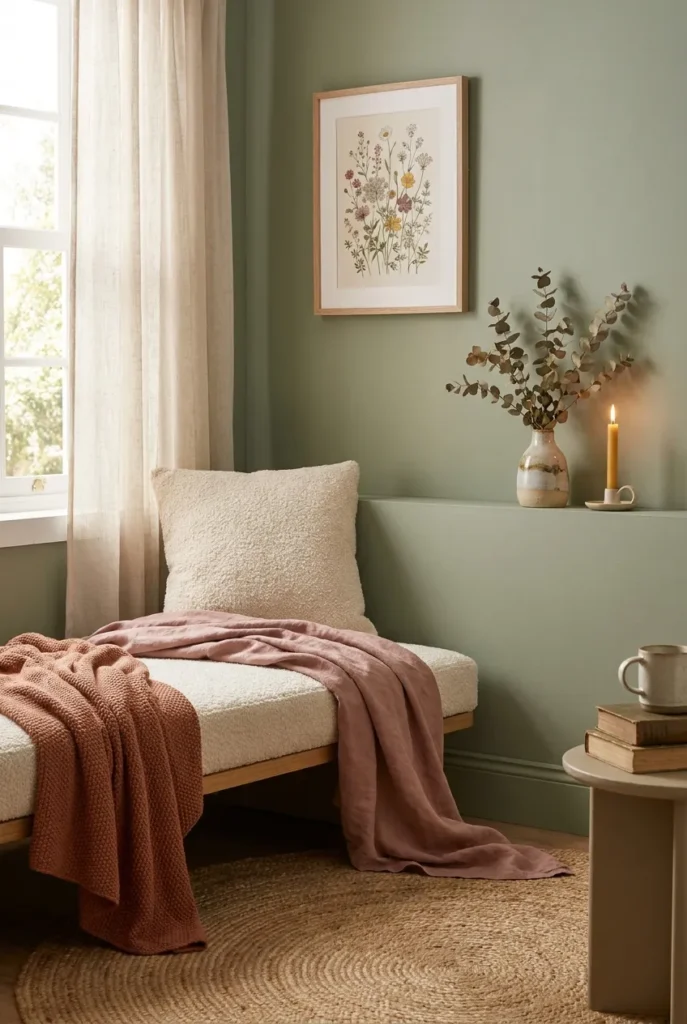
If your style leans cottagecore, the nook is mostly about texture and a gentle palette. Layer a linen throw over a boucle cushion over a jute rug, then add one floral or botanical print on the wall. The mix of rough and soft is what makes the corner feel collected over time rather than bought in one trip.
Stick to a warm, muted palette: sage, cream, soft terracotta, dusty rose. A sprig of dried eucalyptus on the side table and a candle finish it without trying hard.
Failure mode: matchy-matchy everything, which flattens the lived-in charm the whole style is built on.
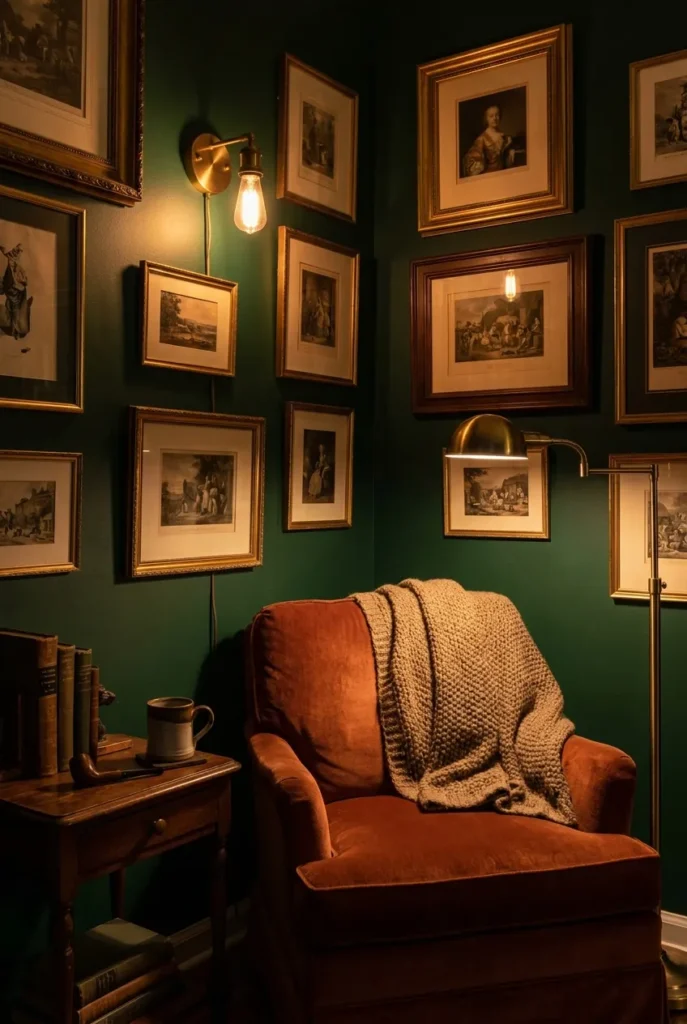
12. Go Dark Academia With Moody Paint and Brass
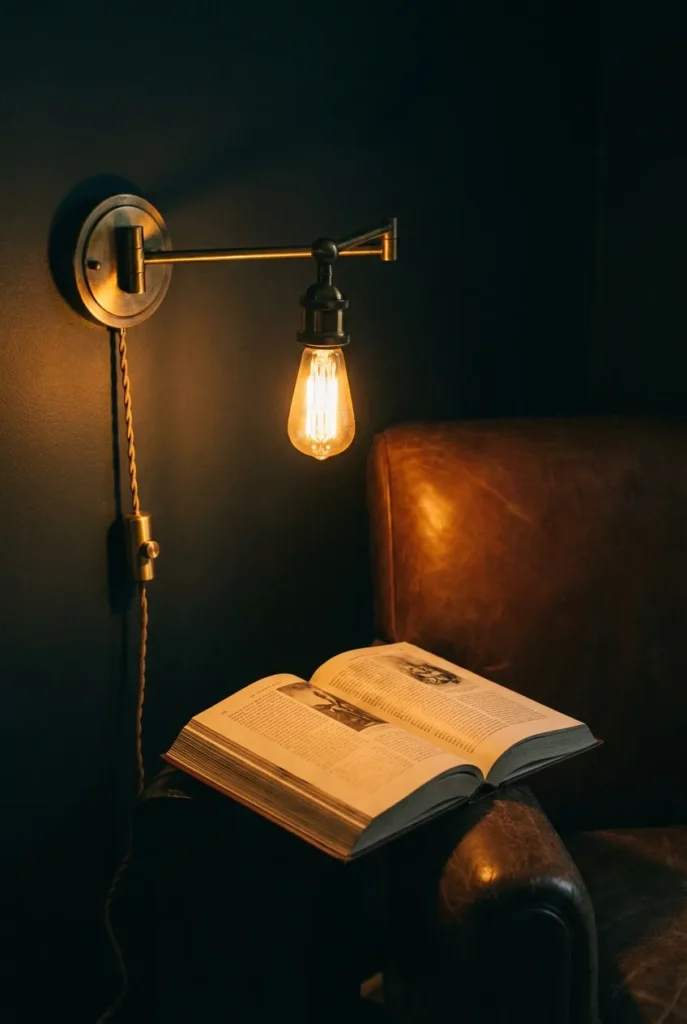
For a moody, library-at-midnight feel, color-drench the corner. Paint the walls, trim, and even the ceiling of the nook one deep shade (forest green, oxblood, or near-black) so the corner recedes and the lamplight pools. Renting? A removable peel-and-stick wallpaper in a dark damask gets you 80% there with no paint and no lost deposit.
Add brass: a picture light, a small lamp, a few aged-spine hardcovers. Dark academia lives on contrast between the gloom and one warm pool of light.
Failure mode: dark walls plus a cold white bulb, which kills the whole mood instantly.
13. Keep It Japandi With One Chair and Empty Space
The opposite move also works beautifully. Japandi and Scandi nooks lean on restraint: one well-made low chair, a single linen cushion, a small wooden stool as a side table, and deliberately empty space around it. The calm comes from what you leave out.
Choose natural materials in a tight palette of pale wood, oatmeal, and warm gray. A 2700K paper lantern or a simple arc lamp keeps the light soft. This is the easiest style to keep tidy because there’s almost nothing to clutter.
Failure mode: adding “just one more” decorative object, which breaks the quiet the whole look depends on.
14. Build a Real Bench With Storage for Under $300
If you’re ready to build rather than arrange, a custom bench is the upgrade that lasts. Three pieces of plywood, one weekend, and around $280 in materials gets you a built-in reading bench with hidden storage and real dimensions. Our full built-in reading bench plans walk through the cut list, the soft-close lid, and the actual photos so you’re not guessing.
Standard build numbers to hit: 18-inch seat height, 18 to 20-inch depth, and a 3-inch foam cushion topped with fabric you can unzip and wash. Get those and the bench feels like furniture, not a box.
Failure mode: building the seat too tall, so your knees ride up and your feet dangle. (The first bench many beginners build comes out 2 inches too high. Cut to 18 and check before you assemble.)
15. Steal a Corner of the Living Room by the Window
You don’t need a dedicated room. A single chair, a floor lamp, and a small side table tucked by the living-room window carve out a nook inside a shared space. The view does the heavy lifting, so angle the chair to catch it.
Define the zone with a small jute rug under the chair. A rug visually fences off the nook from the rest of the room, which is the trick that makes 12 square feet feel like its own spot. Keep a basket beside the chair for the current TBR pile.
Failure mode: floating the chair with no rug, so it reads as misplaced furniture instead of a deliberate corner.
Quick-Spec Cheat Sheet (screenshot this)
| Element | The number to hit | Budget pick |
|---|---|---|
| Seat height | 17 to 18 inches | IKEA Poäng (~$130) |
| Chair-to-wall gap | 18 inches | n/a |
| Seat depth (bench) | 16 to 20 inches | Flat-pack bench (~$80) |
| Cushion foam | 3 inches | Cut-to-size foam |
| Bulb color temp | 2700K, on a dimmer | Warm LED + in-line dimmer (~$12) |
| Under-stair headroom | 36 inches minimum | n/a |
| Whole-nook budget floor | ~$90 | Floor cushions + rug |
Frequently Asked Questions
How do you make a good reading nook?
Start with the 3-2-1 rule: three zones (a comfortable seat, layered light, and book storage), two light sources (one ambient, one task at page level), and one anchor seat at 17 to 18 inches high that you’ll actually sink into. Set the seat 18 inches off the wall, add a 2700K bulb on a dimmer, and keep a throw and a small table within arm’s reach. Nail those basics and the styling is easy.
What are popular themes for book nooks?
The big four right now are cottagecore (soft layered texture, muted botanicals), dark academia (moody color-drenched walls and brass), Japandi or Scandi (pale wood and calm empty space), and boho (floor cushions, jute, warm earth tones). Pick the one that matches the rest of your room so the nook reads as connected, not bolted on.
What are the most common book nook mistakes?
Three repeat offenders: a cold white bulb that makes the corner feel clinical, a seat that’s too stiff or too shallow for real reading, and overstuffed open shelving that turns a calm corner into visual clutter. Fix the light first, the seat second, and hide the book overflow inside storage.
What reading nook items do you really need? A supportive seat, a warm 2700K task light, a throw, a small side table within reach, and a spot to stash books. Everything else is styling. If you only buy two things, make them the right chair and the right bulb.
Can renters build a book nook without drilling?
Absolutely. Use plug-in sconces instead of hardwired ones, tension rods for curtains, peel-and-stick wallpaper for moody walls, and freestanding bookcases or floor cushions for the structure. Almost every idea on this list has a no-drill path that keeps your deposit safe.
How small can a reading nook be?
A real nook fits in about 9 to 12 square feet, roughly a 3-by-3-foot corner. A single chair, a slim floor lamp, and a small side table are all you truly need. A rug under the chair makes even a tiny footprint read as a defined, deliberate spot.
Find Your Corner
You’ve got 15 starting points, one spec table to screenshot, and the 3-2-1 rule to keep you honest. The hardest part is just picking the corner. So which one’s yours: the window seat you’ll build this weekend, the closet you’ll convert, or the chair you’ll just pull 18 inches off the wall tonight? Pick one, set it up before you overthink it, and go get lost in a book.
Keep reading
More cozy nook ideas
 Small Spaces
Read →
Small Spaces
Read →
10 Small Reading Nook Ideas for Adults
One high-back chair, one clamp-on lamp, one $19.99 tray table. At IKEA US prices this month, that’s a full reading corner for…
 Home Library & Bookshelves
Read →
Home Library & Bookshelves
Read →
14 Ideas for a Fireplace with Bookshelves on Each Side on a Budget
Two bookcases, two plug-in lamps, two wall straps. At IKEA US list prices this month, that adds up to $237.98 before tax,…
 Study & Craft Nooks
Read →
Study & Craft Nooks
Read →
16 Kids Homework Station Ideas Little Ones Will Love
Two IKEA pieces, one empty corner, $109.98 before tax. That’s the first kids homework station on this list, and it fits in…