
Reading Nook Without a Window? 9 Cozy Fixes That Look Designed, Not Compromised

If your room has zero windows and you keep scrolling past every nook idea built around a sunny bay, this guide is the fix. A reading nook without window can feel just as warm, just as quiet, and honestly more cinematic than the bay-window kind. The trick isn’t pretending the window exists. It’s building light, texture, and depth that make the corner feel chosen instead of compromised.
I built my first one in a hallway alcove with no daylight at all. Took me two weekends and one humbling mistake (more on that later). What worked: a plug-in sconce, a mirror angled at 22 degrees, and a chair I almost didn’t buy.
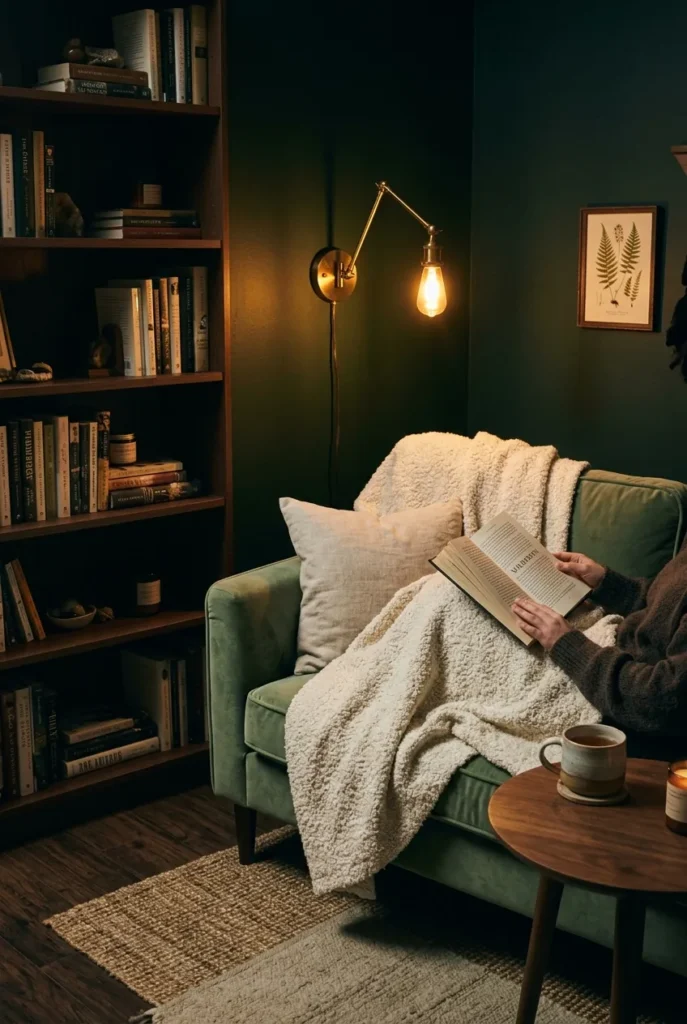
Here’s the build.
The Lighting Fix That Does the Work of a Window (Start Here)
A window gives you two things: light and a sense of openness. You can recreate both without drilling a single hole in your wall.
The math is simple. You want layered light at 2700K (warm amber, the color of late afternoon), totaling around 800 to 1,200 lumens in the seating zone. That’s roughly a 60W-equivalent LED in your reading lamp plus a smaller 40W-equivalent accent somewhere behind you or to the side. According to Energy Star’s bulb guide, 2700K reads as soft white and matches the warmth your brain associates with golden hour.
Three light sources, no overhead. That’s the rule.
- Task light — a swing-arm or clip-on lamp positioned 16 to 20 inches from your shoulder, bulb pointed at the page, not your face.
- Ambient glow — a plug-in wall sconce or small table lamp across the room throwing soft light onto the wall behind you.
- Accent — a string of warm fairy lights tucked behind a shelf, or an LED puck under a floating ledge.
That trio mimics the layered light a window throws across a room at 4 pm. Skip any one and the corner reads flat.
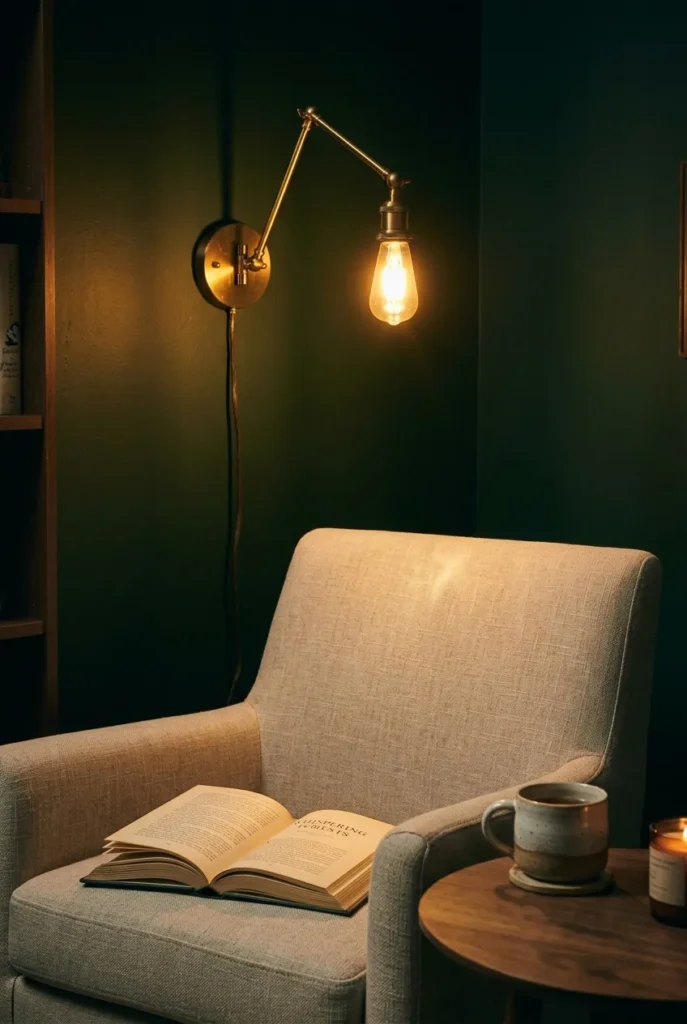
The American Academy of Ophthalmology recommends bright, glare-free light directly on the page when you read; their healthy vision guidance is the source if you want to read up on it. Translation for our nook: aim the bulb at your book, not your eyes, and keep one ambient source on so the contrast between page and room doesn’t fatigue you.
Borrow Light From the Next Room (The Mirror Move Nobody Talks About)
A windowless room is rarely sealed off. Light leaks in from a hallway, a kitchen, a doorway. Your job is to grab that light and drag it into the corner.
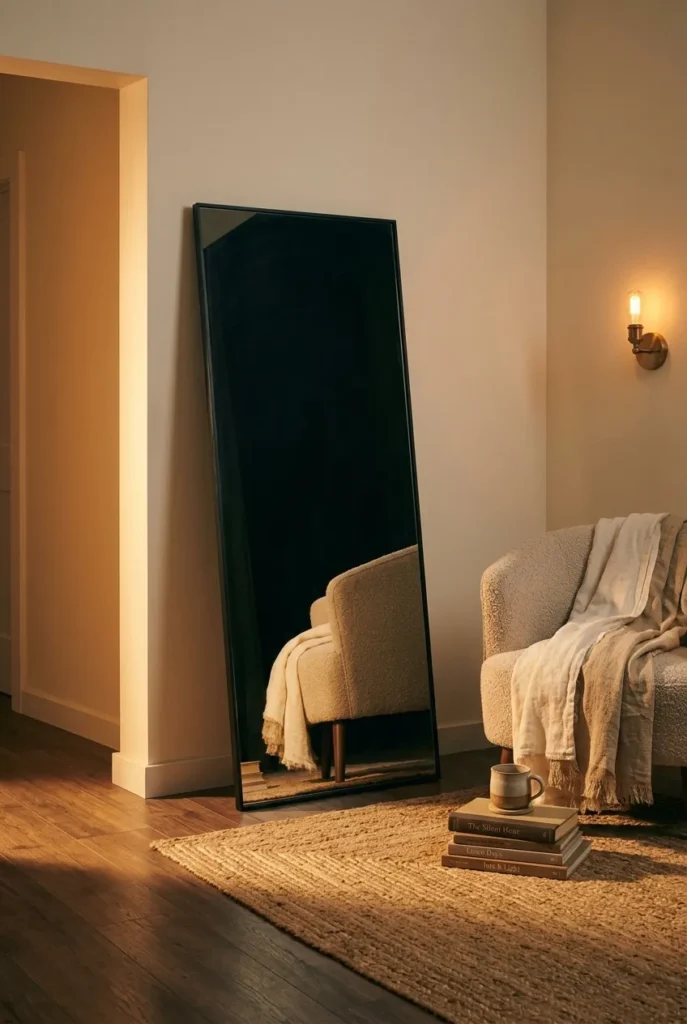
The cheapest, most landlord-friendly way: a tall narrow mirror angled to catch light from the nearest open doorway. I bought a 60-inch leaner from HomeGoods for $79 and propped it against the wall opposite my hallway. The corner went from cave to candlelit in about five minutes.
Two placement rules that actually work:
- Position the mirror so it faces the brightest adjacent source (a hallway lamp, a kitchen window, a living room slider).
- Tilt the top edge forward about 3 to 5 degrees. That redirects light downward into your seating zone instead of bouncing it at the ceiling.
A second trick: paint or paper one wall in a high-LRV (light reflectance value) color. Soft cream, dusty pink, or warm white at LRV 70+ acts like a secondhand window. The corner steals light without you doing anything else.
For renters: peel-and-stick wallpaper works here. Removable, no primer, and the matte finishes reflect light without the glare of paint.
Fake the Window (and Why Your Brain Won’t Mind)
Honestly, this one surprised me. A faux window does something real to the corner, even when you know it’s fake. Your eyes register the shape, the frame, the suggestion of an outdoor reference, and the room reads bigger.
Three faux-window methods that look intentional, not crafty:
The framed landscape. Hang a large vertical print (24 by 36 inches works for an average wall) of a forest, garden, or coastal scene at the height a real window would sit, roughly 36 inches from the floor to the bottom of the frame. A trim molding glued around the print sells the illusion.
The light therapy panel. A 10,000-lux SAD lamp on a small shelf or wall mount, running at warm white for an hour in the morning. It gives your circadian rhythm the same nudge a real window would and reads as architectural at a glance. Bonus: studies have linked light therapy to mood improvements in low-light winters, useful for the [Northern Hemisphere reader] working out of an interior room.
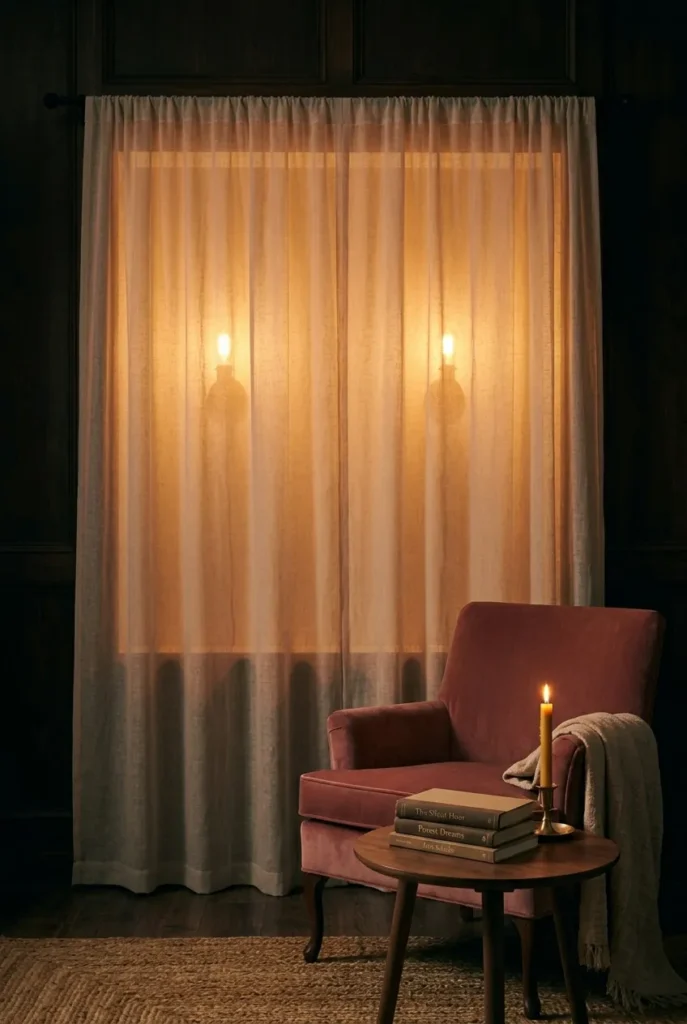
The sheer-over-sconce trick. Mount two plug-in sconces side by side, drape a long piece of unbleached linen vertically over them, and pull a thin rod across the top. The fabric glows like a curtained window at dusk. Cost: under $90 total at Target.
If you want more no-window setups that fit truly small footprints, our guide to tiny reading nook ideas under one square meter has 10 builds that work in awkward corners renters can’t modify.
Pick the Chair That Acts Like Architecture
Without a window to anchor the corner, your seating becomes the visual gravity. The chair has to do double duty: comfort plus shape.
What works in a windowless nook:
- A high-back wingback (IKEA Strandmon or any thrift-store equivalent) — the wings create their own enclosure, mimicking a window alcove.
- A low boucle armchair (Article Sven, West Elm Hayes) with a depth of 32 to 36 inches so you can curl up sideways.
- A small chaise or daybed if the room can take a 60-inch length — gives you a horizontal anchor where the window would have been.
What doesn’t work: a thin dining-style accent chair. No visual weight. The corner reads like a waiting room.
A measurement rule I learned the expensive way: leave at least 18 inches between the chair arm and the wall on one side, so your sconce arm or lamp swing has clearance and you can stand up without bumping shins. I skipped that gap on my first build. My knees still remember.
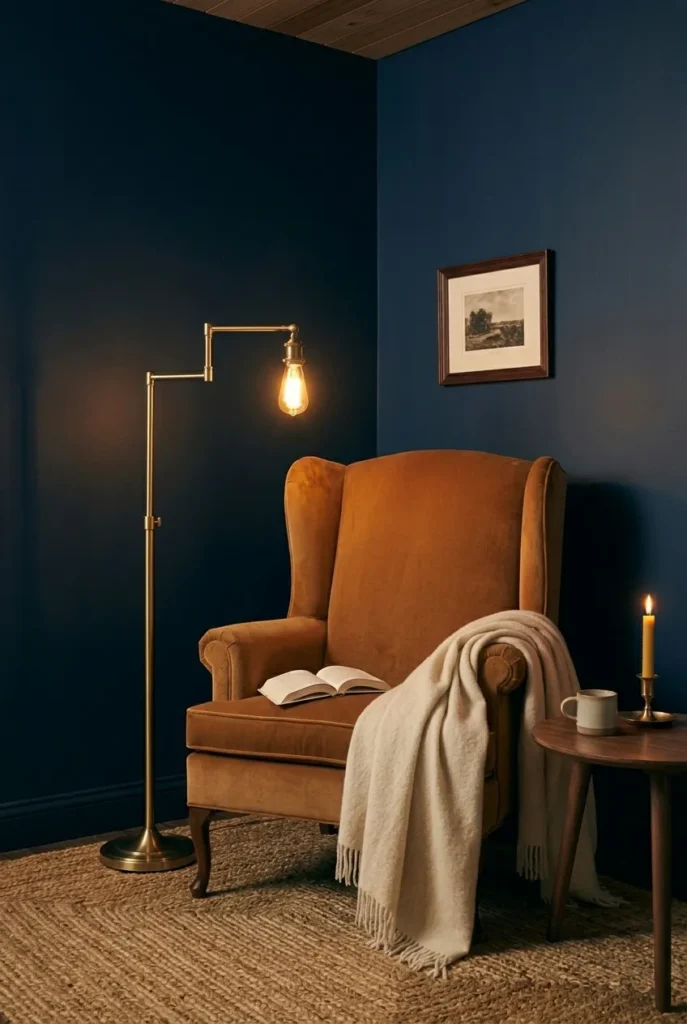
Layer Textiles Like You’re Lighting a Movie Set
A windowless corner can’t lean on natural light to add texture, so the textiles have to. The goal is at least four different tactile surfaces in the seating zone.
The four-layer rule:
- Floor — a wool or jute area rug, minimum 4 by 6 feet, so the chair legs sit fully on it.
- Seat — the chair upholstery (linen, velvet, boucle).
- Throw — wool, sherpa, or knit draped over one arm. Never both arms (looks staged).
- Pillow — one lumbar, 12 by 20 inches, in a contrasting texture.
That’s it. Four layers, and the corner photographs and lives differently than a bare chair against a bare wall.
Color-wise, a windowless room handles dark, saturated palettes better than light ones. Deep forest, navy, oxblood, charcoal — these read as intentional cocoons. A pale palette in a no-window room can feel washed out under artificial light.
For the no-furniture version of this build (great for renters who can’t justify a chair), our reading nook floor cushion setup guide walks through the layering math for a setup with zero furniture at all.
Closet, Alcove, or Awkward Corner? Use the Walls
Here’s the freedom a windowless space gives you: you can use every wall. No window means no compromise on shelving, art, or built-ins. This is where windowless nooks beat windowed ones.
A few wall strategies:
- Three-sided book wrap. Bookshelves on the back wall and one side wall. The books absorb sound and create the alcove feeling a window would have given.
- Picture-ledge layering. Three narrow ledges, 4 inches deep, stacked 12 inches apart, holding books face-out. Reads like a curated bookstore display.
- Floor-to-ceiling vertical mural. A single large piece of art or wallpaper running floor to ceiling in a 24- to 36-inch strip behind the chair. Replaces the architectural “moment” a window would have provided.
If your no-window corner is inside a closet conversion, the walls are even more useful: you can hang a sconce, mount a small shelf, and add a coat hook for your throw without asking the landlord.
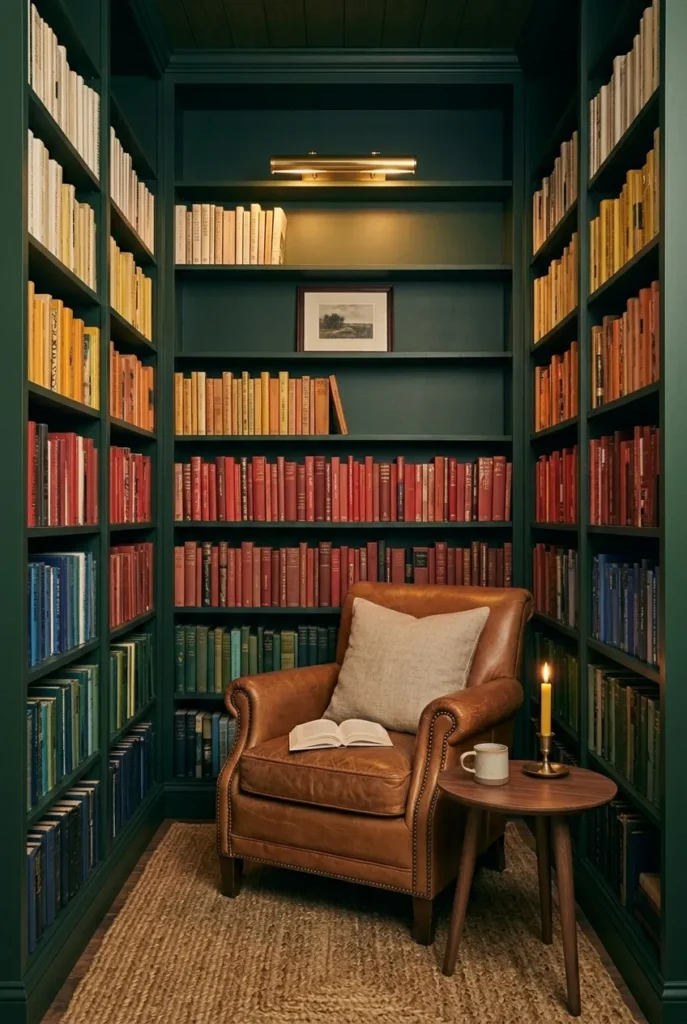
Sound Design Is the Trick Nobody Mentions
A windowless room has no birds, no traffic hum, no leaves. It’s quieter than you’d expect, and the quiet reads as sterile if you don’t address it.
Three sound layers that fix it:
- A small white-noise machine or app running a low rain track at 35 to 40 decibels (about as loud as a soft refrigerator).
- A vinyl record or low jazz playlist during your reading window. Sound adds depth the same way light does.
- Sound-absorbing soft goods: that wool rug, those throw pillows, a heavy curtain on one wall even if there’s no window behind it. They kill the echo a bare windowless room can have.
Honestly, this is the upgrade that surprised me most. I added a 5 by 7 wool rug to my hallway nook and the corner went from “quiet but flat” to “cocooned.” Same room. Different feel.
Use Scent Where Daylight Would Live
A window brings in air, smell, weather. A windowless nook needs a scent strategy or it reads as closed-off.
What works:
- A soy candle in cedar, vetiver, or fig at the seating level (never at face level — too much).
- A reed diffuser in a quiet scent (linen, eucalyptus, sandalwood) on a shelf 6 to 8 feet from the chair.
- A small essential oil diffuser running 20-minute cycles instead of continuously.
Skip plug-in fresheners. They flatten the air and clash with the warm, layered feeling you’re building.
This is the 10% sensory upgrade that does 30% of the work. Your brain registers “this is a real, lived-in space” the moment you walk in.
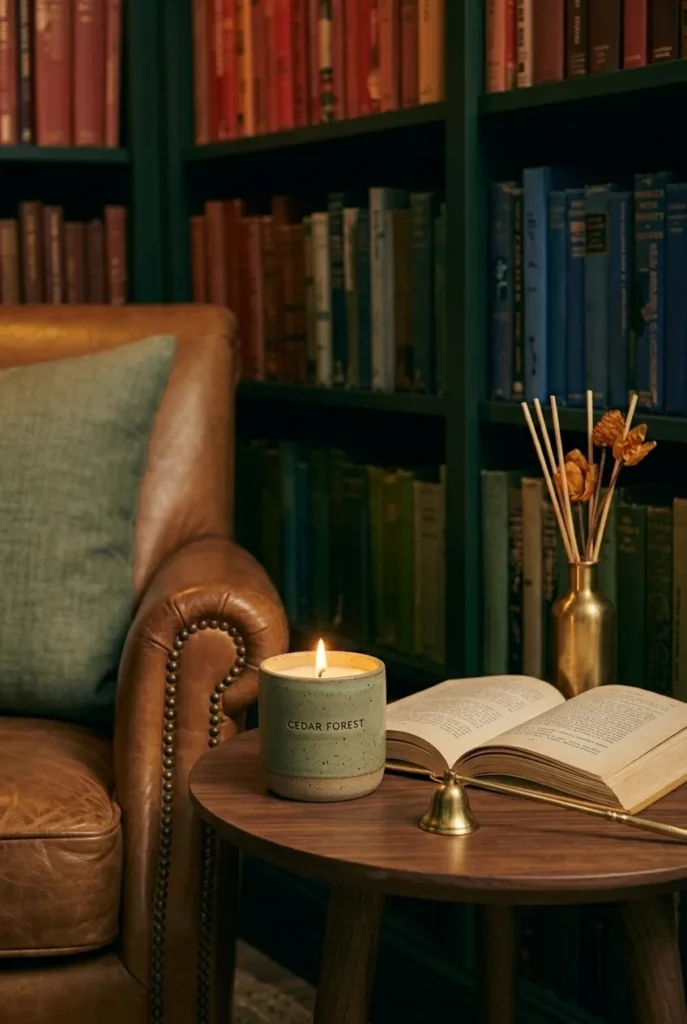
Go Dark on Purpose (The Counterintuitive Move)
Most advice for windowless rooms tells you to paint everything white to maximize light. Wrong instinct for a reading nook.
Dark walls in a windowless reading corner do three things:
- They hide the absence of daylight. A white wall under artificial light reads dingy. A deep green or oxblood wall reads cinematic.
- They amplify your warm light sources. A 2700K bulb against dark walls feels like a fireplace. Against white, it just feels yellow.
- They make the room feel deliberate. Nobody questions a moody library. Everyone questions a windowless beige room.
Colors that work in a no-window reading nook: Farrow & Ball Studio Green, Sherwin-Williams Iron Ore, Behr Cracked Pepper, Benjamin Moore Hale Navy. For renters, peel-and-stick wallpaper in dark florals or moody botanicals delivers the same effect without primer or paint.
If the moody direction speaks to you, our moody home library reading nook guide breaks down the wall colors, shelf styling, and lamp pairings that make a dark windowless room feel like a deliberate retreat instead of a cave.
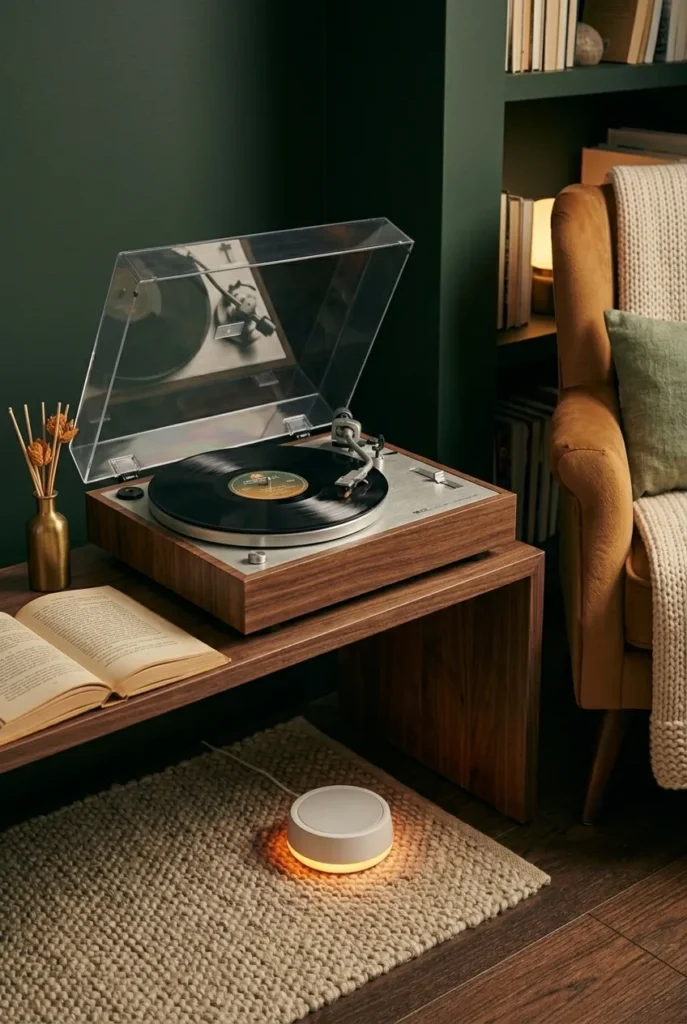
Budget Reality: What a No-Window Nook Actually Costs
I’ve built three of these. Here’s the honest math.
Budget build ($80 to $150): thrift-store armchair ($40), plug-in sconce from Target ($35), $20 throw, $25 lumbar pillow, $30 jute rug from Walmart.
Mid build ($200 to $350): IKEA Strandmon ($279), Article-style swing-arm lamp ($89), small leaning mirror ($79), wool throw ($45), peel-and-stick wallpaper ($60 per roll).
Splurge build ($400 to $700): boucle armchair from a small brand ($499), brass plug-in sconce ($120), 5 by 7 wool rug ($249), faux-window sheer setup ($80), candle and diffuser ($45).
You don’t need the splurge version. The mid build photographs identically to the splurge if you nail the lighting.
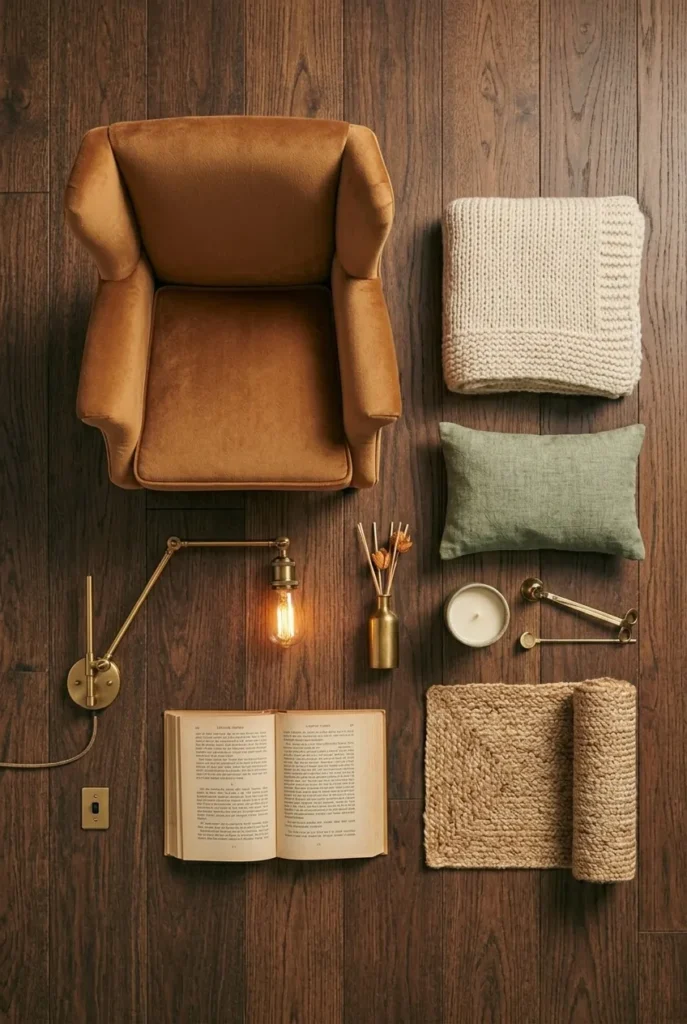
Reading Nook Without Window Frequently Asked Questions
How do you make a reading nook without a window?
Layer three warm 2700K light sources (task, ambient, accent), add a tall mirror angled to borrow light from an adjacent room, choose a high-back chair for visual weight, and stack at least four textile layers (rug, upholstery, throw, pillow). Dark walls beat white walls in this setup.
Can you have a cozy reading corner in a windowless room?
Yes, and often it photographs better than a windowed one. Windowless rooms let you control every light source, so you can hit warm-amber tones consistently. The cocoon effect is easier to achieve when daylight isn’t fighting your lamps.
What lighting works best for a no-window reading nook?
Layered warm light at 2700K, totaling 800 to 1,200 lumens in the seating zone. Use a task light close to the page, a small ambient source like a plug-in sconce, and one accent (fairy lights or an LED puck). Avoid overhead light entirely.
How wide should a reading nook be?
A single-seat nook needs at least 36 inches of clear width for the chair plus 18 inches of clearance on the open side. A daybed-style nook needs 60 inches minimum. Under 36 inches, you’re better off with a floor cushion setup.
What’s the best chair for a small windowless reading corner?
A high-back wingback (like the IKEA Strandmon) or a deep-seat boucle armchair around 30 to 34 inches wide. The high back creates its own architectural enclosure, which a windowless corner needs since there’s no window frame doing that job.
Is a windowless reading nook bad for your eyes?
Not if your lighting is layered correctly. Eye strain comes from contrast: bright page against a dark room. Add an ambient light source to balance the page-to-room ratio, and reading in a windowless corner is no different from reading at night by a single lamp.
Can renters build a reading nook without a window?
Easily. Every method in this guide works without drilling: plug-in sconces, leaning mirrors, peel-and-stick wallpaper, freestanding bookcases, and floor cushion setups. The whole build can be undone in an afternoon at move-out.
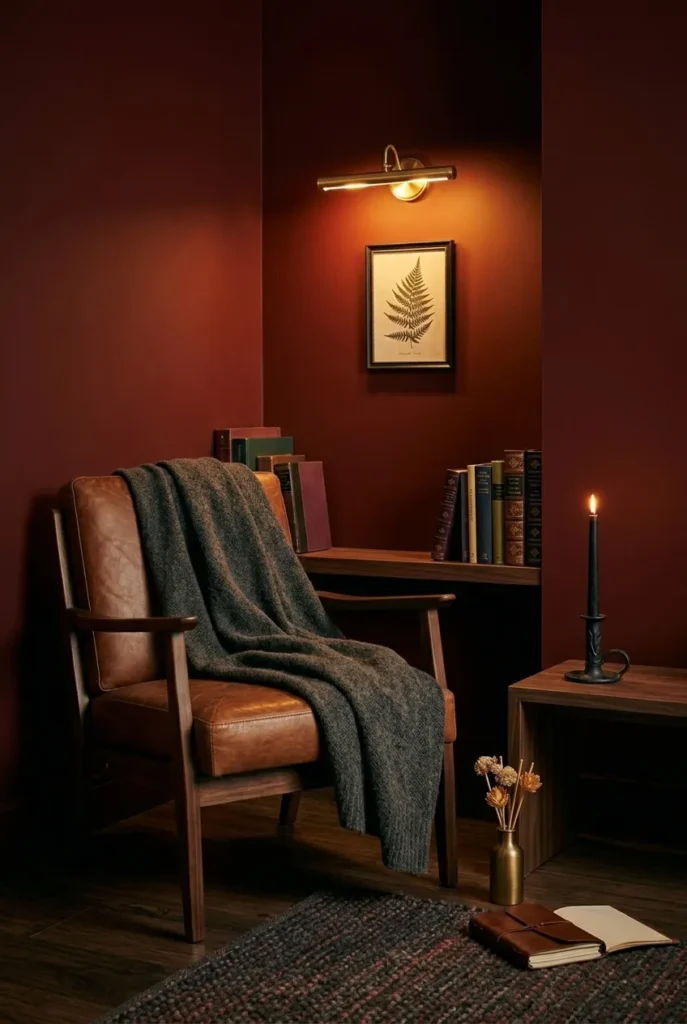
Your Cozy Corner Is Closer Than You Think
A windowless room isn’t a downgrade. It’s a creative constraint, and the corners built inside those constraints are usually the ones readers remember. Three warm light sources, one chair with shape, four textile layers, and a wall you treat on purpose. That’s the whole formula.
Build one piece this weekend. Add another next weekend. By month two, your corner will read as the most intentional spot in your home, and the people who walk in won’t notice the missing window. They’ll notice the warmth.
What corner are you starting with?
Keep reading
More cozy nook ideas
 Small Spaces
Read →
Small Spaces
Read →
10 Small Reading Nook Ideas for Adults
One high-back chair, one clamp-on lamp, one $19.99 tray table. At IKEA US prices this month, that’s a full reading corner for…
 Home Library & Bookshelves
Read →
Home Library & Bookshelves
Read →
14 Ideas for a Fireplace with Bookshelves on Each Side on a Budget
Two bookcases, two plug-in lamps, two wall straps. At IKEA US list prices this month, that adds up to $237.98 before tax,…
 Study & Craft Nooks
Read →
Study & Craft Nooks
Read →
16 Kids Homework Station Ideas Little Ones Will Love
Two IKEA pieces, one empty corner, $109.98 before tax. That’s the first kids homework station on this list, and it fits in…