
Forest Reading Nook Ideas: How to Bring the Mossy, Tucked-Away Woods Indoors

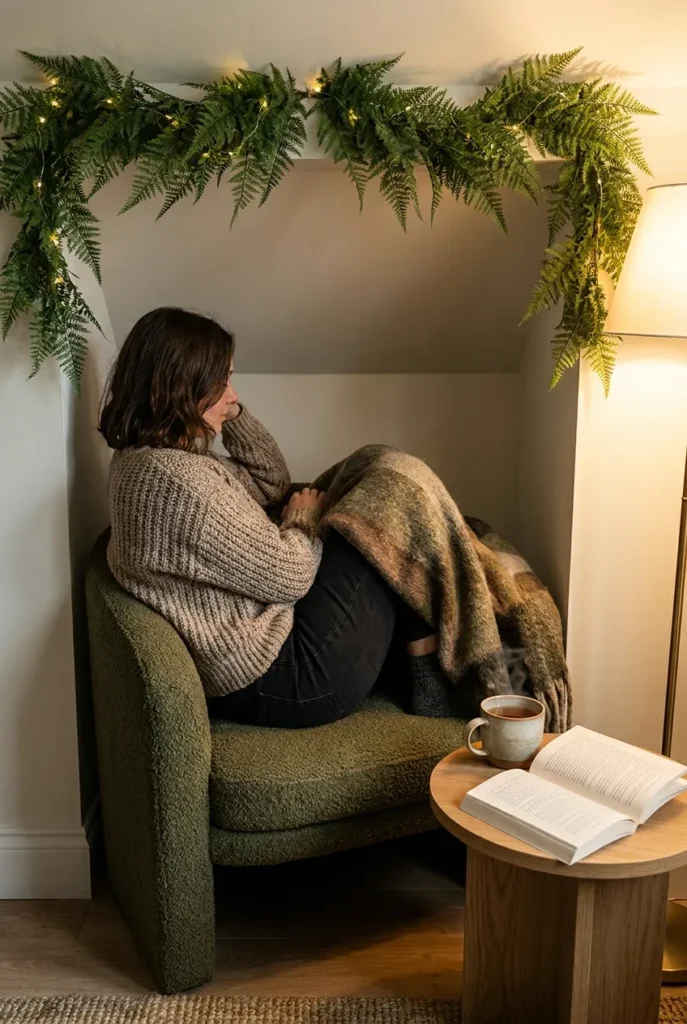
Picture this. Four o’clock light, a wool throw, faux ferns trailing along the wall, and a 2700K bulb glowing like late sun through leaves. That’s the forest reading nook we’re building, and you can do it this month in a rented apartment without a drill, a renovation, or a landlord who likes you.
Here’s the thing most search results miss. They show you tiny diorama kits or a vague mood board. We’re doing the real corner: the one you actually curl up in. If you rent, if your space is barely 600 square feet, if your budget tops out around $160, you’re exactly who this is for.
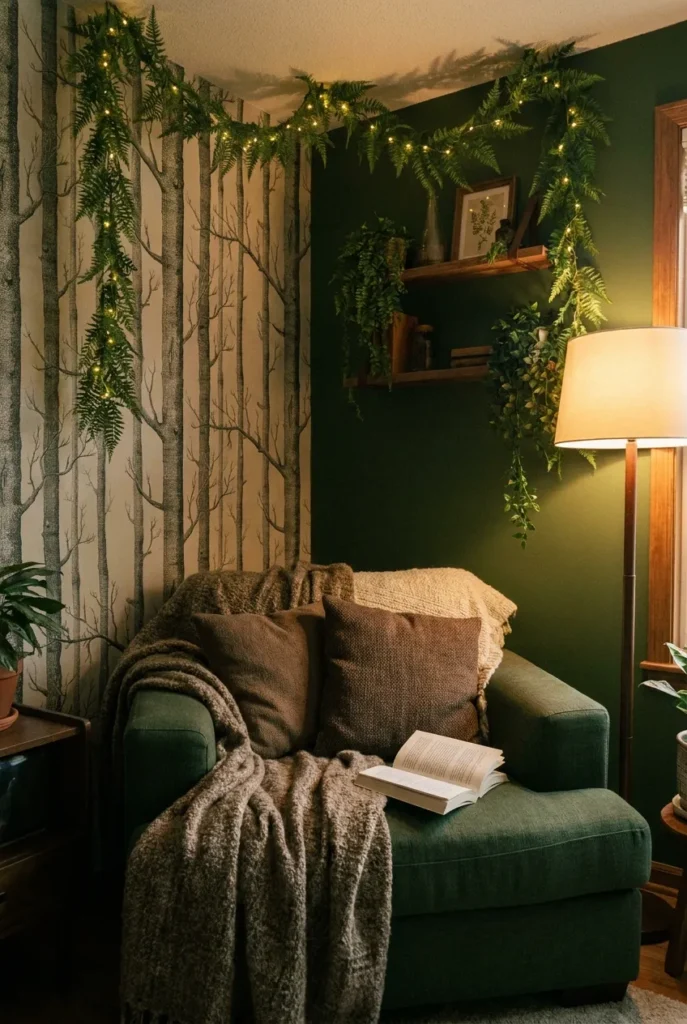
So let’s bring the woods inside.
What Makes a Reading Nook Feel Like a Real Forest
A forest reading nook isn’t about gluing leaves to a wall. It’s about layering the same cues your brain reads in an actual woodland: something green overhead, depth on the walls, soft dappled light, texture underfoot, and a scent or sound that isn’t visual at all. Get those five layers right and even a hallway corner reads as a tucked-away grove.
I learned this the slow way. My first attempt was one sad potted fern and a green pillow. It looked like a waiting room. The corner only clicked once I stopped decorating and started layering.
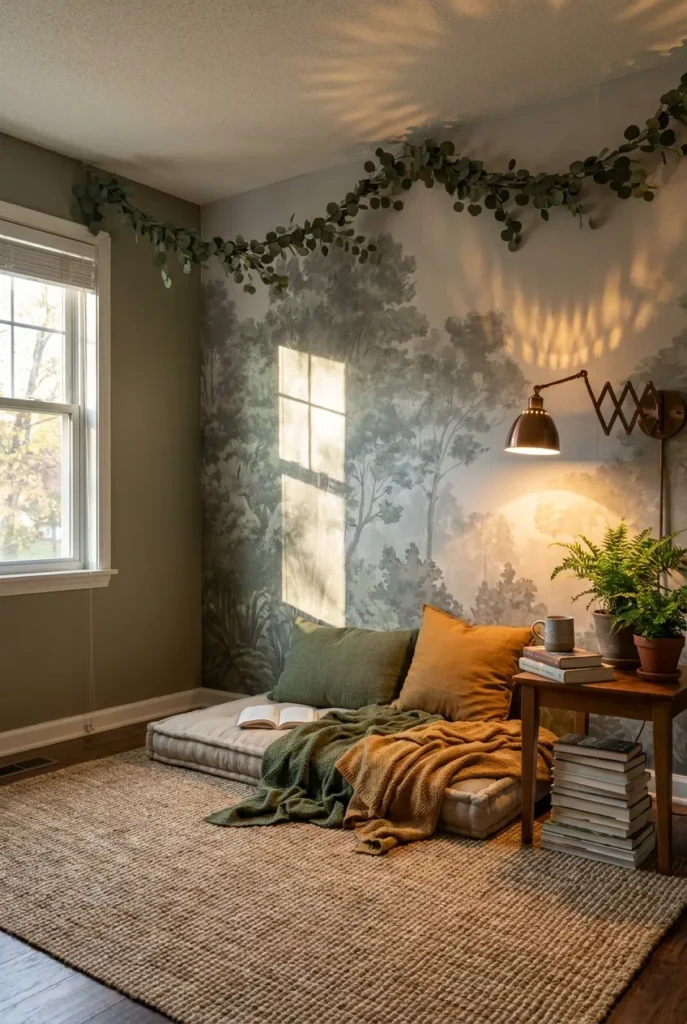
Use this as your build order. Screenshot it.
| Layer | What it does | Easiest renter-safe move |
|---|---|---|
| Canopy (overhead green) | Sells “under the trees” instantly | Faux fern or eucalyptus garland on command hooks |
| Walls (depth) | Fakes forest distance | Peel-and-stick birch or woodland mural |
| Light (dappled, warm) | Turns daytime into dusk | 2700K bulb plus battery fairy lights |
| Floor (texture) | Grounds the space | Washable jute-look rug |
| Scent or sound | The layer everyone forgets | Cedar sachet or a quiet rain track |
That last row is the Canopy-to-Floor Method in one line: four layers you can see, one you can’t. The fifth is what makes a guest say “this feels different” without knowing why.
Renter-Safe Forest Nook: No Drill, No Paint, No Lost Deposit
This is the part nobody publishes, so let’s fix it. You can build the entire forest look with zero holes in the wall.
Peel-and-stick murals do the heavy lifting. A woodland or birch-tree mural costs around $35 to $45, goes up in an afternoon, and peels off clean when you move. For the canopy, skip nails. Adhesive hooks rated for a few pounds hold a faux eucalyptus garland fine, and a tension rod wedged into an alcove gives you a free spot to drape greenery or a sheer café curtain.
Faux foliage matters more than real here. Real ivy drops leaves and judges your watering schedule. Good faux fern and trailing pothos read convincingly from three feet away, which is the only distance that counts in a nook.
If you want more no-damage groundwork before you start, our no-drill reading nook setups for renters walks through the exact hooks, rods, and rugs that survive a lease and a move.
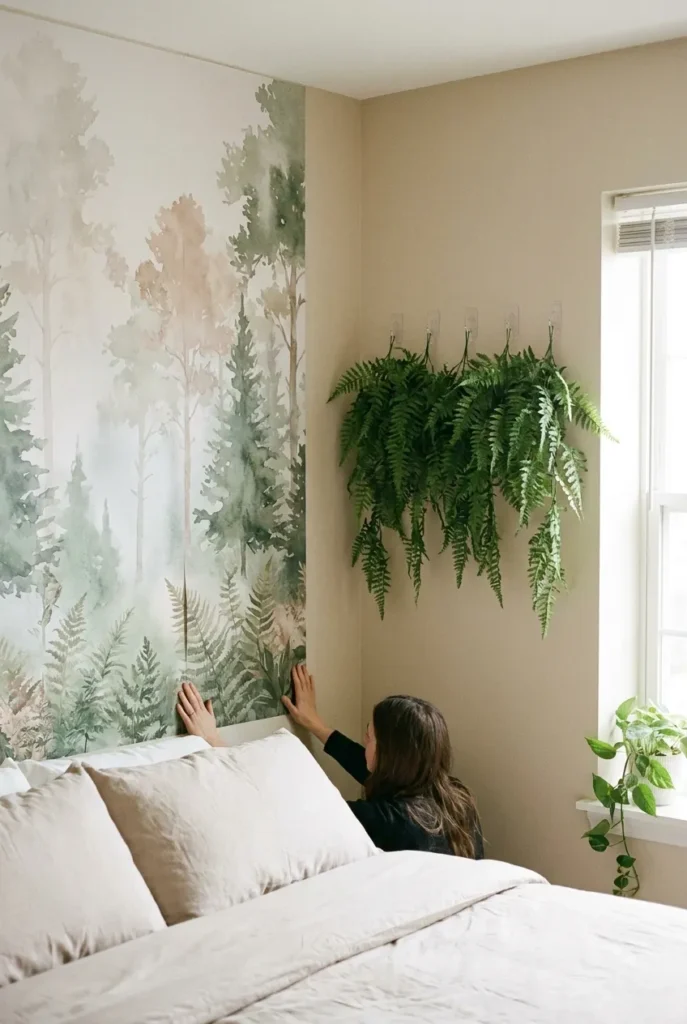
Truth is, the renter version often photographs better than the built-in. Fewer commitments, more play.
The Forest Color Palette That Doesn’t Look Like a Swamp
Green is where people go wrong. One flat lime wall and your woodland turns into a 1990s bathroom.
Layer three greens instead of one. A deep fern or pine for depth, a soft sage for the mid-tone, and a touch of mossy yellow-green for the highlight. Add bark browns and a warm cream so the eye has somewhere to rest. Skip pure white. It snaps the forest spell the moment it catches the light.
For renters, the trick is bringing those greens in through textiles, not paint: a sage washable rug, a moss-green floor cushion, an olive throw. Hardware-free, deposit-safe, and you can change the whole mood by swapping one cushion.

Lighting the Forest Glow: Warm, Dim, and a Little Dappled
Light is what sells the whole illusion, and it’s the cheapest layer to get right.
Go warm. A 2700K bulb gives you that yellow, late-sun tone instead of a clinical white. If you want the science on why, ENERGY STAR’s guide to light color and mood lays out the Kelvin scale plainly: lower numbers read warmer and yellower, higher numbers read cooler and bluer. For a woodland corner, you want the low end every time.
Then layer it. One swing-arm or clip-on reading light for the page, a strand of warm fairy lights woven through the garland for glow, and a dimmer so you can drop the room to dusk. Battery fairy lights cost about $10 and need no outlet, which renters will appreciate.
Skip the dimmer and your 2700K bulb still blasts like a dentist’s office after dark. I made that mistake for a month. The corner only felt like a forest once I could turn it down.
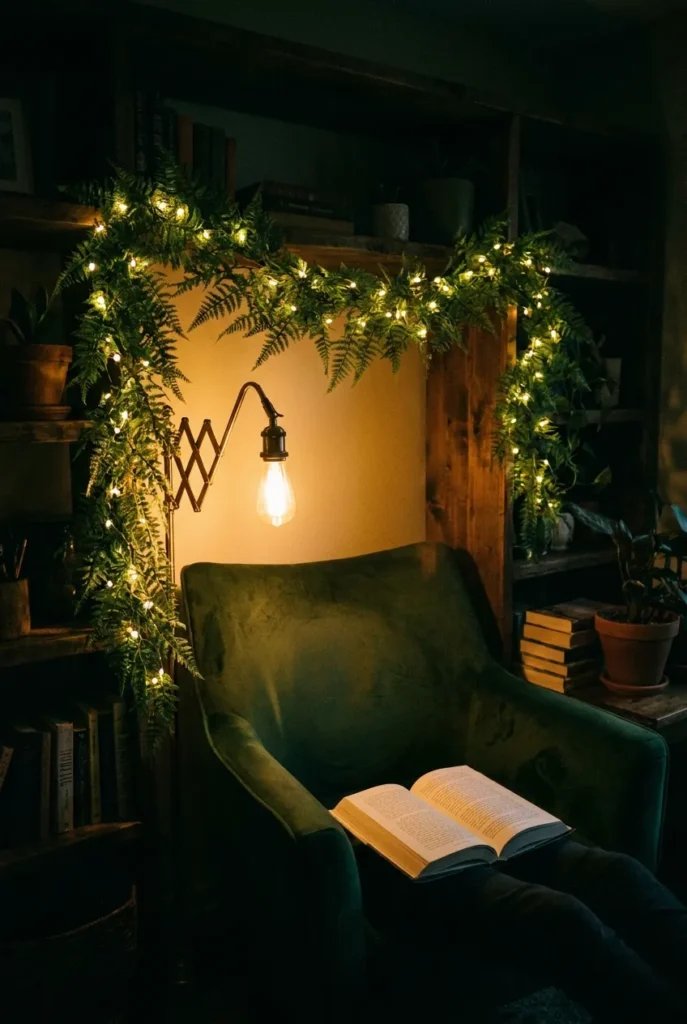
What to Curl Up In: Chair, Floor Cushion, or Daybed
The seat decides whether you read for ten minutes or two hours.
A low accent chair is the safest bet for a woodland corner: something with a soft back you can sink into, in olive, rust, or oatmeal boucle. Floor cushions and poufs look incredible in photos, but after 40 minutes your spine files a complaint. If you go the floor route, prop a firm bolster behind your lower back and you’ll last.
Mind the 18-inch reach rule: set your side table within about 18 inches of the seat so your tea and your book land without a stretch. Sounds fussy. You’ll feel it the first night you reach too far and knock the mug.
Not sure what chair shape fits a tiny corner, we rounded up a supportive reading nook accent chair under $300 with renter-friendly picks that don’t eat your floor space.
Enchanted Forest or Dark Forest? Pick Your Mood
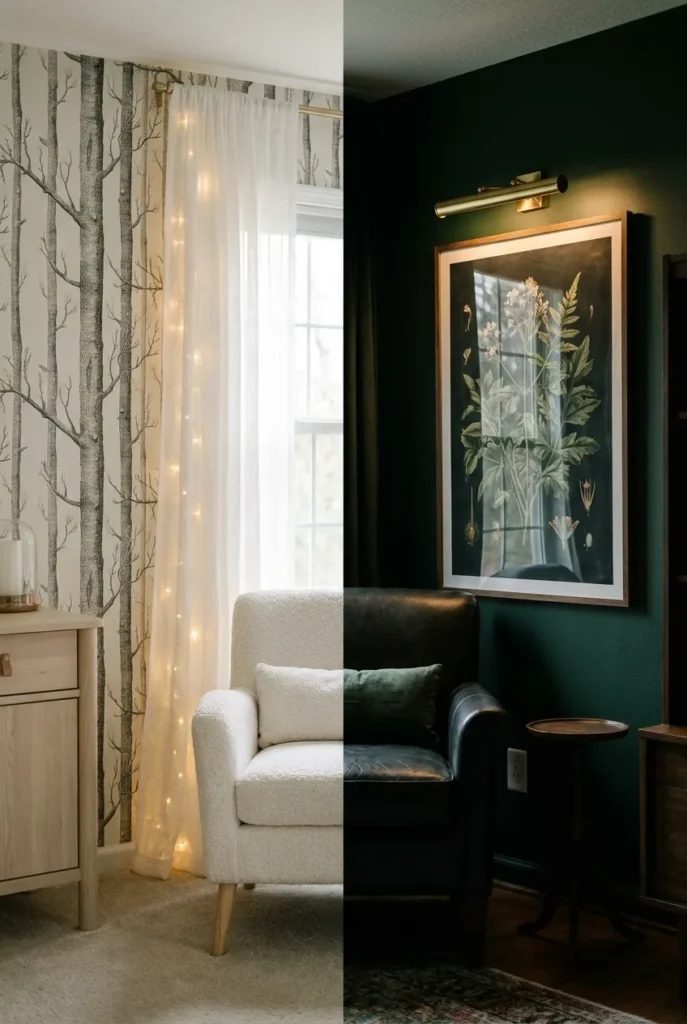
Two readers want two very different woods, so name yours before you shop.
An enchanted forest reading nook leans light and whimsical: birch tones, fairy lights, sheer curtains, a fairy-tale softness. A dark forest version goes moody: deep pine walls, brass, a single picture light, more dark-academia than cottagecore. Same five layers, opposite dimmer setting.
The enchanted route shares a lot of DNA with our whimsical fairy tale reading nook ideas, so start there if you want the softer, storybook end of the spectrum.
The $160 Forest Nook: A Real, Totaled Parts List
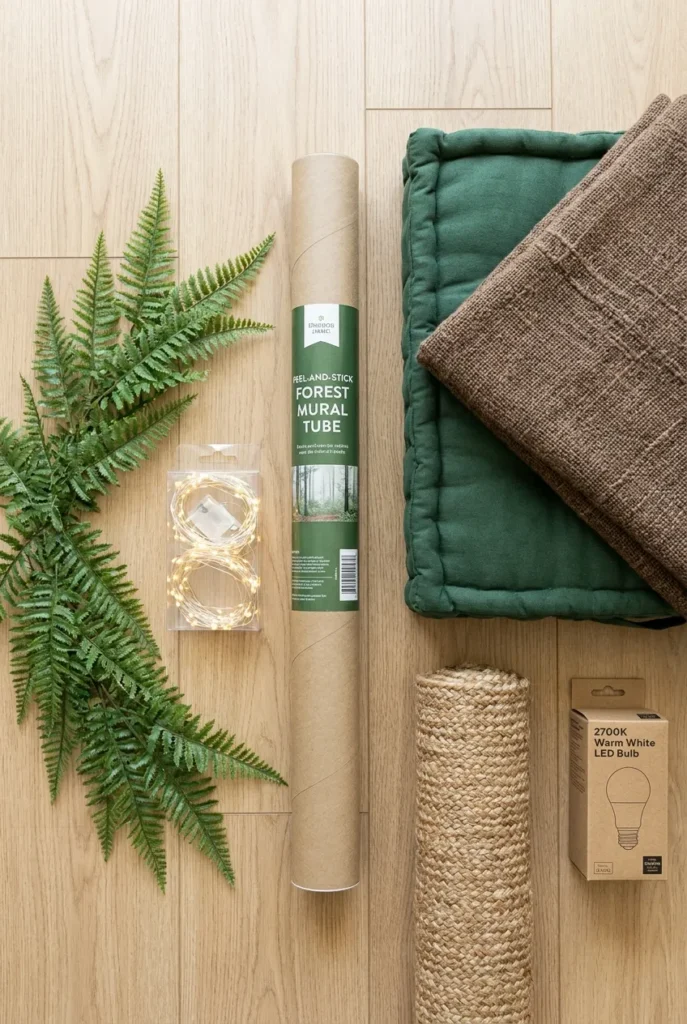
Every other result hand-waves the cost. Here’s the actual math for a renter-safe build, with 2026 price bands I’ve seen at Target, Amazon, and IKEA.
| Item | Rough cost |
|---|---|
| Peel-and-stick woodland mural (accent strip) | $38 |
| Faux eucalyptus or fern garland, 2 strands | $16 |
| Floor cushion or pouf | $30 |
| Warm-white 2700K fairy lights (battery) | $11 |
| 2700K LED bulb for a lamp you own | $6 |
| Washable rug, 2 by 3 feet | $28 |
| Clip-on reading light | $14 |
| Linen or wool-blend throw | $19 |
| Total | about $162 |
Already own a lamp and a rug? You’re under $100. Skip the clip-on light and the standalone rug and you land below $150 fast. None of it drills, paints, or follows you onto the security-deposit report.
Why a Forest Nook Genuinely Calms You Down
This isn’t only aesthetics. Greenery and natural cues do measurable things to your nervous system.
Research summarized by the American Psychological Association on nature and wellbeing links exposure to natural settings with lower stress, better mood, and improved attention, drawing on the biophilia idea that we’re wired to seek out nature. You can’t move into a forest. You can build a six-square-foot version next to your bed, and your body still reads the cues.
That’s the quiet payoff. Not just a pretty corner. A small daily reset that smells faintly of cedar and asks nothing of you.
Frequently Asked Questions
How do I make a forest reading nook in a rental?
Stick to peel-and-stick murals, adhesive hooks, tension rods, and textiles. A woodland mural, a faux fern garland on command hooks, a washable rug, and warm battery fairy lights give you the full look with zero holes and nothing to repaint when you leave.
What colors work best for a forest reading nook?
Layer three greens rather than one: a deep pine or fern for depth, a soft sage mid-tone, and a mossy highlight. Anchor them with bark brown and warm cream, and avoid pure white, which breaks the woodland feel under bright light.
How do I set up a forest reading nook for kids or a classroom?
Lower everything and make it washable. Swap the accent chair for floor cushions or a small reading tent, use a wipeable rug, keep fairy lights battery-powered and out of reach, and lean into the enchanted-forest end with brighter greens and friendly faux foliage.
What is an enchanted forest reading nook?
It’s the light, whimsical version: birch tones, sheer curtains, trailing greenery, and lots of soft fairy-light glow, closer to a fairy-tale grove than a moody woodland. The dark forest version uses the same layers with deeper greens and dimmer light.
What lighting is best for a forest reading nook?
A 2700K warm-white bulb for the base glow, a clip-on or swing-arm light aimed at the page, fairy lights for atmosphere, and a dimmer so you can drop the room to dusk. Warm and dim beats bright and white every time for this look.
How much does a forest reading nook cost?
A complete renter-safe build runs about $160. If you already own a lamp and a rug, you can land under $100. The biggest line items are the mural and the seating, and both have budget options at Target, Amazon, and IKEA.
Your Next Quiet Afternoon
You don’t need acreage or a tree. You need one corner, five layers, and a free Saturday. Start with the canopy and the light, since those two sell the forest fastest, then build down to the floor as your budget allows.
Which mood are you leaning toward, the bright enchanted grove or the moody dark woods? Pin this build order so it’s waiting when you finally clear that corner.
Keep reading
More cozy nook ideas
 Japandi
Read →
Japandi
Read →
10 Japandi Interior Ideas on a Budget, Starting With a $127.47 Corner
Three IKEA parts, one jute rug, $127.47. That’s the opening move for every Japandi interior idea below, and it works in a…
 Cozy Home
Read →
Cozy Home
Read →
25 Fireplace Makeover Ideas for Small Apartments
No landlord who likes power tools, no budget for a contractor, and a fireplace that hasn’t changed since the building went up.…
 Dark Academia
Read →
Dark Academia
Read →
25 Ways to Bring the Light Academia Aesthetic Into Your Home for Small Apartments
No crown molding. No wall of arched windows. No landlord who’ll let you paint. You can still bring the light academia aesthetic…